How to Replace a Shut-Off Valve Under a Sink
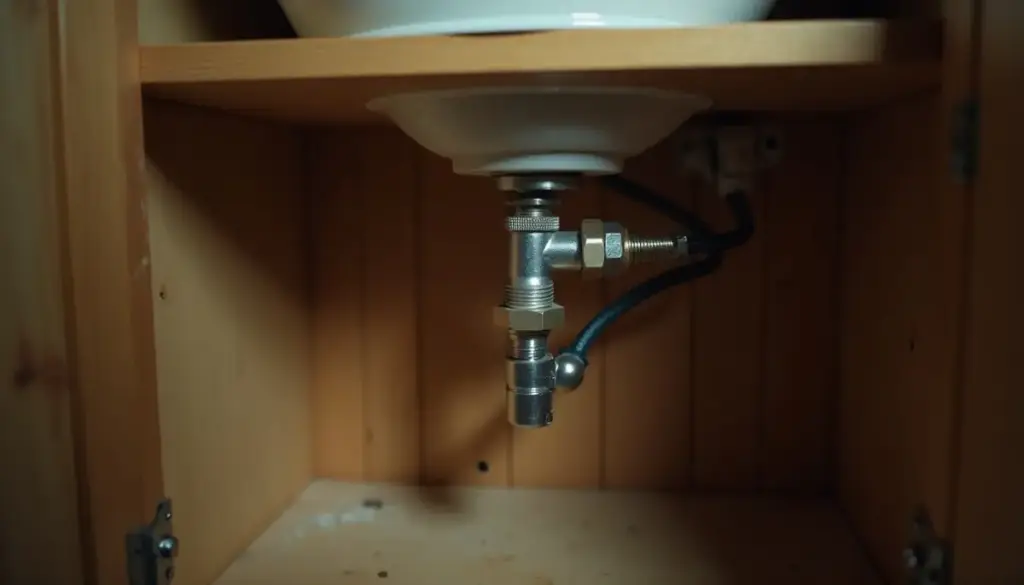
To replace a shut off valve under sink plumbing, shut the main, drain the line, remove the old stop, and install a valve matched to your stub-out, usually 1/2 inch copper in and 3/8 inch compression out.
Key Takeaways
- BrassCraft’s installation sheet says to tighten a copper compression inlet nut 3/4 turn past hand tight, and a riser outlet nut 1 to 1-1/4 turns.
- BrassCraft rates its OCR19Z multi-turn angle stop at 125 psi maximum and 40 to 160 degrees F.
- Home Depot listed common 1/2 by 3/8 inch angle stops from $9.92 to $45.76 in October 2026.
- Homewyse priced a basic shut-off valve install at $277 to $333 per valve in May 2026, with a two-hour labor minimum.
- BrassCraft bans putty and thread seal tape on compression connections; the brass sleeve seals.
When should you replace a shut off valve under the sink?
Replace an under-sink shut off valve when it drips at the stem, will not stop the flow fully when closed, will not turn at all, or shows green or white corrosion on the body. Old multi-turn compression stops are the usual suspects. Their rubber washer hardens over the years and stops sealing, and you only find out the day you need the faucet off. Before swapping the valve, it helps to review bathroom faucet replacement steps since both jobs share the same shutoff and supply line work. For washer hookups and whole-house upgrades, see our guides on washing machine shut off valve leaks and main water shut off valve replacement cost. Toilet stops wear out the same way, so check our breakdown of toilet shut off valve leaking before you assume the valve itself needs replacing.
- Stem drip that returns after snugging the packing nut: replace.
- Water trickles with the handle closed: the seat or washer is worn.
- Handle seized or snapped off: forcing it can crack the body.
- Corrosion crust on the body or nut: replace, and check the pipe behind it.
BrassCraft’s own water stops installation sheet tells owners to inspect stops annually and replace any that show damage, deterioration, or corrosion. That same annual inspection habit applies when adding a T-valve during bidet seat installation, where a hidden leak can go unnoticed for months.
What kind of pipe connects to your shut off valve?
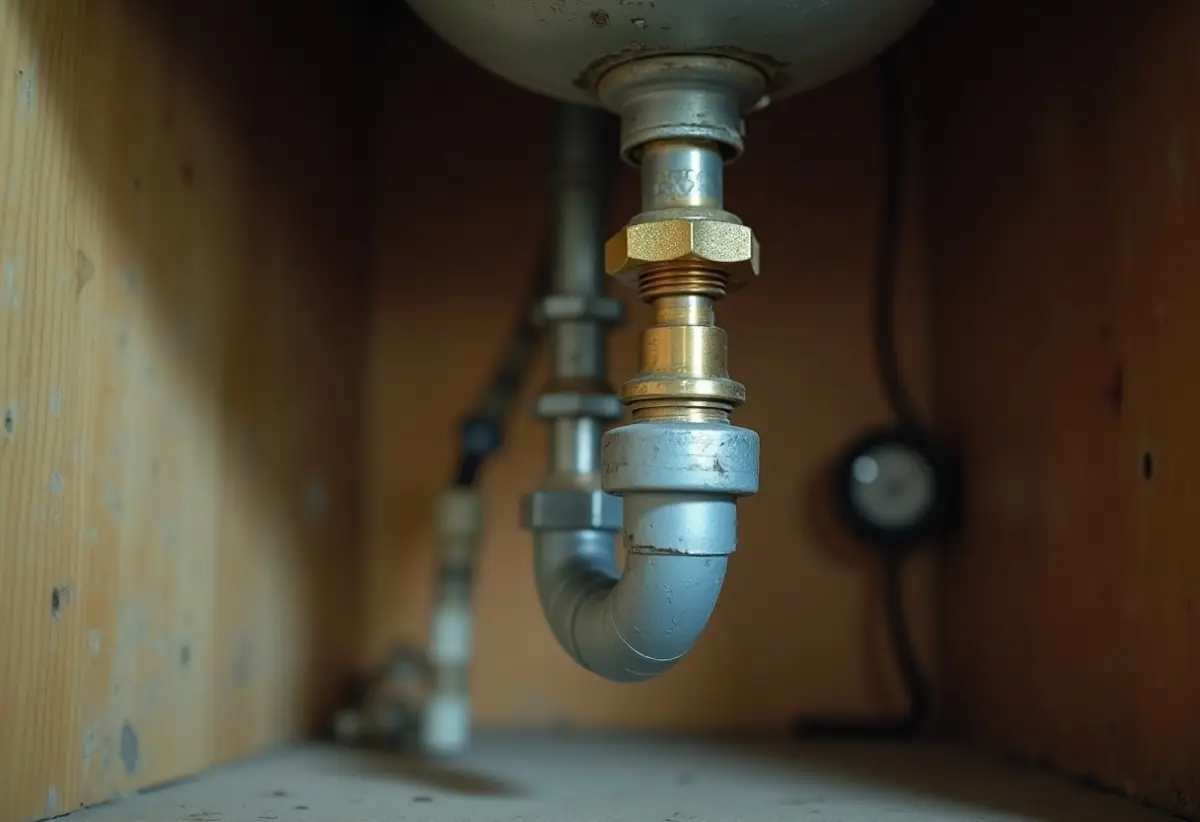
Look where the valve meets the pipe coming out of the wall, called the stub-out. A visible nut means compression. A smooth silver ring of solder means a sweat joint. Threads on gray steel mean threaded iron pipe. A colored plastic tube with a metal ring means PEX, and rigid cream plastic means CPVC. The connection type decides which valve you buy.
A typical sink stop has a 1/2 inch nominal inlet and a 3/8 inch OD compression outlet, the size most faucet supply lines use. Half-inch nominal copper and PEX both measure 5/8 inch outside, so take the old valve to the store. If a toilet line gives you trouble instead, fixing a leaking toilet supply line covers the same compression fittings from a different angle. Worn or partially closed compression valves can also starve the fill cycle, so check out slow toilet fill problems if the tank refills sluggishly afterward.
| Stub-out type | How to tell | Valve to buy | Tools |
|---|---|---|---|
| Copper with compression stop | Copper pipe, hex nut behind the valve body | 1/2 in nominal comp x 3/8 in OD comp (BrassCraft OCR19X or G2CR19X) | Two wrenches, sleeve puller |
| Copper, soldered (sweat) | No nut; the valve joins the pipe at a silver solder line | Cut and convert to compression or push-fit, or sweat a BrassCraft R19X | Tube cutter, deburring tool, torch if sweating |
| Galvanized or brass threaded (IPS) | Gray steel nipple with threads; a magnet sticks to steel but not brass or copper | 1/2 in FIP x 3/8 in OD compression (example BrassCraft G2R17X) | Pipe wrench, backup wrench, thread sealant |
| PEX (crimp or expansion) | Flexible red, blue, or white tube with a crimp or expansion ring | Matching PEX barb stop, compression with insert, or push-fit | PEX cutter, crimp or expansion tool |
| CPVC | Rigid cream or tan plastic glued into the socket | CPVC solvent-weld or push-fit stop | CPVC cutter, primer, CPVC cement |
BrassCraft rates its copper compression inlet for type L or M copper only, and CPVC joints must use CPVC cement or an all-purpose cement meeting ASTM F-493.
Which shut off valve should you buy: quarter-turn or multi-turn, angle or straight?
Buy a quarter-turn stop in most cases. It closes with a 90 degree turn and resists seizing, while a multi-turn stop relies on a rubber washer that ages. Pick an angle stop when the pipe comes out of the wall and a straight stop when it comes up through the cabinet floor. Then match the inlet to your stub-out and the outlet, usually 3/8 inch OD compression, to the supply line.
BrassCraft describes its KT series quarter-turn stops as a brass ball on PTFE seats built to turn smoothly after long periods of non-use. For background on ball, gate, and globe designs, see our guide to the other valves in a home plumbing system.
Price barely separates the types, as listed retail prices from October 2026 show.
The jump at the top is finish, not function. A chrome-plated SharkBite Max stop listed at $45.76 at Home Depot, against $13.45 for a standard SharkBite push stop. Chrome upgrades often extend to the wall penetration too, which is why matching escutcheon plate sizing matters once the new stop goes in.
How do you replace a compression shut off valve under a sink?
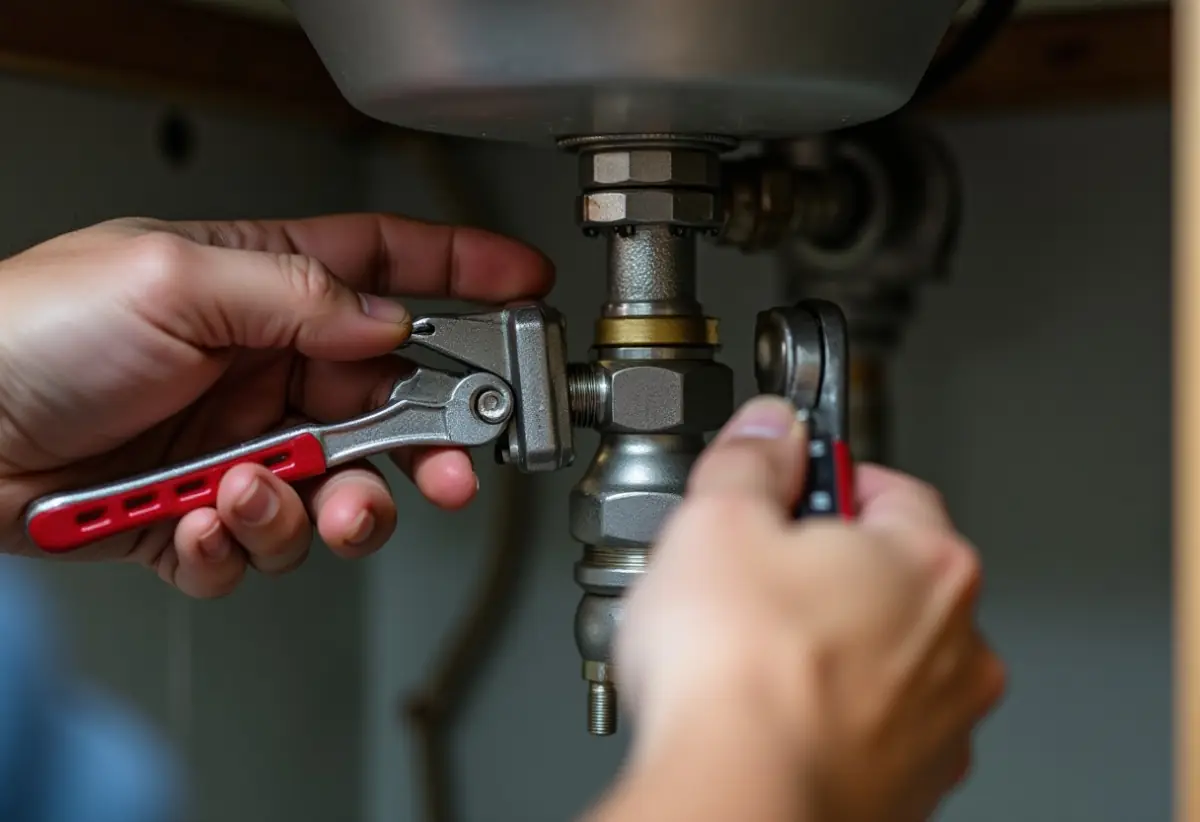
Shut the water off, drain the line, hold the valve body with one wrench while loosening the compression nut with another, slide the old valve off, and pull the old brass sleeve with a sleeve puller. Slide on the new nut and sleeve, seat the valve square, hand tighten, then add the turns the maker specifies. Most swaps take under an hour.
- Shut off the water. If the old stop will not close, shut off the water to the whole house at the main.
- Drain the line. Open the faucet and a lower fixture to relieve pressure. Set a bucket and towel under the valve.
- Disconnect the supply line from the valve outlet.
- Loosen the inlet nut counterclockwise while a second wrench holds the valve body, so you do not twist the stub-out inside the wall.
- Remove the old sleeve. The brass ring, or ferrule, is crushed onto the pipe. A compression sleeve puller draws it off without marring the copper. If you have room, you can cut the pipe behind it instead.
- Prep the pipe. Clean the stub-out with emery cloth. BrassCraft says the stub-out must be square, round, and free of burrs.
- Slide on the escutcheon, nut, and new sleeve, then seat the valve. BrassCraft allows a drop of oil on the threads, but no tape or putty.
- Tighten to spec. On a BrassCraft copper compression inlet, hand tighten, then add 3/4 turn with a wrench, keeping the valve square to the pipe.
- Reconnect the supply line. On a compression riser, BrassCraft calls for 1 to 1-1/4 turns past hand tight. On a braided connector with a metal nut, hand tighten and add about 1/4 turn.
Other brands publish their own turn counts, so read the sheet in the box. For the mechanics of why the sleeve seals and why overtightening backfires, see how compression fittings seal.
How do you replace a sweat, threaded, PEX, or push-fit shut off valve?
A soldered stop is usually cut off and replaced with a compression or push-fit valve on the fresh pipe end. A threaded stop unscrews from the nipple and a new FIP valve threads on with sealant. PEX and CPVC stops follow the crimp, expansion, or solvent-weld method of the system. Push-fit stops slide on after you cut, deburr, and mark the pipe.
Sweat (soldered) copper
The no-heat route is to cut the copper just behind the old valve and fit a compression or push-fit stop. If you resolder instead, BrassCraft says to remove the full stem assembly of a multi-turn stop before heating so the washer is not damaged. Leave a quarter-turn stop open, and do not close it until it cools on its own.
Threaded iron pipe
Backhold the nipple with a pipe wrench and spin the old valve off. Apply thread sealant to the nipple, thread the new FIP stop on, and wrench tighten with the outlet aimed at the faucet. If the threads flake or the nipple turns in the wall, replace it with brass first.
PEX and CPVC
BrassCraft lists separate stops for crimp PEX (ASTM F1807), cold expansion PEX (ASTM F1960), and CPVC. Match the house method, or use a compression stop with a tube insert or a push-fit stop if you do not own a crimp or expansion tool.
Push-fit stops
Push-fit fittings are the fastest option on copper, PEX, or CPVC. SharkBite tells installers to cut the pipe square, deburr it, and mark the insertion depth with its Deburr and Gauge Tool before pushing the stop on. BrassCraft adds that a valve not pushed to the mark may leak and that its push stops are for exposed locations only.
How do you test a new shut off valve for leaks?
Close the new valve, open the main slowly, and check the inlet nut with a dry paper towel. Then open the valve, run the faucet until air and debris clear, close it, and check the outlet. Look again after an hour and the next morning, since slow weeps take time to show.
- Close the new stop and turn the main back on slowly.
- Hold a dry paper towel under the inlet nut. Any spot of water means trouble.
- Open the stop fully and run the faucet with the aerator off to flush debris, then refit it.
- If a compression nut weeps, snug it about 1/8 turn at a time. If a push-fit joint leaks, shut the water off and recheck the pipe end and insertion mark.
- Leave a dry paper towel on the cabinet floor overnight as a cheap leak detector.
How much does angle stop replacement cost, DIY vs a plumber?
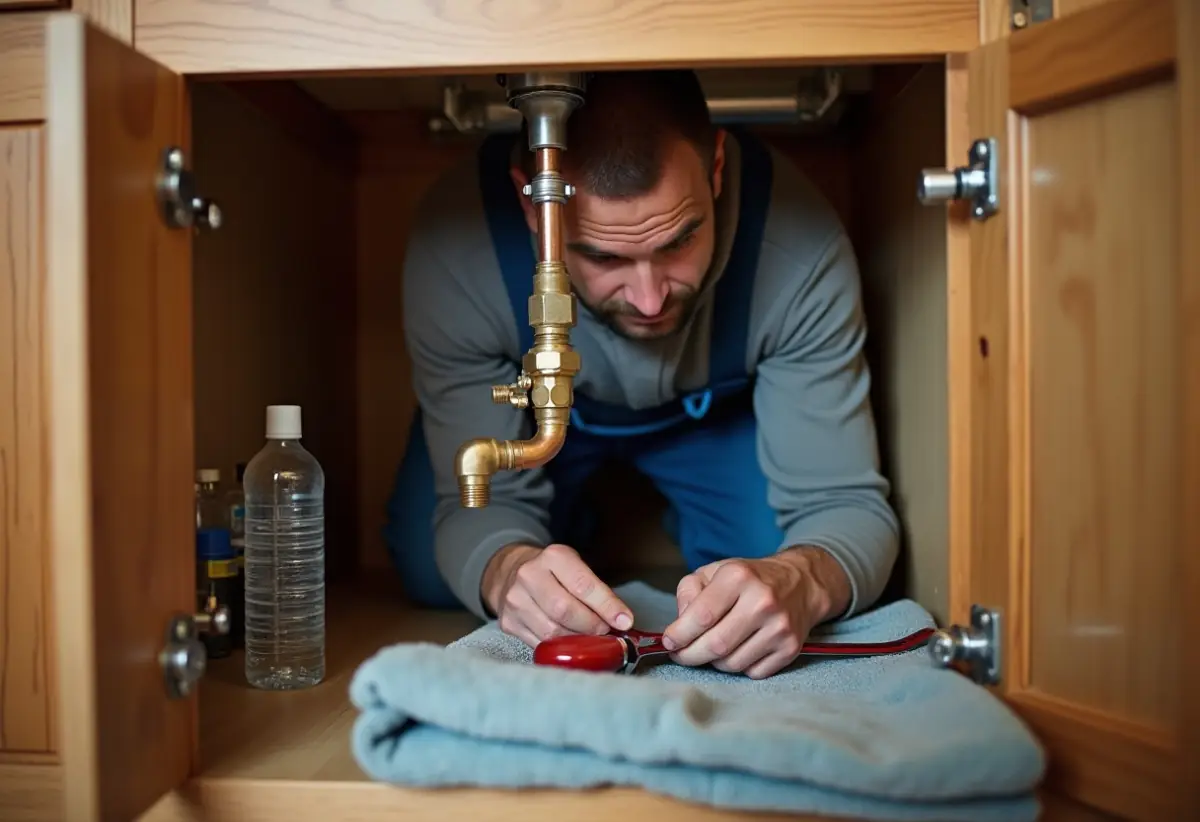
DIY angle stop replacement usually costs the price of the valve, roughly $10 to $46 at Home Depot in October 2026, plus a supply line if the old one is worn. A plumber costs far more. Homewyse estimated $277 to $333 per valve in May 2026 with a two-hour minimum, and HomeGuide’s plumbing price list puts shut-off valve replacement at $150 to $250.
The Homewyse estimate excludes removing or modifying existing plumbing and general contractor markup, which it puts at 13 to 22 percent on top. A new nipple or work inside the wall pushes the bill up, and costs vary by region. Replacing several same-age stops in one visit spreads the trip charge.
What if the stub-out is short, corroded, or the old sleeve will not come off?
A short stub-out leaves no room to cut, so pull the sleeve with a puller instead of cutting, or add a coupling and new pipe to extend it. Corroded pipe should be cut back to clean metal or replaced. A stuck sleeve comes off with a puller. If the pipe inside the wall is pitted or thin, call a plumber before forcing anything.
- Short stub-outs: BrassCraft says the stub-out must fit the depth of the stop and flange. If not, extend it with a coupling and new copper.
- Corroded copper: crust can hide pitting. If the pipe is not round and smooth where the sleeve lands, cut back to sound pipe.
- Rotten galvanized nipples: these can snap inside the wall when wrenched, so have a brass nipple ready.
- Wrong supply connector: BrassCraft warns against connectors with a solid brass cone or bull nose design on its stops, because fractures can develop.
- Hot water recirculation: BrassCraft says not to use its G2 or multi-turn stops on recirculation systems above 115 degrees F.
A slow drip adds up. EPA WaterSense estimates household leaks can waste nearly 10,000 gallons a year, and a weeping stop also rots cabinet floors.
How we sourced this
Every tightening figure, material limit, and caution comes from BrassCraft’s Water Stops installation instructions (document 425.04), read in full. Ratings come from BrassCraft’s OCR19Z page and push-fit prep from SharkBite’s product pages. Retail prices are the listed prices for 1/2 by 3/8 inch angle stops shown in Google Shopping results for Home Depot and Ace Hardware on October 13, 2026; prices change often and exclude tax. Pro cost figures come from Homewyse (May 2026) and HomeGuide’s plumbing price list. Unattributed cost pages were excluded.
Frequently asked questions
How much does it cost to replace a shut-off valve under a sink?
Doing it yourself usually costs only the valve. Home Depot listed common 1/2 by 3/8 inch angle stops between $9.92 and $45.76 in October 2026. Hiring out costs more. Homewyse put a basic shut-off valve install at $277 to $333 per valve in May 2026 with a two-hour labor minimum, and HomeGuide lists shut-off valve replacement at $150 to $250.
Can I replace a shut-off valve under my sink without soldering?
Yes, in most homes. If the old stop is a compression valve, you swap it for another compression valve with two wrenches. If it is soldered, you can cut the copper behind it and install a compression or push-fit stop on the fresh pipe end. Push-fit stops from SharkBite and BrassCraft need no heat, glue, or crimping, only a clean, square, deburred pipe.
How tight should a compression angle stop be?
Follow the maker’s number, not feel. BrassCraft says to hand tighten the inlet compression nut on copper as far as it will go, then turn it 3/4 of a turn more with a wrench. For the riser outlet BrassCraft calls for 1 to 1-1/4 turns past hand tight. Overtightening can crack the valve or crush the pipe and cause a later leak.
Why is the shut-off valve under my sink leaking?
Look at where the water comes from. A drip at the stem or handle on a multi-turn valve usually means loose or worn packing, and a small snug of the packing nut often stops it. A leak at the nut where the pipe enters points to a failed compression sleeve. A leak from a cracked or corroded body means the valve needs replacing.
Should I use Teflon tape on a compression shut-off valve?
No. BrassCraft’s installation sheet says not to use putty, gasket material, or thread seal tape on its compression connections, because the brass sleeve makes the seal, not the threads. A drop of general purpose oil on the threads makes tightening easier. Thread sealant belongs only on threaded iron pipe connections, where the threads themselves seal.
Is a quarter-turn shut-off valve better than a multi-turn valve?
For most sinks, yes. A quarter-turn stop uses a ball or one-piece mechanism that closes with a 90 degree turn and is less likely to seize after years untouched. A multi-turn stop presses a rubber washer onto a seat, and that washer can harden and fail to seal fully. Prices are close, often within a few dollars at Home Depot.
How often should under-sink shut-off valves be replaced?
There is no fixed schedule. BrassCraft tells owners to inspect stops annually and replace any that show damage, deterioration, or corrosion. Many plumbers swap the stops whenever they replace a faucet or toilet, since the valve is already exposed and old multi-turn stops often fail to close completely when you finally need them.
Can you install shut-off valves yourself?
Yes. The article walks through DIY replacement using two wrenches, a sleeve puller, and basic prep like cleaning the stub-out with emery cloth. It notes most swaps take under an hour, and DIY angle stop replacement usually costs only the valve, roughly ten to forty six dollars at Home Depot in October 2026, versus far more for a plumber.
Are water shut-off valves easy to replace?
Generally yes for compression types. The article says most swaps take under an hour using two wrenches, hand tightening, then adding maker specified turns. Quarter turn stops close with a ninety degree turn and resist seizing. Sweat, threaded, PEX, and push fit stops each follow their own method, and push fit stops are called the fastest option.