Toilet Shut Off Valve Leaking: Fix the Stem, Nut, or Replace It
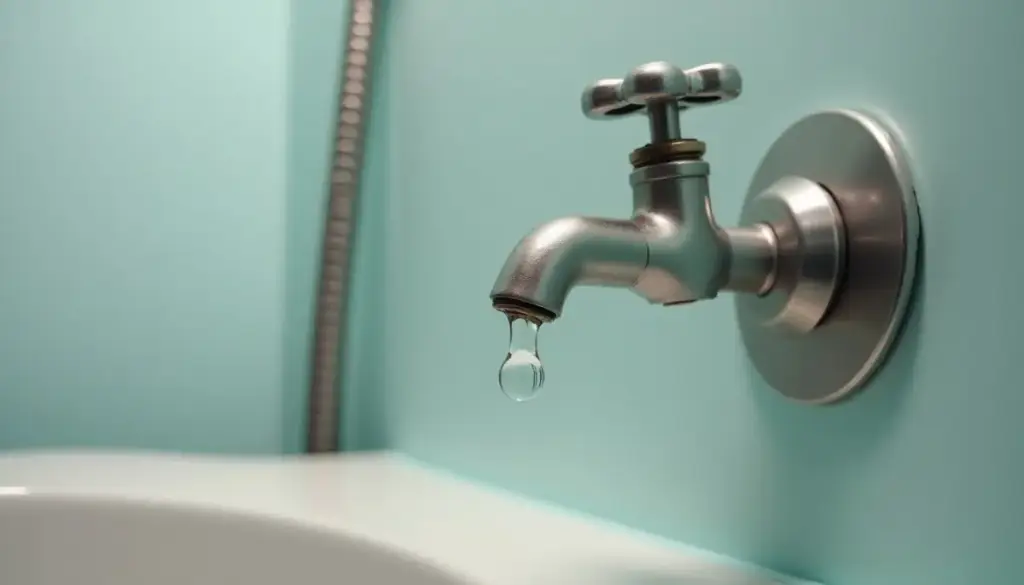
A toilet shut off valve leaking almost always drips from one of three spots: the packing nut under the handle, the 3/8 inch compression nut on the outlet, or the 1/2 inch inlet joint at the wall, and the spot decides the fix.
Key Takeaways
- Family Handyman says to snug a leaking packing nut 1/8 to 1/4 turn, then 1/8 turn at a time.
- BrassCraft’s water stop instructions call for 3/4 turn past hand tight on a copper compression inlet and 1 to 1-1/4 turns on a copper riser outlet.
- BrassCraft bans putty and thread seal tape on compression joints and says to inspect stops annually.
- SharkBite 23037 is a straight stop in retailer listings; the 1/2 by 3/8 inch angle stop is 23036.
- EPA WaterSense says one drip per second wastes more than 3,000 gallons a year, and household leaks waste more than 9,300 gallons per home.
Where is your toilet shut off valve leaking?
A toilet shut off valve leaking will drip from the stem under the handle, the outlet nut where the supply line connects, the inlet joint where the valve meets the pipe from the wall, or a crack in the body. Wrap dry toilet paper around each joint and flush; the first strip that darkens is your leak.
A drip that shows only with the handle open points at the stem packing. If the wet strip sits higher, at the tank nut or along the hose, the problem is the line, covered in our guide to a toilet supply line leaking.
| Leak spot | Likely cause | Fix | Part | Time |
|---|---|---|---|---|
| Under the handle, multi-turn valve | Packing washer hardened or packing nut loose | Snug packing nut 1/8 to 1/4 turn (Family Handyman); replace washer if it still drips | Packing washer, plumbing grease | 5 to 20 min |
| Stem of a quarter-turn valve | Worn stem seal inside the body | Replace the valve | Quarter-turn angle stop matched to the inlet | 30 to 60 min |
| Outlet nut (3/8 in OD compression) | Loose nut, cocked riser, worn cone washer | Braided metal nut hand tight plus 1/4 turn; copper riser 1 to 1-1/4 turns (BrassCraft) | 3/8 in comp x 7/8 in ballcock connector | 10 to 30 min |
| Inlet compression nut at the wall | Sleeve not square, nut loose | Rebuild with new sleeve, 3/4 turn past hand tight (BrassCraft) | 1/2 in nominal (5/8 in OD) nut and sleeve | 30 to 60 min |
| Sweat, threaded or PEX inlet joint | Failed solder, corroded thread, bad crimp | Shut the main, cut out, replace | Stop matched to the pipe type | 45 to 90 min |
| Cracked body | Freeze, overtightening, old plastic | Shut the main, replace | New stop | 30 to 60 min |
| Outlet still flows with handle closed | Worn rubber bibb washer or seat | Replace the valve | New quarter-turn stop | 30 to 60 min |
How do you fix a toilet shut off valve leaking at the packing nut?
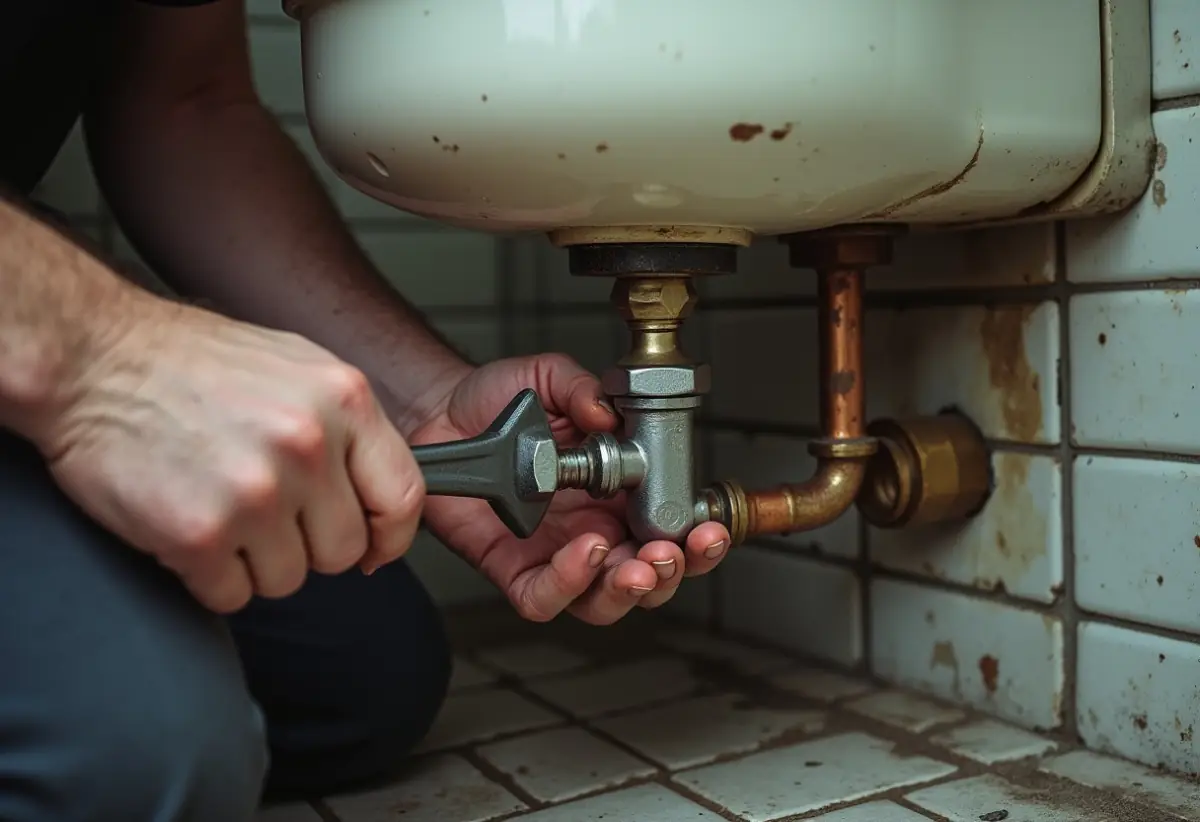
Close the valve, then turn the packing nut, the small nut right under the handle, 1/8 to 1/4 turn clockwise while a second wrench holds the valve body. That is the first step Family Handyman gives for a leaking shutoff valve. If it still weeps, go 1/8 turn more at a time.
The backup wrench keeps torque off the 1/2 inch stub out, which can twist or crack a solder joint inside the wall. Family Handyman warns that overtightening can crack the valve or crush the washer. If snugging fails, replace the packing washer:
- Close the toilet valve. If it will not seal, shut the main first.
- Remove the handle, unscrew the packing nut and slide off the old washer.
- Grease the stem and slide on a matching new washer.
- Thread the packing nut back on, snug it lightly, and refit the handle.
- Open the water slowly and recheck later that day, since Family Handyman notes a slow leak can take hours to show. No tape goes on a packing nut.
Why does a quarter-turn toilet valve leak, and can it be repaired?
A quarter-turn toilet valve that leaks at the stem usually has a worn seal inside the body, and on most residential stops that seal is not serviceable. It has no adjustable packing nut like a multi-turn stop. If a light snug on any exposed stem nut fails, replace the valve.
A multi-turn stop screws a rubber bibb washer down onto a seat, as the stem drawing in BrassCraft’s water supply stop instructions shows. That washer hardens with age. A quarter-turn stop rotates a ball 90 degrees; BrassCraft says its KT series pairs a brass ball with PTFE seats to turn smoothly after long periods of non-use.
Why is the compression nut on the toilet valve outlet dripping?
A drip at the outlet nut means the 3/8 inch OD compression joint between the valve and the supply line is loose, cocked or crushed. On a braided connector the seal is a cone washer inside the nut. On a rigid chrome riser it is a brass sleeve. Snug it slightly first, then rebuild it to the maker’s turn count.
Most toilets take a line with a 3/8 inch compression nut at the valve and a 7/8 inch ballcock nut at the tank, the connection Fluidmaster lists for its Click Seal lines. BrassCraft gives these turn counts for the outlet side:
- Braided connector with a metal nut: hand tight, then 1/4 turn more with a wrench. Wing nuts are hand tight only.
- Copper riser with a brass sleeve: hand tight, then 1 to 1-1/4 turns.
- PEX riser: hand tight, then 1-1/2 to 2 turns.
BrassCraft also warns against connectors with a solid brass cone or bull nose end, since fractures can develop, and says a tilted riser will not seat. Why a crushed sleeve cannot be reused is in our explainer on how compression fittings seal.
Is a leak at the inlet or a cracked valve body fixable?
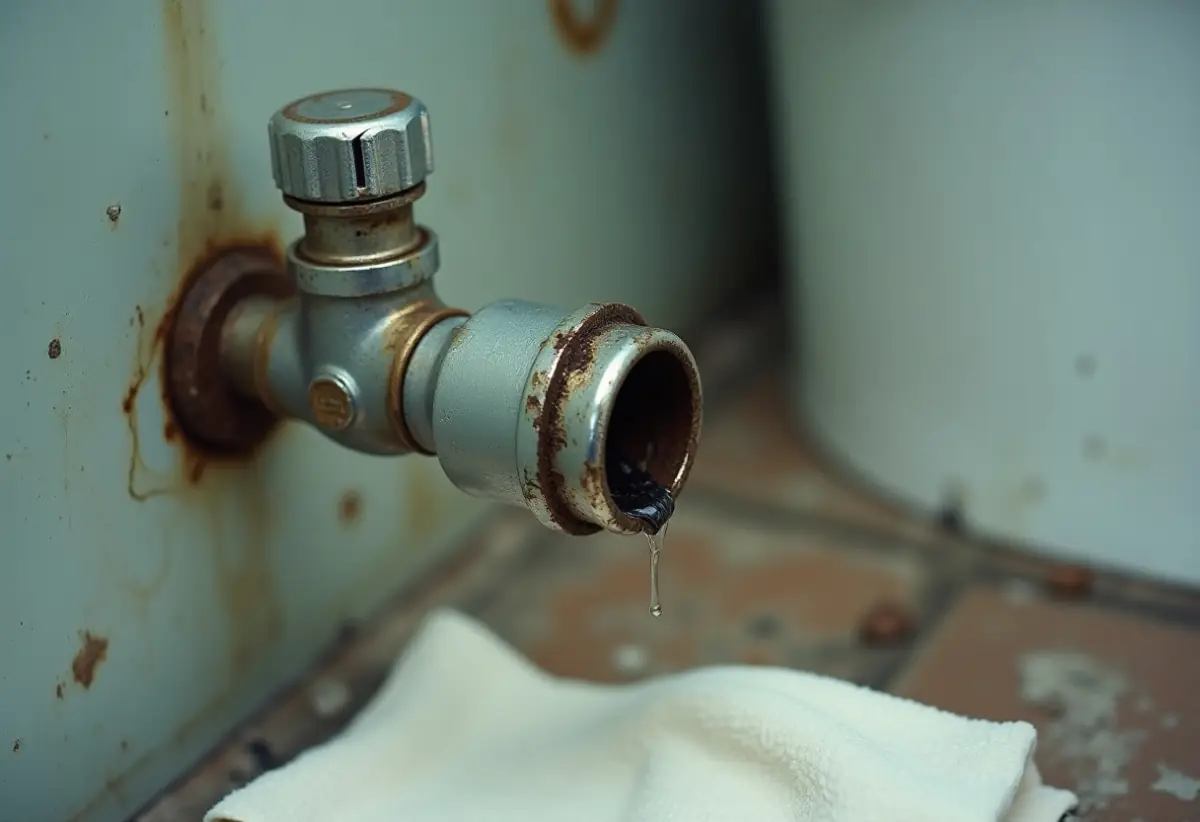
An inlet leak is sometimes fixable; a cracked body never is. A weeping compression inlet can be rebuilt with a new sleeve if the copper is clean and round. A wet solder joint, a corroded threaded nipple, a failed PEX crimp or any crack in the body means shutting the main and replacing the stop.
A typical toilet stop has a 1/2 inch nominal inlet, 5/8 inch outside on copper and PEX. A hex nut behind the body means compression, a silver solder ring means sweat, gray threads mean threaded pipe, and colored plastic tube with a metal ring means PEX.
BrassCraft limits its copper compression inlet to type L or M copper, wants the stub out square, round and free of burrs, and says grooved or scarred tube will not seal. A cracked body is the leak most likely to go from drip to spray.
When should you replace a leaking toilet supply valve instead of repairing it?
Replace the valve when water passes it fully closed, when a quarter-turn stem keeps weeping, when the body or inlet joint is wet, when the handle is seized, or when the brass shows green or white crust. Only a multi-turn packing leak and a loose outlet nut are true repairs.
BrassCraft says not to reuse stops and to replace any showing damage, deterioration or corrosion. To test for an internal leak, close the valve, disconnect the line into a bucket, and hold a rag at the outlet for a minute. Any flow means a worn washer or seat.
Cost rarely decides it. Homewyse put a basic shut off valve install at $277 to $333 per valve in May 2026 with a two hour labor minimum, so have every old multi-turn stop swapped on one visit.
How do you replace a toilet shut off valve on each type of pipe?
Shut the main, drain the line, disconnect the supply line, then remove the old stop and fit a new one with the same inlet type and a 3/8 inch OD compression outlet. Expect 30 to 90 minutes, depending on the inlet type.
- Shut the main and open the lowest faucet to drain the line.
- Flush, sponge out the tank, and disconnect the supply line over a bucket.
- Remove the old stop with a backup wrench on the body.
- Fit the new stop by inlet type, as below, with the outlet aimed at the fill valve.
- Reconnect the line, open the main slowly, then open the new stop and check each joint with dry paper.
Compression on copper
Pull the old sleeve with a puller or cut behind it, fit a new nut and sleeve, hand tighten, then add 3/4 turn, per BrassCraft. A common fit is the BrassCraft G2CR19X, a 1/2 inch nominal compression by 3/8 inch OD compression quarter-turn angle stop. Our guide to replacing a shut off valve walks through this swap in detail.
Threaded iron or brass pipe
Backhold the nipple, spin the old stop off, apply thread sealant to the nipple, and thread on a female threaded stop such as the BrassCraft G2R17X (1/2 inch FIP by 3/8 inch OD compression). Replace a flaking nipple first.
Sweat (soldered copper)
The no torch route is to cut the copper and fit a compression or push fit stop. If you solder, BrassCraft says to remove the full stem assembly of a multi-turn stop so heat does not damage the washer, and to leave a quarter-turn stop open until it fully cools, with no wet rag. It also says not to sweat within 12 inches of a G2 quarter-turn stop.
PEX crimp, expansion or compression
Match the house system. Barbed stops take a crimp ring checked with a crimp gauge; expansion stops are for ASTM F1960 PEX. BrassCraft’s PEX compression inlet needs a stainless tube insert on tube over 3/8 inch OD and 3/4 turn past hand tight.
Push fit
Cut the pipe square, deburr it and mark the insertion depth. For an angle stop, order SharkBite 23036, listed by Acme Tools as a 1/2 inch by 3/8 inch angle stop with a quarter-turn ball valve. Part 23037 is the straight version for pipe rising from the floor. BrassCraft warns a push valve not pushed to the mark may leak.
What should you do if the toilet shut off valve will not close?
If the toilet valve will not close or keeps flowing when closed, stop forcing it and shut the water at the main. A seized handle can snap or crack the body under a wrench. With the main off, open a low faucet to drain pressure, then replace the stop.
The main usually sits where the service line enters, and our guide on how to shut off water to the house shows how to find it. If the main also fails, call your water utility to close the curb stop.
Never leave a stop half closed to quiet a running toilet. BrassCraft says stops must be used fully open or fully closed.
How much water does a dripping toilet shut off valve waste?
EPA WaterSense says a faucet dripping one drip per second wastes more than 3,000 gallons a year, and ten drips per minute wastes more than 500 gallons. A valve drip follows the same math, but lands on the subfloor instead of a drain.
The top three bars are EPA WaterSense figures. The last bar is our arithmetic: EPA says 9 percent of homes have leaks wasting 50 gallons or more per day, which works out to 18,250 gallons a year.
EPA’s Fix a Leak Week page puts household leak waste at nearly 1 trillion gallons a year nationwide.
How we sourced this
Turn counts and cautions come from BrassCraft’s Water Supply Stops instructions (425.04, Rev. 11/19), read in full. Packing nut steps come from Family Handyman. Water waste figures come from EPA WaterSense’s Fix a Leak Week page (updated March 2026); the 18,250 gallon bar is our arithmetic from EPA’s 50 gallon per day threshold. SharkBite part numbers come from retailer listings, since we could not load SharkBite’s own page; check the number on the box. Cost comes from Homewyse (May 2026). Time ranges are our editorial estimates for a homeowner with parts in hand. We excluded forum posts and unattributed blogs; the USGS drip calculator was unreachable, so no USGS figures appear.
Frequently asked questions
Why is my toilet shut off valve leaking after I turned it?
Packing that hardened during years of sitting still loses its seal once the stem turns. Water then escapes past the stem under the handle, usually only while the valve is open. Snug the packing nut 1/8 to 1/4 turn as Family Handyman advises. If it still weeps, replace the packing washer or the whole valve.
Can you tighten a leaking toilet shut off valve?
Yes, if it is a multi-turn valve dripping at the stem. Hold the valve body with one wrench and turn the packing nut under the handle 1/8 to 1/4 turn clockwise with another. Family Handyman warns that overtightening can crack the valve or crush the washer, so stop once the drip stops and check it again later that day.
Can I fix a leaking toilet valve without shutting off the main?
Often you can. Snugging a packing nut or an outlet nut needs no shutdown. Swapping the packing washer or the supply line only needs the toilet valve closed, if it still seals. Replacing the valve itself, or working on one that will not close, means shutting the main and draining the line at a lower faucet first.
Should I replace a toilet shut off valve with a quarter-turn valve?
In most homes, yes. BrassCraft says its KT series quarter-turn stops pair a brass ball with PTFE seats so they turn smoothly after long periods of non-use, while a multi-turn stop seals with a rubber washer that ages. A quarter-turn stop also closes in a 90 degree turn, which matters when the bowl is about to overflow.
Do you use Teflon tape on a toilet shut off valve?
Not on compression joints. BrassCraft’s water stop instructions say not to use putty, gasket material or thread seal tape on compression connections, because the brass sleeve makes the seal. A drop of general purpose oil on the threads is allowed. Thread sealant belongs only on a threaded iron pipe nipple when you install a female threaded stop.
Is a dripping toilet shut off valve an emergency?
A slow drip is not an emergency, but it is not harmless. EPA WaterSense says one drip per second wastes more than 3,000 gallons a year, and a drip behind a toilet soaks the baseboard and subfloor where nobody looks. A spraying crack in the valve body calls for the main shutoff now.