Who Is Responsible for the Sewer Line From House to Street?
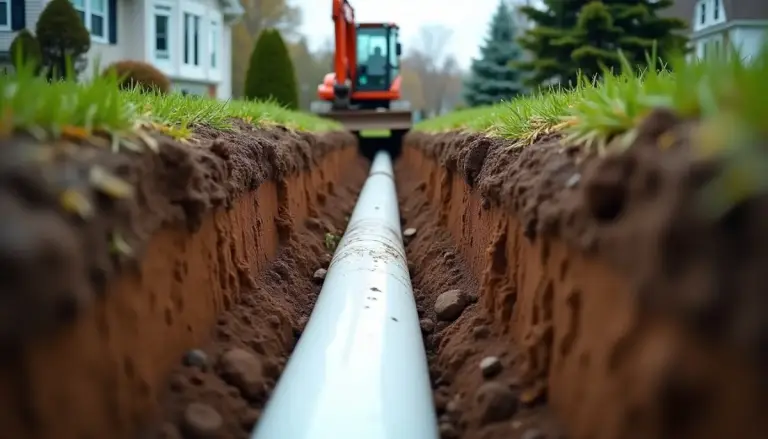
Who is responsible for sewer line from house to street repairs comes down to your utility’s ordinance, and in New York City and Milwaukee the owner pays for the line all the way to the main.
Key Takeaways
- New York City DEP says owners “own and are responsible for maintaining and repairing” the sewer service line that connects to the City’s main in the street.
- Chicago’s Department of Water Management took over repairs of private drains from the main sewer to the property line effective January 1, 2002, per the City’s 311 knowledge base.
- San Francisco owners own the entire lateral, but under most circumstances the SFPUC repairs or replaces the lower section, from the curb to the main, while owners repair the upper section.
- Milwaukee owners own the pipe from the home to the sewer main, including the point of connection, and the city’s 2026 lateral program rehabilitates defective laterals at no cost for eligible owner-occupied homes.
- EBMUD’s East Bay Private Sewer Lateral program requires a Compliance Certificate to close escrow and for remodels with permits over $100,000, per EBMUD.
Who is responsible for the sewer line from house to street?
In most US cities the property owner is responsible for the sewer line from house to street, a pipe called the sewer lateral, and the utility owns only the public main. The catch is the stretch under the sidewalk and pavement. Some cities make you pay for every foot to the tap, while Chicago, San Francisco, Los Altos and Racine take on part of the street end.
Four terms decide who pays, and utilities use them on their own pages and permit forms.
- Upper lateral. The section from your foundation to the property line, the curb, or a city-installed cleanout. This is almost always yours.
- Lower lateral. The section from that point to the main, usually under the sidewalk, parking strip and street. This is the contested part.
- Tap, wye or “Y”. The fitting where your lateral joins the main. Milwaukee says owners own the pipe all the way to the sewer main, “including the point of connection.”
- Sewer main. The shared public pipe under the street. No city in our table bills an owner for a main break.
If you do not know where your lateral leaves the house or which way it heads, find where your sewer line runs before you request quotes.
How do NYC, Chicago, San Francisco and other cities split sewer lateral responsibility?
Cities split sewer lateral responsibility at one of four points: the property line, the curb, a city cleanout, or the main itself. The table quotes or closely paraphrases each utility’s own page, linked in the first column. Confirm your address, because neighboring towns often draw the line differently.
| City or utility | Owner responsible for | City responsible for | Program or note |
|---|---|---|---|
| New York City (DEP) | Maintaining and repairing the sewer service line, “which connects their property to the City’s sewer main in the street” | The sewer main | Optional Service Line Protection Program through American Water Resources |
| Chicago (Dept. of Water Management) | Maintenance and rodding; breaks on private property, fixed by a city licensed sewer contractor | Repairs of private drains “from the main sewer to the property line,” effective January 1, 2002 | Private Drain Program, residential properties up to four units |
| San Francisco (SFPUC) | The entire lateral, plus repair or replacement of the upper section, building to curb | Under most circumstances, the lower section, from the curb to the main | Owner still maintains and inspects the whole lateral |
| Milwaukee (City) | The pipe “from their home all the way to the sewer main, including the point of connection” | The main | 2026 Citywide Lateral Replacements |
| Los Altos, CA | Maintenance from the home to the main; re-construction from the first joint after the property line to the home | Re-construction from the first joint after the property line to the main | Split at the property line |
| Racine, WI | Cleaning or unclogging due to roots, deposits or foreign materials, even in the street | Laterals “which fail within the street right-of-way or city easement” | City repairs confirmed structural defects at no cost to the owner |
| Washington, DC (DC Water) | Maintaining the service line and clearing lateral clogs through a registered master plumber once DC Water finds the main clear | The main sewer; plumbers must call DC Water if they cannot clear the public portion of the lateral | Cleanup and damages most often fall to the owner |
| Covina, CA | The lateral from the home to the main, including the portion under the roadway, parkway tree and sidewalk | The main | Owner keeps the line free of tree roots |
| East Bay (EBMUD region) | The full private lateral, proven leak-free at sale, a remodel over $100,000 or a meter size change | Inspection and certificates | Private Sewer Lateral program |
Who pays for the connection at the main and the pipe under the street?
Who pays for the tap and the pipe under the street depends on whether your city’s line falls at the main or at the property line. In Milwaukee the owner owns the connection itself, and in Covina and New York City the owner keeps the pipe under the street. In Chicago and Los Altos the city handles the public side. In Racine the city repairs a structural failure there, but roots and deposits remain the owner’s job.
Street work adds saw cutting, traffic control, steel plating and pavement patching that a yard dig never needs. When the owner pays, your contractor usually pulls a street opening or right-of-way permit and restores the pavement to city standard.
What should you do first when the sewer line backs up?
When the sewer line backs up, stop using water, check your cleanout to see where the blockage sits, and call the utility to inspect the main before you pay a plumber. A utility crew can clear a blocked main at no charge to you. If the main is clear, the clog is in your lateral and the bill is usually yours.
- Stop all water use. Each flush pushes sewage out the lowest drain.
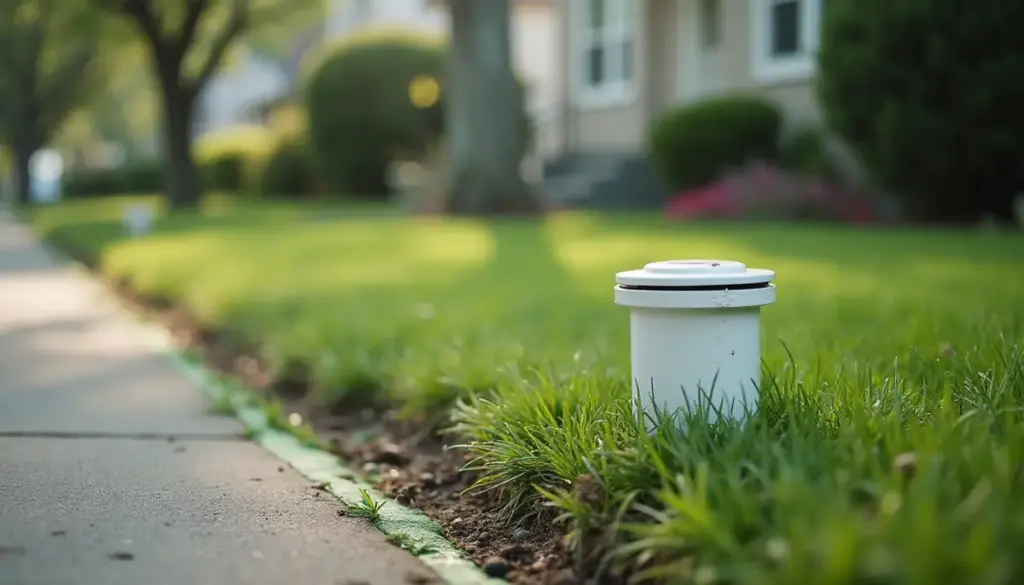
- Open the cleanout cap slowly. Your sewer cleanout is usually a capped pipe near the foundation or the property line. Standing sewage there means the blockage is downstream, in the lateral or the main. A dry cleanout points to the house drain.
- Ask two neighbors. If houses on the same block are backing up too, the main is the likely culprit.
- Call the utility first. In New York City, report it to 311 so DEP can check the main. DC Water says that once it determines the main sewer is clear, a registered master plumber should clear the lateral, and that clogs and cleanup in the lateral are most often the owner’s responsibility.
- Book a camera inspection. Angi prices a standalone sewer camera inspection at $150 to $500. Ask for the video and the footage counter reading at each defect, since that distance shows which side of the property line the break sits on.
- Confirm who digs before any excavation. If the defect sits in the city’s section, send the footage to the utility and ask for a work order. If it is yours, your contractor calls 811 to mark public utilities and pulls the street or right-of-way permit.
When is a sewer lateral inspection required before you sell?
A sewer lateral inspection is required before sale in the East Bay of California, where EBMUD’s Private Sewer Lateral program makes sellers prove the lateral does not leak before escrow closes. Outside such a program, a buyer’s sewer scope is optional.
The EBMUD private sewer lateral page sets these rules.
- Triggers. Buying or selling property (required to close escrow), building or remodeling work worth more than $100,000 (at final permit sign-off), and changing the water meter size.
- Time Extension Certificate. If the lateral cannot pass before title transfers, this gives 180 days from its issue date to finish the work, backed by a refundable $4,500 deposit. For HOA sales, EBMUD notes the buyer and seller negotiate who obtains the certificate.
- Voluntary certificates. You can obtain a Compliance Certificate without a trigger, and EBMUD’s property search tool lets you check status, schedule an inspection or apply for an exemption.
The sequence runs in four steps. Hire a contractor to check and repair or replace the lateral, obtain any municipal permits, schedule an EBMUD inspection to verify the lateral is leak-free (your contractor usually books it), and receive the Compliance Certificate when it passes.
How much does sewer lateral repair cost?
Sewer lateral repair typically costs $1,388 to $5,323, with a national average near $3,319, according to Angi and HomeAdvisor. Add $150 to $500 for the camera inspection that should come first and $150 to $1,600 for an excavation permit, per Angi. Work under a public street lands at the top of these ranges or above them.
A two-way cleanout at the property line, which Angi prices at $2,000 to $5,000, is often installed during a lateral repair so the next clog can be cleared from either direction without pulling a toilet.
Ask every bidder to split the quote into private and public sections. That split is what a cost-sharing city asks for, and it shows whether a cheap bid left out pavement restoration.
Do cities offer sewer lateral repair grants or cost share?
Some cities pay for part or all of a sewer lateral repair, but the programs are local and narrow. Milwaukee rehabilitates defective laterals free for eligible owner-occupied homes in 2026, Chicago repairs the public side, and Racine repairs structural failures in the street right-of-way.
- Milwaukee. The Citywide Lateral Replacements 2026 page serves owner-occupied homes that failed a DNS dye test and have outstanding lateral code violations. The City’s contractor rehabilitates the lateral from the main to the basement cleanout at no cost to the owner. Owners may hire their own licensed contractor instead.
- Racine, Wisconsin. The Racine lateral repair page says the City repairs structural defects such as a crushed lateral or severely offset joints within the right-of-way or a City easement at no cost to the owner once it confirms them. It does not pay for previous cleanings or building damage.
To find a program, search your utility’s site for “lateral,” “private drain,” or “sewer service line.” Apply before work starts, and ask in writing whether the program reimburses a repair that is already finished.
Does insurance cover the sewer line from house to street?
Standard homeowners insurance usually does not cover the sewer line from house to street when it fails from roots, age, corrosion or a sagging section, which are the common causes. Coverage comes from a service line endorsement on your policy or a separate protection plan. Sewage that backs up into the house needs its own sewer backup endorsement.
Before you buy anything, read what a standard homeowners policy covers for plumbing, since the base policy usually pays only for sudden damage from a named peril. Then compare sewer line insurance options, which pay for the buried pipe itself.
- Utility-branded plans. NYC DEP offers an optional Service Line Protection Program through American Water Resources.
- Backup damage. DC Water says it generally does not pay for cleanup costs or damages that result from sewer backups, so cleanup inside the house falls to your policy or your wallet.
Check three items in the fine print: coverage under the public street, pavement restoration, and the per-incident cap. A plan that stops at the property line is worth little in New York City or Covina.
How we sourced this
We read ownership rules on each utility’s own site in October 2026: NYC DEP, Chicago 311, the SFPUC, Milwaukee, Los Altos, Racine, DC Water, Covina and EBMUD. Cost ranges come from Angi, HomeAdvisor and HomeGuide 2026 data. Louisville MSD, San Rafael, Thomasville, Costa Mesa and East Hampton were on our research list, but we could not load their current pages to confirm the rule, so they are left out. Chicago’s 311 article reproduces the original program brochure dating the start to 2002, so confirm it is still active with 311.
Frequently asked questions
Is the city responsible for the sewer line under the street?
Only in some cities. New York City DEP makes the owner responsible for the whole service line to the main in the street. Chicago’s Department of Water Management has repaired private drains from the main to the property line since January 1, 2002, and under most circumstances the SFPUC repairs or replaces the lower lateral, which runs from the curb to the main. Read your own utility’s sewer ordinance.
Who pays if a city tree root breaks my sewer lateral?
Usually you. Covina, California, requires homeowners to maintain the lateral all the way to the main, including the stretch under a parkway tree, and to keep it free of tree roots. The city adds that parkway trees will not be removed solely for roots in sewer laterals. Ask your own city whether it has a tree damage rule, and photograph the camera footage showing the root entry point before any digging starts.
Does homeowners insurance cover the sewer line from house to street?
A standard homeowners policy usually pays only for sudden damage from a named peril, not for roots, wear or a sagging pipe. A service line endorsement or a plan such as New York City’s Service Line Protection Program, run through American Water Resources, fills that gap. Sewer backup damage inside the house needs a separate backup endorsement.
Do I need a sewer lateral inspection to sell my house?
In the East Bay you do. EBMUD’s Private Sewer Lateral program requires a Compliance Certificate to close escrow in the cities where it applies. If the work cannot finish first, a Time Extension Certificate gives 180 days with a refundable $4,500 deposit. A remodel permit over $100,000 or a water meter size change also triggers the certificate.
How do I know if a sewer backup is my line or the city main?
Open your cleanout cap slowly. Standing sewage in the cleanout means the blockage sits downstream, in the lateral or the main, while a dry cleanout points to the house drain. Then call the utility. DC Water says that once it confirms the main is clear, a registered master plumber should clear the lateral, and the cost is most often the owner’s.
How much does it cost to repair a sewer lateral?
Angi and HomeAdvisor put a typical sewer line repair at $1,388 to $5,323, with a national average near $3,319. Budget $150 to $500 for the camera inspection first and $150 to $1,600 for an excavation permit, per Angi. Jobs under a city street cost more because the contractor must cut, plate and patch the pavement.