Storm Drain vs Sanitary Sewer: What Goes Where and Why It Matters
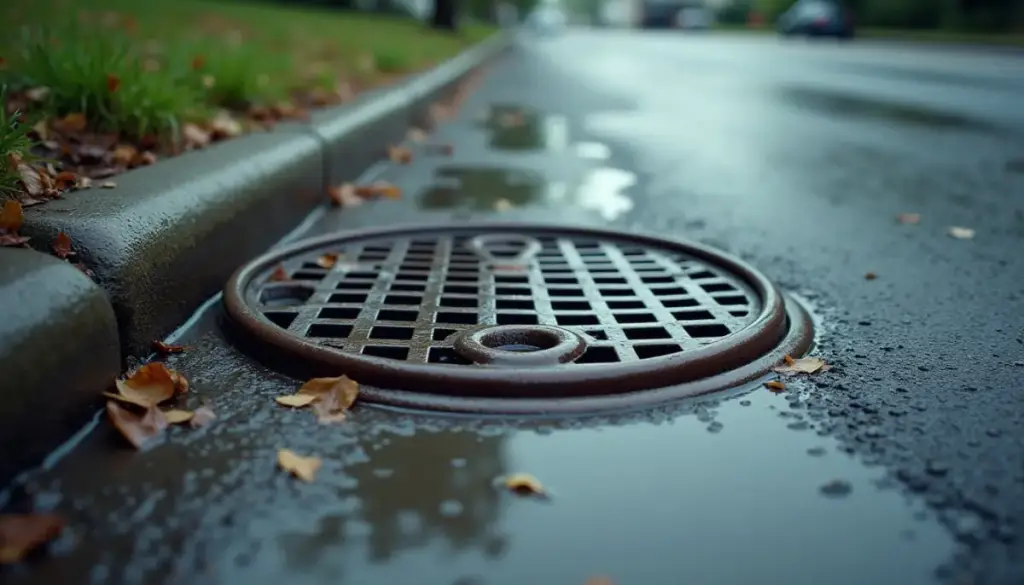
Storm drain vs sanitary sewer comes down to treatment: storm drains carry rain untreated to creeks and rivers, sanitary sewers carry toilet, sink and laundry water to a treatment plant, and older combined sewers carry both.
Key Takeaways
- EPA’s 2004 Report to Congress counted 756 communities in 32 states with combined sewer systems and 9,348 overflow outfalls regulated by 828 NPDES permits.
- EPA estimated combined sewer overflows release about 850 billion gallons of untreated sewage and stormwater a year, down from more than 1 trillion gallons before 1994.
- EPA estimated 23,000 to 75,000 sanitary sewer overflows a year in the US, releasing 3 to 10 billion gallons.
- Golden Valley, Minnesota inspects homes for sump pumps, foundation drains and roof drains tied to the sanitary sewer, and its ordinance bans those cross connections.
- Carmel Utilities in Indiana credits $250 for redirecting a directly connected sump pump and $35 per downspout.
- Philadelphia Water charges every residential customer a flat stormwater fee of $23.05 a month as of September 1, 2026, billed separately from sewer.
What is the difference between a storm drain and a sanitary sewer?
A storm drain collects rain and snowmelt from streets, roofs and yards and sends it, untreated, through pipes and ditches to the nearest creek, river or lake. A sanitary sewer collects wastewater from inside buildings (toilets, showers, sinks, dishwashers, washing machines and floor drains) and carries it to a wastewater treatment plant, where it is cleaned before discharge. The two networks are usually separate pipes under the same street.
A storm sewer has no filter, so whatever reaches a curb inlet lands in the receiving stream. EPA regulates those public storm systems as municipal separate storm sewer systems, or MS4s, and counts about 855 Phase I MS4s covered by 250 individual permits plus 6,695 Phase II MS4s, most under statewide general permits, according to its MS4 program page.
The sanitary side works mostly by gravity: house drains feed a building sewer, usually a 4-inch pipe, that runs to the public main. We trace that full path from house lateral to treatment plant in our guide to how a municipal sewer system works.
| Feature | Storm sewer | Sanitary sewer | Combined sewer |
|---|---|---|---|
| What it carries | Rain, snowmelt, street runoff | Toilet, sink, shower, laundry and floor drain wastewater | Both, in one pipe |
| Where it ends up | Creek, river, lake or bay | Wastewater treatment plant | Treatment plant in dry weather; overflow outfall in heavy rain |
| Treated before discharge? | No | Yes | Yes, until capacity is exceeded |
| What feeds it at a house | Downspouts and sump pump lines only where the city allows it; driveway and yard runoff | Every interior plumbing fixture through the building sewer | Interior fixtures plus, in many older cities, roof leaders |
| Street access | Curb openings, slotted grates, ditch culverts | Round manhole lids in the travel lane, no openings | Both inlets and manholes on the same pipe |
| Federal permit | MS4 stormwater permit | NPDES permit for the treatment plant | NPDES permit covering each CSO outfall |
| Typical failure | Street flooding, polluted runoff | Sanitary sewer overflows and basement backups when rain leaks in | Combined sewer overflows to rivers |
| How you pay | Stormwater fee, often flat or by impervious area | Sewer charge, usually tied to metered water use | Both charges, often on one bill |

What is a combined sewer, and why does it overflow?
A combined sewer carries rainwater runoff, household sewage and industrial wastewater in one pipe, as EPA defines it. In dry weather all of it reaches the treatment plant. During heavy rain or snowmelt the volume can exceed what the pipes or plant can hold, so the system relieves itself through designed outfalls, and untreated stormwater and sewage flow into nearby waterbodies. That release is a combined sewer overflow, or CSO.
The outfalls are deliberate; without them the surcharge would back up into basements. Combined systems date from the era before treatment plants existed, which is why EPA’s 2004 count put them mostly in older cities of the Northeast and Great Lakes regions.
EPA’s 1994 CSO Control Policy requires each of those communities to adopt a long-term control plan, typically storage tunnels, pipe separation and green infrastructure.
How big is the sewer overflow problem, by EPA’s numbers?
EPA’s most recent national estimate, from its 2004 Report to Congress on combined and sanitary sewer overflows, puts CSO volume at about 850 billion gallons a year and sanitary sewer overflows at 23,000 to 75,000 events releasing 3 to 10 billion gallons. A 2023 GAO review noted EPA has not updated the 850 billion gallon figure since, though control projects have likely cut it.
Values are billions of gallons a year. Sanitary overflows are small in volume but can happen in any separate sanitary system, not just the 756 combined ones.
Can you connect a sump pump or downspout to the sanitary sewer?
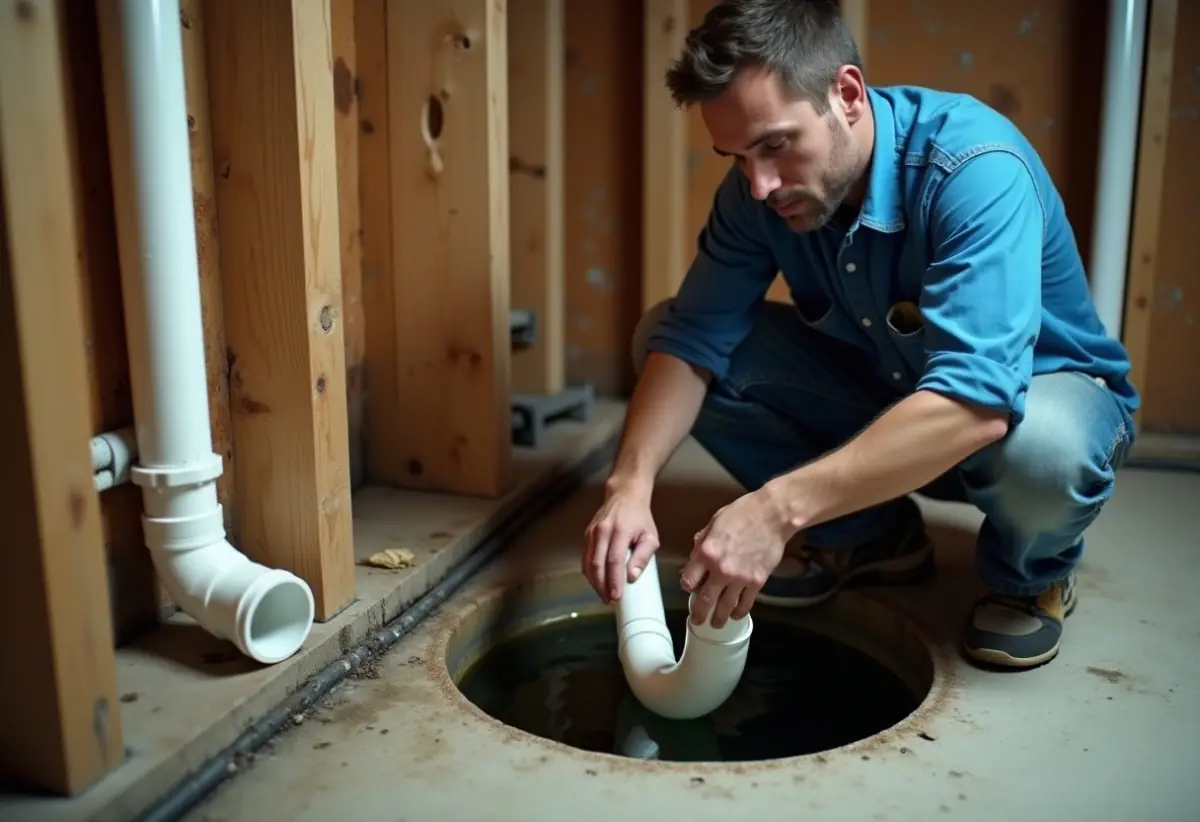
In most cities, no. Sump pumps, roof downspouts and foundation drains are clear-water sources, and sending them into the sanitary sewer is called inflow. With infiltration (groundwater seeping through cracked pipes and joints), it makes up I&I, the rain-driven flow that overloads sanitary mains and plants. Many municipal codes ban these connections outright and run inspection or disconnection programs to find them.
Three examples show how cities handle it:
- Golden Valley, Minnesota: the city inspects homes and businesses for roof drains, foundation drains, sump pumps and other clear-water sources tied to the sanitary sewer, to meet Metropolitan Council I&I directives. Cross connections are against city ordinance.
- Carmel, Indiana: Carmel Utilities treats a sump pump connected to the sanitary sewer as a violation of its sewer ordinance and offers partial reimbursement: $250 for a directly connected sump pump and $35 per downspout.
- Knoxville, Iowa: the city says a sump pump connected to the sanitary sewer is illegal and must be capped and rerouted to discharge at least 3 feet from the foundation.
The arithmetic explains the bans. One inch of rain on a 1,500 square foot roof sheds about 935 gallons (1,500 sq ft x 1/12 ft x 7.48 gallons per cubic foot). Route that roof’s downspouts into the sanitary sewer and a single 1-inch storm adds 935 gallons the treatment plant must pump and treat, multiplied by every connected house on the street.
If your sump pit also collects a basement bathroom or laundry, the rules change: that pit needs a sealed sewage ejector piped to the sanitary sewer, not a sump pump. We break down which pump goes where in sump pump vs sewage ejector.
What is illegal to put down a storm drain?
Under the Clean Water Act MS4 rules (40 CFR 122.26), an illicit discharge is anything entering a municipal storm sewer that is not composed entirely of stormwater, apart from flows covered by their own NPDES permit and firefighting water. Every regulated MS4 must run an illicit discharge detection and elimination program, so cities can trace, fine and order removal of a connection or dumping source.
The usual offenders, and where each one should go instead:
| Item | Correct destination | Why not the storm drain |
|---|---|---|
| Used motor oil, antifreeze | Auto parts store or household hazardous waste drop-off | Goes straight to the creek, toxic to fish |
| Paint, solvent, brush rinse water | Household hazardous waste program; latex can be dried and trashed where allowed | No treatment on the storm side |
| Pet waste | Bagged in the trash | Bacteria and nutrients in the receiving stream |
| Grass clippings, leaves | Compost or yard waste pickup | Clog inlets, add nitrogen and phosphorus |
| Soapy car wash water | Lawn or gravel, or a commercial car wash | Detergent and brake dust reach waterways |
| Sewage, RV holding tanks | Sanitary sewer cleanout or a dump station | An illicit discharge of untreated sewage |
Report dumping to your public works or stormwater hotline with the inlet location.
How can you tell a storm drain from a sanitary sewer at your house?
Openings tell you most of it. A storm inlet has an open grate or curb slot so water can fall in. A sanitary manhole is a solid round lid, usually in the middle of the lane, because sanitary pipes are meant to stay sealed. At your house, interior fixtures drain to the sanitary side through a capped cleanout, while gutters drain to the surface or, where allowed, the storm system.
Work through it in six steps:
- Look at the curb. A rectangular grate or an opening cut into the curb face is a storm inlet.
- Read the manhole lid. Many cities cast “SANITARY,” “SEWER” or “STORM” into the iron. A solid lid with no words is still usually sanitary on a street with separate curb inlets.
- Find your cleanout. Look near the foundation or in the basement for a 3- or 4-inch capped pipe stub. That line is your building sewer and it goes to the sanitary main.
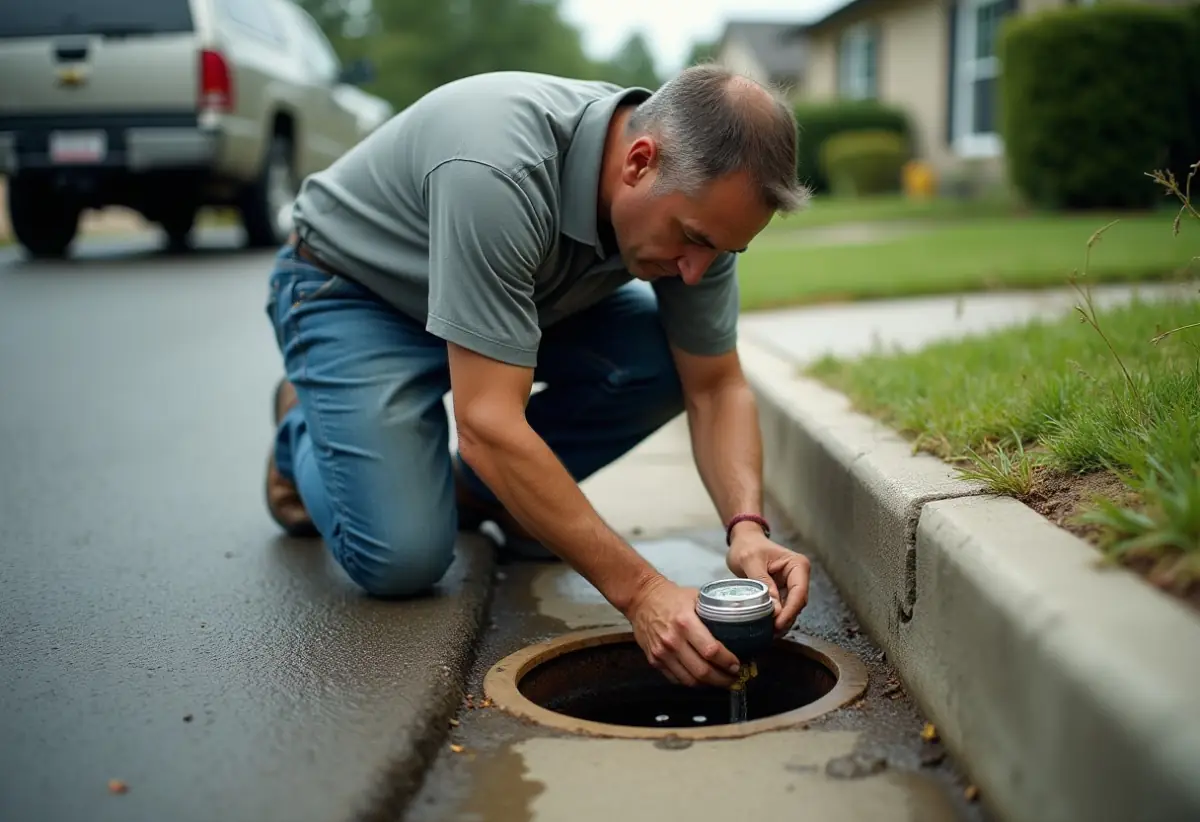
- Follow each downspout. If a downspout disappears into a pipe in the ground, it may connect to the storm system, a dry well or, illegally, the sanitary lateral. Only a dye or smoke test settles it.
- Check the utility map. Most cities and counties publish GIS maps that color storm and sanitary lines separately. Call 811 before you dig; it marks public utility lines but usually not your private lateral.
- Ask for a test. Many sewer utilities run smoke or dye testing to find inflow sources, often as part of the same I&I programs described above.
Why do stormwater fees and sewer charges show up separately on a bill?
They pay for different pipes. The sewer charge funds collection and treatment of wastewater and is usually calculated from metered water use, often a winter average. A stormwater fee funds inlets, storm pipes, ponds and MS4 permit compliance, and is calculated from how much runoff a property sends off site, so it can apply even if you use almost no water.
Philadelphia shows the split clearly. The Philadelphia Water Department bills residential customers a flat stormwater charge, set from the average residential property, that rose from $21.04 to $23.05 a month on September 1, 2026, the same for every home. Commercial parcels pay by gross and impervious area instead, and can earn credits for managing rain on site.
For how the sewer half is calculated and how to lower it, read our breakdown of your sewer bill, line by line.
Why do basements back up with sewage after heavy rain?
Rain gets into the sanitary sewer. Illegal downspout and sump hookups, leaky manhole lids and cracked laterals let stormwater flood a system sized for wastewater. The main surcharges, pressure rises, and sewage pushes back up the building sewer until it escapes at the lowest opening in the house, usually a basement floor drain. In a combined system, the same storm fills the shared pipe directly.
A backwater valve on the building sewer closes when flow reverses, and disconnecting your own clear-water sources keeps your roof out of the problem. When a whole block backs up, the public main is usually the cause.
If raw sewage is already on the floor, shut off water use in the house and work through our guide to a sewer backup in the basement before you start cleanup.
How we sourced this
We reviewed the top-ranking pages for this query, then cited only primary sources: EPA’s 2004 Report to Congress on CSOs and SSOs, EPA’s current CSO and MS4 program pages, the federal MS4 definition at 40 CFR 122.26, three city I&I pages (Golden Valley, Minnesota; Carmel, Indiana; Knoxville, Iowa) Philadelphia Water’s September 2026 rate notice, and GAO’s 2023 review of EPA CSO tracking. EPA has not published a newer national CSO or SSO count than 2004, so those figures carry that date. We excluded vendor blogs and unsourced overflow totals. Local codes vary, so confirm hookup rules with your own sewer utility.
Frequently asked questions
Is a storm drain the same as a sewer?
No. A storm drain carries rain and snowmelt untreated to a creek, river or lake, while a sanitary sewer carries wastewater from toilets, sinks, showers and washing machines to a treatment plant. The exception is a combined sewer, found mostly in older Northeast and Great Lakes cities, where one pipe carries both and can overflow to rivers during heavy rain.
Where does storm drain water go?
In a separate system, storm drain water flows through underground pipes, ditches and culverts straight to the nearest creek, river, lake or bay with no treatment. That is why oil, pet waste, fertilizer and soapy wash water dumped at a curb inlet end up in local waterways. In a combined system it goes to the treatment plant until rain exceeds pipe capacity.
Can I drain my sump pump into the sanitary sewer?
Usually not. Many cities ban sump pump, downspout and foundation drain connections to the sanitary sewer because clear water overloads the pipes and causes basement backups. Knoxville, Iowa requires an illegally connected sump pump to be capped and rerouted at least 3 feet from the foundation, and Carmel, Indiana offers a $250 credit to redirect one. Check your own utility’s ordinance.
Is it illegal to pour things down a storm drain?
Yes, in most places. Under federal Clean Water Act MS4 rules, anything entering a municipal storm sewer that is not entirely stormwater counts as an illicit discharge unless it has its own permit or is firefighting water. Cities with regulated storm systems must detect and eliminate those discharges, and local ordinances set the fines for dumping oil, paint, sewage or yard waste.
Do storm drains connect to the sanitary sewer?
In a separate system they should never connect, and any link between them is treated as an illicit connection. In a combined sewer system, the storm inlets and household drains feed the same pipe by design. EPA’s 2004 Report to Congress counted 756 communities in 32 states with combined systems, so the answer depends on where you live.
Why does my basement flood with sewage when it rains?
Rainwater is getting into the sanitary sewer through illegal downspout and sump pump hookups, leaky manholes and cracked pipes. The main fills, pressure rises, and sewage pushes back up your building sewer to the lowest drain, usually a basement floor drain. A backwater valve on your building sewer and disconnecting clear-water sources are the two main protections.
What is a stormwater fee on my water bill?
A stormwater fee pays for storm inlets, pipes, ponds and federal stormwater permit compliance, separate from the sewer charge that pays for wastewater treatment. Many cities base it on impervious area or charge homes a flat rate. Philadelphia Water charges every residential customer $23.05 a month as of September 1, 2026, regardless of how much water the home uses.