Trenchless Water Line Replacement: Methods, Cost and When It Works
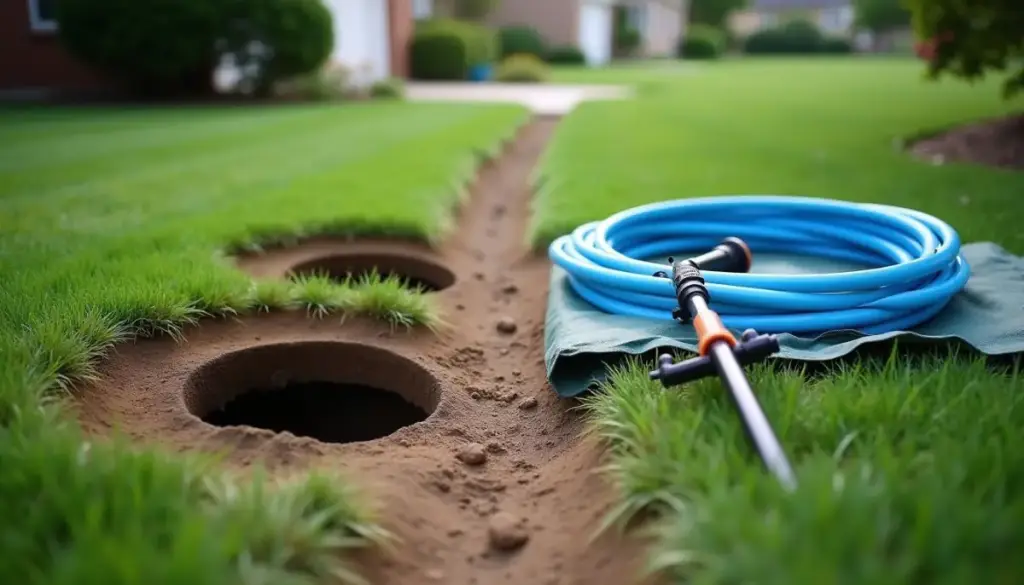
Trenchless water line replacement pulls a new service line through two small pits instead of a trench, and Angi prices the pipe bursting method at $50 to $200 per linear foot.
Key Takeaways
- Angi puts pipe bursting for a water line at $50 to $200 per linear foot; HomeAdvisor’s archived 2022 water main guide listed the same band.
- HomeGuide prices trench digging alone at $5 to $12 per foot, so trenchless pays off when a driveway, patio or trees sit over the line, not in an open lawn.
- IRC Section P2603.5 puts water service pipe at least 12 inches deep and 6 inches below the frost line, per the ICC’s 2021 IRC text.
- The EPA Lead and Copper Rule Improvements give most water systems 10 years to replace lead service lines, with compliance starting November 1, 2027.
- The EPA counts about 9.2 million lead service lines still in use, and a lead line is soft enough to pull out whole while the new pipe follows it in.
- Platte Canyon Water and Sanitation District says the homeowner owns the meter pit and curb stop, so confirm the ownership split before you price the job.
How does trenchless water line replacement work?
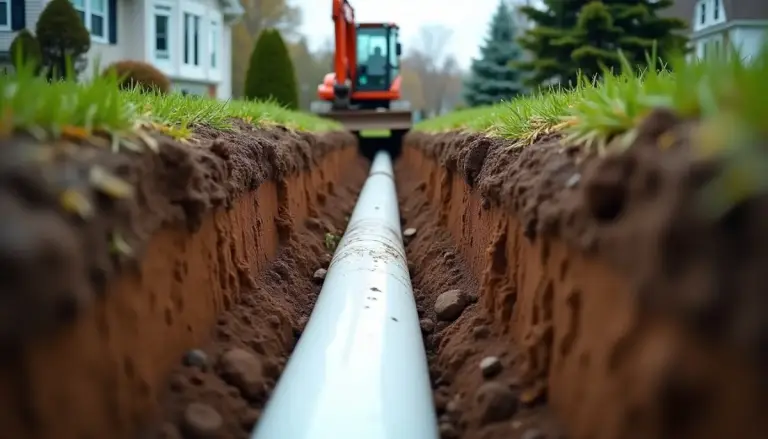
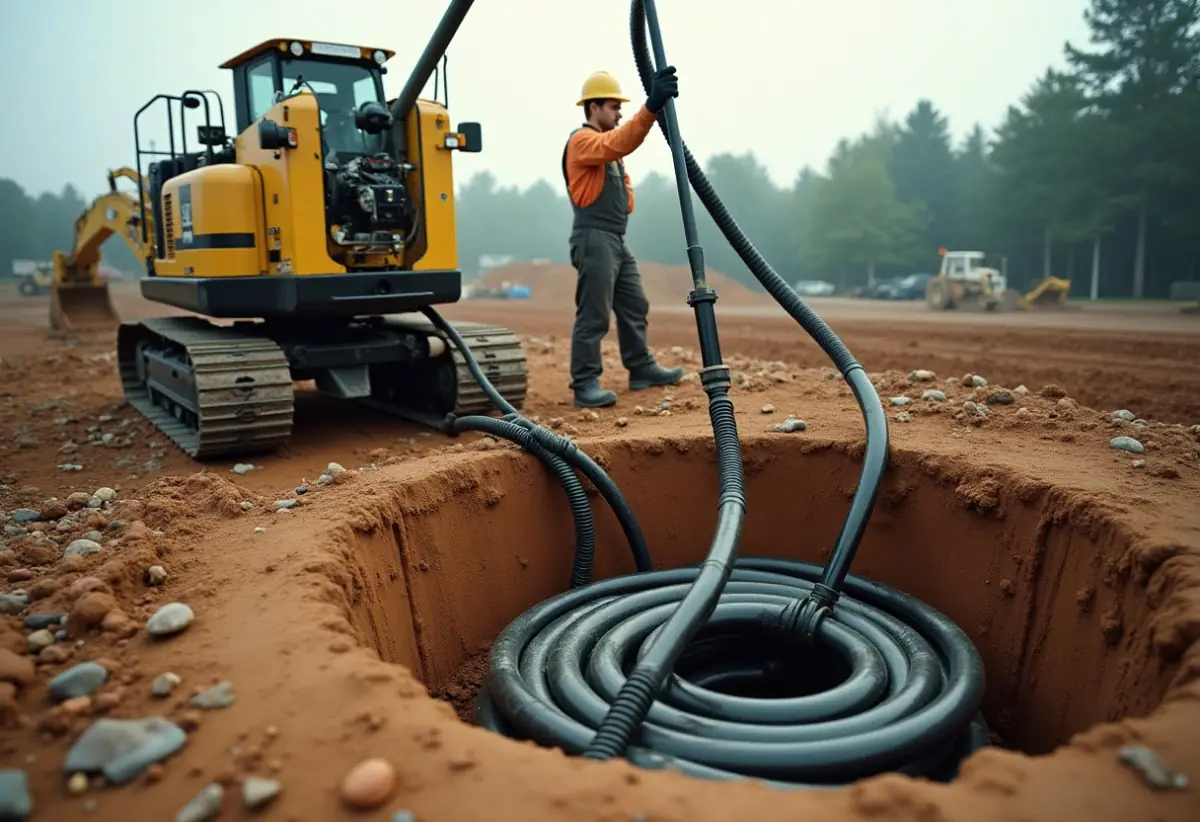
Trenchless water line replacement digs one pit where the service starts, usually at the curb stop or meter, and one where it enters the house. A machine then either destroys or pulls out the old pipe while dragging the new line in behind it, or bores a fresh path beside it. Contractor WM Henderson says a residential job normally finishes in one day.
Four methods do almost all residential work.
- Pipe bursting: a winched cone head fractures the old pipe outward while the new line follows. It suits brittle galvanized steel and can upsize 3/4 inch to 1 inch.
- Pipe pulling: a cable threaded through the old pipe pulls it out whole with the new line coupled behind. Soft lead pulls well.
- Pipe splitting: cutting wheels slit ductile copper, which stretches instead of shattering.
- Pneumatic piercing (moling) and horizontal directional drilling (HDD): both bore a new path. A mole is an air-driven torpedo for short, straight runs; HDD is a steerable head tracked from the surface for longer or deeper runs.
The old line keeps working until the tie-ins. If one fitting failed on a sound pipe, it is usually cheaper to repair a single break instead of replacing the line.
Which trenchless method fits your water service line?
The old pipe’s material and what sits above it decide the method. Galvanized steel bursts, lead pulls, copper pulls or splits, and a collapsed line or one under a slab is better abandoned for a new bored path. Lining is the outlier for drinking water.
| Method | How it works | Pits needed | New pipe | Cost per ft | Limits |
|---|---|---|---|---|---|
| Pipe bursting | Cone head fractures the old pipe and drags the new line in | 2 (start and end) | HDPE, PEX | $50 to $200 (Angi) | Needs a continuous host pipe; ductile copper resists bursting |
| Pipe pulling | Cable pulls the old pipe out whole as the new line follows | 2 | HDPE, PEX, Type K copper | Bid alongside bursting; same 2 pit setup | Old pipe must hold together; corroded galvanized can snap mid-pull |
| Pipe splitting | Wheeled cutter slits copper so the new line passes | 2 | HDPE, PEX | Bid alongside bursting | Split copper stays in the ground next to the new line |
| Moling (pneumatic piercing) | Air-driven tool punches a new hole through soil | 2 (launch and receiving) | HDPE, PEX | Bid per run; trench alternative is $5 to $12 per ft to dig (HomeGuide) | Deflects off rock and cobbles; best on short, straight runs |
| Horizontal directional drilling | Steerable drill bores a tracked path, then pulls the pipe back | 2 small (entry and exit) | HDPE, PEX | Bid per run; priced against the open trench alternative | Highest setup cost; must clear gas, power and sewer crossings |
| Epoxy lining | Coats the inside of the existing pipe | Access at both ends | None (coating only) | Rarely offered for 1 in potable service | Coating must be NSF/ANSI 61 certified; lead pipe stays in the ground |
How much does trenchless water line replacement cost?
Trenchless water line replacement by pipe bursting costs $50 to $200 per linear foot, according to Angi’s main water line replacement cost guide, and HomeAdvisor’s archived 2022 water main guide listed the same band. On a 60 foot service, that is roughly $3,000 to $12,000 before permit and restoration costs.
Digging is the small part of a trench job. HomeGuide prices trenching at $5 to $12 per linear foot, or $500 to $1,200 for a 100 foot trench, so a 60 foot trench through an open lawn costs about $300 to $720 to dig. The expense is rebuilding what sits above it, such as a driveway, patio or sidewalk.
Industrial Monitor Direct, writing about larger fire water lines, puts pipe bursting at about $80 to $150 per foot against $150 to $300 for open cut. Those are commercial diameters, but the gap points the same way. Depth, rock and a driveway crossing push any bid up.
What pipe goes into a trenchless water line, and how deep?
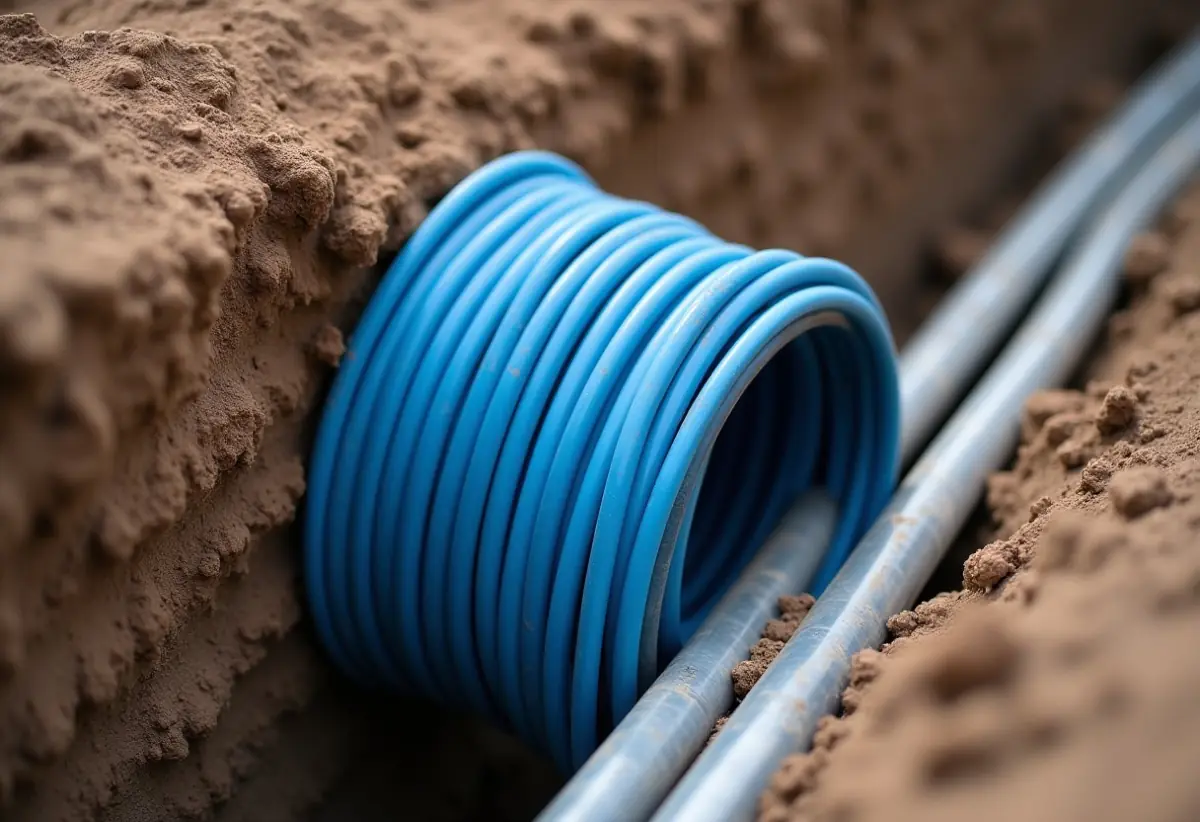
Most trenchless jobs pull in polyethylene (usually blue HDPE tubing), PEX or Type K copper, the thick-wall copper made for burial. Residential services are commonly 3/4 inch or 1 inch, and bursting lets you upsize to 1 inch. The new line has to sit at least 12 inches deep and 6 inches below the frost line under IRC P2603.5.
Plastic service tubing is generally made to AWWA C901 (polyethylene) or AWWA C904 (PEX), and copper tube to ASTM B88. Model codes approve PE, PEX and copper for water service, but utility rules can narrow the list, so ask before the crew orders pipe. Coiled HDPE and PEX pull in as one jointless length.
The ICC’s 2021 IRC Chapter 26 text says water service pipe “shall be installed not less than 12 inches (305 mm) deep and not less than 6 inches (152 mm) below the frost line.” Utilities often add more. Des Moines Water Works Section 505 asks for 5 feet of cover where feasible and requires No. 12 AWG copper tracer wire, with 45 mil blue HDPE insulation, on every PEX service so the plastic line can be located later. See how deep water lines must be buried in your region for the frost depth table.
Why is pipe lining rare for drinking water lines?
Lining is rare on potable service lines because any coating that touches drinking water must be certified to NSF/ANSI 61, the leachate standard model plumbing codes call for, and a liner leaves the old pipe in the ground, which does nothing to remove a lead line.
NSF/ANSI 61 exposes a product to pH 5 and pH 10 test waters and measures what leaches out, including lead, copper, arsenic and cadmium. Curing epoxy fully inside a 3/4 inch line is hard, and replacing a short service outright removes the question.
Sewers are different. Lining a cracked 4 inch lateral is routine because nobody drinks drain water, which is why trenchless sewer repair leans on liners while trenchless water work leans on bursting and pulling.
Can trenchless water line replacement remove a lead service line?
Yes. Lead is soft enough that a pulling rig draws the old pipe out whole while the new copper or plastic line follows it. Under the EPA Lead and Copper Rule Improvements, most water systems must replace lead service lines within 10 years, starting from the November 1, 2027 compliance date.
The EPA’s LCRI page says the rule, issued October 8, 2024, requires systems to replace lead pipes within 10 years. Systems must average at least 10 percent of their lead and galvanized requiring replacement lines per year, the lead action level drops from 15 to 10 micrograms per liter, and a line counts as replaced only when both the utility side and the customer side are confirmed non-lead. The EPA warns that partial replacement can raise lead levels for days to months.
Who pays for the private side is local. Denver Water estimates 60,000 to 64,000 homes with a possible lead service line, and it replaces a customer-owned lead line with copper at no direct charge when one is found during a water main project. Ask your utility three things first:
- Is my line listed as lead, galvanized requiring replacement, or unknown?
- Is my street scheduled in your replacement plan, and will you pay for the customer side?
- If I replace my side now, will you replace yours at the same time?
Who owns the curb stop, and what permits and shutoffs does the job need?
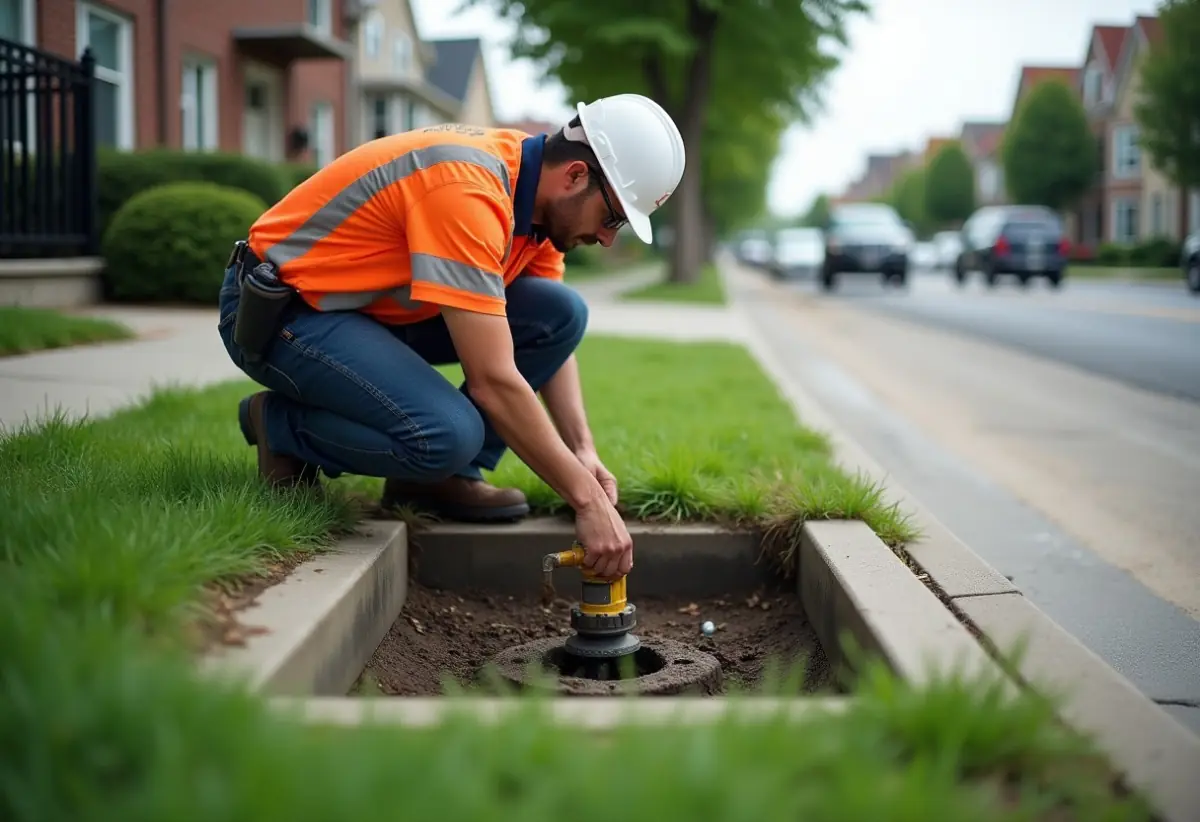
In most areas the utility owns the main and the service up to the curb stop or property line, and the homeowner owns the line from there to the house. That split is local. Platte Canyon Water and Sanitation District in Colorado says the homeowner owns both the meter pit and the curb stop valve, which sits 4.5 to 6 feet below its box lid there.
Ownership decides where the start pit goes. Then work in this order:
- Call 811 so gas, power and cable are marked along the bore path.
- Pull a plumbing permit; HomeGuide lists plumbing permit fees of $30 to $500 depending on the jurisdiction.
- Book the utility’s curb stop shutoff. The Munroe Falls, Ohio water department charges $25 in business hours and $50 after hours, with 48 hours of notice.
- Ask whether the utility makes the curb stop connection and whether a new path needs a new tap at the main.
- Get the inspection before backfill so depth and tracer wire are visible.
The house end is a good time to replace a stiff main shut-off. Angi puts the average at $500 and $875 when a trench is needed, and a 1 inch Apollo 77CLF-205-01A full-port lead-free bronze ball valve listed at $55.11 at SupplyStop in October 2026. Here is what a main shut-off valve replacement costs by location.
When does trenchless water line replacement not work?
Trenchless water line replacement fails when the old pipe cannot guide the new one or the ground stops the tool. Bursting and pulling need a continuous host pipe, rock deflects a mole, and bends, slabs or tight crossings push the job to HDD or a trench.
- Rock, ledge or cobble fill: a mole follows the path of least resistance and can surface in the wrong place.
- Multiple bends: each 45 or 90 degree elbow in the old run usually needs its own pit.
- Collapsed or missing host pipe: a gap leaves the bursting head nothing to follow.
- Close crossings: bursting pushes fragments outward into nearby gas or sewer lines. Des Moines Water Works requires 12 inches between a service line and other pipe or conduit in the same trench.
- Shallow frost-exposed lines: following an old line above code depth keeps the new one too shallow.
If a locator traces one straight, intact line at code depth from curb stop to foundation, trenchless usually works. If not, price a trench.
How we sourced this
We reviewed top-ranking trenchless water line pages in October 2026 and checked claims against the EPA LCRI page, Denver Water, the ICC’s 2021 IRC Chapter 26, Des Moines Water Works Section 505 (2026), Platte Canyon Water and Sanitation District and the Munroe Falls water department. Cost figures come from Angi, HomeGuide, an archived 2022 HomeAdvisor page and Industrial Monitor Direct. Angi and HomeGuide blocked direct page reads during this review, so their per-foot figures are as published in their guides and search listings. We excluded city cost pages with unclear authorship. The 60 foot totals are our arithmetic.
Frequently asked questions
How much does trenchless water line replacement cost?
Angi puts the pipe bursting method of trenchless water line replacement at $50 to $200 per linear foot, and HomeAdvisor’s archived water main guide listed the same per-foot band. For a 60 foot service that works out to about $3,000 to $12,000 before permits, the utility shutoff fee and any restoration.
Is trenchless water line replacement worth it?
It is usually worth it when the old line runs straight under a driveway, patio, mature trees or landscaping you do not want torn up. HomeGuide prices trench digging alone at only $5 to $12 per foot, so in an open lawn with no hardscape a conventional trench can cost less. Get one trenchless bid and one open trench bid for the same run.
How long does trenchless water line replacement take?
A residential job with two access pits is often done in one day, according to contractor WM Henderson. Add lead time for the 811 utility locate, the plumbing permit and the water utility’s curb stop shutoff, which the Munroe Falls, Ohio water department asks customers to request 48 hours in advance.
Can a lead water service line be replaced without digging a trench?
Yes. Lead is soft enough that a pulling rig can draw the old lead pipe out whole while the new copper or plastic line follows, using a pit at each end. The EPA treats a line as fully replaced only when both the utility side and the customer side are confirmed non-lead, so coordinate with your utility.
Who is responsible for the water line from the street to the house?
In most areas the utility owns the main and its side of the service up to the curb stop or property line, and the homeowner owns the line from there to the house. That is not universal. Platte Canyon Water and Sanitation District in Colorado says homeowners own both the meter pit and the curb stop valve, so ask your utility before you hire anyone.
What pipe is used for a trenchless water line replacement?
Most trenchless service replacements pull in polyethylene (often blue HDPE tubing), PEX, or Type K copper, the thick-wall copper used underground. Plastic service tubing is commonly made to AWWA C901 for polyethylene or AWWA C904 for PEX. Your utility may restrict the choice, and Des Moines Water Works requires No. 12 AWG copper tracer wire on every PEX service.
How deep does a new water line have to be?
Under IRC Section P2603.5, water service pipe goes at least 12 inches deep and at least 6 inches below the local frost line, whichever is deeper. Utilities can ask for more. Des Moines Water Works rule 505.3.3 calls for 5 feet of cover over service lines wherever feasible,