Sewer Line Replacement Cost: 2026 Prices by Method and Length
Sewer line replacement cost runs $50 to $250 per foot in 2026, or $2,500 to $12,500 for a 50-foot line, per HomeGuide and HomeAdvisor, with CIPP lining at the top of that range.
Key Takeaways
- HomeGuide prices sewer line replacement at $50 to $250 per linear foot, or $2,000 to $10,000 for a typical 40-foot line, with a $6,000 national average.
- Pipe bursting runs $60 to $200 per foot and CIPP lining $90 to $250 per foot in both HomeGuide and HomeAdvisor data. Fixr’s ranges sit $10 lower at the bottom.
- This Old House, using Angi estimates, puts open trench at $50 to $200 per foot and trenchless at $60 to $250 per foot.
- HomeAdvisor’s $3,319 average is far below the $6,250 midpoint of a 50-foot open trench job by our math, because averages fold in short partial repairs.
- Bridgeport, Connecticut charges $100 for a lateral repair inspection permit in fiscal 2026-2027; Hartland, Wisconsin charges $60 plus $75 for the first 100 feet.
- A camera inspection costs $100 to $500 (This Old House, HomeAdvisor) and decides whether you need a 10-foot spot repair or a full run.
How much does sewer line replacement cost per foot in 2026?
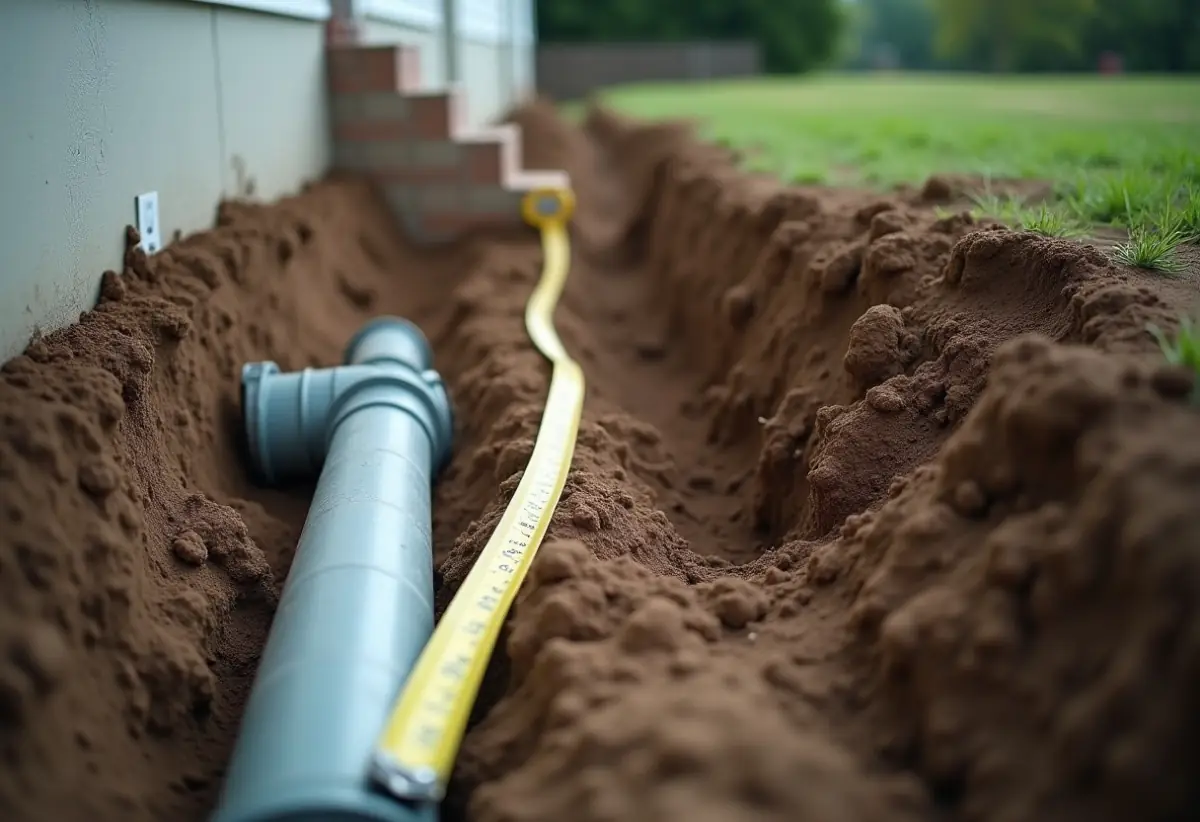
Sewer line replacement cost runs about $50 to $250 per foot across the four cost guides we read. Open trench runs $50 to $200 (This Old House, from Angi data), pipe bursting $50 to $200, and CIPP lining $80 to $250. The ranges overlap almost completely, so what sits on top of your pipe matters more than the method.
HomeAdvisor is an Angi brand and This Old House uses Angi estimates, so treat those two as one data family.
| Method | HomeGuide (Dec 2025) | HomeAdvisor (Jun 2026) | This Old House (Mar 2026) | Fixr (Jan 2025) |
|---|---|---|---|---|
| Open trench (dig and replace) | $50 to $250 (all replacement) | $60 to $250 (complete) | $50 to $200 | $50 to $250 |
| Pipe bursting | $60 to $200 | $60 to $200 | $60 to $250 (all trenchless) | $50 to $200 |
| CIPP lining | $90 to $250 | $90 to $250 | $60 to $250 (all trenchless) | $80 to $250 |
| Spot or partial repair | $150 to $3,800 per repair | $50 to $250 per foot | Priced as a repair, no per-foot figure | $400 to $1,500 per break |
Sources: HomeGuide’s sewer line cost guide, HomeAdvisor’s sewer main cost guide, This Old House, and Fixr’s drain line breakage guide. Fixr’s bursting table says $50 to $250 but its text says $50 to $200; we use the text.
Bars are range midpoints. The under-slab bar is HomeAdvisor’s $300 to $350 per foot surcharge, charged on top of the pipe work.
What does it cost to replace 25, 50 or 100 feet of sewer line?
Multiply the measured footage by the per-foot range. At This Old House’s $50 to $200 open trench rate, 25 feet costs $1,250 to $5,000, 50 feet costs $2,500 to $10,000 and 100 feet costs $5,000 to $20,000. CIPP at $90 to $250 per foot runs $4,500 to $12,500 for 50 feet. HomeGuide’s own length table matches this math: 40 feet is $2,000 to $10,000.
| Method | Per foot | 25 ft | 50 ft | 100 ft |
|---|---|---|---|---|
| Open trench | $50 to $200 | 25 x $50 to 25 x $200 = $1,250 to $5,000 | $2,500 to $10,000 | $5,000 to $20,000 |
| Pipe bursting | $60 to $200 | $1,500 to $5,000 | $3,000 to $10,000 | $6,000 to $20,000 |
| CIPP lining | $90 to $250 | $2,250 to $6,250 | $4,500 to $12,500 | $9,000 to $25,000 |
| Spot repair (10 ft section) | $50 to $250 | 10 x $50 to 10 x $250 = $500 to $2,500 for the section | ||
Why are national averages lower? HomeAdvisor’s $3,319 and This Old House’s $3,320 blend short partial repairs with full runs. HomeGuide says partial jobs often cover 1 to 15 feet and full replacements around 40 feet, so a full 50-foot quote above $5,000 is normal.
| Method | Per foot | 50 ft total | Days | Digging | Best for |
|---|---|---|---|---|---|
| Open trench | $50 to $200 | $2,500 to $10,000 | 1 to 5; slowest (HomeGuide) | Trench along the full run | Collapsed pipe, bellies, a wrong slope, lawn-only runs |
| Pipe bursting | $60 to $200 | $3,000 to $10,000 | 1 to 5; faster than trenching | Two access pits about 4 ft long (Fixr) | Brittle clay, cast iron or Orangeburg under a driveway or trees |
| CIPP lining | $90 to $250 | $4,500 to $12,500 | 1 to 5; faster than trenching | One access point (HomeAdvisor) | Cracks, root entry and leaking joints on a line that still holds grade |
| Spot repair | $50 to $250 | Priced per section, $500 to $2,500 for 10 ft | Low end of 1 to 5 | One pit over the defect | A single break or offset joint in otherwise sound pipe |
For how each trenchless method works in the ground, see our guide to trenchless sewer repair methods.
What drives sewer line replacement cost up or down?
Depth, what is on top of the pipe, and local fees drive the total more than pipe material. HomeAdvisor prices trenching at $4 to $12 per linear foot, rising sharply on deep lines, and adds $300 to $350 per foot under a slab. HomeGuide adds $3 to $8 per square foot to remove concrete and $500 to $2,000 for a new cleanout. Permits run $30 to $1,000 depending on the source and town.
Depth and trench safety
Once a trench reaches 5 feet, OSHA rule 1926.652 requires a protective system such as shoring, a trench box or sloped walls unless the cut is in stable rock. This Old House flags lines buried deep below the frost line in cold climates as one of the costlier cases. Ask the depth at both ends and whether shoring is priced in.
Driveway, sidewalk and slab cuts
A 3-foot-wide cut across a 20-foot driveway is 60 square feet. At HomeGuide’s $3 to $8 per square foot that is $180 to $480 just to remove the concrete, and HomeAdvisor’s $1 to $25 per square foot for concrete driveway repair puts the patch at $60 to $1,500 more (our arithmetic). Ten feet of trench under a basement slab adds $3,000 to $3,500 at HomeAdvisor’s slab rate. None of the four guides publishes a street-cut price, so if your lateral connects mid-street, get the street restoration and any right-of-way permit itemized.
Permits from two real fee schedules
National guides disagree on permits: HomeGuide says $30 to $500, This Old House $100 to $1,000, HomeAdvisor about $200, and Fixr a $75 average plumbing permit. Two published schedules show how fees are built:
- Bridgeport, Connecticut: the WPCA fiscal 2026-2027 fee schedule charges $100 for a sanitary sewer lateral repair inspection permit from 8 am to 4 pm on weekdays and $200 at other hours. A new single-family sanitary connection permit is $125.
- Hartland, Wisconsin: the village’s 2024 plumbing permit application charges a $60 residential base fee plus $75 for the first 100 feet of sanitary building sewer and $0.35 per foot after that. A 50-foot line is $60 + $75 = $135; a 150-foot line is $60 + $75 + (50 x $0.35) = $152.50.
City tap, cleanout and backflow
A connection fee usually applies only to a new tap, which is how Bridgeport labels its $125 single-family fee. Replacing a lateral in the same spot is billed as a repair inspection. HomeGuide prices a new cleanout at $500 to $2,000 and a backflow preventer at $150 to $1,200. The open trench is the cheapest time to add one.
Should you repair or replace the sewer line?
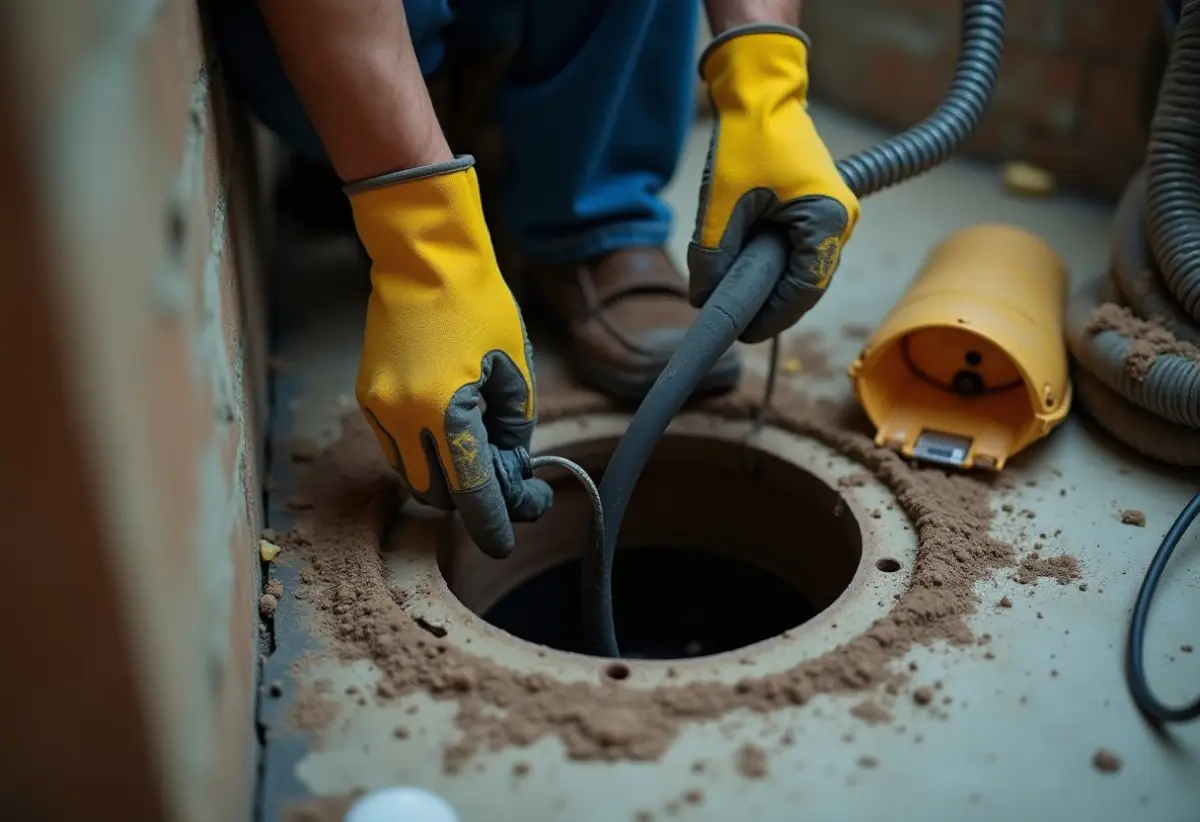
Repair when the camera shows one defect in otherwise sound pipe; replace when the problems repeat along the run or the material is past its life. This Old House lists small cracks, minor roots, separated joints in good pipe, minor sagging and limited corrosion as repair cases. Widespread, recurring damage or aging material points to replacement.
Apply these rules to the camera video. Our rundown of common sewer line problems shows what each defect looks like.
- Belly that holds water: a CIPP liner forms a new pipe inside the old one, so it keeps the sag. Re-bed it with a spot dig, or trench if it runs long.
- Roots at one or two joints: clearing costs $100 to $600 (HomeAdvisor), then a spot repair or liner seals them. Roots at most joints point to lining or bursting the whole run.
- Offset joints: one offset in good pipe is a spot repair; several mean the pipe is moving, which favors replacement.
- Orangeburg pipe: HomeGuide gives Orangeburg and clay a 30 to 60 year life and This Old House calls Orangeburg prone to deterioration. Plan for full replacement rather than patching.
- Collapsed section: HomeAdvisor says trenchless is sometimes unavailable when a pipe has fully collapsed; expect excavation at that spot.
- Scaled or corroded cast iron: Fixr gives cast iron drains 20 to 50 years; This Old House gives 75 to 100. Judge by the camera, not the age.
Which pipe goes in: PVC, HDPE or a CIPP liner?
Open trench and spot repairs usually go in with 4-inch PVC, pipe bursting usually pulls in high-density polyethylene (HDPE), and lining leaves a resin liner cured inside the old pipe. HomeGuide prices 4-inch PVC at $3 to $8 per foot for material, a small share of a $50 to $250 per foot job.
- PVC: new laterals are commonly thin-wall SDR 35 sewer pipe or thicker Schedule 40 DWV pipe. Local code decides which is allowed. This Old House says PVC lasts 100 or more years; HomeGuide gives 50 to 100.
- HDPE: Bob Vila describes the new pipe in bursting as usually high-density polyethylene.
- CIPP liner: HomeAdvisor describes an epoxy-saturated liner pulled through from one access point. Utility specifications commonly design lateral liners to ASTM F1216 Appendix X1 with a 50-year design life, which Underground Infrastructure magazine (November 2017) reported is a specification target rather than a tested lifespan.
Who pays for which part of the sewer line?
In most towns the homeowner owns the lateral from the house to the public main and pays to replace it, while the city or sewer district owns and maintains the main, per HomeGuide. Condo and townhome owners may have the line covered by the HOA. The exact split point, property line or the main itself, is set by your local sewer ordinance.
Call the sewer utility before you sign so you know which feet of pipe are yours. Even on your segment, the city may require its own inspection, as Bridgeport does for lateral repairs.
Does homeowners insurance cover sewer line replacement cost?
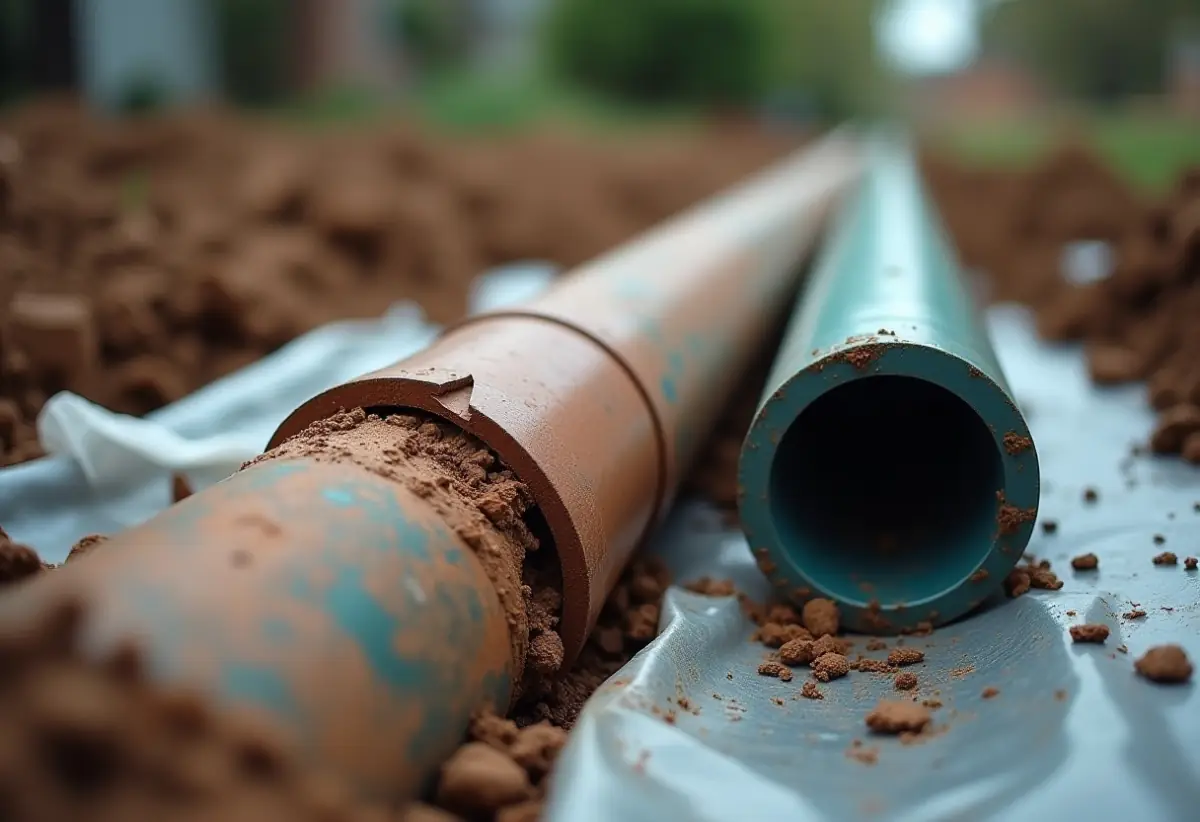
Standard homeowners policies usually do not pay to replace a worn-out sewer line. HomeGuide says most policies exclude wear and tear from lack of maintenance, and Bob Vila lists tree roots, poor upkeep, floods and earthquakes as typical exclusions. Sudden damage from events such as vandalism or an explosion may be covered up to policy limits.
The fix is a service line endorsement or a stand-alone plan; our guide to sewer line insurance compares what those cover and what they cost.
How do you get an accurate sewer line replacement quote?
Start with a recorded camera inspection, then get at least three written quotes priced on the same footage and depth. HomeGuide also advises a written warranty and never paying in full before work starts. Quotes that leave out permits or restoration are not comparable.
- Book a sewer scope inspection ($100 to $500) and keep the video with the footage counter showing where each defect sits.
- Get the length to the main and the depth at both ends.
- Require line items for permit, restoration, cleanout and street work.
- Confirm who pulls the permit and books the city inspection before backfill.
- Get the warranty term in writing and pay in stages, not up front.
How we sourced this
We consulted 13 sources and cite 9. Per-foot prices come from HomeGuide (updated December 22, 2025), HomeAdvisor (updated June 19, 2026), This Old House (updated March 30, 2026, using Angi estimates) and Fixr’s drain line breakage guide (updated January 31, 2025), all read in October 2026. Bob Vila (updated January 2023) is cited only for HDPE use and insurance exclusions, not prices. Permit fees come from Bridgeport WPCA and Village of Hartland schedules. Trench safety comes from OSHA 1926.652 and the CIPP design-life note from Underground Infrastructure. All 25, 50 and 100 foot totals are our arithmetic from the published ranges. Angi’s and Forbes Home’s own pages blocked access, so Angi data appears via HomeAdvisor and This Old House. We excluded local contractor pages.
Frequently asked questions
How much does it cost to replace 50 feet of sewer line?
At the $50 to $250 per foot range HomeGuide and HomeAdvisor publish, 50 feet works out to $2,500 to $12,500 before extras. Open trench at This Old House’s $50 to $200 per foot lands at $2,500 to $10,000, and CIPP lining at $90 to $250 per foot lands at $4,500 to $12,500. Permits, concrete and a cleanout come on top.
Is trenchless sewer replacement cheaper than digging?
Per foot, usually not. This Old House lists trenchless at $60 to $250 per foot against $50 to $200 for open trench. Trenchless wins on the total when the line runs under a driveway, patio or slab, because HomeAdvisor adds $300 to $350 per foot to trench under a slab and concrete repair runs $1 to $25 per square foot.
How long does it take to replace a sewer line?
HomeGuide puts most sewer line repairs and replacements at 1 to 5 days, depending on the length and the obstacles in the way, and says trenchless jobs take less time than digging a trench. Add time for the permit and the city inspection, which in many towns must happen before the trench is backfilled.
Does homeowners insurance cover sewer line replacement?
Usually not for age or wear. HomeGuide says most policies exclude wear and tear from lack of maintenance, and Bob Vila notes tree roots, floods and poor upkeep are typically excluded. Sudden damage from events such as vandalism may be covered. A service line endorsement or separate sewer line policy is the usual way to cover a failed lateral.
Who is responsible for the sewer line from the house to the street?
In most places the homeowner owns and pays for the lateral that connects the house to the public main, and the city or sewer district owns the main itself, per HomeGuide. The split point varies by town. Some put it at the property line and others at the main, so check your local sewer ordinance before you hire.
How do I know if my sewer line needs to be replaced?
Warning signs include several slow drains at once, gurgling, sewage odor, backups in a floor drain and soggy or sunken strips of lawn over the line, per HomeGuide and This Old House. Only a camera inspection, which costs $100 to $500, shows whether the damage is one spot or the whole run.