Plumbing Smoke Test: How It Finds Sewer Gas Leaks and What It Costs
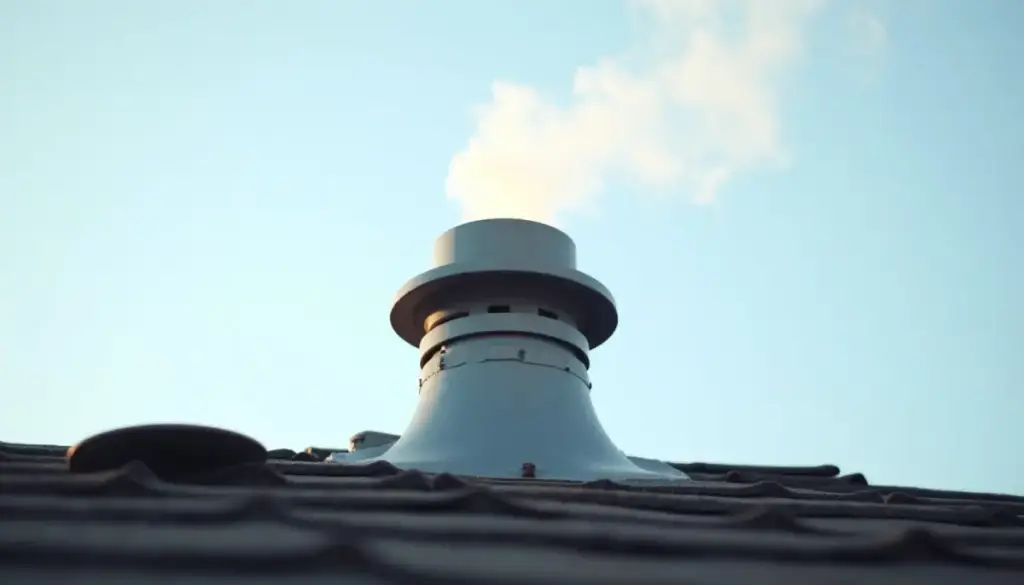
A plumbing smoke test pushes harmless vapor through your drain and vent pipes so each crack, dry trap and failed seal shows itself, and a code final test holds it at 1 inch of water column for 15 minutes.
Key Takeaways
- The 2021 International Plumbing Code (IPC) final smoke test caps the roof stacks once smoke appears and holds a 1-inch water column for 15 minutes (Section 312.4).
- That is under 1% of the IPC rough-in air test pressure of 5 psi (Section 312.3).
- The IPC rough-in water test fills the drain and vent system to a 10-foot head and holds it for 15 minutes (Section 312.2).
- Dover, New Hampshire’s sewer smoke testing FAQ says each setup takes about 15 minutes and owners pay for private plumbing repairs.
- A private smoke test is priced per job, and access, roof work and follow-up repairs drive the quote more than the test itself.
- The Illinois Plumbing Code lets an inspector substitute a peppermint test where a smoke test cannot be performed.
What is a plumbing smoke test?
A plumbing smoke test is a leak check for the drain, waste and vent (DWV) system. A tech seals the system, fills it with dense, non-toxic vapor from a smoke machine, and watches where it escapes. Any wisp indoors marks a path sewer gas can also take. The 2021 IPC uses it as the final test on a finished system.
Smoke follows the same openings gas follows, but you can see it.
If you are chasing an odor, start with our guide on why your bathroom smells like sewer, and book a smoke test when the simple fixes (a dry trap, a loose toilet) come up empty.
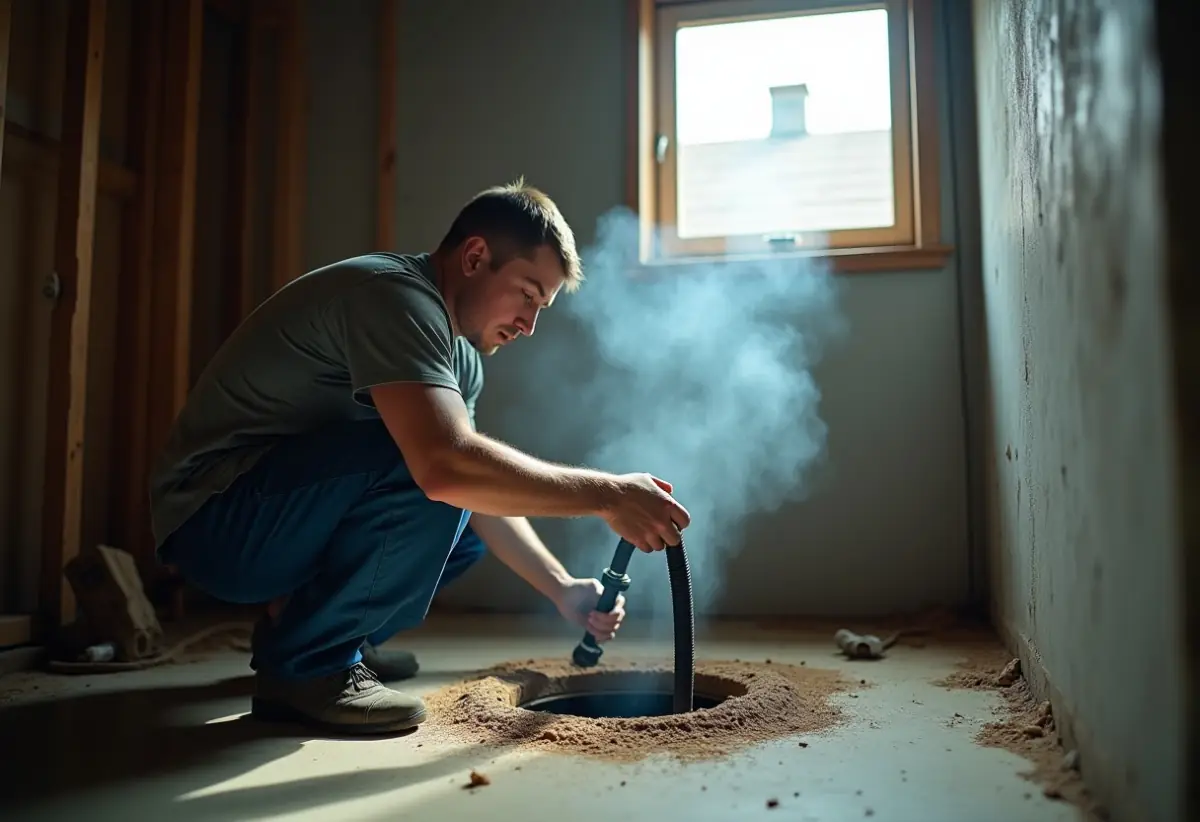
How does a plumbing smoke test work, step by step?
A plumbing smoke test works by filling every trap with water, blowing smoke into the system at a cleanout or roof stack until it rolls out of the roof vents, capping those vents, and holding light pressure while someone walks the house. Under IPC Section 312.4, a code final test holds a 1-inch water column for at least 15 minutes after the stack openings are closed.
- Fill every trap. Run each sink, tub and shower for about a minute and flush every toilet. Dover’s FAQ calls out basement floor drains and unused fixtures as the usual dry traps, so pour water into those too.
- Prep the house. Open a few windows, put a monitored alarm on test mode, and keep anyone with asthma or emphysema away from the smoke, as the Dover FAQ advises.
- Connect the smoke source. The tech couples the blower or smoke machine to a cleanout or feeds it down the main roof stack, then starts the smoke.
- Wait for the roof vents. Smoke rolling out of every roof vent tells the tech the whole system is full. Dover’s FAQ calls smoke at roof vents normal for this reason.
- Cap and hold. On a code final test, the stack openings get plugged and the system holds a 1-inch water column for at least 15 minutes (IPC 312.4).
- Walk every room. Check under sinks, around each toilet base, tub access panels, the attic vent pipes, basement floor drains and the foundation. Photograph each wisp.
- Clear the house. Pull the plugs and leave windows open. Dover’s FAQ says indoor smoke clears within a few minutes.
The smoke only finds the opening. A crack in a buried line still needs a camera to show its size and depth, which is the job of a sewer scope inspection.
What leaks does a sewer gas smoke test find?
A sewer gas smoke test finds any gap between the sealed pipe and your living space. Dover’s FAQ groups them into three causes: vents that are inadequate or defective, traps that are dry or badly installed, and pipes, connections or seals that are damaged or missing plugs.
- Dry traps. A basement floor drain or unused guest shower loses its water seal, and smoke pours out of the grate.
- Failed seals. A crushed or shifted wax ring lets smoke curl up at the base of the toilet, a seal failure in Dover’s terms.
- Bad joints. A PVC or ABS fitting that was dry-fit and never glued leaks smoke inside the wall, often at an outlet box or baseboard.
- Cracked vents. A split vent in the attic or a rotted roof boot puts smoke into the attic instead of out the top.
- Missing plugs. An open cleanout or an uncapped abandoned drain shows up as a steady plume.
- Venting problems. A trap without a working vent can siphon dry, so smoke leaks even from a fixture used daily.
If the test points to a vent problem, compare your layout against our plumbing vent diagram before you open walls. Each leak is also a route for the gases covered in our explainer on sewer gas.
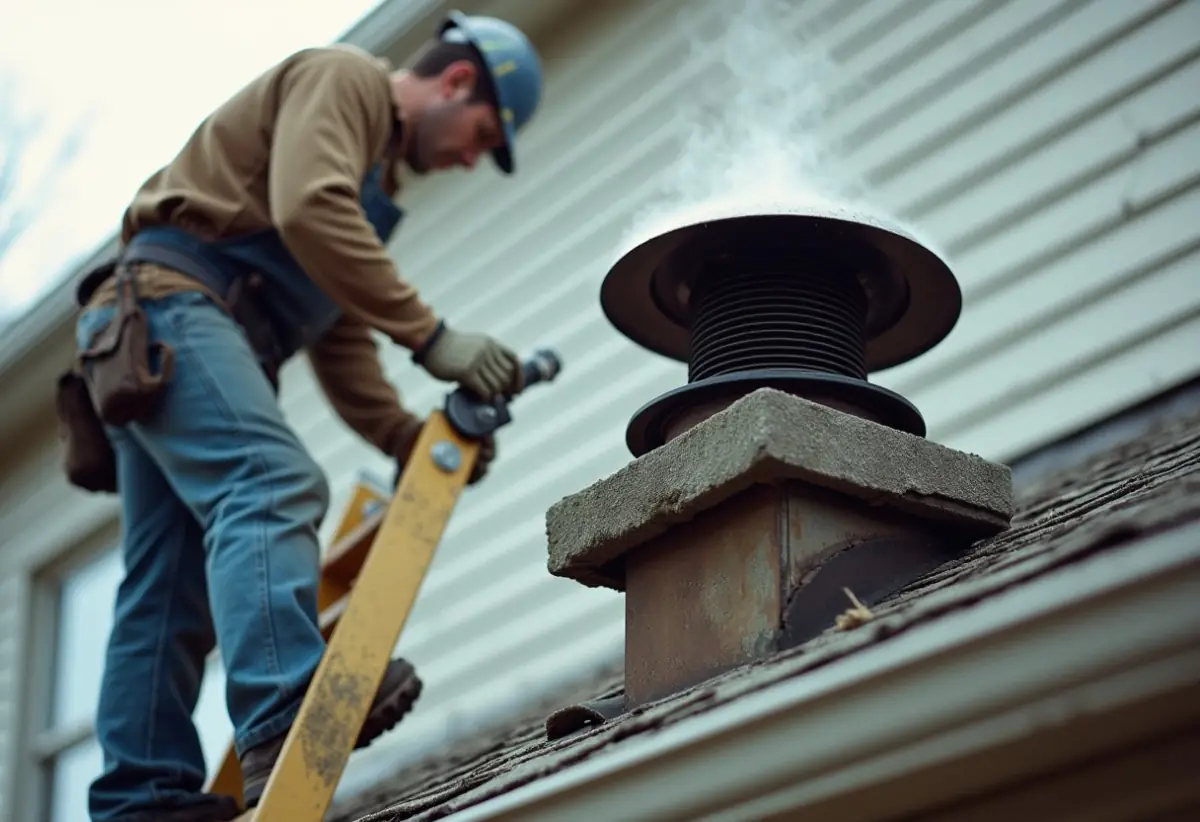
Is the smoke from a plumbing smoke test safe?
The smoke from a plumbing smoke test is generally safe. Dover’s FAQ says the vapor is not true smoke but a mist with a large share of atmospheric moisture, and lists it as non-toxic, non-staining, odorless and no fire hazard. The same FAQ warns it may cause minor respiratory irritation, so people with chronic asthma or emphysema should avoid direct exposure.
Two smoke sources are common. A smoke candle is a pyrotechnic cartridge burned in front of a blower. A liquid smoke machine heats a fluid into a dense fog and pushes it with a fan.
Ask the tech for the safety data sheet (SDS) of the exact candle or fluid before the test, and read its hazard section if anyone at home has a lung condition.
Dover’s FAQ also warns that smoke alarms may activate, so open windows and doors and warn a monitored alarm company first.
What does a city sewer smoke testing notice mean?
A city sewer smoke testing notice means crews will blow smoke into the public sewer main to find inflow and infiltration, meaning stormwater and groundwater entering the sanitary sewer. In Dover, New Hampshire, engineering firm Wright-Pierce mailed owners, told the fire and police departments where it would test each day, and said most homes sit inside the test area for one or two tests.
The Dover smoke testing FAQ spells out what the crews hunt for.
- Downspouts, cellar, yard or basement drains and sump pumps tied into the sanitary sewer.
- Points where groundwater or surface water leaks into the sewer.
- Cross connections between sanitary sewers and storm drains.
- Defective sewer connections that could let sewer gas into a building.
Crews use only enough force to overcome atmospheric pressure. Smoke from roof vents is expected. Smoke from your yard points to a broken sewer line, and smoke indoors points to a dry trap or plumbing defect. Testing stops in rain or high wind, so dates slip.
Owners are responsible for repairs to private property plumbing, and you need not let crews inside. If you doubt where smoke is coming from, the FAQ says to call 911.
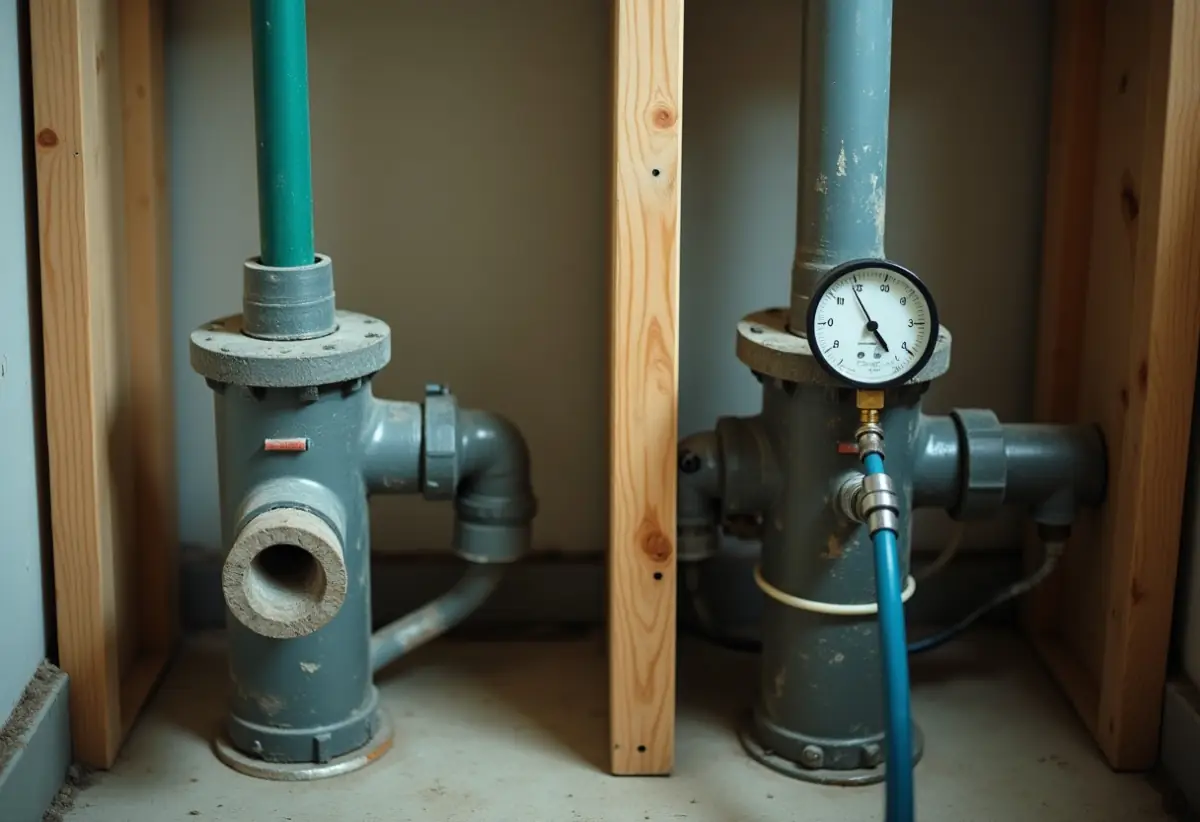
How does a smoke test compare with the IPC water, air and peppermint tests?
A smoke test is the light-pressure final check, while the water and air tests are heavier rough-in checks. In the 2021 IPC, the drainage and vent water test holds a 10-foot head and the air test holds 5 psi, each for 15 minutes. The final smoke test holds just 1 inch of water column for 15 minutes (ICC, IPC 2021 Chapter 3).
When the system is tested in sections, IPC 312.2 also requires the upper 10 feet of the previous section to be retested so no joint escapes the 10-foot head. Section 312.5 covers the water supply test, not smoke or peppermint, so a plumber quoting it for a drain test has the wrong section.
The peppermint test is a state option, not part of the 2021 IPC text we checked. The Illinois Plumbing Code says that where the Department or local plumbing inspector finds a smoke test cannot be performed, a peppermint test may be substituted. Peppermint oil goes into the vent system and the tester follows the smell instead of a plume.
| Test | How it works | What it finds | Pressure and time | Cost or who pays |
|---|---|---|---|---|
| Residential smoke test (IPC 312.4 final test) | Smoke fed at a cleanout or stack, roof openings capped once smoke shows | Dry traps, failed toilet seals, unglued joints, cracked vents, open cleanouts | 1 in. water column, 15 min | Quoted per job; access and roof work set the price |
| Municipal sewer smoke test | Crew blows smoke into the street main | Inflow and infiltration, tied-in sump pumps and downspouts, broken laterals | Only enough force to overcome atmospheric pressure, about 15 min per setup | Run by the utility; owners pay private repairs (Dover FAQ) |
| DWV water test (IPC 312.2) | Openings plugged, system filled with water to overflow | Leaking joints and fittings at rough-in | 10 ft head, 15 min | Performed by the installing plumber for the permit inspection |
| DWV air test (IPC 312.3) | Openings plugged, air forced in and read on a gauge | Leaking joints at rough-in, no water needed | 5 psi or 10 in. mercury, 15 min | Performed by the installing plumber for the permit inspection |
| Peppermint test (Illinois Plumbing Code option) | Peppermint oil put in the vents, rooms checked by smell | Odor paths where a smoke test cannot be performed | No gauge reading; odor check | Allowed only where the inspector finds smoke impractical |
We converted each IPC figure to inches of water column (1 psi equals 27.68 inches, 1 inch of mercury equals 13.6 inches). The smoke test runs at under 1% of the air test pressure.
How much does a plumbing smoke test cost?
A plumbing smoke test for a house is quoted per job, and we found no national cost guide we could open that prices it, so treat any single number online with caution. Three things move the quote most, and a large commercial or multi-building system costs far more than a single house.
- Access. A one-story house with a reachable cleanout is quicker to seal and walk than a three-story house with finished walls.
- Roof work. Capping several roof vents on a steep roof adds labor and safety gear.
- What comes after. The quote covers finding the leak. Replacing a wax ring, regluing a joint or digging up a lateral is billed separately.
Dover’s FAQ makes owners responsible for repairs to private plumbing that a city test exposes. Ask a private tester whether the price includes a written leak map with photos and whether a camera inspection is extra.
How we sourced this
We reviewed live search results for the keyword and a cost variant in October 2026, then read primary sources. Code figures come from the 2021 International Plumbing Code Section 312 as shown by ICC and UpCodes; ICC’s full chapter page blocked a direct fetch, so confirm the wording against the edition your jurisdiction adopted. Municipal practice comes from the Dover, New Hampshire sanitary sewer smoke testing FAQ. The peppermint substitution comes from the Illinois Plumbing Code. We could not open a HomeGuide, Angi, HomeAdvisor or Fixr page that prices a smoke test, so we list cost drivers instead of a dollar range. We left out smoke candle model numbers and burn times because we could not reach the manufacturer’s spec sheets.
Frequently asked questions
How much does a plumbing smoke test cost?
Price depends on the house more than on any national rate card. A one-story home with a reachable cleanout is quicker to seal and walk than a three-story home with finished walls, and capping several vents on a steep roof adds labor. Get two or three written quotes. Repairs the test uncovers, such as a new wax ring or a reglued joint, are billed separately.
Is the smoke from a sewer smoke test harmful?
Dover, New Hampshire’s smoke testing FAQ says the vapor is a mist, not true smoke, and lists it as non-toxic, non-staining, odorless and no fire hazard. It can still cause minor respiratory irritation, so people with chronic asthma or emphysema should avoid direct exposure. Ask the tester for the safety data sheet of the exact candle or fluid.
How long does a plumbing smoke test take?
A code final test holds the sealed system at a 1-inch water column for at least 15 minutes under 2021 IPC Section 312.4, after smoke reaches the roof vents. City tests move fast too. Dover’s FAQ says each smoke test setup takes about 15 minutes, and most homes sit inside the test area for only one or two setups.
What does it mean if smoke comes into my house during a city smoke test?
Smoke indoors means a gap that sewer gas can also use. Dover’s FAQ names three causes, which are vents that are defective or improperly installed, traps that are dry or defective, and pipes, connections or seals that are damaged or missing plugs. Open windows, leave, tell the crew, and plan the repair, since owners pay for private plumbing fixes.
Can a smoke test set off smoke detectors?
Yes. Dover’s smoke testing FAQ says smoke alarms may activate during testing and advises opening windows and doors for ventilation. Put a monitored alarm system on test mode before the crew starts so the monitoring company does not dispatch a fire crew. If you doubt the smoke came from the test, the FAQ says to call 911.
What is a peppermint test in plumbing?
A peppermint test puts peppermint oil into the vent system and has the tester trace leaks by smell instead of by sight. It is not part of the 2021 IPC Section 312 text we checked. The Illinois Plumbing Code allows it as a substitute where the Department or local plumbing inspector finds a smoke test cannot be performed.
Can a smoke test damage pipes or plug the sewer?
No. The IPC final smoke test holds only a 1-inch water column, under 1% of the 5 psi used in the rough-in air test. City crews use only enough force to overcome atmospheric pressure, and Dover’s FAQ says there is no way smoke can plug the sewer because it is a vaporized substance.