Water Softener Loop: What It Is and How to Plumb One
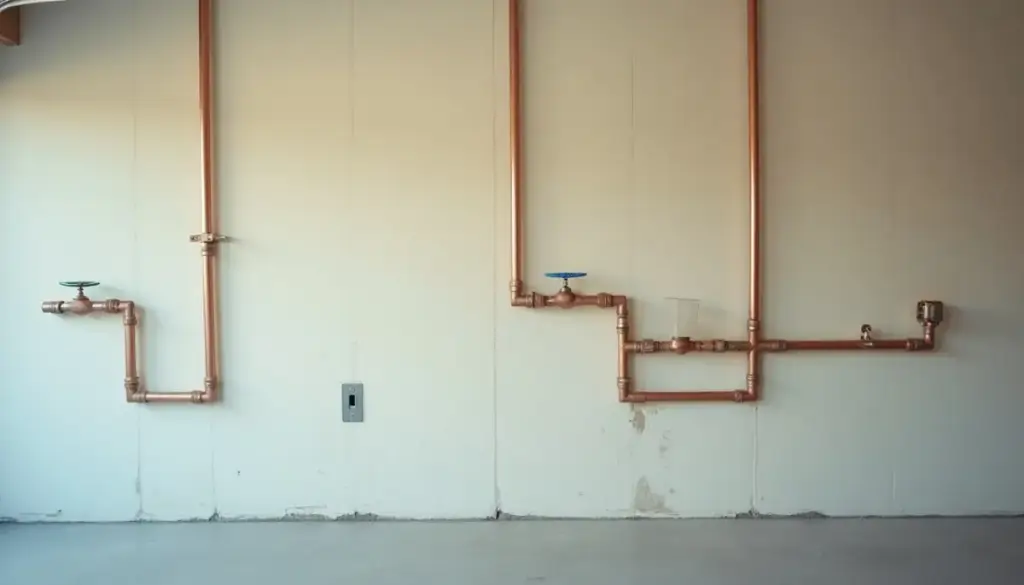
A water softener loop is a pre-plumbed inlet and outlet on the cold main, usually in the garage, that lets a softener drop in later without cutting into the house supply.
Key Takeaways
- SoftPro tells builders to put the loop before the water heater and to include shutoff valves, a bypass valve, a drain line and a grounded outlet.
- Pentair’s Fleck 5600SXT manual requires a drain-line air gap of twice the drain pipe diameter, never less than 1 inch. That is lower than the 1-1/2 inch figure many blogs repeat.
- The same Fleck manual sets a 1/2 inch minimum residential drain line and calls for 3/4 inch once the run passes 20 feet or backwash tops 7 gpm.
- Fleck rates the valve for 20 to 125 psi and water no hotter than 110°F, for dry, non-freezing locations only, which matters for a loop in an unheated garage.
- SoftPro puts the drain within 30 feet of the softener and no more than 8 feet above the floor.
- SoftPro prices adding a softener to an existing home at $400 to $2,000. A ready loop removes the cut-in, valve and drain work from that bill.
What is a water softener loop?
A water softener loop is a pair of pipe stub-outs, one inlet and one outlet, that a plumber cuts into the cold main during construction so a softener can be connected later. Until a softener goes in, a short U-shaped jumper joins the two stubs so the house still gets water. Builders and sales sheets call it a soft water loop, softener loop or softener pre-plumb.
The loop is more than two pipes. SoftPro’s pre-plumbing checklist lists five parts to ask the builder for: the inlet and outlet loop, shutoff valves, a bypass valve, a drain line and a grounded electrical outlet near the loop.
Placement is set by the water heater. SoftPro says to install the loop before the water heater, so the heater receives softened water. Pentair’s Fleck 5600SXT service manual caps inlet water at 110°F, which rules out any spot downstream of the heater.
Which taps does a softener loop leave on hard water?
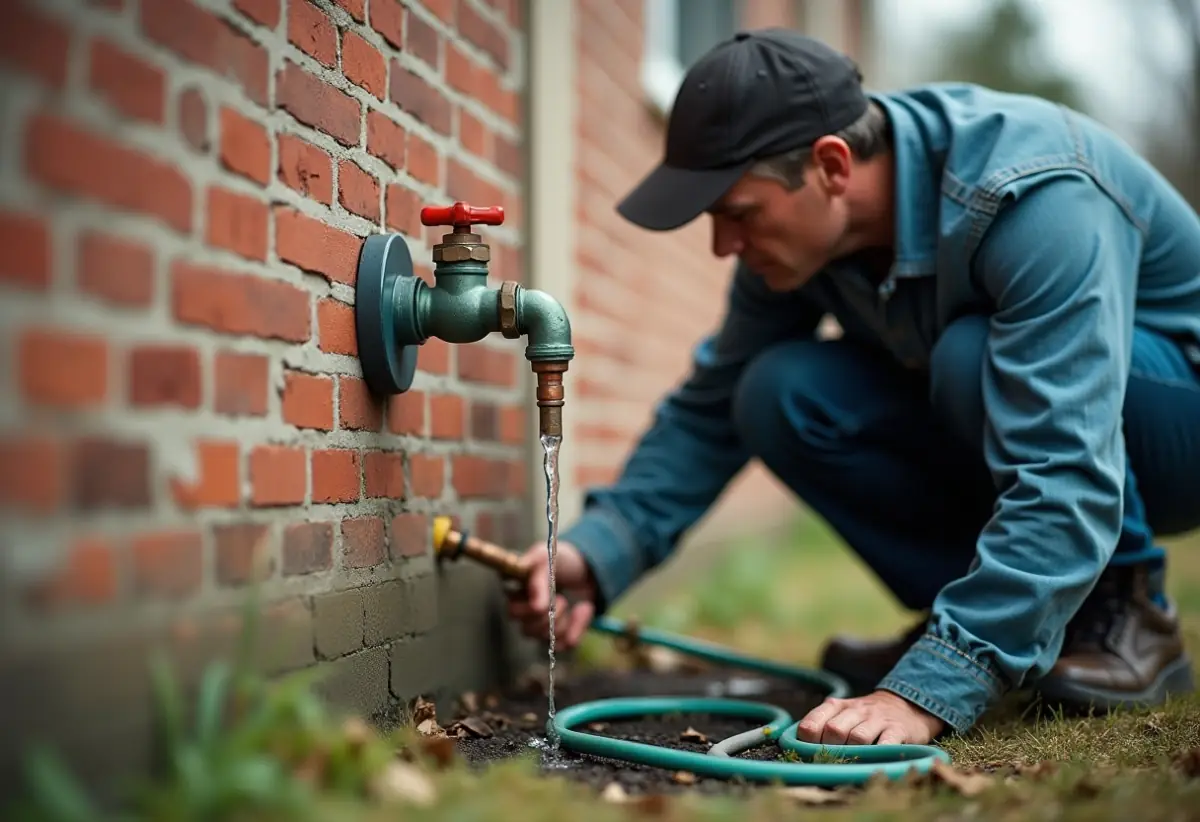
A softener loop leaves every fixture upstream of the inlet stub on hard water. In a typical build that means the exterior hose bibs and the irrigation tap, because the plumber tees them off the main before the loop. SoftPro lists keeping untreated water available for outdoor lines as one of the main reasons to pre-plumb a loop at all.
That split saves salt and resin capacity, since lawn water never passes through the tank. It also keeps sodium-laden softened water off plants. If you want a hard-water drinking tap at the kitchen, ask for a separate cold line teed off before the loop during rough-in, because adding one after drywall means opening walls.
Everything after the outlet stub gets treated, including the water heater, which is where hard water scale does the most expensive damage.
How do you tell if your house has a water softener loop?
Look on the wall nearest the water heater, in the garage, utility room or basement, for two pipes coming out of the wall a few inches apart, each with a valve, joined by a U-shaped jumper or capped. A loop that was built to spec also has a drain (standpipe, floor drain or laundry box) and a receptacle within reach.
- Find the main shutoff and the water heater. Loops usually sit on the wall between them.
- Look for two parallel stubs with ball valves and a short jumper. Three valves in a row (inlet, bypass, outlet) also signal a loop.
- Check the builder’s plumbing plan or option sheet for a line item named soft water loop or softener pre-plumb.
- Test the split. Close the valve on the jumper, then open an indoor cold tap and a hose bib. If the indoor tap stops and the hose bib keeps running, the stubs feed the house and the hose bibs are teed off upstream.
A loop in an unheated garage needs one more check. Fleck’s manual says its valve is for dry locations only and cannot be subjected to freezing, so a loop on an exterior garage wall in a cold climate may need insulation or a heated enclosure before a unit goes on it.
What goes into a properly plumbed softener loop?
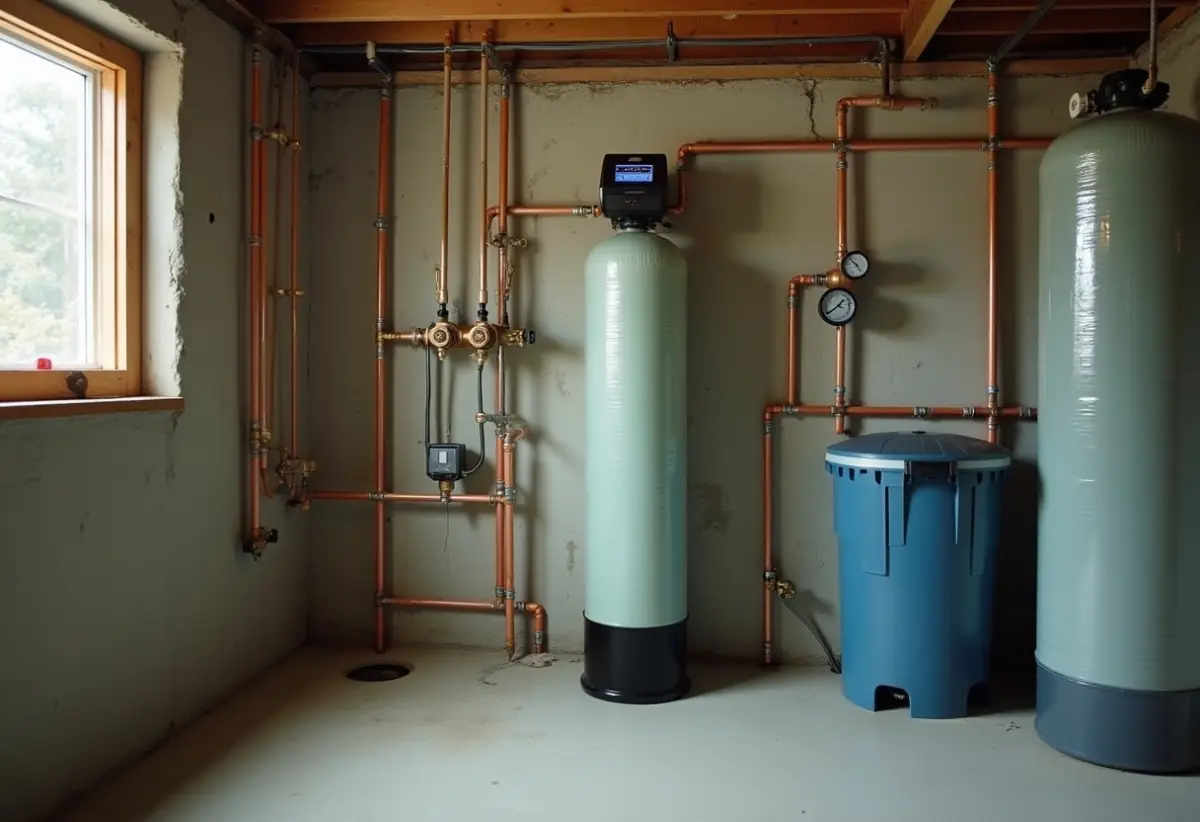
A complete loop has six parts: inlet stub, outlet stub, jumper, isolation and bypass valves, an indirect drain with an air gap, and an uninterrupted outlet. The table gives the spec for each and the reason it exists, using the Fleck 5600SXT manual and SoftPro’s checklist. Your softener’s own manual and your local code take priority where they differ.
| Loop element | Spec | Why it matters |
|---|---|---|
| Inlet and outlet stubs | On the cold main, before the water heater (SoftPro) | Fleck caps inlet water at 110°F, and the heater should get soft water |
| Bypass valve | Fleck 60040SS (3/4 in stainless NPT) or 60041SS (1 in stainless NPT), or a three-valve bypass | Fleck says to always provide one so the house keeps water during service |
| Yoke or adapter | Fleck 18706-02 (3/4 in plastic NPT), 18706 (1 in plastic NPT), 42690 (3/4 in sweat) | Matching the stub size avoids reducers at the valve |
| Drain line | 1/2 in minimum; 3/4 in past 20 ft or above 7 gpm backwash (Fleck) | An undersized line throttles backwash and leaves resin poorly cleaned |
| Air gap | 2x the drain pipe diameter, 1 in minimum (Fleck) | Stops drain water from being pulled back into the supply |
| Drain location | Within 30 ft and no higher than 8 ft above the floor (SoftPro) | Regeneration pushes brine to the drain on line pressure alone |
| Electrical | Grounded receptacle, not on a switch; Fleck uses a 24 V, 9.6 VA plug-in transformer (part 41475) | Fleck notes outages over 8 hours can wipe the time setting |
| Water pressure | 20 psi minimum, 125 psi maximum (Fleck) | Below 20 psi the regeneration valve does not operate effectively |
On drain rules, many local codes treat softener discharge as indirect waste that must empty through an air gap or air break into a trapped receptor. The exact section number and minimum depend on which code your city adopted, so read the local amendment or ask the plumbing inspector before the drain is roughed in.
Should a water softener loop be 3/4 inch or 1 inch?
Size the loop to match the cold main it interrupts. If the house main is 1 inch, a 3/4 inch loop becomes the smallest pipe every indoor fixture draws through. Fleck sells the 5600SXT control with both 3/4 inch and 1 inch yokes and bypasses, so the valve does not force you to downsize.
Check the stub size before you order. Fleck’s parts list includes 3/4 inch and 1 inch quick-connect yokes (61700 and 61694) along with the NPT and sweat yokes in the table above, and its meter options include 3/4 inch and 1 inch turbine meters. A matched yoke means the softener bolts on with no bushings in the line.
Write the size into the builder contract. Ask for the loop at the same nominal size as the main, ball valves on both stubs, and the drain and outlet within the distances above. A line that only says “softener loop” leaves all of that to the plumber’s default.
How do you plumb a water softener loop in an existing house?
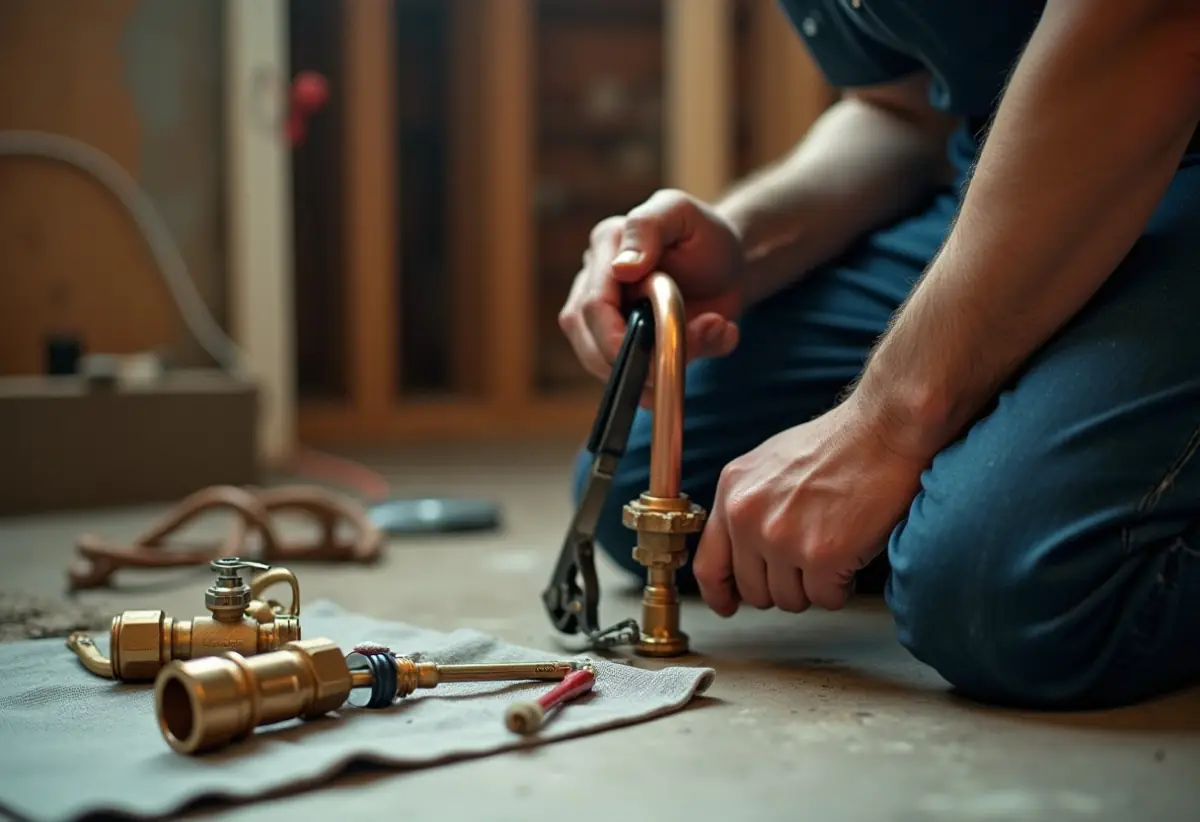
To add a loop to an existing house, cut into the cold main after the hose bib and irrigation tees and before the water heater, install inlet and outlet valves with a bypass, run an indirect drain with an air gap, and add a non-switched outlet. Fleck’s manual supplies the measurements for each step below.
- Pick a dry, level, freeze-free spot on a firm base near the main, within 30 feet of a drain (SoftPro, Fleck).
- Shut off the main and drain the lines. Confirm which tees feed the hose bibs so they stay upstream of the cut.
- Cut in the inlet and outlet stubs at the main’s full size, with a valve on each and a bypass between them.
- Finish all soldering before the drain fitting goes on, keeping solder joints at least 6 inches from the drain line flow control (Fleck).
- Run a 1/2 inch drain line, or 3/4 inch past 20 feet, to a standpipe or floor drain. Seal the drain fitting with PTFE tape only, then leave an air gap of twice the line diameter and at least 1 inch (Fleck).
- Put about 1 inch of water above the grid plate in the brine tank before adding salt (Fleck).
- With the valve in bypass, turn the main back on and run a nearby cold tap for a few minutes to flush solder debris (Fleck).
- Move the bypass slowly to service, purge air at a cold tap, then plug the transformer into the non-switched outlet (Fleck).
- Hold Extra Cycle for 5 seconds to start a regeneration, let backwash run 10 minutes or until clear, then run rapid rinse 5 minutes (Fleck 5600SXT).
Our full water softener installation guide covers sizing and placement in more depth, and the bypass valve guide explains how to read each valve style once the loop is live.
What does it cost to add a water softener loop?
SoftPro puts the total cost of adding a softener to an existing home at $400 to $2,000, and says a pre-plumbed home saves on labor. None of the cost guides we could read publishes a separate line for the loop alone. The extra labor in a no-loop house is the cut-in, the valves, the drain run and, where needed, an electrician for the outlet.
Aquasana quotes most units at $500 to $5,000, BestCompany puts installed systems at $600 to $4,000, and Mid Atlantic Water (October 2026) puts equipment alone at $400 to $3,000 across the cost aggregators. A Mid Atlantic Water video prices its Fleck 5600SXT softeners at $1,495 to $2,495 shipped, for 32,000 to 80,000 grain units.
For a full breakdown of unit prices, salt and running costs, see our water softener cost guide. If you are building, the cheapest loop is the one in the plumbing contract, because the walls are still open and the drain and outlet can be roughed in with everything else.
How we sourced this
We reviewed 11 sources and cite 5. Installation specs come from Pentair’s Fleck 5600SXT Downflow Service Manual (document 42684 Rev L), read in full in October 2026, including its parts list. Builder checklist items, drain distances and the $400 to $2,000 figure come from SoftPro Water Systems. Price ranges come from Aquasana, BestCompany (October 2025) and Mid Atlantic Water (October 2026). We could not read the IPC drain sections directly, so code rules are described generally. We found no published price for a loop alone and did not estimate one. Retailer and installer blogs that repeated a 1-1/2 inch air gap were set aside in favor of the manufacturer’s 1 inch minimum.
Frequently asked questions
Do I need a loop for a water softener?
No, but it makes the install faster and cheaper. A loop gives the installer valved inlet and outlet stubs, a drain and an outlet in one spot. Without one, the plumber cuts into the cold main after the hose bib tees and before the water heater, adds valves and a bypass, and runs a new drain with an air gap.
Can you install a water softener without a loop?
Yes. A plumber cuts into the cold main where it enters the house, ahead of the water heater, and adds inlet, outlet and bypass valves. The job also needs a drain within about 30 feet per SoftPro and a non-switched receptacle. SoftPro puts the total cost of adding a softener to an existing home at $400 to $2,000.
Where is the water softener loop usually located?
Most loops sit in the garage, utility room or basement, on the wall near where the main enters and close to the water heater. SoftPro tells builders to place the loop before the water heater so the heater gets softened water. Look for two valved stubs joined by a short U-shaped jumper, with a drain and receptacle nearby.
What does a water softener loop look like?
It looks like two pipes coming out of the wall a few inches apart, each with a ball valve, joined by a short U-shaped jumper or capped off. Some loops have three valves in a row for inlet, bypass and outlet. A complete loop also has a standpipe or floor drain and a grounded receptacle within reach.
Does a water softener loop include the outside faucets?
Usually not. Builders tee the hose bibs and irrigation off the main before the loop, so outdoor water stays hard and never uses salt or resin capacity. SoftPro names untreated outdoor water as one reason to pre-plumb a loop. Confirm yours by closing the jumper valve and checking whether a hose bib still runs.
Is a water softener loop in the garage a problem in winter?
It can be. The Fleck 5600SXT manual says the valve is for dry locations only and must not freeze, and it caps water temperature at 110°F. A loop on an exterior garage wall in a cold climate may need insulation, heat tape on the pipes or a heated enclosure before a softener goes on it.
How big should the softener drain line and air gap be?
The Fleck 5600SXT manual calls for a residential drain line of at least 1/2 inch, moving to 3/4 inch when the run passes 20 feet or backwash tops 7 gpm. It requires an air gap of twice the drain pipe diameter and never less than 1 inch. Local code may add its own rules.
How much does it cost to add a water softener loop?
No cost guide we read prices the loop by itself. SoftPro puts the full cost of adding a softener to an existing home at $400 to $2,000 and says a pre-plumbed home saves on labor. The loop work covers the cut-in, valves, drain run and sometimes an electrician for a new receptacle.