Water Softener Bypass Valve: How to Use It and When
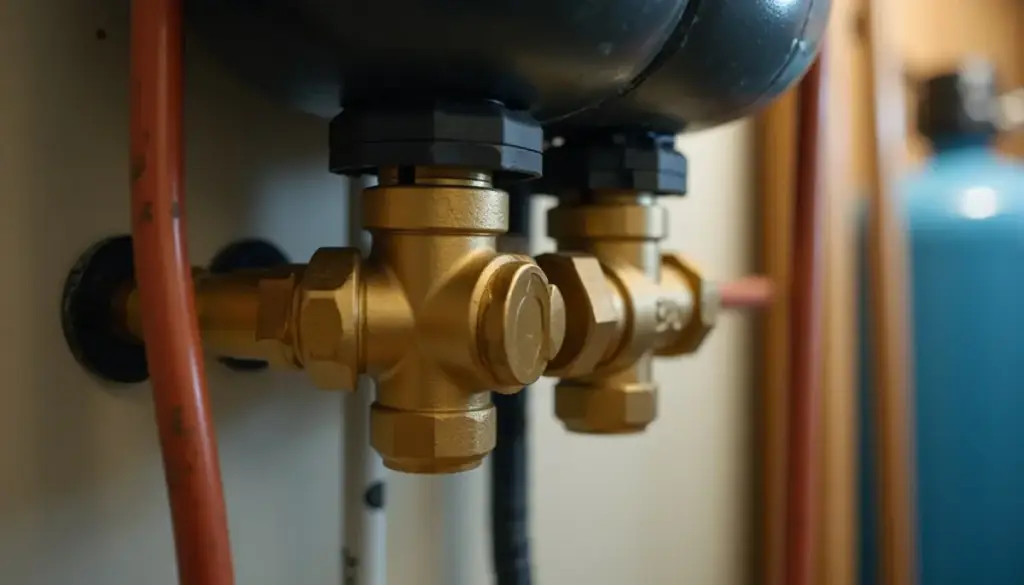
A water softener bypass valve sends raw water around the softener: push the stem in on a GE-style valve, turn both red Clack handles toward each other, or open the middle valve of a three-valve loop.
Key Takeaways
- GE’s GXSF27B manual: pull the stem out for soft water service, push it in for bypass.
- Clack’s WS1 bypass has 4 positions; red handles pointing at each other means bypass (Clack V3115-99 manual).
- On a three-valve loop, Pentair’s Fleck 5600SXT manual says open the bypass line valve first, then close inlet and outlet.
- Bypassed, taps get raw water; the USGS calls anything above 120 mg/L (about 7 grains per gallon) hard.
- Most leaks are O-rings. Pentair and Clack specify silicone lubricant only; Clack bans Vaseline and WD-40.
- Pentair’s troubleshooting table lists an open bypass as the first cause of hard water.
What does a water softener bypass valve do?
A water softener bypass valve cuts the softener’s control valve off from house pressure and sends untreated water straight to the plumbing. Clack describes its WS1 bypass as the way to isolate the control valve for repairs or maintenance. Every tap still runs, just with hard water, and the softener stops treating, metering and counting down to its next regeneration. Knowing how to reach that bypass depends on the plumbing behind it, which is where a pre-plumbed softener loop comes in handy.
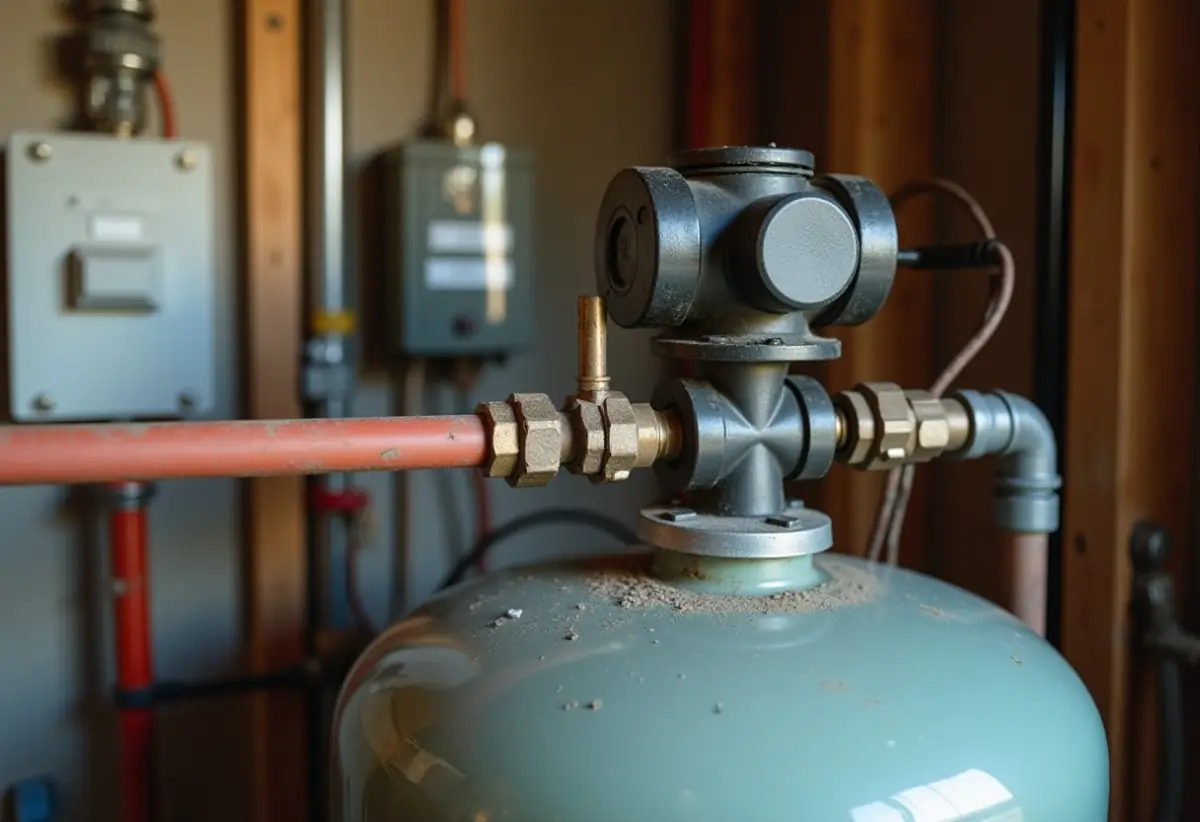
Most residential units have the bypass clipped or screwed to the back of the control valve. Older installs often add three ball valves in copper, and some homes have both. If you find neither, Pentair’s Fleck 5600SXT service manual says to “always provide for the installation of a bypass valve.”
What types of water softener bypass valves are there?
Four types cover almost every home: a single push-pull stem (GE and many big-box units), a two-handle rotary bypass (Clack WS1), Pentair’s Fleck bypass bodies (plastic 60049, stainless 60040SS and 60041SS) and a three-valve loop. Red/green push buttons on older units work like the push-pull stem. The table shows how each bypasses and how to read it.
| Valve type | How to bypass | How to tell it’s bypassed |
|---|---|---|
| Push-pull stem (GE GXSF27B and similar) | Push the stem in until it stops | Stem in = bypass; stem out = service (GE manual) |
| Two red arrow handles (Clack WS1, V3006) | Turn both handles to point at the center | Arrows face each other; in service they match the flow arrows on the valve body |
| Fleck bypass (60049 plastic; 60040SS 3/4 in., 60041SS 1 in. stainless) | Set to the marked bypass position (stainless uses lever 11979) | Handle at the bypass mark on the label (13604-01 on stainless) |
| Red/green push buttons (older Kenmore-style) | Push the red side in | Red side in = bypass, green side in = service |
| Three-valve loop | Open bypass valve, then close inlet and outlet | Middle ball valve handle in line with pipe; inlet and outlet handles crosswise |
Inspectapedia notes most valves are marked IN/OUT, RED/GREEN or BYPASS/OPEN and cites a standard Kenmore bypass as part 7345388. Brands differ, so trust your own label over any general rule.
How do you tell if a water softener is in bypass?
Read the valve, then confirm with water. On a Clack WS1, handles pointing at each other mean bypass. On a GE push-pull, a stem pushed in means bypass. On a three-valve loop, an open middle valve means bypass. Then run a cold tap and watch the display; Pentair says the Fleck SXT flow indicator flashes when it detects outlet flow.
- Clack handles can lie. They pull off, and Clack warns they can go back on 180 degrees wrong. After any service, trust the water test.
- Ball valves. Handle in line with the pipe is open; crosswise is closed.
- Meter test. Clack’s troubleshooting table says a display showing no flow can mean the valve is in bypass.
- Strip test. Compare a softened cold tap with an outdoor spigot. Matching readings mean bypass or a failed softener.
If the valve reads service and the water still tests hard, work through our water softener not working checklist for salt, injector and settings faults.
When should you put a water softener in bypass?
Bypass whenever a lot of water will run that does not need softening, or whenever the softener cannot run safely. That covers irrigation runs and pool fills, repairs on the control valve or brine system, soldering nearby, power outages during regeneration and raw water testing. Each case below ties to how the valve actually works.
- Lawns and pool fills. A metered valve spends capacity on every gallon. A unit set for 24,000 grains at 12 grains per gallon treats about 2,000 gallons, so a 15,000 gallon pool fill would mostly run through spent resin anyway. Inspectapedia calls watering in bypass “perfectly safe.”
- Valve repairs. Pentair’s Fleck brine valve and injector procedures start with bypass, then pressure relief.
- Brine tank cleanouts. Emptying the tank to clear salt bridges and salt mush leaves the next regeneration with no brine. Stay bypassed until you refill and regenerate.
- Soldering. Clack and Pentair want solder joints at least 6 inches from the drain line flow control; GE warns torch heat damages plastic parts.
- Power outages. Pentair says a Fleck SXT that loses power mid-regeneration stays where it stopped until power returns.
- Raw water testing. Bypass, run a cold tap, and test. That number sets the hardness program.
How do you bypass a water softener, step by step?
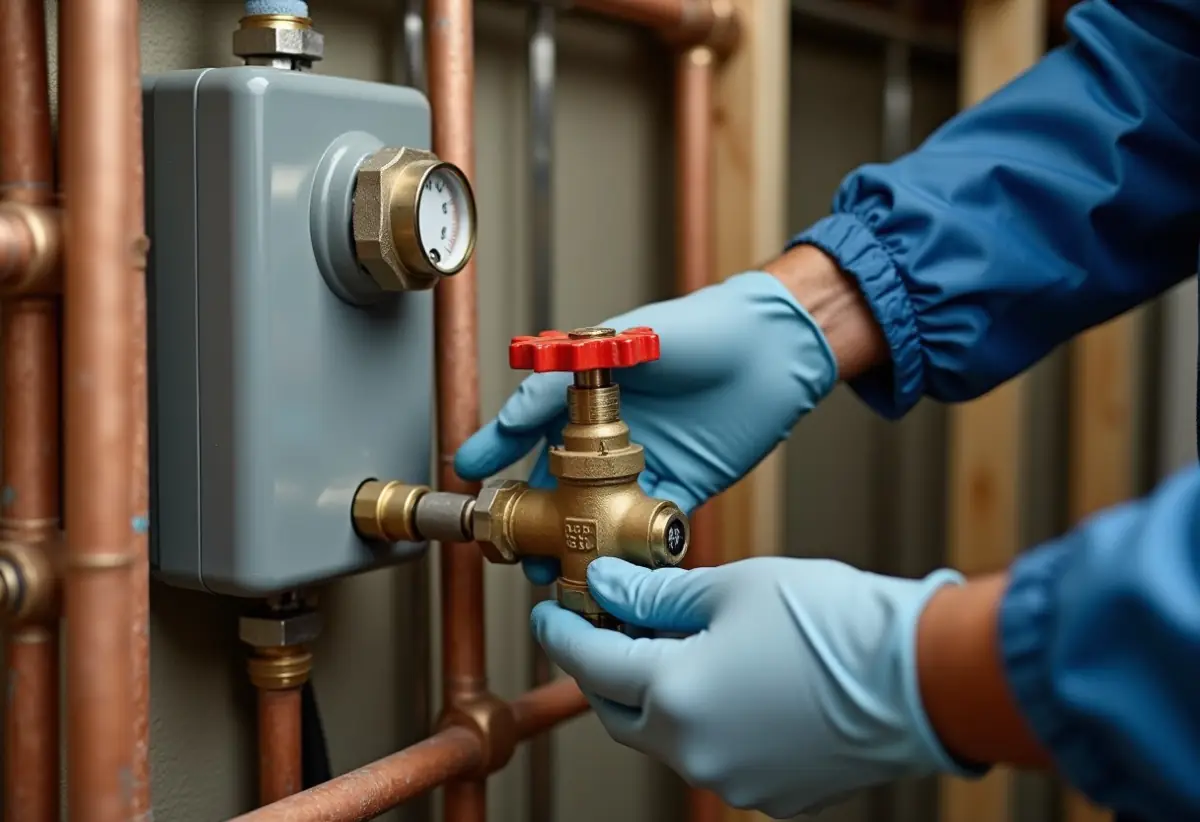
The order never changes: send water around the softener, isolate it, then relieve pressure before you open anything. Pentair warns the system must be depressurized before any connection is removed for servicing. Pick the steps that match your valve type from the table above; Clack’s version needs no tools, and the house keeps water throughout.
Push-pull stem (GE GXSF27B), 2 steps
- Find the stem where the pipes meet the back of the control valve.
- Push it straight in until it stops.
Clack WS1, 2 steps
- Turn the inlet handle to point at the center of the bypass.
- Turn the outlet handle the same way. Clack says the control valve is now isolated from system pressure. (Inlet with flow and outlet at center is Clack’s diagnostic position, which pressurizes the valve without feeding the house.)
Fleck, before a valve repair, 3 steps
- Set the bypass to its bypass position.
- Step the control into Backwash for a moment, then back to In Service, which Pentair specifies to relieve pressure.
- Unplug the transformer.
Three-valve loop, 3 steps
- Open the middle bypass valve fully, so the house never loses pressure.
- Close the inlet valve.
- Close the outlet valve. GE’s manual describes the same layout for soft water and hard water bypass.
What happens to your water while the softener is bypassed?
Every fixture gets raw water at whatever hardness your utility or well delivers. The USGS classes 0 to 60 mg/L as soft, 61 to 120 as moderately hard, 121 to 180 as hard and above 180 as very hard. The softener sits idle, and on a metered valve the countdown to regeneration stops.
Clack mounts its meter on the outlet side of the control valve, so in bypass nothing registers, and its troubleshooting table lists bypass as a reason a valve “does not regenerate automatically.” Pentair adds “hot water tank hardness” that takes repeated tank flushings to clear.
A few days of raw water does no harm, but Inspectapedia warns against bypassing “for months on end” because scale builds in water heaters. See what hard water does to a house. If the softener spends more time bypassed than working, weigh what a water softener costs to keep.
Why is my water softener bypass valve leaking?
A water softener bypass valve leaking almost always means a worn, dry, pinched or missing O-ring, then a cracked body or cross-threaded nut. On a Clack WS1 connection, Clack says tightening the nut will not stop a leak; remove the nut and fitting and check the O-ring for damage or misalignment. Order by the part numbers below.
- Clack WS1: per rotor, O-rings 135 (V3152), 112 (V3155) and 214 (V3156); per connection, O-ring 215 (V3105), split ring V3150 and nut V3151.
- Fleck 60049: two -119 O-rings (13305), two clips (13255), two 8-18 x 5/8 in. screws (13314).
- Fleck 60040SS/60041SS: seal 11726, plug 11972, eight screws (15727).
- GE GXSF27B: O-ring in the outer groove only, clip in the inner groove.
- Bypass or close the loop valves, then relieve pressure.
- Pull the clips, or unscrew the Clack cap and lift cap, rotor and handle out together, twisting.
- Replace worn O-rings and clean the rotor or stem.
- Lubricate with silicone only. The Clack WS1 service manual bans Vaseline, oils, WD-40 and spray silicone.
- Hand tighten. Clack says no pipe wrench, no pipe dope, and Teflon tape only on threaded fittings, never O-ring nuts.
- Pressurize slowly and watch the joint.
How do you free a stuck water softener bypass valve?
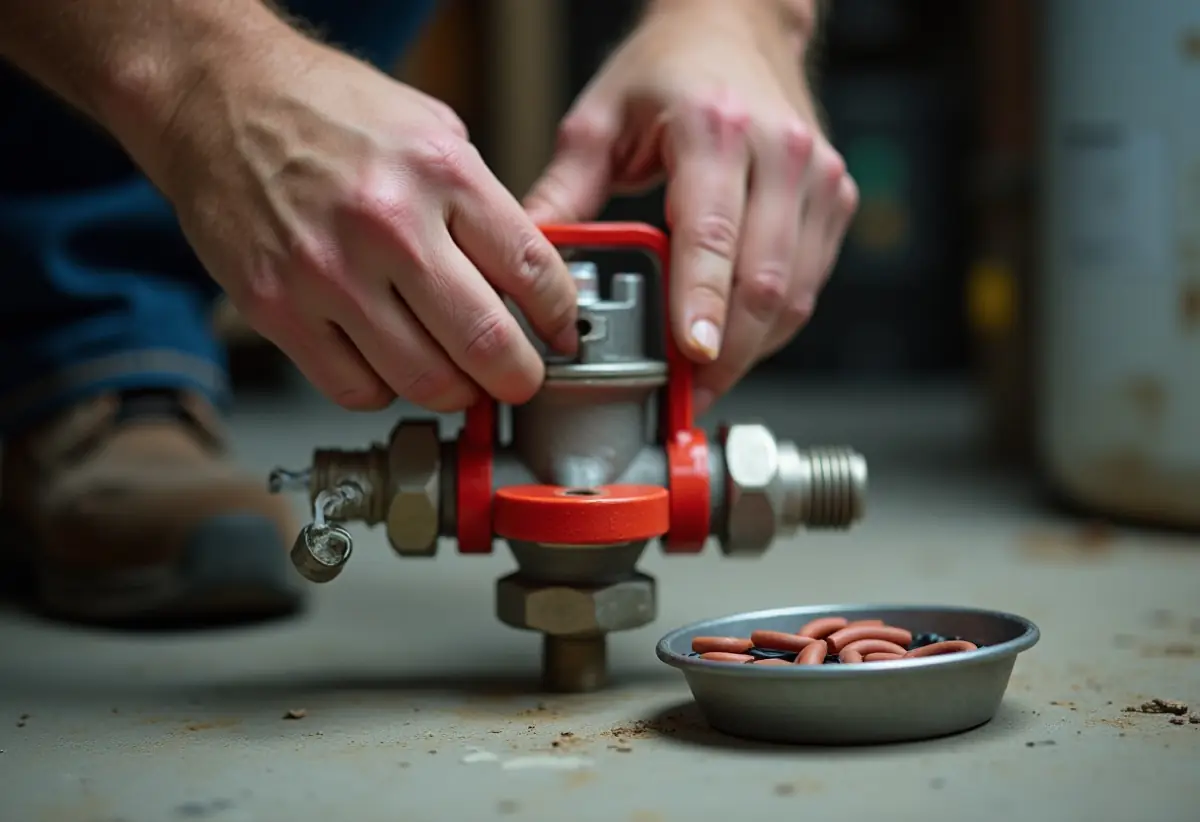
A stuck bypass is usually a dry or scaled seal, not a broken valve. Depressurize, then work the handle; Clack tells technicians to turn the red handles toward the center and back several times to confirm the rotor turns freely. If it still binds, pull the rotor, clean off the scale, replace the O-rings and use silicone only.
- No hammers or pipe wrenches. Clack’s caps are glass-filled polypropylene; pliers are allowed only to unscrew a nut or cap.
- Exercise it. Clack’s EPDM seals are meant “to help prevent valve seizing after long periods of non-use,” so cycle the valve when you add salt.
- Call for help if the body is cracked and the main shutoff will not hold, or if the drain runs continuously in service, which Pentair traces to a control not positioning correctly.
How do you return a water softener to service and check regeneration?
Reverse the bypass slowly, purge the air, then prove the softener is treating. Pentair says to move the bypass to service slowly, let the mineral tank fill until flow stops, then open a nearby cold tap until the air clears. Next, confirm the meter sees flow and run a manual regeneration if the unit sat bypassed through a scheduled one.
- On a loop, open inlet, open outlet, then close the bypass. Pentair: “Be sure to shut off any bypass line.”
- On integral valves, pull the GE stem out, turn the Clack arrows back with the flow, or set the Fleck to service.
- Run a cold tap until it stops sputtering.
- Check that the display shows flow.
- After an outage, reset the clock; Pentair says the SXT keeps time at least 8 hours on backup.
- Regenerate. On a Fleck SXT, hold Extra Cycle for 5 seconds; on Clack, press and hold REGEN.
- Test a cold tap after the cycle; it should read near zero.
How we sourced this
We read the Pentair Fleck 5600SXT Downflow Service Manual (42684 Rev L), Clack’s WS1 Drawings and Service Manual (V3115-99), the GE GXSF27B owner’s manual, the USGS hardness page, Inspectapedia’s bypass guide and the top-ranking pages for this query in October 2026. Part numbers, positions and limits come only from maker manuals. Whirlpool and Culligan specifics were left out because we could not verify a current manual.
Frequently asked questions
How do I know if my water softener is in bypass?
Look at the valve, then confirm with water. On a Clack WS1, both red handles pointing at the center mean bypass. On a GE push-pull valve, a stem pushed in means bypass. On a three-valve loop, an open middle valve means bypass. Then run a cold tap and check that the softener display shows water flowing through the meter.
Is it OK to leave a water softener in bypass?
For hours or a few days, yes. The house simply gets untreated water. Leaving it bypassed for weeks or months lets scale build in the water heater and on fixtures, and a metered valve counts no gallons while bypassed. If a softener spends more time bypassed than in service, ask whether the house needs one at all.
Should I bypass my water softener to water the lawn or fill a pool?
Usually yes, if the hose bibb or fill line runs through the softener. Every gallon through a metered valve uses up resin capacity. A unit set for 24,000 grains at 12 grains per gallon treats about 2,000 gallons, so a 15,000 gallon pool fill is more than seven times that and most of it would run through spent resin as hard water anyway.
Why is my water softener bypass valve leaking?
The usual cause is a worn, dry, pinched or missing O-ring, followed by a cracked plastic body or a cross-threaded nut. Clack says tightening a leaking connection nut on its WS1 will not stop the leak. Depressurize, remove the nut or cap, inspect and replace the O-ring, lubricate it with silicone only and hand tighten.
What lubricant should I use on a water softener bypass valve?
Use a silicone lubricant only. Pentair’s Fleck manual says to use only silicone lubricant on valve O-rings, and Clack warns that hydrocarbons such as Vaseline, petroleum jelly and WD-40 damage its O-rings and plastic parts. Clack also rules out spray silicone and notes its EPDM bypass seals do not strictly need any lubricant.
Will a water softener regenerate while it is in bypass?
Do not count on it. Clack puts its meter on the outlet side of the control valve, so it records no water while bypassed and the gallon countdown stops. Clack lists the bypass position as a reason a valve does not regenerate automatically. After returning to service, run a manual regeneration if the unit sat bypassed through a scheduled one.
Should I bypass my water softener during a power outage?
It is a sensible precaution on city water. Pentair says a Fleck SXT that loses power mid-regeneration stays in its current position until power returns, and it advises safety components to prevent overflows. Bypassing isolates the control valve and still delivers water to the house. Return to service once power is back and check the time of day.