How to Replace a Bathroom Faucet (Hole Spacing, Steps, Specs)
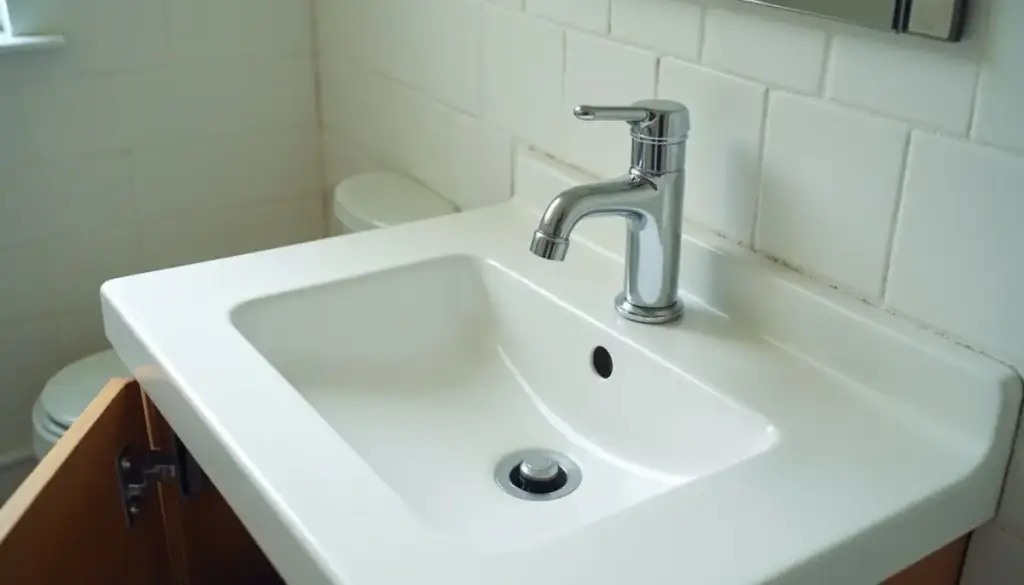
How to replace a bathroom faucet: match the sink holes (one, 4 in centerset or 8 to 16 in widespread), shut both stops, swap faucet and drain, connect the 3/8 in compression lines and flush one minute.
Key Takeaways
- Moen defines a centerset as 3 holes on a 4 inch spread and a widespread as 3 holes with an 8 to 16 inch spread, so measure center to center before you buy.
- Delta’s 567LF-PP install sheet lists 3/8 inch compression connections: hand-tighten, then one more revolution with a wrench, with no pipe dope or sealant.
- Gasket or putty depends on the maker. Delta uses a square rubber gasket, Kohler guide 1202226-2-C uses plumber’s putty, and Kohler bans petroleum-based putty on marble or stone.
- Delta has you remove the aerator and flush the lines for one minute at the full mixed position before first use.
- EPA WaterSense caps labeled bathroom faucets at 1.5 gpm, versus the 2.2 gpm federal limit, and California, Hawaii, Oregon and Washington cap them at 1.2 gpm.
- Homewyse put a pro faucet replacement at $511 to $717 in May 2026.
How do you replace a bathroom faucet, step by step?
To replace a bathroom faucet, confirm the hole layout, close both angle stops, disconnect the supply lines and pop-up linkage, back off the mounting nuts, and pull the old faucet. Set the new one on its gasket or putty as its maker directs, tighten the nuts, connect the lines, install the drain, then flush and leak-test. Ben’s Plumbing puts a typical swap at one to two hours.
- Measure the outer holes center to center.
- Close both stops and open the faucet.
- Disconnect the supply lines and pop-up linkage.
- Remove the mounting nuts with a basin wrench.
- Seat the new faucet on its gasket or putty.
- Tighten the mounting hardware and connect the hoses.
- Install the pop-up drain and lift rod.
- Pull the aerator, flush one minute, leak-test.
If you are also replacing the sink, Kohler’s guides say to mount the faucet and drain on it before setting the sink. For the parts behind the wall, see how bathroom faucet plumbing is laid out.
Single hole vs centerset vs widespread: which faucet fits your sink?
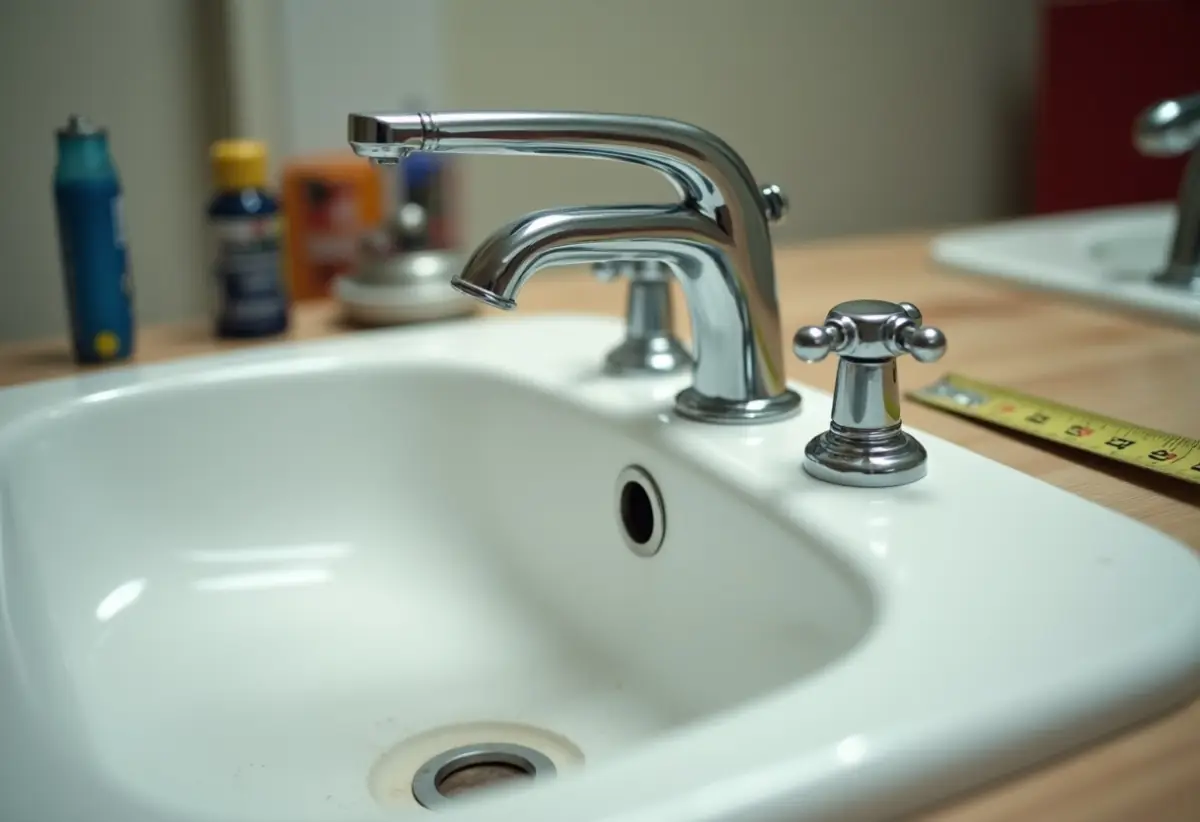
A single-hole faucet needs one hole, a centerset needs three holes on a 4 inch spread, and a widespread needs three holes 8 to 16 inches apart, according to Moen’s support library. A single-hole faucet can also cover a 3-hole sink if it comes with a deck plate. The wrong type means a new sink or countertop, so measure before you shop.
Measure from the center of the left hole to the center of the right hole. This Old House tells readers that 6 inches or more between the outer holes allows a widespread faucet, while closer spacing calls for a centerset or mini-spread unit that drops in as one piece.
| Faucet type | Hole spacing | Install notes from maker documents |
|---|---|---|
| Single-hole (Delta 560LF-PP) | 1 hole, max hole size 1.25 to 1.5 in | Max deck 2.25 in (57 mm). Optional 6 in (152 mm) escutcheon covers 3 holes. |
| Single-hole (Delta 567LF-PP) | 1 hole | Square deck gasket, crescent plate below, 3/8 in compression connections. |
| Centerset (Moen) | 3 holes, 4 in spread | Hot and cold handles mounted on a single plate with the spout, so it sets as one unit. |
| Widespread (Moen) | 3 holes, 8 to 16 in spread | Spout and two handles are separate parts joined by flexible hoses under the deck. |
| Widespread (Kohler 1351429-2-A) | 3 holes | Hoses from spout and handles snap into a tee. Uses 1/2 in-14 NPSM supply hoses. |
What tools and parts do you need to replace a bathroom faucet?
You need a basin wrench for the mounting nuts, an adjustable wrench for the supply nuts, a bucket and rags, a flashlight, and the sealant your faucet maker specifies. Kohler’s guides list stainless (non-staining) plumber’s putty and thread sealant tape for the drain threads, while Delta’s sheets call for silicone. Buy new supply hoses unless your faucet has them attached.
- Basin wrench: its long shaft and swiveling jaw reach the nuts behind the bowl.
- Two adjustable wrenches: one holds the stop, one turns the hose nut.
- Supply hoses: faucets with threaded shanks need hoses that match, such as the 1/2 in FIP hose Kohler lists in guide 1202226-2-C.
- Penetrating oil: for corroded nuts on older faucets.
Check the stops before you start. If a multi-turn stop will not close fully or weeps at the stem, plan to replace the shut-off valve under the sink first. Ben’s Plumbing adds $50 to $150 when a plumber swaps the valves during the same visit.
How do you remove an old bathroom faucet?
To remove an old bathroom faucet, close both stops, open the faucet to drain pressure, disconnect the supply lines at the stops, release the pop-up rod from the clevis strap, then unscrew the mounting nuts with a basin wrench and lift the faucet out. Scrape old putty or gasket residue off the deck so the new base sits flat.
- Shut the water and open the faucet. Turn the stops clockwise by hand. This Old House’s Richard Trethewey warns to be careful not to over-torque old valves, because the pipe behind the wall may not be well secured.
- Disconnect the lines. Hold the stop with one wrench and loosen the hose nut with another.
- Release the pop-up. Squeeze the spring clip off the clevis strap, slide the horizontal rod out, and loosen the setscrew that holds the lift rod. Our guide on how to remove a sink stopper covers each linkage type.
- Remove the nuts. Centersets usually have one nut on each side, and single-hole faucets such as Delta’s 567LF-PP use nuts on threaded studs with a crescent plate.
What if the mounting nuts are seized?
Soak corroded nuts with penetrating oil, wait, and work the basin wrench back and forth instead of forcing one direction. Too much force can crack a porcelain bowl or twist a supply pipe. Ben’s Plumbing prices this risk at an extra $50 to $100 in older homes. Cutting the shank below the nut is the last resort.
Does a new bathroom faucet need plumber’s putty or a gasket?
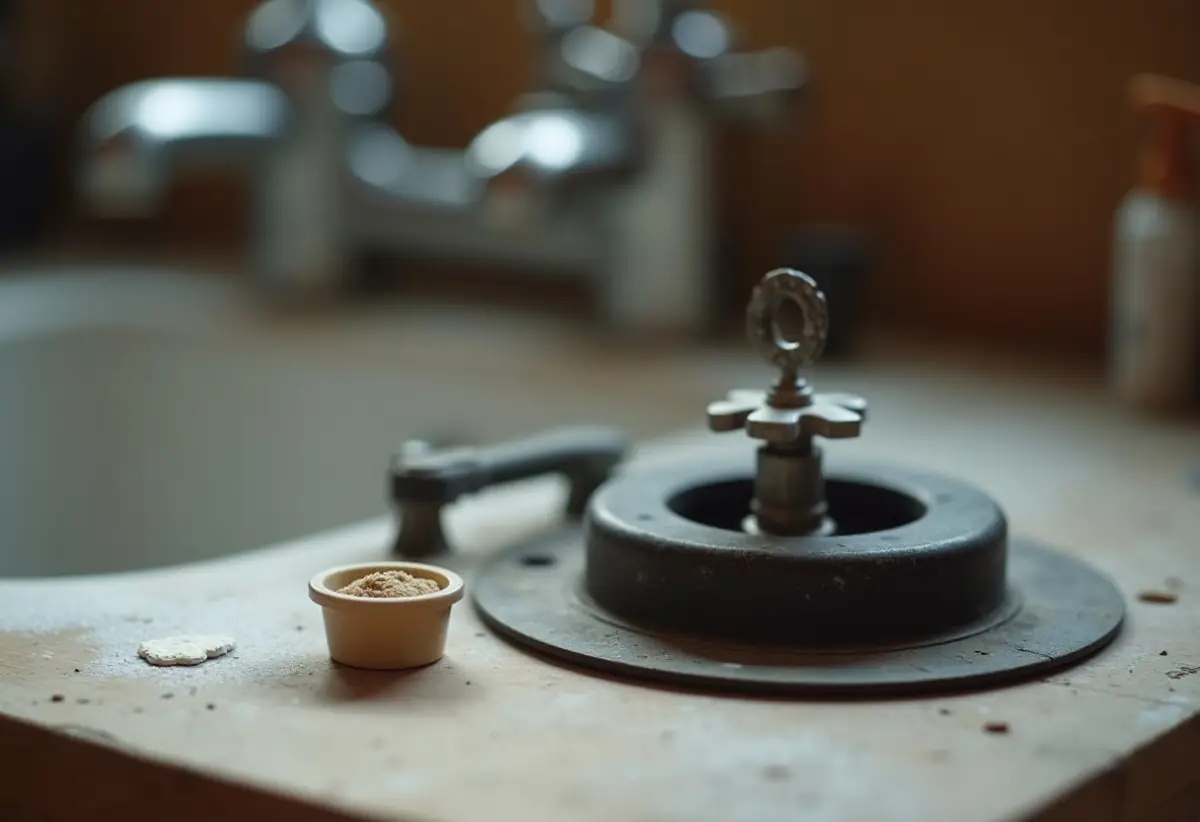
Use exactly what your faucet’s install sheet calls for, because makers disagree. Delta’s 567LF-PP seats on a square rubber gasket and permits silicone under it only on an uneven sink. Kohler’s guide 1202226-2-C says to apply plumber’s putty and insert the faucet, while Kohler’s 1371340-2-A has you adhere a gasket to the deck instead. Do not add putty under a gasket unless the sheet says to.
Stone needs extra care. Kohler guides 1202226-2-C, 1351429-2-A and 1371340-2-A all warn against petroleum-based plumber’s putty on marble or stone and lists stainless, non-staining plumber’s putty instead.
Under the deck, Delta’s single-hole design stacks a crescent-shaped gasket, then a metal crescent plate, then the mounting nuts on threaded studs. The sheet says to tighten the nuts securely, and Kohler’s step after setting the faucet is simply to tighten the mounting nuts and wipe away excess putty.
How do you connect the supply lines and the pop-up drain?
Thread each supply hose to its stop by hand, then snug it. Delta’s 567LF-PP sheet says its faucet connections are 3/8 inch compression fittings: hand-tighten the metal nut, then turn one additional revolution with a wrench and do not overtighten. Delta also warns against pipe dope or any sealant on these water connections.
Connect Delta’s hot-labeled hose to the hot stop, and keep debris out of the fittings. On faucets with separate hoses, Kohler specifies hoses with rubber gaskets or compression fittings.
Delta’s 567LF-PP pop-up sequence:
- Apply silicone to the underside of the drain flange and set it in the sink.
- From below, install the black gasket, washer and brass nut, but leave the nut loose.
- Hand-tighten the tailpiece onto the flange with the pivot facing the faucet.
- Tighten the brass nut without turning the drain body, or the sealant may not seal.
- Install the horizontal rod and stopper, hand-tighten the pivot nut, clip the rod to the strap, and tighten the lift rod screw.
Kohler uses plumber’s putty under the flange and thread sealant tape on the drain pipe threads. If you keep your old drain, Delta’s 560LF-PP includes a cap to plug the unused lift rod hole. The steps match our guide to replacing a kitchen faucet above the deck, but a kitchen sink has no pop-up linkage.
How do you flush and leak-test a new bathroom faucet?
Unscrew the aerator before the first run, set the handle to full on in the mixed position, open both stops, and let water run for one minute, per Delta’s 567LF-PP instructions. Delta says this flushes away debris that could damage internal parts. Then check every connection and reinstall the aerator.
- Wipe the hose nuts at the stops and at the faucet with a dry paper towel.
- Fill the bowl, then lift the stopper and check the drain flange nut and tailpiece.
- Recheck after an hour. Delta says re-tighten if needed but do not overtighten.
Kohler’s guides use a supplied key to remove the aerator. Keep it with the faucet paperwork.
What flow rate should a new bathroom faucet have?
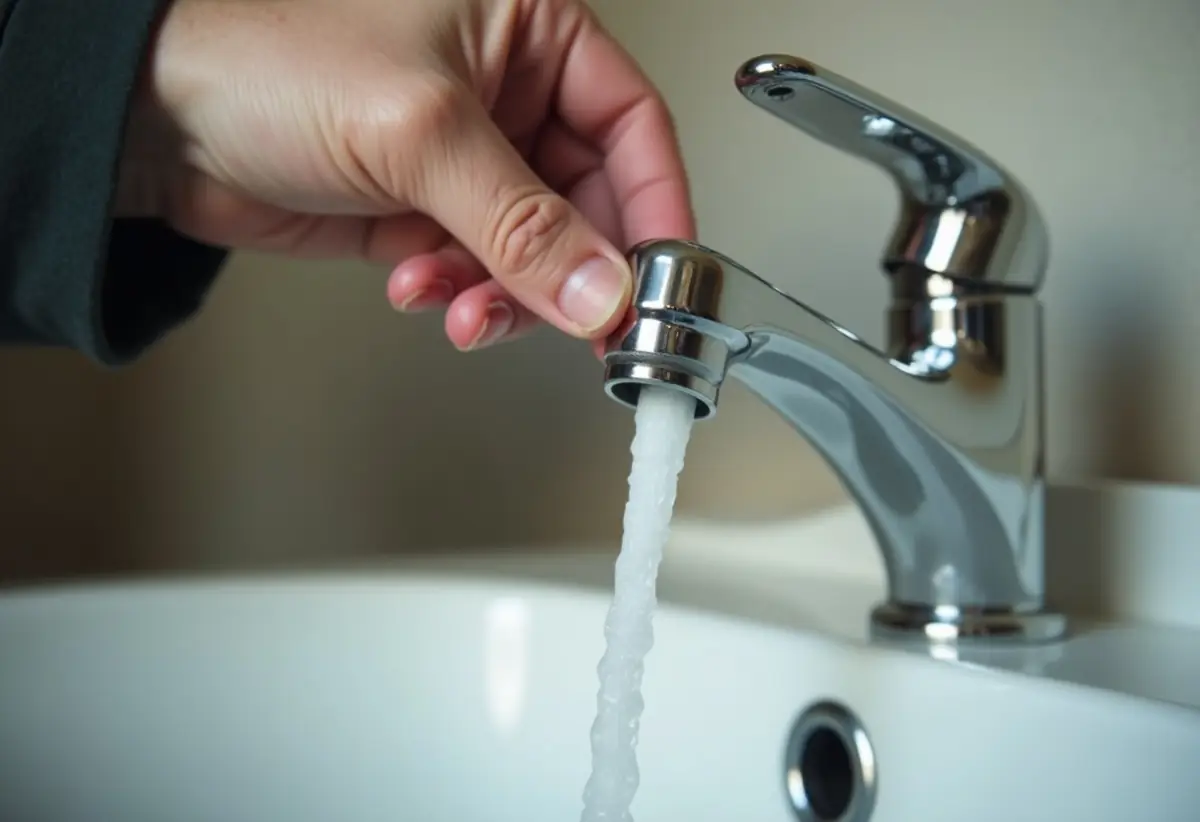
Pick a faucet at 1.5 gallons per minute or less. EPA WaterSense caps labeled bathroom faucets at 1.5 gpm at 60 psi, about 30 percent below the 2.2 gpm federal standard, and requires at least 0.8 gpm at 20 psi so low-pressure homes still get usable flow. In California, Hawaii, Oregon and Washington, state rules cap new bathroom faucets at 1.2 gpm.
Sources: EPA WaterSense High-Efficiency Lavatory Faucet Specification (federal limit under 10 CFR Part 430) and the EPA WaterSense Notice of Intent, March 2024 (state limits).
EPA’s notice says 11 other states plus Washington, D.C. set 1.5 gpm for all sales or new construction. EPA drafted a 1.2 gpm WaterSense Version 2.0 in December 2024, then paused that work in February 2025, per the WaterSense bathroom faucet page.
EPA’s count of labeled models as of January 10, 2024 shows 63.1 percent flow at 1.2 gpm or less, so a 1.2 gpm faucet is easy to find anywhere. EPA estimates WaterSense faucets and aerators save the average family 700 gallons a year, and its certification also checks that the fittings are lead-free.
How much does it cost to replace a bathroom faucet, DIY vs pro?
A DIY bathroom faucet replacement costs only the faucet plus any hoses or sealant it does not include, and many kits include the drain. Hiring out costs more. Homewyse estimated $511 to $717 per faucet nationally in May 2026, including a mid-range centerset with pop-up and basic labor. Ben’s Plumbing in Seattle quotes $100 to $350 for bathroom faucet installation alone.
| Cost item | Range | Source |
|---|---|---|
| Pro replacement, national average (faucet, supplies, labor) | $511 to $717 | Homewyse, May 2026 |
| Bathroom faucet installation | $100 to $350 | Ben’s Plumbing, Seattle, 2026 |
| Corroded mounting nuts, older homes | add $50 to $100 | Ben’s Plumbing |
| Shut-off valves replaced in the same visit | add $50 to $150 | Ben’s Plumbing |
| Trip or service-call fee | $75 to $200 | Ben’s Plumbing |
Hire a plumber when a stop will not close or the supply pipe moves as you turn the nut. Pedestal sinks and wall-hung vanities add $50 to $100 in Seattle because the connections are harder to reach, according to Ben’s Plumbing.
How we sourced this
We ran two searches in October 2026, then read maker documents directly: Delta sheets for the 567LF-PP, 560LF-PP and B510LF-20, Kohler guides 1202226-2-C, 1351429-2-A and 1371340-2-A, the Delta 567LF-PP install guide for the torque and flush specs, the Kohler 1202226-2-C guide for putty, and Moen’s centerset vs widespread article for hole spacing. Flow limits come from EPA WaterSense documents (2007 to 2025), costs from Homewyse (May 2026) and Ben’s Plumbing (August 2026). We excluded cost pages without a stated method and left out penetrating-oil soak times because no maker publishes one.
Frequently asked questions
Can I replace a bathroom faucet myself?
Yes, most homeowners can swap a bathroom faucet in one to two hours with a basin wrench, an adjustable wrench and a bucket. The job gets harder when the shut-off valves will not close, the mounting nuts are corroded, or a pedestal sink blocks access. Call a plumber when a stop valve leaks or the supply pipe twists as you turn it.
How much does a plumber charge to replace a bathroom faucet?
Homewyse put the May 2026 national average at $511 to $717 per faucet, including a mid-range faucet, supplies and labor. Ben’s Plumbing in Seattle quotes $100 to $350 for bathroom faucet installation, with labor alone at $100 to $300 and an extra $50 to $100 when old mounting nuts are corroded. Trip fees of $75 to $200 may apply.
Do you need plumber’s putty to install a bathroom faucet?
Only if the maker says so. Delta’s 567LF-PP sets the faucet on a square rubber gasket and allows silicone under it only if the sink is uneven. Kohler guide 1202226-2-C calls for plumber’s putty under the faucet, while guide 1371340-2-A uses an adhesive deck gasket instead. On marble or stone, Kohler warns against petroleum-based putty.
How long does it take to replace a bathroom faucet?
Plan on one to two hours for a straightforward swap, the range Ben’s Plumbing gives for a standard faucet job. Add time for a new pop-up drain, a widespread faucet with three separate valves, or seized nuts that need penetrating oil. The flush step alone takes one minute of running water at the full mixed position, per Delta’s instructions.
Can you put a single-hole faucet on a 3-hole sink?
Yes, with a deck plate (escutcheon) that covers the two outer holes. Delta’s 560LF-PP ships ready for one hole and offers an optional 6 inch (152 mm) escutcheon with its own deck gasket for three-hole sinks. Check that the plate span covers your outer holes, measured center to center, before you buy.
Should I replace the drain when I replace a bathroom faucet?
Usually yes if the new faucet includes one, since the new lift rod is built to work with that drain. Delta’s 567LF-PP and Kohler’s 1202226-2-C both include pop-up drain steps. Delta’s 567LF-PP drain seals with silicone under the flange, and Kohler’s guides use plumber’s putty. If you keep the old drain, cap the lift rod hole with the cap Delta supplies.
How do I know what size bathroom faucet to buy?
Look under the sink and count the holes, then measure from the center of the left hole to the center of the right hole. One hole takes a single-hole faucet, three holes 4 inches apart take a centerset, and three holes 8 to 16 inches apart take a widespread, per Moen. Also check deck thickness against the faucet spec sheet.
How do I tell what type of bathroom faucet I have?
Look under the sink and count the holes, then measure from the center of the left hole to the center of the right hole. One hole takes a single-hole faucet, three holes on a 4 inch spread take a centerset, and three holes 8 to 16 inches apart take a widespread, according to Moen. A single-hole faucet can also cover a 3-hole sink if it has a deck plate.