Toilet Tank Leaking? Find the Source by Where the Water Shows
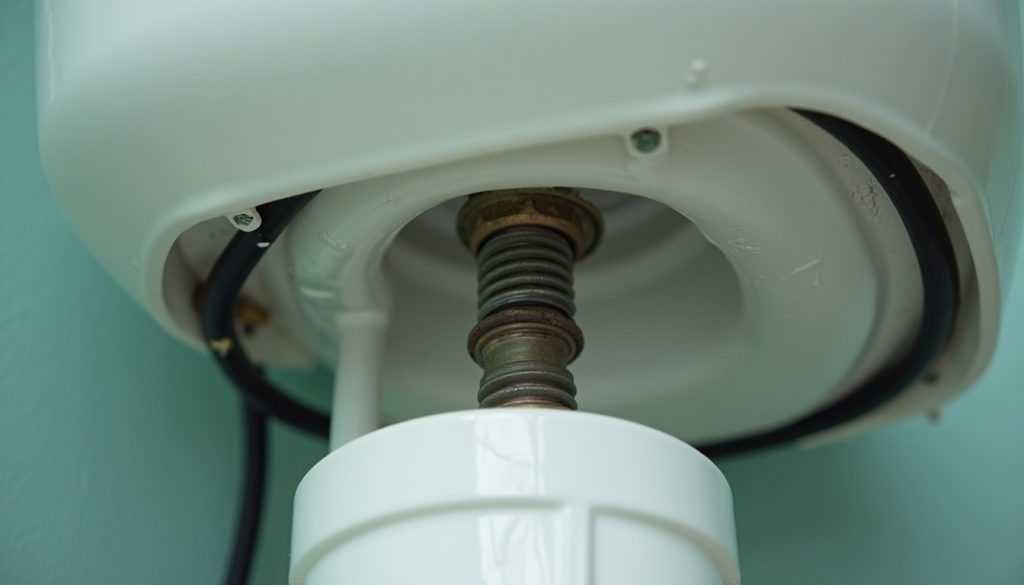
A toilet tank leaking onto the floor or into the bowl almost always traces to one of six spots, and where the water shows up tells you which part to fix.
Key Takeaways
- A leaky toilet can waste about 200 gallons of water a day, per an EPA WaterSense indoor water fact sheet, and most of that flows silently from the tank into the bowl.
- EPA’s dye test catches silent leaks: put a few drops of food coloring in the tank, and if color reaches the bowl within 10 minutes, the tank is leaking.
- Water under the tank points to the tank-to-bowl gasket, the tank bolt washers, or the fill valve shank and supply line. Fluidmaster warns that overtightening tank bolts can crack the bowl.
- Water spread across the whole outside of the tank in humid weather is usually condensation, not a leak, and a dyed-tank check tells the two apart.
- HomeAdvisor puts hired leak repairs at $100 to $600 and the average toilet repair at $271, while most DIY tank parts cost about $5 to $20 at retail.
- Water around the floor line at the base is a wax ring or flange problem, not a tank leak, and needs a different repair.
Why is my toilet tank leaking? Start with where the water shows
A toilet tank leaking usually has one of six causes: a worn tank-to-bowl gasket, failed tank bolt washers, a loose supply line or fill valve nut, a cracked tank, condensation that only looks like a leak, or a silent leak from the tank into the bowl. The location of the water is the fastest way to tell them apart. Catching that silent leak early can also curb bathroom moisture problems, including pink buildup in toilet bowls. Tackling that condensation issue directly can help, since persistent tank sweating often points to deeper humidity problems in the bathroom.
Dry the tank, bolts, supply line and floor with a towel. Then wrap toilet paper around each joint and check it after 15 to 30 minutes. The first spot to wet the paper is your leak. If you want a refresher on the parts involved, our explainer on how a toilet works labels every piece inside the tank.
| Where the water shows | Likely cause | Fix | DIY part cost |
|---|---|---|---|
| Drips from the center underside of the tank, between tank and bowl | Hardened tank-to-bowl (spud) gasket | Pull the tank, fit a new gasket kit such as Fluidmaster 6100 or 6102 | About $5 to $20 |
| Drips or rust streaks at the bolt heads under the tank | Crumbled bolt washers or corroded bolts | Replace bolts, rubber washers and nuts as a set | Usually in the gasket kit |
| Wet supply line, wet shutoff valve, or drip at the left rear corner | Loose coupling nut, failed supply line, or loose fill valve shank nut | Snug the nut, or replace the supply line or fill valve | Low cost; supply lines and fill valves are common stock parts |
| A thin wet line on the china that stays wet after drying | Cracked tank | Replace the tank or the whole toilet | Tank or new toilet |
| Beads of water all over the outside of the tank in humid weather | Condensation (“sweating”) | Ventilation, tank liner, or anti-sweat valve | Varies |
| No water outside, but the tank refills on its own or the bill climbs | Silent tank-into-bowl leak (flapper or fill valve) | Dye test, then replace the flapper or reset the fill valve | About $5 to $20 for a flapper or fill valve |
| Water around the floor line at the base, often after a flush | Wax ring or flange, not the tank | Pull the toilet and reseal | Wax ring |
A puddle spreading from where the china meets the floor, especially right after a flush, is a seal failure under the toilet, not a tank leak. That job has its own guide on a toilet leaking at the base, so this article stays with the tank.
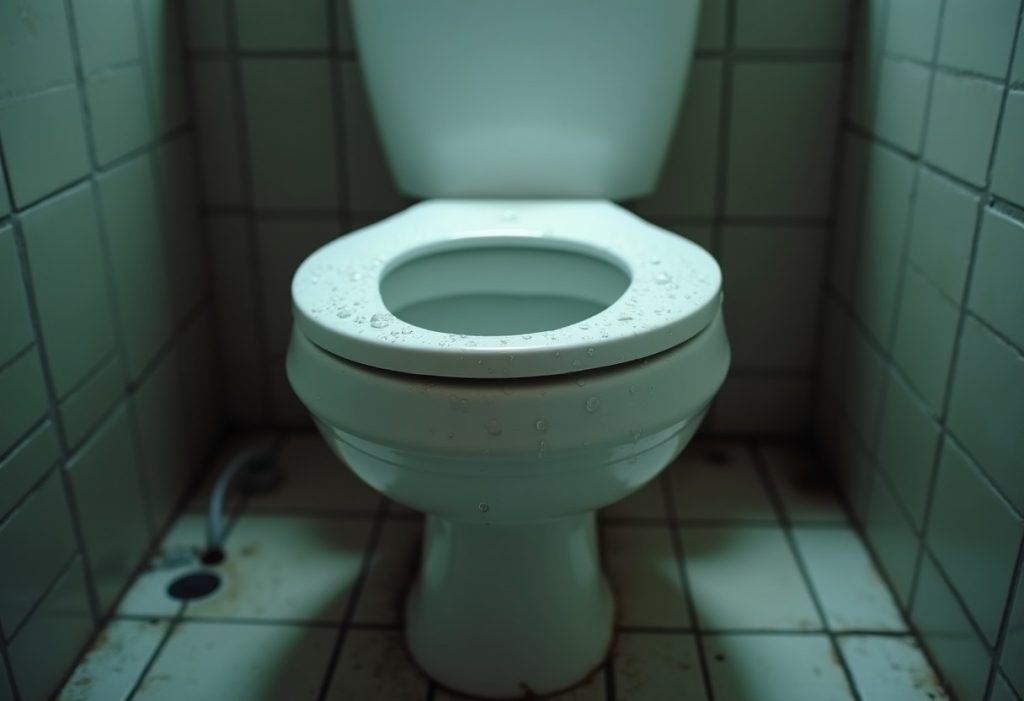
Is it a toilet tank leak or just condensation?
Condensation forms when warm, humid bathroom air hits a tank full of cold water, so beads appear across the whole outside of the tank and drip onto the floor. A true leak starts at one joint and stays wet in one line. Sweating shows up most in summer, after long hot showers, and in homes on cold well water.
Here is a check most guides skip. Add a few drops of dark food coloring to the tank water and wait. If the drips on the floor come out colored, water is escaping from inside the tank. If they stay clear, you are looking at condensation or a supply line leak, since neither carries the dye.
Fixes for a sweating tank, cheapest first, per guidance from This Old House and other repair references:
- Run the bathroom exhaust fan during and after showers, or crack a window, to cut humidity.
- Install a foam tank liner kit, which insulates the china from the cold water inside.
- Have a plumber install an anti-sweat (mixing) valve, which blends a little hot water into the tank supply. This needs a hot line nearby and may need a permit in some areas.
How do you fix a toilet tank leaking between the tank and bowl?
A leak between the tank and bowl on a two-piece toilet almost always means the tank-to-bowl gasket has hardened or shifted. The fix is to unbolt the tank, lift it off, swap in a new gasket and bolt set, and reseat it evenly. Expect about an hour and a kit that costs roughly $5 to $20.
One-piece toilets have no tank-to-bowl gasket, so a leak in that area on a one-piece model usually points to a crack or the flush valve seal inside. Check your model number, usually stamped inside the tank, before you buy parts. Gaskets differ by flush valve size, and many newer toilets use a 3-inch valve instead of the older 2-inch size.
These steps follow the Fluidmaster 6100 tank-to-bowl gasket instructions:
- Turn off the shutoff valve, flush the tank, and sponge out the leftover water. Disconnect the supply line from the fill valve.
- Loosen the nuts under the bowl and lift the tank straight off.
- Remove the old gasket. Slide the new sponge rubber gasket, small side down, over the nut on the threaded end of the flush valve.
- Set the tank back on the bowl so the gasket seats evenly and the bolts line up. Replace worn bolts at the same time.
- Install a rubber washer, a metal washer, then the nut on each bolt. Tighten evenly, alternating sides, and reconnect the supply line.
Fluidmaster also says not to use plumber’s putty on this joint and not to use in-tank drop-in cleaners containing bleach or chlorine. If a gasket or flapper failed early, check whether a bleach tablet has been sitting in the tank.
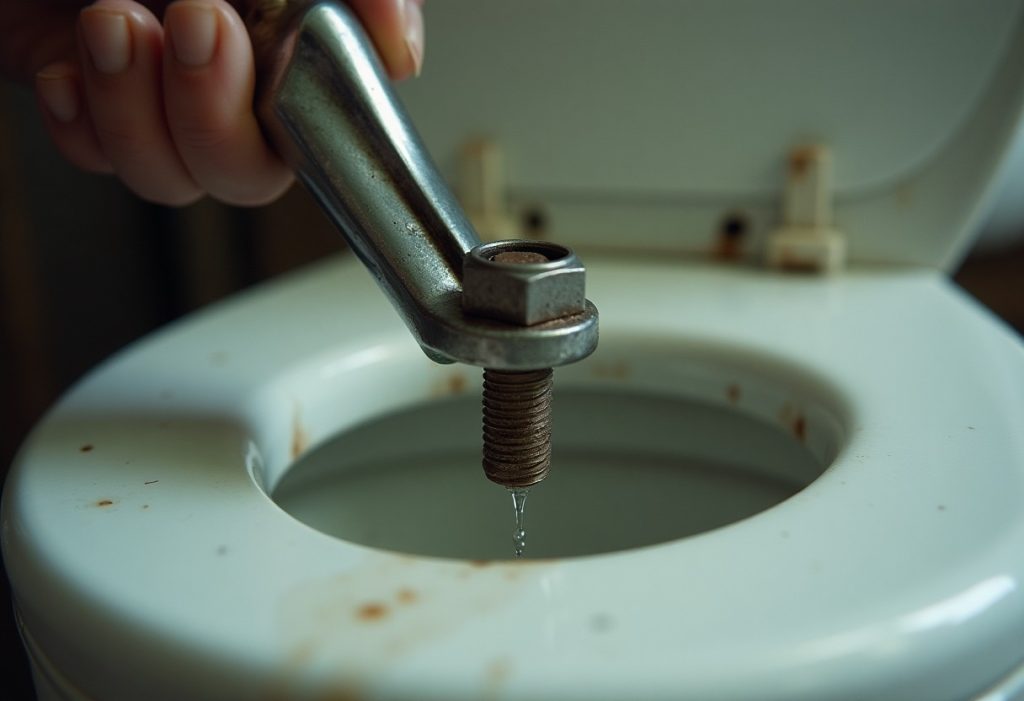
How do you stop toilet tank bolts from leaking?
Tank bolts leak when the rubber washers inside the tank crumble or the bolts corrode, letting water run down the shank and drip from the nuts under the bowl. Snugging a loose nut evenly can stop a weeping bolt, but if it still drips, replace the bolts, washers and nuts as a set rather than cranking harder.
Overtightening is the classic mistake here. Vitreous china does not flex, and Fluidmaster’s instructions warn in capital letters that overtightening can crack the bowl. Tighten in small turns, alternating sides, until the tank sits level and firm and does not rock.
- Rust streaks under the tank: steel bolts are corroding. Replace them with brass or stainless bolts.
- Drip only right after a flush: the washer seals at rest but weeps under the rush of moving water. Replace the washer.
Is the supply line or fill valve leaking under the toilet tank?
If the drip sits at the left rear of the tank, check the supply line first. Water can escape from the coupling nut at the shutoff valve, from the coupling nut on the fill valve shank, or from the fill valve’s own locknut and seal where it passes through the tank. Tissue wrapped around each joint pinpoints which one.
Plastic coupling nuts crack if forced, so snug them by hand and then give a small extra turn with pliers. A braided line with a kink, bulge or rust at the crimp is near failure and should be replaced, not tightened.
- Close the shutoff valve and flush to drain the tank.
- Unscrew the coupling nut at the fill valve shank, then at the shutoff valve.
- Measure the length and connections, then install a new braided line hand tight plus a small turn.
- Open the valve slowly and watch both ends for a minute.
If water seeps from around the fill valve shank inside or under the tank, the shank washer has failed. Replacing the whole valve is usually the better fix, and our toilet fill valve guide walks through the swap and water level settings.
Is your toilet tank leaking into the bowl?
A tank that leaks into the bowl leaves no puddle, which is why it wastes so much water. Signs include the toilet refilling on its own every few minutes or hours, a faint trickle in the bowl, or a jump on the water bill. EPA WaterSense estimates a leaky toilet can waste about 200 gallons a day, and toilets already account for nearly 30 percent of indoor water use in an average home.
Run the dye test from EPA’s Fix a Leak Week guidance: put a few drops of food coloring in the tank, do not flush, and check the bowl after 10 minutes. Color in the bowl means water is escaping past the flapper or flush valve seal.
If the dye test is clean but the tank still refills, lift the lid and look at the overflow tube. Water spilling into the top of it means the fill valve is set too high or not shutting off. Lower the float so the water stops at the waterline mark stamped inside the tank, below the top of the overflow tube, or replace the valve.
A warped, slimy or stiff flapper is the usual culprit when dye reaches the bowl. Our guide to choosing and replacing a toilet flapper covers sizing a 2-inch or 3-inch flapper and checking the seat for mineral scale.
The toilet bar is our annualization of EPA’s 200 gallons a day (200 x 365). Many leaks run slower, but even a fraction of that dwarfs a dripping faucet.
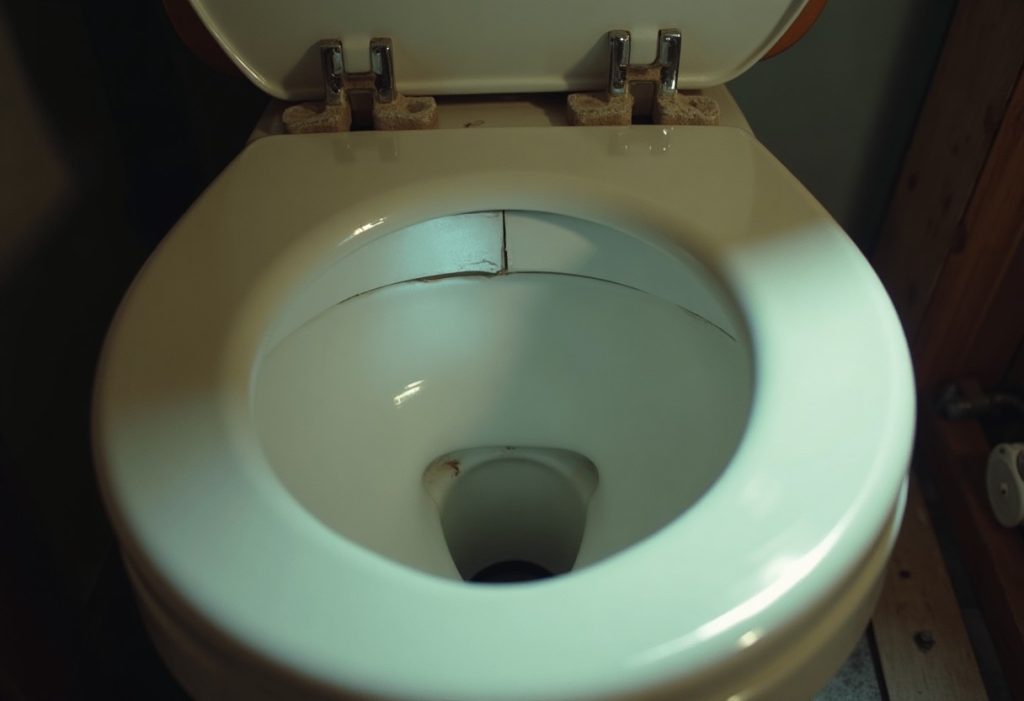
Can a cracked toilet tank be fixed, or should you replace the toilet?
A cracked tank cannot be reliably repaired. Epoxy or porcelain compound can hold a hairline crack above the waterline for a while, but cracks below the waterline carry constant water pressure and tend to grow. The lasting fix is a matching replacement tank or a new toilet, and the choice comes down to age, parts availability and cost.
To confirm a crack, drain the tank, dry it, and shine a flashlight across the inside walls and floor. Look for a fine line that darkens or beads water when you refill.
Replace the whole toilet instead of the tank when:
- The tank for your model number is discontinued or costs close to a new entry-level toilet.
- The toilet predates the 1994 federal 1.6 gallons per flush limit. Older toilets can use as much as 6 gallons per flush, while WaterSense labeled models use 1.28 gallons or less, per EPA WaterSense.
- The bowl also shows cracks, chips at the bolt holes, or a base leak you would have to fix anyway.
How much does it cost to fix a leaking toilet tank?
Most toilet tank leaks cost under $20 in parts to fix yourself. Retail listings put tank-to-bowl gasket and bolt kits at roughly $5 to $20, with name-brand Fluidmaster kits near $10. Hired out, HomeAdvisor puts leak repairs at $100 to $600 and the average toilet repair at $271.
Labor drives the bill. HomeAdvisor reports plumber rates of $45 to $200 per hour, with labor making up 60% to 75% of the total, and night, weekend or holiday calls adding $100 to $300.
| Cause | DIY | Hired (HomeAdvisor range) | Typical DIY time (our estimate) |
|---|---|---|---|
| Tank-to-bowl gasket | About $5 to $20 kit | $100 to $600 (leak repair) | About 1 hour |
| Tank bolts and washers | Usually in the gasket kit | $100 to $600 (leak repair) | 30 to 60 minutes |
| Supply line or fill valve | Low-cost stock parts | $50 to $150 (valves) | 15 to 30 minutes |
| Flapper (tank into bowl) | About $5 to $20 | $50 to $150 (valves) | 15 minutes |
| Cracked tank | Replacement tank for your model | $50 to $100 (tank) or $90 to $1,500 (new toilet) | 1 to 2 hours |
How we sourced this
In October 2026 we reviewed the top-ranking “toilet tank leaking” guides and the People Also Ask questions for the term, then added gaps they miss: the dyed-tank check that separates condensation from a real leak, one-piece toilet differences, the bleach tablet warning, and the overflow tube check for a fill valve set too high. Water-waste figures come from EPA WaterSense. Gasket replacement steps and tightening warnings come from the Fluidmaster 6100 instruction sheet. Hired costs come from the HomeAdvisor toilet repair cost guide; DIY part prices come from US retail listings checked in October 2026. The 73,000 gallon annual figure is our own annualization of EPA’s daily estimate. We excluded aggregator pages that did not show a source or method. Costs are national ranges and vary by region.
Frequently asked questions
Why is my toilet tank leaking from the bottom?
Water dripping from the underside of the tank almost always comes from one of three places. The big tank-to-bowl gasket may have hardened, the rubber washers on the tank bolts may have crumbled, or the fill valve shank nut and supply line may be loose. Dry everything, then wrap tissue around each spot and wait. The wet tissue names the part to replace.
Can a leaking toilet tank be fixed?
Yes, in most cases. Gaskets, bolt washers, supply lines, flappers and fill valves are cheap parts a homeowner can swap in under an hour with a screwdriver and adjustable pliers. The one leak that usually cannot be fixed for good is a crack in the china. A cracked tank needs a matching replacement tank or a new toilet.
How do I know if my toilet tank is cracked?
Dry the tank completely and look for a hairline that stays wet or grows a thin bead of water while the rest of the china stays dry. Shine a flashlight across the inside walls with the tank drained, since many cracks start inside. A tank that loses water with a sound flapper and no gasket leak is a strong sign of a crack.
Can you seal a cracked toilet tank?
You can patch a hairline crack above the waterline with a waterproof epoxy or porcelain repair compound, but treat it as a stopgap. Cracks below the waterline sit under constant pressure and tend to spread, and a sudden failure can dump the full tank onto the floor. Plan to replace the tank or the whole toilet soon.
Is a leaking toilet tank an emergency?
A slow drip is not an emergency, but it is not something to leave for weeks either. Standing water rots subfloors and stains ceilings below. Turn the shutoff valve behind the toilet clockwise to stop the flow, mop up, and plan the repair. A cracked tank or a burst supply line is urgent, so shut the water off right away.
How tight should toilet tank bolts be?
Snug, even, and no tighter. Tighten each nut a little at a time, alternating sides, until the tank sits level and firm on the gasket without rocking. Fluidmaster warns that overtightening can crack the bowl. If a bolt still drips once snug, the washer is worn, and more torque will only risk the china.
How much does it cost to fix a leaking toilet tank?
Doing it yourself, most tank leak parts cost about $5 to $20, such as a tank-to-bowl gasket kit or a new flapper. Hired out, HomeAdvisor puts leak repairs at $100 to $600 and the average toilet repair at $271. A replacement toilet runs $90 to $1,500 installed, depending on the model and the job.


