Toilet Fill Valve: What It Does, Signs It Is Bad, and How to Replace It
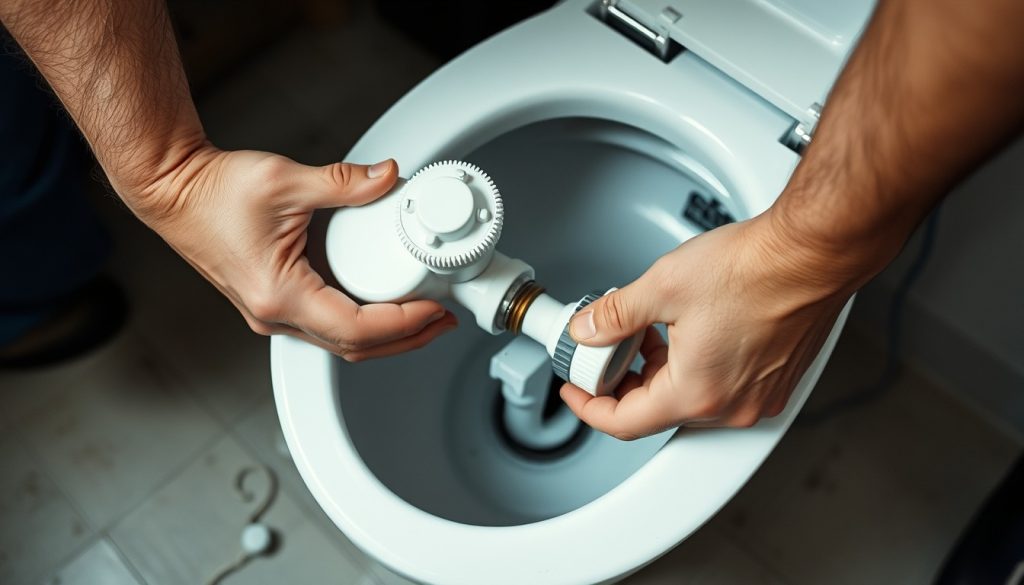
A toilet fill valve refills the tank after every flush and shuts off at a set water level; when it wears out the toilet runs, fills slowly, hisses, or knocks the pipes.
Key Takeaways
- The fill valve refills the tank and bowl after a flush; the flapper is a separate part that seals the flush valve, so fixing a running toilet starts with telling the two apart.
- A running toilet can waste up to 200 gallons of water per day, according to the EPA WaterSense program.
- Household leaks waste nearly 1 trillion gallons of water nationwide each year, enough for about 11 million homes, per the EPA.
- The four common valve types are float-cup, ballcock (float-ball), diaphragm, and floatless (pressure), and a universal float-cup fits most toilets.
- Set the tank water line about 1 inch below the top of the overflow tube, per Fluidmaster installation guidance.
- A replacement valve runs about $10 to $20 and a DIY swap takes roughly 20 to 30 minutes; a plumber often charges about $100 to $150.
What does a toilet fill valve do?
The fill valve refills the tank with fresh water after each flush, then shuts off when the water reaches a preset level. It stands on the left side of the tank, connects to the supply line and shutoff valve under the toilet, and rises up as a vertical column. A small tube from the valve also sends water through the overflow tube to refill the bowl after the flush finishes. If that refill tube slips loose, the bowl can run low even when the tank fills properly, a problem covered in toilet bowl not filling up.
When you flush, the tank empties and the float on the fill valve drops. That opens the valve and water rushes in. As the tank refills, the float rises until it reaches the set point, then closes the valve. The whole cycle takes under a minute on a healthy toilet. For the full flush-and-fill sequence, see our guide to how a toilet works.
Fill valve vs flapper: what is the difference?
The fill valve and the flapper are two different parts that people mix up constantly. The fill valve refills the tank. The flapper seals the flush valve, the large opening at the bottom of the tank. When you flush, the flapper lifts to dump tank water into the bowl, then drops back to hold the next tankful. A running toilet can come from either part, so identifying which one is failing saves you a wasted trip to the store.
| Part | Job | Where it sits | How it fails |
|---|---|---|---|
| Fill valve | Refills the tank and bowl after a flush | Tall column on the left side of the tank | Runs, fills slowly, hisses, or will not shut off |
| Flapper (flush valve seal) | Seals the flush valve to hold water in the tank | Rubber or silicone flap at the bottom center | Leaks water from tank into bowl, causing phantom flushes |
Quick test: put a few drops of food coloring in the tank and wait 15 minutes without flushing. Color in the bowl means the flapper is leaking. If the tank keeps trickling and water spills into the overflow tube instead, the fill valve or its water-level setting is the problem.
What are the types of toilet fill valves?
There are four common designs, and they differ mainly in how they sense the water level. Float-cup valves are the modern standard and the easiest to install and adjust. Ballcock valves are the old brass-and-rod style still found in many older tanks. Diaphragm valves use water pressure against a rubber membrane. Floatless (pressure-sensing) valves read the water column at the bottom of the tank instead of using a float.
| Valve type | How it senses level | Reliability | Adjustability | Best for |
|---|---|---|---|---|
| Float-cup | Plastic cup float slides up and down the valve shaft | High; few failure points | Easy: slide the float on a clip or turn a screw | Most homes; the standard replacement |
| Ballcock (float-ball) | Floating ball on a long horizontal arm | Moderate; older brass units corrode | Turn the screw or bend the arm | Older tanks; usually worth upgrading to float-cup |
| Diaphragm | Water pressure on a rubber membrane, with a float | Moderate to high; membrane can stiffen | Screw on the float arm or cap | Some brands and older float-ball retrofits |
| Floatless (pressure) | Senses water pressure at the tank bottom, no float | Varies; sediment can affect the sensor | Adjustment screw, less intuitive | Tight tanks with no room for a float |
For a standard toilet, a universal float-cup valve is the safe pick. It adjusts in height to fit tanks of different depths and it is the part most stores stock. A few low-profile, dual-flush, or pressure-assisted toilets use a proprietary valve, so check the model if yours looks unusual.
How do you know your fill valve is bad?
Four signs point to a failing fill valve: a toilet that keeps running or cycles on by itself, a tank that fills very slowly, a constant hiss or whistle, or a knock in the pipes when the tank finishes filling. If the flapper seals fine (no color bleeds into the bowl in the dye test) but water still trickles into the tank, the fill valve is almost always the cause.
Running or phantom-refilling toilet
If the toilet runs nonstop or the valve kicks on every few minutes with no one flushing, the valve is not shutting off fully. A worn seal or a water level set too high (spilling into the overflow tube) both do this. This is the most water-wasting failure and the reason to fix it fast. Our guide to fixing a running toilet walks the flapper-versus-valve diagnosis step by step. Before swapping the valve, rule out the cheaper culprit with our breakdown of flapper wear and replacement. Swapping a flapper is simple, but if the toilet still won’t flush right afterward, our symptom-based guide to no-flush troubleshooting covers the other likely causes.
Slow fill, hissing, or water hammer
A slow refill often means sediment or mineral buildup is partly clogging the valve, or the supply shutoff is not fully open. A steady hiss or whistle is water squeezing past a worn seal or a restricted inlet. A sharp knock (water hammer) as the valve snaps shut points to a fast-closing valve or loose pipes; some replacement valves close more gently to prevent it.
How much water does a running toilet waste?
A running toilet is one of the biggest silent water wasters in a home. The EPA WaterSense program reports that a single running toilet can waste up to 200 gallons of water per day. Across the country, household leaks add up to nearly 1 trillion gallons wasted each year, and the average home’s leaks account for more than 9,300 gallons annually, per the EPA.
The math is stark: a valve that costs about $15 can be leaking more water in a week than the part will ever cost. That is why a running toilet is worth chasing down the same day you notice it.
How do you adjust the water level?
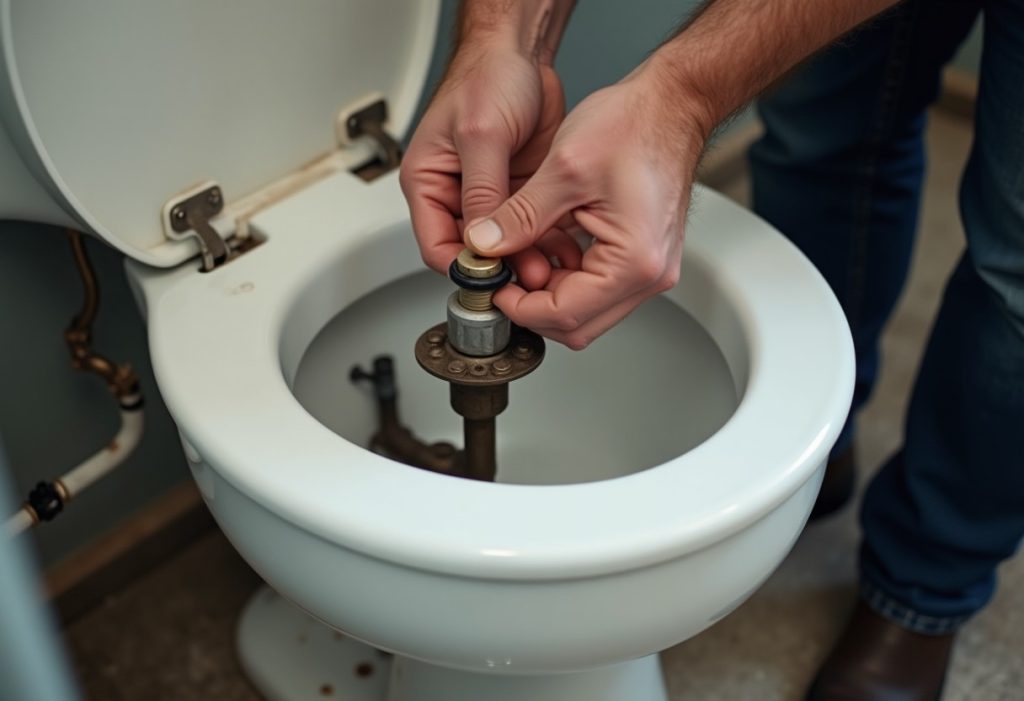
Set the tank water line about 1 inch below the top of the overflow tube, the guidance Fluidmaster prints on its valves. Too high and water spills into the overflow tube and the toilet runs; too low and the bowl may not refill or flush well. The adjustment method depends on your valve type, and every change takes a few seconds to test.
- Take the tank lid off and find the current water line against the overflow tube.
- On a float-cup valve, pinch the spring clip on the adjustment rod and slide the float cup down to lower the level or up to raise it. Some models use a screw on top: clockwise raises, counterclockwise lowers, or the reverse depending on brand, so make a small turn and check.
- On an older ballcock (float-ball) valve, turn the screw on top of the arm, or gently bend the brass arm down to lower the level.
- Flush, let the tank refill, and confirm the water stops about 1 inch below the overflow tube. Repeat in small steps until it is right.
If the valve will not hold a level no matter how you set it, the seal is likely worn and the valve needs replacing rather than adjusting.
How do you replace a toilet fill valve?
Replacing a fill valve is a common DIY job that takes about 20 to 30 minutes with a universal float-cup valve, an adjustable wrench, and a towel. The valve costs roughly $10 to $20. A plumber typically charges about $100 to $150 including the part and a service call, depending on your area. Work slowly at the tank hole, since overtightening the plastic locknut can crack the porcelain.
- Shut off the water at the stop valve under the toilet, then flush and hold the handle to drain the tank.
- Sponge or towel out the last inch of water so the tank is dry.
- Disconnect the water supply line from the bottom of the old valve’s shank.
- Unscrew the plastic locknut under the tank and lift the old valve out.
- Set the new valve’s height so the marked critical level (C.L.) sits at least 1 inch above the overflow tube, per plumbing code, then drop it through the tank hole.
- Hand-tighten the locknut, then give it a small extra turn with a wrench. Do not force it.
- Reconnect the supply line, clip the small refill tube onto the overflow tube (do not push it down inside), turn the water back on, and check for leaks.
- Set the water level about 1 inch below the overflow tube and test a full flush.
If the tank is coming off anyway or you are setting a whole new fixture, our guide to how to install a toilet covers the wax ring and closet bolts. And if you see water pooling on the floor rather than inside the tank, that is a different problem covered in our guide to a toilet leaking at the base.
How we sourced this
Water-waste figures come from the EPA WaterSense program: the up-to-200-gallons-per-day running-toilet figure and the Fix a Leak Week household statistics (nearly 1 trillion gallons wasted nationwide per year, more than 9,300 gallons per average home, and the 90-gallons-per-day threshold used for the high-leak home in the chart). The 1-inch-below-overflow water level and the critical-level positioning above the overflow tube come from Fluidmaster’s Model 400 installation instructions. Valve-type behavior and the fill-versus-flush mechanics reflect standard fixture design and manufacturer documentation from Fluidmaster and Korky. Part prices ($10 to $20), plumber charges ($100 to $150), and install time (20 to 30 minutes) are general US market and manufacturer figures presented as ranges; they vary by region, brand, and shop minimums. Chart values are daily gallons per the EPA, with the average-home figure of about 26 gallons per day derived from the EPA’s 9,300-gallons-per-year household average.
Frequently asked questions
What does a toilet fill valve do?
The fill valve refills the tank with fresh water after each flush and shuts off when the water reaches the set level. It sits on the left side of the tank, connects to the supply line under the toilet, and also sends a small stream through the overflow tube to refill the bowl. When it fails, the toilet runs, fills slowly, or hisses.
What is the difference between a fill valve and a flapper?
The fill valve refills the tank, and the flapper seals the flush valve at the bottom of the tank. The flapper is the rubber or silicone seal that lifts when you flush and drops back to hold water. A bad flapper lets water leak into the bowl, while a bad fill valve fails to shut off or fills too slowly. They are two separate parts.
How do I know if my fill valve is bad?
The clearest signs are a toilet that keeps running or cycles on by itself, a tank that fills very slowly, a constant hiss or whistle, or a knock in the pipes (water hammer) when the tank finishes filling. If the flapper seals fine but water still trickles into the tank, the fill valve is usually the cause.
How do I adjust the water level in the tank?
Set the water line about 1 inch below the top of the overflow tube. On a float-cup valve, pinch the clip on the adjustment rod and slide the float down to lower the level or up to raise it. On older ballcock valves, turn the screw on top of the arm, or gently bend the brass arm. Flush and recheck after each change.
How much does it cost to replace a toilet fill valve?
The valve itself usually costs about $10 to $20 at a hardware store, and a universal float-cup valve fits most toilets. A DIY swap takes roughly 20 to 30 minutes with basic tools. Hiring a plumber often runs about $100 to $150 including the part and a service call, depending on your area and the shop’s minimum charge.
How long does a toilet fill valve last?
A quality fill valve often lasts around 5 to 7 years, though hard water, sediment, and worn seals can shorten that. Mineral buildup on the seal is a common reason a valve starts to hiss or refuses to shut off. Because the part is cheap and the job is quick, replacing a valve that runs is usually smarter than repeated adjustment.
Why does my toilet keep running after I replace the flapper?
If a new flapper did not stop the running, the fill valve is the next suspect. A worn fill-valve seal lets water trickle in, so the valve never fully shuts off and the tank slowly overfills into the overflow tube. Check whether water is spilling into the overflow tube; if it is, the fill valve or its water-level setting is the problem, not the flapper.
Can I use any fill valve on my toilet?
Most modern toilets accept a universal float-cup fill valve, which adjusts in height to fit tanks of different sizes. The main exception is a few low-profile, dual-flush, or pressure-assisted models that use a proprietary valve. Check that the valve’s height range covers your tank and that the shank fits the tank hole, which is standard on nearly all US toilets.


