Sump Pump Running Constantly? Causes and Fixes
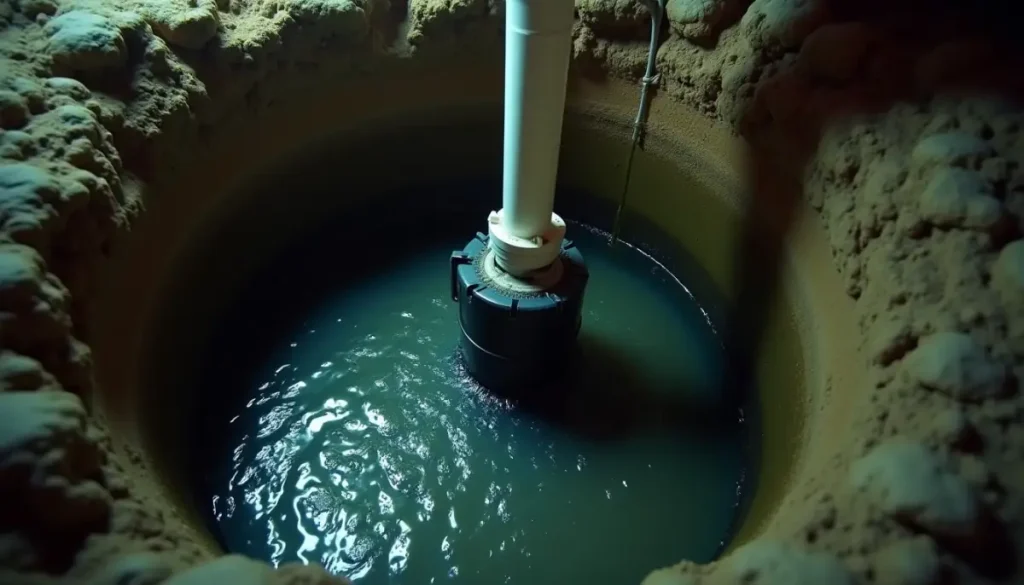
A sump pump running constantly means one of two things: water really is pouring into the pit faster than normal, or the pump cannot shut itself off, and a five-minute refill test tells you which.
Key Takeaways
- Pentair’s sump pump troubleshooting FAQ traces a pump that runs continuously to two causes: a lot of water coming in, or a float switch stuck in the ON position.
- A Zoeller M53 switches on at 7-1/4 inches of water and off at 3 inches, so in an 18-inch basin each cycle removes roughly 4.7 gallons (our arithmetic from Zoeller’s spec sheet).
- At the EIA’s July 2026 average residential price of 18.31 cents per kWh, a 9.7-amp pump running around the clock can cost up to about $147 a month.
- Zoeller puts typical sump pump life at seven to ten years depending on the application, and nonstop duty pushes a pump toward the short end.
- Pentair recommends a 1/16-inch to 1/8-inch anti-airlock hole between the pump and the check valve to keep a pump from running while moving no water.
- Buffalo, North Dakota bans sump discharge to the sanitary sewer from April 1 to October 31 and adds a $100 monthly surcharge for violators, one example of rules many cities enforce.
Why is my sump pump running constantly?
A sump pump running constantly is either keeping up with real inflow or stuck in a loop it cannot break. Real inflow comes from heavy rain, snowmelt, a high water table, or a leaking water line. A stuck loop comes from a jammed float, a failed switch, a bad check valve, a clogged intake, a frozen discharge line, or an air-locked pump.
The fixes are opposites, so run this test first.
- Unplug the pump (or flip its breaker) when the water sits near the bottom of the pit.
- Mark the water level on the pit liner with tape or a marker.
- Time how long the water takes to rise 3 to 4 inches. Stay nearby so the basement does not flood.
- Plug the pump back in before the water reaches the top of the basin.
If the pit refills in a minute or two, water really is coming in. If it barely moves in ten minutes but the pump still ran nonstop, the problem sits in the pump, the float, or the discharge side.
Is it normal for a sump pump to run constantly after a storm?
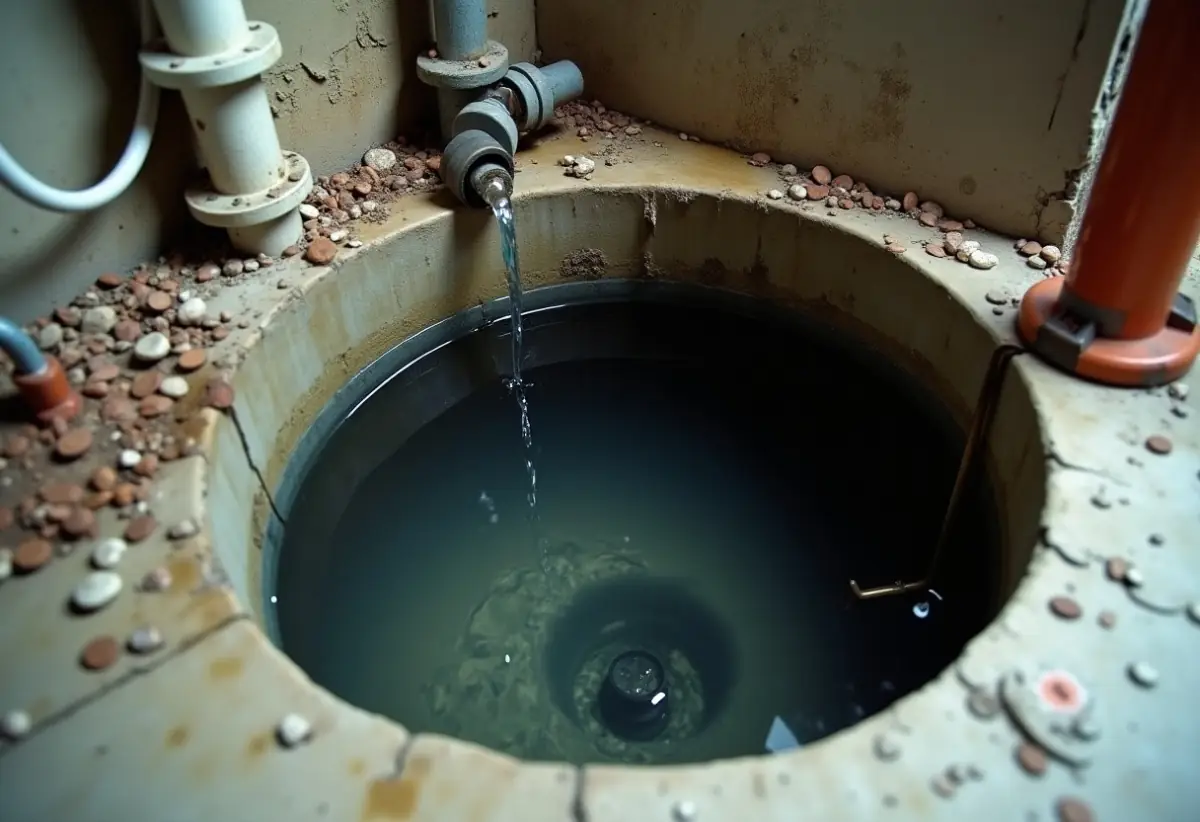
Yes, a sump pump running constantly for hours or even a few days after a heavy storm or a fast snowmelt is often normal. Saturated soil keeps feeding the drain tile long after the rain stops. It becomes a problem when the pump still runs in dry weather a week later, runs with an empty pit, or cannot keep the water below the top of the basin.
Homes on a high water table or at the low point of a street can see a pump cycle every few minutes all season. That is a site condition, not a defect. Watch for three signs of a real fault:
- The pump runs but the water level never drops, which points to a clogged intake, a worn impeller, or a blocked discharge.
- The pump shuts off and the pit refills within seconds with a gurgle from the pipe, which points to a failed check valve.
- The pump keeps cycling in a dry spell, which points to a leaking water line or a high water table.
For pumps that will not start at all, our full sump pump not working guide covers power and dead motors.
Why is my sump pump running but there’s no water in the pit?
A sump pump running with no water in the pit almost always has a float that cannot drop, or a switch that has failed closed. Common culprits are a tethered float caught on the pit wall, a float wrapped in its own cord, debris wedged under a vertical float, or a burned switch contact. Unplug it at once, because running dry overheats the motor.
Zoeller’s M53 is built to start at 7-1/4 inches of water and stop at 3 inches, according to its M53 catalog sheet. If your pump keeps running below its own off point, the switch is not reading the water. Lift and drop the float by hand with the pump plugged in and listen for a clean start and stop.
A float that moves freely but never shuts the pump off means the switch has failed. Our guide on how to test and replace a sump pump float switch walks through tethered, vertical, and electronic switches.
Use this table to match what you see to a likely cause.
| Symptom | Likely cause | Test | Fix |
|---|---|---|---|
| Runs with an empty pit | Stuck or tangled float | Unplug, check float travel, lift and drop it by hand | Free the float, reposition the pump away from the wall, secure the cord |
| Float moves freely, pump never stops | Failed float switch | Plug the pump straight into the outlet (bypass the piggyback switch) to confirm the motor works | Replace the switch or the pump |
| Pit refills right after shutoff, gurgle in pipe | Missing or failed check valve | Watch the pit for 30 seconds after shutoff | Install or replace the check valve, arrow pointing away from the pump |
| Runs, water barely drops | Clogged intake screen or worn impeller | Unplug, pull the pump, inspect the screen and impeller | Clean the screen, set the pump on a brick or stand, replace if worn |
| Hums and runs, no water leaves the pipe | Air lock | Look for a weep hole between pump and check valve | Drill or clear a 1/16 to 1/8 inch relief hole |
| Runs in winter, water backs up | Frozen or clogged discharge line | Check the outdoor outlet for ice or debris | Thaw, clear, and add a freeze-resistant discharge fitting |
| Fast refill in dry weather | Leaking water main or irrigation line | Pool test strip in pit water, watch the water meter leak dial | Find and repair the leak |
| Runs nonstop in heavy rain, cannot keep up | Undersized pump or high water table | Refill timing test during inflow | Larger pump, second pump, or battery backup |
How do you fix a sump pump that keeps cycling?
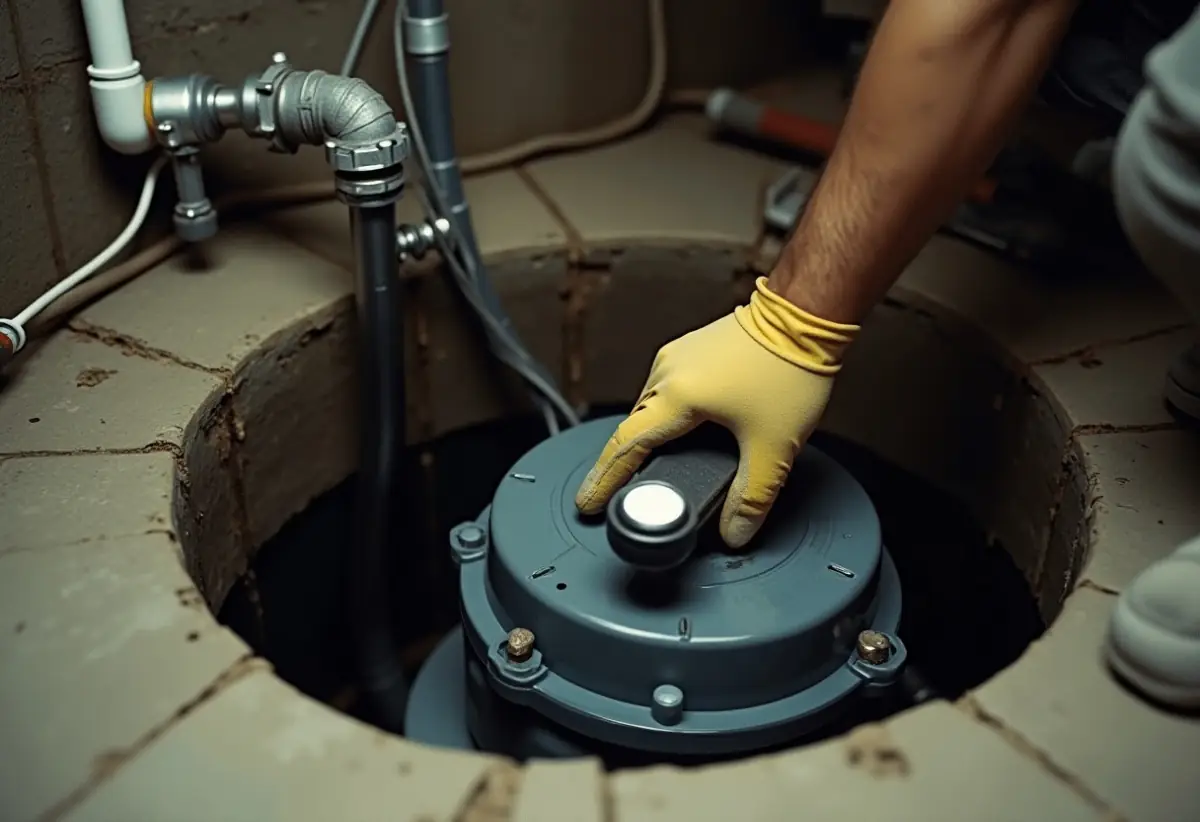
Fix a sump pump that keeps cycling by working from the cheapest, most common cause outward: float first, then check valve, then intake, then the discharge line and weep hole. Always unplug the pump before you reach into the pit.
Check valve
The check valve keeps the water in the vertical discharge pipe from falling back into the basin when the pump stops. If it is missing, stuck open, or has a worn flapper, the pump pumps the same water over and over. Pentair’s FAQ says the arrow on the valve must point up toward the discharge, not at the pump.
Intake screen and impeller
Silt and gravel can choke the intake so the pump moves only a trickle. Pull the pump, rinse the screen, spin the impeller by hand, and set the pump on a flat brick so it clogs less.
Air lock and the weep hole
Air trapped between the pump and a closed check valve can stop flow while the motor keeps running. Pentair recommends a 1/16-inch to 1/8-inch anti-airlock hole in the pipe just above the pump discharge and below the check valve. Clear an existing hole with a paper clip, because mineral scale closes it over time.
Frozen or clogged discharge line
A frozen or clogged discharge line pushes water back to the pit. Clear the outlet and slope the pipe so it drains between cycles.
Leaking water main or irrigation line
A pit that refills fast in a drought may be catching city water. Dip a pool test strip in the pit water. Groundwater carries no chlorine, while treated city water normally does, so a chlorine reading is a strong lead. Shut every fixture off and watch the water meter’s leak dial, then call your water utility or a plumber to locate the break.
Undersized pump
If the refill test shows heavy inflow and the pump never catches up, it may be too small for the head and the volume. Size a replacement on the flow it delivers at your actual vertical lift, not the zero-head number on the box. You can compare sump pump types and horsepower before you buy.
How much electricity does a sump pump running constantly use?
A sump pump running constantly can use up to about 800 kWh a month, which costs up to about $147 at the July 2026 national average price. That ceiling assumes a pump drawing 9.7 amps at 115 volts, like the Zoeller M53, running 24 hours a day for 30 days. Real watts run somewhat lower than amps times volts because motors do not run at full power factor.
Here is the arithmetic. 9.7 amps times 115 volts equals about 1,116 watts, or 1.116 kW. Multiply by hours per day and by 30 days to get kWh per month, then by the U.S. average residential price of 18.31 cents per kWh from the EIA’s Electric Power Monthly Table 5.6.A for July 2026.
Your bill will differ by state rate and actual draw, which a clamp meter can measure. The bigger cost of nonstop running is motor wear.
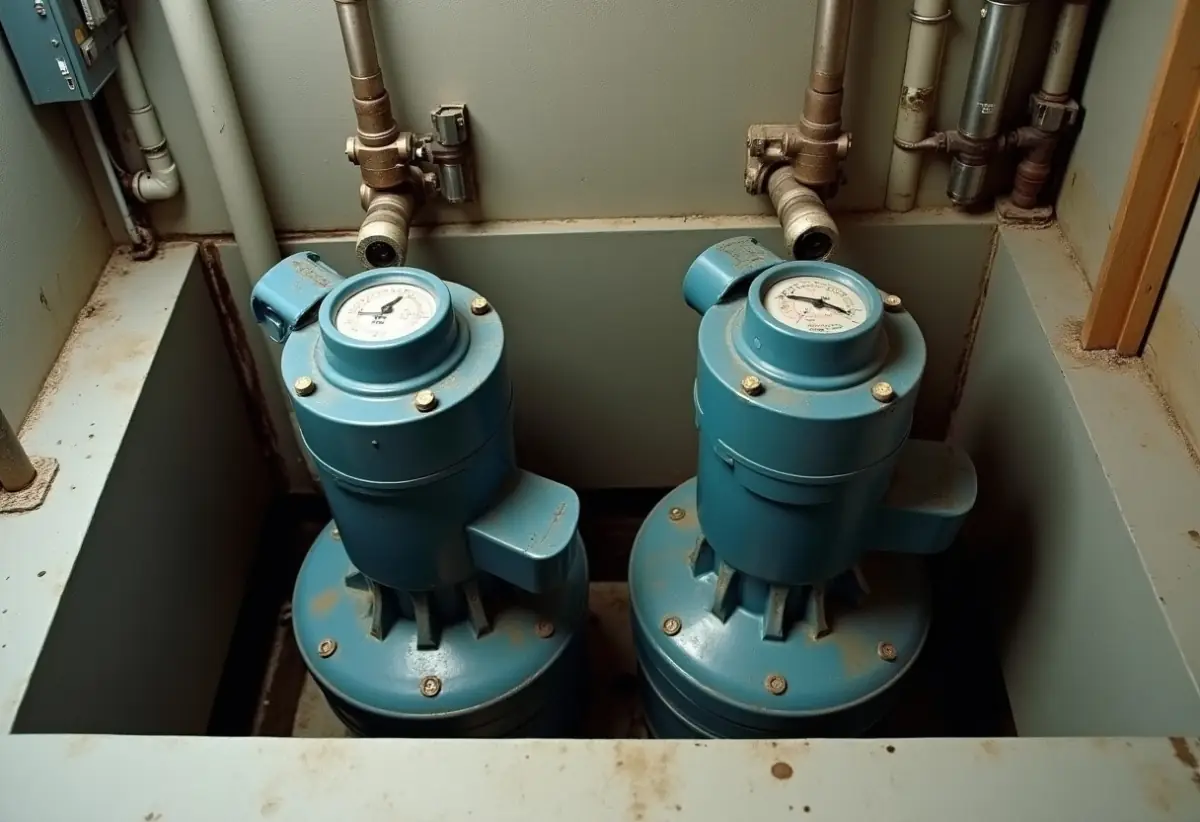
How long does a sump pump last, and when should you add a second pump or battery backup?
Zoeller puts typical sump pump life at seven to ten years depending on the application, in its Three Decades Running case study. A pump that cycles nonstop through every wet season sits at the short end. Add a second pump or a battery backup when the refill test shows the pit can fill faster than one pump empties it, or when a power outage would flood finished space.
Pentair notes that heat is the enemy of electric motors and can shorten pump life dramatically. Give the pump its own outlet, never an extension cord.
Each cycle on a Zoeller M53 moves the water from 7-1/4 inches down to 3 inches, a 4-1/4 inch drop. In an 18-inch-diameter basin that is about 254 square inches times 4.25 inches, or about 1,082 cubic inches, which works out to roughly 4.7 gallons per cycle. A pump that cycles every minute is moving more than 280 gallons an hour, and every start adds heat.
A second pump with a slightly higher float setting shares the load. A battery backup sump pump covers power outages, which tend to hit during the same storms that fill the pit.
Where is a sump pump allowed to discharge?
A sump pump should discharge outside to the yard, a dry well, or a storm sewer where your city allows it, and never into the sanitary sewer in many cities. Clear groundwater overloads wastewater plants and can back sewage into neighbors’ basements. Check your local code before you reroute a line that runs nonstop, because the rules and penalties vary by city.
The City of Buffalo, North Dakota offers one clear example. Its sump pump ordinance bars any groundwater or storm water from the sanitary system from April 1 to October 31, adds a $100 monthly surcharge to sewer bills of noncompliant properties, and allows an infraction of up to $1,000.
Aim the outlet well away from the foundation so the water does not soak back down and feed the pump a second time.
How we sourced this
We consulted more than a dozen sources and cited 5: Pentair’s sump pump troubleshooting FAQ, Zoeller’s M53 catalog sheet and Three Decades Running case study, the EIA Electric Power Monthly Table 5.6.A (July 2026 data), and the City of Buffalo, ND sump pump ordinance. We also reviewed top-ranking guides and People Also Ask questions in October 2026. Cost figures are our own arithmetic from nameplate amps and the EIA price, and are ceilings because real motor watts run below amps times volts. The 4.7-gallon cycle volume assumes an 18-inch basin. We excluded unsourced lifespan claims and forum anecdotes.
Frequently asked questions
Is it normal for a sump pump to run constantly?
It can be normal during heavy rain, spring snowmelt, or a season when the water table sits high, as long as the pit refills between cycles and the pump shuts off when the water drops. It is not normal if the pump runs with an empty pit, runs in dry weather, or never stops even when the basin is drawn down to the bottom.
Why is my sump pump running but no water in the pit?
A pump that runs with an empty pit almost always has a float stuck in the on position, a failed switch, or a float tangled on the cord or pit wall. Unplug the pump at once, because running dry overheats the motor. Free the float, then pour in a bucket of water and confirm the pump starts and stops on its own.
Why does my sump pump keep cycling when it hasn’t rained?
Dry-weather cycling points to a water source other than rain or a pump that refills its own pit. Check for a failed check valve letting discharge water fall back, a leaking water main or irrigation line feeding the drain tile, or a high water table. A pool test strip that shows chlorine in the pit water points to treated city water.
Can a sump pump run 24 hours a day?
Most residential sump pumps are built for on and off duty, not nonstop running, and heat shortens motor life. A pump that truly runs all day is either undersized for the inflow or failing to shut off. Zoeller says a typical pump lasts seven to ten years depending on the application, and constant duty pushes it toward the short end.
How much does it cost to run a sump pump constantly?
A 115-volt pump drawing 9.7 amps, like the Zoeller M53, has a ceiling of about 1,116 watts. At the EIA July 2026 average residential price of 18.31 cents per kWh, running it 24 hours a day for 30 days costs up to about $147. Real power draw runs somewhat lower, so treat that figure as a ceiling.
Will a sump pump burn out if it runs constantly?
It can. Pentair notes that heat is the enemy of electric motors and can shorten pump life sharply. A pump running dry burns out fastest because the water that cools the motor is gone. Most pumps have an automatic thermal overload that shuts the motor off when it overheats, so a pump that stops and restarts by itself is a warning sign.
Can heavy rain overwhelm a sump pump?
Yes. The article notes that a pump can run nonstop during heavy rain and still not keep up, which points to an undersized pump or a high water table. In that case the fix is a larger pump, a second pump, or a battery backup, since heat from constant running shortens motor life and pushes it toward early failure.