Kitchen Sink Smells Like Sewer? Causes and Fixes
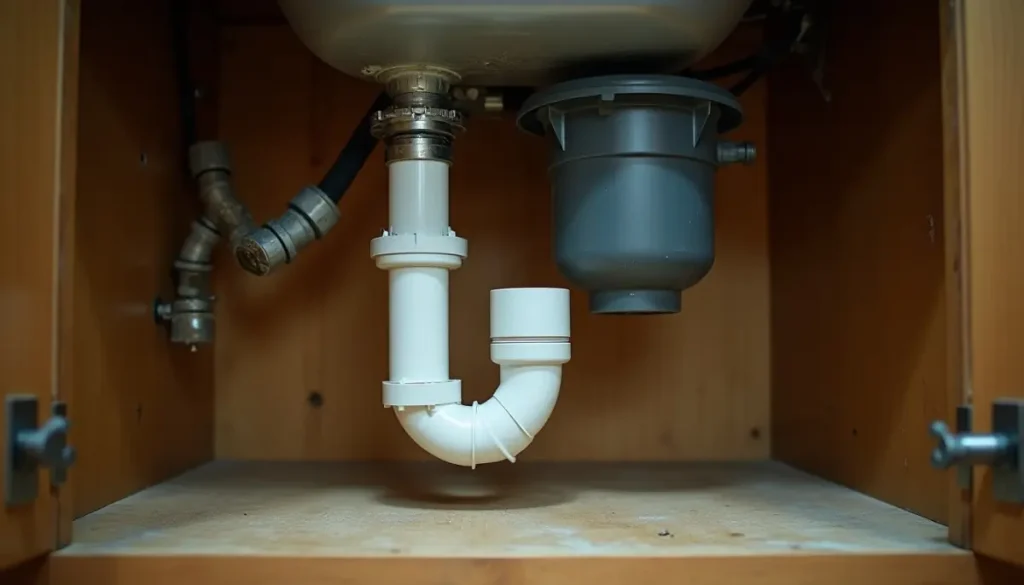
If your kitchen sink smells like sewer, the usual cause is rotting food and grease film in the drain or disposal, a dry trap, or a dishwasher hose that pulls dirty water back.
Key Takeaways
- People can smell hydrogen sulfide, the rotten egg gas in sewer air, at 0.01 to 1.5 ppm, and it turns offensive at 3 to 5 ppm, per OSHA.
- At 100 to 150 ppm the gas deadens your sense of smell, so a fading odor is not proof the air is clear, per OSHA’s effects table.
- Whirlpool Corporation’s Maytag dishwasher guidance calls for a drain hose loop at least 20 inches above the floor, or an air gap if the loop sits lower.
- California Plumbing Code Section 807.3, based on the UPC, requires an approved air gap on a dishwasher drain.
- The IPC and UPC both require a trap seal of 2 to 4 inches of water, which is all that stands between your kitchen and the sewer.
- The ICC says an island sink’s air admittance valve must sit at least 4 inches above the drain it serves.
Why does my kitchen sink smell like sewer?
A kitchen sink smells like sewer when bacteria are digesting food and grease inside the drain, or when the water seal that blocks sewer gas has failed. Both produce hydrogen sulfide, the rotten egg gas. Kitchen drains carry fats and starches bathroom drains never see, so suspect the drain first, then the trap, dishwasher hose and vent.
- Food and grease biofilm. Fats coat the tailpiece and trap, and bacteria in that slime give off sulfur gas at the drain opening.
- A dirty disposal splash guard. The underside of the rubber baffle holds a gray film you never see from above.
- A dry or siphoned P-trap. A prep sink or second basin with its own trap dries out from disuse, and a poorly vented trap can be sucked dry.
- A dishwasher hose with no high loop or air gap. Dirty sink water drifts back into the hose and rots between cycles.
- A failed or missing air admittance valve. A worn seal in an island sink’s one-way vent valve lets gas out.
- A blocked roof vent. Leaves, nests or frost choke the vent, so draining water siphons your trap.
- A loose slip-joint nut. A loose nut on the sewer side of the trap leaks gas into the cabinet, often with no drip.
- A partial clog further down. A slow branch line holds waste that ferments and pushes foul air back up.
- Hot water reacting in the water heater. If only the hot tap smells, the tank is the source.
If several fixtures in the house smell, not only the kitchen, start with our guide to tracking a sewer smell through the rest of the house, since shared venting or the main line is more likely.
How do you tell where the kitchen sink smell is coming from?
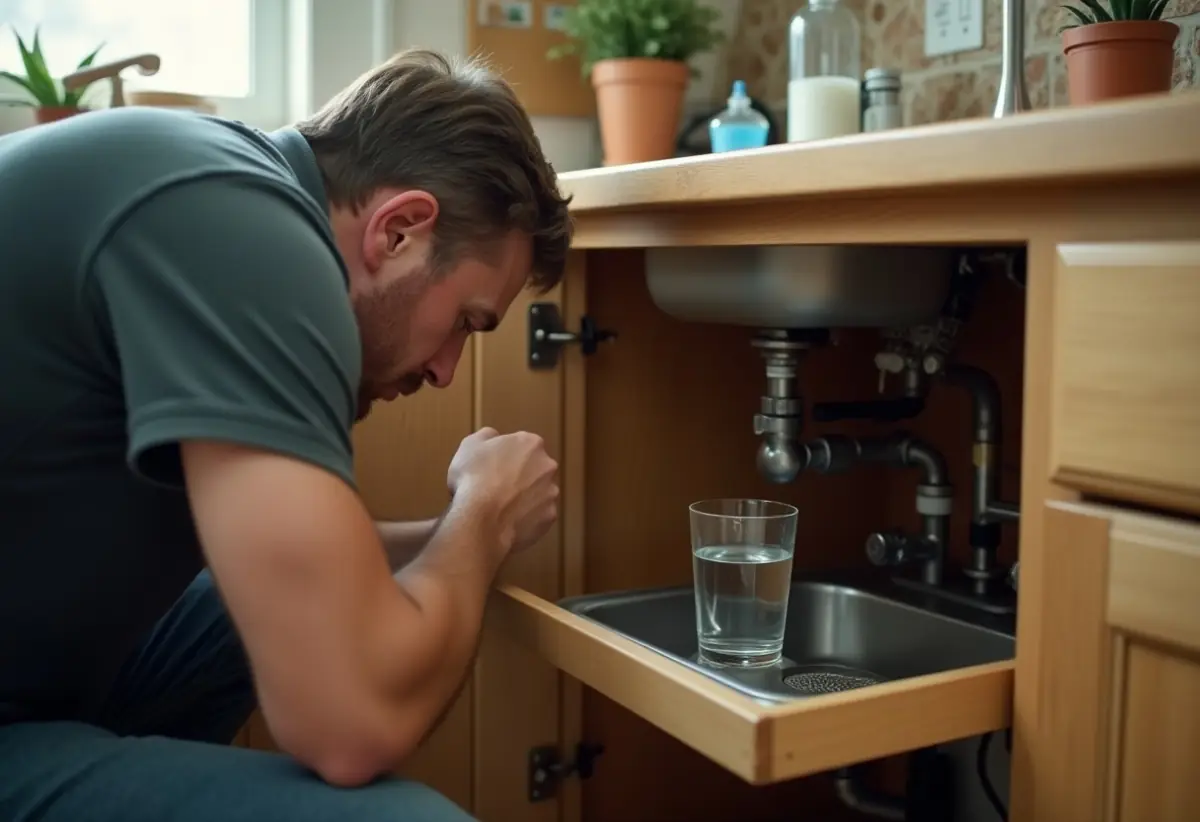
Sniff three places in order: the drain opening, the open cabinet below, and a glass of tap water carried to another room. A smell at the drain points to biofilm or the disposal. A smell strongest in the cabinet points to a loose joint or a bad vent valve. A smell in the glass means your water, not your drain, is the source.
- Clear the air. Close the cabinet for an hour and run the range hood briefly.
- Sniff the drain. Sniff above each basin, then lift the disposal splash guard with a gloved finger and sniff again. A big jump means the disposal is the source.
- Sniff the cabinet. Sniff at the trap, slip nuts, dishwasher hose and any air admittance valve. Drain a full basin and watch the joints with a flashlight.
- Do the glass test. Fill one glass from each tap, carry both to another room and sniff. A smell in the hot glass only points at the water heater.
- Watch the timing. Note whether the smell follows a dishwasher cycle, a heavy drain or days of disuse.
What does each kitchen sink smell pattern point to?
Where and when the smell shows up is the best clue you have. Match your pattern to a row below and try that fix before anything more expensive. Most kitchen odors trace to the first three rows, which need little more than a brush, dish soap and running water.
| Where or when the smell appears | Likely cause | Fix to try first |
|---|---|---|
| Right at the drain, worse when you lift the splash guard | Disposal splash guard and grinding chamber film | Scrub the guard underside and chamber |
| At the drain on the non-disposal side, steady all day | Grease and food biofilm in tailpiece and trap | Remove and clean the trap, flush hot |
| After days away, or from a rarely used prep or bar sink | Dry P-trap (evaporated seal) | Run water for a minute, then use the sink weekly |
| Right after a full basin drains, with gurgling | Siphoned trap from poor or blocked venting | Refill the trap, check the roof vent or air admittance valve |
| After the dishwasher runs, or inside the dishwasher | Drain hose with no high loop or air gap; dirty filter | Add a high loop or air gap, clean the filter |
| Inside the island sink cabinet, no drip visible | Failed or missing air admittance valve | Replace with a listed ASSE 1051 valve |
| Inside the cabinet near the trap arm or wall pipe | Loose slip-joint nut or worn washer on the sewer side | Tighten the nut, replace the washer |
| Slow drain, water rising in the sink when the dishwasher drains | Partial clog further down the branch line | Snake the line past the trap arm |
| Only from the hot tap, in a glass away from the sink | Water heater anode reacting with sulfate-reducing bacteria | Disinfect the tank, swap the anode |
Why does my dishwasher smell like sewer?
A dishwasher smells like sewer most often because its drain hose has no high loop or air gap, so dirty water from the disposal or sink tailpiece drifts back into the hose and the machine’s sump. A clogged tub filter adds to the problem.
Maytag’s drain guidance, published by parent company Whirlpool Corporation, says the drain loop should sit at least 20 inches from the floor, and that an air gap should be used if the loop is lower. The loop prevents backflow and siphoning, the company says.
Codes split on how strict to be. California Plumbing Code Section 807.3, based on the Uniform Plumbing Code, bans connecting a domestic dishwasher to the drain or disposal without an approved air gap fitting on the discharge side. The International Plumbing Code generally also accepts a hose that rises and is fastened under the counter. Local code decides.
- If the hose runs flat along the cabinet floor, lift it and fasten it to the counter underside.
- If your area follows the UPC, install a countertop air gap.
- Pull and clean the dishwasher filter, then run an empty hot cycle.
Why does the kitchen sink smell like rotten eggs only with hot water?
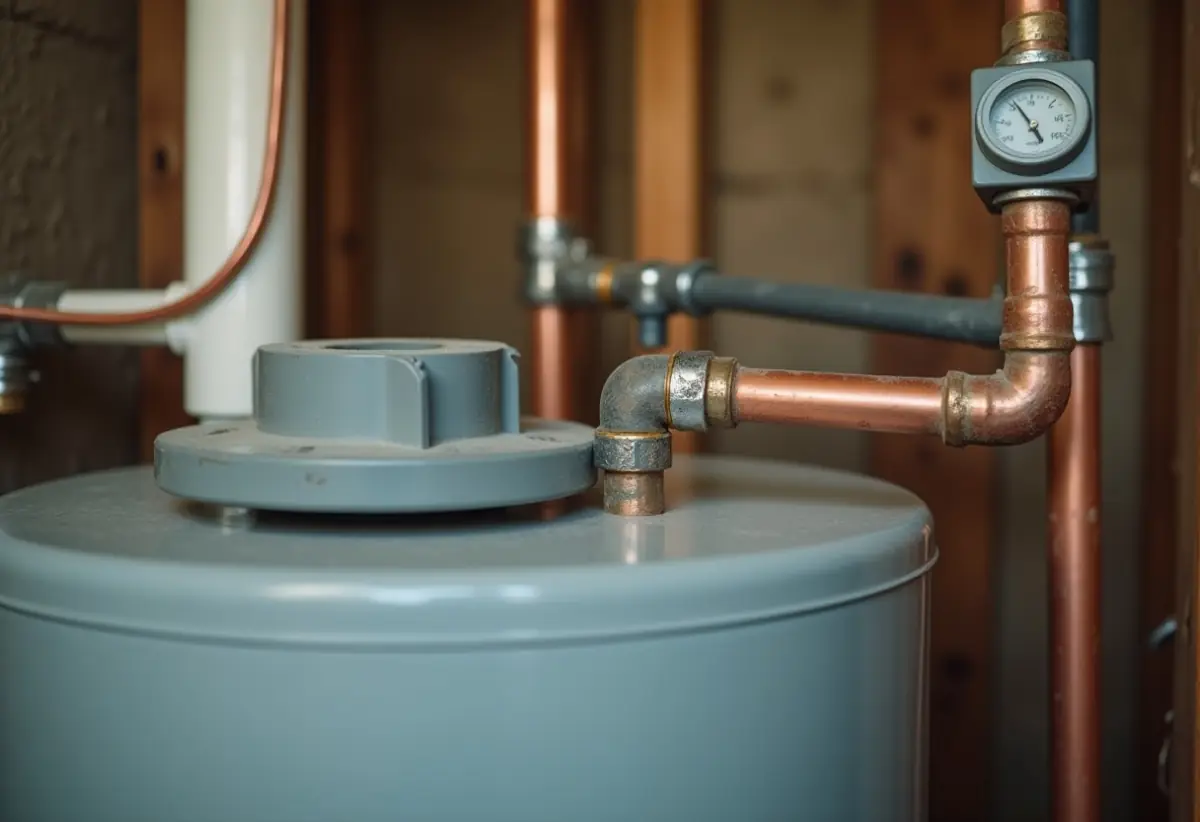
When a kitchen sink smells like rotten eggs only on the hot side, the gas is forming inside your water heater, not your drain. Sulfate-reducing bacteria in the tank react with the magnesium anode rod and produce hydrogen sulfide, which comes out of every hot tap. The glass test from the diagnosis section confirms it in about a minute.
The Minnesota Department of Health describes heating the tank to about 160°F for several hours to kill the bacteria, a job with real scald risk that many homeowners hand to a plumber. Swapping the magnesium rod for an aluminum-zinc or powered anode is the usual long-term fix.
If both taps smell, test the water supply, often a private well, instead of working on the drain.
How do you fix a kitchen sink that smells like sewer, step by step?
Fix a kitchen sink that smells like sewer in order of cost and effort: refill the trap, clean the disposal and splash guard, clean the drain and trap, correct the dishwasher hose, tighten slip nuts, then check the vent valve and roof vent. Stop when the smell stops. Most kitchens never get past step three.
- Refill the trap. Run water in every basin for a minute. See how a P-trap holds its water seal; a dry seal is a two-second fix.
- Clean the disposal. Cut the power and scrub the splash guard underside with a brush and dish soap. Follow our step-by-step garbage disposal cleaning routine for the chamber, never by hand.
- Clean the drain and trap. Set a bucket under the trap, remove it, scrape out the grease and flush the tailpiece with hot soapy water.
- Fix the dishwasher hose. Add a high loop or air gap as local code requires.
- Tighten and reseal joints. Snug each slip nut, replace flattened washers and watch the joints while a full basin drains.
- Check the air admittance valve. Replace a valve that smells or sits below the drain it serves.
- Clear the roof vent. Gurgling drains across the house suggest a blocked vent, a roof job many leave to a pro.
- Snake the branch line. A slow drain after a clean trap means a clog in the wall. Run a hand auger through the trap arm.
Can a failed air admittance valve make an island sink smell like sewer?
Yes. Many island sinks have no roof vent and rely on an air admittance valve under the cabinet that opens to let air in and closes to keep gas out. When its seal wears or sticks, gas escapes into the cabinet, so the smell is strongest there rather than at the drain.
According to ICC CodeNotes on air admittance valves, these valves must sit at least 4 inches above the drain they vent and stay accessible, and every system still needs one open vent outdoors. See how air admittance valves work and fail before buying one, since some UPC areas limit them.
Is sewer gas from a kitchen sink dangerous?
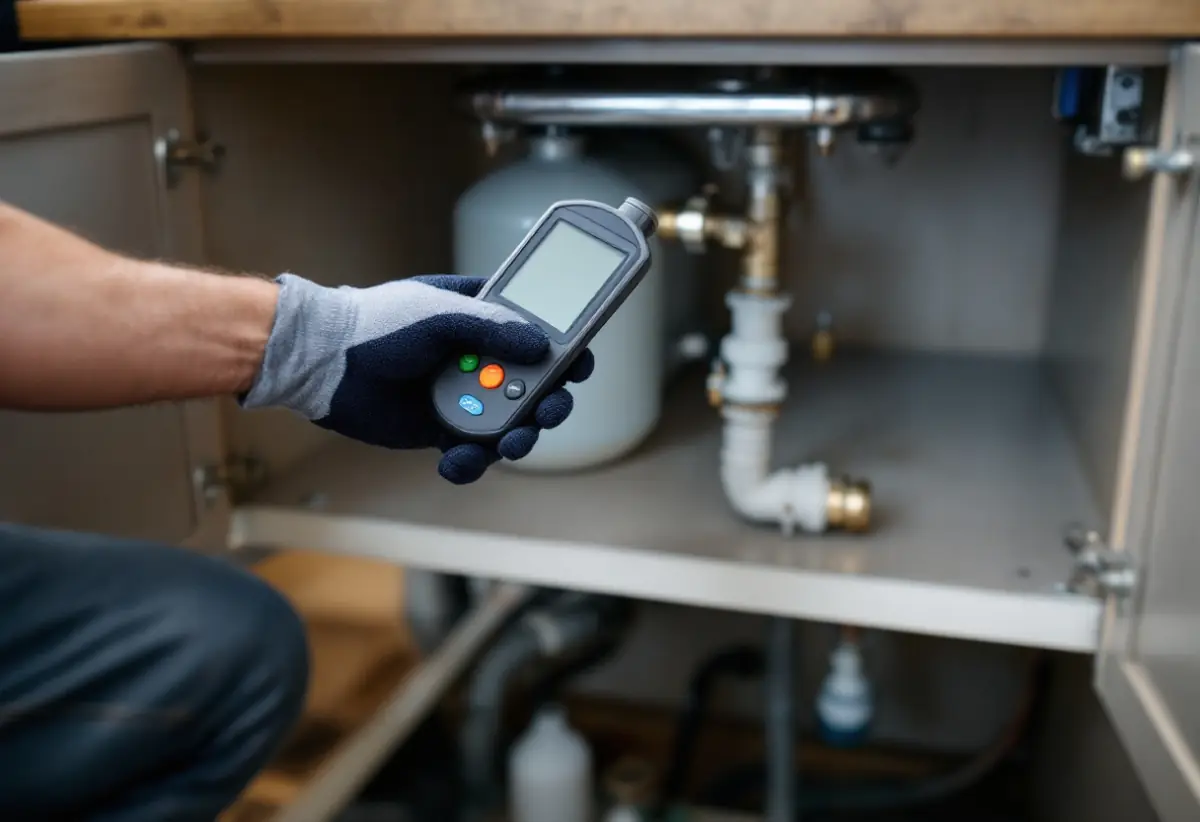
The faint sewer gas from a kitchen sink is mainly a warning sign, not an emergency, but it is not harmless. OSHA lists hydrogen sulfide effects from nausea and headaches at 2 to 5 ppm with prolonged exposure to loss of smell at 100 ppm. Because your nose stops working at high levels, a strong smell that suddenly fades deserves caution.
Household drain odors sit at the bottom of that scale. Ventilate and fix the source rather than masking it, especially with asthma in the house, since OSHA notes airway constriction in some asthma patients at 2 to 5 ppm.
One more check matters. Utilities add a rotten egg odorant to natural gas, so a sulfur smell near a gas range, water heater or furnace may not be sewer gas at all. If you smell it away from the drain, leave the house and call your gas utility from outside.
When should you call a plumber for a kitchen sink sewer smell?
Call a plumber when the kitchen sink smells like sewer after you have refilled the trap, cleaned the disposal and trap, and fixed the dishwasher hose, or sooner if several drains smell, gurgle or back up. Those signs point to venting or a clog in the wall, which takes tools and code knowledge.
- The smell returns within a day of a full cleaning.
- Toilets and tubs gurgle when the kitchen drains.
- Dishwasher water backs up into the sink basin.
- The smell comes from inside a wall.
- The hot water smells and you would rather not handle a tank treatment.
For budgeting, HomeGuide puts snaking a standard fixture drain at roughly $100 to $275, and Angi puts a professional anode rod replacement at about $200 to $500. Prices vary by region.
How we sourced this
We reviewed top-ranking pages and People Also Ask questions for this query and its rotten egg and dishwasher variants in October 2026, then went to primary sources for every number. Sources cited are OSHA (hydrogen sulfide), Whirlpool Corporation’s Maytag help pages (loop height), California Plumbing Code Section 807.3 and ICC CodeNotes (air gaps, valves) and the Minnesota Department of Health (water heaters). Cost ranges are national estimates from HomeGuide and Angi, not our own survey. We excluded septic-specific causes and commercial grease interceptors.
Frequently asked questions
Why does my kitchen sink smell like sewer all of a sudden?
A sudden smell usually means something just changed. The trap may have dried out during a trip, a big drain may have siphoned it, the dishwasher may have pushed dirty water back into its hose, or a clog may have formed downstream. Run water for a minute and sniff again.
How do I get rid of the sewer smell in my kitchen sink?
Work from cheap to costly. Refill the trap with running water, scrub the underside of the disposal splash guard, clean the trap, then give the dishwasher hose a high loop or air gap. If the smell stays, check slip nuts, the air admittance valve and the roof vent.
Can a sewer smell from the kitchen sink make you sick?
At the faint levels most homes see, it is mainly a nuisance, though OSHA says prolonged exposure to 2 to 5 ppm of hydrogen sulfide may cause headaches or nausea. Worry more about a strong smell that suddenly fades, because the gas deadens your sense of smell at higher levels.
Why does my sink smell like sewer when the dishwasher runs?
The dishwasher drains through the sink plumbing. If its hose has no high loop or air gap, dirty water from the disposal can drift back into the hose and rot between cycles. A partial clog downstream can also push foul air up the sink while the pump runs.
Can a garbage disposal cause a sewer smell?
Yes, and it is one of the most common sources. Food film collects under the rubber splash guard and inside the grinding chamber, where bacteria give off sulfur odors. Scrubbing the splash guard with a brush and dish soap often removes the smell in minutes.
Can a clogged vent cause a sewer smell in the kitchen?
Yes. When leaves, a nest or frost block the roof vent, draining water pulls air through the nearest trap instead and can siphon it dry, letting sewer gas in. Gurgling, slow drains and a smell that comes and goes with heavy water use point to the vent.
Does pouring bleach down the drain stop sewer smells?
Bleach may knock back odor bacteria briefly, but it leaves the grease film they live on, so the smell returns. It does nothing for a dry trap, bad vent or loose nut. Never mix bleach with ammonia or acid drain cleaners, because the mix releases toxic gas.
What do plumbers recommend for smelly drains?
They suggest working from cheap fixes to costly ones. Refill the trap by running water for a minute, scrub the disposal splash guard and chamber, remove and clean the trap and tailpiece, then add a high loop or air gap to the dishwasher hose. If the smell stays, tighten slip nuts, check the air admittance valve, and clear the roof vent.


