Air Admittance Valve (AAV): How a Studor Vent Works and Where Code Allows It
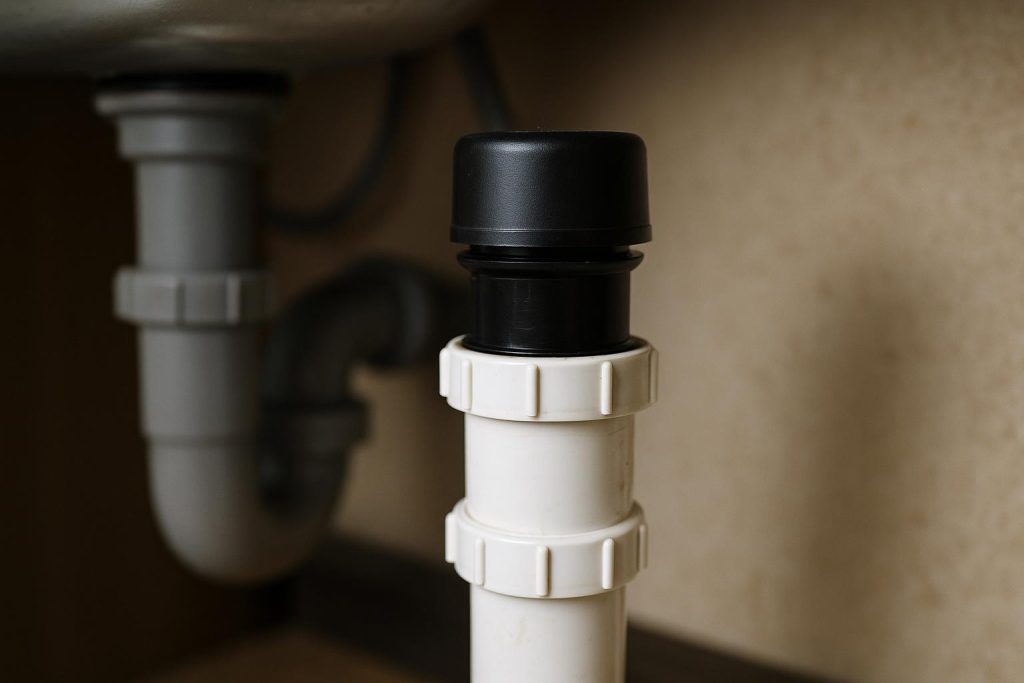
An air admittance valve (AAV), often called a Studor vent, is a one-way valve that opens to let air into a drain line when a fixture empties, then seals shut by gravity to block sewer gas. It vents a fixture, but it does not replace all of your venting.
Key Takeaways
- An AAV admits air to break the vacuum that would siphon a trap dry, then seals against sewer gas; it is a one-way mechanical valve, not an open pipe (Oatey).
- Individual and branch AAVs must conform to ASSE 1051; stack-type AAVs must conform to ASSE 1050, per IPC Section 917.
- An individual or branch AAV sits at least 4 inches above the horizontal branch or fixture drain; a stack AAV at least 6 inches above the highest flood level rim (IPC 917).
- Every building drainage system still needs at least one vent open to the outdoors; an AAV cannot relieve positive pressure (ICC CodeNotes).
- The IPC permits AAVs, but the Uniform Plumbing Code is far more restrictive and many areas limit or prohibit them, so verify with your local AHJ.
- AAVs are mechanical and wear out; a sewer smell usually means the valve is stuck open and needs replacing (Oatey).
What is an air admittance valve, and how does it work?
An air admittance valve is a spring-loaded or gravity-seated one-way valve that opens to let air into the drainage system only when water draining downstream pulls the pressure inside the pipe below atmospheric. The moment that negative pressure is relieved, the internal diaphragm or disc drops back onto its seat and closes. That same seal-protecting mechanism explains why drains gurgle whenever a failing valve or blocked vent starves the pipe of air.
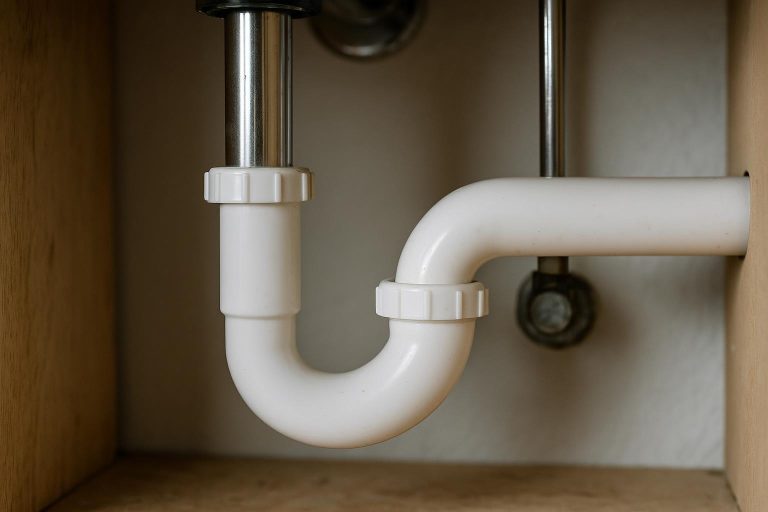
That one-way action does two jobs at once. Admitting air breaks the vacuum that would otherwise siphon water out of a fixture trap, protecting the water seal that keeps sewer gas out of the room. When the fixture stops draining, the valve seals shut so the same sewer gas cannot escape through it. The water seal it protects is the one held by the P-trap that an AAV protects. That same trap seal can still fail quietly over time, so check out kitchen sink smells like sewer if odors return despite a working AAV.
The product most people picture is the Studor vent, the original brand, though Oatey Sure-Vent and others make equivalents. They thread onto an adapter above the drain and need no connection to the roof.
Does an AAV replace all of your venting?
No. An AAV admits air to vent an individual fixture or branch, but it cannot do everything a conventional vent system does. Air admittance valves only let air in; they cannot let positive pressure out. When a large slug of water surges down a stack, the pressure spike has to escape somewhere, and a sealed one-way valve will not pass it.
That is why IPC Section 917 still requires at least one open vent that terminates to the outdoors on every building drainage system, according to ICC CodeNotes. The AAV is a secondary, or supplemental, venting method. Think of it as a tool for the island sink, the basement bath, or the remodel where running a vent to the roof is impractical, not as a way to skip the vent stack entirely. For the bigger picture, see how a plumbing vent system is laid out.
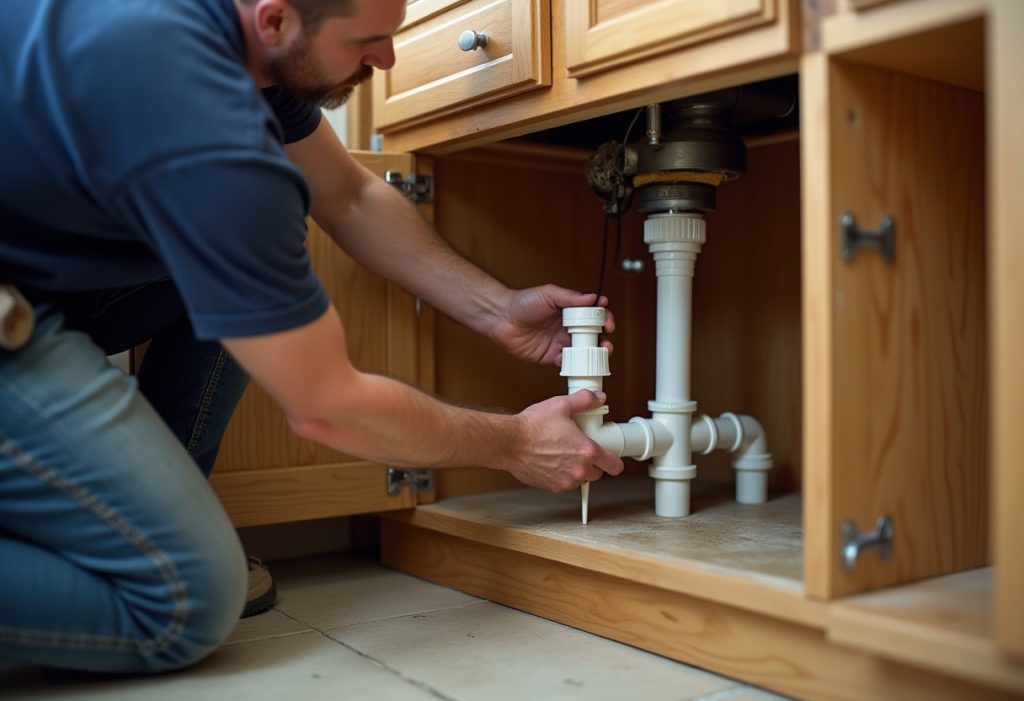
What standards cover AAVs: ASSE 1051 vs ASSE 1050?
Two ASSE standards govern air admittance valves, split by where the valve sits in the system. ASSE 1051 covers individual and branch-type AAVs, the small ones that vent a single fixture or a branch of fixtures. ASSE 1050 covers stack-type AAVs, the larger, higher-capacity valves rated to vent a drainage stack or vent stack.
IPC Section 917 names both standards directly: individual and branch AAVs must conform to ASSE 1051, and stack-type AAVs must conform to ASSE 1050. The marking on the valve body tells you which it is. Using an ASSE 1051 branch valve where the load calls for an ASSE 1050 stack valve is a common sizing mistake that an inspector will catch.
Where does code allow AAVs, and where are they prohibited?
Under the IPC, an AAV may serve as the vent for an individual vent, branch vent, circuit vent, or a stack vent, provided it is sized and installed correctly and the local AHJ accepts it. The code treats AAVs as a legitimate venting method, which is why they show up so often in kitchen islands and finished basements.
The prohibitions matter just as much. An AAV without an engineered design cannot be used to vent a sump or tank of any type, and it cannot serve a stack exceeding six branch intervals. It must not be installed in an HVAC supply or return plenum, or any space that is not at atmospheric pressure, and it must stay accessible for replacement. Critically, it cannot be the only vent on the building; one conventional vent to open air is still required.
| Vent type | Where used | What it vents | Code acceptance | Best for |
|---|---|---|---|---|
| Individual AAV (ASSE 1051) | Above the trap arm of one fixture or a branch, at least 4 in up | A single fixture or a branch of fixtures (admits air only) | Allowed under IPC 917; restricted or prohibited in many UPC areas | Island sinks, remodels, a fixture far from the stack |
| Stack AAV (ASSE 1050) | At the top of a stack, at least 6 in above the highest flood level rim | A drainage or vent stack, up to six branch intervals | Allowed under IPC 917; restricted or prohibited in many UPC areas | Higher-DFU loads where a full stack vent is impractical |
| Conventional through-roof vent | Open pipe run up through the roof | The whole system, both intake air and positive pressure relief | Accepted everywhere; still required on every building | The primary vent on any system; the only option in strict UPC areas |
Because acceptance is set locally, this is the one claim to verify yourself. Confirm with your local AHJ and check whether the job needs a permit before you buy a valve. Our overview of plumbing permit requirements covers when that applies.
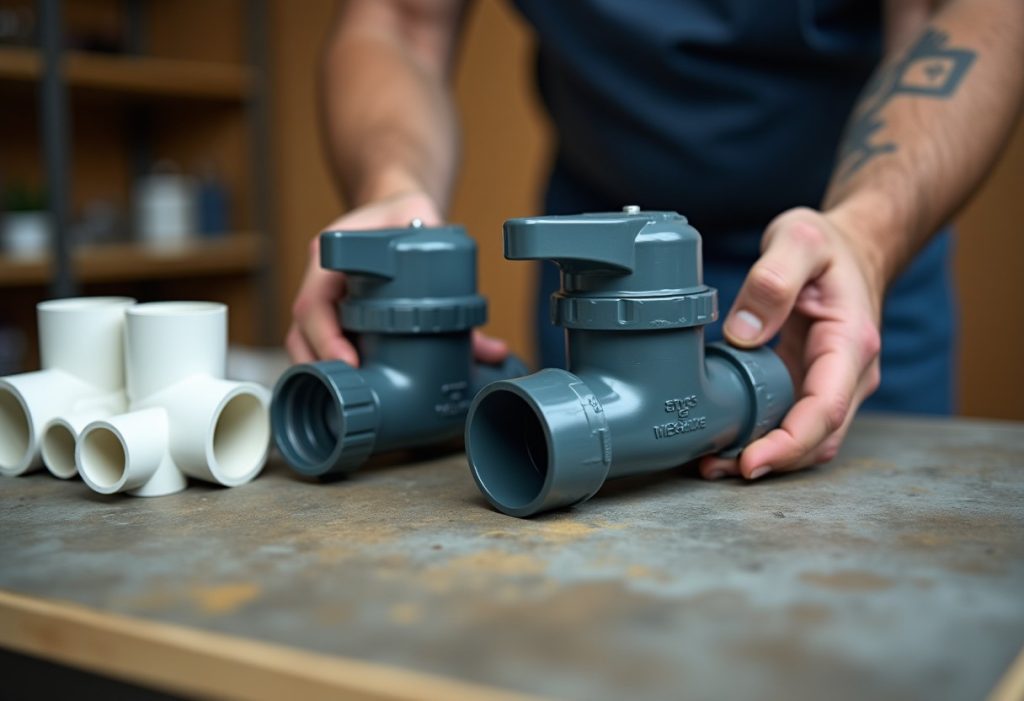
How do you size an AAV by drainage fixture units?
You size an AAV by the drainage fixture unit (DFU) load it has to vent, matching the valve rating to the fixtures downstream of it. A DFU is a code unit of drain load: a bathroom lavatory is about 1 DFU, a kitchen sink around 2, so a single fixture needs only a small valve, while a whole branch or stack needs a higher-capacity one.
Oatey Sure-Vent publishes branch ratings of 20, 160, and 500 DFU across its line, with the 3-inch by 4-inch model rated for 500 branch DFU. The chart below shows that spread. Pick the valve whose rating meets or exceeds the connected DFU load, then confirm against the manufacturer spec sheet and your local code table.
The common error is over-reading the rating: a 160 DFU valve does not mean you can hang 160 fixtures off one undersized drain. The DFU rating is the valve’s air-flow capacity, not a pass on drain or trap-arm sizing, which still follow the code tables.
How high must an AAV be installed above the trap arm?
Height is where most AAV installs go wrong. IPC Section 917 requires an individual or branch-type AAV to sit at least 4 inches above the horizontal branch drain or fixture drain it vents, which keeps the valve above the trap arm and out of the flow path. A stack-type AAV must be at least 6 inches above the flood level rim of the highest fixture it serves.
A few more rules decide pass or fail. The valve must be vertical, within roughly 15 degrees of plumb, or the internal seal will not seat. It must be accessible for replacement, which rules out a sealed wall cavity, and it cannot sit in an HVAC plenum. It also needs at least 6 inches of clearance above any insulation so air can reach it. A cabinet under a sink or a recessed wall box with a vented cover is the usual compliant home.
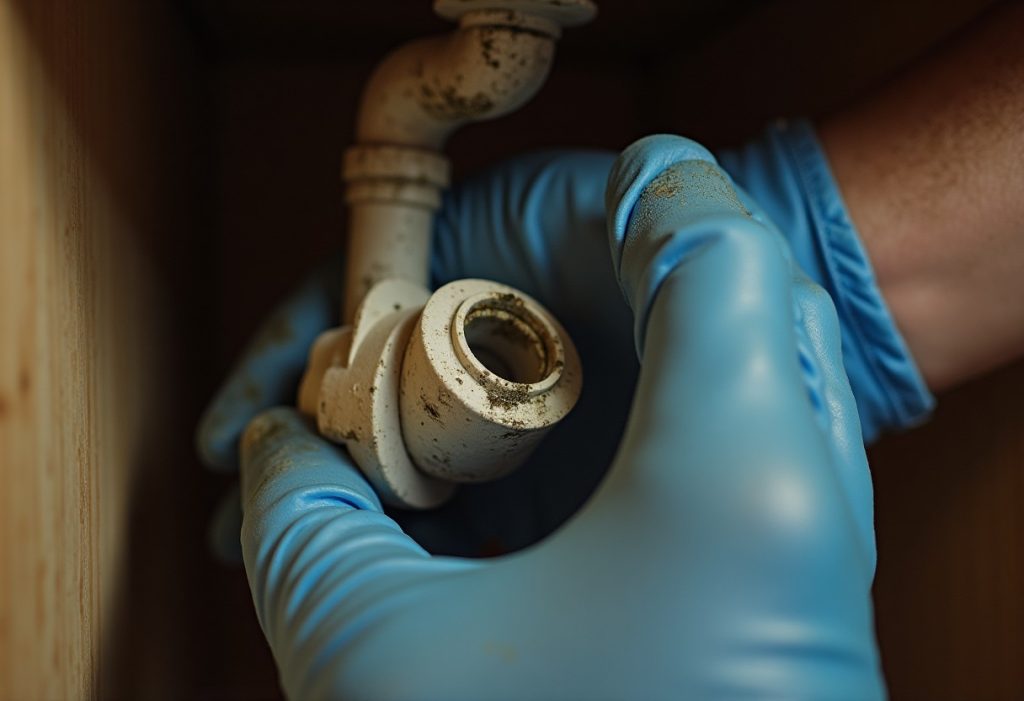
Why does my AAV smell like sewer gas?
A sewer smell at an AAV almost always means the valve is stuck open or its seal has failed, so it no longer closes when the fixture is idle. Grease film, debris, hard-water scale, or simple age can keep the diaphragm from seating. Because the valve is mechanical, this is a wear item, not a permanent fixture.
Diagnose it by smell and location: if the odor is strongest right at the valve and comes and goes, the AAV is the likely culprit. The fix is to unthread the old valve from its adapter and thread on a new one; AAVs are not serviceable inside. Before blaming the valve, rule out a dried-out trap or a bad seal elsewhere, since a dry P-trap produces the same smell. If replacing the AAV does not clear it, the problem is upstream in the drain or vent.
AAV vs a conventional vent: which should you use?
Use a conventional through-roof vent as the backbone of the system, and reach for an AAV only where a conventional vent is genuinely impractical. A vent stack open to the outdoors handles both intake air and positive-pressure relief, has no moving parts, and is accepted in every jurisdiction. That makes it the default and, in strict UPC areas, often the only choice.
An AAV earns its place at the island sink with no wall to vent through, the basement bathroom added after the fact, or the remodel where opening the roof is not worth it. The tradeoff is that it is a mechanical part that will eventually need replacing, and its local acceptance is not guaranteed. If you want to understand where it fits among shutoffs and check valves, our guide to other plumbing valve types puts it in context. Whatever you choose, confirm acceptance with your local AHJ first.
How we sourced this
Code requirements come from the International Plumbing Code (ICC), Section 917 on air admittance valves, including the ASSE 1051 and ASSE 1050 standard references, the 4-inch and 6-inch minimum heights, the six-branch-interval limit, the sump and tank prohibition, and the rule that one vent must still terminate outdoors. The standards split (ASSE 1051 individual and branch, ASSE 1050 stack) is from ASSE International via the IPC. Product figures (DFU capacities of 6, 20, 160, and 500 branch DFU, the 15-degree installation tolerance, and the stuck-valve failure mode) come from Oatey Sure-Vent product and installation documentation; Studor is named as the original AAV brand. We describe local acceptance as jurisdiction-dependent because the Uniform Plumbing Code treats AAVs far more restrictively than the IPC and adoption varies by state and city. Retailer listings were read for model details but code and legal points should be confirmed with your local authority having jurisdiction.
Frequently asked questions
What is an air admittance valve?
An air admittance valve (AAV), often called a Studor vent, is a one-way mechanical valve that opens to let air into the drain line when a fixture drains, then seals shut by gravity. Letting air in breaks the vacuum that would otherwise siphon the trap dry, while the seal blocks sewer gas from entering the room. It replaces a vent pipe on an individual fixture or branch, not the whole system.
Does an AAV replace a regular vent?
No, not entirely. An AAV vents an individual fixture or branch by admitting air, but it cannot relieve positive pressure the way an open pipe can. IPC Section 917 still requires at least one vent that terminates to the outdoors on every building drainage system. An AAV is a secondary venting method for fixtures where running a conventional vent to the roof is impractical.
Are air admittance valves legal?
It depends on your jurisdiction. The International Plumbing Code (IPC Section 917) permits AAVs that conform to ASSE 1051 (individual and branch) or ASSE 1050 (stack). The Uniform Plumbing Code is far more restrictive and many UPC areas limit AAVs to specific situations or prohibit them. Always verify acceptance with your local authority having jurisdiction before you install one.
How high must an air admittance valve be installed?
Under IPC Section 917, an individual or branch-type AAV must sit at least 4 inches above the horizontal branch drain or fixture drain it vents, and above the trap arm. A stack-type AAV must be at least 6 inches above the flood level rim of the highest fixture served. The valve must also be vertical, within about 15 degrees of plumb, and accessible for replacement.
What size AAV do I need?
Size the AAV by the drainage fixture unit (DFU) load it vents. Common Oatey Sure-Vent models are rated for 20, 160, and 500 branch DFU, so a single lavatory (1 DFU) or kitchen sink needs only a small 20 DFU unit, while a whole branch or stack needs a higher-capacity valve. Confirm the DFU load and the model rating against the manufacturer spec and your local code.
Why does my air admittance valve smell like sewer gas?
A sewer smell near an AAV usually means the valve is stuck open or the diaphragm has failed, so it no longer seals when the fixture is not draining. Grease, debris, or age can jam the seal. AAVs are mechanical and do eventually wear out. The fix is almost always to unthread the old valve and replace it; they are not serviceable internally.
Can an AAV be installed in a wall or an attic?
It must be accessible and have free air movement, so a sealed wall cavity or an unvented space is not allowed. IPC Section 917 requires AAVs to be installed in accessible locations and bars them from HVAC supply or return plenums. A cabinet under a sink, or a recessed wall box with a vented cover, is a common compliant spot. Keep it at least 6 inches above any insulation.
Do AAVs fail inspection?
They can, usually for height, location, or local acceptance. Common fails are mounting the valve below the 4-inch minimum above the branch, installing it out of plumb, burying it in a sealed cavity, or using one where the local code does not accept AAVs at all. Pull a permit where required and confirm the AHJ allows AAVs before rough-in to avoid a failed inspection.