PEX vs PVC: Which Pipe for Which Job?
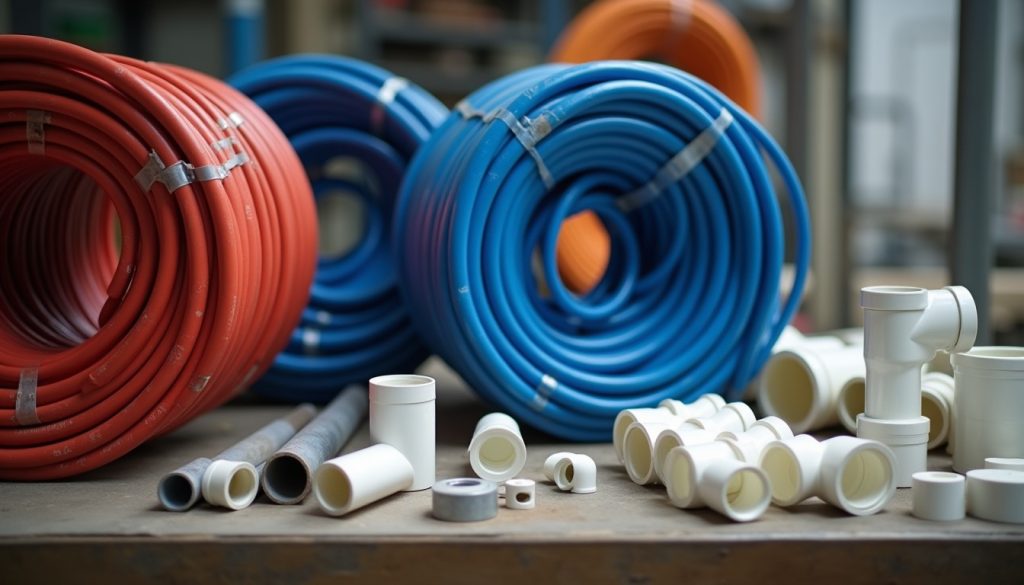
PEX vs PVC is mostly a question of job, not quality: PEX carries hot and cold drinking water inside the house, while PVC carries drain, waste, and vent flow plus cold outdoor water.
Key Takeaways
- Standard PVC tops out at 140°F, and published derating tables show it keeps only about 20% of its 73°F pressure rating at that heat (Engineering ToolBox).
- PEX tubing to ASTM F876 is rated 160 psi at 73°F, 100 psi at 180°F, and 80 psi at 200°F, per Plastics Pipe Institute (PPI) hydrostatic listings published by Uponor.
- The International Plumbing Code (IPC) Table 605.4 lists PEX and CPVC for water distribution and leaves standard PVC out.
- PVC is the default residential drain, waste, and vent (DWV) pipe; PEX is not a DWV material under IPC Table 702.1.
- Uponor limits its white AquaPEX tubing to 30 days of direct sunlight, so neither pipe belongs in long-term UV exposure without protection.
- The U.S. Department of Energy suggests a 120°F water heater setting, leaving PVC only a 20°F margin before its ceiling, which is why codes keep it off hot lines.
What is the difference between PEX and PVC pipe?
PEX is flexible cross-linked polyethylene tubing built for pressurized hot and cold water supply. PVC is rigid polyvinyl chloride pipe built mainly for gravity drains, vents, and cold water lines such as irrigation and buried water service. They overlap only on cold, buried, or outdoor runs. Inside a modern house you will usually see PEX feeding fixtures and white PVC carrying waste away from them.
The chemistry explains the split. Cross-linking bonds the polyethylene chains into a mesh, which gives PEX heat tolerance and memory; if you want the full background on grades A, B, and C, see our explainer on what PEX is and how it is made. PVC stays stiff and holds a straight slope, which is exactly what a drain needs.
They also join differently. PVC uses primer and solvent cement that chemically fuse the joint. PEX uses mechanical fittings: crimp rings (ASTM F1807), stainless clamp rings (ASTM F2098), or cold expansion (ASTM F1960). No glue touches PEX. Since PVC still relies on that chemical bond, proper technique matters, covering PVC pipe gluing steps from priming through cure times.
| Factor | PEX | PVC |
|---|---|---|
| Material | Cross-linked polyethylene, flexible coils or sticks | Polyvinyl chloride, rigid 10 and 20 ft lengths |
| Main residential job | Hot and cold water distribution | Drain, waste, vent; cold water service; irrigation |
| Max rated temperature | 200°F at 80 psi (PPI listing via Uponor) | 140°F, pressure derated to about 20% (Engineering ToolBox) |
| Pressure at 73°F | 160 psi (ASTM F876, PPI listing) | Higher in small Schedule 40 sizes; varies by diameter (ASTM D1785) |
| Freeze behavior | Expands and recovers; often survives a freeze | Rigid; tends to crack |
| Sunlight | 30 days max for Uponor AquaPEX white | Degrades and gets brittle unless painted or shaded |
| Joining | Crimp, clamp, expansion, or push-fit fittings | Primer and solvent cement |
| Material cost per foot | Generally higher than PVC per foot | Generally lower per foot |
| Typical service life | About 40 to 50 years (industry estimates) | About 50 to 100 years (industry estimates) |
| IPC indoor water distribution | Listed in Table 605.4 | Not listed |
Can PVC be used for hot water lines?
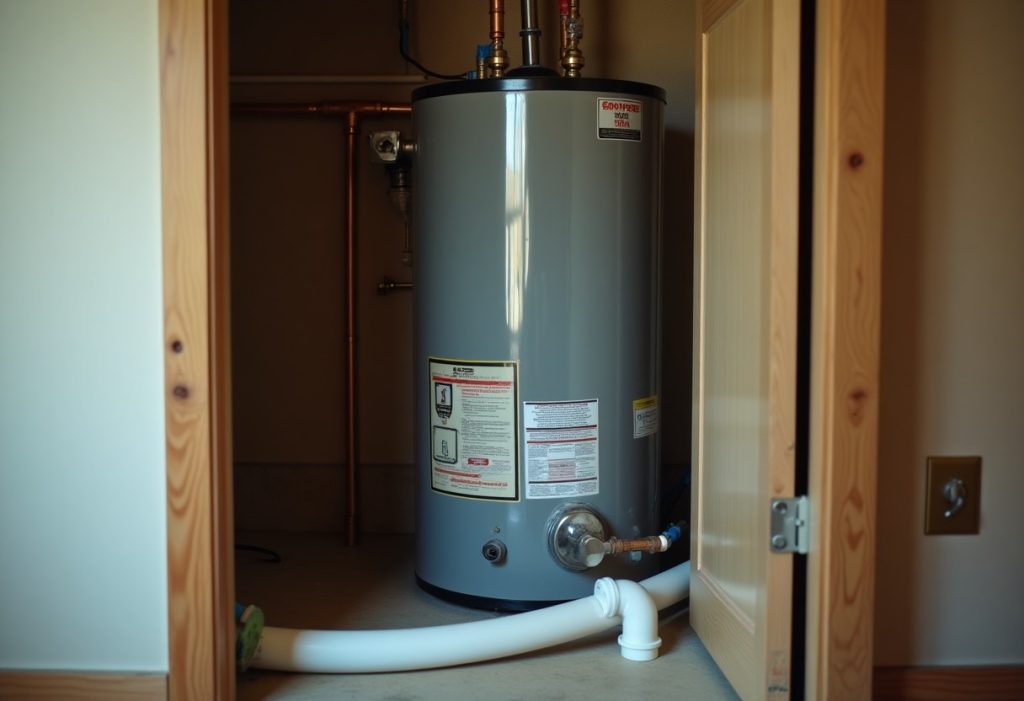
No. Standard PVC is rated for a maximum service temperature of 140°F, and at that temperature it keeps only about 20% of its 73°F pressure rating, according to published derating tables. The IPC does not list PVC as a water distribution material, so it cannot legally feed a hot water line inside a house in most jurisdictions. Use PEX, CPVC, or copper instead.
The margin is thinner than it looks. The U.S. Department of Energy suggests a 120°F water heater setting, and plenty of households run hotter to feed a mixing valve or kill bacteria in the tank. A stuck thermostat or a water heater cranked to its top setting can push water past 140°F, and a softening PVC joint under 50 to 80 psi of street pressure is a flood waiting to happen.
The same logic rules PVC out of water heater relief valve discharge lines. The IPC requires that discharge pipe to be a material rated for hot water distribution, because a tripped temperature and pressure valve can dump water near 210°F. If you need a plastic that looks and glues like PVC but takes heat, that is CPVC, covered in our CPVC vs PEX comparison.
How do PEX vs PVC temperature and pressure ratings compare?
PEX carries a listed rating of 160 psi at 73°F, 100 psi at 180°F, and 80 psi at 200°F under ASTM F876 and PPI hydrostatic listings. PVC starts with a higher cold pressure rating in small Schedule 40 sizes, but loses strength fast as it warms and stops at 140°F. For anything hot, PEX holds a usable rating where PVC has none.
Sources for the chart: PPI hydrostatic listing published by Uponor (PEX), ASTM F441 (CPVC), PVC manufacturer data and Engineering ToolBox (PVC), and the U.S. Department of Energy (water heater setting).
Pressure falls as temperature climbs for both plastics. PVC manufacturers publish derating factors that you multiply against the 73°F rating; by 140°F the factor sits near 0.20, per Engineering ToolBox. That is why Schedule 40 PVC pressure pipe gets sold as a cold water product.
PEX is designed around that curve. Its ASTM F876 listing covers the full range a residential water heater can produce, and the tubing also carries a chlorine resistance code; Uponor AquaPEX white is marked PEX 5106 for continuous recirculation up to 140°F.
Which handles freezing better, PEX or PVC?
PEX handles freezing much better than PVC. Cross-linked polyethylene can stretch as water turns to ice and expands, then shrink back close to its original diameter after the thaw, so one hard freeze often leaves it intact. Rigid PVC has almost no give, so ice inside it usually splits the pipe or cracks a glued fitting. Neither material is freeze-proof.
The weak spot on a PEX line is the fittings. Brass and plastic fittings do not stretch, so a freeze can still crack a fitting or a valve body even when the tubing survives. Repeated freeze cycles also wear the tubing over time, per guidance in the PPI PEX Plumbing Design and Installation Guide.
For PVC, the answer is depth and drainage. Buried water service goes below the local frost line, and irrigation mains get blown out or drained each fall in cold climates. Above-ground PVC lines in unheated spaces are a common source of winter callbacks.
Can PEX or PVC be used outdoors in sunlight?
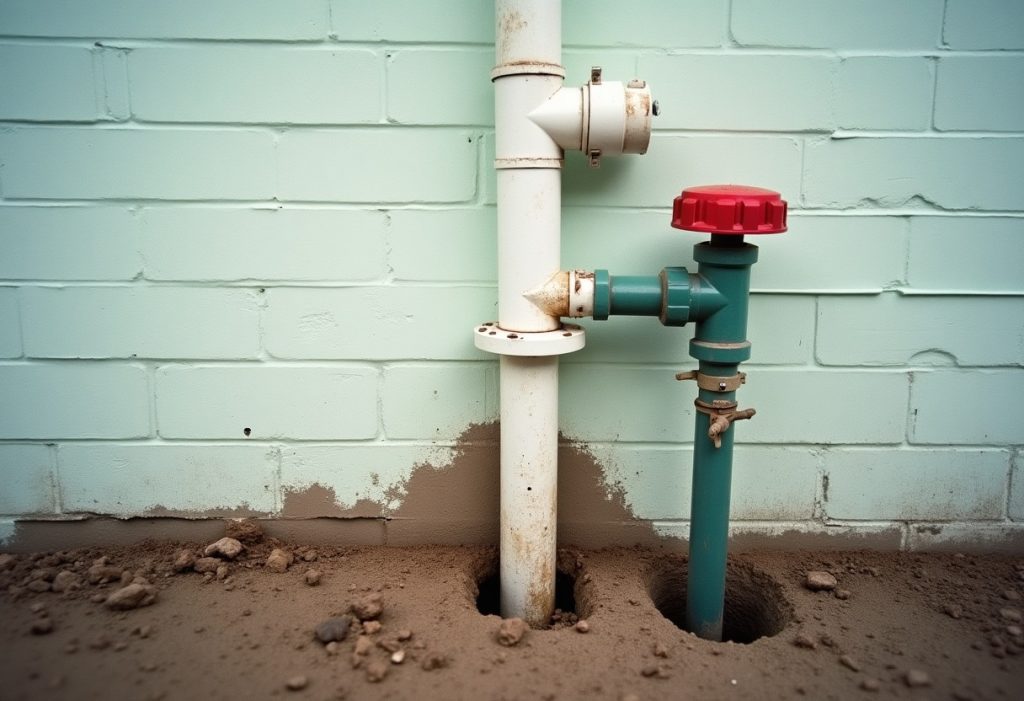
Neither pipe should sit in direct sun for long. Uponor rates its white AquaPEX tubing for no more than 30 days of sunlight exposure, so PEX must be buried, enclosed, or sleeved outdoors. PVC tolerates sun better but still turns chalky and brittle over years of UV exposure, so above-ground PVC is usually painted with a latex paint or covered.
That makes the outdoor split simple in practice:
- Buried cold water service: either can work if listed for it; PVC is common and cheap, PEX bends around obstacles with fewer joints.
- Irrigation mains and laterals: PVC Schedule 40 or pressure-class pipe is the norm, buried below the surface.
- Exposed runs on a wall or roof: neither bare; paint or shield PVC, and keep PEX inside a UV-blocking sleeve or chase.
- Pool and spa equipment pads: PVC dominates because the water is cold or warm, not hot, and fittings are standardized.
Is PEX or PVC cheaper to buy and install?
PVC is usually cheaper per foot. Retail prices vary widely by size, brand, and region, but PVC generally costs less per foot than PEX in common residential sizes. Installed cost is a different story, because PEX bends around corners, comes in long coils, and needs far fewer fittings than a glued rigid system.
Those figures move with resin prices, region, and brand, so treat them as a starting point and price your actual list at a local supply house. The bigger point is that the two rarely compete on the same job. You would not pick PVC over PEX for a bathroom supply line to save money, because code will not let you; the cost question is real mainly on cold, buried runs.
On a long buried water service, PVC usually wins on material, while PEX often wins on labor and joint count. On a full repipe the real competitor to PEX is copper or CPVC, not PVC; our PEX vs copper breakdown covers that cost fight.
What does plumbing code allow for PEX vs PVC?
Under the International Plumbing Code, PEX is approved for both water service and water distribution, while PVC is approved for cold water service outside the building and for DWV, but not for water distribution inside it. That split matches the temperature ratings. Local amendments vary, so your city or county may add limits, require specific listings, or adopt the Uniform Plumbing Code instead.
| Use (IPC table) | PEX | PVC | CPVC |
|---|---|---|---|
| Water service, street to building (Table 605.3) | Allowed (ASTM F876) | Allowed, cold only (ASTM D1785, D2241) | Allowed |
| Water distribution inside building (Table 605.4) | Allowed | Not listed | Allowed |
| Above-ground DWV (Table 702.1) | Not listed | Allowed (ASTM D2665) | Rarely used; check local code |
| Potable listing | NSF/ANSI 61 | NSF/ANSI 61 for pressure pipe | NSF/ANSI 61 |
You can read the current tables in the IPC Chapter 6 text from the International Code Council. Pipe labels matter for inspection: look for the ASTM standard, the NSF mark, and for PVC drain pipe, the DWV marking. For schedule ratings, pipe sizes, and how to prime and glue a joint, see our guide to PVC pipe schedules, sizes, and solvent welding.
Can you use PEX for drains or PVC for supply lines?
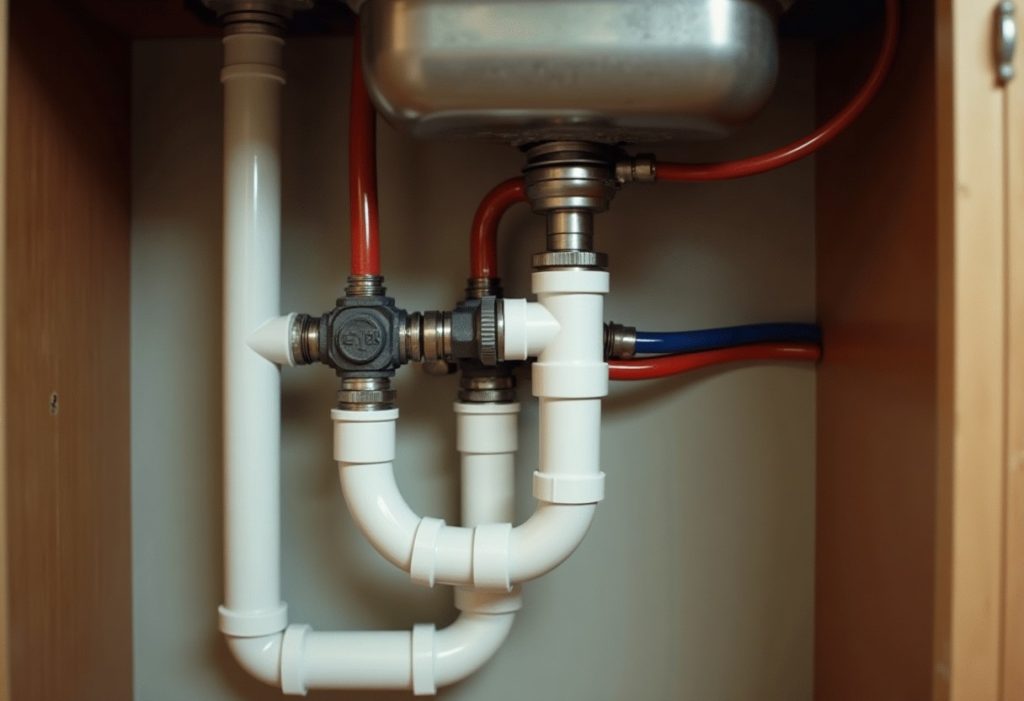
Not in a normal house. PEX is pressure tubing and is not a listed drain, waste, or vent material, so it cannot carry a toilet or sink drain. PVC can carry cold water supply only outside the building or in non-potable systems such as irrigation. Inside the house, supply goes in PEX, CPVC, or copper and drains go in PVC, ABS, or cast iron.
Drains need rigid pipe for a reason. Gravity drainage depends on a steady slope, commonly 1/4 inch per foot for 2-1/2 inch and smaller lines under IPC Table 704.1, and flexible tubing sags between supports and collects solids. Drain fittings also use long sweeps sized for flow that PEX fittings do not offer.
Supply needs heat and pressure tolerance. Even a cold-only line indoors sits next to hot lines, inside walls, and near appliances, which is part of why codes keep PVC out of distribution and point builders toward PEX or CPVC.
How do you connect PEX to PVC?
You connect PEX to PVC with a threaded transition or a push-to-connect fitting listed for both materials. The common setup solvent-welds a PVC male or female adapter onto the PVC, then threads it to a brass or plastic PEX adapter finished with a crimp, clamp, or expansion joint. This joint usually sits where a cold PVC water service enters the house and PEX distribution begins.
- Shut off the water and confirm the PVC side is a cold water line, not a drain.
- Cut the PVC square, deburr it, then prime and solvent-weld a threaded PVC adapter; let it cure per the cement label.
- Wrap the threads with PTFE tape or use a thread sealant rated for plastic, and thread on the PEX adapter hand-tight plus a modest turn. Overtightening cracks plastic female threads.
- Attach the PEX with the fitting system you own: crimp ring, clamp ring, or expansion ring.
- Restore pressure slowly and check both joints for weeping before you close the wall or backfill.
Avoid putting a PVC female thread over a metal male thread where you can help it, since plastic expands and contracts more than brass and the female side can split. A short brass nipple between two plastic adapters is a common fix.
How we sourced this
We reviewed ASTM F876 (PEX), ASTM D1785 (PVC Schedule 40, 80, and 120), ASTM F441 (CPVC), the PPI PEX Plumbing Design and Installation Guide, Uponor AquaPEX specification text, PVC pressure derating data from Engineering ToolBox and Wavin product literature, the U.S. Department of Energy water heating guidance, and IPC Tables 605.3, 605.4, and 702.1. Temperature and pressure figures come from those standards and listings. We do not quote per-foot prices because retail pricing swings with region, brand, and resin costs; we report only the relative difference. Service-life numbers are industry estimates, not warranties. We excluded forum anecdotes and vendor marketing claims. Code coverage reflects the model IPC; local adoption varies. Reviewed October 2026.
Frequently asked questions
Is PEX better than PVC?
Neither is better across the board because they do different jobs. PEX is the better choice for hot and cold water supply inside a house since it is rated to 200°F and flexes when water freezes. PVC is the better choice for drain, waste, and vent lines and for cold, buried water service or irrigation, where it is cheap, rigid, and long-lived.
Can PVC be used for hot water?
No. Standard PVC is rated to a maximum of 140°F and keeps only about 20% of its room-temperature pressure rating at that heat, per published derating tables. The International Plumbing Code leaves PVC out of its list of approved water distribution materials. For hot water, use PEX, CPVC, or copper, which are rated for hot supply.
Is PEX cheaper than PVC?
PVC usually costs less per foot than PEX in common residential sizes, though retail prices vary widely by size, brand, and region. PEX can still win on installed cost for supply lines because it bends around corners and needs fewer fittings and less labor.
Can PEX be used for drain lines?
No. PEX is a pressure tubing made for water supply and is not listed as a drain, waste, and vent material in the International Plumbing Code. Drains work by gravity at a set slope, and flexible tubing sags. Use PVC, ABS, or cast iron for drains, sized and sloped to your local code.
Which is better for freezing, PEX or PVC?
PEX handles freezing far better. Its cross-linked polyethylene can stretch as ice forms and return close to its original size after a thaw, so a single freeze often does not split it. Rigid PVC has almost no give and tends to crack when water freezes inside it. Insulation and heat still matter for both.
Can PEX and PVC be buried underground?
Yes, both can be buried for water service when the pipe is listed for it and installed to local code. PVC is common for cold water service and irrigation mains. PEX is listed for water service under ASTM F876 and works well buried because soil blocks sunlight. Check depth, bedding, and tracer wire rules with your local authority.
How long do PEX and PVC pipes last?
Industry estimates commonly put PEX at about 40 to 50 years and PVC at about 50 to 100 years, with buried PVC at the long end. Real life depends on water chemistry, temperature, and sunlight. PEX shortens with UV exposure and very hot recirculating water, while PVC shortens with UV, heat above 140°F, and freeze cracks.
Can you connect PEX to PVC?
Yes, with a transition fitting. The usual setup is a PVC female or male adapter, solvent-welded onto the PVC, threaded to a brass or plastic PEX adapter that uses the crimp, clamp, or expansion method. Push-to-connect fittings listed for both materials also work. The joint typically happens where cold PVC water service meets PEX distribution.
What are the disadvantages of PEX pipes?
PEX is not approved as a drain, waste, or vent material, so it cannot carry drain lines. Its white tubing is limited to 30 days of direct sunlight exposure. Fittings such as brass or plastic connectors do not stretch and can still crack during a freeze. Material cost per foot runs higher than PVC, and estimated service life is shorter, around 40 to 50 years compared to PVC's 50 to 100 years.