PEX vs Copper: Cost, Lifespan, and Where Each Pipe Wins
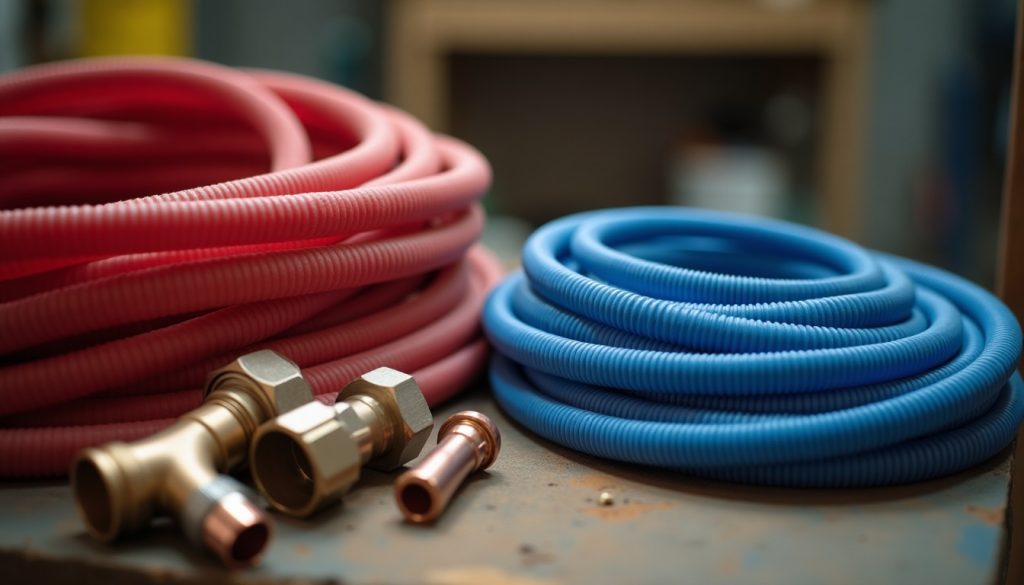
PEX wins for most whole-house repipes on price and speed, while copper still leads on lifespan and holds an edge with some codes, buyers, and high-heat runs.
Key Takeaways
- A PEX repipe of a 1,500 to 2,000 square foot home runs about $4,000 to $8,000, roughly half copper’s $8,000 to $15,000, per 2026 repipe cost data.
- Copper commonly lasts 50 to 70 years; PEX is rated 30 to 50 years, and the Plastics Pipe Institute TR-3 model predicts about 50 years inside its limits.
- PEX can expand up to three times its diameter when water freezes, so it resists burst far better than rigid copper, per SharkBite.
- Both PEX and copper certified to NSF/ANSI 61 and 372 are lead-free and approved for drinking water in every major US code.
- Copper can develop pinhole (pitting) leaks in acidic or high-chloramine water, sometimes within 5 to 10 years; PEX does not corrode.
- PEX installs 40 to 60 percent faster than copper because it needs no soldered joints, which is where most of copper’s cost gap comes from.
PEX vs copper: which pipe should you choose?
Choose PEX for most residential supply repipes: it costs less, installs faster, resists freeze bursts, and shrugs off the corrosion that pits copper. Choose copper where local code or an HOA requires it, where a run sits in sunlight or against high-heat surfaces PEX cannot tolerate, or when a longer proven lifespan matters more than upfront price. Before settling on PEX for a repipe, weigh common pex installation issues against your specific job conditions. Check type l versus type m copper before committing to copper for those code-mandated or high-heat runs.
Both are approved potable-water materials, so this is rarely a safety decision. It is a trade of upfront cost and freeze resistance against lifespan and a few code and resale edge cases. The table below lines them up on the seven factors that actually change the answer. For the wider field of options, see every common plumbing pipe material.
| Factor | PEX | Copper |
|---|---|---|
| Cost per linear foot (material) | $0.50 to $2 | $2 to $4 |
| Typical lifespan | 30 to 50 years (PPI TR-3: ~50) | 50 to 70 years |
| Freeze resistance | High; expands up to 3x diameter | Low; rigid, prone to burst |
| Corrosion / pinhole risk | Immune to corrosion and scale | Can pit in acidic/chloramine water |
| Install speed | Fast; flexible, few joints | Slow; every joint soldered |
| Taste / health | NSF 61 & 372; faint early plastic taste | NSF 61 & 372; long track record |
| Resale / code | Accepted in all major model codes | Sometimes required; premium image |
How much does PEX vs copper cost to install?
PEX costs roughly half of copper installed. PEX material runs about $0.50 to $2 per linear foot and $2 to $5 installed, while copper runs $2 to $4 per foot for material and $4 to $10 installed. On a full repipe of a 1,500 to 2,000 square foot home that gap widens to about $4,000 to $8,000 for PEX against $8,000 to $15,000 for copper.
Most of the difference is labor, not the metal. Copper needs every joint cut, cleaned, fluxed, and soldered by hand, while PEX snakes through walls with far fewer connections. See full repipe cost by home size for how those ranges scale with square footage and fixture count.
Which lasts longer, PEX or copper?
Copper lasts longer in most homes. Copper piping commonly serves 50 to 70 years, while PEX carries a 30 to 50 year expectation, and the Plastics Pipe Institute’s TR-3 model predicts about 50 years when PEX stays inside its rated pressure and temperature. The catch is water chemistry: aggressive water flips the result.
PEX manufacturers often back tubing with 10 to 25 year warranties, whereas copper usually ships with none. In homes with acidic or high-chloramine water that pits copper from the inside, PEX can outlast it. Learn what PEX tubing is and how its cross-linked structure resists that failure mode.
How do PEX and copper handle freezing and corrosion?
PEX beats copper on both. PEX can expand up to three times its diameter as ice forms and frequently returns to shape without splitting, while rigid copper has little give and tends to rupture at a frozen joint. On corrosion, PEX is immune, while copper can develop pinhole leaks from pitting in acidic or high-chloramine water, sometimes in systems only 5 to 10 years old.
Neither material is truly freeze-proof, so insulate any pipe in unconditioned space and keep a drip going in a hard freeze. If your area has a history of copper pinhole leaks, that alone often points a repipe toward PEX. Before weighing pinhole risk against a copper repipe, check current copper and pex pricing trends and brush up on sweating a copper joint in case copper still wins your layout.
Is PEX or copper safer for drinking water?
Both are safe when certified. PEX and copper carry NSF/ANSI 61 (health effects) and NSF/ANSI 372 (lead-free, 0.25 percent max) certification and are approved for potable water in every major US plumbing code. Neither leaches lead. The practical difference is a faint plastic taste some PEX brands give off in the first few weeks, which clears after flushing.
Copper has the longer potable-water history and no taste concern, but it can raise copper levels in standing water where the pipe is corroding. Both are code-legal choices for a home, so safety rarely decides this comparison. See how copper pipe types M, L, and K differ for potable supply.
Is PEX faster to install, and how does it affect resale?
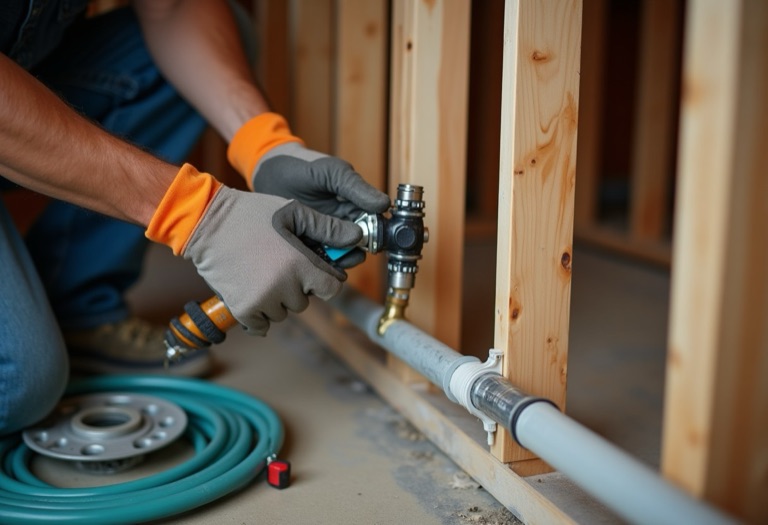
PEX installs 40 to 60 percent faster than copper, which is the main reason its labor bill is lower. Flexible PEX runs long distances with few fittings and no torch, so a crew repipes a house in less time and with less wall opening. On resale, most appraisers now treat a modern PEX repipe as a full-value upgrade over galvanized or polybutylene.
Copper still carries a premium image with a slice of buyers and inspectors, and a few older local codes or HOAs specify it. Those are edge cases, not the rule. In new construction, PEX is standard.
When is copper still the better choice?
Copper wins in a handful of specific spots. Use it where a run sits in direct sunlight or against high-heat surfaces, because UV and sustained high temperatures degrade PEX. Copper is also the call where local code or an HOA requires metal supply, where a buyer explicitly wants it, or where you want the longest proven lifespan and clean water chemistry supports it.
Many repipes mix the two: PEX for the bulk of the runs, copper stubs at the water heater and high-heat connections. That captures PEX’s cost and freeze advantages while keeping metal where it earns its place.
How we sourced this
We compared PEX and copper on 2026 US material and installed pricing, lifespan, freeze and corrosion behavior, potable-water certification, and code acceptance. Figures come from primary and industry sources: the Plastics Pipe Institute (TR-3 lifespan), NSF (NSF/ANSI 61 and 372 potable-water certification), SharkBite manufacturer specifications (freeze expansion), and current repipe cost data from multiple US contractors. Regional pricing, water chemistry, and local code adoption vary, so we cite ranges rather than single figures. We excluded commercial and industrial piping and CPVC-only comparisons.
Frequently asked questions
Is PEX or copper better for a whole-house repipe?
For most homes, PEX wins on total cost and speed. A PEX repipe of a 1,500 to 2,000 square foot home typically runs $4,000 to $8,000, roughly half the $8,000 to $15,000 for copper. Copper still makes sense where local code, HOA rules, or a homeowner’s resale plans specifically call for it, or in high-heat and outdoor-UV spots PEX cannot go.
Does PEX last as long as copper?
Not quite in most conditions. Copper commonly lasts 50 to 70 years, while PEX is rated for 30 to 50 years, and the Plastics Pipe Institute’s TR-3 model predicts about 50 years of service inside PEX pressure and temperature limits. In homes with acidic or aggressive water that pits copper, PEX can actually outlast it.
Will PEX burst when it freezes like copper?
PEX is far more freeze-tolerant, though no pipe is freeze-proof. PEX can expand up to three times its diameter as ice forms and often returns to shape without splitting, per SharkBite. Rigid copper has little give and commonly ruptures at a frozen joint or run. You still want to insulate and protect either material in unconditioned space.
Is PEX safe for drinking water?
Yes. PEX certified to NSF/ANSI 61 and NSF/ANSI 372 is approved for potable water by every major US plumbing code and contains no lead. Some brands can give off a faint plastic taste in the first few weeks, which fades after flushing. Copper is also NSF 61 and 372 compliant and has a long potable-water track record.
Why is copper so much more expensive than PEX?
Two reasons: material and labor. Copper pipe runs about $2 to $4 per linear foot versus $0.50 to $2 for PEX, and every copper joint must be cut, cleaned, fluxed, and soldered. PEX runs flexibly through walls with far fewer fittings, so it installs 40 to 60 percent faster, which cuts the labor bill on a repipe sharply.
Does copper add more resale value than PEX?
Slightly, in some markets. A few buyers and inspectors still view copper as a premium, and older local codes or HOAs occasionally require it. PEX is now accepted in the major model codes and is standard in new construction, so most appraisers treat a modern PEX repipe as a full-value upgrade over old galvanized or polybutylene.
Can I mix PEX and copper in the same system?
Yes, and many repipes do. Transition fittings and push-to-connect couplings join PEX to copper stubs at the water heater, valves, and fixture connections where heat or code favors metal. Keep PEX a few inches away from hot flue pipes and high-heat appliances, and follow the manufacturer’s minimum distance from a gas water heater’s draft hood.


