PEX Pipe Problems: Which Are Real, Which Are Myths, and How to Avoid Them
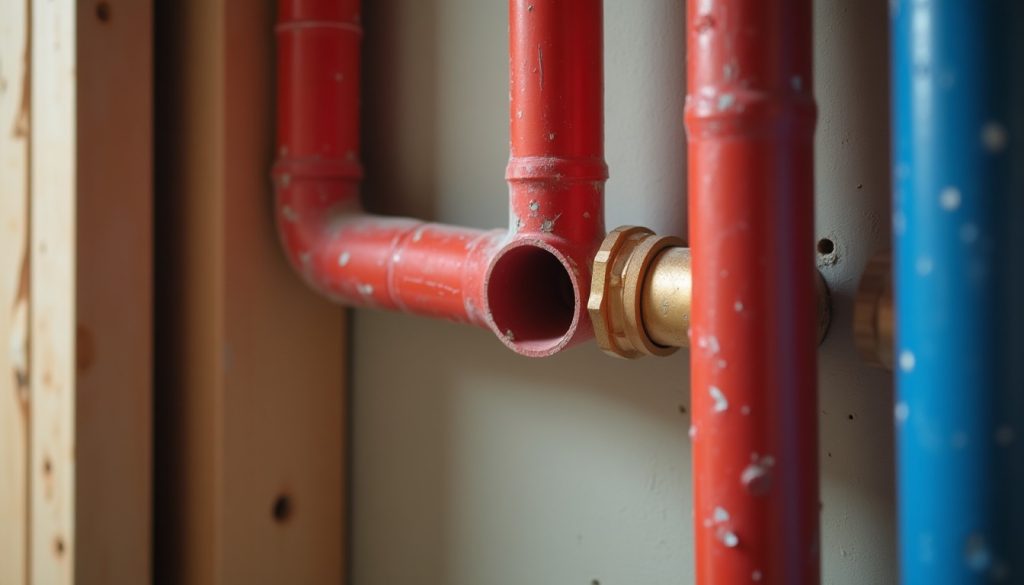
PEX pipe problems are real but narrow: most failures trace to sunlight before install, brass fittings, bad crimps or heat, not to the pipe itself, and its freeze resistance beats copper.
Key Takeaways
- A 2014 Water Research study led by Andrew Whelton found water from all 6 PEX brands tested exceeded the EPA odor guideline of 3 TON when the pipe was new.
- One brand released ETBE at up to 175 ppb in the first 3 days, above a 40 ppb New Hampshire standard, and still 74 ppb at day 30 (Whelton and Bryant, 2014).
- The Plastics Pipe Institute (PPI TR-52, 2021) cites research showing PEX tolerated 400+ freeze and thaw cycles.
- PEX UV ratings run 0, 1, 3 or 6 months of sunlight under the ASTM code PPI describes; Uponor AquaPEX white is rated 1 month.
- Uponor’s ICC-ES listing (PMG-1006) sets a minimum bend radius of 6 times the pipe’s outside diameter. Tighter bends kink it.
- IPEX paid US$125 million to settle Kitec claims over corroding high-zinc brass fittings, a fitting problem rather than a PEX pipe flaw.
What are the real PEX pipe problems?
The real PEX pipe problems are UV damage from outdoor storage, odor from new pipe, chlorine attack on low-rated pipe in hot lines, corroding brass fittings, kinks, heat near gas water heaters, permeation in contaminated soil, rodents and combustibility. Most are preventable with the right pipe rating, fittings and installation habits.
The weak spot is usually the joint, not the pipe wall. If you need a primer on the material itself first, start with what PEX is and how the three types differ.
The table sorts each problem by the evidence behind it and gives the fix.
| Problem | Real or overstated? | Evidence | How to avoid it |
|---|---|---|---|
| UV degradation before install | Real | ASTM F2657 UV test; PPI code rates 1, 3 or 6 months; Uponor AquaPEX white rated 1 month | Store indoors in the bag; never run exposed outdoors |
| Taste and odor from new pipe | Real, mostly temporary | Whelton and Bryant, Water Research 2014: 6 of 6 brands above 3 TON odor guideline | Flush new lines; buy NSF/ANSI 61 pipe |
| Chlorine attack | Real for low-rated pipe in hot, chlorinated lines | ASTM F2023 test; first digit of the PEX code (0, 1, 3, 5) | Use a 5-rated pipe (100% of time at 140 degrees F) for hot recirculation |
| Brass fitting dezincification | Real | Kitec class actions, US$125 million settlement | Use DZR or lead-free brass, or polymer fittings, in aggressive water |
| Kinking | Real, installer error | ICC-ES PMG-1006: minimum bend radius 6 times outside diameter | Use bend supports; cut out kinks |
| Heat at water heater | Real | IFGC 503.10.5 and IRC M1306 clearances (Uponor listing) | Metal connector at gas heaters; follow brand instructions |
| Soil contamination and burial | Real in polluted ground | Plastic pipe permeation by fuels and solvents; PPI service line guidance | Use metal pipe near fuel tanks or spills; bed in clean sand |
| Rodent damage | Real but rare and unmeasured | Inspector and insurer reports; no national data | Seal entry points; avoid nesting areas |
| Fire behavior | Real, it is combustible | Uponor ICC-ES listing meets E84 25/50 only with listed insulation or spacing | Follow plenum and firestop rules |
| Bursts when frozen | Overstated | PPI TR-52: 400+ freeze cycles tolerated | Still insulate; avoid freeze points at metal fittings |
Does new PEX pipe make water taste or smell bad?
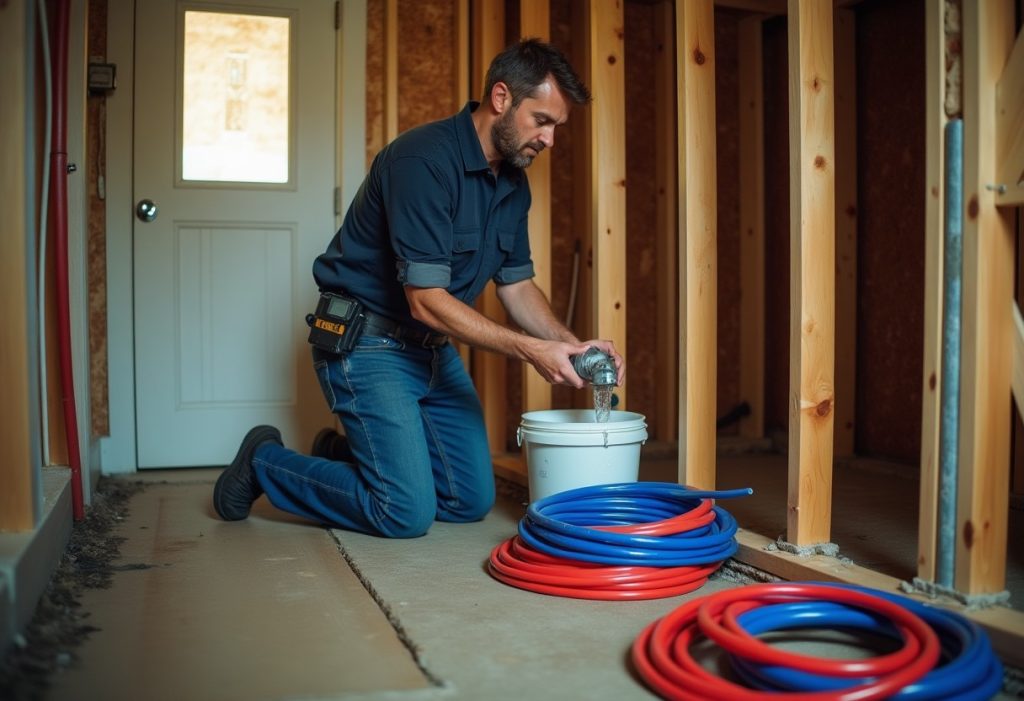
Yes, new PEX can make water smell or taste off for days to weeks. A 2014 Water Research study by Andrew Whelton (now at Purdue University) and Rebecca Bryant tested 6 US PEX brands and found odor from all of them above the EPA’s 3 TON guideline. Chemical release fell over 30 days, but odor often lingered as the pipe aged.
The team identified 11 chemicals tied to PEX ingredients and breakdown products. One brand released ethyl tert-butyl ether (ETBE) at up to 175 parts per billion in the first 3 days, against a 40 ppb New Hampshire drinking water standard. After 30 days it was still at 74 ppb. The full paper is in Water Research (2014).
Source: Whelton and Bryant, Water Research, September 2014. One brand only.
Keep this in proportion. The study did not show a market-wide health risk, and drinking water pipe must meet NSF/ANSI 61. Flush a new PEX system hard before anyone drinks from it, and call the installer if a solvent smell lasts past a few weeks. The EPA secondary standard for odor is a nuisance guideline, not an enforceable health limit.
Why does sunlight and chlorine damage PEX?
Ultraviolet light breaks down the polymer chains in PEX, so pipe left in the sun before installation can turn brittle and fail years later behind a wall. Chlorine in hot water slowly oxidizes the inner wall of low-rated pipe. Both risks show up in the four-digit code printed on the pipe.
The PPI PEX design manual explains the code. The first digit rates chlorine resistance under ASTM F2023, from 0 (untested) up to 5 (100% of the time at 140 degrees F). The second digit rates UV at 0, 1, 3 or 6 months.
The UV clock is cumulative. Coils left on a truck bed through a long framing stage can burn through a 1-month rating. Keep pipe bagged until it goes in the wall, and never run standard PEX exposed outdoors.
Chlorine matters most on hot recirculation loops, where water sits at heat all day. A 5-rated pipe is the safe pick for any loop that stays hot.
Can heat, kinks and rodents damage PEX pipe?
Yes, all three can. Heat is the biggest risk near gas water heaters, where flue gases or a failed thermostat can push pipe past its rating. Kinks come from bending tighter than the minimum radius. Rodents chew PEX the way they chew wire jackets. Each risk has a simple fix that failed installs usually skipped.
Heat at the water heater
PEX ratings fall as temperature rises. In PPI’s design manual, the maximum operating pressure for DR 11 PEX drops from 160 psig at 73 degrees F to 63 psig at 200 degrees F. A runaway water heater can reach the 210 degree F relief valve setting, past those design points.
Source: PPI PEX Pipe Design Manual (HDB-based), Table 2, DR 11 pipe with a 0.5 design factor. Residential SDR 9 tubing carries its own printed ratings.
That is why many PEX makers and inspectors want a metal connector at a gas water heater, not PEX straight to the outlet. Uponor’s ICC-ES listing PMG-1006 ties heat clearances to IFGC 503.10.5 and IRC M1306, and Uponor data calls for 6 inches from gas appliance vents.
Kinks and expansion
The same listing sets a minimum bend radius of 6 times the outside diameter, about 5 1/4 inches on 3/4 inch PEX. Some PEX-a makers allow heat repair of a kink; otherwise cut it out and add a coupling.
PEX also grows with heat. Using PPI’s coefficients (7.9 to 10 millionths per degree F between 73 and 100 degrees F), 100 feet of PEX lengthens roughly 1 to 1.2 inches for each 10 degree F swing, about ten times copper. Pipe strapped tight with no slack can pull at fittings.
Rodents
Mice and rats do gnaw PEX, but no national dataset counts how often; the evidence is inspector photos and insurance claims. Where rodents are active, seal entry points and sleeve pipe that crosses nesting areas.
Are PEX fittings the weakest point?
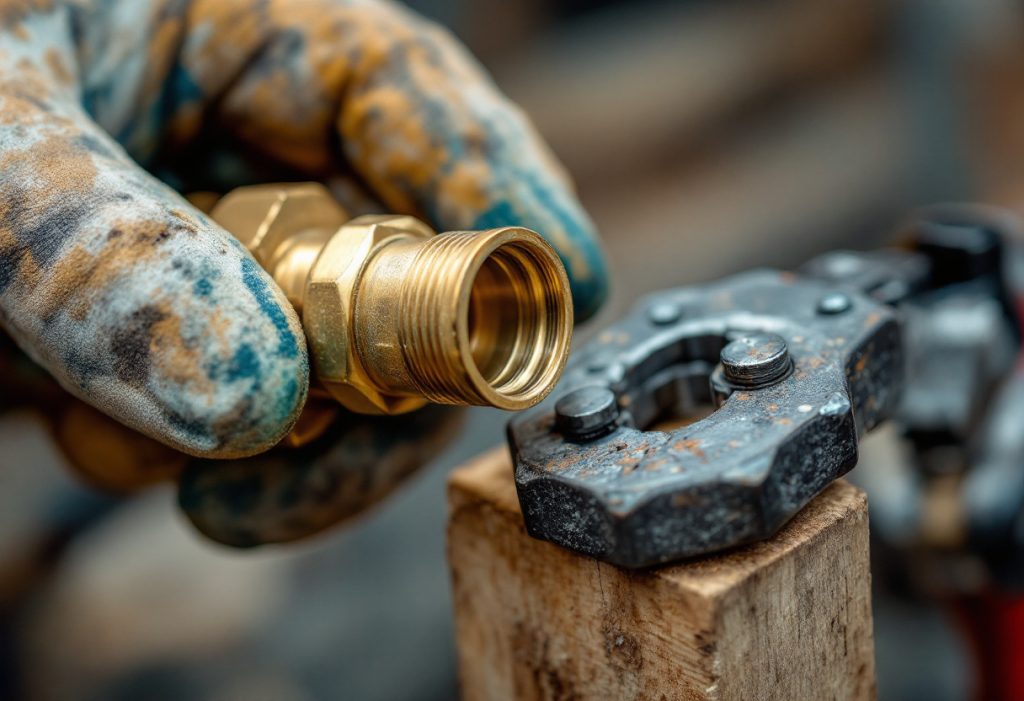
Usually, yes. Most PEX leaks start at a joint, either from a brass fitting that corroded through dezincification or from a crimp, clamp or expansion ring made with a poorly calibrated tool. The pipe wall itself rarely fails first when it is the right rating and stayed out of the sun.
Dezincification happens when aggressive water (low pH or high chloride) leaches zinc out of yellow brass. The fitting turns porous, grows white crust, chokes flow and finally leaks. This is exactly what sank Kitec plumbing and its brass fitting failures, which ended in a US$125 million settlement paid by IPEX. Kitec was a composite pipe, but the lesson applies to any brass insert.
Fixes are straightforward. Use dezincification-resistant (DZR) or lead-free brass certified to NSF/ANSI 372, or engineered polymer fittings, where your water is soft, acidic or high in chloride. Your utility’s annual water report lists pH and chloride.
The second fitting failure is human: crimp rings need a go/no-go gauge check on every joint. If you are choosing a connection method, our guide to PEX crimp vs clamp rings explains which one is more forgiving for a DIY install.
Can you bury PEX or run it through contaminated soil?
You can bury PEX for water service lines when it is listed for that use and bedded properly; PPI’s 2026 third-edition guide added a service line chapter. The limit is contaminated ground. Plastic pipe, PEX included, can be permeated by gasoline, fuel oil and solvents, which can then reach the water.
Use approved metal pipe near buried fuel tanks, old gas stations, dry cleaners or known spills, and ask your water utility, since many restrict plastic service lines there. In clean ground, bed PEX in sand and sleeve it through foundations.
Fire matters too, because PEX is combustible. Uponor’s listing meets an ASTM E84 flame-spread index of 25 and smoke index of 50 only with listed insulation or, for 3/4 inch and smaller, 18 inches of spacing between runs. Follow firestop rules at rated walls.
Which PEX pipe problems are myths or overstated?
Three common claims do not hold up. PEX does not burst as readily as copper when frozen, PEX is not banned in California, and claims that PEX will last exactly 100 years are not proven in either direction.
Myth 1: PEX bursts when it freezes
PPI’s Technical Report TR-52 explains that PEX usually swells when water inside freezes and then returns to size on thawing. PPI president David Fink cited research showing PEX freeze tolerant up to 400+ cycles and notes that PEX conducts heat far less readily than copper, which slows freezing.
The caveat: PPI’s design manual warns that water trapped between two frozen points, often at metal fittings, can still burst any pipe. Insulate PEX like copper.
Myth 2: PEX is banned in California
California restricted PEX during a long environmental review, then approved it statewide in 2009.
Myth 3: PEX lasts 100 years (or fails in 10)
Both claims overreach. ASTM F876 pipe passes long-term pressure and chlorine tests built to predict decades of service, and many plumbers expect 40 to 50 years. But widespread US potable use began in the 1990s, so no full-life field record exists. The famous early failures were mostly fittings, like Kitec.
What does a PEX pipe failure actually look like?
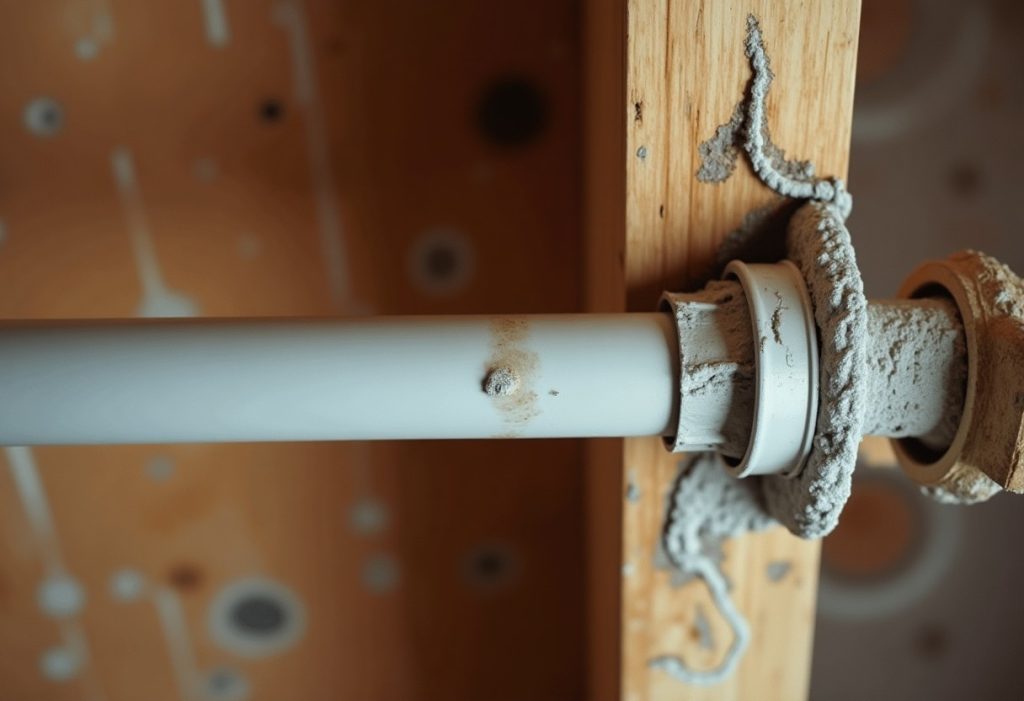
A failing PEX system usually shows a slow drip or white crust at a brass fitting, a split in sun-exposed pipe, a flattened kink with weak flow, or a stain under a joint. Sudden mid-run splits are rare and usually point to UV damage, heat or freeze points.
- White or green crust on brass fittings: dezincification in progress; plan to replace the fittings.
- Chalky, cracked or discolored pipe surface: likely UV damage; replace the affected run.
- Low flow at one fixture: kinked pipe or a fitting choked with corrosion product.
- Leak at a crimp ring: under- or over-crimped joint; recut and remake it.
- Solvent odor: new pipe; flush, then test if it lasts.
To prevent all of the above on a new install:
- Check the printed code. Pick a 5-rated pipe for hot or recirculated lines.
- Store pipe indoors in its bag.
- Choose DZR brass or polymer fittings if your water is aggressive.
- Gauge every crimp and keep tools calibrated.
- Respect the 6 times OD bend radius and use bend supports.
- Use metal connections at gas water heaters per the brand’s instructions.
- Leave expansion slack, insulate cold runs and flush before use.
When is PEX still the better choice despite its problems?
PEX is still the better choice for most whole-house repipes, retrofits in finished walls, cold climates and homes with water that pits copper. It installs faster with fewer joints, resists freeze breaks and does not corrode. Copper wins for exposed or sunlit runs, contaminated soil and the first connections at gas water heaters.
The problems above are mostly about where and how PEX goes in. For the cost, lifespan and installation trade-offs side by side, see our full PEX vs copper comparison.
How we sourced this
We reviewed 11 sources and cited 7: Whelton and Bryant in Water Research (2014), PPI TR-52 (2021), the PPI PEX Pipe Design Manual (2018), PPI’s 2026 third-edition plumbing guide notice, Uponor’s ICC-ES listing PMG-1006 (March 2026), Uponor AquaPEX submittal data and EPA secondary standards. We excluded claims we could not trace to a primary source, such as rodent damage rates. Expansion figures are our calculation from PPI’s published coefficients. Clearances vary by jurisdiction; check local code and your pipe brand’s instructions.
Frequently asked questions
What is the biggest problem with PEX pipe?
Most PEX failures happen at the fittings, not the pipe wall. Brass fittings can corrode through dezincification in aggressive water, and crimp or clamp rings fail when the tool is out of calibration. The next most common problem is sunlight damage to pipe stored outdoors before installation.
How long does PEX plumbing last?
PEX made to ASTM F876 is tested for long service under rated heat and chlorine conditions, and many installers expect 40 to 50 years or more. Widespread US potable use only dates to the 1990s, though, so no one has a 75 or 100 year field record yet. Treat century claims as marketing, not data.
Is PEX safe for drinking water?
PEX sold for potable use is certified to NSF/ANSI 61 for health effects. A 2014 study in Water Research found new PEX from all six brands tested raised odor above the EPA guideline of 3 TON, and one brand leached ETBE above a New Hampshire health standard early on. Flushing new lines well before use cuts the early release.
Do mice and rats chew through PEX?
Yes, rodents can gnaw PEX, as they gnaw any plastic pipe or wire jacket. No national dataset measures how often it happens, so the evidence is mostly inspector and insurer reports. Sealing entry points and keeping pipe away from nesting areas helps more than switching pipe material.
Will PEX burst if it freezes?
PEX resists freeze breaks far better than copper. The Plastics Pipe Institute cites research showing PEX tolerating more than 400 freeze and thaw cycles, and it stays flexible below minus 40 degrees F. It can still burst when water freezes between two fixed points, such as metal fittings, so frozen PEX is not a safe practice.
Can PEX be connected directly to a water heater?
Often not. Many PEX makers and local inspectors call for a metal connector or a short run of metal pipe at a gas water heater, and the Uponor ICC-ES listing requires clearances from heat producing equipment under the fuel gas and residential codes. Follow the instructions printed for your pipe brand and your local code.
Why do some plumbers not like PEX?
Common complaints are its look on exposed runs, brand specific tools and fittings, about 1 inch of growth per 100 feet for each 10 degree F swing, and doubts about fittings after the Kitec failures. Many of the same plumbers still use PEX for most repipes because it installs faster.
Is PEX banned in California?
No. California restricted PEX for years during an environmental review, but the state approved it for statewide residential use in 2009, and the California Plumbing Code now lists it as an approved water distribution material. Claims that PEX is banned there are out of date by more than 15 years.
What is the life expectancy of PEX plumbing?
PEX made to ASTM F876 is tested for long term performance under rated heat and chlorine conditions, and many installers expect it to last 40 to 50 years or more. Widespread United States use only began in the 1990s, so no full 75 or 100 year field record exists. Claims of a guaranteed 100 year lifespan are not proven either way.
What is the lawsuit against PEX pipe?
The lawsuit described involves Kitec pipe rather than PEX itself. IPEX paid a 125 million dollar settlement over corroding high zinc brass fittings used in Kitec plumbing systems, a fitting problem rather than a flaw in PEX pipe. The article notes the dezincification lesson from that case applies to any brass insert fitting, including ones used with PEX.
What are the downsides of PEX pipe?
Real PEX problems include ultraviolet damage from sunlight before installation, temporary odor and taste in new pipe, chlorine attack on low rated hot water lines, dezincification of brass fittings, kinking from bends tighter than the minimum radius, heat damage near gas water heaters, permeation in contaminated soil, rodent gnawing, and combustibility without proper insulation or spacing.