Orangeburg Pipe: How to Identify It and What Replacement Costs
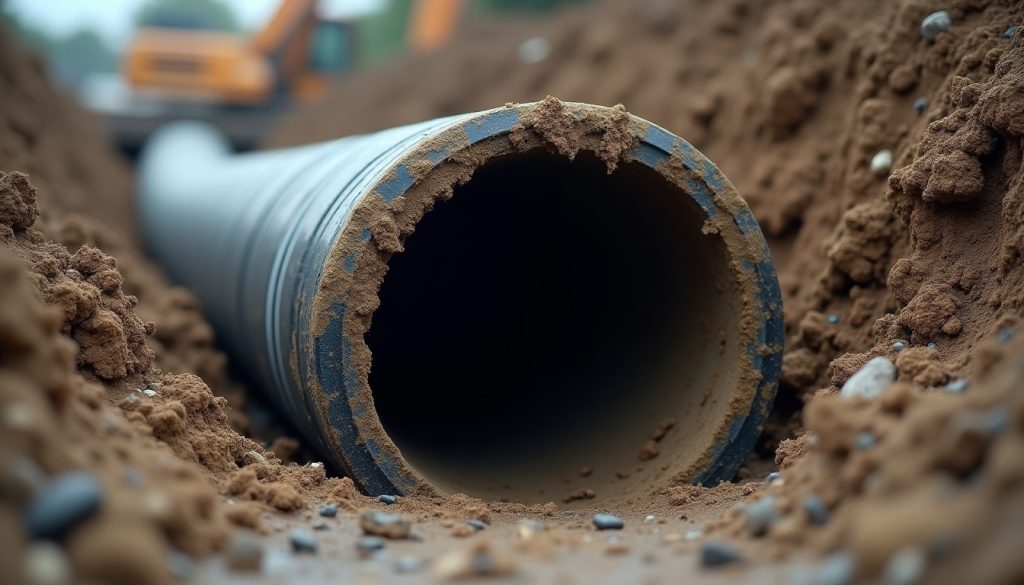
Orangeburg pipe is tar-soaked wood fiber sewer line, installed mostly from the 1940s to the early 1970s, that flattens, blisters and collapses with age, so a confirmed run usually needs replacement at $50 to $250 per foot.
Key Takeaways
- Orangeburg is bituminized fiber pipe named for Orangeburg, New York, where the Fiber Conduit Co. set up in 1893, according to PHCP Pros.
- The City of Ann Arbor treats early 1950s to early 1970s homes as the likely window, with some contractors finding it as early as 1949.
- PHCP Pros reports the pipe starts to deform after about 30 years, against a rated life of up to 50 years.
- Angi data reported by This Old House puts sewer replacement at $50 to $200 per foot dug and $60 to $250 per foot trenchless.
- A sewer camera inspection, which This Old House prices at $100 to $500, is the only reliable way to confirm Orangeburg and see its shape.
- Standard homeowners policies generally exclude wear and tear, and insurers such as American Family sell service line coverage as an optional add-on.
What is Orangeburg pipe?
Orangeburg pipe is bituminized fiber sewer pipe made from layers of ground wood pulp bonded with adhesive and impregnated with coal tar pitch. It takes its name from Orangeburg, New York, where most of it was made. Builders used it mainly for the sewer lateral that runs from a house to the city main, because it was cheap, light and easy to cut.
PHCP Pros reports that a 4-inch pipe could contain up to 25 layers of pitch-pressed wood pulp. The Fiber Conduit Co. founded the Orangeburg plant in 1893 and became the Orangeburg Manufacturing Co. by 1948. The same article says the plant closed in fall 1972 as PVC took over, while Wikipedia gives 1974 for the company closing.
Dates vary by source. Wikipedia describes use from the 1860s through the 1970s. PHCP Pros says it connected homes to public sewers between 1940 and 1970 and that the Uniform Plumbing Code permitted it between 1955 and 1982 under the name Bituminous Fiber Sewer Pipe. The City of Ann Arbor calls early 1950s to early 1970s a reasonable assumption for local homes.
Orangeburg sits at the bottom of the lifespan chart in our guide to sewer pipe types and their lifespans, well below vitrified clay, cast iron and PVC.
Why does Orangeburg pipe fail?
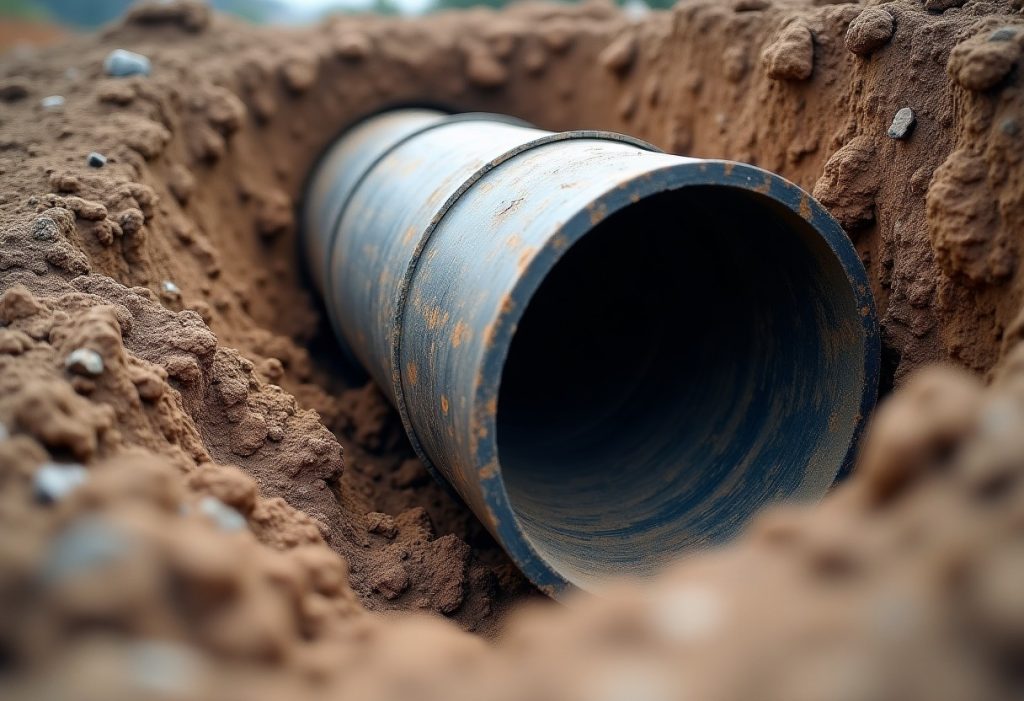
Orangeburg pipe fails because its wood fiber walls soak up water, soften and lose their round shape under the weight of the soil above. A Mr. Rooter franchise calls this ovaling. Once the pipe flattens, flow capacity drops, joints open, roots move in and the line eventually caves in. Most surviving runs are now more than 50 years old.
The Mr. Rooter Spokane franchise lists four failure patterns, and the City of Ann Arbor adds a fifth.
- Deformation. Wet fibers soften and the round pipe squeezes into an oval.
- Collapse and sags. Soil pressure flattens sections and creates bellies where waste sits.
- Root intrusion. Roots push through the soft wall and joints, cracking the pipe and blocking flow.
- Delamination and blistering. Layers of wood pulp separate, so the inner wall bubbles and flakes.
- Inside-out rot. Ann Arbor notes solvents and drain cleaners attack the interior first, so the pipe can rot from the inside out.
That inside-out failure is why harsh chemical drain openers are a bad idea on this pipe. Many plumbers also avoid full-pressure hydro jetting on a known Orangeburg line and use a cable machine or camera first, since a soft wall can tear.
How do you identify Orangeburg pipe?
To identify Orangeburg pipe, start with the home’s build date, then look at any exposed sewer pipe at the cleanout or foundation wall for black, layered, tar-coated material that dents or scrapes with a screwdriver. Confirm it with a sewer camera, which shows ovalized, blistered or flaking walls. Ann Arbor notes many cities lack complete records of where it went in.
InspectAPedia describes the pipe as black, fragile, compressed layers of asphalt-impregnated wood pulp that look like tarred piping. Despite the name, it is never orange. Cast iron sounds hard and shows rust when scraped, while Orangeburg feels softer and shows fibrous layers at a cut or broken edge.
| Sign | What it means | Next step |
|---|---|---|
| Home connected to sewer between about 1945 and 1972 | You are inside the main installation window cited by PHCP Pros and Underground Infrastructure | Ask the city or utility for lateral replacement records, then book a camera inspection |
| Black, layered, tar-like pipe at the cleanout or foundation | Classic Orangeburg appearance per InspectAPedia | Do not chip at it, have a plumber confirm the material |
| Camera shows an oval or flattened pipe | Wall has softened and is deforming under soil load | Get bids for bursting or excavation, lining is likely out |
| Camera shows bubbles, blisters or flaking on the inner wall | Layers are delaminating | Plan replacement before the blisters block flow |
| Roots at joints or through the wall | Soft wall has been breached | Mechanical root cutting as a stopgap, then replace |
| Recurring slow drains, backups or sewer odor | Partial collapse or a belly holding waste | Camera inspection now, not after the next backup |
| Sunken strip or soggy spot over the sewer path | Possible break leaking into the soil | Locate and scope the line, keep traffic off the area |
Ann Arbor also suggests checking city replacement records and microfilm for similar homes. A plumber cleaning the line may pull out pieces of the pipe wall, which is a strong clue.
Should you buy a house with Orangeburg pipe?
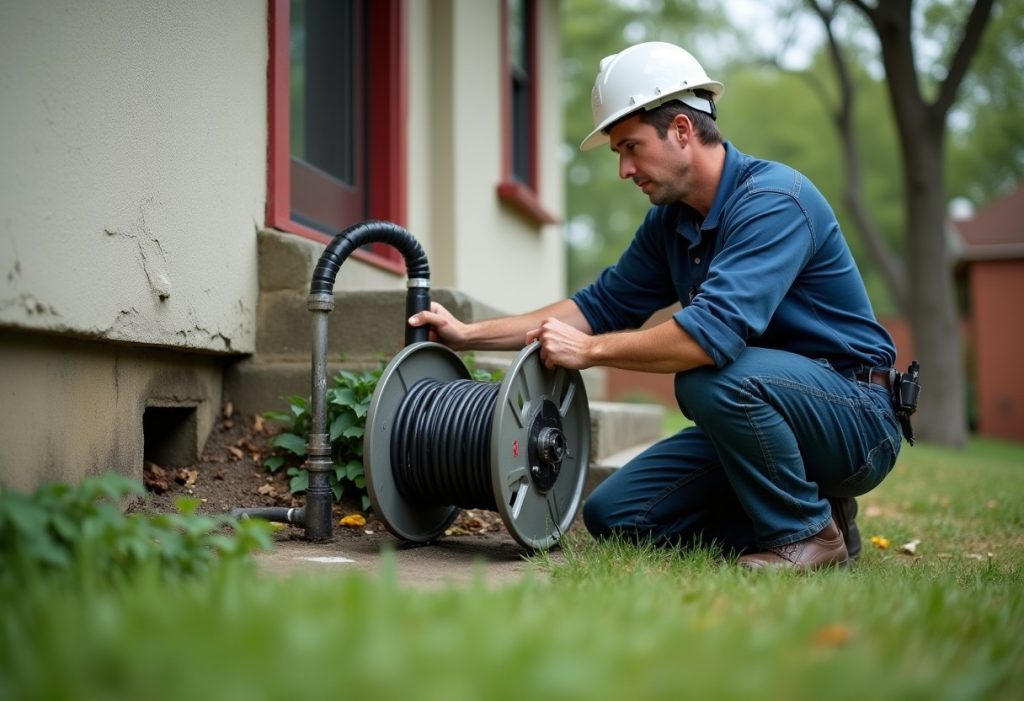
You can buy a house with Orangeburg pipe, but treat the sewer lateral as a known repair and price it into your offer. Order a camera inspection inside your contingency window, get a written replacement bid, and ask the seller for a credit, price cut or completed replacement. A standard home inspection does not look inside the buried sewer line.
A sewer scope inspection before closing is the cheapest protection a buyer has on a 1940s to 1970s house. The camera footage gives you evidence to negotiate with, and the plumber can usually measure the run length and depth at the same visit, which are the two numbers a replacement bid depends on.
- Ask the seller’s disclosure and the city whether the lateral has ever been replaced.
- Book a sewer camera inspection and keep a copy of the video.
- If the camera shows Orangeburg, get two written bids that name the method and footage.
- Negotiate a credit or repair, and confirm who owns the lateral under your city’s rules.
- Price a service line endorsement with your insurer before closing.
Ownership varies. In many cities the homeowner owns the lateral all the way to the main, including the part under the street, which can raise the cost.
What are the Orangeburg pipe replacement options?
Orangeburg pipe is usually replaced by traditional trench excavation or by trenchless pipe bursting, which pulls new HDPE pipe through the old path while splitting the old pipe apart. Cured-in-place lining only suits sections that still hold a round shape. Ann Arbor lists trenching, trenchless and pipe bursting as the replacement methods used locally.
| Method | How it works | Fits Orangeburg when | Main tradeoff |
|---|---|---|---|
| Traditional excavation | Dig a trench, remove the old pipe, lay new PVC | Any condition, including full collapse or a belly | Yard, driveway and landscaping repair add cost |
| Pipe bursting | A bursting head splits the old pipe and pulls new HDPE behind it | Deformed, cracked or collapsed runs with access pits at both ends | Needs fairly straight runs and two pits |
| Cured-in-place lining | A resin-soaked liner cures inside the old pipe | Only where the pipe still holds its round shape | Locks in any oval and will not fix a sag |
| Spot repair | Dig and replace one short section | Rarely, as the rest of the run is the same age | Often just moves the failure to the next joint |
The Mr. Rooter Spokane franchise says lining can extend Orangeburg’s life when the pipe keeps its round shape, and otherwise points owners to pipe bursting or excavation with modern PVC or HDPE. The same tradeoffs apply to old metal lines, as our breakdown of cast iron pipe replacement costs shows.
Bursting can be fast. Cleaner magazine reported a 100-foot, 4-inch collapsed Orangeburg lateral in Shinnston, West Virginia, replaced with 4-inch HDPE in a 13-minute pull and about two hours of service disruption.
How much does Orangeburg pipe replacement cost?
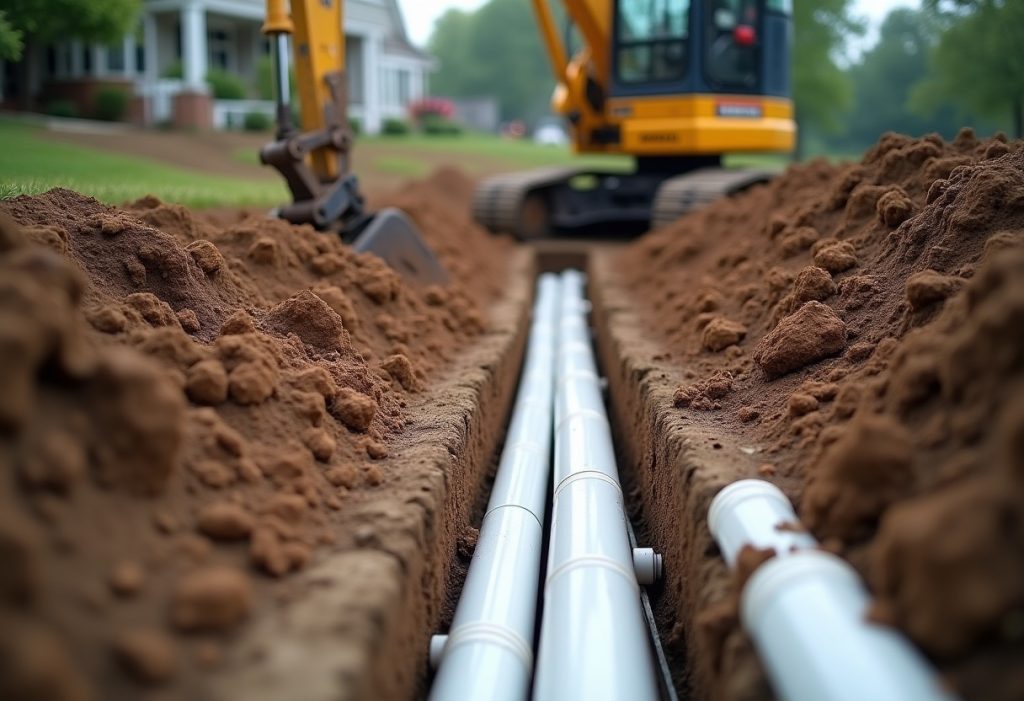
Orangeburg pipe replacement costs about the same as any sewer lateral replacement, roughly $50 to $200 per linear foot dug and $60 to $250 per foot trenchless, per Angi data reported by This Old House. A typical job averages $3,320, but long, deep or under-driveway runs cost far more.
Low ends are $50 per foot dug and $60 per foot trenchless (Angi), and $60 per foot in the Mr. Rooter Spokane quote. The bigger swing is restoration. Cleaner reported that conventional excavation on the Shinnston job could have run $85,000 or more, and that bursting saved at least $75,000 on that 11-foot-deep lateral.
Cost drivers to ask about on every bid:
- Length and depth. A deep connection at the main means more digging or bigger pits.
- What sits on top. Driveways, patios, mature trees and sidewalks add restoration cost.
- Street work. If you own the lateral to the main, road cuts and traffic control may be on your bill.
- Permits and inspection. Most cities require a permit and a final inspection for lateral replacement.
For spot repairs, depth surcharges and regional pricing on other materials, see our sewer line repair cost guide.
Does homeowners insurance cover Orangeburg pipe?
Homeowners insurance usually does not cover Orangeburg pipe replacement, because a sewer line that fails from age, deterioration or roots counts as wear and tear, which standard policies exclude. Some insurers sell a service line endorsement that can pay for buried line repair, and sudden water damage inside the house may be handled separately under your main policy.
American Family Insurance describes service line coverage as an optional add-on that helps pay to fix damaged underground sewer, water and power lines, with examples including root invasion and corrosion. Pricing and coverage limits for these endorsements vary by insurer and state, so ask your agent for a quote and the exact limit before you count on it.
Three points to check in your own policy before you file anything:
- Whether the endorsement excludes lines that were already damaged or deteriorated when coverage began.
- Whether the limit covers excavation and lawn or driveway restoration, not just pipe.
- Whether sewer backup damage inside the home needs its own separate endorsement.
A line already confirmed as failing may be treated as pre-existing damage, so add the endorsement early.
How we sourced this
We reviewed the top-ranking pages for orangeburg pipe and related questions in October 2026, then went to the closest primary sources we could reach. We cited PHCP Pros for manufacturing history and code dates, the City of Ann Arbor building department for installation window and failure modes, InspectAPedia and Wikipedia for composition and lifespan, This Old House (Angi data, updated March 2026) for national cost ranges, a Mr. Rooter franchise for Orangeburg-specific pricing and lining limits, Cleaner magazine for a documented bursting job, and American Family Insurance for service line coverage. Pages that blocked access were excluded. Costs are national ranges, not quotes, and local prices may differ.
Frequently asked questions
What is Orangeburg pipe made of?
Orangeburg pipe is bituminized fiber pipe. Makers wrapped layers of ground wood pulp, sometimes with asbestos fibers, bonded them with a water resistant adhesive and soaked the result in liquefied coal tar pitch. PHCP Pros reports a 4-inch pipe could hold up to 25 layers. It looks black and tarry, not orange, and soft enough to cut with a handsaw.
How do I know if I have Orangeburg pipe?
Start with the build year. Homes connected to sewer from roughly the 1940s to the early 1970s are the main suspects. Look at any exposed pipe near the cleanout or where the line leaves the foundation for black, layered, tar-like material. A sewer camera inspection is the only reliable confirmation, since a camera can show ovalized, blistered or flaking walls that a visual check misses.
How long does Orangeburg pipe last?
Sources put useful life near 50 years under ideal conditions. PHCP Pros reports the pipe starts to deform and warp after about 30 years, and Wikipedia notes failures in as little as 10 years. Because most of it went in before 1972, nearly every surviving run is past that 50 year mark and should be treated as near the end of its life.
Does homeowners insurance cover Orangeburg pipe replacement?
Usually not. Standard homeowners policies treat a sewer line that fails from age, deterioration or roots as wear and tear, which they exclude. Some insurers, including American Family, sell an optional service line endorsement that can cover root invasion, corrosion and similar line damage. Read the limit and the deductible, and add the endorsement before a problem shows up on camera.
How much does it cost to replace Orangeburg pipe?
Angi data reported by This Old House puts traditional excavated sewer replacement at $50 to $200 per linear foot and trenchless methods at $60 to $250 per foot. A Mr. Rooter franchise quotes $60 to $200 per foot for Orangeburg replacement. Depth, length, driveway crossings and city permits push the final number up or down, so get at least two written bids.
Should I buy a house with Orangeburg pipe?
You can, but price the sewer lateral into the deal. Order a sewer scope during your inspection window, get a written replacement bid, and ask the seller for a credit, a price cut or a completed replacement before closing. Treat a confirmed Orangeburg line as a near-term repair, not a maybe, because the material only gets weaker with time.
Can Orangeburg pipe be relined instead of replaced?
Sometimes, but only when the pipe still holds a round shape. A Mr. Rooter franchise notes lining can extend the life of Orangeburg that keeps its shape, while ovalized or collapsed pipe needs bursting or excavation. Lining a flattened pipe just locks the deformation in place, so a camera inspection should come first and decide the method.
Does Orangeburg pipe contain asbestos?
Some of it may. The City of Ann Arbor describes the pipe as plant fibers and asbestos soaked in a tar-like substance, and Wikipedia also lists asbestos fibers in the mix. Leave the old pipe in the ground when bursting allows, and let a licensed contractor handle and dispose of any sections that are dug out, following your state and local rules.
When did they stop using Orangeburg piping?
Sources vary. PHCP Pros says the Orangeburg plant closed in fall 1972 as PVC took over, while Wikipedia gives 1974 for the company closing. PHCP Pros also says it connected homes to public sewers between 1940 and 1970, and the Uniform Plumbing Code permitted it between 1955 and 1982 under the name Bituminous Fiber Sewer Pipe.