Kitec Plumbing: How to Identify It, Why It Fails, Settlement Status and Repipe Cost
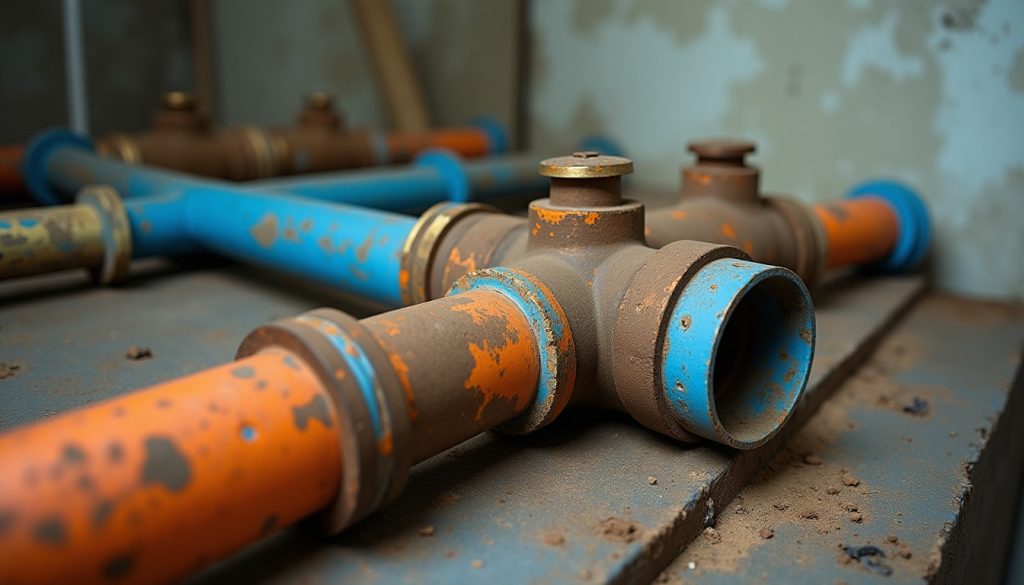
Kitec plumbing is orange and blue aluminum-core plastic pipe with brass fittings, installed in about 292,000 North American homes from roughly 1995 to 2007; it leaks at the fittings, and the US$125 million settlement is now closed.
Key Takeaways
- Kitec is a PEX-AL-PEX (or PE-AL-PE) composite pipe made by IPEX and sold under at least nine names, including PlumbBetter, IPEX AQUA, WarmRite and XPA, per the court-approved settlement FAQ.
- CBC News reported an estimated 292,000 North American homes contain the system, most plumbed in the late 1990s and early 2000s.
- The US$125 million class settlement (MDL No. 2098, Northern District of Texas, plus Ontario and Quebec courts) took claims until January 9, 2020; late claims had to be approved by March 1, 2021.
- Final checks went out in late December 2024 and early January 2025, and the settlement administrator says the stale date has passed, so new claims are no longer possible.
- The settlement’s own Final Plan of Allocation valued a full replumb at US$4.50 per square foot, the same rate HomeAdvisor uses in its June 2026 repipe guide.
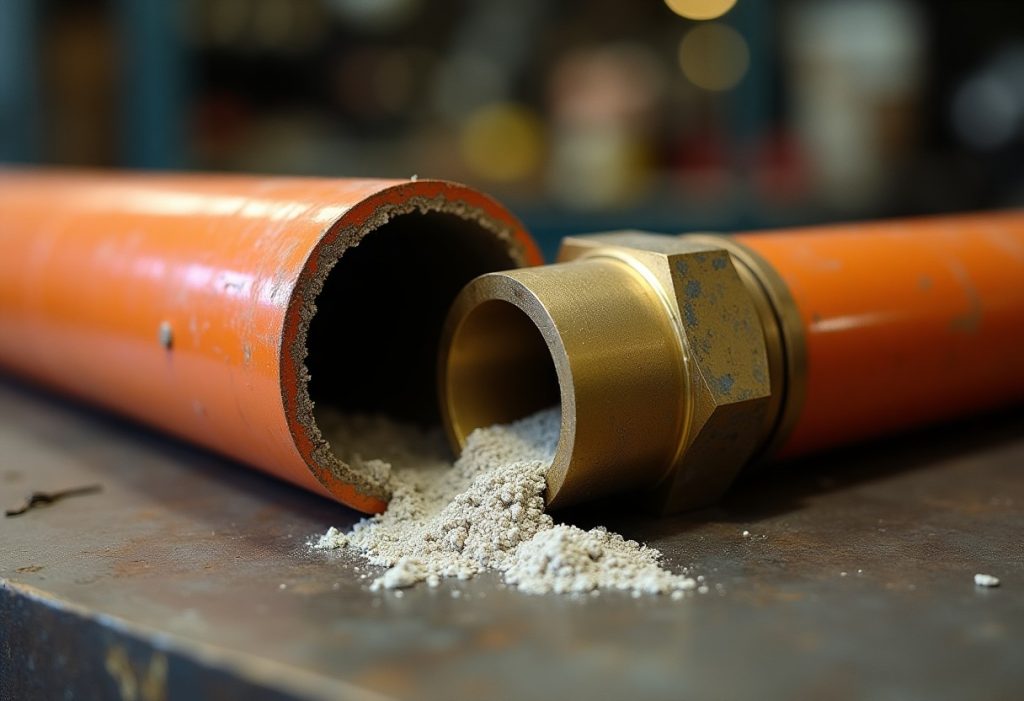
- The settlement FAQ names the first warning signs as white crust on brass fittings and black or bulging pipe, usually near the water heater.
What is Kitec plumbing?
Kitec plumbing is a flexible water supply system built from a thin aluminum tube sandwiched between two layers of polyethylene or cross-linked polyethylene (PEX), joined with brass compression fittings. IPEX Inc. made it and sold it across the US and Canada from about 1995 until roughly 2007. Orange pipe carried hot water and blue carried cold, per the settlement notice.
It was sold as a cheaper, faster alternative to copper. Plumbers could bend it by hand, and the aluminum core let it hold a bend and cut oxygen transfer, which made it popular for radiant floor and baseboard heating as well as potable water.
The court documents define the “Kitec System” broadly. It covers PEX-AL-PEX, PE-AL-PE, PERT-AL-PERT and PEX pipe, valves and fittings made by or for IPEX, whether sold as Kitec, PlumbBetter, IPEX AQUA, WarmRite, Kitec XPA, AmbioComfort, XPA, KERR Controls or Plomberie Améliorée. So a home can have “Kitec” even if the word Kitec never appears on the pipe.
Why does Kitec plumbing fail?
Kitec fails mainly at its brass fittings, which corrode through dezincification: water leaches zinc out of the high-zinc brass, leaving weak, porous copper and white mineral crust that clogs flow and then leaks. A second, slower failure involves the pipe itself, where heat and stress break down the aluminum layer and the pipe blackens or bulges.
Dezincification of the brass fittings
Brass is copper plus zinc. The more zinc, the more readily water pulls it out. A 2009 Virginia Tech dissertation by Yaofu Zhang on brass corrosion in premise plumbing found that alloys with higher zinc content dezincify faster and that chloride in the water speeds the attack, and it singled out inexpensive high-zinc brass fittings in PEX systems as a recent US problem.
Water chemistry matters. When IPEX negotiated a separate Las Vegas settlement in 2008, the Las Vegas Sun reported that the company argued builders and plumbers should have known the valley’s hard water would corrode the brass. That Nevada group, the “Clark County Class,” was carved out of the later national settlement.
Aluminum layer and heat
The pipe has its own weak point. A 1993 study by J. Bowman in the Journal of Materials Science tested aluminum-reinforced polyethylene pipe at 60 and 80 degrees Celsius and found that failure starts when the aluminum layer fails, after which the plastic layers give way almost at once. Hot lines run near that range, which is why the settlement FAQ says problems typically show up first near the water heater.
- Fitting warning sign: white or greenish crust building on the outside of a brass fitting.
- Pipe warning sign: orange pipe that has darkened, blackened or swollen.
How do you identify Kitec plumbing in your house?
Look where pipes leave the wall at the water heater, the mechanical room, and under kitchen and bathroom sinks. Kitec is usually bright orange (hot) or blue (cold), stamped with a brand such as Kitec, PlumbBetter, IPEX AQUA, WarmRite or XPA, and its brass fittings may read “Kitec” or “KTC.” Markings CSA B137.9, CSA B137.10 or ASTM F1974 are further clues.
Those locations and markings come straight from the 2011 court notice. CBC News added that the pipe is often labeled “ASTM 1281,” the standard number for PEX-AL-PEX pipe. A homeowner who cannot find markings can check a cut end or an exposed stub: a thin silver ring of aluminum between two plastic layers points to a composite pipe.
Some electrical panels carry a yellow or neon sticker warning that the water pipe cannot serve as a ground. Inspectapedia and InterNACHI both caution that these stickers went into many homes with any plastic piping, so a sticker alone does not prove Kitec, and no sticker does not rule it out. If the pipe in your home is gray and stamped PB2110 instead, you are looking at a different problem, covered in our guide to polybutylene pipe and how to spot it.
| Feature | Kitec (IPEX) | Standard PEX | Polybutylene |
|---|---|---|---|
| Typical install years | About 1995 to 2007 | 1980s to today | 1978 to 1995 |
| Common colors | Bright orange (hot), bright blue (cold) | Red, blue, white | Gray indoors, blue outdoors |
| Wall construction | Plastic, aluminum, plastic (3 layers plus adhesive) | Single solid plastic wall | Single solid plastic wall |
| Stamped markings | Kitec, PlumbBetter, IPEX AQUA, WarmRite, XPA; CSA B137.9 or B137.10; ASTM F1281 or F1974 | “PEX” plus ASTM F876 or F877 | PB2110 |
| Fittings | Brass compression fittings stamped Kitec or KTC | Crimp, clamp, expansion or press fittings | Plastic or metal crimp-ring fittings |
| Holds a bend? | Yes, the aluminum core keeps its shape | No, it springs back | No, it springs back |
| Main failure | Fitting dezincification, pipe breakdown near heat | Rare; UV damage if stored outdoors | Chlorine attack, fitting cracks |
| Settlement status | US$125M fund closed; claims ended 2020 and 2021 | No class settlement | Cox v. Shell fund closed |
If you are buying, ask the seller’s disclosure about pipe material and have a licensed inspector confirm it. Our breakdown of a full plumbing inspection and what it checks covers what to request in writing.
What happened in the Kitec class action settlement?
IPEX settled US and Canadian class actions in 2011 for US$125 million without admitting fault. The fund paid partial interim checks for leaks during an eight-year claims period, then a final payment after that period ended. Courts in Texas, Ontario and Quebec approved the final plan in 2023 and 2024, and the last checks were mailed around the start of 2025.
The cases were In re Kitec Plumbing System Products Liability Litigation, MDL No. 2098 in the US District Court for the Northern District of Texas; Rosati v. IPEX in the Ontario Superior Court of Justice; and Cooke v. Ipex in the Superior Court of Quebec. The settlement became effective January 10, 2012, according to CBC.
Uptake was slow. By May 2018 more than US$97.7 million was still sitting in the fund, and early interim checks were small on purpose; one Nova Scotia owner told CBC she spent about $9,000 replacing her Kitec and received $247. The 2023 Final Plan of Allocation showed a trust balance of US$101,094,277.05 on May 31, 2023, and stated plainly that claims exceeded the fund, so no claimant would be made whole.
The final plan split claimants in two. Category A owners who had paid for repairs or a replumb got 63 cents per dollar of uncompensated cost. Category B owners who still had Kitec in place shared the rest pro rata, with their replumb valued at US$4.50 per square foot. Any leftover money after small residual payments goes to Habitat for Humanity in the US, Canada and Quebec.
Can you still file a Kitec claim in 2026?
No. The Kitec settlement claims period closed January 9, 2020, and the Final Plan of Allocation bars any claim not received and approved by March 1, 2021. Payments went out in late 2024 and early 2025, and a July 2025 notice on the settlement website says the check stale date has passed. A homeowner who finds Kitec today pays for replacement out of pocket.
Two narrow exceptions remain. If you filed a valid claim and never received or cashed a check, the administrator asks you to contact info@kitec-settlement.com or 1-877-337-1293. And the settlement never released certain claims against installers, such as a nail driven through the pipe, a plumber-supplied pressure reducing valve that failed, or pipe stressed by poor framing. Those may still be pursued against the builder or plumber, subject to your state’s statute of limitations, so a local attorney is the right call.
Should you replace Kitec plumbing, and what does it cost?
Many plumbers and home inspectors recommend replacing Kitec, and the settlement FAQ itself says to have a licensed plumber inspect it and replace defective pipe or fittings. A whole-house repipe runs about $4.50 per square foot per HomeAdvisor’s June 2026 guide, or roughly $6,750 for a 1,500-square-foot home and $13,500 for 3,000 square feet.
Those figures come from the home-size table in HomeAdvisor’s repipe cost guide, which applies a flat $4.50 per square foot. Homes with Kitec buried in concrete slabs or radiant floors cost more, and drywall patching and paint are often quoted separately. For quotes by pipe type and number of bathrooms, see our full guide to the cost to repipe a house.
Your three options
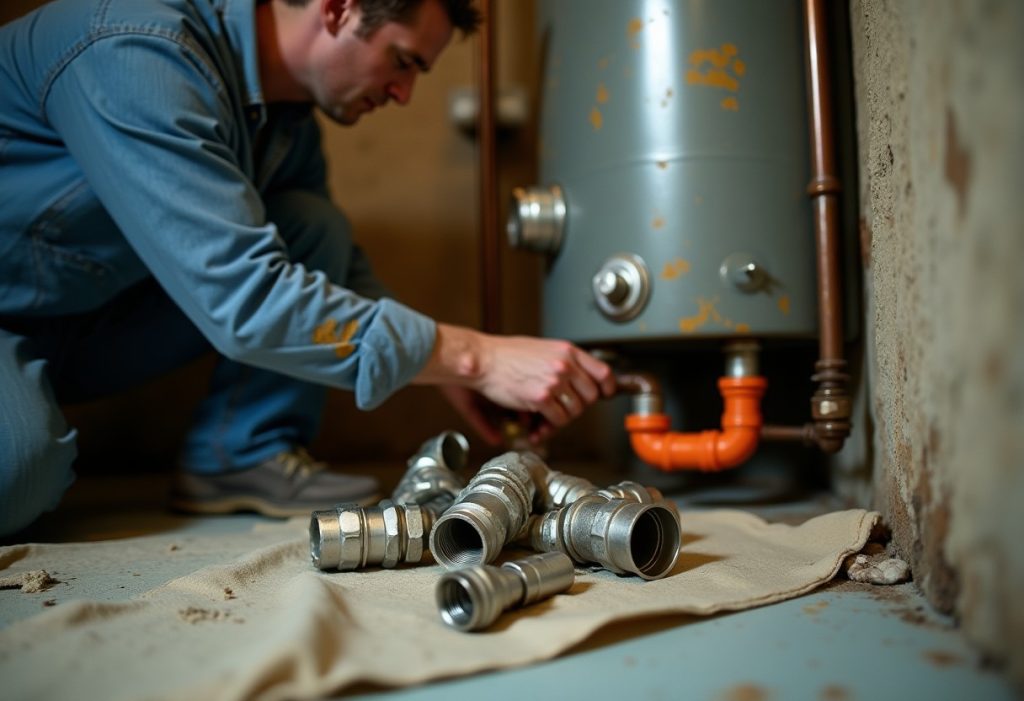
- Replace fittings only. Cheapest, since a plumber swaps exposed brass fittings for modern lead-free ones. It does nothing for pipe already darkening near the water heater, and hidden fittings remain.
- Partial repipe. Replace the hot side first, since heat drives both failure modes, and every fitting you can reach. A sensible middle path when budget is tight.
- Full repipe. Abandon or pull all Kitec and run new supply lines. The only option that clears the issue for insurers and buyers.
Material choice moves the bill less than access does. HomeAdvisor lists PEX at $0.40 to $4 per linear foot and copper at $2 to $12, and labor is the bigger share either way. Most Kitec repipes go back in PEX with modern fittings; our PEX vs copper comparison lays out where copper still earns its higher price.
Does Kitec plumbing affect homeowners insurance?
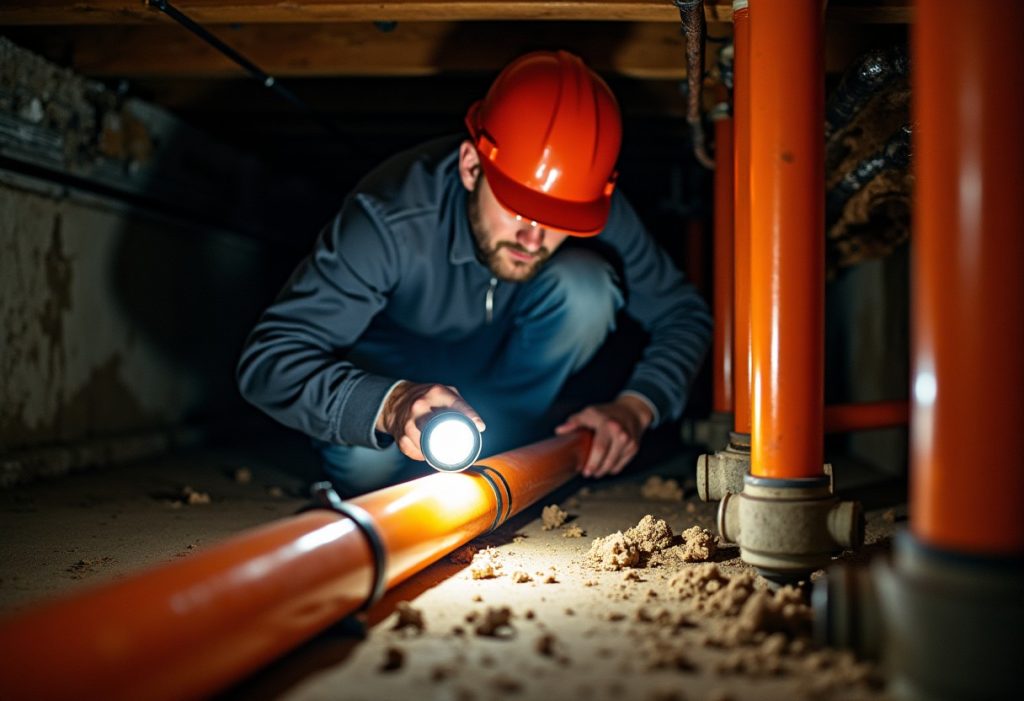
It can. There is no national rule, but some insurers ask about Kitec on applications, may require a plumber’s inspection, add water-damage limits, or decline to write the policy until it is replaced. Because some insurers treat Kitec as a known risk, tell your insurer if an inspection finds it and ask how it affects your coverage.
Disclosure protects you. A carrier that later learns of undisclosed Kitec after a leak may contest the claim, depending on your policy language and state law. Keep receipts and photos of any fitting replacement or repipe; underwriters generally want proof of what was replaced and when.
Standard homeowners policies typically cover sudden water damage, not the cost to replace worn-out pipe. With Kitec, that means the ruined drywall and flooring from a burst fitting may be covered while the new plumbing is your expense.
Can you sell or buy a house with Kitec plumbing?
Yes, a home with Kitec can legally be sold, but disclosure rules vary by state and province, and buyers, lenders and insurers often push for replacement or a price credit. The settlement FAQ tells sellers to consult a real estate lawyer and, if they filed a claim, to tell buyers about the claim and its release terms. Inspectors were told to flag Kitec to clients.
For sellers, the practical choice is to repipe before listing or price the repipe into the offer. CBC reported a Nova Scotia seller who was told she could not sell with Kitec and spent about $9,000 on a replacement. Doing the work first removes a common inspection objection and an insurance hurdle for the buyer.
For buyers, budget for a full repipe at roughly $4.50 per square foot and get an insurance quote before you remove contingencies. Ask for any invoices showing partial work, and confirm whether hidden fittings remain inside walls or slabs.
How we sourced this
We read the 2011 court-approved notice of settlement (US District Court, Northern District of Texas, MDL No. 2098, with the Ontario and Quebec cases), the settlement FAQ and case-status page at KitecSettlement.com (updates through July 9, 2025), and the 2023 Final Plan of Allocation. Background figures come from CBC News (January 2019) and the Inspectapedia literature review, which cites Bowman (1993), Zhang (2009) and the Las Vegas Sun (2008). Cost figures come from HomeAdvisor’s repipe guide updated June 17, 2026. We consulted about a dozen inspector, insurer and contractor pages and cited only those that matched primary documents. We could not confirm a formal US government recall of Kitec; the end date of about 2007 comes from inspector sources, not IPEX.
Frequently asked questions
Is Kitec plumbing bad?
Kitec has a well documented failure record. Its high-zinc brass fittings corrode through dezincification, which clogs flow and causes leaks, and the orange hot-water pipe can blacken or bulge near the water heater. Not every system has leaked, but IPEX paid US$125 million to settle class actions over it, and many inspectors and insurers treat it as a defect that should be replaced.
Can I still file a claim for Kitec plumbing?
No. The settlement claims deadline was January 9, 2020, and the Final Plan of Allocation bars any claim not received and approved by March 1, 2021. Final checks went out in late 2024 and early 2025. If you filed a valid claim but never got paid, contact the administrator at 1-877-337-1293. Separate claims against an installer for faulty workmanship may still exist under state law.
How do I know if I have Kitec plumbing?
Check the pipes at the water heater, the mechanical room and under sinks. Kitec is usually bright orange for hot water and blue for cold, printed with Kitec, PlumbBetter, IPEX AQUA, WarmRite or XPA. Brass fittings may be stamped Kitec or KTC. A thin aluminum ring visible in a cut end also points to Kitec or another composite pipe.
What years was Kitec plumbing installed?
Kitec was installed from about 1995 to roughly 2007 in the US and Canada, with the heaviest use in the late 1990s and early 2000s, according to CBC News and home inspector sources. Homes and condos built or replumbed in that window, especially in Canada and the Las Vegas area, are the most likely to have it.
Will insurance cover a house with Kitec plumbing?
Often, but it depends on the carrier. Some insurers ask about Kitec, require a plumber’s inspection, limit water-damage coverage, or decline the policy until the pipe is replaced. Standard policies usually pay for sudden water damage, not new pipe. Disclose Kitec when you apply, keep repair invoices, and get a written quote before buying a home that has it.
Do I have to replace Kitec before selling my house?
No law requires it, but disclosure rules vary by state and province, and buyers, lenders and insurers often ask for replacement or a credit. The settlement FAQ tells sellers to speak with a real estate lawyer. Many sellers repipe before listing so the issue does not stall the sale at inspection.
How much does it cost to replace Kitec plumbing?
A whole-house repipe runs about $4.50 per square foot per HomeAdvisor’s 2026 guide, roughly $6,750 for a 1,500-square-foot home and $13,500 for 3,000 square feet. The Kitec settlement used the same $4.50 rate to value a replumb. Slab or radiant-floor installs, drywall repair and permits push the total higher.
Does kitec plumbing need to be replaced?
The article says many plumbers and home inspectors recommend replacing Kitec, and the settlement FAQ itself tells owners to have a licensed plumber inspect it and replace defective pipe or fittings. Full repipe is described as the only option that clears the issue for insurers and buyers, while fitting replacement or partial repipe are cheaper middle options.
Is kitec plumbing a deal breaker?
A home with Kitec can legally be sold, but buyers, lenders and insurers often push for replacement or a price credit, and inspectors were told to flag Kitec to clients. Sellers often repipe before listing because doing the work first removes a common inspection objection and an insurance hurdle for the buyer.


