CPVC vs PEX: Which Water Supply Pipe Is Better?
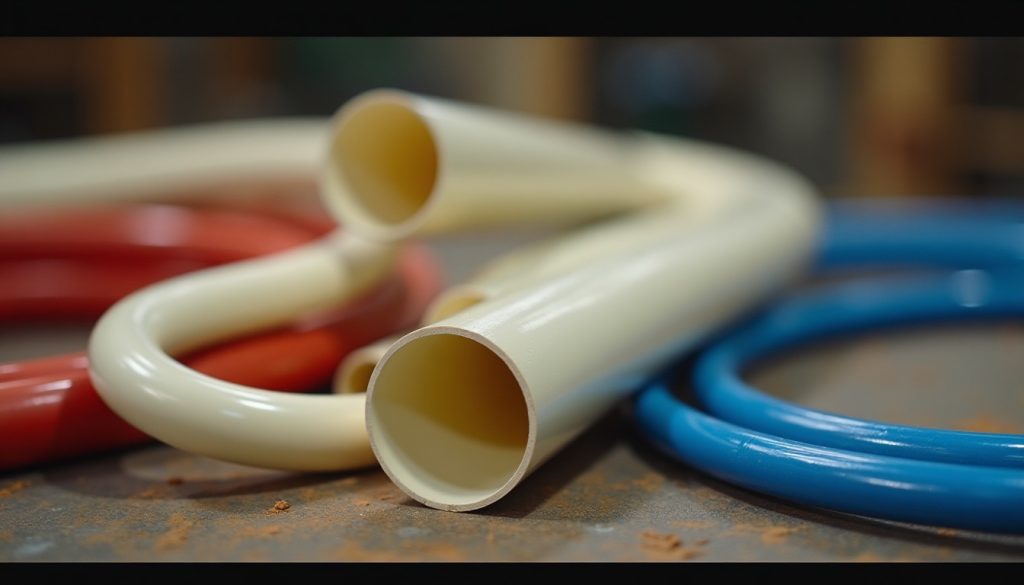
CPVC and PEX both handle hot and cold water supply; PEX wins on flexibility and freeze resistance, while CPVC handles high heat and resists chlorine better.
Key Takeaways
- CPVC is a rigid plastic supply pipe made to ASTM F441 (Schedule 40/80) and ASTM F442 (SDR), rated for service up to about 200F.
- PEX is a flexible tubing made to ASTM F876, rated at 160 psi at 73F, 100 psi at 180F, and 80 psi at 200F.
- PEX resists freeze bursts better because it flexes and rebounds; rigid CPVC cracks more readily when water inside it freezes (PPI).
- CPVC joins by solvent weld (cement to ASTM F493); PEX joins with crimp, cinch, or cold-expansion fittings and no glue.
- Material cost is close, roughly $0.50 to $3 per foot for CPVC and $0.40 to $4 per foot for PEX, but PEX often wins on total installed cost through fewer fittings and less labor.
- Both are code-recognized for potable water in the IPC and UPC and must be listed to NSF/ANSI 61 and 372, but adoption is local.
Is CPVC or PEX better for water supply pipe?
Neither is universally better. CPVC and PEX are both code-recognized plastics for hot and cold water supply, and both do the job in most homes. PEX is flexible, faster to install, and more forgiving of freezing. CPVC is rigid, handles slightly higher sustained heat, and resists chlorine well. The right pick depends on climate, whether you are repiping or building new, and what your local code allows.
If you are comparing all your options, our overview of the types of plumbing pipes covers supply and drain materials together, and our head-to-head on PEX vs copper handles the other common supply matchup.
What are CPVC and PEX pipe?
CPVC (chlorinated polyvinyl chloride) is a rigid off-white plastic supply pipe made for pressurized hot and cold water. It is produced to ASTM F441 in Schedule 40 and 80 and to ASTM F442 in copper-tube-size (CTS) dimensions, and it carries a maximum service temperature near 200F. That heat tolerance is why CPVC, not standard PVC, is the plastic used on hot water lines. CPVC assembles by solvent welding, a chemical cement that fuses pipe and fitting into one piece. It is a cousin of PVC; for the schedules and where each fits, see our guide to PVC and CPVC pipe basics.
PEX (cross-linked polyethylene) is a flexible plastic tubing made to ASTM F876 for hot and cold water supply. It bends around corners, runs long distances with few fittings, and comes in three types: PEX-A, PEX-B, and PEX-C, which differ in how the polymer is cross-linked. Its flexibility and freeze tolerance made it the dominant repipe material across much of the United States. PEX joins with mechanical fittings and no glue, using crimp rings, cinch clamps, or cold expansion. For a deeper look at grades, safety, and uses, see our explainer on what PEX is.
CPVC vs PEX: how do they compare head-to-head?
PEX wins on flexibility, freeze resistance, and speed of installation, while CPVC wins on rigidity, sustained heat, and chlorine tolerance. On temperature ceiling and code standing the two are close. The table below lays out each factor side by side so you can match the pipe to the job.
| Factor | CPVC | PEX |
|---|---|---|
| Material | Rigid chlorinated PVC, off-white | Flexible cross-linked polyethylene |
| ASTM standard | F441 (Sch 40/80), F442 (SDR) | F876 (tubing) |
| Max service temperature | About 200F | About 200F |
| Rated pressure at 73F / 180F | Derates with heat; hot rated near 100 psi at 180F (CTS) | 160 psi at 73F, 100 psi at 180F (F876) |
| Flexibility and bending | Rigid, needs elbows to turn | Bends around corners, fewer fittings |
| Joining method | Solvent weld, cement to ASTM F493 | Crimp, cinch, or cold expansion, no glue |
| Freeze burst resistance | Lower; rigid pipe cracks when frozen | Higher; flexes and rebounds |
| Chlorine tolerance | High, resists chlorinated water | Good with PEX-B; more sensitive overall |
| Cost (material) | About $0.50 to $3 per foot | About $0.40 to $4 per foot |
| Lifespan (industry estimate) | 50 to 75 years | 40 to 50 years |
Which handles higher temperature and pressure?
They tie on the temperature ceiling and split on how they get there. Both CPVC and PEX carry a maximum service temperature near 200F, so either can run hot water. The difference is that PEX has a published pressure ladder under ASTM F876: 160 psi at 73F, 100 psi at 180F, and 80 psi at 200F. Pressure capacity falls as the water gets hotter for both materials.
CPVC derates with heat in the same way; its rated pressure drops sharply toward the top of its range, and at 200F its strength falls to roughly a fifth of the strength at 73F, per the Plastics Pipe Institute. For normal household supply pressure, both materials have ample margin at the hot temperatures a water heater actually delivers.
Does CPVC or PEX resist freezing better?
PEX resists freeze damage better, and it is the clearest practical difference between the two. Because PEX is flexible, it can expand as water freezes inside it and return close to its original diameter after thawing, which lowers the chance of a burst. Rigid CPVC has little give, so freezing water is more likely to crack it.
This matters most for pipe in unheated spaces: crawl spaces, attics, exterior walls, and unconditioned garages. In cold regions many installers lean toward PEX for exposed runs for that reason. No supply pipe is freeze-proof, so insulation and freeze prevention still apply to either material. Pairing PEX with the right fitting method matters too, so see our breakdown of pex connection methods before roughing in exposed runs.
How do you join CPVC vs PEX pipe?
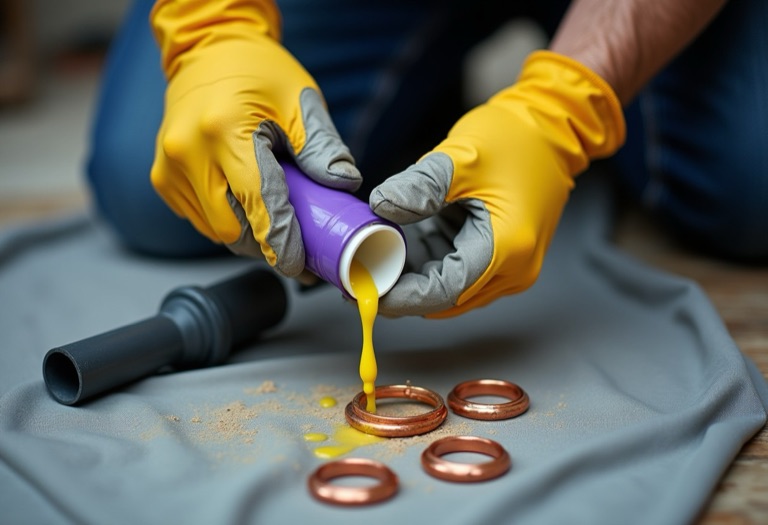
They join in completely different ways, which shapes how each installs. CPVC uses a solvent weld: a chemical cement made to ASTM F493 that softens and fuses the pipe into the fitting, curing into one continuous piece. PEX uses mechanical fittings with no glue and no torch.
- CPVC: clean and prime the pipe end (per product and local code), apply CPVC cement, insert into the fitting, and hold briefly while it sets.
- PEX crimp: slide a copper crimp ring over the pipe, insert the fitting, and compress the ring with a crimp tool (ASTM F1807).
- PEX cinch: use a stainless steel clamp closed with a cinch tool (ASTM F2098).
- PEX cold expansion: expand the pipe and a sleeve, insert the fitting, and let it shrink back tight (ASTM F1960).
Which resists chlorine and chemicals better?
CPVC has the edge on chlorine. It is highly resistant to the chlorine and chloramine used to treat municipal water, which is one reason it stays common on hot water lines. PEX is more sensitive to oxidative chemistry, though PEX-B is formulated for good chlorine resistance and is the grade most often used on whole-house repipes.
Neither is meant for prolonged sunlight. UV exposure degrades PEX, so it should not run in continuous direct sun, and CPVC also needs protection outdoors. On typical treated municipal water inside a home, both materials perform well for decades when installed to spec.
Which costs less to install?
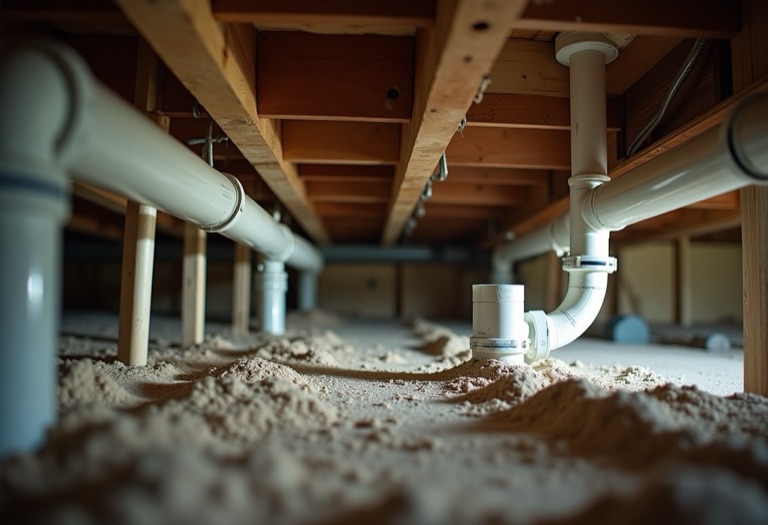
Material cost is close and the ranges overlap, roughly $0.50 to $3 per foot for CPVC and $0.40 to $4 per foot for PEX depending on diameter and grade. The bigger swing is labor. PEX bends around corners and needs far fewer fittings, so it usually installs faster and comes in lower on total installed cost, especially on a full repipe.
CPVC can be cost-competitive on shorter, straighter runs and where crews already stock it. For a whole-house job, get itemized quotes that separate material from labor, because the fitting count and layout drive the final number more than the per-foot pipe price.
When should you use CPVC vs PEX?
Match the pipe to the conditions. Choose PEX for repipes, freeze-prone or unheated runs, long flexible pulls, and jobs where speed and fewer fittings lower cost. Choose CPVC where a rigid plastic is preferred, where you want maximum chlorine resistance, or where local code or a specific application favors it.
For most homeowners, PEX is the default for a modern repipe and CPVC is the specialist pick. Whichever you choose, confirm the material and fitting method are accepted by your local code and listed to NSF/ANSI 61 and 372 for potable water before you buy.
How we sourced this
Temperature and pressure figures come from ASTM material standards: F441 and F442 for CPVC pipe, F876 for PEX tubing (160 psi at 73F, 100 psi at 180F, 80 psi at 200F), and F493 for CPVC solvent cement, with the PEX joining standards F1807 (crimp), F2098 (cinch), and F1960 (cold expansion). The CPVC strength derating at 200F and freeze behavior come from Plastics Pipe Institute (PPI) material. Lifespan (CPVC 50 to 75 years, PEX 40 to 50 years) and cost ranges ($0.50 to $3 and $0.40 to $4 per foot) are reported as industry and market estimates, not fixed figures, because both vary widely by region, size, grade, and installer. Code acceptance is described as jurisdiction-dependent because IPC and UPC adoption is local. Retailer and contractor blog posts were read for context but not cited as figures.
Frequently asked questions
Is CPVC or PEX better for home plumbing?
Neither wins outright. PEX is flexible, installs faster with fewer fittings, and resists freeze bursts because it expands and rebounds. CPVC is rigid, handles slightly higher sustained heat, and resists chlorine well. Choose PEX for freeze-prone or remodel runs and CPVC where a rigid plastic is preferred or PEX faces local code limits.
What temperature can CPVC and PEX handle?
Both are rated for a maximum service temperature near 200F for hot water supply. CPVC is made to ASTM F441 and F442. PEX is made to ASTM F876, which rates it at 160 psi at 73F, 100 psi at 180F, and 80 psi at 200F. Pressure capacity drops as temperature rises for both materials.
Does CPVC or PEX resist freezing better?
PEX resists freeze damage better. Because PEX is flexible, it can expand as water freezes and return close to its original size after thawing, which lowers burst risk. CPVC is rigid and cracks more readily when the water inside it freezes. In cold, unheated spaces many installers favor PEX for that reason.
How do you join CPVC vs PEX pipe?
They join in completely different ways. CPVC uses a solvent weld, a one or two step chemical cement made to ASTM F493 that fuses the joint. PEX uses mechanical fittings with no glue: copper crimp rings (ASTM F1807), stainless cinch clamps (ASTM F2098), or cold expansion (ASTM F1960). PEX needs a tool for its fitting method.
Which is cheaper, CPVC or PEX?
Material prices are close and overlap, roughly $0.50 to $3 per foot for CPVC and $0.40 to $4 per foot for PEX depending on size and grade. PEX often wins on total installed cost because it uses fewer fittings and less labor, especially on a full repipe. Compare local supplier and labor pricing before deciding.
How long do CPVC and PEX pipes last?
Industry estimates put CPVC service life around 50 to 75 years and PEX around 40 to 50 years under normal conditions. Both can shorten in service, CPVC from high chlorine or UV exposure, PEX from prolonged sunlight and some aggressive water chemistry. Neither is rated for continuous outdoor UV exposure without protection.
Is CPVC or PEX more resistant to chlorine?
CPVC is highly resistant to the chlorine in municipal water. PEX is more sensitive, though PEX-B is formulated for good chlorine resistance and is common on whole-house repipes. In water with consistently high chlorine or chloramine levels, CPVC has an edge, but both are widely used on treated municipal supplies.
Is CPVC or PEX approved by plumbing code?
Both CPVC and PEX are recognized for hot and cold water distribution in the International Plumbing Code and the Uniform Plumbing Code, and both must be listed to NSF/ANSI 61 and 372 for potable use. Adoption is local, so confirm your city or county accepts the material and fitting method before you buy.


