Iron Bacteria in Toilet Tank: Orange Slime, Causes, and Shock Treatment
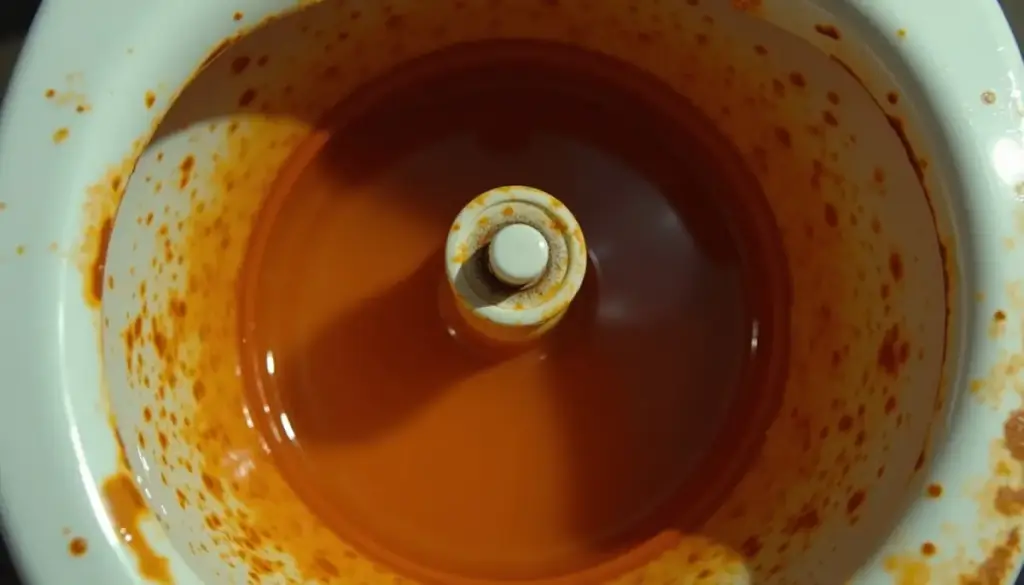
Iron bacteria in toilet tank water leave rust-orange slime because the well feeds them dissolved iron, so scrub the tank, then shock the well and plumbing near 200 ppm chlorine for 12 to 24 hours.
Key Takeaways
- The Minnesota Department of Health says iron bacteria are not known to cause disease, but they can create conditions where disease organisms grow (MDH).
- Penn State Extension lists orange or opaque slimy strands inside toilet tanks as a sign, and says iron as low as 0.01 mg/L can feed the bacteria (Penn State).
- MDH puts the shock chlorine target close to, but not above, 200 ppm, because stronger solutions disinfect less effectively.
- Wisconsin DNR reaches about 200 ppm with 1.5 quarts of 5.25% bleach per 100 gallons, held at least overnight and preferably 24 hours (DNR PUB-DG-120).
- Wisconsin DNR says a 6-inch casing holds about 1.5 gallons per foot of water, so 100 feet of water needs about 9 cups of bleach.
What does iron bacteria in a toilet tank look like?
Iron bacteria in a toilet tank look like sticky, rust-orange, yellow, brown, or gray slime coating the tank walls, the fill valve, and the flapper. Penn State Extension describes orange or opaque slimy strands inside toilet tanks, and the Minnesota Department of Health adds feathery, filament-like growths that show up best in standing water. A toilet tank is standing water, so it shows the problem first.
Run a finger along the tank wall. Plain iron staining feels hard, while bacterial growth feels slick and smears. MDH also lists a rainbow, oil-like sheen as a sign.
Penn State and MDH describe the odor as swampy, musty, oily or petroleum-like, cucumber, sewage, or rotten vegetation, and Penn State notes it may only be noticeable after the water sits unused for several hours. A seldom-flushed guest toilet is often the worst one in the house.

Is iron bacteria in a toilet tank dangerous?
Iron bacteria in a toilet tank are a nuisance, not a known disease risk. The Minnesota Department of Health says iron bacteria are not known to cause disease, and Wisconsin DNR states they are not a threat to your health and that no drinking water standard exists for them. MDH warns the slime can create conditions where disease-causing organisms may grow.
MDH also says they can cut well output and cause clogging, and it recommends a coliform test every year and any time the water changes in taste, odor, or appearance. Our guide to well water testing lists what to order and what labs charge.
What causes iron bacteria in toilet tank water?
Iron bacteria in toilet tank water come from the well, not the toilet. MDH says iron bacteria occur naturally in soil, shallow groundwater, and surface water, and are in most soils in Minnesota. Well work can carry them in, and Penn State says they thrive where dissolved oxygen is low, temperatures are mild, and the water carries dissolved iron or manganese.
They do not need much food. Penn State says iron concentrations as low as 0.01 mg/L can be enough for growth, which is 30 times lower than the EPA secondary guideline of 0.3 mg/L for iron (EPA secondary standards). Penn State notes the bacteria can use manganese instead, and the EPA guideline for manganese is 0.05 mg/L.
Penn State traces many infections to contaminated drilling water or equipment, or a poorly built well. MDH prevention rules follow from that: put only disinfected water in a well, keep the casing capped and at least 1 foot above ground, keep pump parts off the ground during repairs, and disinfect after every repair.
For the dissolved iron side of the problem, see our report on iron in well water.

Is it iron bacteria, plain iron, manganese, or sulfur bacteria?
Slime separates iron bacteria from the other three. Dissolved iron and manganese stain surfaces but do not grow, and sulfur bacteria announce themselves with a rotten egg odor. Penn State says iron and sulfur bacteria often live together.
| Sign | Iron bacteria | Dissolved iron | Manganese | Sulfur bacteria |
|---|---|---|---|---|
| Texture in tank | Sticky, slick slime and strands (MDH, Penn State) | Hard rust stain, no slime | Hard black to brown stain, no slime | Dark slime possible (Penn State) |
| Color | Rust, yellow, orange, brown, or gray (MDH) | Rusty color, reddish or orange staining (EPA) | Black to brown color, black staining (EPA) | Dark or black deposits |
| Odor | Swampy, musty, oily, cucumber, sewage (MDH, Penn State) | Metallic taste, little odor (EPA) | Bitter metallic taste (EPA) | Rotten egg, often worse on the hot tap (Penn State, DNR) |
| Guideline level | No standard (DNR) | 0.3 mg/L (EPA) | 0.05 mg/L (EPA) | No standard listed |
| First fix | Shock chlorination near 200 ppm (MDH) | Iron filter or softener sized to the test | Oxidizing filter sized to the test | Shock, or 160°F water heater cycle for 8 hours (DNR) |
One look-alike sits in the bowl rather than the tank. A pink or salmon ring at the waterline is usually Serratia marcescens, an airborne bacterium, and our guide to pink mold in toilet bowls covers that cleaning routine. Orange slime inside the tank on a private well points back to the well.
How much bleach does it take to shock a well for iron bacteria?
Wisconsin DNR uses 1.5 quarts (3 pints) of 5.25% laundry bleach per 100 gallons of water to reach about 200 ppm, the ceiling MDH sets for iron bacteria. DNR’s routine dose is 3/4 quart for about 100 ppm, and MDH says going above 200 ppm makes disinfection less effective.
To size the dose, find the standing water column. DNR says to subtract the static water level from the total well depth on your well construction report, then multiply by gallons per foot: about 2 1/2 for an 8-inch casing, 1 1/2 for 6-inch, 1 for 5-inch, and 2/3 for 4-inch. If unknown, DNR treats 100 gallons as a reasonable estimate.
The table below applies the DNR 200 ppm ratio to common water columns. DNR mixes the bleach into a volume of clean water equal to the column, so each cell shows the bleach and the mix volume.
| Casing | 50 ft of water | 100 ft of water | 150 ft of water |
|---|---|---|---|
| 4-inch | 2 cups in 33 gal | 4 cups in 67 gal | 6 cups in 100 gal |
| 5-inch | 3 cups in 50 gal | 6 cups in 100 gal | 9 cups in 150 gal |
| 6-inch | 4 1/2 cups in 75 gal | 9 cups in 150 gal | 13 1/2 cups in 225 gal |
| 8-inch | 7 1/2 cups in 125 gal | 15 cups in 250 gal | 22 1/2 cups in 375 gal |
Check the jug before you measure. The DNR ratios assume 5.25% bleach, and DNR warns that pool-aisle bleach is often double that strength. For 8.25% bleach, multiply each amount by 0.64, and for 6% bleach multiply by 0.875.
Two limits apply. DNR caps arsenic areas of northeastern Wisconsin at 100 ppm, and MDH reports about 40 percent of Minnesota wells have arsenic, so check with your state well program. DNR also says chlorine fails as a biocide above pH 8, so keep the mix at pH 7.5 or lower, checked with test strips.
How do you shock chlorinate the well and plumbing, step by step?
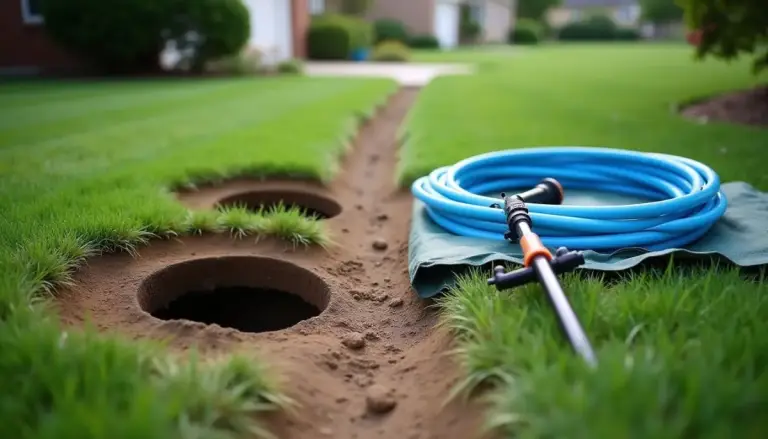
Shock chlorination for iron bacteria takes 9 steps and at least a full day without usable water, following the Wisconsin DNR procedure. You pour the mix down the casing, pull it to every tap and toilet, hold it 12 to 24 hours, then flush outdoors. Our guide on how to shock a well has more detail.
- Pump or clean first. MDH says the well should be pumped until clear or physically cleaned before chlorine goes in.
- Bypass treatment equipment. Close the gate valves around the water softener and any other treatment unit (DNR).
- Mix the solution. DNR uses three new 33-gallon trash cans for a 100-gallon batch.
- Cut power and open the cap. Wear eye protection and rubber gloves. Insects or rodent droppings inside mean the breach must be fixed first (DNR).
- Pour in one continuous pour. Rinse the inside of the casing down to the water table.
- Pull chlorine to every outlet. Restore power and open every faucet until each smells of chlorine, then flush each toilet until its tank water does too.
- Wait. Close all taps and leave the solution in the well and plumbing at least overnight, preferably 24 hours (DNR).
- Flush outdoors. Hose it away from lawn and plantings, never into a septic system or stream, until no faucet smells of chlorine.
- Retest. Wait about a week and send a total coliform and E. coli sample to a certified lab (DNR). Replace any cartridge filter after flushing.
DNR adds that a salt and chimney brush treatment can help break up thick slime so bleach can reach the bacteria.
How do you clean iron bacteria out of the toilet tank itself?
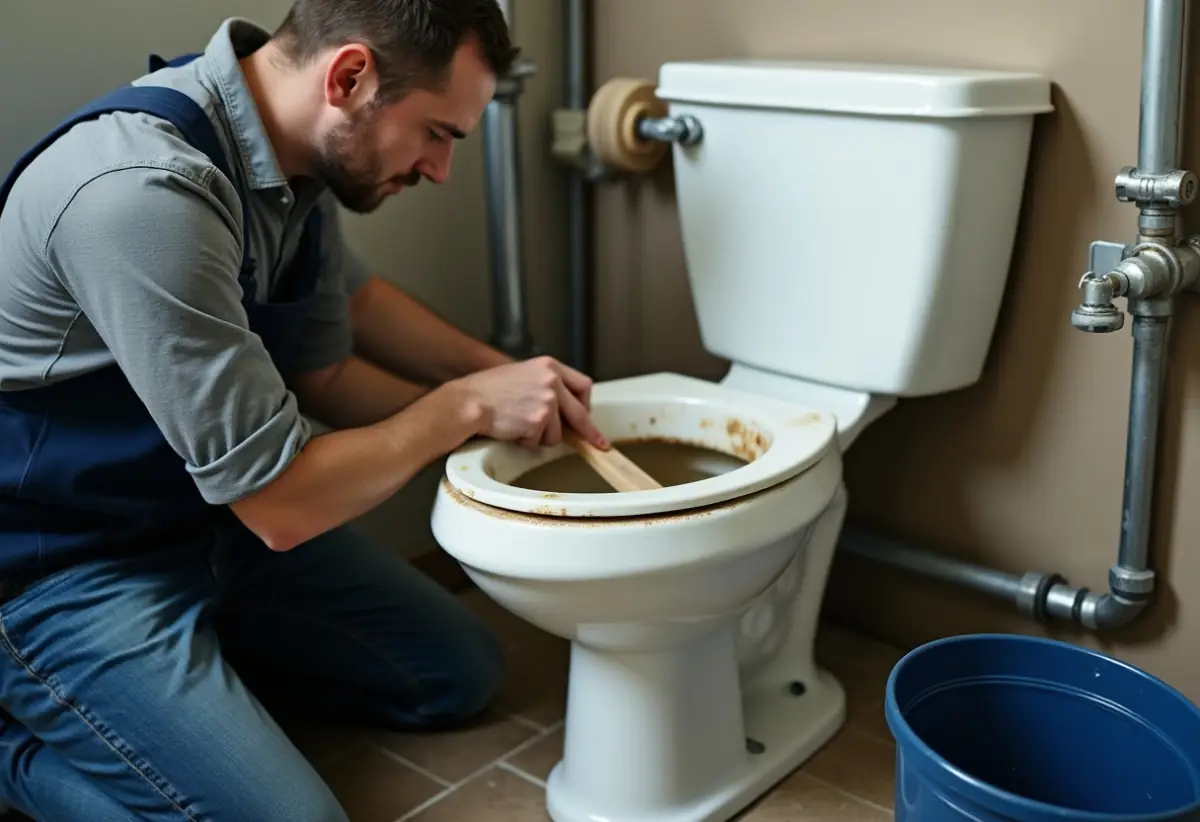
Clean the toilet tank right before the well shock, not after. Scrubbing strips the slime, then the 200 ppm water that refills the tank in step 6 disinfects bare surfaces for the full contact time. Cleaning the tank alone fails because the well keeps sending in fresh bacteria.
- Turn the supply stop valve under the tank clockwise until it stops, then flush and hold the handle to drain the tank.
- Scrub the tank walls, fill valve body, overflow tube, flapper, and chain with a nylon brush or non-scratch pad.
- For hard orange deposits left behind, wipe or soak them with plain white vinegar. MDH notes acids dissolve iron deposits and loosen slime.
- Rinse every trace of vinegar out with clean water. MDH warns never to mix acid and chlorine.
- Reopen the stop valve during the shock so the tank fills with chlorinated water.
- After the flush in step 8, flush the toilet several times until the tank water has no chlorine smell.
Why does the orange slime come back, and what stops it for good?
The slime comes back because shocking rarely kills every colony. Penn State says complete removal is impossible because slime shields the bacteria from chlorine. DNR adds that zones of the water column with no flow, common when the pump hangs well above the bottom, harbor survivors.
Penn State sets a practical limit. If you need to shock more often than every six months, explore other control options, because frequent shock chlorination can damage private water systems. DNR warns it can corrode the well casing.
- Use more water. DNR lists flushing and using more water as a fix.
- Pellet chlorination in the well. Penn State points persistent cases to down-well pellet droppers plus a whole-house media filter. Wisconsin DNR requires advance approval.
- Professional well cleaning. MDH calls physical removal the usual first step in heavily infected wells: pulling and cleaning the pump and brushing the casing.
- Pasteurization. MDH describes holding well water at 140°F for 30 minutes, effective but expensive.
- In-house treatment. Cartridge filters, continuous chlorination, and oxidizing filters clean water after it enters the house, but Penn State says they will not control the bacteria in the well.
MDH does not usually recommend continuous chlorine injection, because it can hide other bacterial contamination and cause corrosion.
For testing, Wisconsin DNR says to request a lab test for iron bacteria, and Penn State notes visible slime often makes it unnecessary. Field kits sold as BART iron bacteria tests exist, but order iron, manganese, pH, and coliform from a certified lab first, since those numbers decide the filter and the dose.
How we sourced this
We reviewed the top-ranking pages for iron bacteria in toilet tank searches in October 2026, mostly water treatment retailers, then sourced every figure to public agencies. Doses, contact times, casing volumes, and pH limits come from Wisconsin DNR publication PUB-DG-120 (2025) and its slime in toilet tank fact sheet. Health and treatment statements come from the Minnesota Department of Health and Penn State Extension, and guideline levels from the EPA. The dose table and chart are our arithmetic on DNR ratios. We left out the popular stick test for bacterial versus oil sheen and test kit prices, because no primary source we checked gave them.
Frequently asked questions
Is iron bacteria in a toilet tank harmful?
Not directly. The Minnesota Department of Health says iron bacteria are not known to cause disease, and Wisconsin DNR calls them a nuisance with no drinking water standard. MDH adds that the slime can shelter disease organisms, so test for coliform bacteria yearly.
What is the orange slime in my toilet tank?
On a private well it is usually iron bacteria, organisms that feed on dissolved iron or manganese and leave sticky rust, yellow, brown, or gray slime. A pink ring at the bowl waterline is more often Serratia bacteria, a separate problem.
How do I get rid of iron bacteria in my toilet tank?
Scrub the tank, then shock the well and plumbing so the chlorinated water refills the tank. Wisconsin DNR uses 1.5 quarts of 5.25 percent bleach per 100 gallons for about 200 ppm, left overnight and preferably 24 hours. Cleaning only the tank fails because the well keeps reseeding it with new bacteria.
Will vinegar kill iron bacteria in a toilet tank?
Vinegar loosens slime and dissolves rust deposits, but it does nothing about bacteria living in the well. Rinse it out completely before any shock, because MDH warns never to mix acid and chlorine.
How long should chlorine stay in the well for iron bacteria?
Wisconsin DNR says to leave the chlorine solution in the well and plumbing at least overnight and preferably 24 hours, then flush it outdoors away from lawns, septic systems, and streams. Retest for coliform about a week later.
Why does iron bacteria keep coming back after shocking the well?
Slime shields the bacteria from chlorine, and Penn State Extension says total removal is impossible. Wisconsin DNR adds that no-flow zones in the well harbor survivors. If you need to shock more often than every six months, Penn State says to move on to other controls.
How do I test for iron bacteria?
Wisconsin DNR says to request a lab test for iron bacteria, and labs certified for coliform may also run it, so ask. Penn State adds that visible slime often makes a test unnecessary. Test iron and manganese too, since the EPA guideline levels are 0.3 and 0.05 mg/L.