UV Water Purifier for Well Water: Dose, Pretreatment, Sizing and Cost
A UV water purifier for well water kills bacteria, viruses, and cysts with 254 nm light, but only on clear, pretreated water and only at NSF Class A’s 40 mJ/cm² dose.
Key Takeaways
- NSF/ANSI 55 Class A units must deliver 40 mJ/cm² at the alarm set point; Class B units run at 16 mJ/cm² and are not meant for unsafe water, per the Ohio Department of Health.
- Viqua’s VH410 is rated 34 GPM at 16 mJ/cm² but 14 GPM at 40 mJ/cm², so the flow number on the box depends on the dose behind it.
- Viqua lists water limits of hardness under 7 grains per gallon, iron under 0.3 mg/L, and tannins under 0.1 mg/L.
- Connecticut’s Department of Public Health calls for a 5-micron prefilter and caps turbidity at 1.0 NTU and manganese at 0.05 mg/L.
- Viqua rates its home lamps at 9,000 hours, so the lamp gets replaced every year.
How does a UV water purifier for a well work?
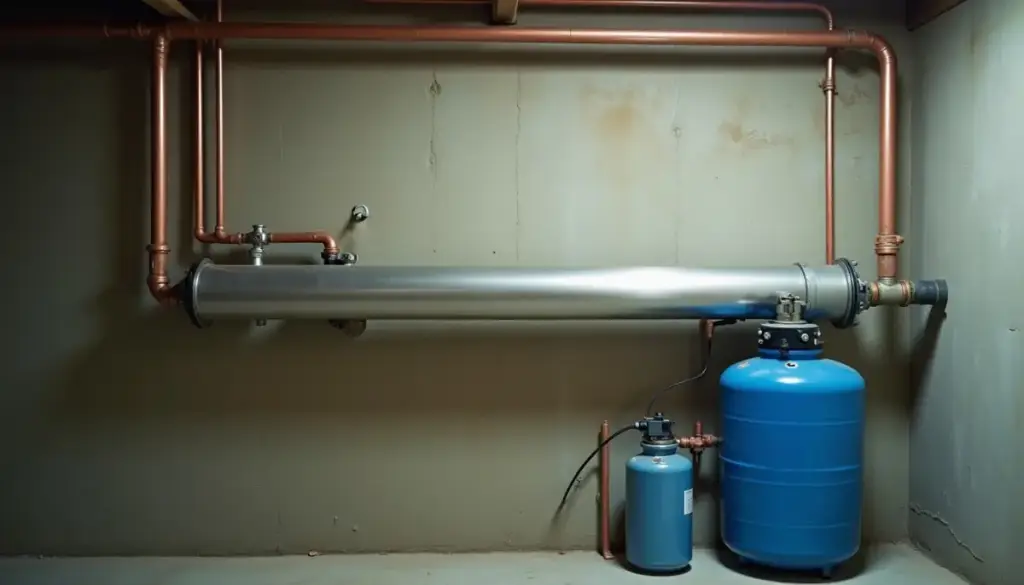
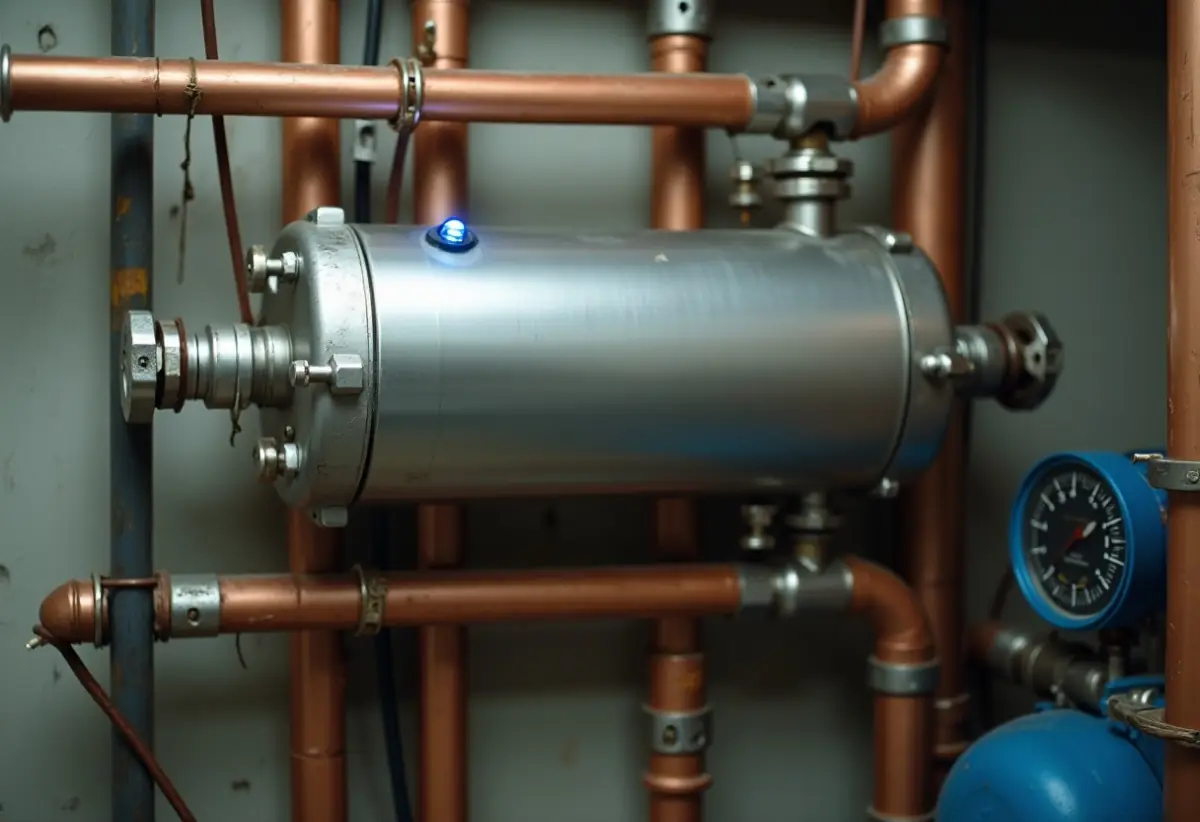
A UV water purifier for a well pumps water through a stainless chamber past a lamp sealed in a quartz sleeve. The lamp emits UV-C light at about 254 nm, which the Ohio Department of Health says disrupts a microorganism’s DNA so it cannot reproduce. Nothing is added to the water and nothing is filtered out. The microbes stay in the water, but they can no longer cause infection.
Private wells sit outside federal drinking water rules, so the owner decides whether to disinfect. That decision starts with well water testing at a state-certified lab, not with a product page.
What UV dose do you need: NSF Class A or Class B?
For a well that has tested positive for bacteria, you need an NSF/ANSI 55 Class A unit. NSF defines Class A as a system that delivers at least 40 mJ/cm² at 254 nm at its alarm set point, and it is designed to inactivate bacteria, viruses, Cryptosporidium, and Giardia in contaminated water. Class B units deliver 16 mJ/cm² and are meant only for water already considered safe.
The Ohio Department of Health fact sheet quotes NSF directly: Class B systems reduce “normally occurring non-pathogenic or nuisance microorganisms only” and are not for “micro biologically unsafe water.” Ohio goes further than most states. Under OAC 3701-28-15, only a Class A system or equivalent may serve as primary disinfection on a private water system there.
Dose is light intensity multiplied by contact time. Class A units carry an alarm or automatic shutoff that trips below 40 mJ/cm², and the Ohio fact sheet prefers the shutoff, since an alarm alone still lets untreated water through.
Watch the labels. Viqua’s home spec sheet rates each model at 16, 30, and 40 mJ/cm², all at 95 percent UV transmittance. A unit marketed by its biggest flow number is usually quoted at the lowest dose.
What does a UV water purifier not do?
A UV water purifier does not filter, soften, or remove any chemical. Iron, manganese, hardness, sediment, nitrate, arsenic, lead, PFAS, tannins, and hydrogen sulfide pass straight through. It also adds no residual disinfectant, so water is treated only at the instant it passes the lamp, and bacteria already living in pipes downstream stay there.
- No chemical removal. The CDC tells well owners to test for nitrates every year; EPA’s limit is 10 mg/L as nitrogen, and UV has no effect on it.
- No protection during a power outage. When the lamp is off, water flows through untreated unless a solenoid valve shuts it.
That is why UV usually rides as the final stage of a whole house water filter train rather than standing alone.
What pretreatment does well water need before UV?
Well water needs to be clear and low in minerals before it reaches the lamp. Viqua lists hardness under 7 grains per gallon (120 mg/L), iron under 0.3 mg/L, and tannins under 0.1 mg/L. Connecticut’s Department of Public Health adds manganese under 0.05 mg/L, turbidity under 1.0 NTU, color under 15 units, and no detectable hydrogen sulfide or iron bacteria, plus a 5-micron prefilter.
The Connecticut DPH UV guidelines target small public systems, but they are the clearest published checklist a homeowner can use. Viqua’s PRO series literature adds a floor of 75 percent UV transmittance after pretreatment.
The Ohio Department of Health says dissolved iron and hardness build up on the quartz and cut the light reaching the water, and it advises treating from 0.3 ppm iron or 6 grains per gallon of hardness. If your report flags iron in well water, that system goes in ahead of the lamp.
| Water condition (from the lab report) | UV OK as is? | Pretreatment needed first |
|---|---|---|
| Coliform positive, clear, all chemistry within limits | Yes, with a Class A unit | 5-micron sediment filter (Connecticut DPH; Chautauqua County, NY) |
| Iron above 0.3 mg/L | No | Iron filter or softener sized to the iron level (Viqua; Connecticut DPH) |
| Manganese above 0.05 mg/L | No | Manganese removal upstream (Connecticut DPH; Chautauqua County) |
| Hardness above 7 gpg (120 mg/L) | No | Water softener (Viqua); Ohio advises treating from 6 gpg |
| Turbidity above 1.0 NTU or visible sediment | No | Sediment filtration down to 5 micron (Connecticut DPH) |
| Tannins above 0.1 mg/L (tea-colored water) | No | Tannin removal ahead of the lamp (Viqua limit) |
| Hydrogen sulfide detectable (rotten-egg odor) | No | Sulfide removal; limit is non-detectable (Connecticut DPH) |
| Iron bacteria present | No | Shock chlorination plus iron treatment; limit is none (Connecticut DPH) |
| pH outside 6.5 to 9.5 | No | pH correction (Chautauqua County) |
| Nitrate above 10 mg/L | UV has no effect | Separate nitrate treatment, such as reverse osmosis (EPA limit) |
How do you size a UV water purifier for a well?
Size a UV water purifier for a well by gallons per minute, using the unit’s rating at 40 mJ/cm² and your pump’s maximum output. Chautauqua County, New York requires the light to be “sized to pump capacity, or flow restriction provided,” and the Ohio Department of Health says the device should disinfect all household water at peak use. Pipe size is not a sizing method.
In Viqua’s VH series spec sheet, every model loses more than half its rated flow when the dose moves from 16 to 40 mJ/cm².
Those figures assume 95 percent UV transmittance; lower transmittance means less dose at the same flow. Retailers often sell the VH410 as an 18 GPM unit, its rating at Viqua’s own 30 mJ/cm² standard.
- Find your pump’s maximum flow from its label or a timed bucket test.
- Pick a unit whose 40 mJ/cm² rating meets or beats that flow, or add a flow restrictor.
- If the lab shows low UV transmittance, size up.
Where does a UV system go, and should it have a bypass?
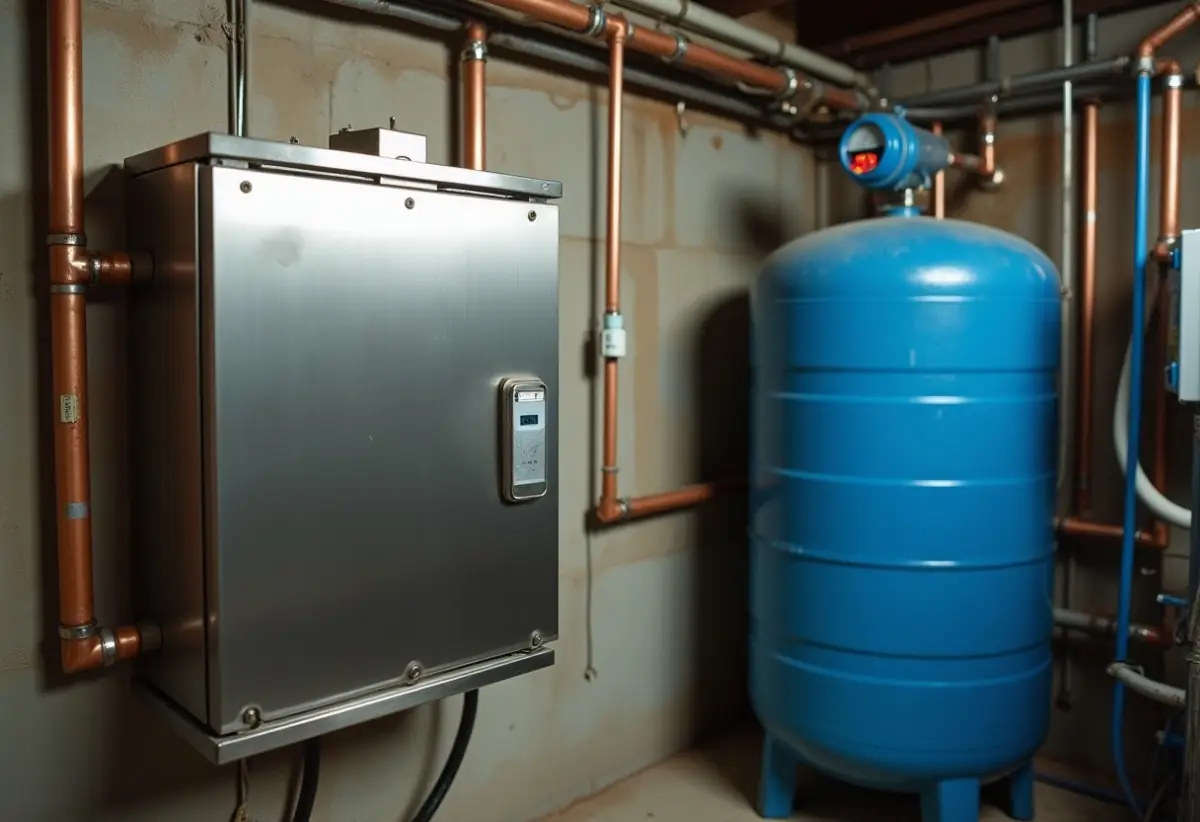
A UV system goes after the pressure tank and after every other treatment stage, as the last device before the line branches to any tap. Chautauqua County’s schematic runs pressure tank, raw water tap, 5-micron filter, softener, then the UV light. Connecticut DPH puts shutoff valves within 4 feet of each side.
Viqua’s diagram shows an optional service bypass. Connecticut DPH says no bypass should go around the unit unless a second approved UV unit sits on the bypass line, because water routed around the lamp reaches the house untreated.
- Raw water sample tap, then the 5-micron filter with valves on both sides.
- Softener, iron, or other treatment your lab report calls for.
- UV chamber last, on a GFCI circuit per Viqua’s diagram, with a sample tap after it.
- A solenoid valve if the unit supports one, so water stops when the lamp fails.
- Chlorine disinfection of the plumbing after installation, as Chautauqua County requires.
That last step matters because UV leaves no residual. Bacteria already in the pipes downstream survive a new lamp, so shock chlorinate the well and household lines once the unit is plumbed in. If a bypass valve is ever opened for service, treat the downstream lines the same way before drinking the water.
How do you maintain a UV well water system?
Maintain a UV well water system with one yearly service. Replace the lamp every 12 months, clean or replace the quartz sleeve at the same visit, and change the sediment cartridge on its own schedule. Viqua rates its home lamps at 9,000 hours, and the Ohio Department of Health says bulbs lose much of their intensity in about a year.
A lamp can glow and still fail to disinfect. Viqua’s home controllers count down lamp life and alarm when the lamp fails, but only the VH410M in that family carries a UV intensity sensor.
- Lamp: replace yearly and leave it on between changes.
- Quartz sleeve: Viqua says to clean mineral deposits off with a calcium, lime, and rust remover; replace a cloudy or cracked sleeve.
- Sediment cartridge: Mid Atlantic Water estimates every 4 to 6 months.
- Spare lamp: Chautauqua County requires one kept on site in a cool, dry spot.

How much does a UV water purifier for a well cost?
A UV water purifier for a well costs about $895 to $995 for a whole house Viqua unit, before installation, according to Mid Atlantic Water’s October 2026 price guide. That guide cites HomeGuide at $700 to $2,500 installed with equipment and Modernize at $300 to $1,500 for installation alone. Yearly upkeep runs about $165 to $170 for a lamp, plus filters and power.
| Cost item | Viqua VH200 (9 GPM at 30 mJ/cm²) | Viqua VH410 (18 GPM at 30 mJ/cm²) | Source |
|---|---|---|---|
| Unit | $895 | $995 | Mid Atlantic Water, Oct 2026 |
| Replacement lamp (yearly) | $165 | $170 | Mid Atlantic Water |
| Quartz sleeve (when needed) | $110 | $145 | Mid Atlantic Water |
| Electricity per year | About $56 (35 W) | About $96 (60 W) | Viqua wattage; EIA July 2026 rate |
| Sediment prefilter kit | $165 (10 inch) to $195 (20 inch); cartridges $45 to $55 | Mid Atlantic Water | |
The electricity line is our arithmetic: 60 watts for 8,760 hours is about 526 kWh, and at the EIA’s July 2026 average residential price of 18.31 cents per kWh that comes to about $96.
Pretreatment ahead of the lamp can cost more than the UV unit, so price the whole train from the lab report.
Do you still need to retest well water after installing UV?
Yes. A UV unit is only proven by a clean bacteria test taken after it. Chautauqua County requires a passing water sample after installation and recommends testing for bacteria at least once a year, and as soon as water is turned on each season at seasonal homes. The CDC says to test private wells yearly for total coliform, nitrates, total dissolved solids, and pH.
The CDC also lists times to retest outside the annual schedule: flooding or land disturbance near the well, reports of local well problems, any well repair or replacement, and a change in taste, color, or smell. Retest iron and hardness too, since creeping minerals foul the sleeve and cut the dose even with a new lamp.
How we sourced this
We consulted about 20 sources in October 2026 and cited 8. Dose classes come from NSF/ANSI 55 as quoted by the Ohio Department of Health, which also supplied Ohio’s Class A rule and bulb guidance. Water limits, the 5-micron prefilter, and valve and bypass guidance come from Connecticut DPH (rev. 2006) and Chautauqua County, NY (2025). Flow ratings, wattages, lamp life, and mineral limits come from Viqua’s VH series spec sheet; UV transmittance and sleeve cleaning from Viqua’s PRO series submittal. Prices come from Mid Atlantic Water’s 2026 guide, a retailer, including the HomeGuide and Modernize figures it cites. Electricity uses the EIA’s July 2026 average. Testing intervals come from the CDC. We excluded affiliate “best of” lists and did not test units.
Frequently asked questions
Do I need a UV light for my well water?
You need one if lab tests keep finding coliform or E. coli, or if your well is shallow, old, or prone to flooding. A clean test does not require UV. The CDC says to test private wells for total coliform bacteria, nitrates, total dissolved solids, and pH at least once a year, and that result should drive the decision.
How much does a UV water purifier for a well cost?
A whole house unit runs about $895 to $995 for Viqua’s VH200 and VH410, per Mid Atlantic Water’s October 2026 price guide. The same guide cites HomeGuide at $700 to $2,500 installed with equipment and $100 to $400 for electrical work. Budget about $165 to $170 a year for the lamp plus sediment cartridges.
Does a UV light remove iron, sediment, or chemicals from well water?
No. UV light only inactivates bacteria, viruses, and cysts. It removes no iron, manganese, hardness, sediment, nitrate, lead, or PFAS, and it changes no taste or odor. Several of them make UV work worse by coating the quartz sleeve or shading microbes, so treat them upstream first.
How often should you change the bulb in a UV water system?
Once a year. Viqua rates its residential lamps at 9,000 hours, which is about 375 days of continuous burning, and the Ohio Department of Health says a bulb loses much of its intensity in about a year even while it still glows. Clean the quartz sleeve at the same visit.
Do you need a sediment filter before a UV light?
Yes. Connecticut’s Department of Public Health calls for a 5-micron prefilter ahead of the UV unit, and Chautauqua County in New York requires one on every private well UV install. Particles shield microbes from the light and dirty the sleeve. Viqua’s installation diagram shows the same 5-micron sediment filter upstream of the chamber.
What size UV system do I need for my well?
Match the unit’s rating at 40 mJ/cm² to the maximum flow your well pump can deliver, not the larger number printed on the box. Viqua’s VH410 is listed at 34 gallons per minute at 16 mJ/cm² but only 14 at 40. Chautauqua County requires sizing to pump capacity or adding a flow restrictor.
Does a UV water system use a lot of electricity?
No, but it runs around the clock. Viqua lists 35 watts for the VH200 and 60 watts for the VH410. At the EIA’s July 2026 average residential rate of 18.31 cents per kWh, that works out to roughly $56 and $96 a year. The lamp must stay on, because a cold lamp needs time to warm up.
What is the downside of UV disinfection water?
UV disinfection does not filter, soften, or remove any chemical, so iron, manganese, hardness, sediment, nitrate, arsenic, lead, PFAS, tannins, and hydrogen sulfide pass straight through. It adds no residual disinfectant, treating water only at the instant it passes the lamp, and bacteria already living in downstream pipes stay there. During a power outage, untreated water flows through unless a solenoid valve shuts it.