Sink Without Plumbing: Portable Sink Options and What They Need
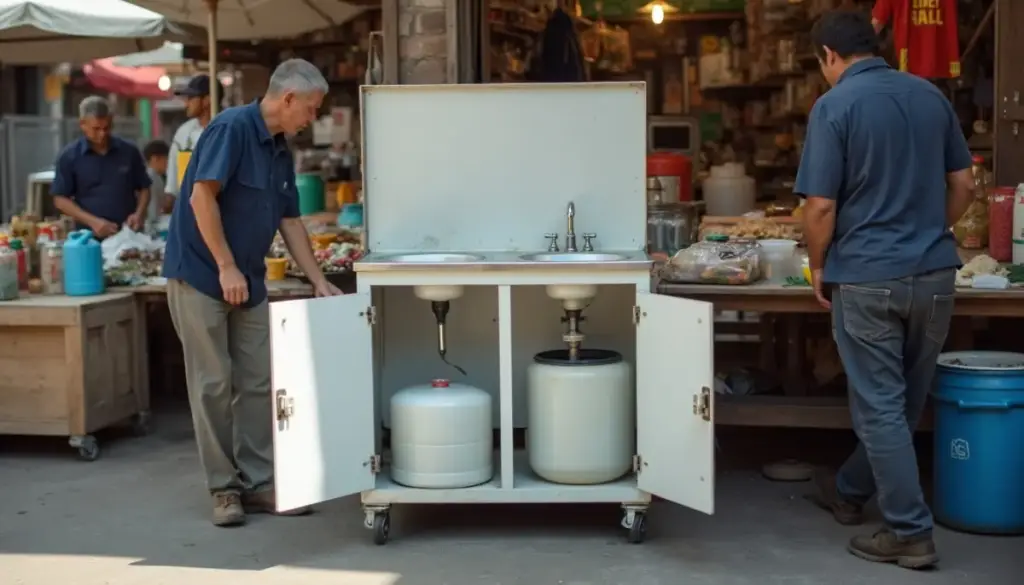
A portable sink, no plumbing required, runs on two tanks: fresh water pushed by a foot or electric pump, and a waste tank at least 15 percent larger, plus a heater if you serve food.
Key Takeaways
- The FDA Food Code 2022, section 5-202.12(A), sets handwash water at a minimum of 85 F (29.4 C), not 100 F.
- Food Code section 5-401.11 requires a mobile unit’s waste tank to be 15 percent larger than its fresh tank, with a drain of at least 1 inch inner diameter.
- PolyJohn’s Bravo holds 22 gallons fresh and 24 gallons grey, so a full fill breaks the 15 percent rule; cap it at about 20.8 gallons.
- Ozark River rates one 5 gallon fresh tank at 45 to 60 hand washes, roughly 10.7 to 14.2 ounces per wash.
- PolyJohn’s Heated Bravo draws 1,450 W at 13 A on 110 V, and PolyJohn recommends a 15 A GFI connection for it.
- The Food Code classes handwash water as sewage, so it goes to a sanitary sewer or approved servicing area, never a storm drain.
How does a sink without plumbing work?
A sink without plumbing replaces the supply line with a fresh water tank and the drain line with a waste tank. A foot pump, hand pump or electric pump lifts water from the fresh tank to the faucet, the basin drains by gravity into the waste tank, and you refill one and empty the other by hand. Heated models add an electric heater between the tank and the faucet.
There is no trap, no vent and no water main pressure, and the Food Code allows that for temporary events. Section 5-103.12 says water for a temporary food establishment supplied from bottled water or closed portable containers “need not be under pressure.”
The catch is the listing. Kaplan Early Learning’s portable sink category puts Clean Hands Helper waste water and non-potable clean water tanks, sold as separate items, right next to the complete stations. Read the spec line for “self-contained” or a tank size before you order.
Which portable sink types exist, and what does each need?
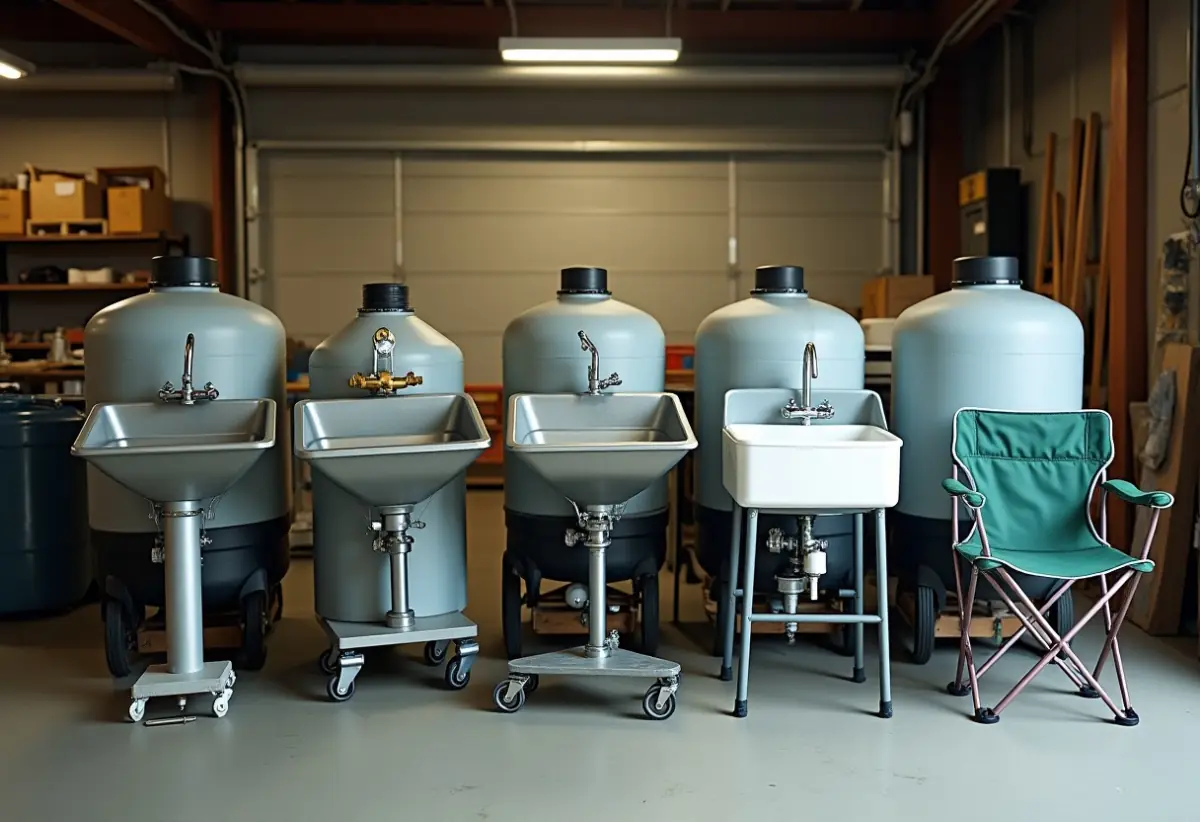
Portable sinks fall into five working groups: foot or hand pump sinks, electric pump sinks, heated sinks, salon and pedicure units, and camping or garden sinks. The pump type decides whether you need power, and the heater decides how much. Only heated units with a waste tank sized to the fresh tank suit most health-permitted food events.
| Type | How water moves | Hot water | Power needed | Best fit |
|---|---|---|---|---|
| Foot or hand pump sink (PolyJohn Bravo, Encore cold water sink) | Foot pedal or plunger pump lifts water to the spout | No | None | Job sites, porta-john rows, festivals |
| Electric pump sink, 12 V or 120 V | Small diaphragm or demand pump runs when the faucet opens | Only if a heater is added | 12 V battery or 120 V outlet | Garages, sheds, campers |
| Heated cabinet sink (Ozark River Premier and Elite series) | Electric pump plus on-demand or tank heater | Yes | 110 V outlet, often a dedicated circuit | Food booths, classrooms, clinics |
| Heated outdoor station (PolyJohn Heated Bravo, Ozark River Frontier) | Pump plus heater in a rotomolded shell | Yes | 110 V, 15 A to 20 A circuit | Outdoor events, construction rentals |
| Salon shampoo bowl or pedicure unit | Pump feeds a sprayer; drain pump empties to a tank or bucket | Usually, via heater | 120 V outlet | Booth rentals, mobile stylists |
| Camping or garden sink | Gravity jug with spigot, or a hand pump | No, unless you heat the water first | None | Campsites, potting benches |
How big should the fresh and waste tanks on a portable sink be?
The waste tank should hold at least 15 percent more than the fresh tank. FDA Food Code section 5-401.11 sets that rule for mobile food establishment holding tanks, and the Food Code annex applies the same reasoning to temporary food establishments. Required waste capacity equals fresh capacity times 1.15, so a 5 gallon fresh tank needs at least 5.75 gallons of waste capacity.
The same section says the waste tank must slope to a drain at least 1 inch (25 mm) in inner diameter with a shut-off valve. The annex adds that the waste drain must be larger than the fill hose, so nobody can use the drinking water hose to empty the waste tank.
| Model (maker) | Fresh tank | Waste tank | Hot water | Power | Meets 15% rule when full? |
|---|---|---|---|---|---|
| Premier (Ozark River) | 5 gal | 6 gal | Yes, on-demand | 110 V, dedicated 20 A circuit | Yes, needs 5.75 gal |
| Bravo (PolyJohn) | 22 gal | 24 gal | No | None, foot pump | No, needs 25.3 gal; fill to 20.8 gal |
| Applause (PolyJohn) | 30 gal | 30 gal | No | None stated | No, needs 34.5 gal; fill to 26 gal |
The fix for an equal-tank sink is simple math, not a new sink. Divide the waste tank by 1.15 and stop filling there. A Bravo filled to 20.8 gallons and an Applause filled to 26 gallons both clear the 15 percent margin.
How many hand washes does one portable sink tank give you?
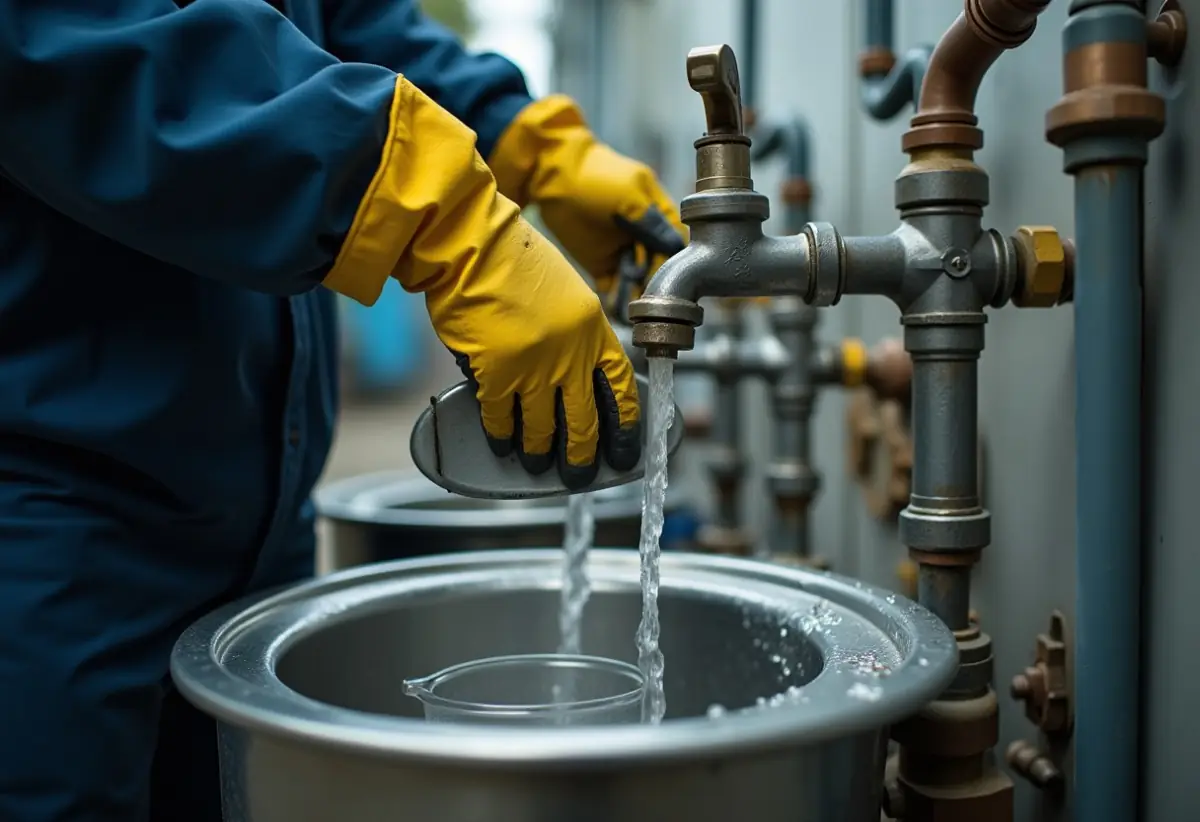
Ozark River rates each 5 gallon fresh tank at 45 to 60 hand washes. Five gallons is 640 fluid ounces, so that equals about 10.7 to 14.2 ounces per wash. Scale it to any tank: washes equal tank ounces divided by 10.7 for a best case, or by 14.2 for a busy, sloppy line.
- Convert the usable fresh volume to ounces (gallons times 128). Use the capped fill from the 15 percent rule, not the tank’s full size.
- Divide by 14.2 for a conservative wash count and by 10.7 for the optimistic count.
- Estimate demand: workers times washes per hour times event hours.
- If demand beats the conservative count, stage a second filled fresh tank and an empty waste tank before doors open.
Worked example: two food workers washing four times an hour over a six hour event need 48 washes. One 5 gallon Ozark River tank covers that only at the high end of its 45 to 60 range, so bring a spare. A Bravo capped at 20.8 gallons (2,662 ounces) gives about 187 to 249 washes, enough for a crowd handwash station at a small fair.
Waste fills on the same schedule. Empty the waste tank every time you refill fresh, because a 6 gallon tank on a 5 gallon system has only about one gallon of spare room.
What power does a heated portable sink with no plumbing need?
Most heated portable sinks plug into a standard 110 V outlet but want the circuit to themselves. PolyJohn lists the Heated Bravo at 110 V, 1,450 W and 13 A and recommends a 15 A GFI connection. Ozark River asks for a dedicated, grounded 20 A breaker for its Frontier outdoor station.
Run the numbers on the Heated Bravo. A 15 A circuit at 110 V carries 1,650 W, and the sink takes 1,450 W, so about 200 W is left. Plug a hot plate or kettle into the same circuit and the breaker trips mid-service.
- Ask the venue which outlets sit on separate breakers before you set up.
- Plug into a GFI-protected outlet, as PolyJohn recommends for the Heated Bravo.
A 12 V pump sink without a heater cannot guarantee 85 F water, so on its own it may not satisfy a food event permit.
What does the FDA Food Code require for a food vendor’s portable sink?
The FDA Food Code 2022 requires a handwashing sink that delivers water of at least 85 F through a mixing valve or combination faucet, soap, a hand drying method, a waste receptacle and a handwashing sign. Self-closing or metering faucets must run at least 15 seconds per push. Utensil washing needs a separate sink with at least three compartments.
Check the number in your own state. The FDA Food Code 2022 text says 85 F (29.4 C), and its annex notes that the International Plumbing Code calls 85 F to 110 F tempered water. Many vendor checklists still say 100 F, which may come from an older Food Code edition or a state amendment. The county environmental health office that issues your temporary event permit decides which applies.
- Section 2-301.12 requires food employees to wash for at least 20 seconds, scrubbing for 10 to 15 seconds, under running warm water.
- Section 5-104.12 allows water for a temporary event from bottled drinking water, closed portable containers, a vehicle tank or an on-premises storage tank.
- Section 4-301.12 requires a three compartment sink for manual warewashing; a two compartment sink is allowed only with the regulator’s approval.
- Section 6-301.14 requires a sign reminding food employees to wash their hands.
Where can you dump portable sink grey water?
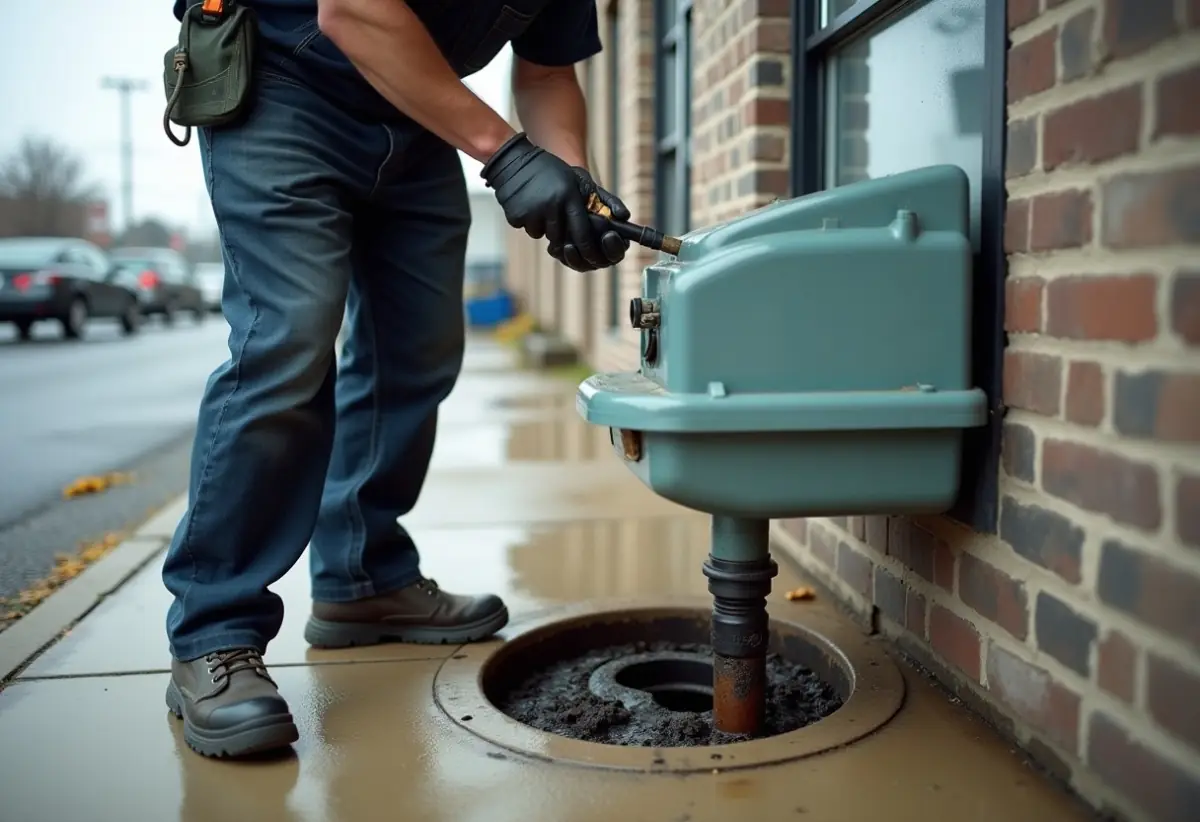
Portable sink waste water goes into a sanitary sewer or an approved servicing area, never a storm drain, street gutter or lawn. The FDA Food Code defines sewage as liquid waste containing animal or vegetable matter, which covers handwash water. Section 5-403.11 requires sewage disposal through a public sewage treatment plant or a permitted individual sewage system.
Storm drains are neither. They carry rain runoff, not sewage, so they do not count as an approved disposal facility under the Food Code. Section 5-402.14 adds that mobile units must unload liquid waste at an approved waste servicing area or into a sewage transport vehicle.
- Close the waste tank valve and carry or wheel the tank to a toilet, mop sink, RV dump station or the event’s grey water tote.
- Drain it slowly to avoid splashing, then flush and drain the tank, as section 5-402.15 requires during servicing.
- Never rinse the waste tank with the fresh tank’s fill hose.
Home use is different. Reusing shower or sink water on garden beds is handled through a permitted greywater system where your state allows one, and the rules on which fixtures qualify vary by state.
When is a plumbed sink the better buy than a portable sink?
A plumbed sink wins when the sink stays put and a drain line is within reach. In a garage, basement or shop, a permanent drain ends the daily tank chore. Price the drain tie-in before you buy a self-contained unit for a fixed spot.
Kaplan Early Learning’s portable sink listings showed Clean Hands Helper water tanks at $143.95 each and complete heated stations at $3,379.95 to $3,695.95 when we checked in October 2026. If you can reach a drain, a standard utility sink plumbing setup with a trap and vent costs less over time.
A sink below the sewer line can still drain without tanks. A laundry sink pump lifts the water up to the drain line, which is the usual answer for basement utility sinks. For a bathroom or vanity with supply lines close by, it is often simpler to install a bathroom sink the normal way.
How we sourced this
We read the January 18, 2023 version of the FDA Food Code 2022 directly and quoted sections 2-301.12, 4-301.12, 5-103.12, 5-104.12, 5-202.12, 5-401.11, 5-402.13 to 5-402.15, 5-403.11 and 6-301.14, plus the annex notes. Tank, heater and power specs come only from maker pages: PolyJohn Bravo, PolyJohn Heated Bravo, PolyJohn Applause, Ozark River’s Premier and 5 gallon fresh tank pages, and Ozark River’s Frontier and Encore pages, checked in October 2026. We consulted about 30 sources, including search results and dealer listings, and cited 9. Retailer-only specs, such as heater outlet temperatures and grey tank figures found only on dealer listings, were left out, as were per-model prices we could not confirm with the maker. Wash counts and fill caps are our arithmetic from those figures.
Frequently asked questions
Can you have a sink without plumbing?
Yes. A self-contained portable sink carries its own fresh water tank, a foot or electric pump, and a separate waste tank you empty by hand. PolyJohn’s Bravo holds 22 gallons of fresh water and 24 gallons of grey water, while Ozark River’s heated Premier runs a 5 gallon fresh tank into a 6 gallon waste tank and plugs into a 110 V outlet.
What temperature does a portable handwashing sink need to reach?
The FDA Food Code 2022, section 5-202.12(A), requires a handwashing sink to deliver water at least 85 F (29.4 C) through a mixing valve or combination faucet. The Food Code annex notes the plumbing code treats 85 F to 110 F as tempered water. Some states still enforce an older edition with a higher number, so check with the health department that issues your event permit.
How much bigger should the waste tank be than the fresh tank?
At least 15 percent bigger. FDA Food Code section 5-401.11 says a sewage holding tank on a mobile food establishment must be sized 15 percent larger than the water supply tank and sloped to a drain at least 1 inch in inner diameter with a shut-off valve. A 5 gallon fresh tank therefore needs a waste tank of at least 5.75 gallons.
How many hand washes do you get from a portable sink tank?
Ozark River says each 5 gallon fresh water tank gives 45 to 60 hand washes, which works out to roughly 10.7 to 14.2 fluid ounces per wash. Divide your fresh tank volume in ounces by those figures to plan refills. Two food workers washing four times an hour across a six hour event need about 48 washes.
Where can I dump the waste water from a portable sink?
Into a sanitary sewer, such as a toilet, a mop sink or an RV dump station, or a waste servicing area your health department approves. The FDA Food Code treats handwash water as sewage and requires disposal through a public sewage treatment plant or a permitted septic system. Storm drains are not either one, so never pour it there or on the ground.
Do food vendors need a three compartment sink as well as a handwash sink?
Usually yes, if you wash utensils on site. FDA Food Code section 4-301.12 requires a sink with at least three compartments to wash, rinse and sanitize equipment and utensils by hand. A handwash sink cannot stand in for it. The code lets the regulator approve alternatives, including a two compartment sink or receptacles that substitute for compartments.
Does a heated portable sink need a special outlet?
Often it does. PolyJohn lists its Heated Bravo at 1,450 W and 13 A on 110 V and recommends a 15 A GFI connection, which leaves only about 200 W of headroom on that circuit. Ozark River asks for a dedicated, grounded 20 A breaker for its Frontier outdoor station. Plan one sink per circuit and keep other heaters off it.