How to Install a Bathroom Sink (Every Sink Type)
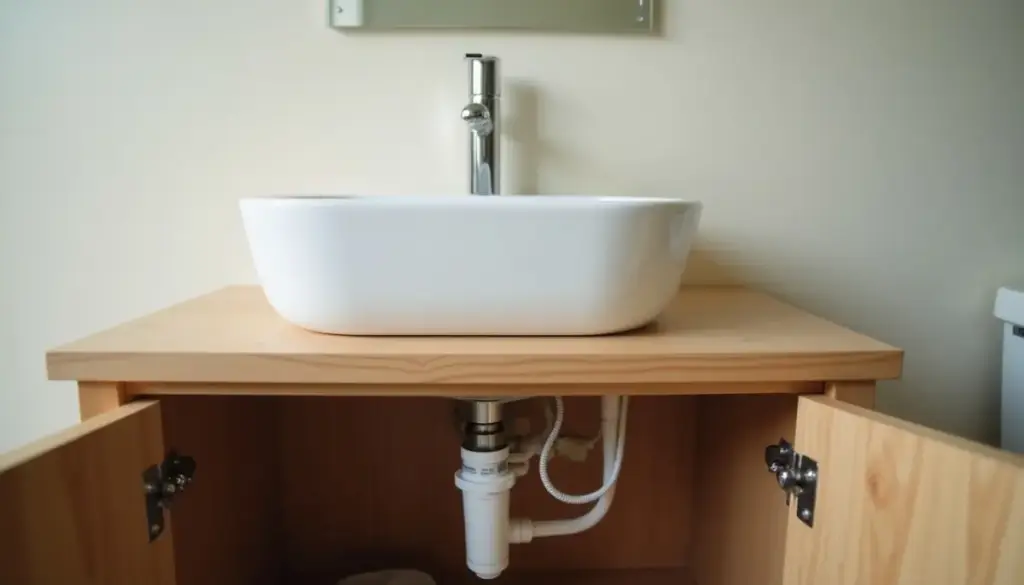
To install a bathroom sink, mount the faucet and drain on the bowl first, secure the bowl for its type, then connect a 1-1/4 inch P-trap and two supply lines and leak test every joint.
Key Takeaways
- Fixr puts the average installed cost of a bathroom sink at $750, with most jobs between $500 and $1,000 (updated January 2025).
- Kohler’s Memoirs pedestal instructions have you install the faucet and drain on the bowl before setting it on the pedestal.
- Oatey lists its standard plumber’s putty as not for marble, granite, other stone or plastic. Use stain-free putty or silicone there.
- The International Plumbing Code (IPC Table 709.1) sets a 1-1/4 inch minimum trap for a lavatory, with a 2 to 4 inch water seal (IPC 1002.4).
- Fixr says undermount sinks need at least 24 hours of adhesive cure before you hook up the drain.
- Kohler’s Memoirs pedestal sink roughs the pop-up drain about 14-1/2 inches below the rim and the supplies about 10 inches below it.
What do you need before you install a bathroom sink?
Before you install a bathroom sink, you need working shutoff valves, a drain stub in the wall at the right height, the sink’s own installation sheet, and a short kit of parts. Read the spec sheet first because it sets the drain hole size, faucet drilling and rough-in heights. Kohler pedestal sinks, for example, all list a 1-3/4 inch drain hole.
Shut off both angle stops and open the faucet to drop the pressure. If the old stops weep or will not close fully, replace the shut-off valves first, while the wall is open and the sink is out of the way.
- Tools. Basin wrench, adjustable wrench, tongue-and-groove pliers, level, tape measure, drill, utility knife, caulk gun, bucket and rags.
- Parts. Faucet, drain assembly that matches the sink (pop-up or grid), 1-1/4 inch trap kit, two braided supply lines (Kohler lists 3/8 inch lavatory supplies as the matching accessory), sealant, and mounting hardware.
- Check the layout. Know how bathroom sink plumbing is laid out behind the wall before you cut a countertop or move a drain stub.
How do you install a bathroom sink by sink type?
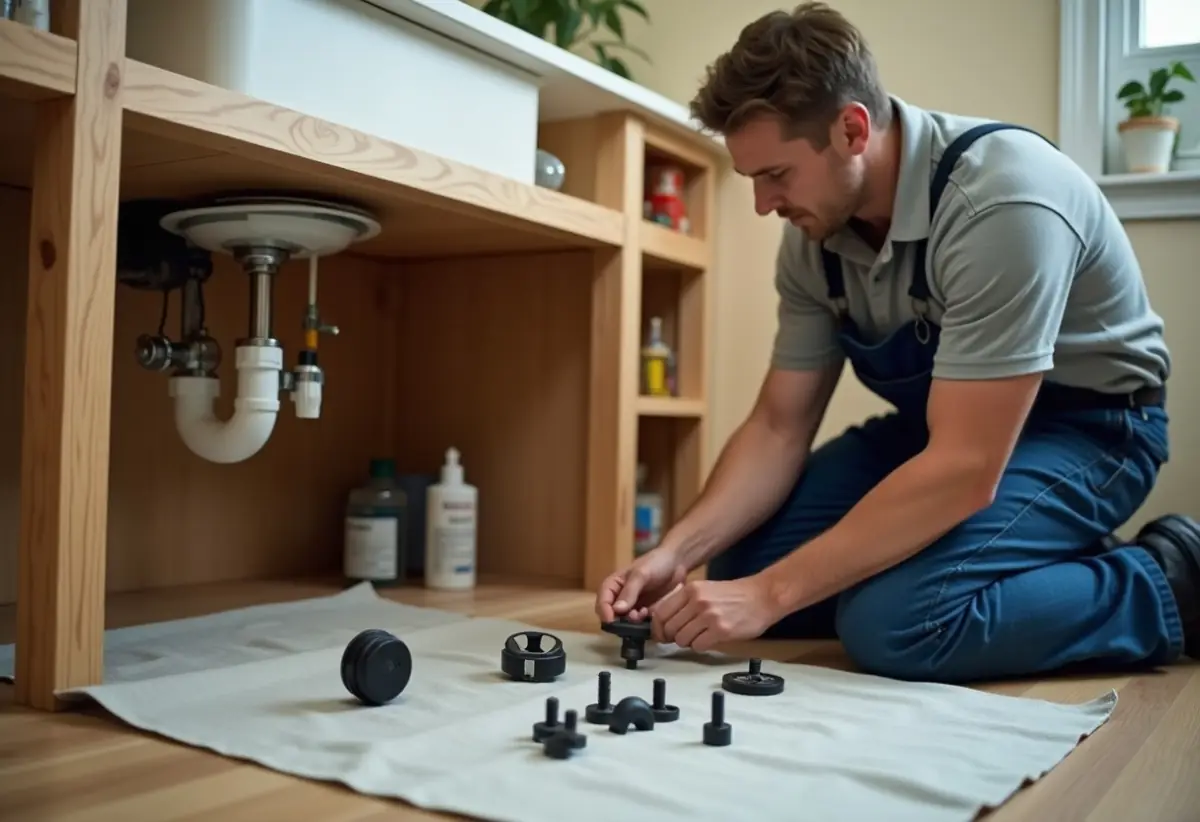
The plumbing hookup is the same for every bathroom sink, but the mounting is not. Drop-in sinks sit on a bead of sealant, undermount sinks hang from clips and adhesive under stone, vessel sinks sit on top of the counter, and pedestal and wall-mount sinks bolt to blocking in the wall. Pick the steps for your type below.
| Sink type | How it mounts | Usual drain | DIY difficulty | Installed cost (Fixr) |
|---|---|---|---|---|
| Drop-in (self-rimming) | Rim rests on counter over a silicone bead | Pop-up with overflow | Easy | $200 to $700 |
| Undermount | Clips, epoxy or silicone under a stone or solid-surface top | Pop-up with overflow, or grid | Hard | $250 to $1,600 |
| Vessel | Sits on counter on a ring or silicone | Grid drain, no overflow | Moderate | $200 to $1,500 |
| Pedestal | Bowl bolts to wall blocking, pedestal screws to floor | Pop-up with overflow | Moderate to hard | $400 to $1,200 |
| Wall-mount | Hangs on a bracket or lag bolts into blocking | Pop-up or grid, exposed trap | Hard | $400 to $1,600 |
Drop-in sink
- Trace the template on the counter and cut the opening if it is new.
- Mount the faucet and drain on the sink while it sits on a padded bench.
- Run a continuous bead of 100 percent silicone around the cutout, set the sink, and press it down evenly.
- Tighten any rim clips the maker supplies, then wipe away squeeze-out.
Undermount sink
- Dry fit the bowl centered under the cutout, with the reveal even on all sides.
- Apply the adhesive or silicone the sink maker specifies to the rim and press it up against the stone.
- Brace it from below with a padded support or bar clamp, then install the mounting clips.
- Let it cure. Fixr notes at least 24 hours of cure time before you install the drain.
Vessel sink
- Confirm a 1-3/4 inch drain hole in the counter (or the size on your sink’s sheet).
- Set the mounting ring or gasket and a thin silicone bead, then seat the bowl.
- Thread the grid drain through the bowl and counter and snug the nut from below.
- Install a tall vessel filler or a wall faucet so the spout clears the bowl rim.
Pedestal and wall-mount sinks
- Install solid backing in the wall. Kohler’s pedestal guide requires it for the anchors.
- Set the bowl on the pedestal (or the bracket), level it, and mark the anchor holes.
- Pull the bowl, drill, and set the hanger bolts. Kohler leaves about 1-1/4 inches of each bolt exposed.
- Fit the faucet and drain on the bowl, then hang it. Kohler says not to fully tighten slip joints yet and not to overtighten the bowl nuts.
Should you use plumber’s putty or silicone on the drain flange?
Use whatever the drain and sink makers specify, and default to putty only on standard vitreous china or enameled sinks. Oatey’s standard plumber’s putty is labeled not for use on marble, granite, other stone or plastics, because its oils can stain porous surfaces. On stone, cultured marble, glass vessels or plastic drain bodies, use stain-free putty or 100 percent silicone.
Putty stays soft, so you can tighten the drain right away and pull it out years later. Silicone grips harder and suits glass and stone, but you must let it set before you test, and removing it later takes a razor and patience. Oatey markets a separate stain-free putty for granite, marble, quartz and solid surface.
- Vitreous china, drop-in or pedestal. Standard putty under the flange is the common choice.
- Stone, quartz, cultured marble. Stain-free putty or silicone.
- Glass or metal vessel. Silicone or the gasket the drain ships with.
- Plastic drain body. Silicone. Oatey says even its stain-free putty is not for ABS.
How do you install the faucet and pop-up drain before setting the sink?
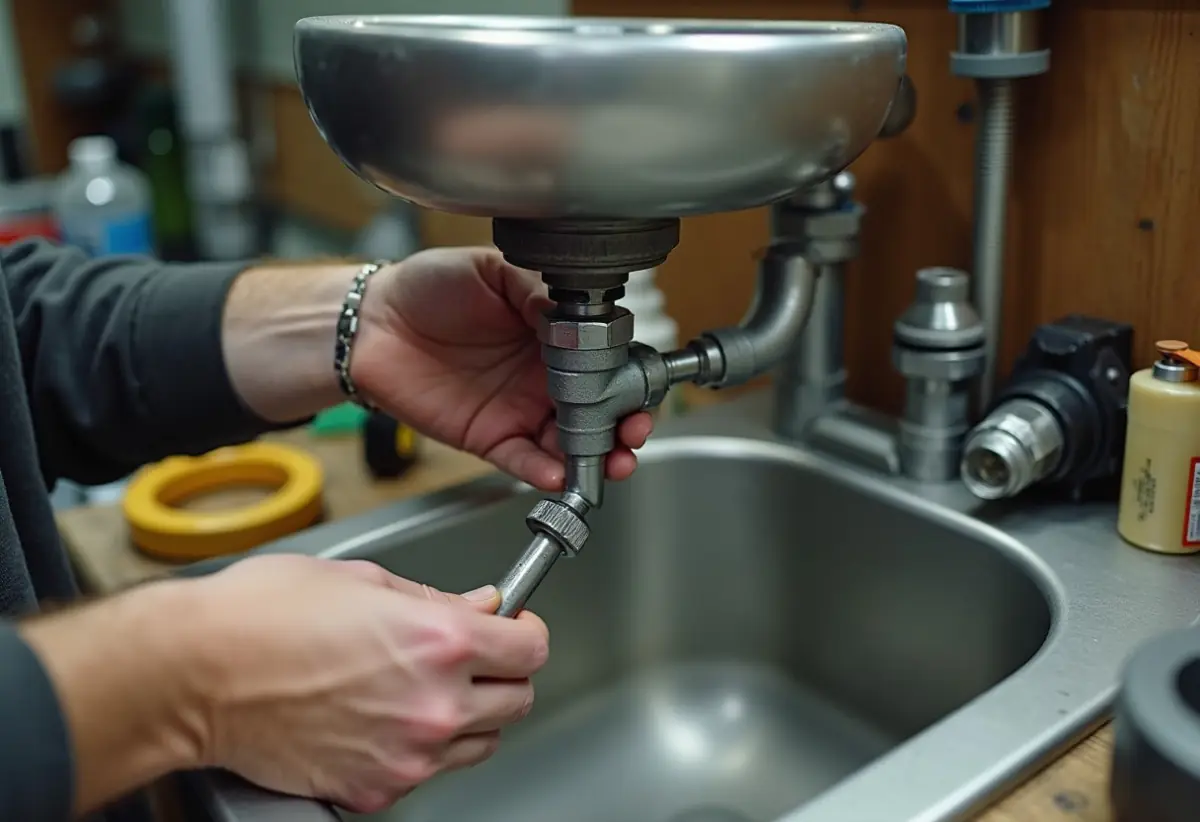
Mount the faucet and drain on the bowl before it goes into place, because you get full access to the nuts. Kohler’s pedestal instructions follow this order. Set the faucet through its holes with its gasket, tighten the mounting nuts, then install the drain body, flange and pop-up linkage. Follow our step-by-step faucet replacement guide for the faucet itself.
- Roll a rope of putty (or lay a silicone bead) under the drain flange and press the flange into the drain hole.
- From below, thread on the gasket, washer and locknut. Turn the drain body so the pivot rod opening faces the back wall.
- Line up the overflow slot in the drain body with the sink’s overflow channel before you tighten.
- Install the stopper, pivot rod and clevis strap, or the push-to-close cap if your drain has one.
- Wipe away the squeezed-out putty from the flange.
Match the drain to the sink. A sink with an overflow hole needs a drain body with an overflow slot, or water from the overflow has nowhere to go. A sink with no overflow, which covers most vessels, needs a drain without side holes, or the drain will leak through them. Fixr notes that many vessel sinks call for a grid drain, often sold separately.
How do you connect the bathroom sink drain trap and supply lines?
Connect the tailpiece to a 1-1/4 inch P-trap, run the trap arm into the wall stub, and attach braided supply lines from the faucet tails to the angle stops. The IPC (Table 709.1) sets 1-1/4 inch as the minimum lavatory trap size, and Section 1002.4 requires a water seal of 2 to 4 inches. Hand-tighten slip nuts, then add a quarter turn.
- Cut the tailpiece so the trap lines up with the wall stub without forcing it. Measure twice.
- Slide on the slip nut and washer (bevel facing the joint) and join tailpiece, trap and trap arm.
- Keep the trap arm sloped toward the wall. The IPC (Table 909.1) caps a 1-1/4 inch trap arm at 5 feet from the vent.
- Thread the supply lines onto the faucet tails by hand, then onto the stops. Snug with a wrench, but do not crank on compression nuts.
Learn how a P-trap works and how to fit one if your wall stub sits off center or too low. Never install an S-trap to make up the difference. Use a 1-1/4 to 1-1/2 inch reducing washer when the wall arm is 1-1/2 inch.
What rough-in heights does a bathroom sink need?
Rough-in heights come from the sink’s spec sheet, not a universal number. Kohler’s Memoirs pedestal guide (K-2258) sets the supplies about 10 inches below the rim and the pop-up drain about 14-1/2 inches below the rim on a 35-inch-tall lavatory. A grid drain sits higher, about 13-5/8 inches below the rim. That puts the pop-up outlet roughly 20-1/2 inches off the floor.
Pedestal and wall-mount sinks leave the trap and stops in plain view, so their heights must match the sheet closely. Vanities hide everything, so a stub that is a couple of inches off still works. Kohler also notes that supply stop handles cannot stick out more than 3 inches from the finished wall on that pedestal, or they will hit the pedestal.
How do you leak test a new bathroom sink?
Leak test in three passes: supplies under pressure, the drain under a full basin, and the overflow. Open each angle stop slowly, then check the compression nuts with a dry paper towel. Fill the bowl to the overflow, pull the stopper, and watch every slip joint as the full basin drains. Tighten a quarter turn at a time where you see moisture.
- Open the stops a quarter turn, check for drips, then open fully.
- Run hot and cold for one minute each to flush debris from the aerator.
- Fill the basin to the overflow and release it. A full bowl puts the most load on the trap joints.
- Pour water slowly into the overflow hole and confirm none appears below the drain flange.
- Recheck after an hour and again the next day. Putty and silicone joints can seep once they settle.
On silicone-set vessel and undermount sinks, wait until the sealant has cured to the maker’s stated time before the full-basin test. A drain that moves while the silicone is wet will leak at the flange.
How much does it cost to install a bathroom sink yourself vs hiring a plumber?
Doing it yourself costs the sink, faucet and parts. Fixr lists sink units from $75 for a basic drop-in to $1,000 for a premium undermount, vessel or wall-mount. Hiring a plumber averages $750 installed, with most jobs between $500 and $1,000. Fixr pegs sink labor at about $100 for a countertop sink and about $500 for a wall-mount unit.
Costs climb when the job needs new pipe. Fixr puts new-plumbing labor at $100 to $300 plus $300 to $500 in materials, for $750 to $1,500 total with a new sink. Fixr also says a straight sink swap generally needs no permit, but moving the sink or adding plumbing may, depending on your local code.
- Good DIY jobs. Drop-in or vessel swaps where the drain and stops are already in place.
- Hire out. Undermount sinks under new stone, wall-mount sinks that need blocking, and any job that moves the drain stub.
How we sourced this
We reviewed the top-ranking install guides for this query in October 2026 to map what they cover, then went to primary sources for every number. Costs come from Fixr’s bathroom sink installation cost guide (updated January 30, 2025). Mounting order, backing and rough-in heights come from Kohler’s Memoirs pedestal installation guide and Kohler’s K-2015 specification sheet. Sealant limits come from Oatey’s plumber’s putty product pages. Trap size, seal depth and trap arm length come from the International Plumbing Code. Your state or city may adopt the UPC or local amendments instead. We excluded forum anecdotes and cost figures without a stated method.
Frequently asked questions
Is it hard to install a bathroom sink yourself?
A drop-in sink on an existing vanity with working drain and supply lines is a beginner job of a few hours. Fixr calls drop-in sinks the easiest type. Pedestal and wall-mount sinks are harder because they need solid backing in the wall, and undermount sinks need the countertop fabricator or a strong helper plus a full day of cure time.
Do you install the faucet before the sink?
Yes, in most cases. Kohler’s pedestal sink instructions have you mount the faucet and drain to the bowl before the bowl goes onto the pedestal. Working on the bare sink on a padded bench is far easier than lying under a cabinet with a basin wrench. Vessel and undermount sinks are the exception when the faucet mounts to the counter.
Should I use plumber’s putty or silicone on a bathroom sink drain?
Follow the drain maker’s sheet first. Standard putty works on most vitreous china sinks and stays easy to remove. Oatey lists its standard putty as not for marble, granite, other stone or plastics, because the oils can stain. Use a stain-free putty or 100 percent silicone on stone, cultured marble, glass vessels and plastic drain bodies.
How do you install a vessel sink?
Drill or confirm a drain hole in the counter, set the mounting ring or gasket, and run a thin bead of silicone under the bowl. Drop in a grid drain sized for the sink, since most vessels have no overflow. Mount a tall vessel faucet or a wall faucet, connect the trap and supply lines, then leak test after the silicone cures.
How high should a bathroom sink drain be?
It depends on the sink. Kohler’s Memoirs pedestal guide puts the pop-up drain outlet about 14-1/2 inches below the rim and the supplies about 10 inches below the rim on a 35-inch-tall lavatory. A vanity hides the trap, so it allows more slack. Always rough to the exact spec sheet for the model you bought.
What size P-trap does a bathroom sink need?
A single bathroom lavatory takes a 1-1/4 inch trap under the International Plumbing Code Table 709.1. Many vanity kits sell a 1-1/4 by 1-1/2 inch trap that steps up to a 1-1/2 inch wall arm, which is also common. The trap must hold a water seal between 2 and 4 inches deep under IPC Section 1002.4.
How much does it cost to have a plumber install a bathroom sink?
Fixr puts the national average at $750, with most jobs between $500 and $1,000 including the sink. Plumbers bill $75 to $150 an hour, and sink labor alone runs about $100 for a countertop sink up to about $500 for a wall-mount unit. New supply or drain piping adds $100 to $300 in labor plus materials.
How do you secure a bathroom sink to a countertop?
It depends on the sink type. Drop-in sinks rest on a bead of 100 percent silicone around the cutout, with rim clips tightened if supplied. Undermount sinks get adhesive or silicone specified by the maker applied to the rim, braced from below, then held with mounting clips while curing. Vessel sinks sit on a mounting ring or gasket with a thin silicone bead underneath.