SDR 35 Pipe: Sizes, Uses, and SDR 35 vs Schedule 40
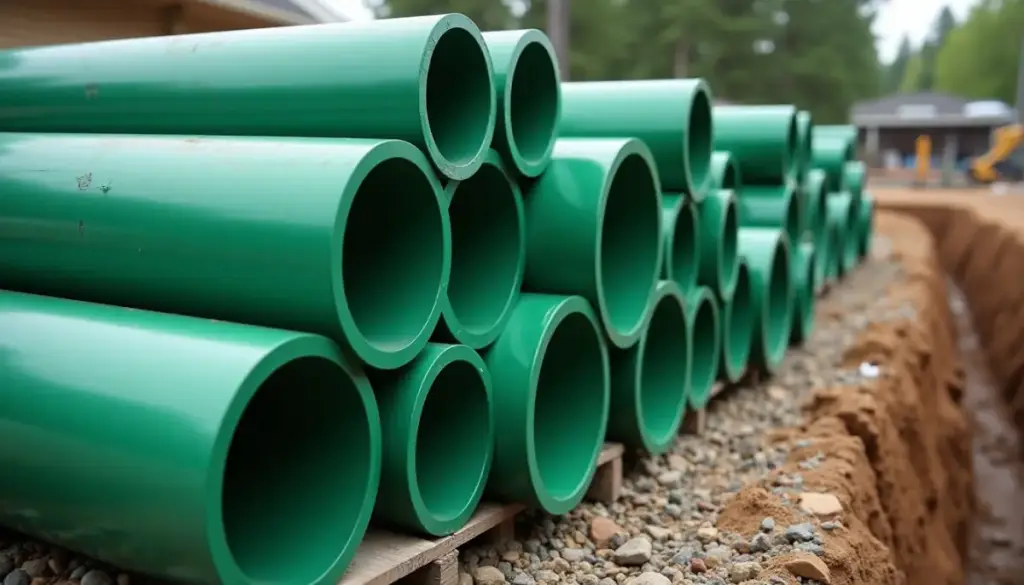
SDR 35 pipe is thin-wall ASTM D3034 PVC sewer pipe, 4 to 15 inches, rated 46 psi stiffness for buried gravity lines, and its 4.215-inch OD will not fit Schedule 40 fittings.
Key Takeaways
- SDR means standard dimension ratio, the outside diameter divided by the minimum wall. On 4-inch pipe that is 4.215 in divided by 0.120 in, which equals 35 (ASTM D3034 dimensions via Engineering ToolBox).
- SDR 35 has a minimum pipe stiffness of 46 psi; SDR 26 in the same OD reaches 115 psi (ASTM D3034, Westlake Pipe).
- 4-inch Schedule 40 measures 4.500 in OD with a 0.237 in wall (ASTM D1785), so the two pipes need an adapter to connect.
- SDR 35 is a non-pressure product. Westlake Pipe lists it for gravity sewer and drainage only, and the Home Depot IPEX listing caps it at 140 degrees F.
- A 4 in x 10 ft IPEX SDR 35 stick was listed at $16.47 at Home Depot in October 2026, about $1.65 per foot.
- Green follows the APWA Uniform Color Code, where green marks sewers and drain lines.
What is SDR 35 pipe and what does SDR mean?
SDR 35 pipe is PVC gravity sewer pipe made to ASTM D3034, the standard for Type PSM PVC sewer pipe and fittings. SDR stands for standard dimension ratio, the average outside diameter divided by the minimum wall thickness. A 35 ratio means the wall is one thirty-fifth of the OD, so a 4-inch pipe at 4.215 inches OD gets a 0.120-inch wall.
A higher SDR number means a thinner wall, not a thicker one. SDR 41 is thinner than SDR 35, and SDR 26 is thicker. Because the ratio stays fixed, every size of SDR 35 has the same stiffness rating regardless of diameter.
D3034 pipe has its own outside diameters, different from the iron pipe size (IPS) diameters of Schedule 40 and 80. For a broader map of where this pipe sits among plastic options, see how the PVC pipe families differ.
What sizes does SDR 35 pipe come in?
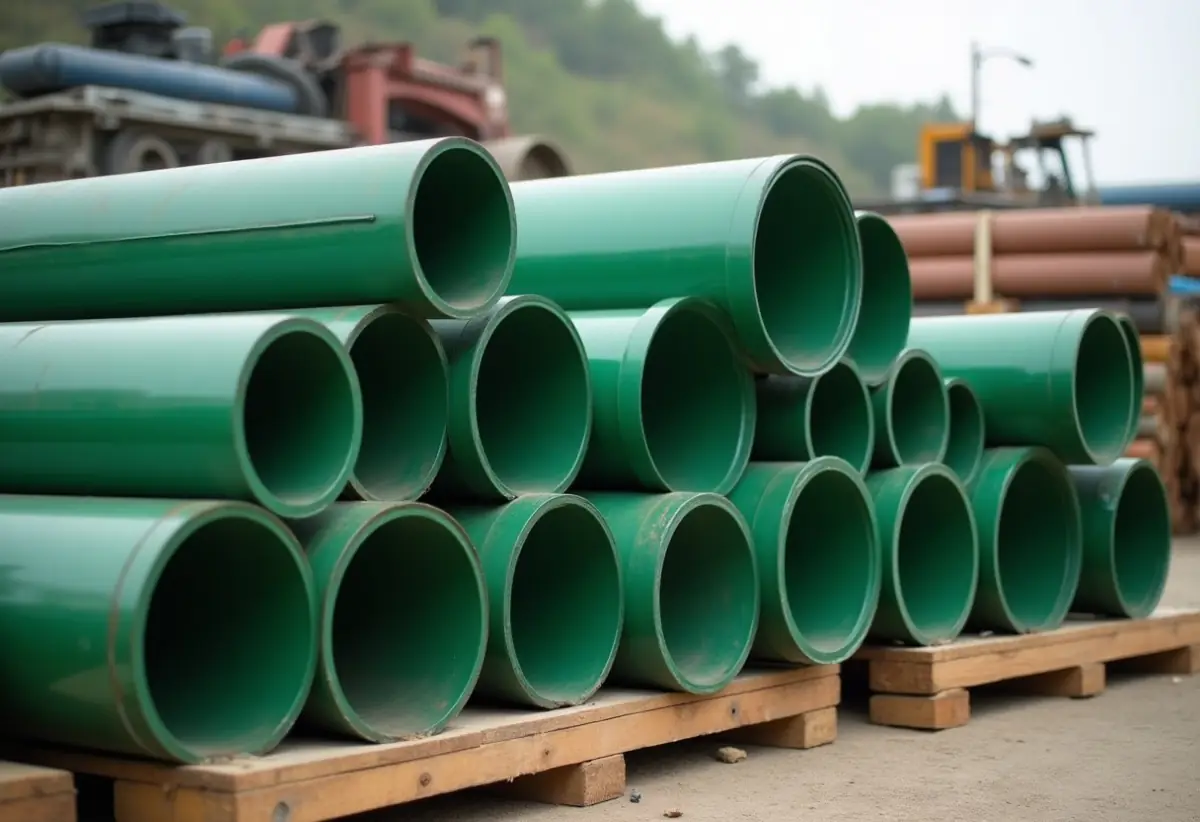
SDR 35 pipe under ASTM D3034 runs from 4 to 15 inches nominal. The average outside diameters are 4.215, 6.275, 8.400, 10.500, 12.500 and 15.300 inches, with SDR 35 minimum walls from 0.120 inch at 4 inches up to 0.437 inch at 15 inches. Sizes above 15 inches fall under a separate standard, ASTM F679.
The table below uses the D3034 dimension table published by Engineering ToolBox. You can check any row yourself. Divide the OD by the wall and you land on the SDR number, for example 8.400 / 0.240 = 35.
| Nominal size | Average OD (in) | SDR 35 min wall (in) | SDR 26 min wall (in) | Typical use |
|---|---|---|---|---|
| 4 in | 4.215 | 0.120 | 0.162 | Single-family house sewer lateral |
| 6 in | 6.275 | 0.180 | 0.241 | Multifamily or commercial lateral |
| 8 in | 8.400 | 0.240 | 0.323 | Smallest common municipal main |
| 10 in | 10.500 | 0.300 | 0.404 | Collector sewer |
| 12 in | 12.500 | 0.360 | 0.481 | Collector sewer, storm line |
| 15 in | 15.300 | 0.437 | 0.588 | Trunk sewer, storm line |
Stick lengths depend on where you buy. Home centers stock 10 ft solvent-weld sticks in 4 and 6 inches. Supply houses carry gasketed pipe in longer lengths, such as the 14 ft grip-joint sticks on Ferguson and the 8-inch, 20 ft gasket x plain green stick listed by Pace Supply. A JM Eagle listing gives the 4-inch nominal inside diameter as 3.975 inches.
Is SDR 35 stronger than Schedule 40?
No. At 4 inches, Schedule 40 PVC has a 0.237-inch minimum wall under ASTM D1785, nearly double the 0.120-inch wall of SDR 35. Schedule 40 resists crushing and point loads far better and carries a pressure rating. SDR 35 wins on cost and weight for long buried gravity runs, where compacted backfill shares the load.
Schedule 40 serves drain, waste and vent work inside the building and pressure service. SDR 35 is a flexible conduit, designed to deflect slightly and lean on the soil beside it. Bedded right, that combination holds; bedded in clay chunks and rocks, it ovals and leaks at the joints.
| Pipe (4 in) | Standard | Average OD | Min wall | Stiffness or rating | Where it is normally used |
|---|---|---|---|---|---|
| SDR 35 PVC | ASTM D3034 | 4.215 in | 0.120 in | 46 psi pipe stiffness, non-pressure | Buried building sewer outside the foundation |
| SDR 26 PVC | ASTM D3034 | 4.215 in | 0.162 in | 115 psi pipe stiffness, non-pressure | Deep burial, shallow cover, driveways |
| Schedule 40 PVC | ASTM D1785 / D2665 (DWV) | 4.500 in | 0.237 in | Pressure rated (D1785 pipe) | Drain, waste and vent inside the building |
| Schedule 80 PVC | ASTM D1785 | 4.500 in | 0.337 in | Higher pressure rating than Sch 40 | Industrial, exposed or high-load runs |
If you are choosing between the thicker IPS pipes, our guide to Schedule 40 vs Schedule 80 PVC wall and pressure differences covers that call.
Where does code allow SDR 35 sewer pipe?
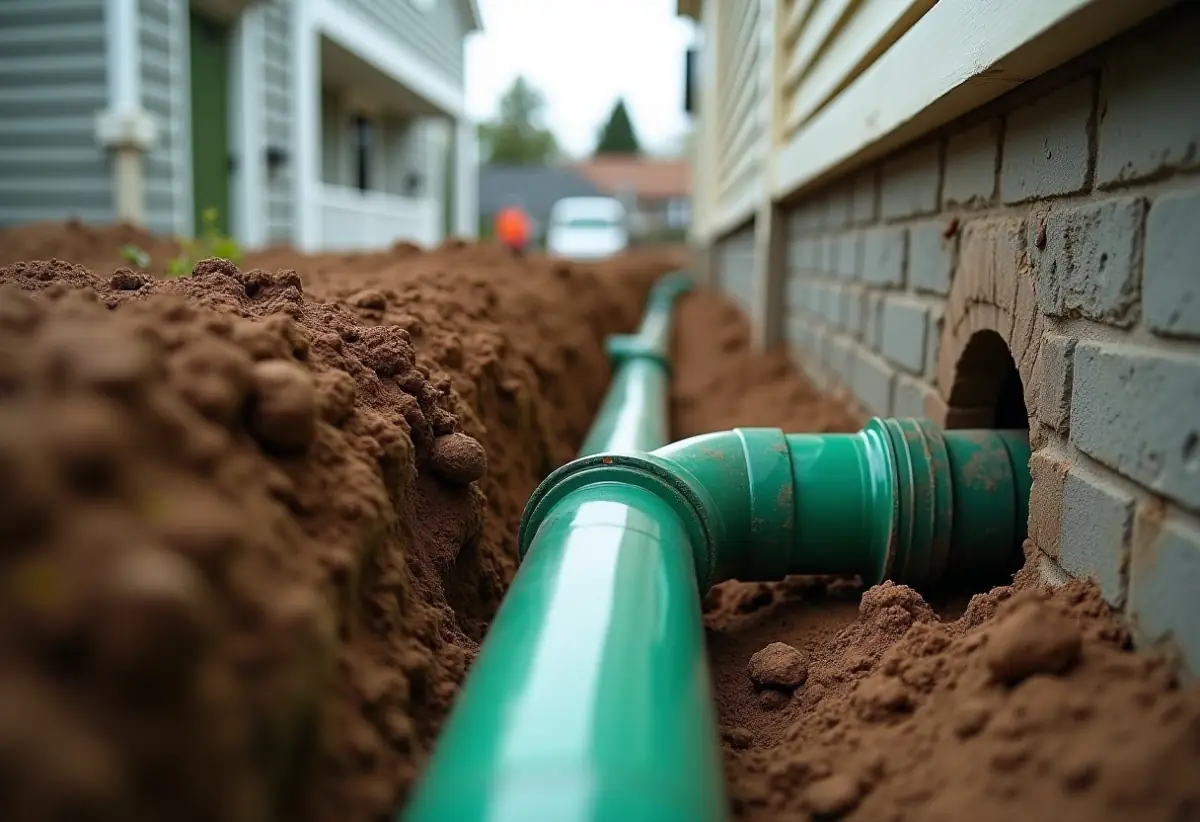
Model plumbing codes treat SDR 35 as building sewer pipe, the buried line from just outside the house to the public main or septic tank. In the International Plumbing Code, ASTM D3034 PVC appears in the building sewer materials table (Table 702.3). The tables for drainage pipe above ground and underground inside the building list IPS pipe such as ASTM D2665 instead.
Where the building drain ends matters. The IPC defines the building drain as running to a point 30 inches outside the exterior wall, and the building sewer starts there. In practice, many plumbers run Schedule 40 through the foundation and out to that point, then transition to SDR 35 for the long run to the street.
Code adoption varies by state and city, and some utilities write their own lateral specs. Before you buy pipe, ask three questions of your building department or sewer utility:
- Is ASTM D3034 SDR 35 approved for the house lateral, or does the utility require SDR 26 or Schedule 40?
- Where exactly does the inspector want the transition from building drain to building sewer?
- What slope and cleanout spacing does the local code require on the lateral?
On slope, a 4-inch house sewer is commonly run at 1/4 inch per foot, with some codes accepting 1/8 inch per foot as a minimum for 4-inch pipe. Over a 60 ft run, 1/4 inch per foot means 15 inches of total fall, so check that the street connection is deep enough before you dig. For how SDR 35 stacks up against clay, cast iron and ABS laterals, see the main sewer pipe materials compared.
Gasket or glue: how do SDR 35 joints work?
SDR 35 comes with two joint styles. Gasketed bells use an elastomeric rubber ring (ASTM F477 gaskets, joints tested to ASTM D3212) and push together with pipe lube. Solvent-weld bells, common on 4- and 6-inch home center sticks, glue together with PVC primer and cement like DWV pipe. Never glue a gasketed joint.
To make a gasketed SDR 35 joint:
- Cut the spigot square and bevel the end; factory spigots come beveled.
- Mark the insertion depth on the spigot so you can see when it is fully home.
- Wipe the gasket and spigot clean of dirt and sand.
- Apply the pipe maker’s lubricant to the spigot, not petroleum grease.
- Align the pipe straight and push it in until the mark reaches the bell. Use a bar and block on larger sizes, never a direct hit on the pipe.
For a solvent-weld SDR 35 joint, dry fit first, prime both surfaces, apply cement to the spigot and the inside of the bell, then push in with a quarter turn and hold it for the set time printed on the cement can so the pipe does not back out.
How do you connect SDR 35 to Schedule 40 or cast iron?
You need a transition fitting, because 4-inch SDR 35 is 4.215 inches OD and 4-inch Schedule 40 is 4.500 inches. Common options are a molded SDR 35 x Schedule 40 adapter (glued on the Schedule 40 side, gasketed or glued on the SDR side) or a flexible rubber coupling made for those two exact diameters.
Read the coupling label. A “4 inch PVC” coupling made for 4.500-inch IPS pipe will not clamp tight on 4.215-inch SDR 35, so buy one that names both SDR 35 (or “sewer and drain”) and Schedule 40.
Old houses often tie the new SDR 35 lateral into a cast iron building drain at the foundation. Cast iron has its own outside diameter again, so that joint needs a coupling listed for cast iron on one side. Our walkthrough on connecting PVC to cast iron with a shielded coupling shows the cut and clamp steps.
How should SDR 35 sewer pipe be bedded and backfilled?
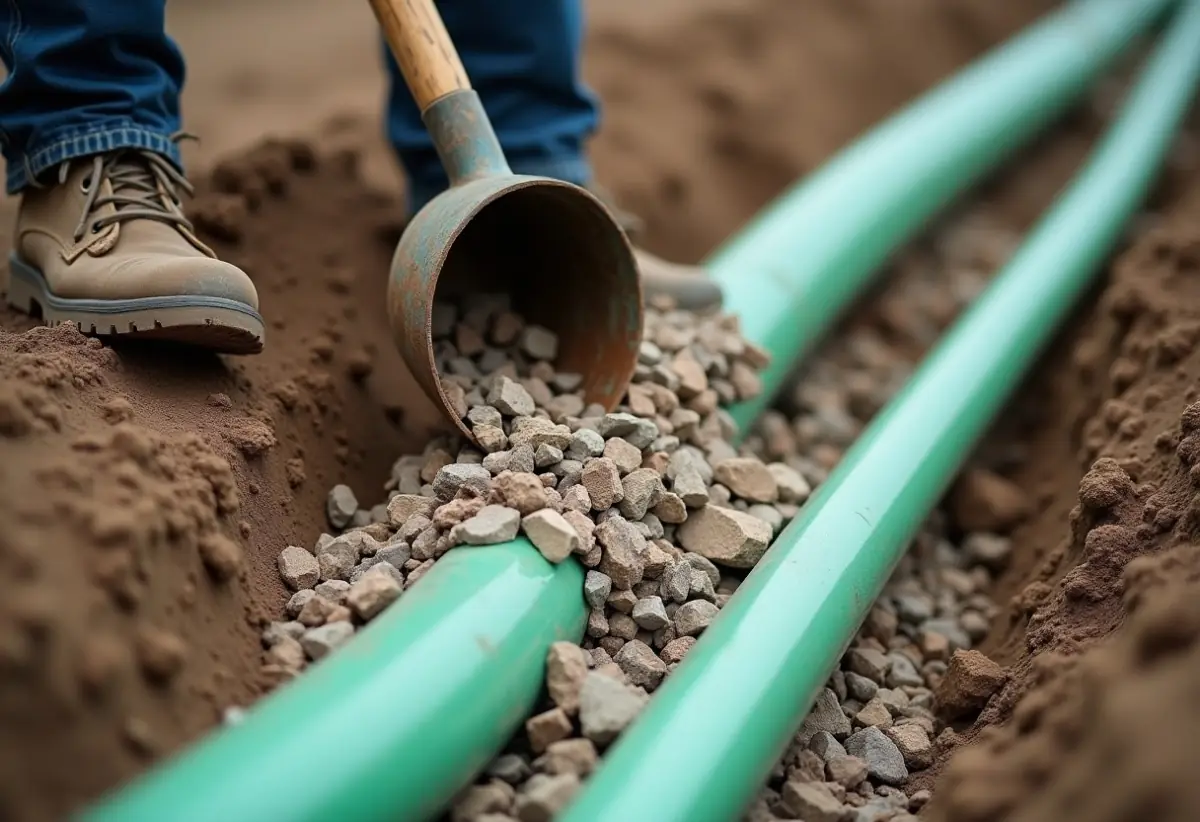
Bury SDR 35 per ASTM D2321, the standard practice for flexible thermoplastic sewer pipe. In short, set the pipe on a bed of crushed stone or clean sand, pack that material under the pipe haunches, then cover the crown with more granular fill before native soil goes back in. The pipe gets its strength from that envelope.
D2321 sorts embedment soils into classes, with Class I crushed stone and Class II clean sand and gravel the usual choices for a lateral. Avoid frozen soil, clay clods and rocks against the pipe wall. A rock pressed into the side of a 0.120-inch wall is the classic way a new lateral cracks.
- Dig the trench to grade, then remove any rock that would touch the pipe.
- Place a uniform layer of granular bedding and set it to the required slope.
- Lay the pipe with bells uphill and dig small bell holes so the pipe rests on its barrel, not the bells.
- Work granular fill under the haunches by hand or with a shovel, in shallow lifts.
- Cover the top of the pipe with granular fill before placing native backfill.
- Keep heavy compactors and machines off the pipe until there is enough cover over it.
Many utilities check new PVC sewer by pulling a deflection mandrel (a “go, no-go” gauge) through it after backfill, often set to 5 percent deflection of the inside diameter. Where cover is shallow, a driveway crosses the line, or soil is poor, that is when engineers move up to SDR 26 and its 115 psi stiffness.
How much does SDR 35 pipe cost?
A 4-inch, 10 ft solvent-weld SDR 35 stick was listed at $16.47 at Home Depot (IPEX, Internet #202300536) in October 2026, about $1.65 per foot, with a $13.18 price at 10 or more sticks. A solid Charlotte Pipe 4 in x 10 ft stick was listed at $27.99 at a True Value store, about $2.80 per foot.
| Product | Retailer | Listed price | Per foot |
|---|---|---|---|
| IPEX 4 in x 10 ft SDR 35 sewer pipe | Home Depot (1 to 9 sticks) | $16.47 | about $1.65 |
| IPEX 4 in x 10 ft SDR 35 sewer pipe | Home Depot (10 or more) | $13.18 | about $1.32 |
| Charlotte Pipe 4 in x 10 ft solid SDR 35 | Westhampton True Value | $27.99 | about $2.80 |
A 60 ft run at the Home Depot bulk price is about $79 in pipe, before fittings, cleanouts, stone, permit and excavation. Prices change, so check the current Home Depot listing before you plan around these numbers.
How we sourced this
We reviewed the top-ranking pages for “sdr 35 pipe” and “sdr 35 vs schedule 40” in October 2026, then went to primary and maker sources. Dimensions come from the ASTM D3034 table as published by Engineering ToolBox and checked against OD divided by SDR. Stiffness and non-pressure use come from Westlake Pipe’s technical FAQ and the ASTM D3034 specification. Schedule 40 and 80 walls are ASTM D1785 minimums. Prices are retailer listings seen in October 2026. We could not load the full IPC code text during reporting, so code references are described generally; confirm with your local code edition. We excluded auto-generated pages that misstated the SDR ratio.
Frequently asked questions
Can SDR 35 pipe be used under a house?
Generally no. SDR 35 is made to ASTM D3034, a sewer pipe standard, and the model codes list it for the building sewer that runs outside the foundation. Drain lines under and inside the house are normally Schedule 40 DWV per ASTM D2665 or D1785. Some jurisdictions draw the line differently, so confirm with your local inspector before you trench.
Is SDR 35 stronger than Schedule 40?
No. A 4-inch SDR 35 pipe has a minimum wall of 0.120 inch per ASTM D3034, while 4-inch Schedule 40 has a minimum wall of 0.237 inch per ASTM D1785, roughly twice as thick. SDR 35 is still strong enough for buried gravity sewer when bedded correctly, because the compacted soil around it carries much of the load.
Do SDR 35 and Schedule 40 fittings fit each other?
No. A 4-inch SDR 35 pipe has an average outside diameter of 4.215 inches, while 4-inch Schedule 40 measures 4.500 inches. That 0.285-inch gap means a Schedule 40 fitting will not slip onto SDR 35 and an SDR 35 bell will not accept Schedule 40. Use a transition adapter or a flexible coupling sized for both diameters.
Why is sewer pipe green?
Green marks sewer and drain lines under the APWA Uniform Color Code, the scheme utility locators use to paint and flag buried lines. Pipe makers color D3034 sewer pipe green so a crew digging later knows it found a sewer and not a water, gas or electric line. Some SDR 35 is also sold in white, so color alone is not proof of the standard.
Can SDR 35 be used for water or pressure lines?
No. Westlake Pipe states that SDR 35 is designed for non-pressure gravity sewer and drainage use, and retail listings such as the IPEX stick at Home Depot say sewer and storm drainage only, with a maximum working temperature of 140 degrees F. Pressure water service calls for pressure-rated pipe such as Schedule 40 or a pressure-class PVC.
What is the difference between SDR 35 and SDR 26?
Both share the same outside diameter under ASTM D3034, so they use the same gasketed fittings. SDR 26 has the thicker wall (0.162 inch at 4 inches versus 0.120 inch for SDR 35) and a minimum pipe stiffness of 115 psi versus 46 psi. Engineers often specify SDR 26 for deep burial, shallow cover under traffic or poor soil.
Can you glue SDR 35 pipe?
Yes, if you buy the solvent-weld version. Home center SDR 35 in 4- and 6-inch sizes usually comes with a plain solvent-weld bell, and you join it with PVC primer and cement the same way you would DWV pipe. Larger and longer SDR 35 sticks usually have gasketed bells instead, which you push together with lubricant and never glue.