Toilet Flange: What It Is, Correct Height, and Repair vs Replace
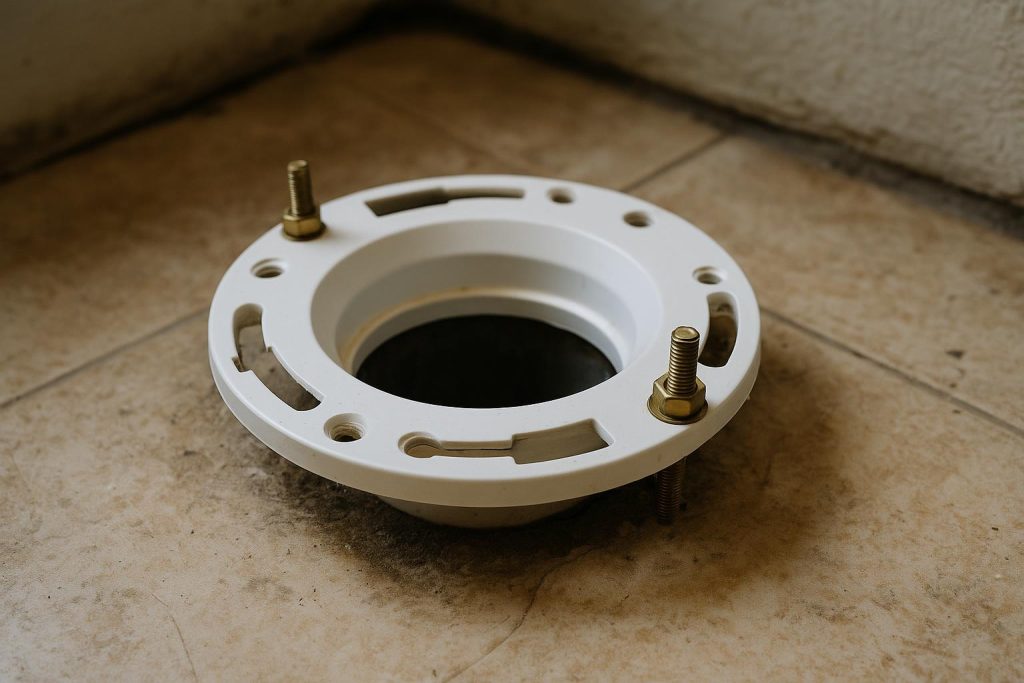
A toilet flange is the round fitting that anchors the toilet to the floor and joins it to the drain; it should sit on top of the finished floor, about 1/4 inch above, and a rocking toilet is the top sign it is broken.
Key Takeaways
- The flange is the anchor and the toilet wax ring is the seal; the flange holds the toilet down while the wax ring keeps the joint watertight.
- The flange rim should sit on top of the finished floor, about 1/4 inch above and flush at most, per Oatey installation guidance.
- Flanges come in PVC, ABS, cast iron, brass, offset, and repair (spacer) styles; the material has to match the drain pipe, which is a 3-inch or 4-inch line in most homes.
- A rocking toilet is the number-one sign of a broken flange, usually from cracked bolt slots or corrosion.
- A repair ring runs about $5 to $15 and a new flange part about $5 to $25 at US retail; a full replacement by a plumber runs about $150 to $350, per Angi 2026 data.
- Do not stack wax rings to fix a sunken flange; use a flange spacer or extender kit instead, per Oatey.
What is a toilet flange?
A toilet flange, also called a closet flange, is the round fitting that bolts your toilet to the floor and connects the toilet’s outlet to the drain pipe below. It does two jobs: it anchors the fixture with two closet bolts that drop into slots on its rim, and it ties the toilet into the drain-waste-vent system. Oatey, a major manufacturer, describes it as the connection point between toilet and drain line. Since the flange’s position determines where that connection point sits, check toilet rough-in measurements when installing a new fixture, or troubleshoot fixing a wobbly toilet if yours already shifts underfoot.
The flange sits at the top of the closet bend, the elbow at the end of the drain. Its rim rests on the finished floor and gets screwed down so the toilet cannot move. Our guide to how a toilet works shows where the flange fits in the full flush-and-drain path.
Flange or wax ring: what is the difference?
The flange is the anchor and the wax ring is the seal, and that single distinction clears up most confusion. The flange is the rigid fitting screwed to the floor and joined to the drain pipe; it holds the toilet bolts and never moves. The wax ring is the soft, single-use ring that sits on top of the flange and compresses under the toilet’s weight to block water and sewer gas.
Put simply, the flange holds the toilet down and the wax ring keeps it watertight. If water is pooling at the base, the problem could be either part, so our guide to a toilet leaking at the base walks through telling them apart. For the seal itself, see our dedicated toilet wax ring guide.
What are the types of toilet flanges?
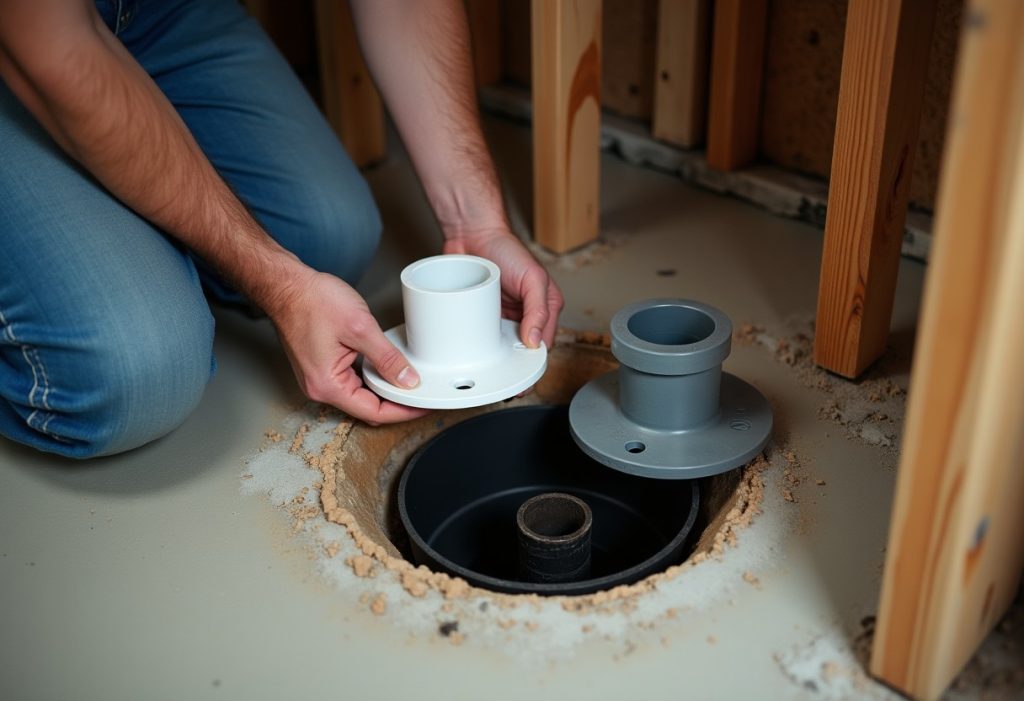
Toilet flanges come in six common styles, split between material (PVC, ABS, cast iron, brass) and shape or function (offset, repair). The first rule is that the flange material and size must match your drain pipe, which is a 3-inch or 4-inch line in most homes. PVC is the default for new work; the others solve specific pipe or layout problems.
| Flange type | Fits which drain | When to use | Install note | Best for |
|---|---|---|---|---|
| PVC | 3-inch or 4-inch PVC | Most new installs and remodels | Solvent-weld with PVC cement, then screw the rim to the floor | The default, lowest-cost choice |
| ABS | 3-inch or 4-inch ABS (black) | Homes plumbed with ABS drain pipe | Solvent-weld with ABS cement, not PVC cement | Matching an existing ABS drain system |
| Cast iron | Cast iron drain | Older homes with cast iron waste lines | Bolts or caulks to the pipe; heavier and harder to work | Durable repairs on cast iron systems |
| Brass | Cast iron or as a reinforcement ring | Corrosion-prone spots or a metal top ring | Resists corrosion; often paired as a repair ring on old flanges | Long-life anchor where rust is a concern |
| Offset | 3-inch or 4-inch | Rough-in pipe is off-center from the toilet | Shifts the toilet a couple of inches without moving the drain | Repositioning a toilet over a fixed drain |
| Repair (spacer) | Fits over an existing flange | Cracked bolt slots or a flange left too low | Screws or stacks over the old flange; no pipe work | Fixing a damaged or recessed flange fast |
A repair ring (sometimes a metal half-moon or a full reinforcement ring) screws over a flange with broken bolt slots so you skip cutting out the old one. A spacer or extender kit, such as the Oatey Set-Rite, raises a recessed flange back up to the floor. Both cost far less than a full replacement.
How high should a toilet flange sit?
The flange should sit on top of the finished floor, with the rim about 1/4 inch above the floor and flush at most, per Oatey installation guidance. That height lets the wax ring compress from both sides and form a watertight, gas-tight seal. A flange set too low is the most common reason a new wax ring fails to seal on the first set.
Oatey lists setting the flange on top of the finished floor as a best practice, which matters most after new tile, vinyl, or laminate raises the floor around an existing flange. When that happens, do not stack two wax rings to bridge the gap, because stacked wax tends to squeeze out and weep over time.
The target is the rim sitting on top of the floor, roughly a quarter inch proud. That gives the wax something to press against without starving the seal, which is what a recessed flange does. A rotted flange often factors into the broader toilet installation cost breakdown homeowners weigh before calling a plumber.
What are the signs of a broken toilet flange?
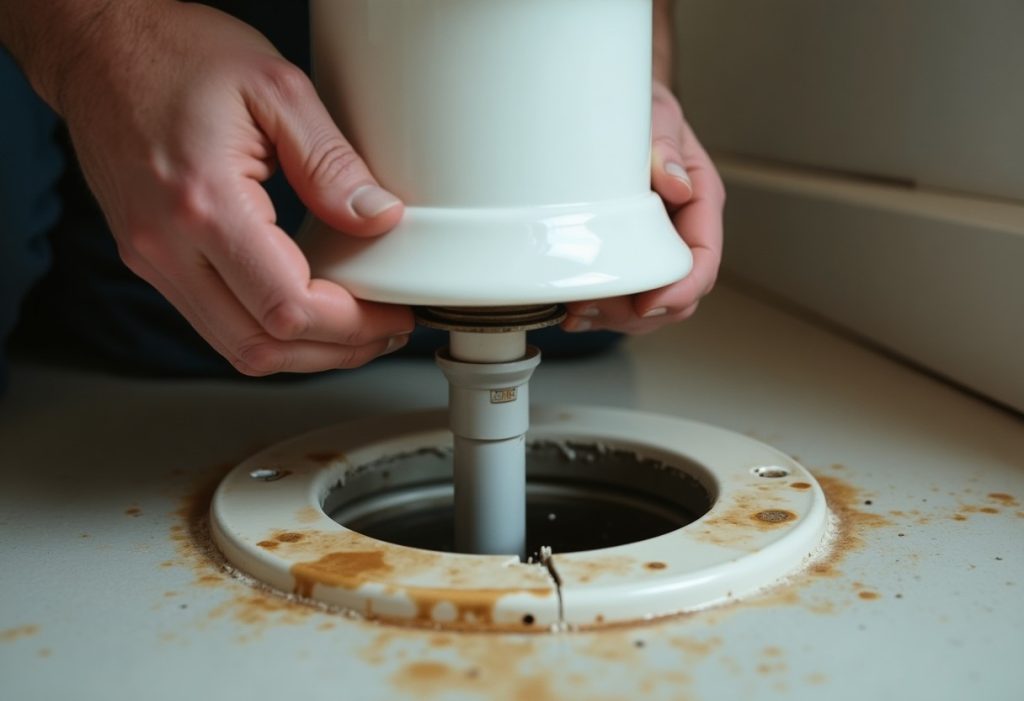
A rocking toilet is the number-one sign of a broken flange. When the flange cracks at the bolt slots or corrodes, it can no longer hold the fixture tight, so the toilet shifts when you lean on it. Other signs are water at the base after a flush, closet bolts that spin or pull loose, and a lingering sewer-gas smell near the toilet.
A rocking toilet and loose bolts
If the toilet rocks, suspect the flange first. Plastic flanges often crack through the thin bolt slots; metal ones rust until the slots give way. Either way the closet bolts lose their grip, the toilet moves, and that movement cracks the wax seal below. A spinning bolt that will not snug down is a classic broken-slot symptom.
Water or sewer smell at the base
Water showing up around the base after a flush, or a rotten-egg sewer-gas odor, means the seal has broken, often because a loose flange let the toilet rock. Because the flange and the wax ring fail together, treat a leaking base as a prompt to inspect both. Our toilet leaking at the base guide covers that diagnosis step by step.

Should you repair or replace a toilet flange?
Repair when the drain pipe and most of the flange are sound and only the bolt slots or rim are damaged; replace when the flange is corroded through, broken all the way around, or sitting too low. A repair ring screwed over the old flange restores the bolt anchor for about $5 to $15 and takes minutes. A low flange calls for a spacer or extender rather than a swap.
Go to a full replacement when a plastic flange is shattered, a cast iron one has rusted apart, or the pipe joint itself leaks. That means removing the old flange and bonding or bolting a new one to the pipe, which is why hiring it out runs more. Many homeowners pair the job with a fresh wax ring, so our guide to how to install a toilet covers resetting the fixture afterward.
The spread is almost all labor. The parts are a few dollars, so when the pipe is fine a DIY repair ring is one of the cheapest toilet fixes; a plumber’s $150 to $350 covers pulling the toilet, swapping the flange, and resetting on a new wax ring.
How do you replace a toilet flange?
Replacing a flange is a DIY job on PVC or ABS systems and takes about an hour with a few tools. The work is pulling the toilet, removing the old flange, bonding or screwing a new one to the pipe at the right height, and resetting the toilet on a fresh wax ring. Cast iron flanges are harder and often worth a plumber.
- Shut off the supply stop, flush to empty the tank, and sponge out the remaining water.
- Disconnect the supply line, remove the closet-bolt nuts, and lift the toilet off onto a towel.
- Scrape away the old wax and plug the drain with a rag so nothing falls in and no sewer gas escapes.
- Remove the old flange: unscrew it from the floor, then cut or unbolt it from the pipe depending on the material.
- Dry-fit the new flange, confirm the rim will sit about 1/4 inch above the finished floor, and align the bolt slots.
- Solvent-weld a PVC or ABS flange to the pipe with the matching cement, or bolt and caulk a cast iron or repair flange.
- Screw the flange rim to the floor with corrosion-resistant screws so it cannot rock.
- Set new closet bolts, remove the rag, press on a new wax ring, and reseat the toilet straight down with your weight.
- Snug the nuts a little at a time side to side, reconnect the water, and run several flushes while watching the base.
If the toilet still rocks after the bolts are snug, shim and caulk the base per local code, because the movement is what breaks flanges and seals in the first place.
How we sourced this
Flange function, the six material and shape types, and the height rule (rim on top of the finished floor, about 1/4 inch above and flush at most, with the caution against stacking wax rings) come from Oatey’s toilet flange installation guide and flange-types resources. The flange-extender approach reflects Oatey Set-Rite kit documentation. The $150 to $350 plumber replacement range reflects Angi 2026 toilet and flange cost reporting (professional flange work commonly cited around $145 to $300 plus the toilet reset), presented as a range because pricing varies by region, floor level, and pipe material. Repair-ring ($5 to $15) and flange-part ($5 to $25) prices are general US retail ranges. Drain sizes (3-inch and 4-inch) reflect standard residential closet-bend sizing. The rocking-toilet sign reflects field diagnostic guidance. Both charts use dollar and inch ranges scaled against the highest value shown; the recessed bar is intentionally zero-width to mark it as the wrong, no-clearance condition.
Frequently asked questions
What is a toilet flange?
A toilet flange, also called a closet flange, is the round fitting that bolts the toilet to the floor and connects its outlet to the drain pipe. The flange has a rim with slots that hold the two closet bolts the toilet sits on. It is the anchor; the wax ring that sits on top of it is the separate seal.
How high should a toilet flange sit?
The flange should sit on top of the finished floor, with its rim about 1/4 inch above the floor and flush at most, per Oatey installation guidance. That height lets the wax ring compress from both sides and seal. If new tile or flooring left the flange recessed below the floor, add a flange spacer or extender rather than stacking wax rings.
What are the signs of a broken toilet flange?
A rocking toilet is the clearest sign, because a cracked or corroded flange can no longer hold the fixture steady. Other tells are water appearing at the base after a flush, closet bolts that spin or pull loose, and a sewer-gas smell. A toilet that rocks breaks the wax seal, so a broken flange and a leaking base often show up together.
Can you repair a toilet flange or do you have to replace it?
If the pipe and most of the flange are sound and only the bolt slots or rim are cracked, a repair ring (a metal or plastic reinforcement ring screwed over the old flange) usually fixes it for about $5 to $15. If the flange is badly corroded, broken all the way around, or sits too low, replace it or add an extender. A full flange replacement by a plumber runs about $150 to $350.
What is the difference between a toilet flange and a wax ring?
The flange is the anchor and the wax ring is the seal. The flange is the rigid fitting screwed to the floor and joined to the drain pipe that holds the toilet bolts. The wax ring is the soft ring that sits on top of the flange and compresses under the toilet to block water and sewer gas. One holds the toilet down; the other keeps it watertight.
What size is a toilet flange?
Most residential toilet flanges fit a 3-inch or 4-inch drain pipe, the two standard closet-bend sizes. A common PVC flange has a 4-inch outer hub that cements over a 4-inch pipe or an inner shoulder that fits inside a 3-inch pipe, so one part often serves both. Check the pipe size and material (PVC, ABS, or cast iron) before buying.
Should you glue or screw a toilet flange down?
Both. A PVC or ABS flange is solvent-welded (glued) to the drain pipe with the matching cement so the joint is watertight, and the flange rim is then screwed to the finished floor with corrosion-resistant screws so the toilet cannot rock. Cast iron flanges bolt or caulk to the pipe. The glue seals the drain joint; the screws anchor the flange to the floor.


