Septic Tank Size: What Size Tank You Need by Bedrooms and State

Septic tank size is set by bedroom count, not headcount: the state codes we checked require 900 to 1,500 gallons for a 3-bedroom home, sized from a design flow of 100 to 150 gallons per bedroom per day.
Key Takeaways
- Maryland sizes residential systems at 150 gallons per day per bedroom and requires a 1,000-gallon tank for 3 or fewer bedrooms, per COMAR 26.04.02.05.
- Massachusetts Title 5 (310 CMR 15.223) sets a 1,500-gallon floor for every single-family home, the largest minimum among the five codes we compared.
- Florida (Rule 62-6.008) and Pennsylvania (per Penn State Extension) allow a 900-gallon tank for a 3-bedroom home.
- Minnesota rule 7080.1930 makes a tank 50 percent larger, with multiple compartments, when the home has a garbage disposal or a sewage pump.
- A 1,000-gallon tank serving 4 people needs pumping about every 2.6 years, versus 4.2 years for a 1,500-gallon tank, per Oregon State University Extension EC 1343.
- HomeAdvisor’s June 2026 cost guide puts a 1,000-gallon tank at $900 to $1,500 and a 1,500-gallon tank at $1,500 to $2,500, before installation.
How is septic tank size determined?
Septic tank size is calculated from design daily flow, which state codes tie to the number of bedrooms rather than the number of people living in the house. The code assigns a flow per bedroom, often 150 gallons per day, then requires a tank that holds roughly two days or more of that flow so solids can settle before effluent reaches the drain field. Tank size also plays into overall project budgeting, which is covered in more detail in septic system installation costs. Homeowners comparing old systems to new installs may also want to understand the difference between cesspools and septic tanks.
Bedrooms stand in for people because occupancy changes and bedrooms do not. The Connecticut Department of Public Health explains its 150 gallons per day per bedroom figure as two occupants per bedroom, each using 50 gallons per day, times a 1.5 safety factor. Maryland uses the same 150 gallons per bedroom in COMAR 26.04.02.05.
Massachusetts instead assigns 110 gallons per day per bedroom with a 330-gallon daily minimum (310 CMR 15.203). Florida’s Rule 62-6.008 Table I assigns 300 gallons per day to a 3-bedroom home, and Pennsylvania’s table, as published by Penn State Extension, assigns 400 gallons per day to the same house.
The tank then gets sized to hold that flow long enough to separate. Penn State Extension says wastewater resides in the tank for about two to three days, and Massachusetts writes the rule directly: the tank must hold 200 percent of design flow, or 48 hours. Our guide to how a septic system works covers what happens inside the tank during that time.
What size septic tank do I need for my number of bedrooms?
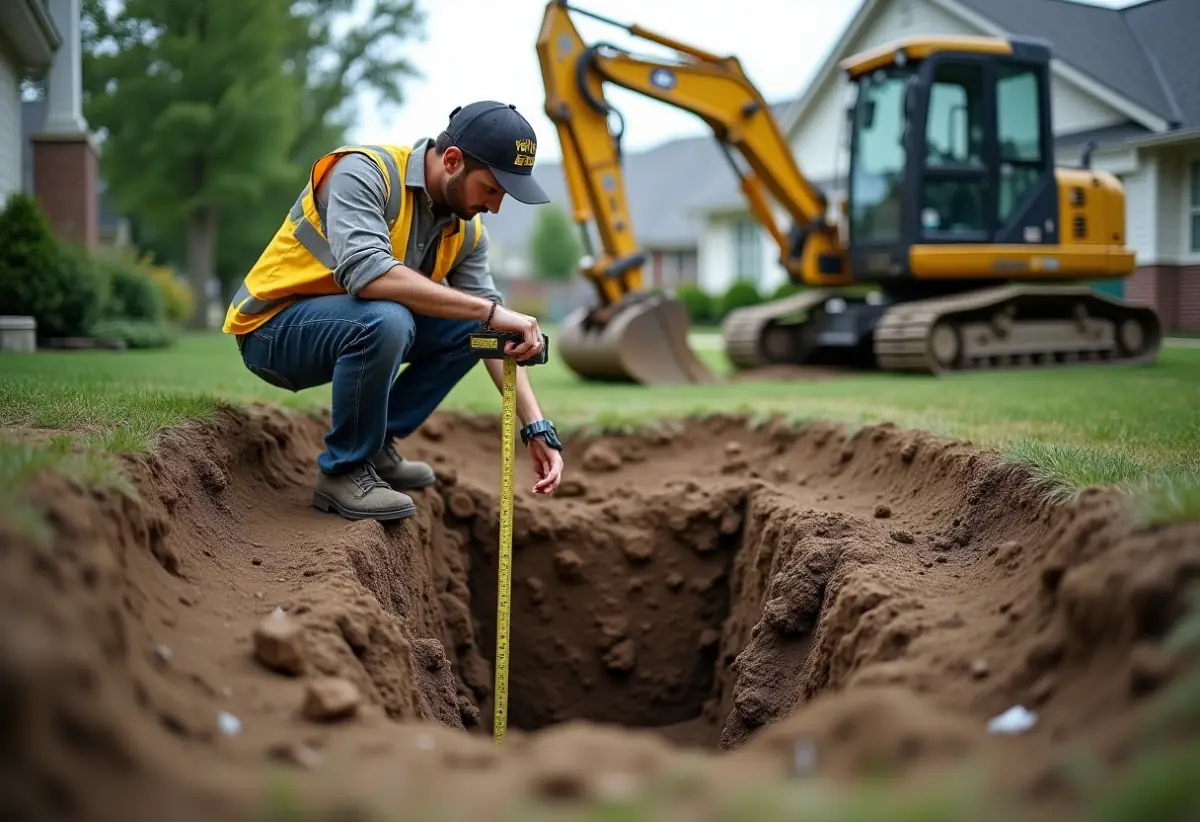
For a 3-bedroom home, expect a minimum septic tank size of 900 to 1,500 gallons depending on your state, with 1,000 gallons the most common answer. A 4-bedroom home typically needs 1,050 to 1,500 gallons. In states that scale by bedroom, each bedroom past four adds 150 to 250 gallons, while Massachusetts holds a flat 1,500-gallon floor up through 6 bedrooms.
| State rule | Flow basis | 3 BR | 4 BR | 5 BR | 6 BR |
|---|---|---|---|---|---|
| Florida, Rule 62-6.008 | 300 gpd for 3 BR, also tied to floor area | 900 | 1,050 | 1,200* | 1,350* |
| Pennsylvania (Penn State Extension table) | 400 gpd for 3 BR, plus 100 per BR | 900 | 1,250 | 1,400 | 1,550 |
| Maryland, COMAR 26.04.02.05 | 150 gpd per BR | 1,000 | 1,250 | 1,500 | 1,750 |
| Minnesota, Rule 7080.1930 | Bedroom bands (Table V) | 1,000 | 1,500 | 1,500 | 2,000 |
| Massachusetts, 310 CMR 15.223 | 110 gpd per BR, tank at 200% | 1,500 | 1,500 | 1,500 | 1,500 |
*Our calculation from Florida’s Table I (60 gallons per day added for each bedroom past four) and Table II. A large floor area can push a Florida home into a bigger size even with the same bedroom count, because the rule counts every additional 750 square feet like a bedroom.
Maryland adds 250 gallons for each bedroom past four. Minnesota moves in bands, so 4-bedroom and 5-bedroom homes share a 1,500-gallon minimum.
How do state septic tank size rules compare?
State septic tank size rules differ by up to 450 gallons for the same 4-bedroom house. Florida’s minimum is 1,050 gallons, Pennsylvania and Maryland require 1,250, and Minnesota and Massachusetts require 1,500. The gap comes from different design flows per bedroom and different safety margins, so a national chart is only a starting point for your own county.
Garbage disposals are where the rules split hardest. Minnesota Rule 7080.1930 requires a tank at least 50 percent larger than the base size, plus multiple compartments or tanks, when a home has a garbage disposal or pumps its sewage to the tank. The same 3-bedroom home that needs 1,000 gallons without a disposal needs 1,500 gallons with one.
Massachusetts Title 5 takes a similar line: a home with a garbage grinder needs a two-compartment tank or two tanks in series, sized at 200 percent of design flow with a 1,500-gallon minimum. Many other states leave disposals to local health departments, so check before you add one to an existing house.
How do I find out what size septic tank I have?
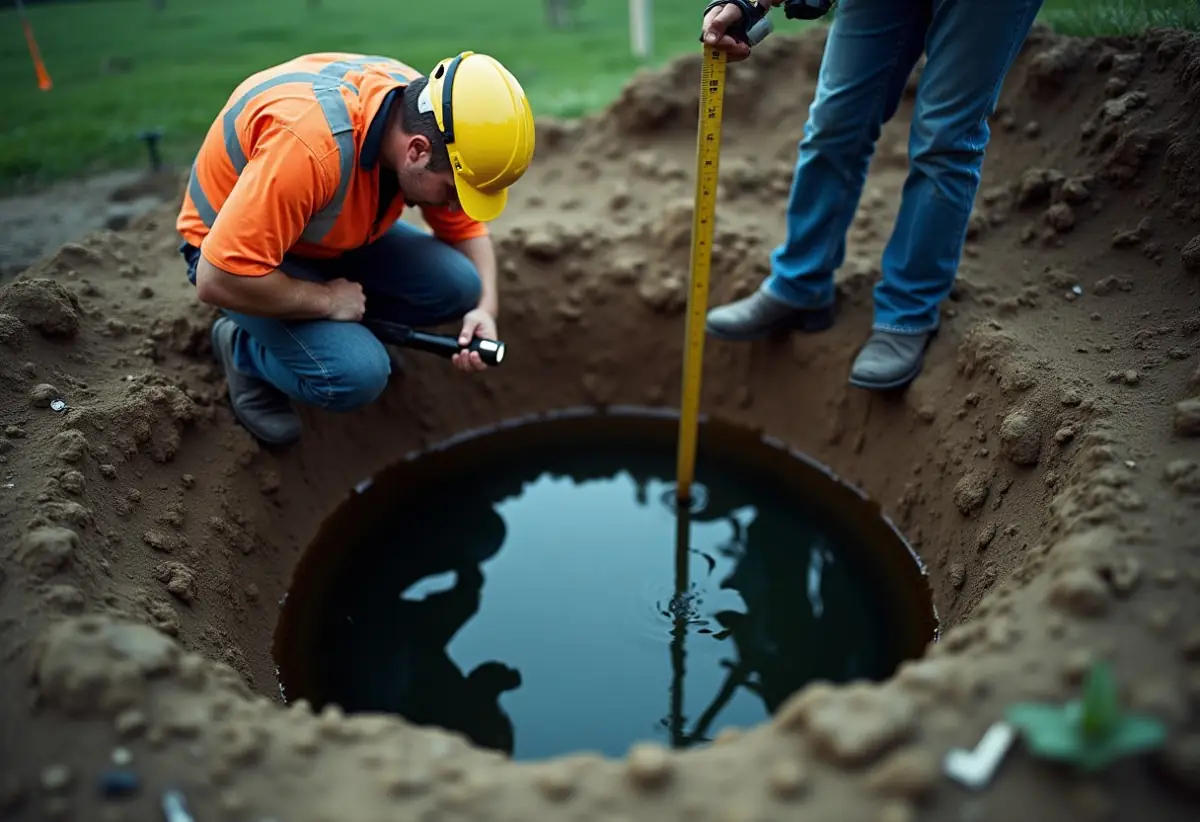
The fastest way to find your septic tank size is the permit record. Most counties keep a septic permit or as-built drawing that lists tank capacity in gallons, and old pumping receipts or inspection reports often record it too. If no paperwork exists, a pumper or inspector can measure the open tank and calculate volume from its inside dimensions.
- Request the permit file. Call the county health or environmental health department with your address and parcel number and ask for the septic permit and as-built drawing.
- Check closing documents. A septic inspection done when you bought the house often lists tank size, material and compartment count.
- Look at pumping receipts. Pumpers usually write down how many gallons they removed, which is close to the tank’s working volume.
- Count bedrooms as a cross-check. A tank permitted under your state’s current table will match your bedroom count at the time it was installed.
- Measure the tank. With the lid off, measure inside length, inside width and liquid depth (from the floor to the outlet pipe), all in feet.
The math for a rectangular tank is length times width times liquid depth, times 7.48 gallons per cubic foot. A tank 8 feet long and 4.5 feet wide with 4 feet of liquid depth holds 8 x 4.5 x 4 = 144 cubic feet, or about 1,077 gallons. For a round tank, use 3.14 times the radius squared times liquid depth, then the same 7.48 conversion.
Use liquid depth, not outside height. The space above the outlet holds scum and air, not working volume.
Do you need a one or two compartment septic tank?
Most current codes push new installs toward a two-compartment septic tank or two tanks in series. Maryland requires two compartments for every residential tank, Florida requires multiple chambers or tanks in series, and Penn State Extension reports that Pennsylvania DEP now requires a two-chamber tank on all new and upgraded systems. Single-compartment tanks remain common in older homes.
The second compartment gives solids a second chance to settle before effluent flows out to the septic drain field, where solids clog soil and shorten its life.
| State rule | Compartment requirement |
|---|---|
| Maryland, COMAR 26.04.02.05 | Two compartments or two tanks in series for all residential tanks |
| Florida, Rule 62-6.008 | Multiple chambers or tanks in series to reach required capacity |
| Pennsylvania DEP (via Penn State Extension) | Two-chamber tank on all new and upgraded on-lot systems |
| Minnesota, Rule 7080.1930 | Multiple compartments or tanks when a garbage disposal or sewage pump is used |
| Massachusetts, 310 CMR 15.223 | Two compartments or two tanks with a garbage grinder or a multi-unit system |
A single-compartment tank that passes inspection usually does not need replacing; the rule tends to apply when a system is replaced or expanded.
How does septic tank size affect pumping frequency?
A larger septic tank goes longer between pumpings because it has more room to store sludge before solids reach the outlet. Oregon State University Extension estimates a 4-person household needs pumping every 2.6 years with a 1,000-gallon tank, every 4.2 years with 1,500 gallons and every 5.9 years with 2,000 gallons. Household size moves the number as much as tank size.
| Tank size | 2 people | 4 people | 6 people |
|---|---|---|---|
| 750 gallons | 4.2 yr | 1.8 yr | 1.0 yr |
| 1,000 gallons | 5.9 yr | 2.6 yr | 1.5 yr |
| 1,250 gallons | 7.5 yr | 3.4 yr | 2.0 yr |
| 1,500 gallons | 9.1 yr | 4.2 yr | 2.6 yr |
| 2,000 gallons | 12.4 yr | 5.9 yr | 3.7 yr |
Source: Oregon State University Extension EC 1343, Table 1 (revised March 2022, reviewed 2025).
Other sources run more conservative. Penn State Extension says each adult adds about 60 gallons of solids a year and that a family of four fills the 300-gallon storage space of a 1,000-gallon tank in about 1.5 years, so it recommends pumping every two to three years. The EPA gives a general range of every three to five years, with an inspection at least every three years.
Tank size also changes the bill, since a bigger tank means more gallons to haul, and it is one of the factors in our breakdown of septic tank pumping cost. Pouring in bacteria products does not stretch the interval either; the research on septic tank additives finds no product that replaces pumping.

How much does a septic tank cost by size?
A septic tank alone costs about $500 to $2,500 depending on size, according to HomeAdvisor’s June 2026 cost guide, with a 1,000-gallon tank at $900 to $1,500 and a 1,500-gallon tank at $1,500 to $2,500. The full installed system runs far higher, averaging about $8,016, because excavation, the drain field and permits make up most of the bill.
| Tank capacity | HomeAdvisor’s home-size pairing | Tank price range |
|---|---|---|
| 500 gallons | 1 bedroom | $500 to $900 |
| 750 gallons | 2 bedrooms | $700 to $1,200 |
| 1,000 gallons | 3 to 4 bedrooms | $900 to $1,500 |
| 1,200 gallons | 5 to 6 bedrooms | $1,200 to $1,600 |
| 1,500 gallons | 6 to 7 bedrooms or small duplex | $1,500 to $2,500 |
Source: HomeAdvisor, Septic Tank Installation Cost (updated June 20, 2026). HomeAdvisor puts the national installed range at $3,590 to $12,463 and says labor typically accounts for 50 to 70 percent of the total.
One caution on that table: its bedroom pairings are looser than several state codes. A 1,000-gallon tank for a 4-bedroom home would fall short in Maryland and Pennsylvania (1,250 gallons) and Minnesota and Massachusetts (1,500 gallons). Price the size your code requires, not the size a cost guide pairs with your house.
Material matters less than size. HomeAdvisor lists concrete tanks at $700 to $2,000, plastic at $500 to $2,000 and fiberglass at $1,200 to $2,000.
Do you need a bigger septic tank if you add a bedroom?
Often, yes. Because septic tank size is tied to bedroom count, adding a bedroom can push your home past the capacity your system was permitted for. Many county health departments review septic capacity before they sign off on a building permit for an addition, and an undersized tank or drain field may need an upgrade before the new room is approved.
The jump can be large. In Minnesota, going from 3 to 4 bedrooms raises the minimum from 1,000 to 1,500 gallons. In Maryland, the same change moves the minimum from 1,000 to 1,250 gallons. In Massachusetts, a 4-bedroom home still fits under the 1,500-gallon floor, but the design flow and leaching area rise with every bedroom.
Before you draw up plans:
- Pull your septic permit to confirm the bedroom count and tank size it was approved for.
- Compare the new bedroom count against your state and county table.
- Ask the permitting office whether a home office, den or bonus room counts as a bedroom under local rules.
- If the tank is short, get quotes for adding a second tank in series or replacing it, and ask whether the drain field must grow too.
The drain field is sized from the same design flow, so more bedrooms on paper can mean more trench area as well as more tank volume.
How we sourced this
We consulted 13 sources and cited 10: the septic rules of Maryland (COMAR 26.04.02.05), Minnesota (Rule 7080.1930), Massachusetts (310 CMR 15.203 and 15.223) and Florida (Rule 62-6.008), the Connecticut Department of Public Health design-flow guidance, Penn State Extension’s septic pumping publication (for Pennsylvania’s table and DEP compartment rule), Oregon State University Extension EC 1343, two EPA SepticSmart pages and HomeAdvisor’s cost guide updated June 2026. State tables were read in the rule text, not from summaries. Florida’s 5- and 6-bedroom sizes are our calculation from the rule’s two tables. We excluded search results that cited no code or primary source. Local rules may be stricter than state minimums.
Frequently asked questions
What size septic tank do I need for a 3 bedroom house?
Most state codes call for 900 to 1,500 gallons for a 3-bedroom home. Florida and Pennsylvania set the floor at 900 gallons, Maryland and Minnesota at 1,000 gallons, and Massachusetts at 1,500 gallons for any single-family home. A 1,000-gallon tank is the most common choice, but your county health department sets the number that applies to your lot.
How many bedrooms can a 1,000 gallon septic tank handle?
Under Maryland and Minnesota rules, a 1,000-gallon tank covers a home with 3 or fewer bedrooms. A fourth bedroom raises the Maryland minimum to 1,250 gallons and the Minnesota minimum to 1,500 gallons. Florida’s table allows 1,050 gallons for a 4-bedroom home, so the answer depends on the state code and, in some states, on the home’s floor area.
How do I find out what size my septic tank is?
Start with the septic permit or as-built drawing on file at your county health or environmental department, then check old pumping receipts and inspection reports. If no record exists, a pumper can measure the tank when it is open. For a rectangular tank, multiply length by width by liquid depth in feet, then multiply by 7.48 to get gallons.
What is the most common septic tank size?
The 1,000-gallon tank is the most common residential size because it meets the minimum for a home with up to 3 bedrooms in many states, including Maryland and Minnesota. HomeAdvisor’s 2026 cost guide prices a 1,000-gallon tank alone at $900 to $1,500. Larger homes often step up to 1,250 or 1,500 gallons, and Massachusetts requires 1,500 gallons for every single-family home.
How often should a 1,000 gallon septic tank be pumped?
Oregon State University Extension estimates a 1,000-gallon tank serving 4 people needs pumping about every 2.6 years, and every 1.5 years for 6 people. A couple can go about 5.9 years. The EPA gives a general range of every 3 to 5 years and recommends an inspection at least every 3 years, since actual sludge buildup varies by household.
Is a bigger septic tank better?
A bigger tank holds more sludge before pumping and gives wastewater more time to settle, which protects the drain field. Oregon State’s table shows a 1,500-gallon tank lasting about 4.2 years between pumpings for 4 people, versus 2.6 years for 1,000 gallons. The tradeoff is a higher price and more excavation, and an oversized tank does not fix a failing drain field.
Does a garbage disposal require a bigger septic tank?
In some states, yes. Minnesota rule 7080.1930 requires a tank at least 50 percent larger than the base size, plus multiple compartments or tanks, when a home has a garbage disposal. Massachusetts Title 5 requires a two-compartment tank of at least 1,500 gallons sized at 200 percent of design flow. Other states leave it to local health departments, so ask before you install one.