How to Clear a Clogged Plumbing Vent
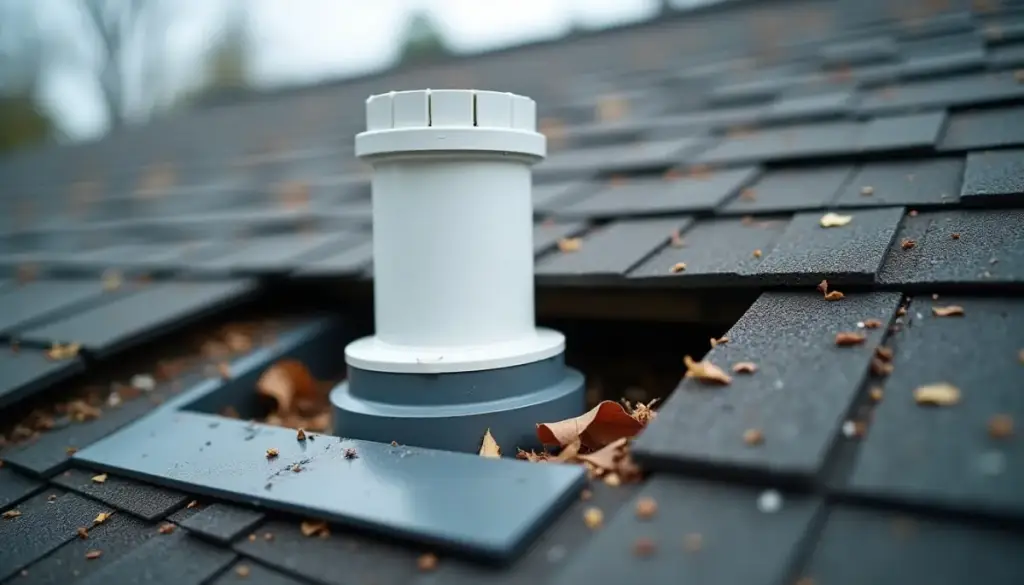
How to clear a clogged plumbing vent comes down to three moves: confirm the symptom shows in two or more fixtures, reach the stack safely, then probe, flush with a garden hose, and retest with a toilet flush.
Key Takeaways
- A vent clog shows up in several fixtures at once. This Old House plumber Richard Trethewey flags a toilet bowl whose water level “bounces” during a flush as a venting tell.
- OSHA rule 29 CFR 1926.1053 sets the ladder foot at one-quarter of its working length from the wall and the rails at least 3 feet above the roof edge.
- OSHA treats any roof over 4 in 12 as steep. On one of those, hire a plumber with fall protection.
- This Old House clears vents with a 12-foot electrician’s probe, then a garden hose fed down to the clog, then a toilet-flush retest.
- The International Residential Code (P3103.1) requires an open vent to end at least 6 inches above the roof or the expected snow line, whichever is greater.
- A 1954 National Bureau of Standards report found frost closure unlikely unless outdoor air stays below about 10°F for several days.
What are the symptoms of a clogged plumbing vent?
A clogged plumbing vent shows up as the same problem in several fixtures at once: gurgling sinks, slow tubs and showers, a toilet that bubbles or loses bowl water after a flush, and a sewer smell indoors. The vent lets air into the drain lines. When it is blocked, draining water pulls air from the nearest trap instead. That trap-siphoning effect ties directly to vent stack sizing and code requirements, worth checking if gurgling persists after clearing a blockage.
That pull is why trap water drops. Both the IPC and UPC require a trap seal of 2 to 4 inches. A vent-starved drain can siphon that seal low or dry, and an empty trap lets sewer gas into the room.
On This Old House, plumber Richard Trethewey points to toilet bowl water that “bounces” during a flush as a venting tell. One slow sink with no other symptoms is usually a hair clog, not the vent.

Is it the vent or a drain clog?
It is the vent when fixtures drain slowly and gurgle but water never backs up out of the lowest drain. It is a drain clog when water rises in a tub, shower, or floor drain, or when the problem stays in one fixture. Run these tests from inside before anyone climbs a ladder.
Gurgling has several causes, and our guide to gurgling drains covers the ones that have nothing to do with the roof. The table below sorts the common symptoms.
| Symptom | Vent or drain? | Test that settles it |
|---|---|---|
| One sink slow, nothing else affected | Drain (local clog) | Pull the stopper or P-trap. Hair or grease at the trap means the vent is fine. |
| Sink gurgles when the tub or washer drains | Vent likely | Drain a full tub and watch nearby traps. Gurgle plus falling trap water points up the stack. |
| Toilet bowl water bounces or drops after a flush | Vent likely | Mark the bowl water line with tape, run the shower for 2 minutes, and check whether the level fell. |
| Sewer smell, traps keep going dry | Vent or unused fixture | Refill every trap with water. If odor returns within a day while fixtures are in use, suspect the vent. |
| Water backs up in the lowest tub or floor drain | Main drain clog | Open the main cleanout cap slowly. Standing water in the cleanout means a main line blockage downstream. |
| Every fixture slow, worst on the lowest floor | Main drain clog | Flush an upstairs toilet and watch the lowest drain. Rising water confirms the main line. |
What clogs a plumbing vent in the first place?
Most vent clogs start at the top of the pipe: wind-blown leaves, pine needles, bird and squirrel nests, and debris from roof work. In cold climates, frost can close the opening. The open top is where most of this material lands, which is why the first check is a flashlight look down the pipe.
Warm, wet air rising up the stack can leave ice on the inner wall or as a cap growing from the rim. The National Bureau of Standards report BMS 142 (Eaton and Wyly, 1954) closed vents as large as 3 inches completely in a cold chamber.
The same report records a field case. At the Hotel St. James in Ironwood, Michigan, on January 18, 1950, with outdoor air at minus 23°F, every 2-inch vent on the roof was frozen shut and several 4-inch vents were completely closed. The authors concluded trouble is unlikely unless outdoor air stays below about 10°F for several days, and that drifted snow is porous enough to cause little trouble.
How do you get on the roof safely to reach the vent?
Set an extension ladder so its foot sits one-quarter of the working length out from the wall, extend the rails at least 3 feet past the roof edge, face the ladder while climbing, and carry tools in a bag or on a hoist line. On roofs steeper than 4 in 12, or in frost, hire a pro.
These numbers come straight from OSHA 29 CFR 1926.1053. Working length is the distance along the ladder from the foot to the top support, and (b)(22) bars carrying any load that could throw you off balance.
A 16-foot working length puts the foot 4 feet out. Under OSHA 1926.501, residential construction work 6 feet or more above a lower level needs fall protection, and OSHA 1926.500 defines a steep roof as anything over 4 in 12. Hire out a 2-story roof, a pitch over 4 in 12, wet shingles, or frost.

How do you clear a clogged plumbing vent from the roof, step by step?
From the roof, clearing a clogged plumbing vent takes six steps: look, pull what you can reach, probe, flush with a hose, auger if needed, and retest. Most clogs clear by step four. Plan on a helper inside to run water.
- Look down the pipe. Shine a flashlight into the opening. Leaves or a nest within arm’s reach come out by gloved hand or with a wet/dry vac hose sealed against the rim. Pull debris up, never push it down.
- Locate a deeper clog. This Old House feeds an inspection camera, which rents for about $75 to $100 a day, down the stack while watching the monitor. A helper flushing a toilet also works. If you hear water but cannot see it pass, the clog sits above that point.
- Probe it. This Old House uses a 12-foot electrician’s probe (fish tape) pushed down until it hits the blockage. The tip often comes back with soggy leaves, which tells you what you are fighting.
- Flush with a garden hose. Lower the hose all the way to the clog, turn the water on, and work the hose up and down to break the mass apart. Have your helper watch the lowest tub or floor drain and shout if water rises, which means the drain below is clogged too.
- Auger stubborn clogs. Lower a hand drum auger, crank it slowly clockwise through the blockage, and retrieve it the same way. Skip powered drain machines on a roof, where a kinking cable can pull you off balance.
- Retest. Have someone flush a toilet while you watch the stack. Water running freely down the pipe means the vent is clear. Then confirm the gurgle and bowl bounce are gone.
How do you unclog a vent stack without getting on the roof?
If the vent runs through an attic in PVC, you can clear it from inside. Hunker describes cutting out a section just large enough for an auger, running the auger down and then up toward the roof, and rejoining the pipe with rubber or PVC couplings and PVC cement. Cast iron or no attic access means calling a plumber.
For frost, Hunker recommends warming the attic section of pipe with a hair dryer and never climbing an icy roof. Hunker also suggests running hot water so warm vapor rises up the stack. Use that one sparingly: the NBS study found hot water discharged into the stack, especially at night, raises the humidity of the rising air and increases frost buildup.
The NBS authors found the surest prevention is shortening the exposed vent above the roof, within code limits, and warned that small uninsulated vents in unheated attics may freeze solid. This Old House suggests heat cable before winter.
What vent sizes and roof heights does code require?
Under the International Residential Code, an open vent through a roof must end at least 6 inches above the roof or the expected snow line, whichever is greater, and at least 7 feet above a roof used as a deck. Each vent must be at least half the diameter of the drain it serves and never smaller than 1-1/4 inches.
The roof height rule is IRC Section P3103.1, and local amendments change it. Rhode Island’s amendment raises the minimum to 12 inches. For context on stack, branch, and individual vents, see our breakdown of how a house vent system is laid out.
Cold states size up against frost. Michigan rule R 408.30533 requires every vent extension through a roof to be at least 3 inches in diameter, with any size increase made inside the building at least 1 foot below the roof.
An air admittance valve can vent a single fixture such as an island sink where codes allow it. It does not replace the main stack through the roof.
Should you put a cap or screen on a plumbing vent?
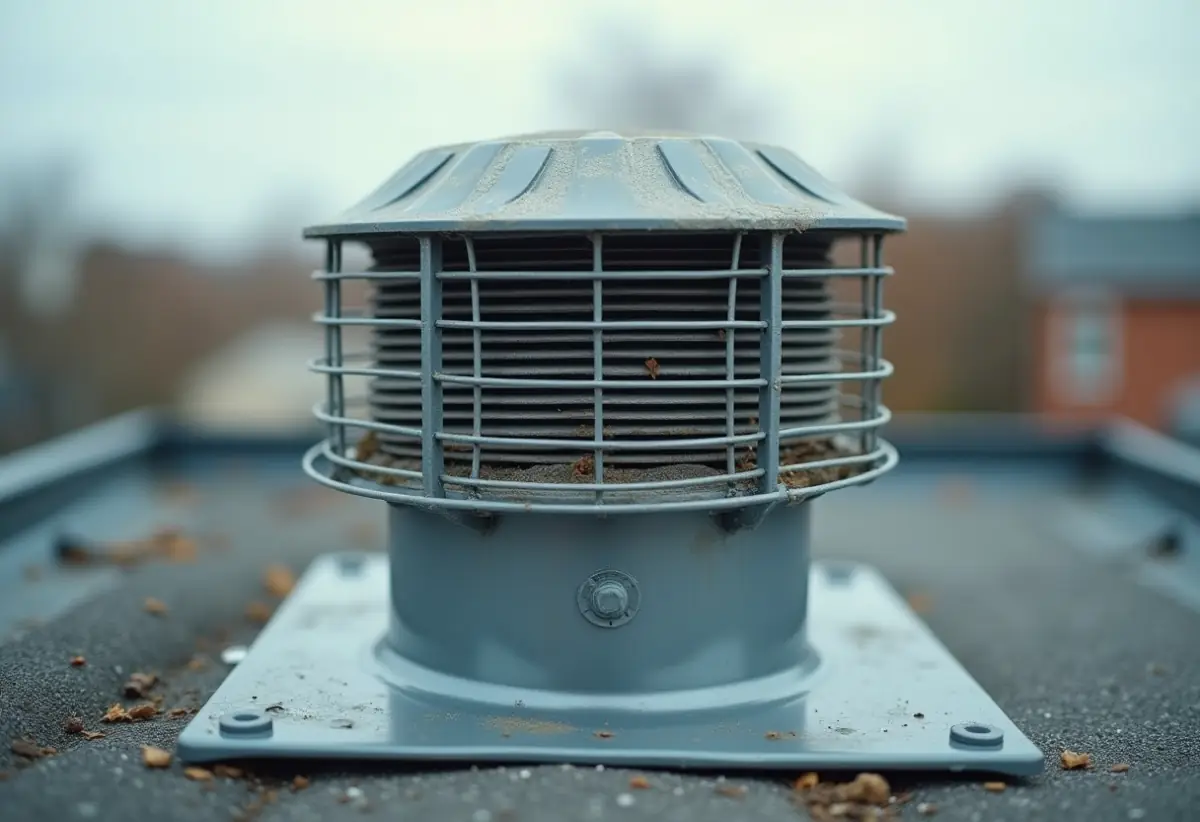
Check with your local inspector before capping a vent. The code text calls for open vent pipes through the roof, and caps or fine screens can catch frost and lint-like debris and recreate the clog. This Old House recommends covers that keep out leaves and animals while preserving airflow, so pick open, coarse designs that do not shrink the opening.
Frost is the main risk. The NBS report found frost most often forms as a cap that grows from the rim of the vent outlet. Mesh at that rim gives ice a ready frame to bridge. In a climate that sees long stretches under 10°F, skip the screen and use the upsizing and insulation approach above.
What if it is not the vent?
If water backs up out of the lowest drain, the problem is a main line clog, not the vent, and clearing the roof will not help. Signs include a tub filling when the washer drains, toilets that rise on every flush, and standing water in the cleanout. That calls for a drain machine through the cleanout or a plumber with a camera.
An inspection camera rented for about $75 to $100 a day, per This Old House, can be run in from the cleanout. Roots or a collapsed section means a sewer contractor.
Call a licensed plumber when the vent pipe looks cracked or loose at the roof boot, when clogs come back every season, or when sewer odor persists after every trap is refilled and the vent tests clear. Those point to a broken pipe or failed seal that needs a smoke test.
How we sourced this
We reviewed the top-ranking how-to guides for this query, including This Old House and Hunker, and cited only their specific tools, steps, and prices. Ladder and fall-protection figures come from OSHA 29 CFR 1926.500, 1926.501, and 1926.1053 as published on osha.gov in October 2026. Frost data comes from National Bureau of Standards report BMS 142 (Eaton and Wyly, issued October 1954). Code figures come from the IRC model text and Michigan’s adopted amendment; check your local edition. We excluded cost-to-hire figures we could not verify.
Frequently asked questions
How do I know if my plumbing vent is clogged?
Look for the same symptom in two or more fixtures at once. Gurgling sinks, slow tubs, a toilet bowl that bubbles or drops its water after a flush, and a sewer smell indoors all point to a starved vent. One slow sink alone is usually a local clog in that drain, not the vent.
Can you clear a plumbing vent without going on the roof?
Often, yes. If the vent runs through an attic in PVC, you can cut a short access section, run a hand auger down and then up toward the roof, and rejoin the pipe with couplings and PVC cement. For winter frost, warm the attic section of pipe gently instead of climbing onto an icy roof.
Can a clogged vent cause a sewer smell in the house?
Yes. A blocked vent lets draining water pull the water seal out of fixture traps, and an empty trap is an open path for sewer gas. Both the IPC and UPC call for a trap seal between 2 and 4 inches deep, so a trap that keeps losing water after nearby drains run is a strong vent clue.
Will a frozen plumbing vent clear itself?
Usually, once temperatures rise. A 1954 National Bureau of Standards study found frost closure is unlikely unless outdoor air stays below about 10°F for several days, and that drifted snow is porous enough to cause little trouble. Leaves, nests, and debris will not clear on their own and need probing or flushing.
Can I use a shop vac to unclog a plumbing vent?
A wet/dry vac can pull loose leaves or a fresh nest that sits within reach of the opening, which is where many vent clogs start. Seal the hose to the pipe with a gloved hand or a rag. It will not lift a packed clog deep in the stack, so switch to a probe, auger, or garden hose for those.
Should a plumbing vent have a cap or screen?
Check with your local inspector first. Model code text calls for open vent pipes through the roof, and a 1954 federal study found frost often builds as a cap from the rim of the vent outlet. A screen with fine mesh can catch frost or debris and recreate the clog it was meant to stop.
How far above the roof must a plumbing vent extend?
Under the International Residential Code, an open vent through a roof must end at least 6 inches above the roof or above the expected snow line, whichever is greater. Some states raise that, Rhode Island to 12 inches. A roof used as a deck or similar space needs the vent at least 7 feet above it.
Will a toilet flush if the vent is clogged?
Yes, but the flush shows trouble instead of failing outright. Richard Trethewey points to bowl water that bounces during a flush as a venting tell. A vent starved drain can also pull the trap seal low or dry, and the bowl may bubble or lose water after flushing, though the article does not say the toilet stops flushing altogether.