Heat Pump vs Tankless Water Heater: Which Wins?
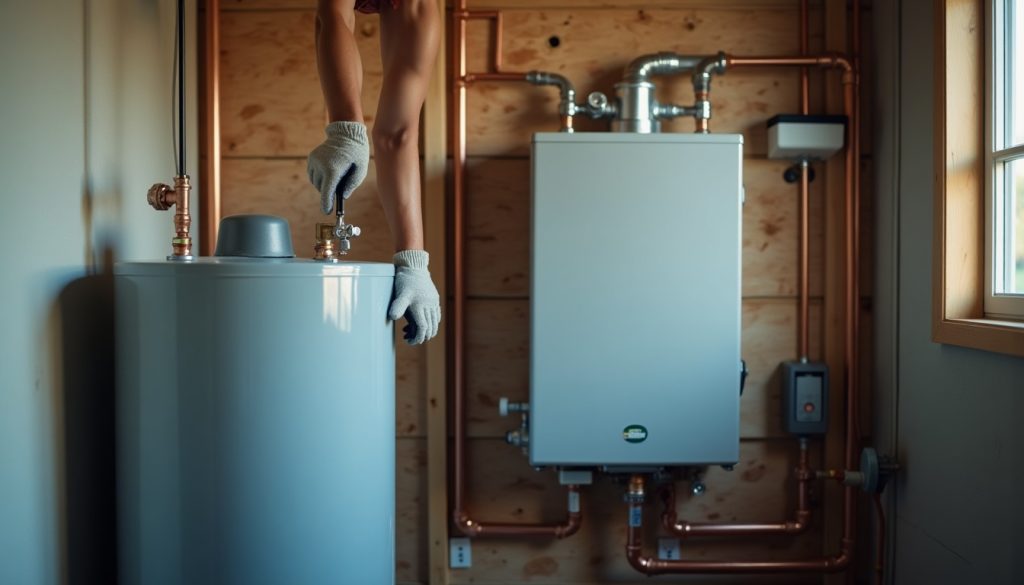
Heat pump water heaters beat tankless on efficiency, running up to 4 times more efficient than a conventional electric unit, while gas tankless wins on endless flow and a compact footprint, per ENERGY STAR and the U.S. DOE.
Key Takeaways
- A heat pump water heater reaches a Uniform Energy Factor (UEF) of 3.5 to 4.0 in top models, versus about 0.90 to 0.95 for a gas tankless unit (ENERGY STAR).
- ENERGY STAR certified heat pump water heaters use about 70% less energy and save a family of four roughly $550 a year versus a standard electric tank (ENERGY STAR).
- A tankless unit heats on demand and gives endless hot water at 2 to 5 gallons per minute, so flow, not tank volume, sets its limit (U.S. DOE).
- A heat pump water heater needs about 1,000 cubic feet of air and a 40 to 90 degree Fahrenheit space, so a cold closet is a poor fit (U.S. DOE).
- The heat pump premium pays back for a family of four in about three years, per ENERGY STAR, but a gas tankless unit sidesteps space and climate limits.
- A tankless unit lasts more than 20 years (U.S. DOE); a heat pump water heater stores water in a tank and lasts closer to 10 to 15 years, so weigh how long water heaters last before you buy.
What is the difference between a heat pump vs tankless water heater?
A heat pump water heater uses electricity to move heat from the surrounding air into a storage tank, so it holds a reserve of hot water. A tankless (demand) unit heats water only as it flows through, using gas or electric elements, and holds nothing. That split drives every trade-off below: efficiency, running cost, space, climate, flow, and lifespan. Certified efficiency ratings for both types are compared across hundreds of models in our Energy Star water heater data.
These are two different bets. A heat pump chases the lowest electric running cost; a tankless chases endless flow and a small footprint. If you are weighing storage against on-demand more broadly, our tankless vs tank water heater guide covers that layer first.
What is a heat pump water heater?
A heat pump water heater, also called a hybrid electric unit, pulls heat from the air around it and pumps it into a storage tank rather than making heat directly. Because it moves heat instead of generating it, an ENERGY STAR model is up to 4 times more efficient than a conventional electric heater, using about 70% less energy.
The catch is its environment. The U.S. Department of Energy advises installing it where at least roughly 1,000 cubic feet of air is available and the space stays between 40 and 90 degrees Fahrenheit year round. A warm garage, basement, or utility room works well; a tight, cold closet does not.
What is a tankless water heater?
A tankless water heater heats water instantly as you open a tap, using a gas burner or electric elements, with no storage tank. With no stored water sitting idle, there is no standby heat loss, and it mounts on a wall in roughly the space of a suitcase.
Its limit is flow. The U.S. Department of Energy puts a single unit at 2 to 5 gallons per minute, with gas models near the top and electric whole-house units closer to 3 GPM. Gas tankless models are certified around a UEF of 0.90 to 0.95, high for a fuel-burning heater but far below a heat pump’s ratio.
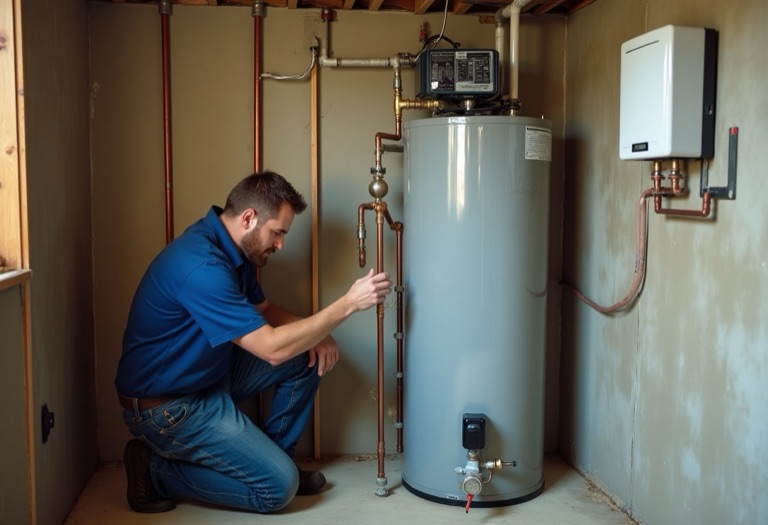
Heat pump vs tankless water heater: how do they compare head-to-head?
A heat pump water heater wins on efficiency and electric running cost; a tankless wins on flow, footprint, and lifespan. The table lays out each factor side by side with sourced figures so you can match the unit to your home rather than the marketing.
| Factor | Heat pump (hybrid electric) | Tankless (gas or electric) |
|---|---|---|
| How it heats | Moves heat from surrounding air into a 40-80 gallon tank | Heats water on demand as it flows through |
| Efficiency (UEF) | 3.5-4.0 in top models (ENERGY STAR product data) | Gas 0.90-0.95; electric near 0.99 (ENERGY STAR) |
| Vs standard heater | Up to 4x a conventional electric unit (ENERGY STAR) | Gas tankless up to ~1.5x a standard gas tank |
| Fuel | Electric only | Gas or electric |
| Hot water supply | Stored tank plus recovery time | Endless at a 2-5 GPM flow limit (U.S. DOE) |
| Space and climate | ~1,000 cu ft of air, 40-90F space, condensate drain (U.S. DOE) | Wall-mounted, compact, works in any climate |
| Lifespan | Roughly 10-15 years (tank-based) | More than 20 years (U.S. DOE) |
| Install extras | 240V circuit, floor space, drain | Upsized gas line and venting, or heavy electric circuit |
How much more efficient is a heat pump than tankless?
A heat pump water heater is in a different efficiency class. Its UEF of 3.5 to 4.0 means it delivers 3.5 to 4 units of heat per unit of electricity, because it moves existing heat rather than making it. A gas tankless unit tops out near a UEF of 0.95, since every fuel-burning heater loses some energy up the vent. Venting losses and standby behavior vary further across the other water heater types, and pairing either system with a hot water recirculation pump changes the efficiency math at the tap. Before weighing efficiency gains against upkeep, it helps to understand the annual descaling process that keeps a tankless unit’s heat exchanger performing as rated.
Efficiency and running cost are not the same thing, though. A heat pump runs on electricity while a gas tankless runs on gas, so the cheaper bill depends on your local price ratio. Where the two share a fuel, as with an electric tankless, the heat pump’s edge is large. For the underlying fuel math, see our gas vs electric water heater comparison.
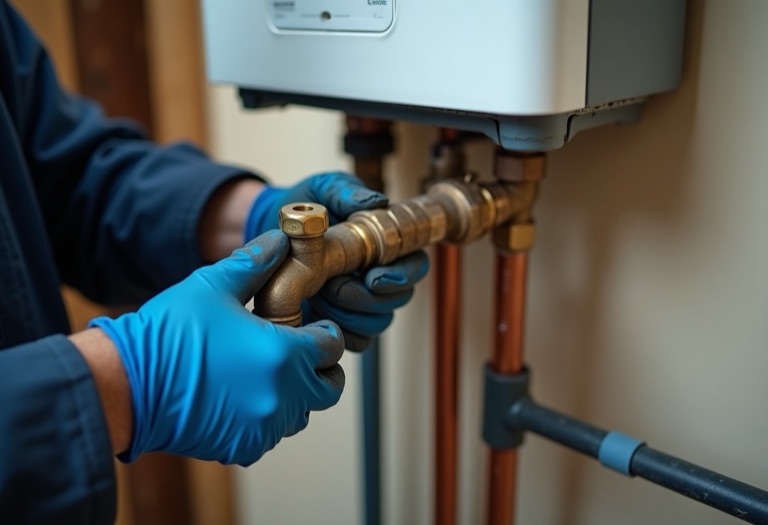
What does a heat pump vs tankless water heater cost to run each year?
A heat pump water heater usually posts the lowest annual operating cost for a household on electricity. ENERGY STAR reports it saves a family of four about $550 a year against a standard electric tank. A gas tankless unit runs cheaper than a gas tank but competes on gas prices, so the chart below shows estimates, not fixed quotes.
Upfront cost runs the other way. A heat pump unit and its air, drain, and space needs push the install higher, and a gas tankless often needs an upsized gas line and venting. Because a tankless outlives a tank-based heat pump by years, run both against our water heater replacement cost figures before you commit.
Does a heat pump water heater need special space or a warm climate?
Yes, and this is the deciding factor for many homes. A heat pump water heater cools and dries the air it pulls from, so the U.S. Department of Energy recommends a space with at least roughly 1,000 cubic feet of air that stays between 40 and 90 degrees Fahrenheit all year. It also needs a condensate drain and can hum like a window air conditioner.
A garage, basement, or large utility room in a mild or warm climate suits it well. A tankless unit carries none of these constraints: it mounts on a wall, works in any climate, and takes almost no floor space, which is why it wins in cold regions, tight closets, and small mechanical rooms.
When should you choose a heat pump, and when tankless?
Choose a heat pump water heater if your home runs on electricity, you have a warm 40 to 90 degree space with room and a drain, and lowest running cost matters most. ENERGY STAR puts the savings near $550 a year for a family of four with about a three-year payback. Choose a gas tankless unit for endless flow, a tiny footprint, cold-climate installs, or when you already have gas service.
Household size and habits tip the balance too. A large family drawing several fixtures at once may prefer a sized gas tankless for uninterrupted flow, while a steady-use electric home banks the heat pump’s efficiency year after year. Match the unit to your fuel, space, and climate first, then to budget.
How we sourced this
Efficiency multipliers, the 70% energy figure, the ~$550 annual family-of-four savings, and the roughly three-year payback come from ENERGY STAR heat pump water heater guidance. UEF ranges come from ENERGY STAR product criteria and certified product data (heat pump 3.5-4.0; gas tankless 0.90-0.95). Flow rate (2-5 GPM), the 20-plus year tankless lifespan, the ~1,000 cubic foot air requirement, and the 40-90F range come from the U.S. Department of Energy. The annual operating-cost chart shows 2026 market estimates for a family of four; the standard electric tank figure is derived from the ENERGY STAR $550 savings benchmark and varies by local energy prices, usage, and climate. Retailer and manufacturer blogs were read for context but not cited as figures.
Frequently asked questions
Is a heat pump or tankless water heater more efficient?
A heat pump water heater is far more efficient. Top models reach a Uniform Energy Factor of 3.5 to 4.0, meaning they move 3.5 to 4 units of heat for every unit of electricity. ENERGY STAR rates certified units up to 4 times more efficient than a conventional electric heater. A gas tankless unit sits near a UEF of 0.90 to 0.95.
Does a heat pump water heater cost less to run than tankless?
In most homes, yes. An ENERGY STAR heat pump water heater saves a family of four about $550 a year versus a standard electric tank and uses roughly 70% less energy, per ENERGY STAR. A gas tankless unit runs on gas, so the winner depends on your local gas versus electricity price ratio, but the heat pump usually costs less to operate.
What are the downsides of a heat pump water heater?
A heat pump water heater needs space and warmth. The U.S. Department of Energy advises installing it where at least about 1,000 cubic feet of air is available and the temperature stays between 40 and 90 degrees Fahrenheit year round. It also needs a condensate drain, costs more upfront, and can make a low hum, so a small closet or a cold garage is a poor fit.
Can a tankless water heater run out of hot water?
A tankless unit heats on demand, so it will not empty like a tank, but it is limited by flow. The U.S. Department of Energy puts a single unit at 2 to 5 gallons per minute. Draw more than that at once, such as two showers plus a dishwasher, and the water arrives cooler. It gives endless hot water at its rated flow, not unlimited flow.
Which lasts longer, a heat pump or tankless water heater?
A tankless water heater lasts longer, more than 20 years per the U.S. Department of Energy, versus roughly 10 to 15 years for a heat pump water heater, which stores water in a tank like a conventional unit. ENERGY STAR certified heat pump models carry at least a 6-year warranty. Lifespan varies with water hardness and maintenance.
Is a heat pump water heater worth it over a tankless?
If your home runs on electricity and you have a warm 40 to 90 degree space with room, a heat pump water heater usually wins on running cost, saving a family of four about $550 a year, per ENERGY STAR, and paying back its premium in about three years. Choose gas tankless instead if you want endless flow, minimal footprint, or already have gas service.
Do heat pump and tankless water heaters need electrical or gas upgrades?
Often. A heat pump water heater runs on a standard 240-volt circuit but needs floor space, air volume, and a condensate drain. A gas tankless unit frequently needs an upsized gas line and dedicated venting, while a whole-house electric tankless unit draws heavy amperage and may need a panel upgrade. These upgrades drive much of the install cost gap.


