How Long Do Water Heaters Last? Lifespan by Type
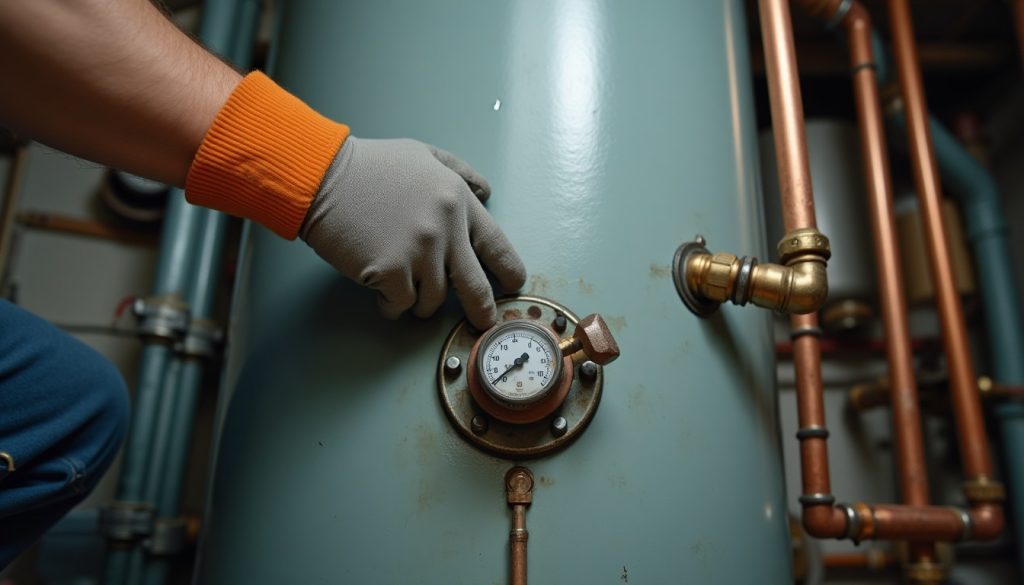
How long a water heater lasts depends on type: a tank runs 8 to 12 years, a tankless unit more than 20, and a heat pump model about 13 to 15.
Key Takeaways
- A conventional storage tank lasts 8 to 12 years in most homes; the U.S. Department of Energy puts a well-maintained tank at 10 to 15 (U.S. Department of Energy).
- Tankless (demand) water heaters have a life expectancy of more than 20 years (U.S. Department of Energy).
- Heat pump water heaters typically last about 13 to 15 years (U.S. Department of Energy).
- Hard water and sediment are the leading causes of early failure, making the burner or element work harder and speeding corrosion.
- The sacrificial anode rod lasts roughly 3 to 5 years; replacing it can add several years and, kept fresh, roughly double a tank’s life.
- Once the tank body itself corrodes through and leaks, it cannot be repaired; see a leaking water heater for how to tell.
How long do water heaters last by type?
How long a water heater lasts comes down to design. A storage tank runs 8 to 12 years in most homes, a tankless unit lasts more than 20, and a heat pump model lands around 13 to 15. The U.S. Department of Energy lists storage tanks at 10 to 15 years with good maintenance and tankless units at more than 20.
The gap is mostly about standing water and corrosion. A tank holds 40 to 80 gallons that constantly sit against steel, so it rusts and collects sediment from the inside out. A tankless unit stores nothing and its parts are serviceable, which is why it outlasts two tanks.
What is the average lifespan of each water heater type?
Each type has a distinct expected life, and each has different levers for stretching it. The table below pairs the average lifespan with what actually extends it and the signals that it has reached the end.
| Type | Average lifespan | What extends it | End-of-life signs |
|---|---|---|---|
| Storage tank (gas or electric) | 8-12 years (DOE: 10-15 maintained) | Annual flush, anode rod swaps, 120F setting, expansion tank | Rusty water, leak at base, popping, no anode left |
| Tankless (demand) | More than 20 years (DOE) | Yearly descaling, inlet filter cleaning, water softening on hard water | Scale error codes, failing heat exchanger, weak flow when hot |
| Heat pump (hybrid) | 13-15 years (DOE) | Air filter cleaning, condensate line care, anode checks | Compressor failure, long recovery, heavy corrosion |
| Anode rod (component) | 3-5 years | Replacing before it is under half an inch thick | Rod fully consumed, rotten egg smell, rusty hot water |
What shortens the life of a water heater?
Hard water is the single biggest factor. Dissolved calcium and magnesium drop out as sediment on the tank bottom, forcing the burner or element to heat through an insulating layer and driving up corrosion. A used-up anode rod, skipped flushing, high temperature settings, and high incoming pressure all take years off.
Sediment does the most quiet damage. As it stacks up it traps heat against the steel, warps the base, and creates the popping and rumbling sound owners often notice first. Homes on well water or hard municipal supply usually see tanks fail well before the 8 to 12 year average unless the tank is flushed regularly.
What are the signs a water heater is failing?
A failing water heater usually warns you before it quits. Watch for rusty or discolored hot water, a metallic or rotten egg smell, popping or rumbling from sediment, hot water that runs out faster than before, and any moisture pooling around the base. The last one is the most serious. Leaking at the base often traces back to internal tank corrosion, so it’s worth checking anode rod replacement before the damage spreads.
Water at the base of the tank often means the steel has corroded through, and a rusted-through tank cannot be patched. If you find dampness or dripping, read a leaking water heater to locate the source before deciding, since a fitting or valve leak is fixable while a tank leak is not.
How can you extend the life of a water heater?
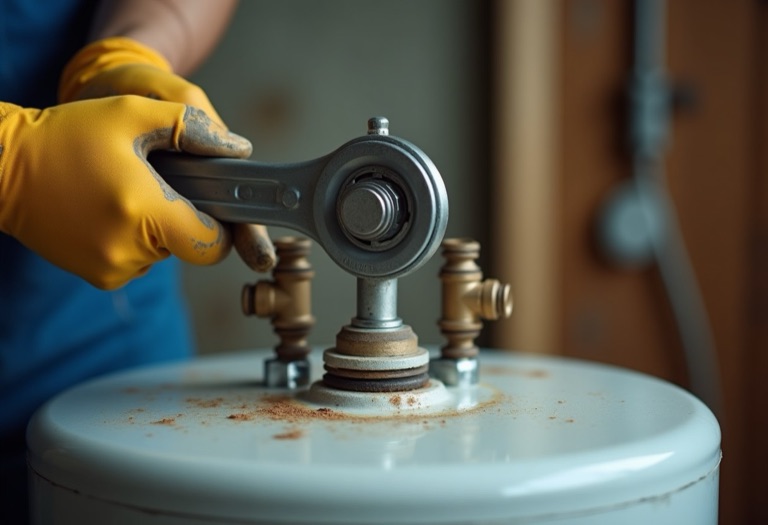
Regular maintenance is what separates a tank that dies at 8 years from one that reaches 15. The core routine is short, and most of it is DIY. Follow these steps on a yearly cycle and check the anode rod on a longer one.
- Flush the tank once a year to clear sediment; on hard water do it more often. You can flush the sediment out yourself in under an hour with a garden hose.
- Check the sacrificial anode rod every 2 to 3 years and replace it when it is under half an inch thick or heavily corroded. A fresh rod protects the steel and can roughly double tank life.
- Set the thermostat near 120 degrees Fahrenheit, which reduces mineral scaling and standby loss while staying safe.
- Add an expansion tank or a pressure reducing valve if incoming pressure is high, since pressure spikes stress the tank and fittings.
- On hard water, consider a water softener to cut the mineral load, and check the anode more often because soft water can consume it faster.
Should you repair or replace a water heater at the end of its life?
The age of the unit decides it. If a tank is under 8 years old and the fault is a single part like a thermostat, heating element, or valve, repair is usually the cheaper call. Past 10 to 12 years, or when the tank body itself leaks, replacement wins because a corroded tank cannot be fixed.
Run the repair quote against both the replacement cost and the remaining expected life. Our repair vs replace an aging water heater guide walks the decision, and the water heater replacement cost breakdown covers what a new unit and install actually run.
How we sourced this
Lifespan figures for tankless (more than 20 years), storage tank (10 to 15 years maintained), and heat pump water heaters (about 13 to 15 years) come from U.S. Department of Energy Energy Saver guidance. The 8 to 12 year figure for a typical tank reflects the common real-world service band reported across plumbing-trade sources and sits just below the DOE maintained range. Anode rod service life and maintenance intervals reflect manufacturer guidance and standard trade practice. Cost specifics are covered in our linked cost guides and were not restated here as fixed figures.
Frequently asked questions
How long do water heaters last on average?
A conventional storage tank water heater typically lasts 8 to 12 years, with the U.S. Department of Energy putting a well-maintained tank at 10 to 15 years. Tankless units last more than 20 years, and heat pump water heaters run about 13 to 15 years. Water chemistry, maintenance, and how hard the unit works all move those numbers.
Why do tankless water heaters last so much longer than tanks?
A tankless unit holds no standing water, so it avoids the constant internal corrosion and sediment buildup that eats a storage tank from the inside. The U.S. Department of Energy lists tankless life expectancy at more than 20 years versus 10 to 15 for a tank. Tankless parts are also serviceable, so a failing component can be swapped rather than scrapping the whole unit.
What shortens the life of a water heater?
Hard water is the biggest factor. Dissolved minerals settle as sediment on the tank bottom, which makes the burner or element work harder and speeds corrosion. A depleted anode rod, skipped annual flushing, high temperature settings, and high incoming pressure all shorten life. Homes on well or hard municipal water usually see tanks fail years earlier than the average.
What are the signs my water heater is failing?
Watch for rusty or discolored hot water, a metallic or rotten egg smell, popping or rumbling from sediment, water pooling around the base, and hot water that runs out faster than it used to. Any moisture at the base of the tank, as covered in our leaking water heater guide, usually means the tank has corroded through and needs replacement, not repair.
How can I make my water heater last longer?
Flush the tank once a year to clear sediment, check the anode rod every 2 to 3 years and replace it when it is under half an inch thick or heavily corroded, set the thermostat near 120 degrees, and add an expansion tank or pressure reducing valve if pressure is high. A fresh anode rod alone can roughly double tank life by protecting the steel from rust.
Should I repair or replace an old water heater?
If the tank is under 8 years old and the failure is a single part like a thermostat, element, or valve, repair is usually cheaper. Past 10 to 12 years, or when the tank itself leaks, replacement makes more sense because a rusted-through tank cannot be fixed. Compare the repair quote against replacement cost and the unit’s remaining expected life.
Does a water heater last longer with a water softener?
Often yes, because softened water carries fewer of the calcium and magnesium minerals that form sediment and scale. The trade-off is that softened water can consume the sacrificial anode rod faster, so a home with a softener should check the anode more often. Net effect for most hard-water homes is a longer tank life.
How often should a water heater be flushed?
Once a year is the common recommendation, and more often on hard or well water. Flushing drains the sediment that collects on the tank bottom, restores heating efficiency, and cuts the popping and rumbling noise that signals buildup. It is a job most homeowners can do in under an hour with a garden hose.


