Tankless vs Tank Water Heater: Which Is Worth It?
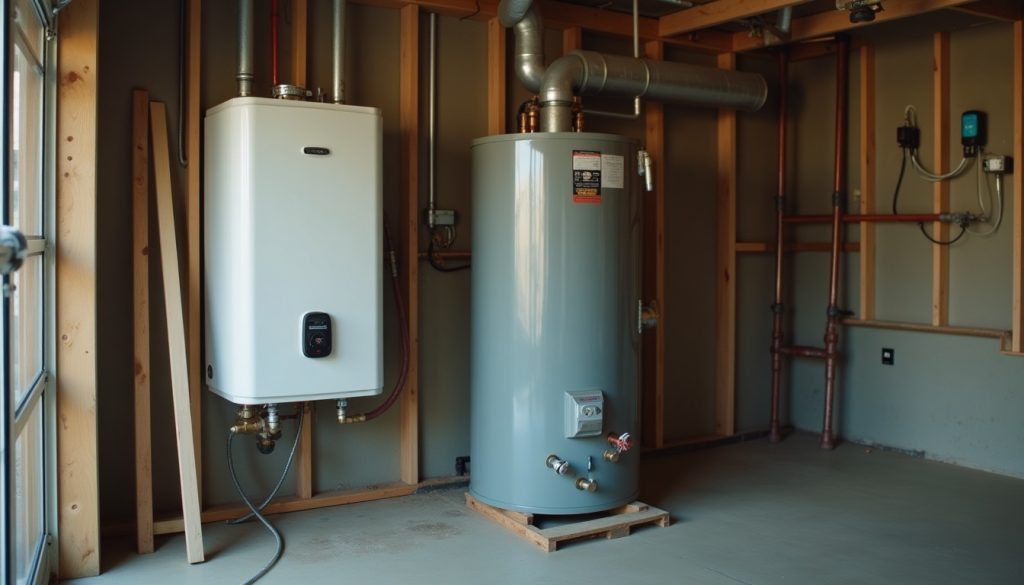
Tankless water heaters cost more upfront but last 20+ years and run 24-34% more efficiently than a storage tank in low-use homes, per the U.S. Department of Energy.
Key Takeaways
- A tankless water heater lasts more than 20 years; a storage tank lasts 10-15 years (U.S. Department of Energy).
- Tankless units are 24-34% more efficient in homes using 41 gallons or less of hot water per day, and 8-14% more efficient in high-use homes near 86 gallons (U.S. DOE).
- Tankless heaters deliver hot water at 2-5 gallons per minute, so flow rate, not tank volume, sets the limit (U.S. DOE).
- A good tankless Uniform Energy Factor (UEF) is 0.90 or higher, with certified gas models reaching 0.95 (ENERGY STAR).
- Tankless installs often cost more because gas models can need an upsized gas line and dedicated venting; see our full what a tankless install actually costs breakdown.
- A tank gives a large burst of hot water then needs recovery time; a sized tankless supplies unlimited hot water at its rated flow.
What is the difference between a tankless vs tank water heater?
A tank water heater stores and constantly reheats 40-80 gallons of hot water; a tankless (demand) unit heats water only as it flows through, so it holds no reserve. That single design choice drives every trade-off below: standby energy loss, lifespan, flow limits, install cost, and space. Standby loss and flow limits aside, it helps to know common tankless heater problems before deciding which system fits your home.
Choosing between them is less about which is “better” and more about your hot water habits, your fuel type, and how long you plan to own the home. If you are only weighing a like-for-like swap, our water heater replacement cost guide covers the straightforward tank-for-tank route.
What is a tankless water heater?
A tankless water heater heats water instantly as you turn on a tap, using a gas burner or electric elements, with no storage tank. Because no water sits heated waiting to be used, there is no standby heat loss, which is where much of its efficiency edge comes from.
The catch is flow. The U.S. Department of Energy notes a single unit delivers 2-5 gallons per minute of hot water. Gas models reach the higher end near 5 GPM; electric whole-house units usually land closer to 3 GPM because of the power draw. Run more fixtures than that at once and the water arrives cooler.
What is a tank (storage) water heater?
A storage tank water heater keeps 40-80 gallons hot and ready in an insulated tank, refilling and reheating as you draw it down. It is the type in most U.S. homes, cheaper to buy and simpler to install, but it loses heat while sitting idle and can be emptied by heavy back-to-back use.
Recovery rate matters here: once the tank is drained, you wait for it to reheat. A tank’s simplicity also makes it forgiving to service, and many failures are a single part like an element or thermostat, which is why a repair an existing water heater call is often cheaper than a full replacement on a newer unit.
Tankless vs tank water heater: how do the specs compare head-to-head?
Across the specs that matter, a tankless water heater wins on lifespan, efficiency, and space, while a tank wins on upfront cost, install simplicity, and simultaneous high-volume demand. The table below lays out each factor side by side with the sourced figures.
| Factor | Tankless (demand) | Tank (storage) |
|---|---|---|
| Unit + install (typical, installed) | Often $1,000-$3,500+, higher with gas line or vent upgrades | Often $600-$1,800 |
| Lifespan | More than 20 years (U.S. DOE) | 10-15 years (U.S. DOE) |
| Efficiency, low-use home | 24-34% more efficient (U.S. DOE) | Baseline, with standby loss |
| Efficiency, high-use home | 8-14% more efficient (U.S. DOE) | Baseline |
| Hot water supply | Endless at 2-5 GPM flow limit (U.S. DOE) | Big burst of 40-80 gal, then recovery wait |
| Space | Wall-mounted, roughly the size of a suitcase | Floor-standing, 40-80 gallon footprint |
| Good efficiency rating | UEF 0.90+ (ENERGY STAR) | UEF often 0.60-0.70 for standard gas |
How much more efficient is tankless, and does it depend on usage?
Tankless efficiency gains shrink as your hot water usage climbs. The U.S. Department of Energy’s figures make the pattern clear: the less you use, the more the lack of standby loss pays off. A low-demand home sees the biggest gap; a heavy-use home sees a narrower one. Before weighing usage patterns further, it helps to see how recirculation pumps affect wait times fit in, and to review the six main water heater types side by side. Those curious about electric alternatives might also compare heat pump water heaters against tankless models before settling on a system. Installing a point of use water heater at distant fixtures offers another way to cut standby losses without overhauling the whole system. Homeowners weighing a tankless setup should also plan for upkeep, including how to flush a tankless unit.
An ENERGY STAR certified gas tankless unit carries a Uniform Energy Factor (UEF) of 0.90 or higher, with manufacturers like A. O. Smith listing models at 0.95. A standard gas storage tank often sits well below that, which is the efficiency gap in a single number.
Can a tankless water heater keep up with your hot water demand?
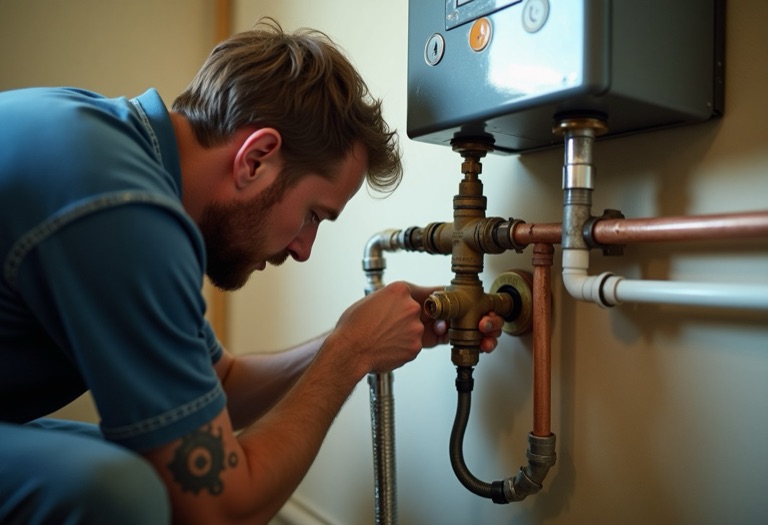
A tankless unit supplies unlimited hot water, but only up to its flow rate. The U.S. Department of Energy puts a single unit at 2-5 GPM. That is plenty for one or two fixtures, but running two showers plus a dishwasher can exceed a gas unit’s roughly 5 GPM ceiling and cool the output.
The fix is sizing: pick a unit rated for your peak simultaneous flow, or install two for a large household. A storage tank sidesteps flow limits with sheer volume, delivering a big burst, but then it needs recovery time before the next heavy draw.
What does a tankless vs tank water heater cost over 20 years?
Over a 20-year window the math often narrows because a tank rarely lasts that long. With a 10-15 year tank life (U.S. DOE), many homeowners buy and install a tank once or twice inside the single 20+ year service life of one tankless unit, before counting any energy savings.
Add the efficiency edge on top: 24-34% less water-heating energy in a low-use home compounds year after year. The upfront gap still matters, especially if a gas line or venting upgrade is needed, so run your own numbers against our what a tankless install actually costs figures before deciding.
When should you choose tankless, and when a tank?
Choose tankless if you plan to stay long enough to recover the higher install cost, want the longest service life, are tight on space, or value endless hot water at a steady flow. Choose a tank if upfront budget is the priority, you need high simultaneous volume, or a like-for-like swap keeps the job simple.
Your fuel type shapes the call too. Electric whole-house tankless units draw heavy amperage and often need a panel upgrade, while gas units may need line and vent work. If you are still weighing the burner itself, our gas vs electric water heater comparison covers that layer.
How we sourced this
Efficiency percentages, lifespan ranges, and the 2-5 GPM flow figure come from the U.S. Department of Energy’s guidance on tankless (demand-type) water heaters. UEF thresholds and the 0.90-0.95 range come from ENERGY STAR criteria and A. O. Smith product specifications. Installed-cost ranges are typical U.S. market bands and vary by region, fuel type, and whether gas-line or venting upgrades are required; we present them as ranges, not fixed quotes. Retailer and contractor blog estimates were read for context but not cited as figures.
Frequently asked questions
Is a tankless water heater worth the extra cost?
It depends on how long you stay and how much hot water you use. Tankless units last 20+ years versus 10-15 for a tank, per the U.S. Department of Energy, and run 24-34% more efficiently in low-use homes. Over a long tenure the energy savings and longer service life often offset the higher install cost, but a short stay rarely pays it back.
Do tankless water heaters really save money on energy?
Yes, though the amount varies. The U.S. Department of Energy reports demand heaters are 24-34% more efficient than a storage tank in homes using 41 gallons or less per day, and 8-14% more efficient in high-use homes near 86 gallons per day. There is no standby loss because no water sits heated in a tank.
How long do tankless vs tank water heaters last?
A tankless water heater has a life expectancy of more than 20 years, while a conventional storage tank lasts 10-15 years, according to the U.S. Department of Energy. That gap means many homeowners replace a tank once or twice during the single service life of one tankless unit.
Can one tankless water heater supply a whole house?
Often, but flow rate sets the limit. The U.S. Department of Energy notes tankless units deliver 2-5 gallons per minute of hot water. Gas models reach roughly 5 GPM; electric units are usually nearer 3 GPM. A busy household running two showers and a dishwasher at once may need a larger unit or a second one.
Do tankless water heaters need a bigger gas line or special venting?
Gas tankless units frequently do. Their high burner output often requires an upsized gas line and dedicated stainless or PVC venting, which raises install cost. Electric whole-house tankless units need substantial dedicated circuits and adequate panel capacity. These upgrades are the main reason a tankless install runs higher than swapping in a tank.
Is a tankless or tank water heater better for a large family?
A large family with simultaneous demand can use either, but sizing matters. A properly sized gas tankless at roughly 5 GPM handles back-to-back showers with endless hot water, while a 50-80 gallon tank delivers a big burst then needs recovery time. Undersize a tankless and the temperature drops when demand spikes.
Does a tankless water heater ever run out of hot water?
A tankless heats water on demand, so it will not empty like a tank. It can, however, fall short on flow: if you draw more gallons per minute than its 2-5 GPM output, the water arrives cooler. It supplies unlimited hot water at its rated flow, not unlimited flow.
Should I repair my old tank or replace it with tankless?
If a tank is under 8-10 years old with a minor part failure, repair is often the cheaper call. Past 10-12 years, with rust, leaks, or repeated issues, replacement makes more sense. Whether you go tank or tankless then depends on budget, gas or electric service, and how long you plan to stay.


