Types of Shower Heads: Styles and GPM Compared

Shower heads come in five main styles, fixed, rain, handheld, dual or combo, and high-pressure, and every new one is capped at 2.5 gallons per minute, or 2.0 gpm with a WaterSense label.
Key Takeaways
- The five common shower head styles are fixed (wall-mount), rain or overhead, handheld on a hose, dual or combo, and high-pressure; low-flow is a flow rating that can apply to any of them.
- New US shower heads cannot exceed 2.5 gallons per minute (gpm) at 80 psi, the federal cap effective since 1994 under the Energy Policy Act, per the US Department of Energy.
- A WaterSense-labeled head uses no more than 2.0 gpm, at least 20 percent below the federal cap, and still must pass a spray-force test, per the EPA.
- The average family saves about 2,700 gallons of water and 330 kilowatt hours of electricity a year with WaterSense heads, roughly 50 dollars in combined bills, per the EPA.
- Showering is about 17 percent of household indoor water use, near 40 gallons a day for the average family, per the EPA.
- Nearly all heads use a standard 1/2-inch NPT connection, so swapping one is a hand-tighten job with fresh thread-seal tape, no new plumbing.
What are the main types of shower heads?
Shower heads split into five common styles: fixed (wall-mount), rain or overhead, handheld on a hose, dual or combo, and high-pressure. A sixth label, low-flow or water-saving, is a flow rating rather than a shape, and it can apply to any of the five. All of them thread onto the same standard shower arm, so most are a direct swap. The style you pick sets the spray feel, the reach, and the install effort. Before weighing install effort against water bills, check how much water a shower uses to see where your current head stands.
The head is only the visible part of the shower. The valve behind the wall controls temperature and volume, and it decides which features you can run at once; see our guide to shower valve types for that side. If you are roughing in or moving a shower, the shower plumbing diagram shows how the arm, valve, and drain connect.
How does each shower head style work?
Each style solves a different problem: coverage, drenching rain feel, reach, versatility, or spray force. The table below compares the five on how they mount, typical flow, who they suit, and what to watch for. Use it to shortlist, then match flow rate and finish.
| Shower head type | How it mounts | Typical flow | Best for | Watch-outs |
|---|---|---|---|---|
| Fixed (wall-mount) | Screws onto the wall shower arm | 1.5 to 2.5 gpm | Everyday use, budgets, rentals | Fixed angle and height; no reach for rinsing |
| Rain / overhead | Ceiling arm or a tall gooseneck wall arm | 1.8 to 2.5 gpm | Drenching, spa-style coverage | Softer spray; large heads need good pressure and clearance |
| Handheld | Wand on a hose, clipped to a wall bracket or slide bar | 1.5 to 2.5 gpm | Rinsing, cleaning, kids, pets, accessibility | Hose can kink or leak at the connection over time |
| Dual / combo | Fixed head plus a handheld on a diverter | 2.0 to 2.5 gpm combined | Wanting both an overhead and a wand | Costs more; diverter is one more part that can wear |
| High-pressure | Screws onto the standard arm like a fixed head | 1.5 to 2.5 gpm | Homes with low or soft water pressure | Narrow nozzles clog with hard-water scale faster |
Fixed (wall-mount)
A fixed head threads onto the wall arm and sprays from one set angle and height. It is the cheapest, simplest, and most common style, and it is the easy default for a rental or a quick upgrade. The tradeoff is no reach and a spray you cannot aim beyond a small ball-joint swivel.
Rain / overhead
A rain head is a wide, flat face, often 8 to 12 inches across, that mounts on a ceiling drop or a tall gooseneck arm so water falls straight down. It feels drenching and spa-like at lower pressure per nozzle. Big rain heads spread flow over many holes, so they can feel soft if house pressure is weak.
Handheld
A handheld head sits on a 60 to 80 inch hose and clips into a wall bracket or a slide bar, so you can lift it to rinse, wash a child or a dog, or clean the shower walls. It is the most accessible style for seated or limited-mobility users. The hose connection is the part most likely to drip years later.
Dual / combo
A dual or combo unit pairs a fixed or rain head with a handheld wand, linked by a diverter that switches between them or, on some models, runs both. It is the most versatile choice and the reason it sells well in remodels. Expect a higher price and one extra moving part in the diverter.
High-pressure
A high-pressure head uses restricted or air-injected nozzles to boost the spray force you feel while staying inside the same 2.5 gpm cap. It is aimed at homes with weak flow. Because the nozzles are tighter, mineral scale clogs them sooner, so soak the face in vinegar periodically to keep it strong.
How much water does a shower head use?
Flow rate is measured in gallons per minute (gpm), and every new shower head sold in the US is capped at 2.5 gpm at 80 psi under federal law, effective since 1994. A WaterSense-labeled head uses no more than 2.0 gpm, and many water-saving heads run 1.5 gpm. Older pre-1994 heads flowed 5.0 gpm or more, so a swap on an old head can roughly halve or better the water used.
Flow rate is set by a small restrictor washer inside the head, so a 2.5 gpm and a 2.0 gpm model can look identical. Some states go lower than federal: California and several others cap shower heads at 1.8 gpm. If your shower feels weak, the head rating is usually not the cause; see the pressure question below.
What do the 2.5 GPM cap and WaterSense 2.0 GPM label mean?
The 2.5 gpm figure is a legal ceiling and the 2.0 gpm WaterSense figure is a voluntary efficiency label. Under the Energy Policy Act, no shower head made for US sale since 1994 may flow more than 2.5 gpm at 80 psi, per the US Department of Energy. WaterSense, run by the EPA, certifies heads at 2.0 gpm or less that also pass spray-force and coverage tests, so lower flow does not mean a weak shower. For those weighing fixtures beyond flow rate, picking a basin style ties into shower drain options, while weighing the stall itself against shower versus bathtub tradeoffs rounds out the bathroom planning picture. Anyone installing or swapping a shower head should also understand pipe thread standards before connecting fittings. Matching threads correctly also makes routine upkeep easier, so bookmark shower head cleaning steps before mineral buildup slows the spray.
The label matters because showering is a big share of home water use, about 17 percent of indoor use and near 40 gallons a day for the average family, per the EPA. Switching to WaterSense heads saves that family roughly 2,700 gallons and 330 kilowatt hours a year. Nationally, the EPA estimates every home using WaterSense heads would save more than 260 billion gallons and 2.9 billion dollars in water bills a year.
What spray settings and features should you look for?
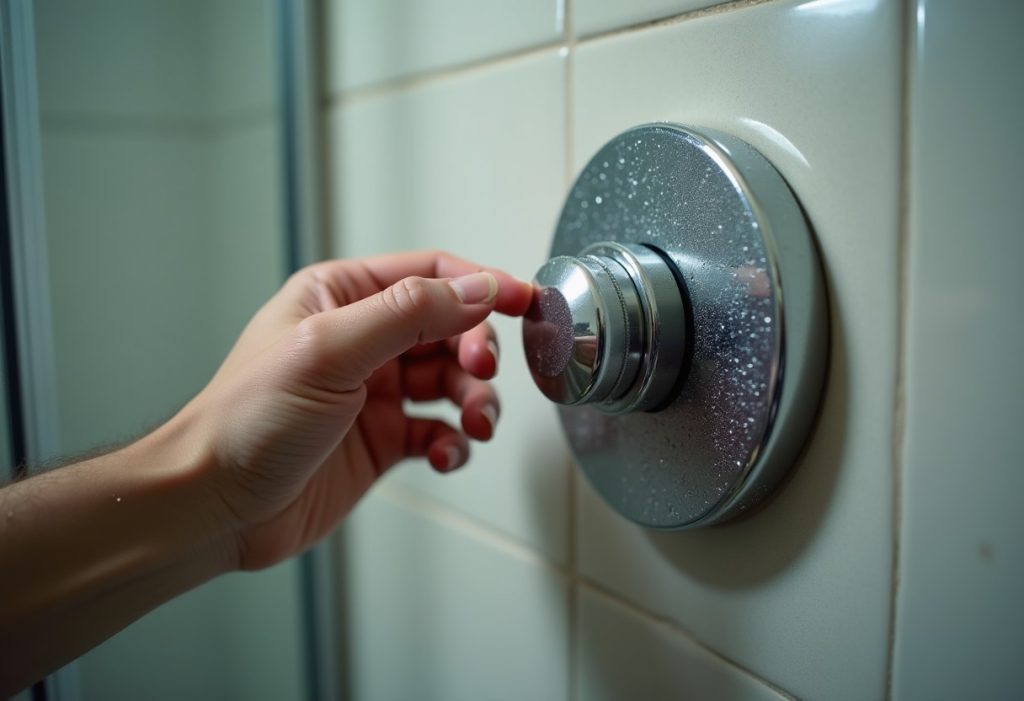
Beyond shape, heads differ in spray settings, the patterns the face can produce. Common modes are a full drenching spray, a targeted massage or pulsing jet, a soft rain, a fine mist or aerated spray, and a trickle or pause setting that slows flow while you lather. More expensive heads add more modes and a dial or lever to switch between them.
Air injection is worth knowing: it mixes air into the water so each drop feels fuller, which keeps a 2.0 gpm head feeling strong. A pause or trickle mode is handy on a handheld for saving water mid-shower. Rubber or silicone nozzle tips are a practical feature because you can wipe scale off them by hand instead of soaking the whole face.
What finish and connection basics matter?
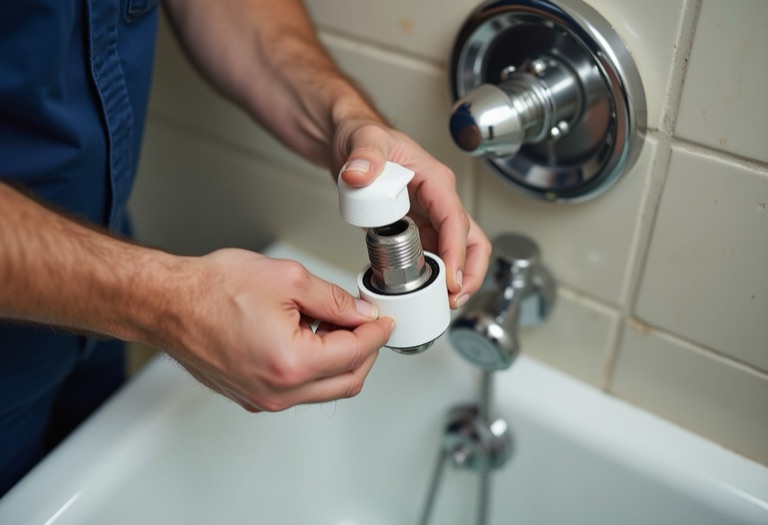
Nearly every US shower head and arm uses a 1/2-inch NPT (national pipe thread) connection, so heads are interchangeable across brands and swapping one needs no new plumbing. You unscrew the old head, clean the arm threads, wrap fresh PTFE thread-seal tape clockwise around them, and hand-tighten the new head. Only snug it lightly with tape-wrapped pliers if it still weeps.
Finish is mostly cosmetic but affects upkeep. Polished chrome is the cheapest and most common and wipes clean but shows spots. Brushed or satin nickel and matte black hide water spots and fingerprints better. Bronze and brushed gold suit traditional baths. Match the head finish to the shower valve trim, handles, and tub spout in the same room so the metals read as intentional.
Does a low-flow shower head mean weak pressure?
No, not on its own. Flow rate (gpm) and water pressure (psi) are different things: a WaterSense head must pass a spray-force test, so a 2.0 gpm model still has to feel strong to earn the label. Air injection and pressure-compensating nozzles keep the spray firm at lower flow. Weak flow almost always traces to the house or the head, not the rating.
If the shower is feeble, check for a clogged head first (soak it in vinegar to clear scale), then look at the house. Our guide to low water pressure walks through causes like a failing pressure-reducing valve, a partly closed shutoff, or a hidden leak. For context on what your whole house should read, see normal water pressure, which for most homes sits between 40 and 60 psi.
Which shower head should you choose?
Match the head to how you shower. For a simple upgrade or a rental, a fixed WaterSense head is the cheap, safe pick. For a spa feel, choose a rain or overhead head, but confirm your pressure can feed a wide face. For flexibility, cleaning, or accessibility, a handheld or a dual combo is the most useful. For genuinely weak flow, a high-pressure or air-injected head helps within the same cap.
Then filter on flow and upkeep: look for the WaterSense label if water and energy bills matter, rubber nozzle tips you can wipe clean, and a finish that matches the rest of the shower trim. Confirm the head is standard 1/2-inch NPT, which nearly all are, so a future swap stays a five-minute job.
How we sourced this
Flow-rate figures come from federal and EPA sources: the 2.5 gpm at 80 psi federal maximum, effective since 1994 under the Energy Policy Act, is documented by the US Department of Energy (FEMP Best Management Practice #7); the 2.0 gpm WaterSense maximum, the at-least-20-percent reduction versus the federal cap, the spray-force requirement, the roughly 17 percent share of indoor water use and near 40 gallons per day for an average family, and the annual savings figures (about 2,700 gallons, 330 kilowatt hours, and roughly 50 dollars per household, plus the national 260 billion gallon and 2.9 billion dollar estimates) come from the EPA WaterSense showerheads program. Pre-1994 heads flowing 5.0 gpm or more, and the 1.8 gpm California-style state limit, reflect the same DOE and state efficiency records. Shower head styles, spray settings, air injection, the 1/2-inch NPT connection, and finish characteristics are reported as standard product classifications drawn from manufacturer and retailer buying guides read for context. Prices are given only as typical retail ranges and vary by brand, finish, and features; they are not stated as fixed figures.
Frequently asked questions
What are the main types of shower heads?
The main styles are fixed (wall-mount), rain or overhead, handheld on a hose, dual or combo (a fixed head paired with a handheld), and high-pressure. Low-flow or water-saving is a flow category that overlaps all of them. Every one screws onto the same standard 1/2-inch shower arm, so most are a swap you can do by hand.
How many gallons per minute does a shower head use?
New shower heads sold in the US are capped at 2.5 gallons per minute (gpm) at 80 psi, the federal maximum set under the Energy Policy Act and effective since 1994, per the US Department of Energy. A WaterSense-labeled head uses no more than 2.0 gpm, and many low-flow heads run 1.5 gpm. Older pre-1994 heads flowed 5.0 gpm or more.
What is the WaterSense label on a shower head?
WaterSense is an EPA program that labels shower heads using no more than 2.0 gallons per minute, at least 20 percent below the 2.5 gpm federal cap, while still meeting spray-force and coverage tests so the shower feels strong. The EPA says the average family saves about 2,700 gallons of water and 330 kilowatt hours of electricity a year with WaterSense heads.
Do low-flow shower heads have weak pressure?
Not necessarily. A WaterSense-labeled head must pass a spray-force test, so it has to feel strong at 2.0 gpm or less to earn the label. Many low-flow heads use air injection or pressure-compensating nozzles to keep the spray firm. Weak flow more often points to a house pressure or clog problem than to the head’s rating.
What is a dual or combo shower head?
A dual or combo shower head pairs a fixed wall-mount head with a handheld head on a hose, joined by a diverter so you run one at a time or, on some models, both together. It gives you the convenience of a rain-style overhead plus the reach of a handheld for rinsing, cleaning the shower, or bathing kids and pets.
What size fitting do shower heads use?
Almost all US residential shower heads and arms use a 1/2-inch NPT (national pipe thread) connection, so heads are interchangeable across brands. To swap one you unscrew the old head by hand or with tape-wrapped pliers, clean the arm threads, wrap fresh PTFE thread-seal tape clockwise, and hand-tighten the new head. No new plumbing is needed.
How much does a shower head cost?
Prices vary by style and finish. Basic fixed heads often run about 15 to 60 dollars, handheld sets 20 to 100 dollars, dual or combo units 40 to 150 dollars, and large rain heads 40 to 200 dollars or more. Figures are typical retail ranges and shift by brand, finish, and features.