How to Clean a Shower Head: Vinegar Soak Times, Screens, and Restrictors
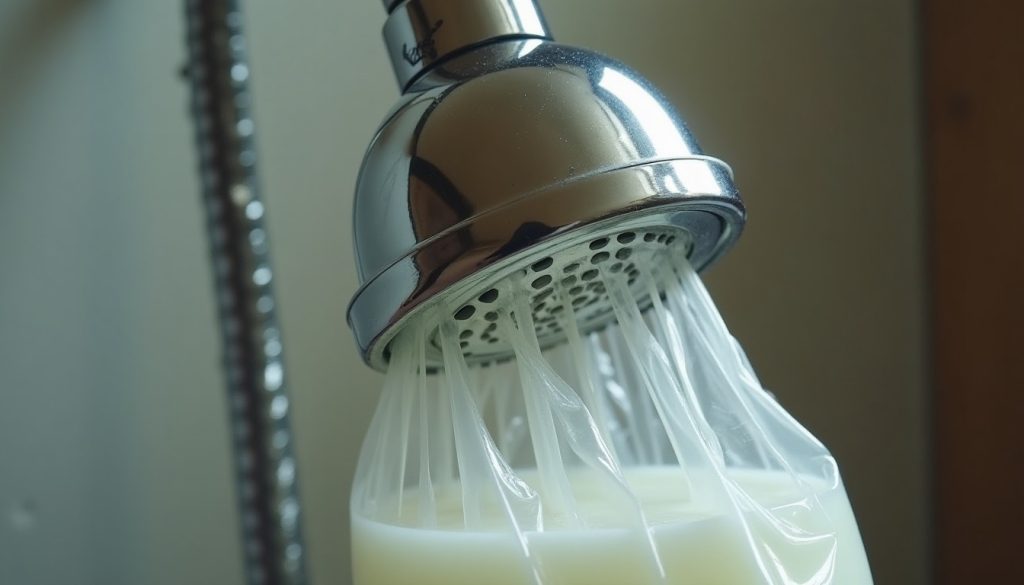
How to clean a shower head: soak the face in distilled white vinegar for 30 minutes to overnight, scrub the nozzles, then rinse the inlet screen most people never touch.
Key Takeaways
- Shower heads clog because hard water leaves calcium carbonate scale in the nozzles. The USGS rates water above 120 mg/L as hard and above 180 mg/L as very hard.
- Delta Faucet recommends a 50/50 mix of distilled white vinegar and water and a 30-minute soak, repeated until the deposits wipe away.
- Deep cleans on chrome can run 4 to 8 hours or overnight, per Bob Vila; brass, gold, and nickel finishes should stay at 30 minutes or less.
- Federal rules cap showerheads at 2.5 gallons per minute and WaterSense models at 2.0 gpm, per EPA WaterSense. The flow restrictor that enforces that cap sits behind a screen that clogs too.
- In hard water, plan on a vinegar soak about once a month; in soft water, every two to three months usually holds the spray pattern.
Why do shower heads clog with white crust?
Shower heads clog because hard water carries dissolved calcium and magnesium, and every time the water dries on the face it leaves a thin layer of calcium carbonate behind. Over weeks, that scale narrows the tiny nozzle openings until jets spray sideways, sputter, or stop. The harder your water, the faster it happens, which is why the same head lasts years in one town and months in the next.
The U.S. Geological Survey sorts water into four classes by milligrams per liter (mg/L) of calcium carbonate. Most utilities try to keep water out of the very hard class because of scaling in pipes and appliances. If you are not sure where your water lands, our guide to hard water explains how to test it and what the numbers mean.
Bars show the upper limit of each USGS class as calcium carbonate. Anything over 180 mg/L falls into the very hard class, where scale builds fastest. Your utility’s annual Consumer Confidence Report often lists hardness.
Rust flakes, well sand, and grit after a water main repair clog the inlet screen instead. Those clogs show as low flow with no white crust on the face.
How do you clean a shower head with vinegar?
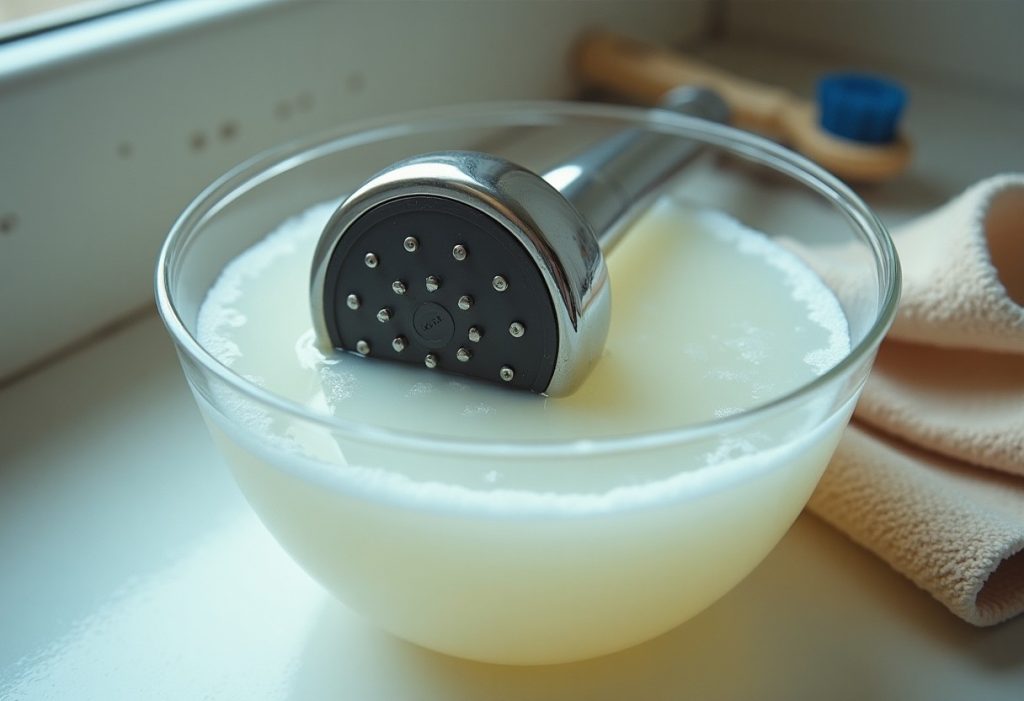
To clean a shower head with vinegar, take it off the shower arm, soak it in a 50/50 mix of distilled white vinegar and water for about 30 minutes, then rub the nozzles with a soft cloth or old toothbrush and rinse. Repeat the soak if crust remains. This is the method Delta Faucet publishes, and it works on any removable head with a chrome or stainless finish.
You need distilled white vinegar (not apple cider or balsamic), a bowl, an old toothbrush, a soft cloth, a wrench, a toothpick, and thread seal tape.
- Unscrew the head. Turn the connecting nut counterclockwise by hand. If it will not budge, wrap the nut in a cloth and use the wrench so you do not scratch the finish.
- Rub the nozzles first. On soft rubber nozzles (Delta calls its version Touch-Clean), a thumb rub pops out loose scale.
- Soak. Fill the bowl with equal parts vinegar and water, starting with 1 cup of each, and submerge the face.
- Scrub and check. Brush the face and clear any blocked hole with a toothpick, never a drill bit, which can enlarge it.
- Rinse and reinstall. Rinse in clean water, wrap the shower arm threads with two or three clockwise turns of thread seal tape, and hand-tighten. Run the shower for a minute to flush out loosened scale.
Keep the washer and debris screen in the nut when you reinstall. Delta notes that the gasket keeps the joint watertight and the screen keeps grit out of the head.
How do you clean a shower head you can’t remove?
To clean a fixed shower head you cannot remove, fill a sturdy plastic bag with vinegar, pull it up over the head until every nozzle sits in the liquid, and tie it to the shower arm with a rubber band or twist tie. Leave it 30 minutes to a few hours, remove the bag, run hot water to flush loosened scale, and scrub the face with a toothbrush.
- Use a zip-top bag. Thin grocery bags tear.
- Support large rain heads. A 10 or 12 inch face needs a bowl or bucket held up by a stool rather than a bag.
- Flush before you scrub. Running hot water first pushes softened scale out of the nozzles from the inside.
The bag cannot reach the inlet screen. If a fixed head still runs weak after two soaks, the clog is upstream of the face.
How long should you soak a shower head in vinegar?
Soak a shower head in vinegar for 30 minutes for routine cleaning, which is Delta Faucet’s own recommendation, and 4 to 8 hours or overnight for heavy scale on chrome or stainless steel. Brass, gold, nickel, and oil-rubbed bronze finishes should stay at 30 minutes or less, because vinegar is an acid and long contact can dull or etch softer coatings.
The finish matters more than the brand. If you do not know yours, start with 30 minutes and repeat rather than leaving it overnight.
| Finish | Max vinegar soak | Notes |
|---|---|---|
| Polished chrome | 30 min routine; 4 to 8 hr for heavy scale | Most forgiving finish; rinse and buff dry after |
| Stainless steel | 30 min routine; 4 to 8 hr for heavy scale | Same as chrome; avoid steel wool |
| Brushed nickel | 30 min or less | Use 50/50 dilution; wipe, do not scour |
| Brass, gold, oil-rubbed bronze | 30 min or less, or wipe only | Living finishes may change color; follow maker’s guide |
| Matte black | Wipe or short soak only | Coatings vary by maker; check the care sheet first |
Soak times draw on Delta Faucet’s 30-minute method and the 4 to 8 hour deep-clean range in Bob Vila’s guide. Finish limits reflect the acid caution in manufacturer care guides; they are not lab test results.
How do you clean the inlet screen and flow restrictor?
To clean the inlet screen and flow restrictor, remove the shower head, look inside the connecting nut, and lift out the rubber washer and the small mesh screen under it with a pick or needle-nose pliers. Rinse both under the tap, brush scale off the screen, and soak it in vinegar if needed. Then rinse the plastic restrictor disk in the inlet without prying it out.
Almost every cleaning guide skips this step, yet the screen catches exactly the sand and rust a vinegar soak cannot dissolve.
- Pull the screen. It sits under the rubber washer; a dental pick lifts it out. Note which side faces up.
- Rinse from the back. Run water through the clean side so debris flushes out the way it came in.
- Check the restrictor. Behind the screen, most heads have a small plastic disk with one or more holes, often colored. Rinse it and clear any grain blocking a hole.
- Reassemble in order. Restrictor, screen, then washer, the way they came out.
Do not drill out or discard the restrictor to get more flow. It is how the head meets the 2.5 gallons per minute federal limit set by the Energy Policy Act of 1992, or 2.0 gpm for a WaterSense model, per EPA WaterSense. Removing it may conflict with local code and void the warranty.
Flow caps from EPA WaterSense; the 1.75 gpm example is the rated flow on Delta’s RP72856 product page.
If the face and the screen are both clean and the spray is still weak, test the sink and tub spout. Weak flow at several fixtures points to a house-wide cause, and our guide to low water pressure walks through the pressure reducing valve, main shutoff, and hidden leak checks.
Which shower head cleaning method works best?
For most homes, a vinegar soak on a removable head works best: it dissolves scale, costs under a few dollars, and is safe on chrome when timed right. A bag soak suits fixed heads, a finger rub keeps rubber nozzles clear between cleanings, and a commercial descaler is the fallback for thick crust that survives two vinegar soaks.
| Method | Time | Effort | Best for |
|---|---|---|---|
| Finger rub (rubber nozzles) | Under 1 minute | Very low | Weekly upkeep on heads with flexible nozzles, such as Delta Touch-Clean |
| Vinegar bowl soak (removable) | 30 min routine; 4 to 8 hr heavy | Low | Monthly descaling in hard water; chrome and stainless finishes |
| Vinegar bag soak (fixed) | 30 min to a few hours | Low | Seized, ceiling, or rain heads you cannot easily remove |
| Baking soda paste | About 30 min sit | Medium (scrubbing) | Surface film and soap residue; not thick mineral crust |
| Inlet screen and restrictor rinse | A few minutes once the head is off | Medium | Weak flow with a clean face; sand, rust, or debris clogs |
| Commercial descaler | Per label | Low to medium | Heavy scale vinegar will not shift; check finish compatibility first |
| Replace the head | About 15 minutes | Low | Cracked faces, stripped threads, or scale that keeps returning |
Baking soda timing follows retailer DIY guides such as B&Q’s; other times follow the sources above.
Are commercial descalers safe for shower heads?
Commercial descalers can be safe for shower heads, but they are stronger than vinegar and vary by formula, so read both the product label and your shower head maker’s care guide first. Delta Faucet, for example, warns against cleaners with hydrofluoric, hydrochloric, or phosphoric acid, bleach-based and industrial cleaners, tarnish and rust removers, abrasive sponges, and polishes on its finishes.
Hardware-store lime and rust removers work in minutes instead of hours, but left on too long they can etch plating and swell rubber nozzles.
- Dilute as directed. Many labels call for a 50/50 mix with water for plated fixtures.
- Time it. Stick to the shortest contact time on the label and rinse right away.
- Never mix cleaners. Combining an acid descaler with bleach can release toxic chlorine gas. Ventilate the bathroom.
How often should you clean a shower head?
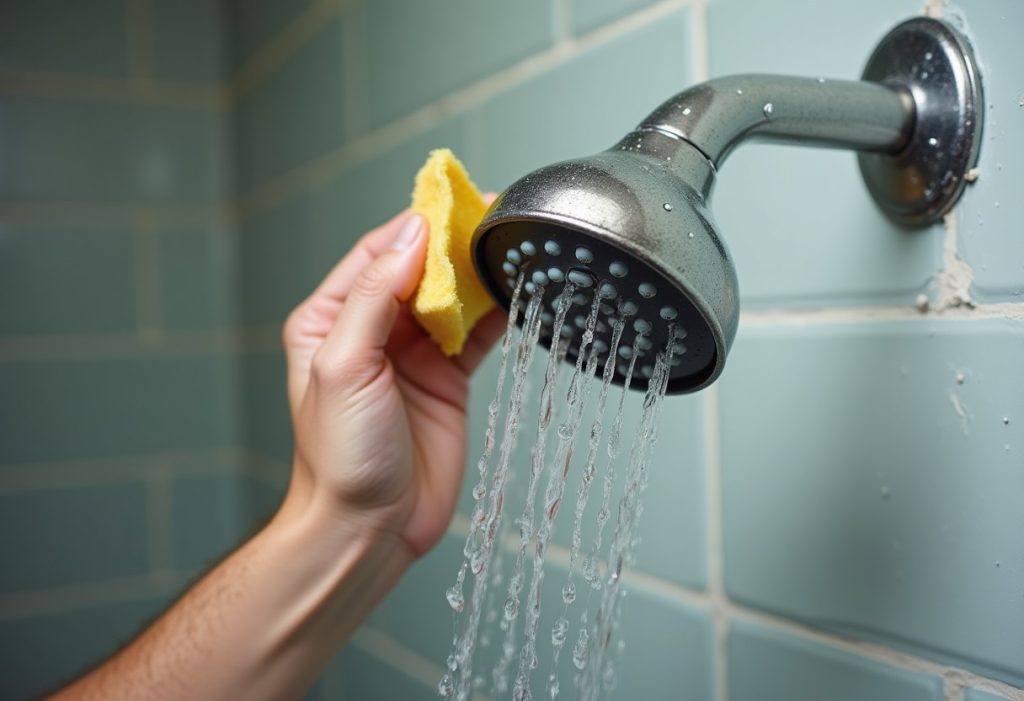
Clean a shower head with a vinegar soak about once a month in hard or very hard water, and every two to three months in soft water. Wipe the face weekly with a damp, non-abrasive sponge, as Delta Faucet recommends, and buff it dry. Clean sooner any time jets spray crooked, white crust forms on the nozzles, or flow drops suddenly.
| Your water (USGS class) | Weekly | Vinegar soak | Screen check |
|---|---|---|---|
| Soft (0 to 60 mg/L) | Wipe and dry | Every 2 to 3 months | Once or twice a year |
| Moderately hard (61 to 120 mg/L) | Wipe; rub nozzles | Every 1 to 2 months | Twice a year |
| Hard (121 to 180 mg/L) | Wipe; rub nozzles | Monthly | Every 3 to 4 months |
| Very hard (over 180 mg/L) | Wipe; rub nozzles | Monthly or more | Every 2 to 3 months |
| Private well with sediment | Wipe | As needed | Every 1 to 2 months |
Frequencies are editorial guidance built on the USGS classes, not a manufacturer requirement. Drying the face after showers slows buildup, because scale forms where water evaporates. The same habit helps every fixture in the house, including the faucet aerator on your bathroom sink, which clogs with the same minerals and cleans with the same vinegar soak.
When should you replace a shower head instead of cleaning it?
Replace a shower head when cleaning no longer restores the spray: a cracked face, stripped or corroded threads, nozzles that stay blocked after two or three soaks, or a finish already flaking. Replacement takes about 15 minutes with thread seal tape and a wrench, and it is a chance to move to a WaterSense model rated at 2.0 gallons per minute or less.
Showering accounts for nearly 17 percent of residential indoor water use, and EPA estimates the average family could save about 2,700 gallons a year by switching to WaterSense labeled showerheads, per EPA WaterSense.
Soft rubber nozzles shed scale with a thumb rub, and handheld heads come off with no tools. Our breakdown of types of shower heads compares fixed, handheld, rain, and dual heads, including which ones are easiest to keep clear in hard water.
How we sourced this
We reviewed top-ranking guides and People Also Ask questions in October 2026, then built the steps from primary sources. Water hardness classes come from the U.S. Geological Survey Water Science School. Flow limits, the showering share of indoor water use, and family water savings come from EPA WaterSense. Soak ratio, soak time, the gasket and debris screen, and the cleaners to avoid come from Delta Faucet’s published care guide, and the 1.75 gpm example from Delta’s RP72856 product page. The 4 to 8 hour deep-soak range comes from Bob Vila. We did not cite any figure for percent flow loss from scale, because we found no primary measurement of it. Cleaning frequencies by hardness class are our editorial guidance.
Frequently asked questions
How long should you soak a shower head in vinegar?
Delta Faucet recommends a 30-minute soak in a 50/50 mix of distilled white vinegar and water, then a gentle rub with a soft cloth or toothbrush, repeated until the scale wipes away. Heavy buildup on chrome or stainless steel can sit 4 to 8 hours or overnight. Brass, gold, and nickel finishes should stay at 30 minutes or less, because vinegar is an acid.
Can you clean a shower head without removing it?
Yes. Fill a sturdy plastic bag with distilled white vinegar, pull it up over the shower head until every nozzle sits under the liquid, and tie it to the shower arm with a rubber band or twist tie. Leave it for 30 minutes on a light clog or a few hours on heavy scale, then remove the bag, run hot water, and scrub the nozzles.
Does vinegar damage shower heads?
Vinegar is safe on chrome and stainless steel for normal soak times, and Delta Faucet lists a 50/50 vinegar and water mix as its own cleaning method. Long soaks can dull or etch softer finishes such as brass, gold, nickel, and oil-rubbed bronze, so keep those under 30 minutes. Always rinse with clean water afterward and wipe the head dry.
How often should you clean a shower head?
Wipe the face weekly and do a vinegar soak about once a month if your water tests hard or very hard, which the USGS defines as above 120 mg/L of calcium carbonate. In soft water areas, a soak every two to three months is usually enough. Clean sooner any time you see crooked jets, white crust on the nozzles, or a sudden drop in flow.
Is CLR or a commercial descaler safe on a shower head?
Many commercial limescale removers work faster than vinegar, but they vary in strength. Read the product label and your shower head maker’s care guide first. Delta Faucet, for example, warns against cleaners containing hydrofluoric, hydrochloric, or phosphoric acid, plus bleach and abrasives. If you use a descaler, dilute it as directed, keep the contact time short, and rinse the head thoroughly.
Why is my shower head still weak after cleaning it?
If the face is clean and flow is still weak, check the inlet screen and flow restrictor inside the connection nut, where grit and scale collect. If those are clear too, test another fixture. Weak flow at several taps points to a household pressure problem, such as a failing pressure reducing valve or a partly closed main shutoff, rather than the shower head itself.
Can you clean a shower head with baking soda?
Baking soda works as a mild scrub, not a strong descaler. Mix it with a little water into a paste, spread it on the face, let it sit about 30 minutes, then scrub with a toothbrush and rinse. It lifts surface grime and light film. For thick white mineral crust, follow it with a vinegar soak, since the acid in vinegar is what dissolves calcium carbonate scale.


