Water Heater Anode Rod: Types, When to Replace, and Cost
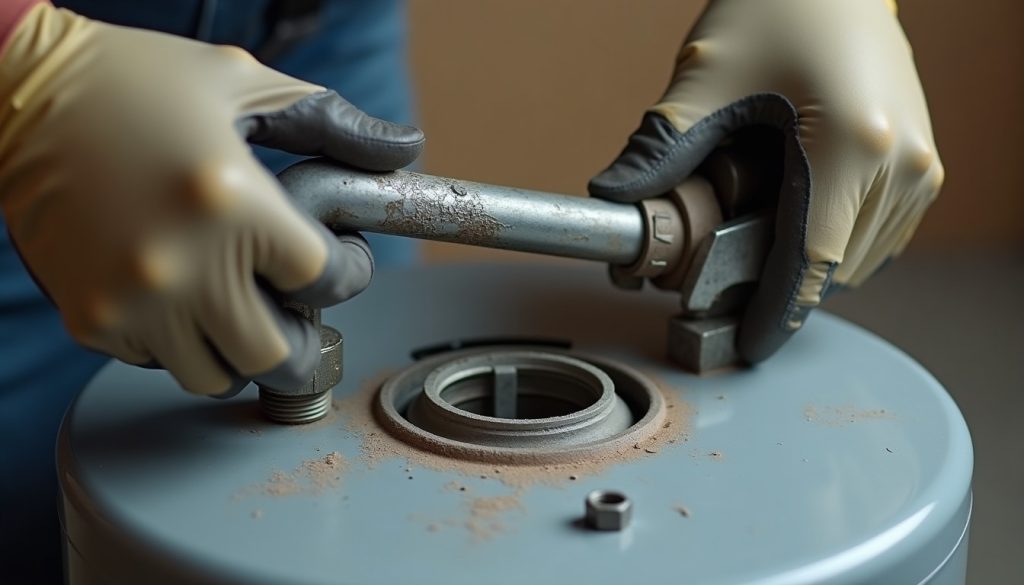
A water heater anode rod is a sacrificial metal rod that corrodes in place of your steel tank, and replacing it every few years is the cheapest way to keep the tank from rusting out.
Key Takeaways
- The anode rod (magnesium, aluminum, or aluminum-zinc) dissolves so the steel tank does not, which is why a neglected rod can let a tank rust out before 10 years, per industry service data.
- Inspect the rod every 2 to 3 years and replace it when less than half is left or the steel core wire is exposed, following your manufacturer’s manual.
- Magnesium gives the strongest protection but wears fastest, often 3 to 5 years and less in hard water; aluminum and aluminum-zinc last longer in hard or well water.
- A rotten egg or sulfur smell in hot water usually means the rod is reacting with the water; an aluminum-zinc rod is the common fix, per Bonney and Gold Medal Service.
- A powered anode rod uses electric current instead of dissolving metal, does not deplete, and often carries a 20-year warranty, per Corro-Protec.
- A DIY rod costs about $20 to $60; a plumber typically charges $200 to $500, around $300 average, per 2026 Angi cost data.
What is a water heater anode rod, and why does it protect the tank?
A water heater anode rod is a long metal rod threaded into the top of a tank water heater that corrodes on purpose so the steel tank does not. Made of magnesium or aluminum wrapped around a steel core wire, the rod is more chemically reactive than the tank, so minerals and oxygen attack it first. Plumbers call this sacrificial or galvanic protection.
Steel tanks are lined with glass enamel, but that lining always has small gaps and seams. The anode rod covers those weak spots electrically. Once the rod is spent, corrosion moves to the exposed steel, the tank starts to rust from the inside, and a leak is only a matter of time. That single rod is often what decides how long water heaters last.
What are the types of water heater anode rods?
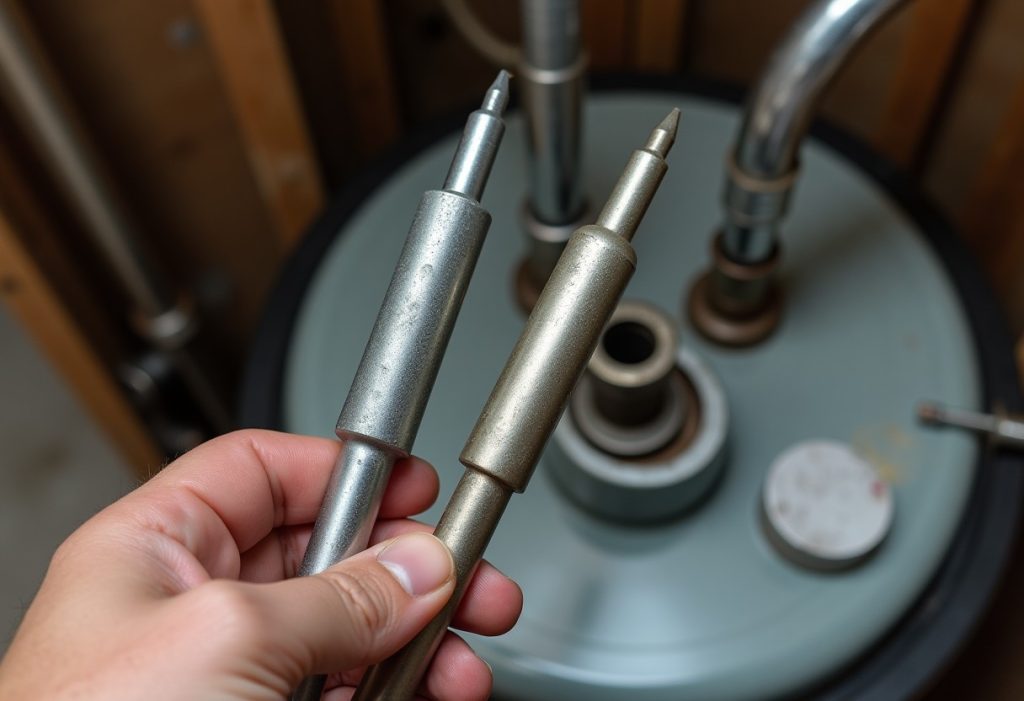
There are three sacrificial rod materials plus one powered option. Magnesium offers the strongest corrosion protection but the shortest life. Aluminum and aluminum-zinc corrode slower and hold up better in hard or well water, with aluminum-zinc adding zinc to fight sulfur smell. A powered rod skips the dissolving metal entirely and runs on a small electric current.
The right pick depends mostly on your water chemistry and whether you have odor problems. The table below lines up all four on the factors that matter, and the next section helps you match one to your water.
| Rod type | Best water type | Typical life | Notes |
|---|---|---|---|
| Magnesium | Soft to moderate water | 3 to 5 years, less in hard water | Strongest protection; wears fastest; can worsen sulfur smell |
| Aluminum | Hard water and well water | About 5 years or more | Slower to corrode; leaves more sediment; do not use for drinking or cooking water concerns without checking local guidance |
| Aluminum-zinc | Water with rotten egg odor | About 5 years | Zinc reduces sulfur smell; common odor fix |
| Powered (impressed current) | Any, especially odor or fast-burnout water | Tank life; often 20-year warranty | Does not deplete; needs an outlet; higher upfront cost |
Which anode rod is best for my water?
Match the rod to your water. On soft or moderate municipal water, a magnesium rod gives the best protection and is the standard factory choice. On hard water, well water, or where magnesium burns out fast, switch to aluminum or aluminum-zinc, which corrode more slowly. If you fight a rotten egg smell, aluminum-zinc or a powered rod is the usual answer.
Water softeners change the math. Softened water is more aggressive toward magnesium and can eat a rod in a year or two, so many owners on softeners move to aluminum-zinc or a powered rod. When you check the rod, it is a good moment to also flush the sediment from your tank, since heavy sediment shortens tank life alongside a spent rod.
How often should you inspect and replace an anode rod?
Inspect the rod every 2 to 3 years and replace it once less than half remains or the bare steel core wire is showing, per common manufacturer guidance. On hard water, well water, or a softened supply, check it more often, sometimes yearly, because the rod corrodes faster. Always confirm the interval in your unit’s manual, since it can affect the warranty.
To inspect it, shut off power or gas and the cold water supply, relieve pressure at a hot tap, then loosen the hex head on top of the tank with a socket. A rod that is thin, flaky, crusted with calcium, or down to the core wire is done. If yours looks fine at the first check, note the date and look again in two years. While you’re in there checking the rod, it’s worth examining nearby fittings for galvanic corrosion at copper and steel joints, since both issues stem from the same electrochemical process. Preventing dielectric union problems also helps avoid black specks in water caused by deteriorating anode rods or corroding fittings.
What are the signs of a spent anode rod?
The clearest sign is a rotten egg or sulfur smell in the hot water, which happens when sulfate-reducing bacteria react with a corroding magnesium or aluminum rod to make hydrogen sulfide gas, per Bonney and Gold Medal Service. Rusty or discolored hot water, a rumbling or popping tank, and simply passing the 3 to 5 year mark are other tells worth a look.
None of these is proof on its own, so pull the rod to confirm. A spent rod is thin, corroded down to the steel wire, or coated in scale. Catching it here is the difference between a $30 part and a new tank. If you already see moisture at the base of the unit, read up on where a water heater leak comes from before spending on a rod.
How much does anode rod replacement cost, DIY vs pro?
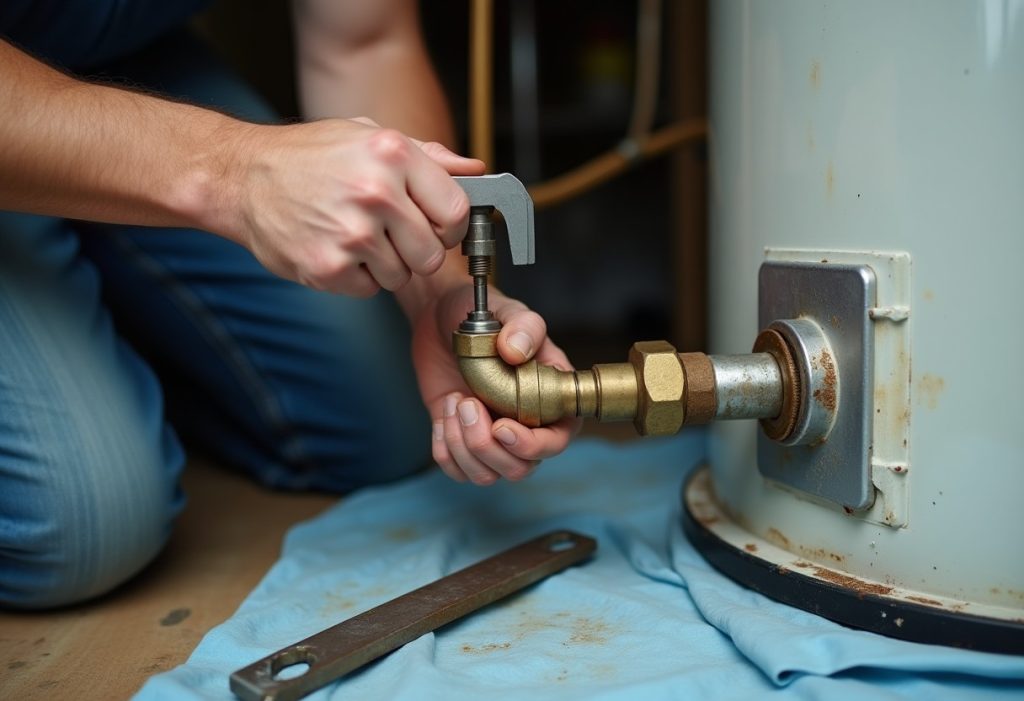
A DIY replacement runs about $20 to $60 for a sacrificial rod: roughly $20 to $40 for magnesium, $25 to $50 for aluminum, and a bit more for a flexible or segmented rod in tight spaces. A powered rod costs $150 to $300. Hiring a plumber typically costs $200 to $500, around $300 on average, for the part plus 30 to 60 minutes of labor, per 2026 Angi data.
DIY saves roughly $150 to $250, but the job needs a breaker bar, sometimes an impact tool, and clearance above the tank. A factory rod can be torqued hard and stuck after years in place. If the rod will not budge or the tank is in a cramped closet, a pro is worth it. See other common water heater repairs to weigh a rod against bigger fixes.
When is a powered anode rod worth the extra cost?
A powered anode rod, also called an impressed-current rod, is worth it when sacrificial rods burn out fast or cause persistent odor. Instead of dissolving, it uses a titanium rod and a small plug-in electric current to protect the tank, so it never depletes and often carries a 20-year warranty, per Corro-Protec. It plugs into a nearby outlet and can protect the tank for its full life.
The tradeoff is upfront cost, $150 to $300 versus $20 to $60, and the need for a power outlet within reach. For homes on well water, softened water, or with a stubborn rotten egg smell, that one-time cost can outlast several sacrificial rods and stop the odor for good. On simple municipal soft water, a standard magnesium rod is usually enough.
How we sourced this
We compiled anode rod materials, service intervals, failure signs, and 2026 US costs from manufacturer and industry sources: Corro-Protec (powered rod specs, warranty, and lifespan), Bob Vila (replacement threshold and DIY parts pricing), Angi (2026 professional replacement cost), and plumbing service guidance from Bonney, Gold Medal Service, and Service Champions on odor and inspection. Rod life and cost vary widely with water chemistry, tank size, and region, so we cite ranges and defer to your manufacturer’s manual. We excluded commercial and tankless units, which do not use a standard sacrificial rod the same way.
Frequently asked questions
What does a water heater anode rod do?
The anode rod is a sacrificial metal rod, usually magnesium or aluminum, that corrodes in place of the steel tank. Because the rod metal is more reactive, minerals in the water attack it first, protecting the tank lining. Once the rod is used up, corrosion turns to the steel, which is when the tank starts to rust and eventually leak.
How often should I replace my anode rod?
Inspect the rod every 2 to 3 years and replace it when less than half remains or the steel core wire shows, per manufacturer guidance. In hard water, on well water, or with a water softener, plan on more frequent checks, sometimes yearly. A rod left in place too long lets the tank corrode, which can cut a water heater’s life to under 10 years.
What are the signs my anode rod needs replacing?
A rotten egg or sulfur smell in the hot water is the most common tell, caused by bacteria reacting with a spent magnesium or aluminum rod. Rusty or discolored hot water, a popping or rumbling tank, and simply reaching the 3 to 5 year mark are other signs. Pulling the rod to inspect it is the only way to confirm how much is left.
Which anode rod is best for hard water?
Aluminum and aluminum-zinc rods hold up better than magnesium in hard or well water because they corrode more slowly. Aluminum-zinc is the usual fix for sulfur or rotten egg odor. Magnesium gives the strongest protection but wears fastest in hard water. A powered rod does not deplete at all, so it sidesteps the hard water tradeoff entirely.
How much does it cost to replace an anode rod?
A DIY replacement runs about $20 to $60 for the rod itself, with magnesium and aluminum rods at the low end and a powered rod at $150 to $300. Hiring a plumber typically costs $200 to $500, around $300 on average, including the part and 30 to 60 minutes of labor, per 2026 cost data from Angi.
Is a powered anode rod worth it?
A powered rod uses a small electrical current instead of a metal that dissolves, so it never wears out and often carries a 20-year warranty. It costs more upfront, $150 to $300, but it stops sulfur smell and can protect the tank for its full service life. It plugs into an outlet and works best where sacrificial rods burn out fast or cause odor.


