Types of Water Heaters: 6 Kinds Compared
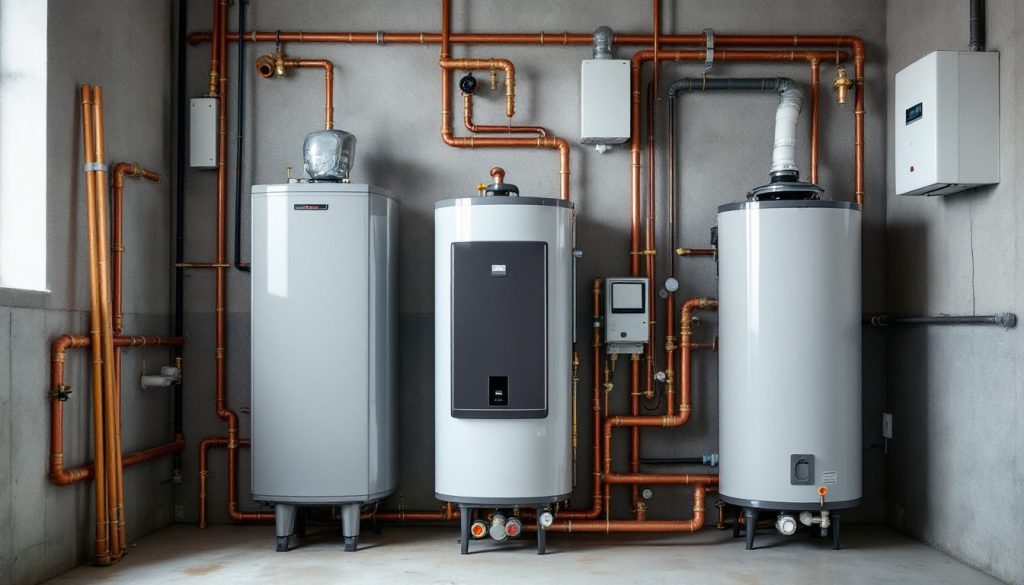
Water heaters come in six main types, from cheap storage tanks to heat pump units that run up to four times more efficient, and the right pick depends on your fuel, space, and budget.
Key Takeaways
- The six main types are conventional storage tank, tankless (on-demand), heat pump (hybrid electric), condensing gas, solar, and point-of-use.
- Heat pump water heaters are the most efficient, at a Uniform Energy Factor (UEF) of 3.3 to 4.1 in ENERGY STAR models, versus roughly 0.90 to 0.95 for gas tankless (ENERGY STAR).
- A conventional storage tank lasts 10 to 15 years and a tankless unit lasts more than 20 years, per the U.S. DOE.
- Condensing gas units run above 95% thermal efficiency, against about 65% for a standard gas heater (U.S. DOE).
- Solar water heaters can cut water heating costs by roughly 50%, up to 50 to 80% in the best conditions, but need a gas or electric backup (ENERGY STAR).
- Storage tanks cost the least to buy; heat pump, condensing, and solar systems cost more upfront but less to run, so weigh the full water heater replacement cost before choosing.
What are the main types of water heaters?
There are six main types of water heaters: conventional storage tank, tankless (on-demand), heat pump (hybrid electric), condensing gas, solar, and point-of-use. They split along two axes: whether they store hot water or heat it on demand, and whether they run on gas, electricity, or sunlight. That split drives efficiency, cost, and lifespan. Before weighing these options against each other, it helps to clarify how water heaters differ from boilers in purpose and function.
This page is the overview. Each type below links down to a deeper guide, so use this to narrow the field, then follow the link for the head-to-head math. The two biggest decisions for most homes are storage versus on-demand and the fuel source, covered in our tankless vs tank water heater and gas vs electric water heater comparisons.
| Type | How it works | Efficiency (UEF) | Upfront cost | Lifespan | Best for |
|---|---|---|---|---|---|
| Storage tank | Keeps 40-80 gal hot in an insulated tank | Gas ~0.60-0.70; electric ~0.92 | Lowest | 10-15 yr | Lowest upfront, simple like-for-like swap |
| Tankless (on-demand) | Heats water as it flows, no tank | Gas 0.90-0.95; electric ~0.99 | Higher | 20+ yr | Endless flow, small footprint, long life |
| Heat pump (hybrid) | Moves heat from surrounding air into a tank | 3.3-4.1 (most efficient) | Higher | 10-15 yr | Lowest electric running cost, warm space |
| Condensing gas | Captures exhaust heat before it vents | 95%+ thermal efficiency | Higher | 10-15 yr (tank) | Large gas homes wanting high efficiency |
| Solar | Roof collectors heat water, plus backup | Cuts costs ~50% or more | Highest | 20+ yr collectors | Sunny climates, long-term savings |
| Point-of-use | Small tankless or mini-tank at one fixture | Electric ~0.99 | Low (small unit) | Varies | A remote sink, killing the hot-water wait |
How does a storage tank water heater work?
A storage tank water heater keeps 40 to 80 gallons of water hot in an insulated tank, ready to draw at any time. A gas burner underneath or an electric element inside reheats the water as it cools, so the tank stays hot around the clock. It is the most common type in U.S. homes and the cheapest to buy and install.
The trade-off is standby loss, the energy spent keeping stored water hot between uses, plus a finite supply that recovers slowly once drained. A standard gas tank runs near 65% efficient, while a good electric tank posts a UEF around 0.92. When it fails, a like-for-like swap is the simplest and lowest-cost replacement.
What is a tankless (on-demand) water heater?
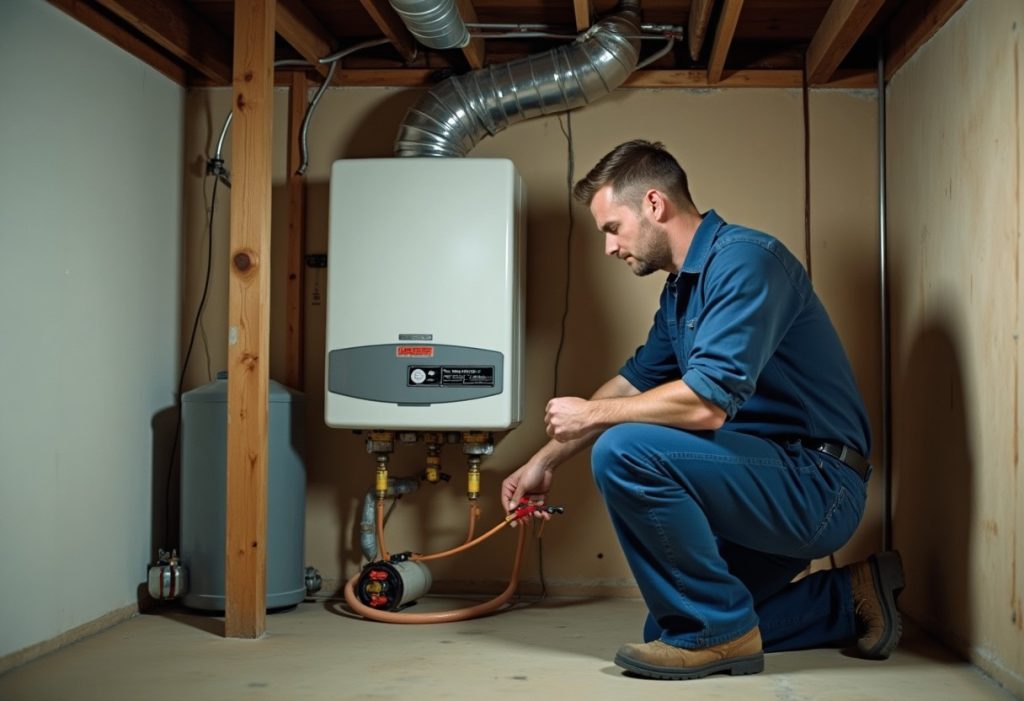
A tankless water heater heats water only as it flows through, using a gas burner or electric elements, with no storage tank. With no stored water sitting idle, it wastes no standby energy and never runs empty. The U.S. Department of Energy rates a single unit at 2 to 5 gallons per minute, so flow, not tank volume, sets its limit.
Certified gas tankless units carry a UEF around 0.90 to 0.95 and last more than 20 years, roughly double a tank. An ENERGY STAR gas tankless saves a family of four about $95 a year against a standard gas tank. The upfront cost and any gas-line or venting upgrades run higher, detailed in our tankless vs tank water heater guide.
How does a heat pump (hybrid) water heater compare?
A heat pump water heater, also called a hybrid electric unit, moves heat from the surrounding air into a storage tank rather than generating heat directly. Because it moves heat instead of making it, ENERGY STAR models reach a UEF of 3.3 to 4.1, delivering 3 to 4 units of heat per unit of electricity. That makes it the most efficient type sold.
The catch is its environment. The U.S. Department of Energy advises installing it where at least about 1,000 cubic feet of air is available and the temperature stays between 40 and 90 degrees Fahrenheit year round, plus a condensate drain. A warm garage or basement fits; a cold closet does not. See how it stacks up against on-demand units in our heat pump vs tankless water heater comparison.
What are condensing gas, solar, and point-of-use water heaters?
These three cover the specialist end of the lineup. A condensing gas unit is a high-efficiency gas heater that captures heat from its own exhaust before it escapes up the vent, pushing thermal efficiency above 95% against about 65% for a standard gas heater. It suits larger homes on gas that use a lot of hot water. Before settling on a condensing gas model for a high-demand household, check correct capacity for your home and weigh the installation cost breakdown against what a standard tank would run.
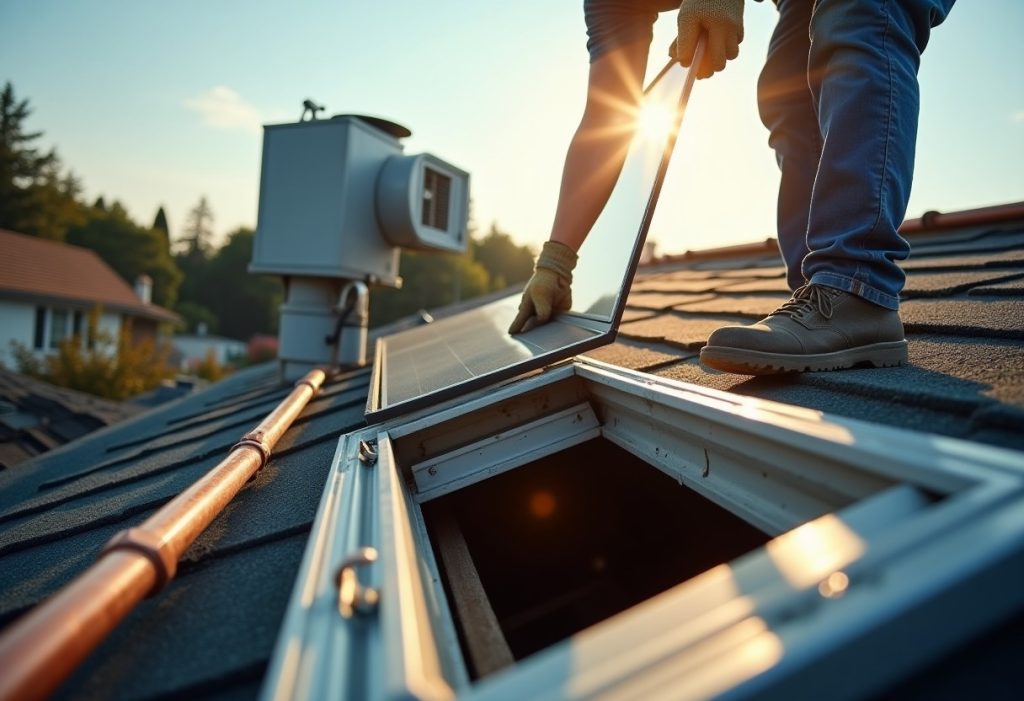
A solar water heater uses roof-mounted collectors to heat water and stores it in a tank, backed by a gas or electric unit for cloudy days. ENERGY STAR says a certified system can cut annual water heating costs by half, and the U.S. Department of Energy puts savings at 50% to 80% in the best conditions. Upfront cost is the highest of any type.
A point-of-use water heater is a small tankless or mini-tank unit installed at a single fixture, such as a distant bathroom sink or a garage utility sink. It gives near-instant hot water and ends the long wait while hot water travels from a central heater. It serves one fixture, not a house, and costs the least to buy.
Which type of water heater is most efficient?
A heat pump water heater is the most efficient by a wide margin. Its UEF of 3.3 to 4.1 means it moves 3 to 4 units of heat per unit of electricity, while every direct-fired unit loses some energy as it burns fuel or runs an element. The chart below plots UEF by type, and the heat pump’s lead is not close.
Efficiency and running cost are not the same thing, though. A heat pump runs on electricity while a condensing or tankless gas unit runs on gas, so the cheaper monthly bill depends on your local price ratio. Solar sidesteps fuel entirely for the hours the sun is out. Match the type to your fuel first, then compare UEF within that fuel.
How long does each type of water heater last?
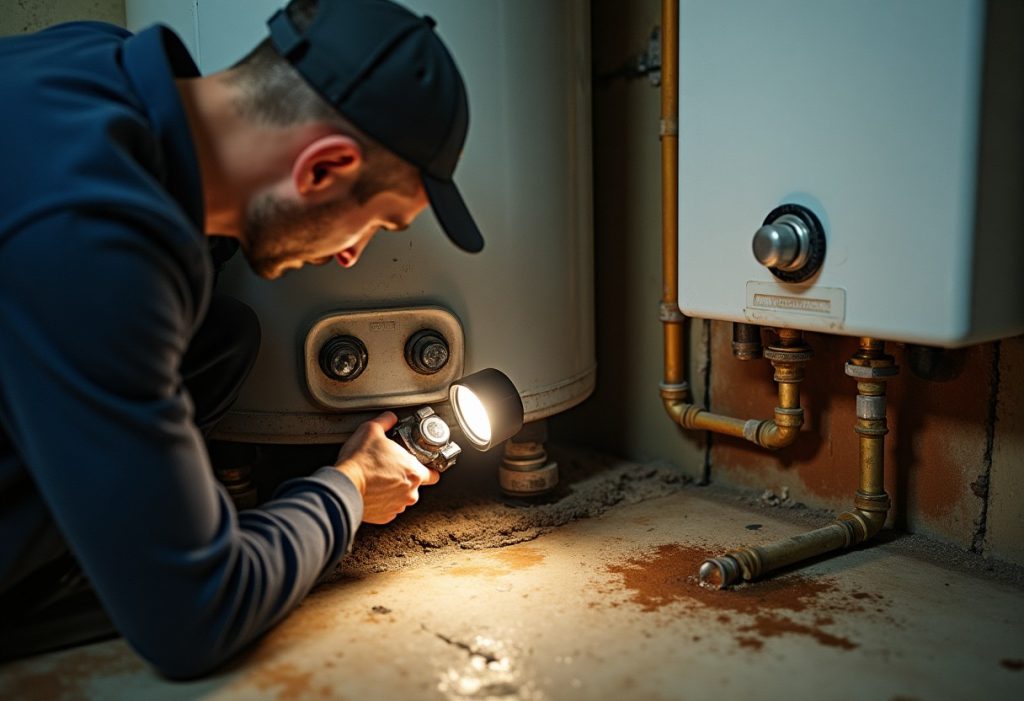
Lifespan tracks closely with whether the unit stores water. The U.S. Department of Energy puts a conventional storage tank at 10 to 15 years and a tankless unit at more than 20 years. Heat pump and condensing storage units keep a tank, so they land near the 10 to 15 year band, while solar collectors often run 20 years or more.
Water hardness, sediment, and maintenance shift every figure. Flushing sediment yearly and replacing the anode rod extends a tank’s life, while hard water shortens it. Because a tankless or solar system can outlive a tank by a decade, factor lifespan into the total cost, not just the sticker price.
Which type of water heater is right for your home?
Match the type to your fuel, space, climate, and budget in that order. If you want the lowest upfront cost and a simple swap, a conventional storage tank wins. If you want endless hot water and a small footprint, choose tankless. For the lowest electric running cost with a warm space to spare, a heat pump leads.
Larger gas homes that burn a lot of hot water benefit from a condensing unit, sunny-climate owners planning to stay put gain most from solar, and a single far-off fixture is the classic point-of-use job. Run your two or three finalists against real 2026 install and operating numbers in our water heater replacement cost guide before you buy.
How we sourced this
UEF ranges come from ENERGY STAR residential water heater criteria and product data (heat pump 3.3-4.1; gas tankless 0.90-0.95; electric tankless near 0.99; electric storage near 0.92) and from the U.S. Department of Energy for gas storage efficiency (about 65%) and condensing (above 95% thermal). Lifespan figures (storage 10-15 years, tankless 20-plus years) come from the U.S. DOE. Solar savings (about 50%, up to 50-80%) come from ENERGY STAR and the U.S. DOE; the family-of-four gas tankless savings ($95/year) come from ENERGY STAR. Upfront-cost labels are relative rankings, not fixed quotes; dollar figures vary by region, fuel, and install conditions, and are covered in our replacement-cost guide. Retailer and manufacturer blogs were read for context but not cited as figures.
Frequently asked questions
What are the main types of water heaters?
There are six main types of water heaters: conventional storage tank, tankless (on-demand), heat pump (hybrid electric), condensing gas, solar, and point-of-use. Storage tanks are the most common and cheapest to buy, tankless and heat pump units run more efficiently, and solar cuts fuel use most where sun is plentiful. Each runs on gas, electricity, or sunlight.
Which type of water heater is most efficient?
A heat pump water heater is the most efficient by far. ENERGY STAR certified models reach a Uniform Energy Factor of 3.3 to 4.1, meaning they move 3 to 4 units of heat per unit of electricity. Condensing gas units top 95% thermal efficiency, and solar can cut water heating costs by half or more, but no direct-fired unit matches a heat pump’s ratio.
What is the difference between a tank and tankless water heater?
A storage tank keeps 40 to 80 gallons of water hot around the clock, so it loses some standby heat but delivers a big burst on demand. A tankless unit heats water only as it flows through, so it wastes no standby energy and never empties, but a single unit is limited to about 2 to 5 gallons per minute of flow, per the U.S. Department of Energy.
How long does each type of water heater last?
The U.S. Department of Energy puts a conventional storage tank at 10 to 15 years and a tankless unit at more than 20 years. Heat pump units store water in a tank, so they land near 10 to 15 years, while solar collectors often last 20 years or more. Water hardness and maintenance shift every figure.
What is a condensing water heater?
A condensing water heater is a high-efficiency gas unit that captures heat from its own exhaust before it escapes up the vent, rather than losing it. Manufacturers rate condensing models above 95% thermal efficiency, versus roughly 65% for a standard gas heater, per the U.S. Department of Energy. They suit larger homes on gas that use a lot of hot water.
Are solar water heaters worth it?
Solar water heaters can cut annual water heating costs by about 50%, and by 50% to 80% in the sunniest conditions, per ENERGY STAR and the U.S. Department of Energy. They carry the highest upfront cost and almost always need an electric or gas backup for cloudy stretches, so payback depends on your climate, local fuel prices, and available incentives.
What is a point-of-use water heater?
A point-of-use water heater is a small tankless or mini-tank unit installed right at a single fixture, such as a far bathroom sink or a garage utility sink. It delivers near-instant hot water and eliminates the long wait while hot water travels from a central heater. It handles one fixture, not a whole house, and costs the least to buy.


