Water Heater vs Boiler: What Each Does, Costs and Lasts
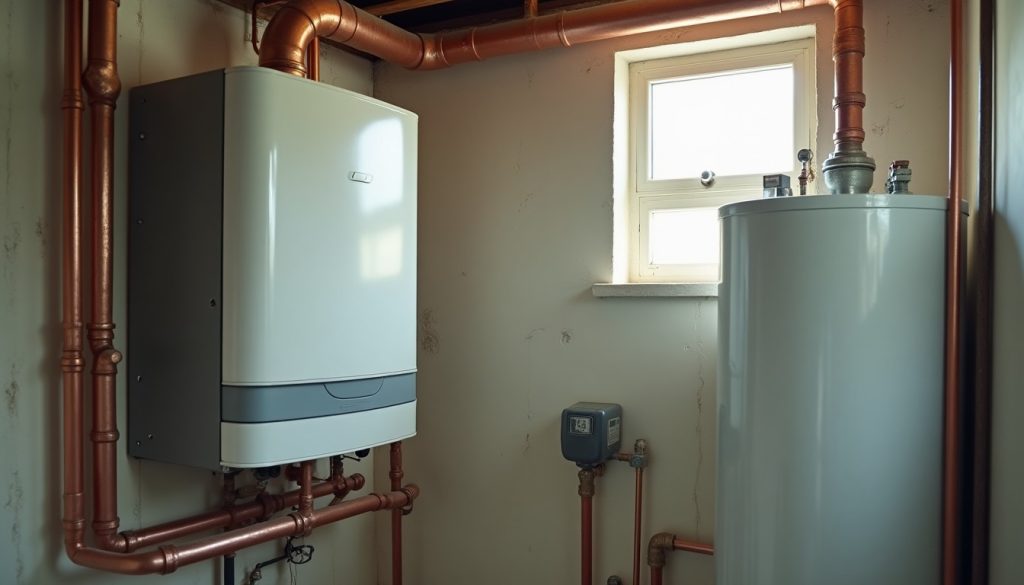
Water heater vs boiler comes down to the job: a water heater makes hot water for your taps and showers, while a boiler heats water or steam to warm your rooms through radiators or radiant floors.
Key Takeaways
- A water heater serves faucets and appliances; a boiler serves heating. Bob Vila puts typical water heater storage at up to 140 degrees F and boiler water at up to about 200 degrees F.
- ENERGY STAR certifies gas boilers at 90% AFUE or higher and oil boilers at 87% or higher, about 6% and 1% above the federal minimums.
- ENERGY STAR water heaters are judged on UEF instead: 0.81 for a medium-draw gas tank up to 55 gallons, 0.95 for gas tankless and 3.30 for an integrated heat pump model.
- Fixr puts the national average water heater installation at $1,400 (most pay $900 to $3,000), while HomeAdvisor puts an installed replacement boiler at $4,800 to $9,000.
- A combi boiler does both jobs in one box; PickHVAC reports most U.S. combi replacements cost $2,800 to $10,000 installed.
- The U.S. Department of Energy gives storage water heaters 10 to 15 years and tankless units about 20, against 15 to 30 years for central heating equipment such as boilers.
What is the difference between a water heater vs boiler?
A water heater heats potable water and sends it to your faucets, showers, dishwasher and washing machine. A boiler heats water, or makes steam, inside a closed loop and pushes that heat through radiators, baseboard or radiant floor tubing to warm rooms. The water heater belongs to your plumbing system. The boiler belongs to your heating system, even though both burn gas or oil or run on electricity.
The water inside a hot water boiler is not for drinking. It circulates through the same loop for years, often with a corrosion inhibitor added, and returns to the boiler to be heated again.
Temperature is the other split. Bob Vila notes that standard water heaters hold water at up to about 140 degrees F, while boilers run as hot as about 200 degrees F. The same guide notes that equipment storing more than 120 gallons, running above 160 psi or 210 degrees F, or rated above 200,000 Btu per hour input is generally treated as a boiler rather than a water heater.
Tank, tankless, heat pump, solar and indirect units all count as water heaters, and our guide to the types of water heaters breaks down how each one works.
| Equipment | Purpose | Efficiency metric | Typical installed cost | Lifespan |
|---|---|---|---|---|
| Tank water heater | Stores and heats potable water for taps | UEF (ENERGY STAR gas: 0.81 to 0.86) | $600 to $2,500 (Fixr) | 10 to 15 years (DOE) |
| Tankless water heater | Heats potable water on demand | UEF (ENERGY STAR gas: 0.95) | $1,000 to $4,000 (Fixr) | About 20 years (DOE) |
| Boiler (heating only) | Heats a closed loop for radiators or floors | AFUE (ENERGY STAR gas: 90%) | $4,800 to $9,000 (HomeAdvisor) | 15 to 30 years (DOE, central heating) |
| Combi boiler | Space heat plus on-demand tap water | AFUE for heating | $2,800 to $10,000 (PickHVAC) | 10 to 15 years (Bob Vila) |
| Indirect water heater | Tank heated by a boiler loop | Depends on the boiler feeding it | $1,200 to $4,500 (Fixr) | About 10 years (DOE) |
How can you tell if you have a boiler or a water heater?
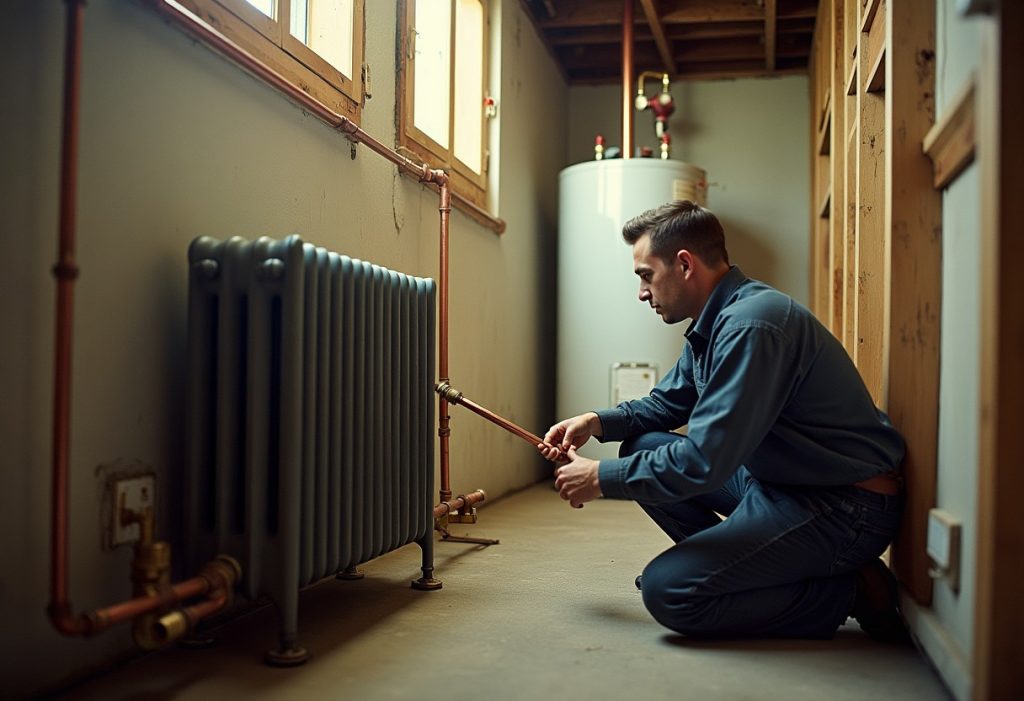
Look at how your rooms get heat, then read the rating plates. Radiators, baseboard convectors or warm floors with no air vents point to a boiler. A tank with cold and hot pipes running to fixtures, a gallon rating and a relief valve near the top is a water heater. Most boiler homes have both: the boiler for heat and a water heater for taps.
- Check the rooms. Floor or wall registers that blow air mean a furnace or heat pump. Radiators, fin-tube baseboard or heated floors mean a boiler.
- Read the rating plate. A water heater plate lists tank capacity in gallons and often a first hour rating or UEF. A boiler plate lists input and output in Btu per hour, maximum working pressure and AFUE.
- Find the gauges. A hot water boiler usually has a combined pressure and temperature gauge and a relief valve, commonly a 30 psi valve such as the Watts 174A on residential units. A water heater has a temperature and pressure relief valve with a discharge pipe running down toward the floor.
- Trace the pipes. A water heater has one cold inlet and one hot outlet to the house. A boiler has supply and return piping, a circulator pump and an expansion tank.
- Spot the hybrids. One wall-hung box with no tank that feeds both radiators and taps is likely a combi boiler. A separate insulated tank piped to the boiler is an indirect water heater.
Can one boiler make both heat and hot water?
Yes, in three ways. A combi boiler heats the space loop and makes tap water on demand through a built-in heat exchanger. A standard boiler can feed an indirect water heater, a storage tank with a coil the boiler water flows through. Older oil boilers often carry a tankless coil inside the boiler itself. Each option removes the separate burner a stand-alone water heater needs.
Combi boilers. These wall-hung units suit smaller homes and tight mechanical rooms because there is no tank. The trade-off is flow: a combi heats tap water only as fast as its burner can, so a home that runs two showers and a dishwasher at once may run short. PickHVAC reports most U.S. combi replacements cost $2,800 to $10,000 installed, and Bob Vila puts combination boiler life at 10 to 15 years.
Indirect water heaters. The boiler treats the tank as one more heating zone. Because the tank is well insulated and has no burner or flue of its own, it pairs well with an efficient boiler. Fixr lists indirect water heater installation at $1,200 to $4,500, and the U.S. Department of Energy gives indirect and tankless coil units a life of about 10 years.
Tankless coils. These make the boiler fire all summer just to supply tap water, which wastes fuel in the months you need no heat.
Can you use a water heater for radiant floor heat?
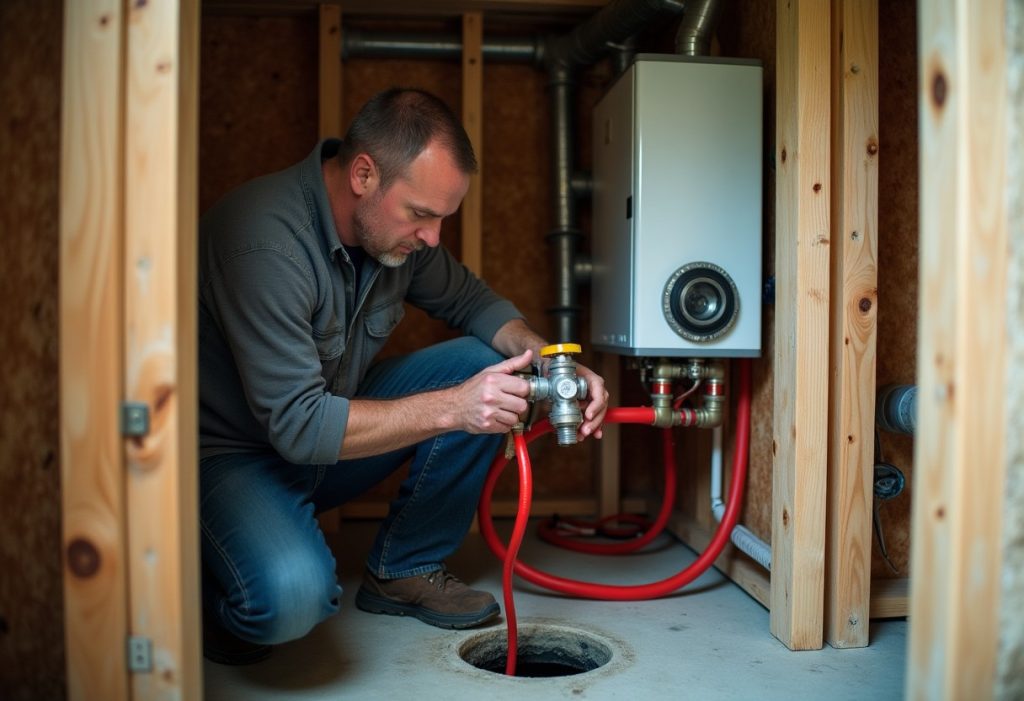
Yes, for small loads. A tank or tankless water heater can supply a radiant floor zone, a basement slab or a small, well-insulated house. The usual setup runs a heat exchanger between the water heater and the floor loop so drinking water never sits in heating tubing. Larger or colder homes generally need a boiler sized to the full heat loss.
Check two things before you plan this. First, the water heater should be listed by its maker for combined space and water heating, because some warranties exclude space heating use. Second, many local plumbing codes restrict open systems that send potable water through heating loops, so the heat exchanger or approved components may be required.
A water heater on a radiant zone also has to keep up with showers. Price the tubing, manifold and heat source together; our radiant floor heating cost breakdown separates electric mats from hydronic systems and shows when a dedicated boiler earns its price.
Which is more efficient, a water heater or a boiler?
Neither number beats the other because they measure different things. Water heaters use Uniform Energy Factor (UEF), the share of energy that ends up as usable hot water in a standard daily draw test. Boilers use Annual Fuel Utilization Efficiency (AFUE), the share of fuel energy turned into space heat over a season. Compare each unit against its own ENERGY STAR bar instead.
| Product | Metric | ENERGY STAR minimum |
|---|---|---|
| Gas boiler | AFUE | 90% (about 6% above federal standard) |
| Oil boiler | AFUE | 87% (about 1% above federal standard) |
| Gas tank water heater, 20 to 55 gal | UEF | 0.81 medium draw, 0.86 high draw |
| Gas tank water heater, over 55 gal | UEF | 0.86 |
| Gas tankless water heater | UEF | 0.95 |
| Integrated heat pump water heater | UEF | 3.30 (2.20 for 120 V plug-in models) |
The figures above come from the ENERGY STAR residential water heater criteria and the ENERGY STAR boiler page. A heat pump water heater can score above 1.0 because it moves heat from the surrounding air instead of making it, so a 3.30 UEF means roughly 3.3 units of hot water energy per unit of electricity.
ENERGY STAR estimates a certified gas boiler saves about $780 over its life and a certified oil boiler about $200. Gas boilers at 90% AFUE and above are generally condensing units, which need plastic venting and a condensate drain and run most efficiently with cooler return water, a good match for radiant floors.
If you are choosing the water heater side, our tankless vs tank water heater comparison works through how daily hot water use changes the efficiency gap.
How much does a water heater vs boiler cost to install?
A water heater costs far less. Fixr puts the national average water heater installation at $1,400, with most homeowners paying $900 to $3,000. HomeAdvisor puts an installed replacement boiler at $4,800 to $9,000. Angi figures cited by Bob Vila land in the same order: $882 to $1,809 for a water heater against $3,604 to $8,446 for a boiler.
By type, Fixr’s 2026 guide lists tank units at $600 to $2,500 installed, tankless at $1,000 to $4,000, indirect at $1,200 to $4,500 and heat pump or hybrid at $1,200 to $4,600.
PickHVAC notes labor in Northeast and West Coast metros often runs 10% to 25% above national averages. If your boiler still runs but acts up, our boiler repair cost guide prices the common failures by part so you can weigh a repair against a replacement.
How long do water heaters and boilers last, and what upkeep do they need?
Boilers outlast water heaters. The U.S. Department of Energy gives storage water heaters 10 to 15 years, tankless units about 20 years and indirect tanks about 10, while its heating guidance gives central heating equipment such as boilers 15 to 30 years. Bob Vila reports standard steam boilers often pass 25 years. Annual service on a boiler and simple tank flushing on a water heater stretch both toward the long end.
Cost guides run shorter than DOE on water heaters. Fixr’s 2026 guide gives tank units 8 to 12 years and tankless 15 to 20, so treat DOE figures as what good water quality and upkeep can deliver.
Water heater upkeep a homeowner can handle:
- Drain a few gallons from the tank as the manual directs to clear sediment, more often with hard water.
- Lift the temperature and pressure relief valve lever once a year to confirm it opens and reseats.
- Have the anode rod checked every few years on a tank unit; when it is gone, the tank starts to corrode.
- Descale a tankless unit on the schedule its maker sets.
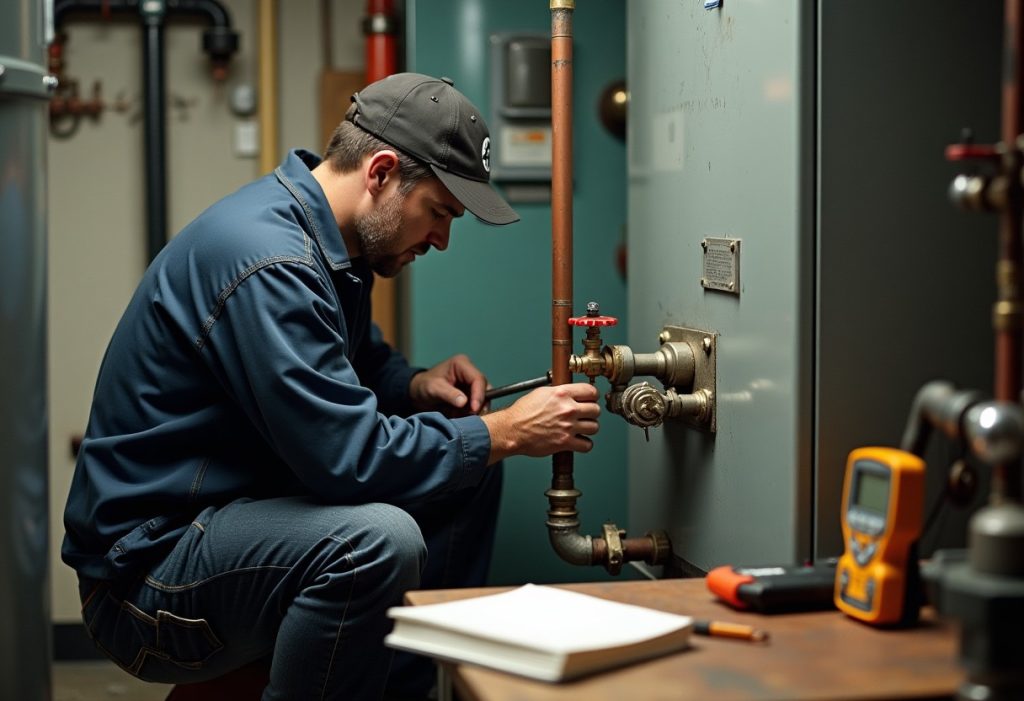
Boiler upkeep is mostly a pro job. Book a service visit before each heating season so a technician can check system pressure, test the relief valve and low-water cutoff, clean the burner and inspect the venting for leaks. Bleed air from radiators when they heat unevenly, and keep a working carbon monoxide alarm near any fuel-burning boiler or water heater.
Where does a furnace fit in water heater vs boiler vs furnace?
A furnace heats air and blows it through ducts, which makes it the alternative to a boiler, not to a water heater. Most homes have one water heater for taps plus either a furnace, a heat pump or a boiler for heat. A furnace and a boiler are both rated by AFUE and both sit in HVAC; the water heater is plumbing.
| Water heater | Boiler | Furnace | |
|---|---|---|---|
| What it heats | Potable water | Water or steam in a closed loop | Air |
| How heat moves | Pipes to taps and appliances | Pipes to radiators, baseboard or floors | Ducts to vents |
| Rating | UEF | AFUE | AFUE |
| Trade category | Plumbing | HVAC | HVAC |
| Works with central AC ducts | Not applicable | No | Yes |
Boiler heat is quiet and even, with no blowing dust, but it warms a cold house more slowly than forced air and does nothing for cooling. Homes that want central air on a boiler system need separate ducts or ductless heat pumps.
How we sourced this
We reviewed the top-ranking pages for “water heater vs boiler” and “water heater vs boiler vs furnace” in October 2026, plus their People Also Ask questions. Efficiency thresholds come from the ENERGY STAR residential water heater criteria and ENERGY STAR boiler page. Lifespans come from the U.S. Department of Energy water heater comparison and home heating guidance; the DOE pages blocked our direct fetch, so those figures are confirmed through search results and our prior DOE reviews. Water heater costs come from Fixr (updated January 2026), boiler costs from HomeAdvisor and Angi (as cited by Bob Vila), and combi costs from PickHVAC (May 2026). We excluded UK combi boiler prices, which dominate that query, and commercial equipment above 300,000 Btu per hour. All costs are national ranges; local prices vary.
Frequently asked questions
At what point does a water heater become a boiler?
Size, pressure and heat input decide it. Bob Vila notes that equipment storing more than 120 gallons, operating above 160 psi or 210 degrees F, or rated above 200,000 Btu per hour input is generally treated as a boiler under code rules rather than as a water heater. Below those limits, a unit that heats potable water for taps is a water heater.
Are boilers more efficient than water heaters?
You cannot compare them directly because they use different ratings. Boilers are rated by AFUE, and ENERGY STAR requires 90 percent or higher for gas models. Water heaters are rated by UEF, and ENERGY STAR sets 0.81 for a medium-draw gas tank, 0.95 for gas tankless and 3.30 for an integrated heat pump unit. Each rating only measures its own job.
Does a boiler heat water for showers?
A standard heating-only boiler does not. Its water stays in a closed loop that runs to radiators or floor tubing. A boiler only supplies shower water if it is a combi boiler with a built-in domestic hot water heat exchanger, if it feeds an indirect water heater tank, or if it is an older unit with a tankless coil inside.
Can a water heater be used to heat a house?
In small homes or single zones, yes. A tank or tankless water heater can supply a radiant floor or fan coil, usually through a heat exchanger that keeps drinking water separate from the heating loop. The unit should be listed by its maker for combined space and water heating, and local code may restrict open systems, so get a licensed installer to size it.
What are the disadvantages of boiler heat?
Boilers cost more to install than water heaters, with HomeAdvisor putting a replacement at 4,800 to 9,000 dollars. They heat rooms more slowly than forced air, cannot share ductwork for central air conditioning, and need annual service on pressure, relief valves and venting. Leaks in radiators or floor loops can also be harder to find than duct problems.
Is a boiler the same as a furnace?
No. A furnace heats air and blows it through ducts and vents. A boiler heats water or makes steam and moves that heat through pipes to radiators, baseboard or radiant floors. Both are rated by AFUE and both sit in the HVAC category, while a water heater belongs to your plumbing system and serves taps.
Does every house have a boiler?
No. Nearly every house with hot taps has a water heater or a combi boiler, but space heat varies. Homes with ductwork and floor or wall vents usually use a furnace or heat pump. Homes with cast iron radiators, baseboard convectors or warm floors and no vents usually use a boiler. Some newer homes use a combi boiler for both jobs.


