Radiant Floor Heating Cost: Hydronic vs Electric per Square Foot (2026)
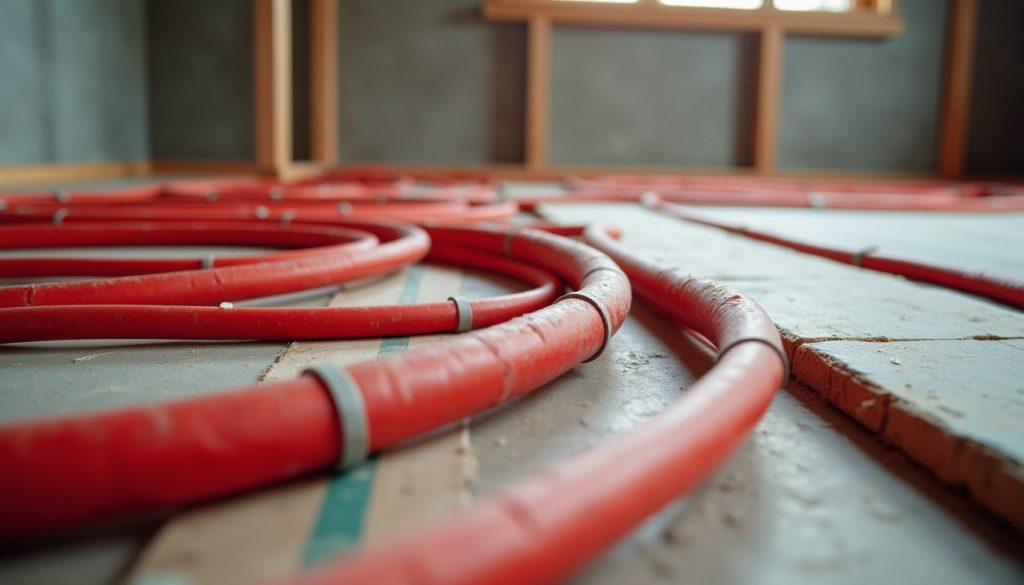
Radiant floor heating cost runs about $8 to $15 per square foot for electric mats and $6 to $22 for hydronic tubing in 2026, with typical projects near $4,000 before any new boiler.
Key Takeaways
- Angi and HomeAdvisor data cited by Bob Vila puts the typical radiant floor project at $1,700 to $6,170, with a national average of $3,831.
- Electric systems cost $8 to $15 per square foot installed and hydronic systems $6 to $22, per Synchrony (February 2026).
- A hydronic floor that needs its own boiler adds $3,200 to $9,000, according to Block Renovation.
- Retrofitting an existing home typically costs 50 to 80 percent more than installing during new construction (Block Renovation).
- Whole-home operating cost runs $65 to $165 a month for hydronic and $90 to $250 for electric (Block Renovation, 2026).
- Electric mats put out 12 or 15 watts per square foot, equal to 41 or 51 BTU (Nuheat spec sheet), so you can price your own kWh use.
- Half-inch PEX is laid 8 to 12 inches on center with loops no longer than 300 feet, per the Radiantec layout manual.
How much does radiant floor heating cost in 2026?
Most homeowners pay $1,700 to $6,170 for radiant floor heating, with a national average of $3,831, according to Angi and HomeAdvisor figures reported by Bob Vila. Per square foot, budget $8 to $15 for electric and $6 to $22 for hydronic. A whole house, or a hydronic job that needs a new boiler, lands far higher. Budgeting for a new boiler alongside hydronic installation makes it worth comparing boiler repair costs before deciding whether to repair or replace. Check water heater versus boiler differences to see how the two systems compare before committing to a boiler-based setup.
The spread is wide because two different products share one name: an electric mat under bathroom tile, or a hydronic system with a boiler, manifolds, and hundreds of feet of tubing.
Room size drives most bathroom and kitchen quotes. Block Renovation prices a 40 square foot bathroom at $300 to $700 for the heat alone, and a 160 square foot primary bath or kitchen at $1,100 to $2,700. Whole homes of 1,500 to 2,000 square feet run $10,000 to $34,000 in its 2026 guide.
New construction scales up from there. Bob Vila estimates $15,000 to $62,500 to heat a typical 2,500 square foot new home with radiant floors, a range that reflects the choice of heat source and floor covering as much as square footage.
What does radiant floor heating cost per square foot by system type?
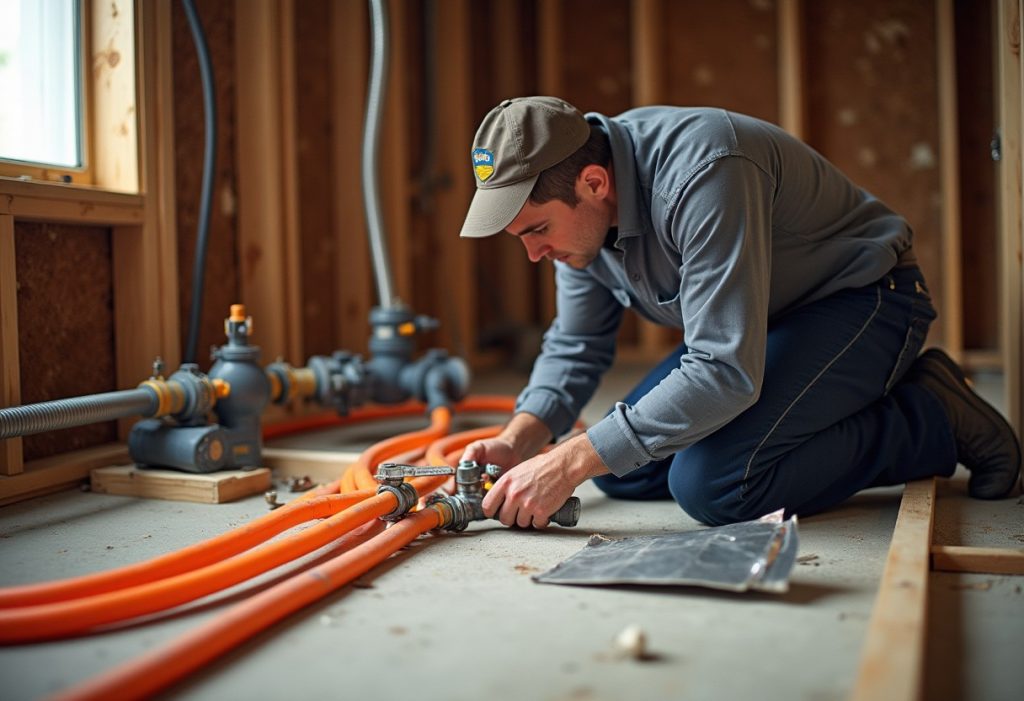
Electric radiant floors cost $8 to $15 per square foot installed, and hydronic floors cost $6 to $22, per Synchrony’s February 2026 guide. Block Renovation narrows hydronic to $7 to $17 before the boiler. Solar-fed hydronic is the priciest at $18 to $25, and geothermal tubing lists at $4 to $12 before the heat pump. The chart uses each range’s midpoint so the bars compare like with like.
Read the hydronic bars as distribution cost: tubing, manifold, insulation, and labor. If your house has no boiler or spare water-heating capacity, the heat source sits on top, which is why small hydronic jobs rarely pencil out.
| Factor | Electric radiant | Hydronic radiant |
|---|---|---|
| Installed cost per sq ft | $8 to $15 (Synchrony, Block Renovation) | $6 to $22 (Synchrony); $7 to $17 (Block Renovation) |
| Heat source | Heating cable or mat on a dedicated circuit | Boiler, water heater, or heat pump |
| Heat source cost | None beyond wiring and thermostat | Boiler $3,200 to $9,000; small-system water heater $600 to $3,100 (Block Renovation) |
| Whole-home monthly run cost | $90 to $250 (Block Renovation) | $65 to $165 (Block Renovation) |
| Best fit | Bathrooms, kitchens, additions | Whole homes, slabs, heating-dominated climates (DOE) |
| Retrofit difficulty | Low under new tile | Higher; joist or panel access needed |
Hydronic vs electric radiant floor heating: which costs less to run?
Hydronic usually costs less to run across a whole house. For a 1,500 square foot home heating about four hours a day, Block Renovation’s 2026 guide puts hydronic at $65 to $165 a month against $90 to $250 for electric. The U.S. Department of Energy calls hydronic the most popular and cost-effective radiant choice for heating-dominated climates, and says electric floors usually pay off only with thermal mass and time-of-use rates.
With time-of-use pricing you can charge a thick slab overnight, roughly 9 p.m. to 6 a.m., and the DOE says a large enough slab can hold comfort for 8 to 10 hours without more power.
For one room, electric is cheap enough that the math rarely matters. You can price it yourself from the mat rating: Nuheat sells mats at 12 or 15 watts per square foot. Multiply square feet by watts, then by hours on, and divide by 1,000 for kWh. The table assumes about 17 cents per kWh, close to the recent U.S. residential average reported by the EIA; swap in your own rate.
| Room (heated area) | Mat rating | Draw | 3 hours a day | Approx. cost per month |
|---|---|---|---|---|
| Bathroom (50 sq ft) | 12 W/sq ft | 600 W | 1.8 kWh | About $9 |
| Bathroom (50 sq ft) | 15 W/sq ft | 750 W | 2.25 kWh | About $11.50 |
| Kitchen (150 sq ft) | 12 W/sq ft | 1,800 W | 5.4 kWh | About $27.50 |
These are our calculations from manufacturer wattage, not quotes. Block Renovation’s estimate of $15 to $20 a month for a heated bathroom on a timer sits in the same range.
What heat source does a hydronic radiant floor need?
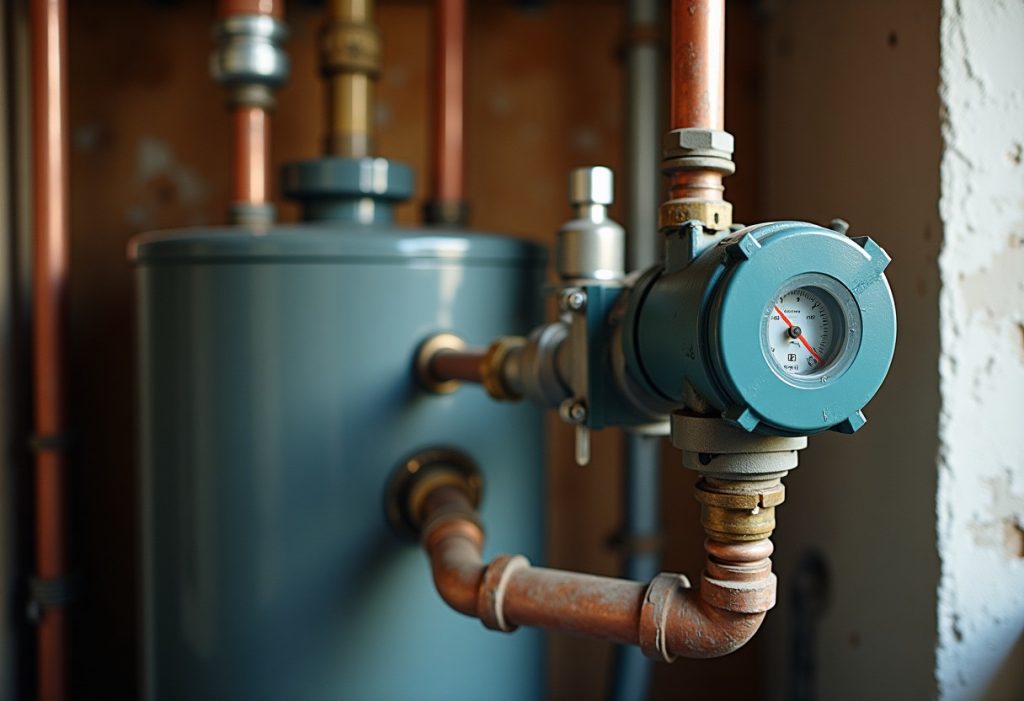
A hydronic floor needs something to heat the water: usually a gas or oil boiler, sometimes a water heater for small zones, and increasingly a heat pump. The DOE also lists wood-fired boilers and solar water heaters. Radiant floors run at low water temperatures, which suits condensing boilers and heat pumps that work best below their maximum output.
| Heat source | Reported cost | Where it fits |
|---|---|---|
| Gas or oil boiler | $3,200 to $9,000 (Block Renovation); about $5,678 average boiler price (Bob Vila) | Whole-home systems, cold climates |
| Dedicated water heater | $600 to $3,100 for small systems (Block Renovation) | One bathroom, basement slab, addition |
| Propane water heating tank | About $2,600, plus $2,400 to $2,900 for tubing and labor (Bob Vila) | Homes without natural gas |
| Geothermal heat pump | $9,500 to $27,000 for a geothermal radiant system (Bob Vila) | New builds with land for a ground loop |
| Solar water heating | $18 to $25 per sq ft for the system (Synchrony) | Thick slabs that store daytime heat (DOE) |
Heat pumps are the fastest-moving option. An air-to-water heat pump makes warm water instead of warm air and can feed radiant tubing, and the same low-temperature logic that drives the heat pump vs tankless water heater decision applies here: lower supply temperatures mean higher efficiency. Ask for a heat-loss calculation before you price one.
Whatever heats the water, a sealed heating loop needs room for that water to expand. The boiler side uses its own expansion tank, the same principle as the thermal expansion tank on a domestic water heater.
How is PEX tubing laid out for radiant floor heat?
Radiant tubing is almost always PEX laid in loops that return to a manifold. Radiantec’s layout manual recommends 8 to 12 inch spacing for 1/2 inch tubing, 6 to 8 inches for 3/8 inch, and 12 to 16 inches for 7/8 inch. Each 1/2 inch loop should run 100 to 300 feet so the water does not cool before the loop ends.
If you are new to the material, our guide to what PEX is and how it is made covers the A, B, and C types. Heating loops use PEX with an oxygen barrier, which keeps oxygen from passing through the tube wall into iron boiler parts.
| Tube size | Spacing (on center) | Loop length | Tubing per sq ft |
|---|---|---|---|
| 3/8 inch | 6 to 8 inches | Up to 150 ft | 2.0 ft at 6 in; 1.5 ft at 8 in |
| 1/2 inch | 8 to 12 inches | 100 to 300 ft | 1.5 ft at 8 in; 1.0 ft at 12 in |
| 7/8 inch | 12 to 16 inches | 200 to 400 ft | 1.0 ft at 12 in; 0.75 ft at 16 in |
Source: Radiantec tubing layout instructions. Using those multipliers, a 1,000 square foot zone at 12 inch spacing takes about 1,000 feet of 1/2 inch PEX, which works out to at least four loops at the 300 foot cap.
Installers use two main patterns:
- Serpentine: the tube snakes back and forth from one wall to the other. It is quick to lay, but the floor is warmest where the supply enters and cooler near the return.
- Counterflow (spiral): supply and return run side by side in a spiral toward the center and back out. Hot and cooler runs alternate, so floor temperature evens out across the room.
The connection work at the manifold uses the same crimp, clamp, or expansion fittings described in our guide on how to plumb with PEX. Radiantec’s slab manual adds: pressure test before the pour, and never kink the tube.
Why does a radiant floor heating retrofit cost more than new construction?
A retrofit costs more because the floor is already finished. Block Renovation says retrofits typically run 50 to 80 percent above new construction, since crews must remove flooring, work around joists, and sometimes raise floor height. In new construction, tubing goes down before the slab pour or subfloor, with no demolition.
The DOE splits installs into two groups. Wet installations embed tubing or cable in a concrete slab or a thin layer of concrete or gypsum over the subfloor; the DOE notes a concrete topping off grade may need an engineer to check floor loading. Dry installations hang tubing between joists or sandwich it between plywood layers, and are faster and cheaper to build.
Dry systems have a tradeoff: they heat an air space, so they need warmer water, and joist installs need reflective insulation under the tubes to push heat upward, per the DOE. Grooved subfloor panels with aluminum heat diffuser plates can cut the tubing needed by about half, the DOE says, because they transfer heat to the floor so much better.
How does flooring type change radiant floor heating cost?
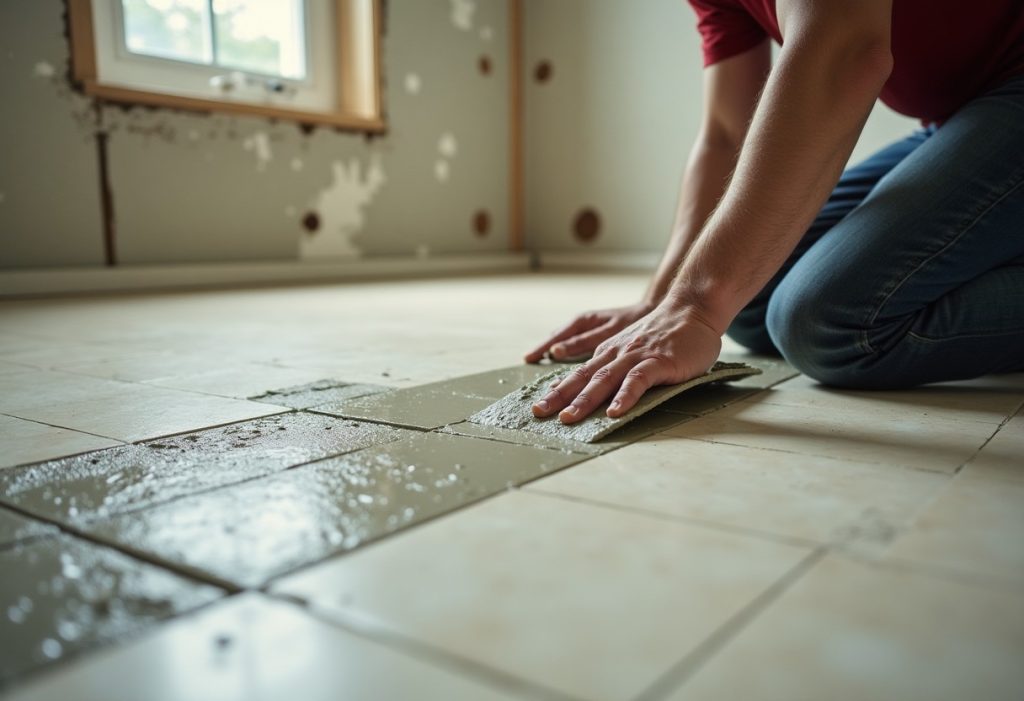
Flooring changes both the install price and how well the heat reaches the room. Bob Vila, citing Angi data, lists radiant heat under laminate or hardwood at about $17.50 per square foot installed, concrete at $22.50, and tile at $30. The DOE calls ceramic tile the most effective covering because it conducts heat and stores it.
| Floor covering | Installed cost per sq ft | Heat transfer notes (DOE) |
|---|---|---|
| Laminate or hardwood | About $17.50 (Bob Vila) | Use laminated wood; solid wood can shrink and crack |
| Concrete | About $22.50 (Bob Vila) | Large thermal mass; slow to respond to setbacks |
| Tile | About $30 (Bob Vila) | Most common and effective covering |
| Carpet | Not priced in our sources | Use thin carpet with dense pad; insulates the floor |
Mixed coverings cost more to design. The DOE advises a separate tubing loop for rooms with carpet or other insulating coverings, because water under those floors has to run hotter to deliver the same heat.
What are the pros and cons of radiant floor heating?
The main pros are efficiency, even comfort, and clean air; the main cons are high upfront cost, slow response, and no cooling. The DOE rates radiant heat more efficient than baseboard and usually more efficient than forced air because it has no duct losses, and notes people with allergies often prefer it.
- Pro, efficiency: no ducts to leak heat into attics and crawlspaces (DOE).
- Pro, low electric use for hydronic: the DOE notes hydronic systems use little electricity, useful where power is expensive.
- Pro, quiet and dust-free: nothing blows air, so nothing stirs up allergens.
- Pro, long warranties: Nuheat backs its mats with a 25-year Total Care warranty for qualifying installs.
- Con, upfront cost: Block Renovation puts a whole 1,500 to 2,000 square foot house at $10,000 to $34,000.
- Con, slow response: the DOE says thick slabs make night or daytime setbacks difficult or impossible.
- Con, no cooling: a whole-house radiant system still needs separate air conditioning, Bob Vila notes.
The practical split: electric for a bathroom or kitchen you are already retiling, hydronic for a new build or slab. In between, get two quotes and ask for the heat-loss numbers behind the tube spacing.
How we sourced this
We reviewed the top-ranking cost guides for this query in October 2026 and cited the ones with clear system-by-system figures: Synchrony (February 2026), Block Renovation (2026 guide), and Bob Vila (updated November 2023, citing Angi and HomeAdvisor data). Technical claims come from the U.S. Department of Energy Energy Saver radiant heating guidance, the Nuheat floor heating mat spec sheet, and Radiantec’s tubing layout manual. The operating cost table is our own arithmetic from published mat wattage at an assumed 17 cents per kWh. We excluded figures from sites that republish cost data without a named source. Prices vary by region, labor market, and local code; treat every range as a starting point for quotes.
Frequently asked questions
Is radiant floor heating worth the cost?
It often is when the floor is open anyway: a new build, a slab pour, or a bathroom remodel down to the subfloor. The U.S. Department of Energy calls radiant heat more efficient than baseboard and usually more efficient than forced air because there are no duct losses. It is harder to justify as a retrofit under finished floors, where labor can add 50 to 80 percent.
How much does it cost to put radiant heat in a bathroom?
Block Renovation puts a small 40 square foot bathroom at $300 to $700 for the heating system alone, or $600 to $1,600 including new flooring. A 160 square foot primary bath runs $1,100 to $2,700 for heat only. Most bathrooms use electric mats, which skip the boiler and need only a dedicated circuit and a floor thermostat.
Is radiant floor heating expensive to run?
A single heated bathroom is cheap to run: Block Renovation estimates $15 to $20 a month on a timer. Whole-home systems cost more, at $65 to $165 a month for hydronic and $90 to $250 for electric in its 2026 guide. The DOE says electric floors are usually only cost-effective with heavy thermal mass and time-of-use power rates.
Can you install radiant floor heating in an existing home?
Yes. Electric mats go down in thinset under new tile, and hydronic tubing can be stapled up between joists from a basement or set into grooved panels over the subfloor. Expect a premium: Block Renovation says retrofits typically cost 50 to 80 percent more than the same system installed during new construction, mostly from floor removal and access.
Can a water heater run radiant floor heat?
A water heater can supply a small hydronic zone, such as one bathroom or a basement slab. Block Renovation prices a dedicated water heater for small systems at $600 to $3,100. Larger homes generally need a boiler ($3,200 to $9,000) or a heat pump sized to the heat loss, and any closed heating loop needs its own expansion tank.
Does radiant floor heating need a boiler?
Electric radiant floors never need a boiler; they run on heating cable powered by a dedicated circuit. Hydronic floors need a heat source, which the DOE lists as gas or oil boilers, wood-fired boilers, solar water heaters, or a combination. A water heater or water-to-water heat pump can also serve, depending on the load your contractor calculates.
Can you put radiant heat under hardwood floors?
Yes, with care. Bob Vila, citing Angi data, lists radiant heat under laminate or hardwood as the cheapest flooring pairing at about $17.50 per square foot installed. The DOE recommends laminated or engineered wood over solid boards, which can shrink and crack as the heat dries them. Any covering that insulates the floor lowers system efficiency.


