What Size Water Heater Do I Need?
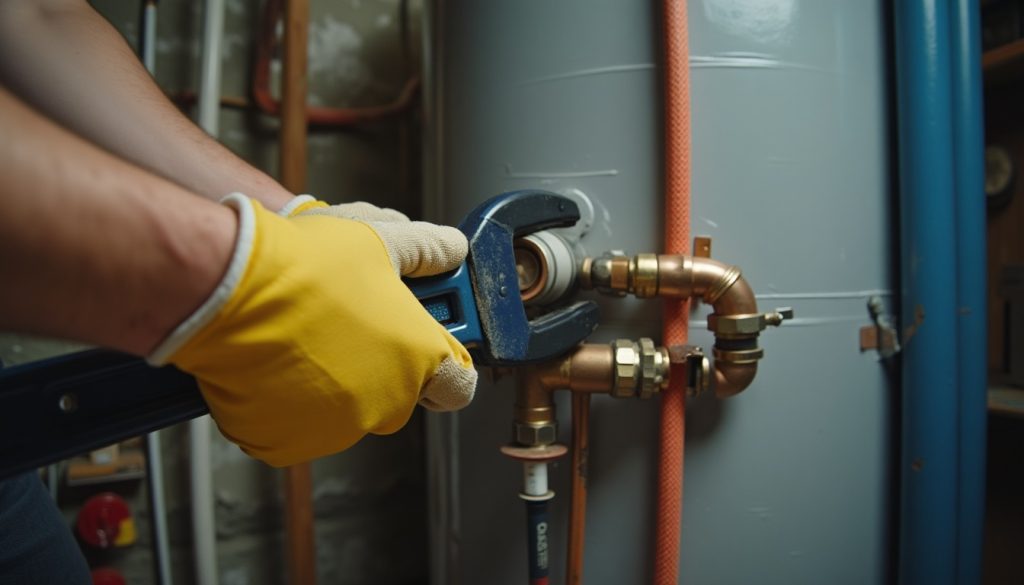
What size water heater you need comes down to peak-hour demand: most 3-4 person homes fit a 40-50 gallon tank (50-60 first-hour rating) or a 5-7 GPM tankless unit, per U.S. Department of Energy sizing guidance.
Key Takeaways
- Storage tanks are sized by first-hour rating (FHR), the gallons of hot water a full tank delivers in an hour; tankless units are sized by flow rate in gallons per minute (U.S. Department of Energy).
- A single tankless unit delivers 2-5 GPM of hot water; gas models reach about 5 GPM, electric whole-house units nearer 3 GPM (U.S. DOE).
- Size a tankless unit for temperature rise: subtract incoming water temperature (often 40-50°F in winter) from your target, which the DOE recommends setting at 120°F, for a 70-80°F rise.
- Most 3-4 person homes fit a 40-50 gallon tank; a 1-2 person home needs 30-40 gallons, and a 5+ person home 50-80 gallons.
- Heat pump water heaters run 2-3 times more efficient than standard electric models (U.S. DOE) and are sized by first-hour rating, often at 50-80 gallons.
- Oversizing wastes energy through standby heat loss and extra cycling; match the first-hour rating to your peak-hour demand within a gallon or two (U.S. DOE).
What size water heater do I need?
The size you need is set by your peak-hour demand, the most hot water your household draws in one busy hour, not by the number of people or bedrooms. For a storage tank, match that number to the unit’s first-hour rating. For a tankless unit, match it to a flow rate in gallons per minute. Undersize either and hot water runs cold mid-shower. Running cold before you expect it often traces back to the same undersized math, which is worth ruling out first in troubleshooting short hot water supply.
If you are shopping to swap an aging unit, pair this sizing check with our water heater replacement cost guide so the size and the budget line up before you buy. Installation timing matters too, so check water heater heat-up times to know what to expect once the new unit is connected.
How does tank water heater size work (gallons and first-hour rating)?
Tank size has two numbers that matter: stored gallons and first-hour rating (FHR). The FHR is the gallons of hot water a full tank can deliver in the first hour of heavy use, combining storage capacity with how fast the burner or element reheats. The U.S. Department of Energy tells buyers to size by FHR, not by the gallon label alone.
Recovery speed is why the two numbers split. A 40 gallon gas tank can post a higher FHR than a 50 gallon electric tank because gas reheats faster during that test hour. So a smaller gas tank sometimes out-supplies a larger electric one, which is the trap of shopping on stored gallons alone.
What size water heater do I need by household size?
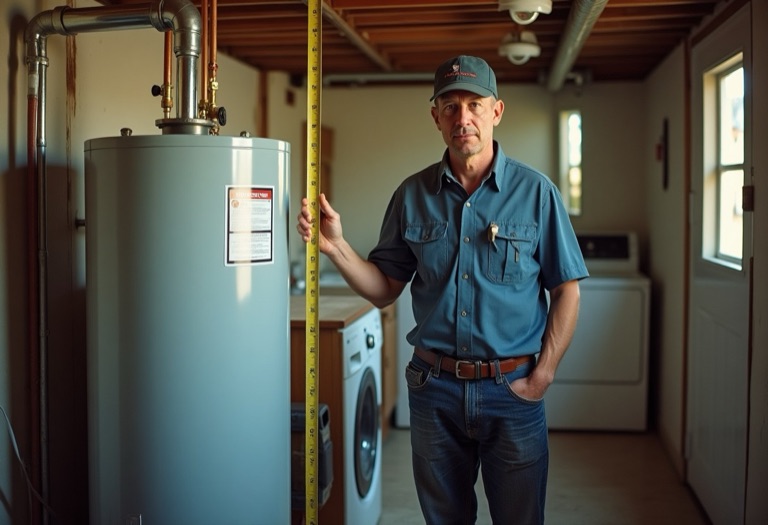
Household size is a useful starting point before you refine with peak-hour demand. A 1-2 person home usually fits a 30-40 gallon tank, a 3-4 person home a 40-50 gallon tank, and a 5+ person home a 50-80 gallon tank. The table pairs each with a rough first-hour rating and the tankless flow that covers the same demand.
| Household size | Tank gallons | First-hour rating (FHR) | Tankless flow (GPM) |
|---|---|---|---|
| 1-2 people | 30-40 gallons | 30-40 gallons | 3-5 GPM |
| 3-4 people | 40-50 gallons | 50-60 gallons | 5-7 GPM |
| 5+ people | 50-80 gallons | 60-80 gallons | 8-10+ GPM |
Treat these as brackets, not exact picks. A two-person home with a soaking tub and a rain shower can draw like a four-person home, so the demand math below matters more than the head count.
How do you size a tankless water heater (GPM and temperature rise)?
Size a tankless heater by two things: the flow rate you need in gallons per minute, and the temperature rise it must produce. Add up the GPM of every fixture that could run at once, then confirm the unit hits that flow at your rise. A single unit delivers 2-5 GPM, per the U.S. Department of Energy, with gas near 5 GPM and electric nearer 3 GPM.
Temperature rise is your target minus the incoming water temperature. With a 120°F setting and winter groundwater around 40-50°F, plan for a 70-80°F rise. The catch: a unit that lists a high GPM at a small rise delivers far less at a large one, so a heater fine in August can run lukewarm in January. Always size for the coldest month. If you are still deciding between the two designs, our tankless vs tank water heater comparison covers the trade-offs. Our guide to temperature setting tradeoffs explains how your chosen target affects both safety and the sizing math above. For a distant fixture that still runs cold too long, pairing your main heater with a point of use water heater can help. point of use water heater basics.
How do you size a heat pump water heater?
A heat pump water heater (also called a hybrid) is sized by first-hour rating like any storage tank, but many homes step up one gallon size. These units pull heat from the surrounding air and run 2-3 times more efficient than standard electric resistance models, per the U.S. Department of Energy, yet they heat water more slowly in pure heat-pump mode.
That slower recovery is why a 50-80 gallon model with a strong first-hour rating suits most families: the larger reserve covers back-to-back draws while the compressor catches up. Give the unit enough surrounding air volume too, since it cools and dehumidifies the space it sits in.
How do I calculate my peak-hour hot water demand?
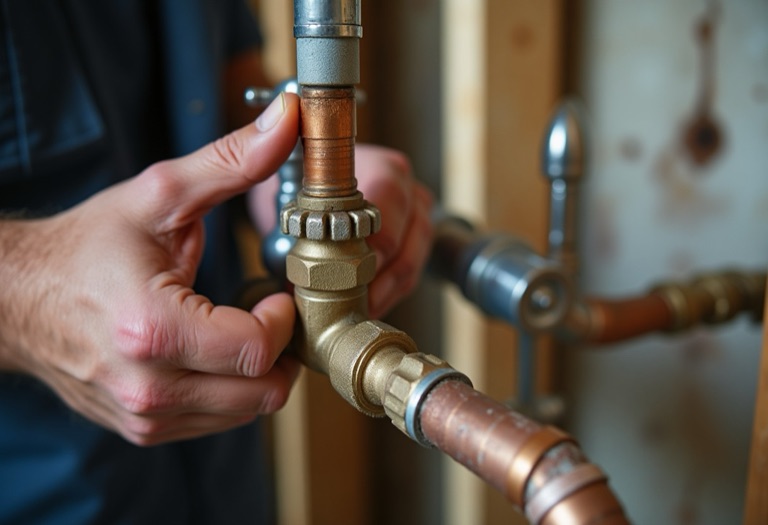
Peak-hour demand is the total hot water your home uses during its busiest 60 minutes, usually a weekday morning. List every use in that hour, add the gallons, and buy a tank whose first-hour rating meets or slightly beats the total. The DOE worksheet assigns average gallons to each activity, shown below.
Worked example: a morning with two showers (20 gallons), one shave (2 gallons), and a dishwasher load (6 gallons) totals 28 gallons. You want a tank with a first-hour rating of roughly 28-30 gallons, or a tankless unit sized for the combined GPM of whatever runs at the same moment.
What are the most common water heater sizing mistakes?
The most common mistake is buying the biggest tank that fits. An oversized unit costs more upfront and wastes energy every day through standby heat loss and extra cycling, since it keeps more water hot than the home ever uses, per the U.S. Department of Energy. Bigger is not safer; right-sized is.
The other frequent errors are shopping on stored gallons instead of first-hour rating, and sizing a tankless unit without accounting for winter temperature rise. Two smaller ones: ignoring low-flow fixtures that cut demand, such as a 2.0 GPM WaterSense showerhead, and forgetting that a neglected tank loses effective capacity to sediment. Our guide to flush the sediment from a tank keeps that capacity where it belongs, and if the unit is already struggling, water heater repair may fix the supply before you upsize.
How we sourced this
Sizing method (first-hour rating for storage, flow rate and temperature rise for tankless), the 2-5 GPM tankless range, the 2-3 times heat pump efficiency figure, the 120°F recommended setting, and the average gallons-per-use figures come from U.S. Department of Energy Energy Saver guidance on selecting and sizing water heaters. The 2.0 GPM showerhead flow is the EPA WaterSense specification. Tank gallon and first-hour-rating ranges by household size are typical U.S. sizing brackets and vary by fuel type, recovery rate, and fixture flow; we present them as ranges, not fixed prescriptions. Retailer and contractor calculators were read for context but not cited as figures.
Frequently asked questions
What size water heater do I need for a family of 4?
A family of four usually fits a 40 to 50 gallon storage tank with a first-hour rating of about 50 to 60 gallons, or a tankless unit rated 5 to 7 GPM. The right number depends on peak-hour demand, not head count. Total the hot water used in your busiest hour, then match a first-hour rating to it.
What size tankless water heater do I need?
Size a tankless heater by flow rate in gallons per minute, not by gallons stored. Add up the GPM of every fixture that could run at once, then confirm the unit delivers that flow at your temperature rise. Most 3 to 4 person homes need 5 to 7 GPM; a single unit delivers 2 to 5 GPM, per the U.S. Department of Energy.
Is a 40 or 50 gallon water heater better?
Neither is better on its own; it depends on peak-hour demand and recovery speed. A 40 gallon gas tank can post a higher first-hour rating than a 50 gallon electric one because gas recovers faster. For most 3 to 4 person homes a 40 to 50 gallon tank works. Match the first-hour rating to your busiest hour rather than the raw gallon number.
What size water heater do I need for a 1-2 person household?
A one or two person household usually fits a 30 to 40 gallon storage tank with a first-hour rating near 30 to 40 gallons, or a tankless unit around 3 to 5 GPM. Smaller households rarely draw enough hot water at once to justify a larger tank, and an oversized unit only adds standby heat loss.
How do I calculate first-hour rating (FHR)?
You do not calculate a tank’s first-hour rating; the manufacturer publishes it on the EnergyGuide label. Your job is to calculate peak-hour demand, the gallons of hot water used in your busiest hour, then pick a tank whose first-hour rating equals or exceeds that number by a gallon or two, per U.S. Department of Energy guidance.
What size heat pump water heater do I need?
Size a heat pump water heater by first-hour rating like any storage tank, though many homes step up one size. These units are 2 to 3 times more efficient than standard electric, per the U.S. Department of Energy, but heat water more slowly, so a 50 to 80 gallon model with a strong first-hour rating covers most families.
Does a bigger water heater use more energy?
Yes. An oversized tank costs more to buy and wastes energy through standby heat loss and extra cycling, since it keeps more water hot than you use, per the U.S. Department of Energy. Match the first-hour rating to your peak-hour demand rather than buying the biggest tank that fits, and you cut that waste.
What temperature rise do I need for a tankless water heater?
Temperature rise is your target temperature minus the incoming water temperature. The Department of Energy recommends a 120°F setting, and incoming water often sits at 40 to 50°F in winter, so plan for a 70 to 80°F rise. A tankless unit delivers fewer gallons per minute at a high rise, so always size for cold-month water.


