Shower Valve Types: Pressure-Balance vs Thermostatic
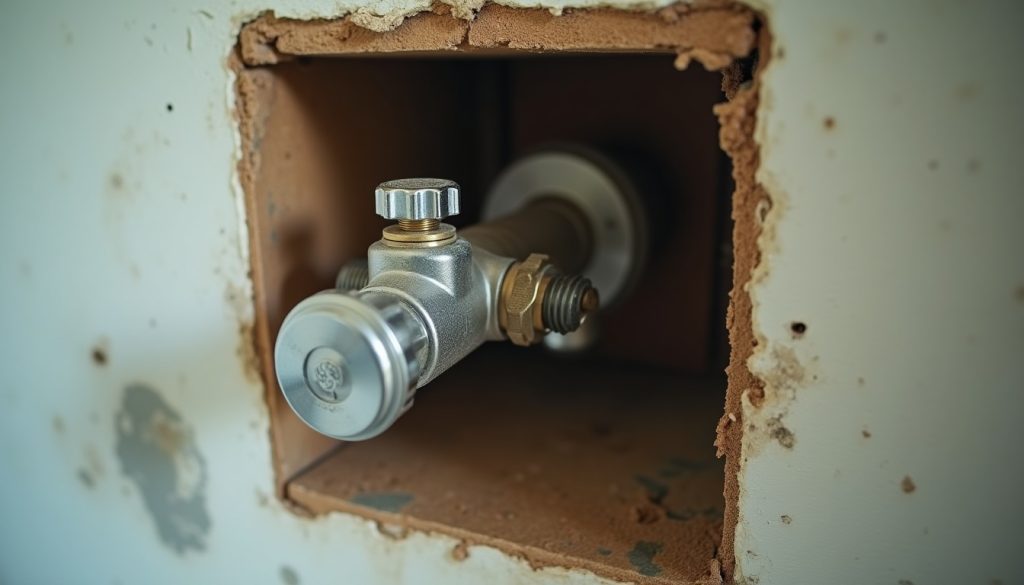
Shower valve types split four ways: pressure-balance and thermostatic valves fight scalding, manual mixing valves only blend hot and cold, and diverter or transfer valves route water between outlets.
Key Takeaways
- ASSE 1016 recognizes three anti-scald control valves: pressure-balance (Type P), thermostatic (Type T), and combination (Type T/P) (ANSI/ASSE 1016).
- Plumbing codes require shower water not exceed 120°F, and valves must ship with an adjustable high-limit stop set at install (Watts / ASSE 1016).
- A compliant valve must hold the mixed temperature within ±3.6°F (2.0°C) despite supply changes (ASSE International).
- A Type P valve must compensate for a 50% pressure change to the hot or cold supply (ASSE 1016).
- A full shower valve replacement runs about $150 to $550 in 2026 (Angi, HomeGuide).
- A pressure-balance cartridge alone is $20 to $50 in parts; a thermostatic valve body runs $200 to $350 (Angi).
- A plain manual mixing valve with no scald protection is generally not code-legal for new shower installs (PlumbingSupply.com).
What does a shower valve do?
A shower valve is the mixing control buried in the wall behind your shower trim. It blends hot and cold water to a usable temperature, sets the flow, and on any modern valve, guards against scalding when the supply pressure or temperature shifts. The handle and escutcheon you see are the trim; the valve body doing the work sits inside the wall. Since that hidden valve controls your temperature, check shower-only hot water problems before blaming the water heater. Before swapping parts yourself, fixing a leaky shower faucet starts with identifying which worn component inside that hidden valve is causing the drip. Our guide to diverter troubleshooting covers a related culprit when water flow seems off despite a properly working valve.
The temperature protection is the part codes care about. Without it, a flushed toilet stealing cold water can spike the shower hot in seconds. See how the valve sits relative to the drain and supply in our shower valve rough-in diagram.
What are the main shower valve types?
There are four shower valve types in common use: pressure-balance, thermostatic, manual mixing, and diverter or transfer valves. The first three set water temperature, and the diverter or transfer valve routes that water between outlets. Pressure-balance and thermostatic are the two anti-scald designs that modern codes require for a shower.
The table below lines up all four (plus the combination Type T/P) on how they work, whether they protect against scalding, how you control them, cost, and where each fits.
| Valve type | How it works | Anti-scald | Handles / control | Typical cost (valve) | Best for |
|---|---|---|---|---|---|
| Pressure-balance (Type P) | Senses hot and cold pressure and throttles one side to hold temperature | Yes, meets ASSE 1016 | Single handle, temp and flow together | $50 to $300 | Most homes; the affordable code-compliant default |
| Thermostatic (Type T) | Senses outlet temperature and holds it within about 3.6°F of the setting | Yes, meets ASSE 1016 | Two controls: temperature and separate volume | $200 to $350 | Steady temperature, multiple heads, preset temp |
| Combination (Type T/P) | Senses both outlet temperature and incoming pressure | Yes, meets ASSE 1016 | Temperature plus volume control | $250 to $400 | High-demand or commercial showers |
| Manual mixing | Blends hot and cold with no compensation for pressure or temp swings | No | One or two handles | $20 to $80 | Legacy installs only; not code-legal for new showers |
| Diverter / transfer | Routes water between tub spout, showerhead, or sprays (does not set temperature) | No (pairs with a P or T valve) | Separate knob or lever | $40 to $150 | Tub-shower combos and multi-outlet showers |
How does anti-scald code (ASSE 1016) affect shower valve types?
ASSE 1016 is the standard that decides which shower valve types are legal. It covers automatic compensating valves for individual showers and tub-shower combinations, and it recognizes three: pressure-balance (Type P), thermostatic (Type T), and combination (Type T/P). Model codes point to it, which is why plain manual mixing valves are out for new installs.
The core requirement is a 120°F ceiling. Codes require that shower water not exceed 120°F, and compliant valves conform to ASSE 1016 or ASME A112.18.1 with an adjustable maximum-temperature stop set at install, per manufacturer guidance. The Uniform Plumbing Code and International Plumbing Code both carry this rule, though the exact section varies by adopted edition and local amendments.
Performance is measured, not assumed. A compliant valve holds the mixed temperature within ±3.6°F (2.0°C), and a Type P valve must do that through a 50% pressure change on the hot or cold supply, per ASSE International.
How much do shower valve types cost?
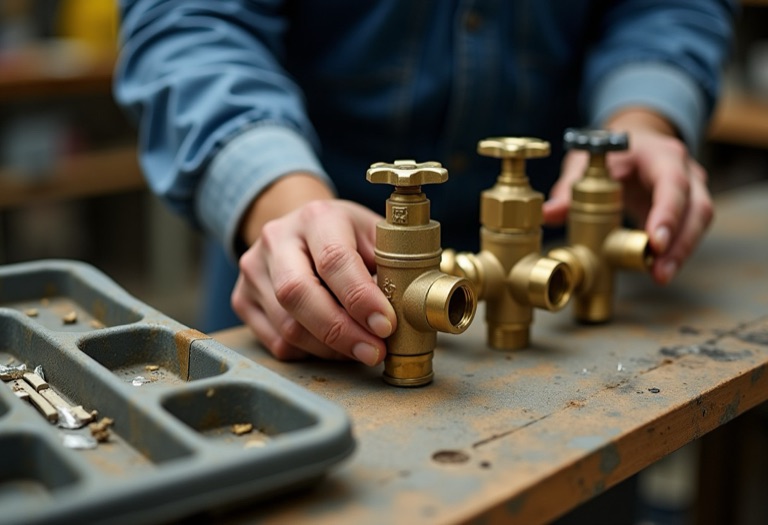
Cost climbs with the level of temperature control. A manual mixing valve body is the cheapest at $20 to $80, a diverter or transfer valve runs $40 to $150, a pressure-balance valve is $50 to $300, and a thermostatic valve body is $200 to $350, per Angi and HomeGuide 2026 data. Those are parts only, before labor.
Installed cost is a different number. A full valve replacement runs about $150 to $550, with many jobs reaching $350 to $800 once wall access and labor are counted. Swapping only the cartridge is cheaper: $20 to $50 in parts and $90 to $270 in labor. The same skills apply when you fix a leaky faucet, since both come down to a worn cartridge or seal. Check our guide on shower head styles and flow rates if you’re already opening the wall for valve work. Weigh that against a dedicated thermostatic mixing valve setup before deciding how far to take the wall demo.
How many handles does each shower valve type have?
Handle count tracks the valve type. A pressure-balance valve is almost always single-handle, where one lever sets both temperature and flow at once. Thermostatic setups usually split the job into two controls, one dedicated to temperature and one to volume, so you can shut off flow without losing your temperature setting.
Older two-handle showers with a separate hot and cold control are typically manual mixing valves, which is one reason they read as dated and fail modern code. Add a diverter or transfer control and you get a third knob to send water where you want it. For how these valve types sit alongside the rest of the house, see our plumbing valve types overview.
What are diverter and transfer valves?
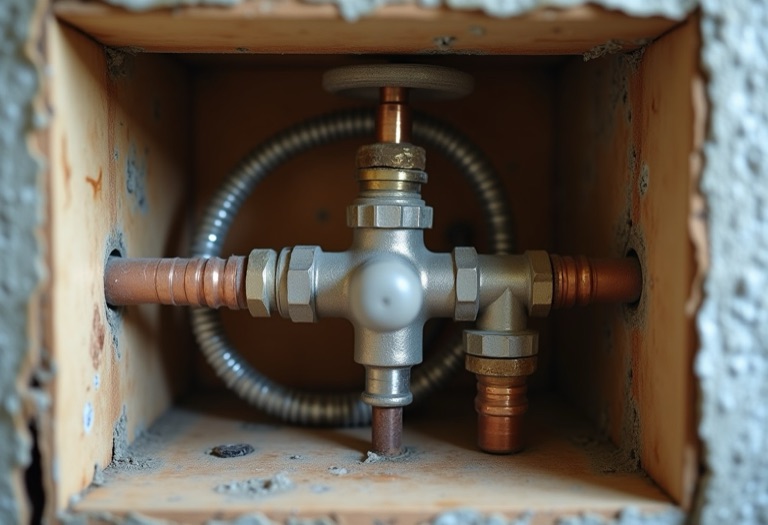
A diverter or transfer valve controls water direction, not temperature, and it pairs with a pressure-balance or thermostatic valve rather than replacing one. A diverter sends water to one outlet at a time, such as switching from the tub spout to the showerhead. A transfer valve can feed several outlets at once, like a showerhead plus body sprays.
Tub-shower combos rely on a diverter, often the pull-up tab on the tub spout itself. Multi-head showers use a transfer valve so a rain head and a handheld can run together. Neither offers scald protection on its own, so the temperature-setting valve upstream still has to meet ASSE 1016.
When should you choose each shower valve type?
Match the valve to the shower and the budget. A pressure-balance valve is the sensible default for a standard single-head shower, thermostatic makes sense when you want a preset temperature or run multiple heads, and a diverter or transfer valve gets added whenever there is more than one outlet to feed.
- Standard single-head shower on a budget: pressure-balance (Type P).
- You want a locked-in temperature or separate volume control: thermostatic (Type T).
- Multiple heads, body sprays, or high demand: thermostatic or combination (Type T/P) with a transfer valve.
- Tub-shower combo: any compliant valve plus a diverter.
- Replacing a two-handle manual valve: upgrade to a pressure-balance or thermostatic valve to meet code.
Does the rough-in matter when replacing a shower valve type?
The rough-in decides how big the job is. The valve body set into the wall at rough-in is brand and series specific, and the trim, handle, and cartridge are built to fit that exact body. Swapping trim or a cartridge is often possible from the front without opening the wall, so it stays a small job.
Changing the valve type itself is the bigger job, because a new body means cutting into the wall and re-plumbing the supply and outlet stubs. Plan that alongside any wall-open work, and confirm the anti-scald limit stop gets set at install. Our guide to bathroom plumbing rough-in covers the pipe stub heights and spacing the valve body ties into.
How we sourced this
We built the valve-type comparison from the ASSE 1016 standard (via ANSI and ASSE International documents) and manufacturer guidance from Watts and PlumbingSupply.com, then pulled 2026 cost ranges from Angi and HomeGuide, across roughly nine sources reviewed. Temperature and tolerance figures come only from ASSE and ASME-referenced documents. Cost figures are national US ranges for the valve or cartridge; local labor, wall access, and finish level shift installed pricing. Code section numbers vary by the UPC or IPC edition your area has adopted, so verify locally. Reviewed September 2026.
Frequently asked questions
What are the main types of shower valves?
Four kinds cover almost every shower: pressure-balance valves that hold temperature against pressure swings, thermostatic valves that lock in a set temperature, plain manual mixing valves that only blend hot and cold, and diverter or transfer valves that route water between a tub spout, showerhead, or multiple sprays. Pressure-balance and thermostatic are the two anti-scald types codes require.
What is the difference between pressure-balance and thermostatic shower valves?
A pressure-balance valve senses pressure changes in the hot and cold supply and throttles one side to hold temperature, so it reacts when a toilet flushes. A thermostatic valve senses the outlet water temperature itself and holds it within about 3.6°F of your setting, and it lets you preset a temperature and control flow separately. Thermostatic costs more but is steadier.
Are manual shower mixing valves against code?
In most US jurisdictions, yes, for new or replacement shower installs. Model plumbing codes require an automatic compensating valve that meets ASSE 1016, which means a pressure-balance (Type P), thermostatic (Type T), or combination (Type T/P) valve. A plain manual mixing valve with no scald protection is generally not permitted for showers, though you may still find them in older homes.
What temperature must a shower valve limit water to?
Plumbing codes require that water delivered from a shower not exceed 120°F, per ASSE 1016 and the ASME A112.18.1 standard. Compliant valves ship with an adjustable high-limit stop that the installer sets at rough-in. A compliant valve must hold the mixed temperature within about 3.6°F even when supply pressure or temperature shifts.
How many handles does a shower valve have?
Most modern showers use a single-handle valve, where one lever controls both temperature and flow. Thermostatic setups often use two controls, one for temperature and one for volume, or a dual-function handle. Older or high-end showers may add a separate diverter or transfer knob to switch water between the tub spout, showerhead, and body sprays.
How much does a shower valve cost to replace in 2026?
A full shower valve replacement runs about $150 to $550 in 2026, with many jobs landing $350 to $800 once wall access and labor are counted, per Angi and HomeGuide. A pressure-balance cartridge alone is $20 to $50 in parts. Thermostatic valve bodies cost more, roughly $200 to $350 for the valve itself.
Do I have to match the valve body when I replace the trim?
Usually yes. The valve body set inside the wall at rough-in is brand and series specific, and the escutcheon, handle, and cartridge are designed to fit that exact body. You can often swap trim or a cartridge without opening the wall, but changing the valve body means cutting into the wall and re-plumbing the rough-in.


