Shower Cartridge Replacement: Signs, Steps, and Cost
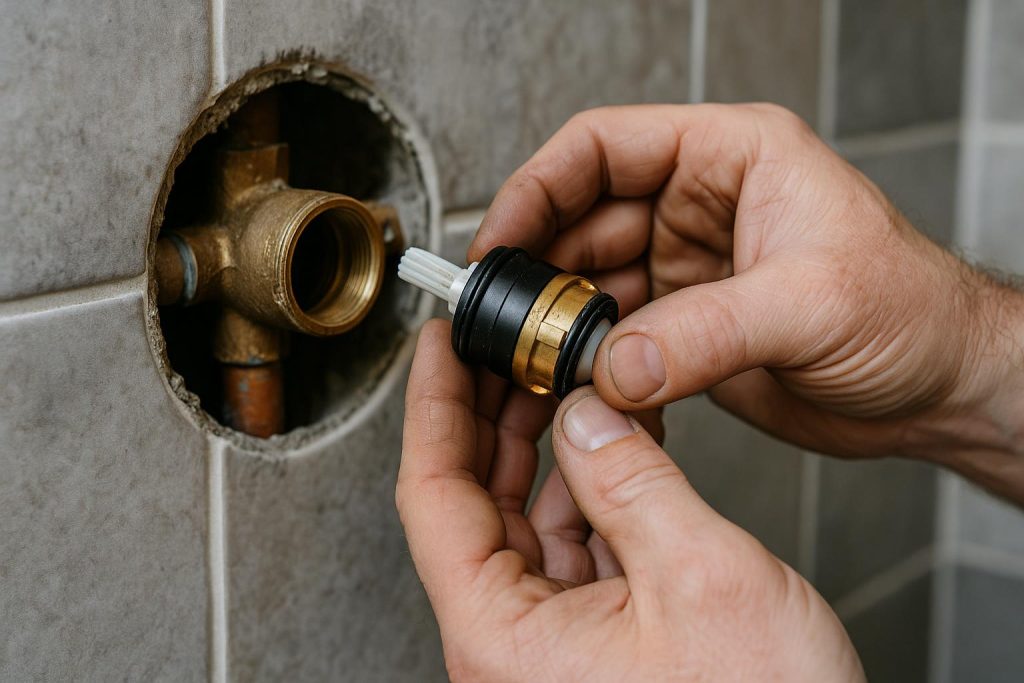
Shower cartridge replacement fixes a single-handle shower that drips, sticks, or swings hot and cold, and it is a 30 to 60 minute job once you match the right part.
Key Takeaways
- A shower cartridge is the valve insert that mixes hot and cold behind a single-handle shower; you replace it, not the whole valve.
- Failing signs: a drip when the handle is off, a stiff or gritty handle, temperature swings, and weak flow (see low water pressure).
- A replacement cartridge costs about $10 to $80 in parts; a plumber charges roughly $100 to $350 installed (HomeGuide, Angi).
- Brands are not interchangeable: Moen Posi-Temp uses the 1222, Delta MultiChoice uses RP46074, Kohler Rite-Temp uses GP876851.
- A showerhead leaking at 10 drips per minute wastes more than 500 gallons a year (EPA WaterSense).
- Most single-handle showers use a pressure-balance valve, which caps water at 120°F under the ASSE 1016 anti-scald standard.
- Reset the limit stop after install so the shower still cannot exceed 120°F.
What is a shower cartridge?
A shower cartridge is the replaceable valve insert inside a single-handle shower that mixes hot and cold water and controls the flow. The handle rotates it, and on a pressure-balance valve the cartridge also holds temperature steady when supply pressure shifts, like when a toilet flushes. When the internal seals wear, you pull the cartridge and drop in a new one rather than replacing the valve body in the wall. Before swapping the cartridge, check whether the real culprit is a misadjusted limit stop rather than worn-out seals. Adjusting the limit stop won’t help a drip that’s already started, so see how to fix a leaky shower faucet for diagnosing worn parts first. If the spray still won’t shift between showerhead and tub spout afterward, see shower diverter troubleshooting for separate causes and fixes.
The cartridge lives inside the valve body, behind the handle and escutcheon plate. For how that valve sits relative to the supply lines and drain, see our shower valve rough-in diagram. For the wider family of valve designs the cartridge fits into, see shower valve types.
What are the signs a shower cartridge is failing?
Four signs point to a worn shower cartridge: a shower that drips when the handle is fully off, a handle that is hard or gritty to turn, water temperature that swings hot and cold on its own, and weak flow through the valve. Any one of these means the seals or ports inside the cartridge have failed. The drip-when-off is the clearest single tell.
A steady drip is not just annoying, it is metered waste. A showerhead leaking at 10 drips per minute wastes more than 500 gallons a year, and the average household’s leaks total more than 9,300 gallons a year, per EPA WaterSense. If the handle sticks or flow is weak but the rest of the house is fine, the cartridge is the likely cause; if flow is weak everywhere, check for low water pressure instead.
How do you identify your shower cartridge brand and model?
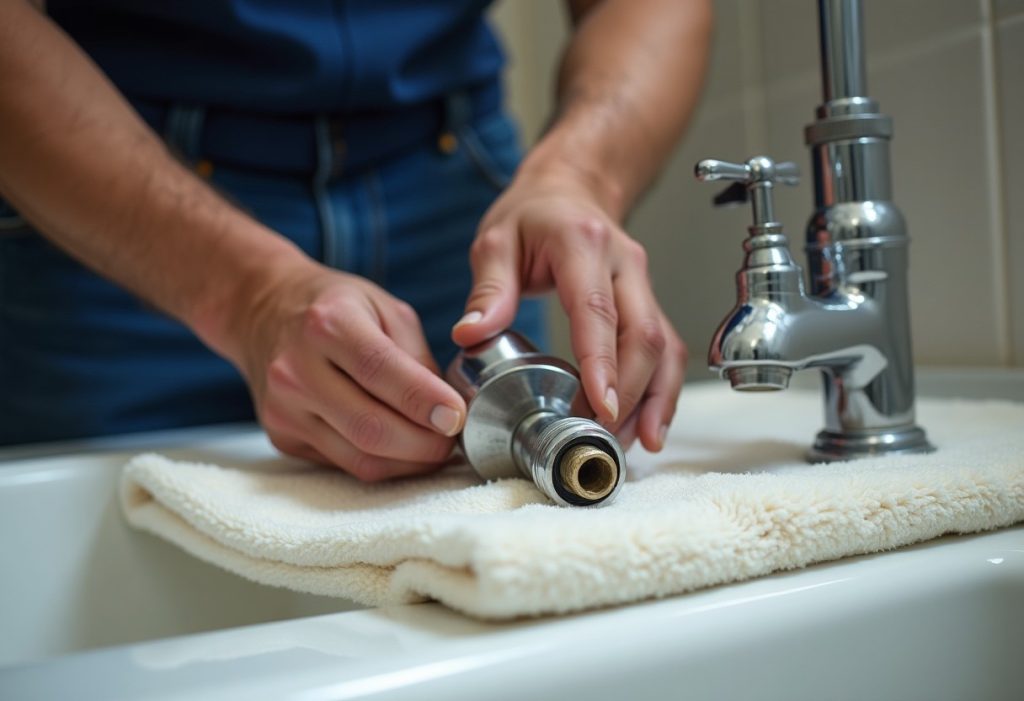
Start at the trim: the handle or escutcheon plate usually carries a brand name, and once the handle is off you can read a part number stamped on the cartridge or match its shape. Brands are not interchangeable, so a Moen Posi-Temp cartridge will not fit a Kohler Rite-Temp body. Photograph the old part, note the brand, and match it at a supply house before you buy.
The table below lines up the four brands most homeowners meet, with how to spot each, the common part number, a removal note, and where each is typically found.
| Brand / series | How to identify | Common part | Removal note | Best fit for |
|---|---|---|---|---|
| Moen Posi-Temp | Single handle, “Moen” on trim; brass or plastic barrel held by a horizontal U-clip | 1222 (also 1225) | Pull the retaining clip, then use a Moen or Danco 86712 puller to twist and draw it out | The most common single-handle shower in US homes |
| Delta MultiChoice / Monitor | “Delta” on trim; small pressure-balance cartridge behind a bonnet nut, with seats and springs behind it | RP46074 (13/14 series), RP19804 (older 1700) | Remove bonnet nut and clip, pull straight out; replace rubber seats and springs too | Delta and Peerless single-handle valves after 2006 |
| Kohler Rite-Temp | “Kohler” on trim; pressure-balancing unit, often black and orange plastic | GP876851 (older 1373526) | Remove the cap and mixer, unclip, and lift the balancing unit; note the up orientation | Kohler single-handle pressure-balance showers |
| Pfister (Price Pfister) | “Pfister” on trim; balancing cartridge held by a retaining nut or clip | 974-042, 974-291 series | Back off the retaining nut, pull the cartridge, keep the hot side oriented correctly | Pfister single-handle tub and shower valves |
How do you replace a shower cartridge step by step?
Replacing a shower cartridge follows the same seven steps on nearly every single-handle valve: shut off water, pull the handle and trim, remove the retaining clip, extract the old cartridge, drop in the new one, reassemble, and reset the temperature limit. Budget 30 to 60 minutes, and buy the matching cartridge and a brand puller before you start.
- Shut off the water. Close the integral stops behind the trim plate if the valve has them, otherwise close the main house shutoff. Open the handle to bleed pressure, then close it.
- Cover the drain with a rag so no small clip or screw disappears down it.
- Remove the handle. Pop the button cap, back out the set screw or handle screw, and pull the handle. Then unscrew and lift off the escutcheon plate and any sleeve.
- Pull the retaining clip or bonnet nut. Most Moen and Kohler valves use a U-shaped clip you lift out with needle-nose pliers; Delta and Pfister use a threaded nut. Note the cartridge’s up orientation first.
- Extract the cartridge. Wiggle it free by hand if it is loose, or fit a brand-specific cartridge puller over the stem and twist to break corrosion before drawing it straight out.
- Insert the new cartridge in the same orientation, hot side matched, seated fully home. On Delta valves, swap the rubber seats and springs while the valve is open.
- Reassemble the clip or nut, sleeve, escutcheon, and handle, then reset the anti-scald limit stop and test.
The mechanics are the same worn-seal problem you meet when you fix a leaky faucet: a cheap insert, not the whole fixture, is doing the leaking.
How do you reset the anti-scald limit stop after replacement?
Reset the high-limit stop so the shower still cannot deliver water hotter than 120°F, the ceiling most single-handle valves must hold under the ASSE 1016 anti-scald standard. New cartridges and rotational limit stops often ship in a default position that can run too hot or too cold, so you set it after install, not before.
Run the shower to the hottest safe setting, check the outlet temperature with a thermometer, and rotate the limit stop ring or clip one notch cooler at a time until the maximum reads about 120°F or below. The exact ring, notch count, and direction vary by brand, so follow the sheet in the cartridge box. Skipping this step is the most common mistake after a swap, and it leaves the scald protection defeated.
How much does shower cartridge replacement cost?
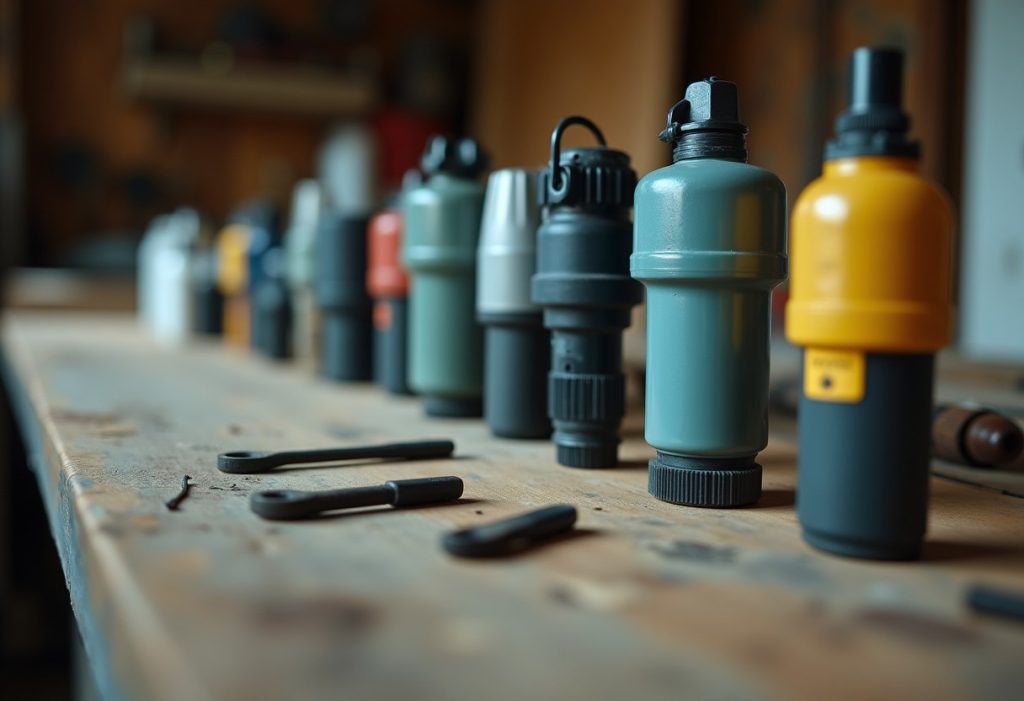
A replacement cartridge costs about $10 to $80 in parts, so a DIY swap costs only the part, per HomeGuide and Angi. Hiring a plumber runs about $100 to $350 installed, with labor at roughly $90 to $270. Moen, Grohe, and Delta cartridges sit at the high end of the parts range, while generic Danco versions cost less.
Cost climbs when the wall has to be opened to reach a corroded valve, since drywall cutting and patching get added. That is rare for a cartridge-only swap, which reaches the part from the front. If the valve body itself is failing rather than the cartridge, you are into a larger job closer to a full valve replacement, which runs several hundred dollars more.
When should you call a plumber instead?
Call a plumber when the cartridge will not budge, the valve body is corroded or cracked, or the shower still drips after a correct replacement. A stuck cartridge that resists a puller can shear or crack a brass valve body, and a broken body means opening the wall and re-plumbing the rough-in, which is a different job from swapping an insert.
DIY makes sense when you have identified the exact part, the water shuts off cleanly, and the handle and clip come apart without a fight. If a new matching cartridge does not stop the drip, the seats, springs, or seat surface are the problem, and a pro can resurface or rebuild the valve. When flow is weak across the whole house rather than one shower, the cause is upstream, not the cartridge.
How we sourced this
We built the brand comparison from Moen, Delta, Kohler, and Pfister part references and supply-house identification guides, pulled 2026 cost ranges from Angi and HomeGuide, and took the leak-waste figures and the 120°F anti-scald ceiling from EPA WaterSense and the ASSE 1016 standard, across roughly eight sources reviewed. Part numbers are the common single-handle cartridges per brand; your valve may use a different series, so match the old part before buying. Cost figures are national US ranges and shift with brand, region, and whether the wall must be opened. Reviewed September 2026.
Frequently asked questions
What is a shower cartridge?
A shower cartridge is the valve insert inside a single-handle shower that mixes hot and cold water and sets the flow. The handle turns it, and on a pressure-balance valve the cartridge also holds temperature steady when someone flushes a toilet. When it wears out the shower drips, gets stiff, or swings hot and cold, and you replace the cartridge instead of the whole valve.
How do I know if my shower cartridge is bad?
The common signs are a shower that drips when fully off, a handle that is hard or gritty to turn, water temperature that swings hot and cold on its own, and weak flow from the valve. Any one of these points to a worn cartridge, since the internal seals and ports have failed. A drip when off is the clearest tell.
How do I identify my shower cartridge brand and model?
Look at the handle and trim plate for a brand name such as Moen, Delta, Kohler, or Pfister, then pull the handle to read any part number on the cartridge or note its shape. A Moen Posi-Temp uses the 1222 cartridge, Delta MultiChoice valves use RP46074, and Kohler Rite-Temp uses GP876851. Photograph the old part and match it at a supply house.
Can I replace a shower cartridge myself?
Yes, most single-handle cartridge swaps are a DIY job that takes 30 to 60 minutes with basic tools. You shut off the water, pull the handle and trim, remove the retaining clip or bonnet nut, extract the cartridge with a puller, and install the new one. The main risks are a stuck cartridge or a corroded valve body, which may need a plumber.
Do I need to turn off the main water to change a shower cartridge?
Usually yes. Most showers have no dedicated shutoff, so you close the main house valve or the water heater and cold supply feeding the bathroom before opening the valve. A few showers have integral stops behind the trim plate that you can close with a screwdriver. Open the valve after shutting off to bleed pressure before you pull the cartridge.
How much does it cost to replace a shower cartridge?
A replacement cartridge runs about $10 to $80 in parts depending on brand, per Angi and HomeGuide. Doing it yourself keeps the cost to the part alone. Hiring a plumber runs about $100 to $350 total, with labor at roughly $90 to $270, and more if the wall must be opened to reach the valve.
Why does my shower still drip after replacing the cartridge?
A drip after a new cartridge usually means debris on the seat, a cartridge seated backward or not fully home, or a worn seat and spring the cartridge rides against. On Delta and some valves you replace the rubber seats and springs at the same time. Also confirm you matched the exact model, since a close-but-wrong cartridge will leak.


