Check Valve Plumbing: Types, Where They Go and Why They Fail
Check valve plumbing comes down to one job: let water move one way and stop it cold the other way, using a swing, spring, ball, lift or dual check matched to the line it sits on.
Key Takeaways
- Franklin Electric says a submersible pump without a built-in check needs an inline check valve within 25 feet of the pump and below the drawdown level.
- On well settings deeper than 200 feet, Franklin Electric’s submersible manuals call for added check valves every 100 feet; Boshart’s dealer guide allows up to 200 feet between valves.
- Boshart says spring checks close faster than flapper (swing) checks, which cuts water hammer, while flapper checks suit dirty water such as pond pumping.
- A sewer line needs a listed backwater valve, not a plain check. IPC Section 715.2, as adopted in Payson, Utah, names ASME A112.14.1, CSA B181.1 and CSA B181.2.
- A dual check on the water service is built to ASSE 1024, and it turns the house into a closed system that needs room for thermal expansion.
What does a check valve do in plumbing?
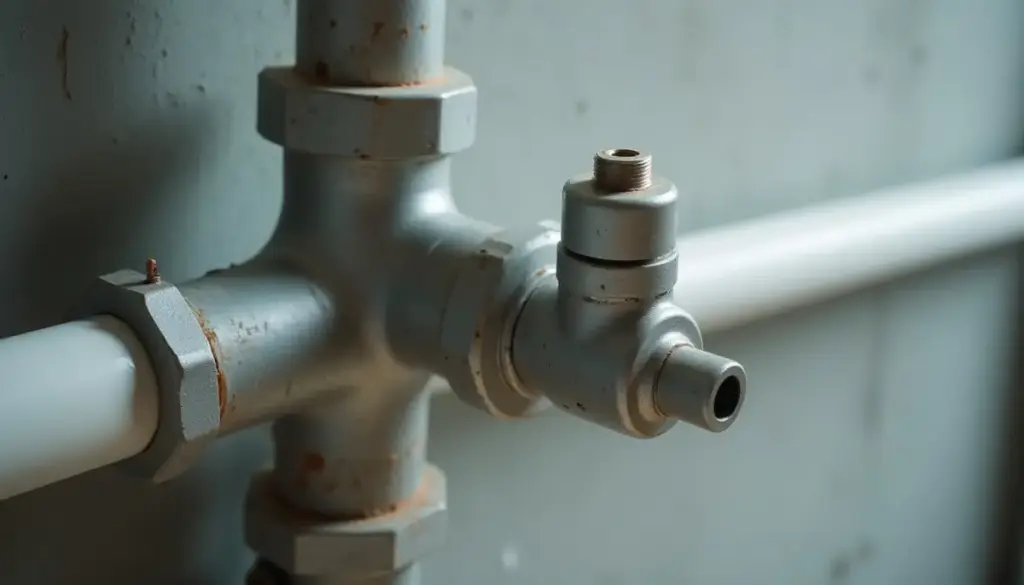
A check valve in plumbing is a one-way door. Flow pushes a disc, ball, poppet or flapper off its seat; when flow stops or reverses, gravity, a spring or the backflow itself drives it shut. It has no handle and needs no power.
Boshart lists check valve bodies in stainless steel, brass, ductile iron, plastic and bronze, usually with NPT threads on both ends. A foot valve is the variant that sits at the very bottom of a suction line, with an FPT connection on the outlet and a strainer on the inlet that keeps debris away from the poppet.
In a house, look for them on the sump discharge, the well drop pipe and the water service at the meter. Sewer lines need a different, listed part.
What are the main types of check valves?
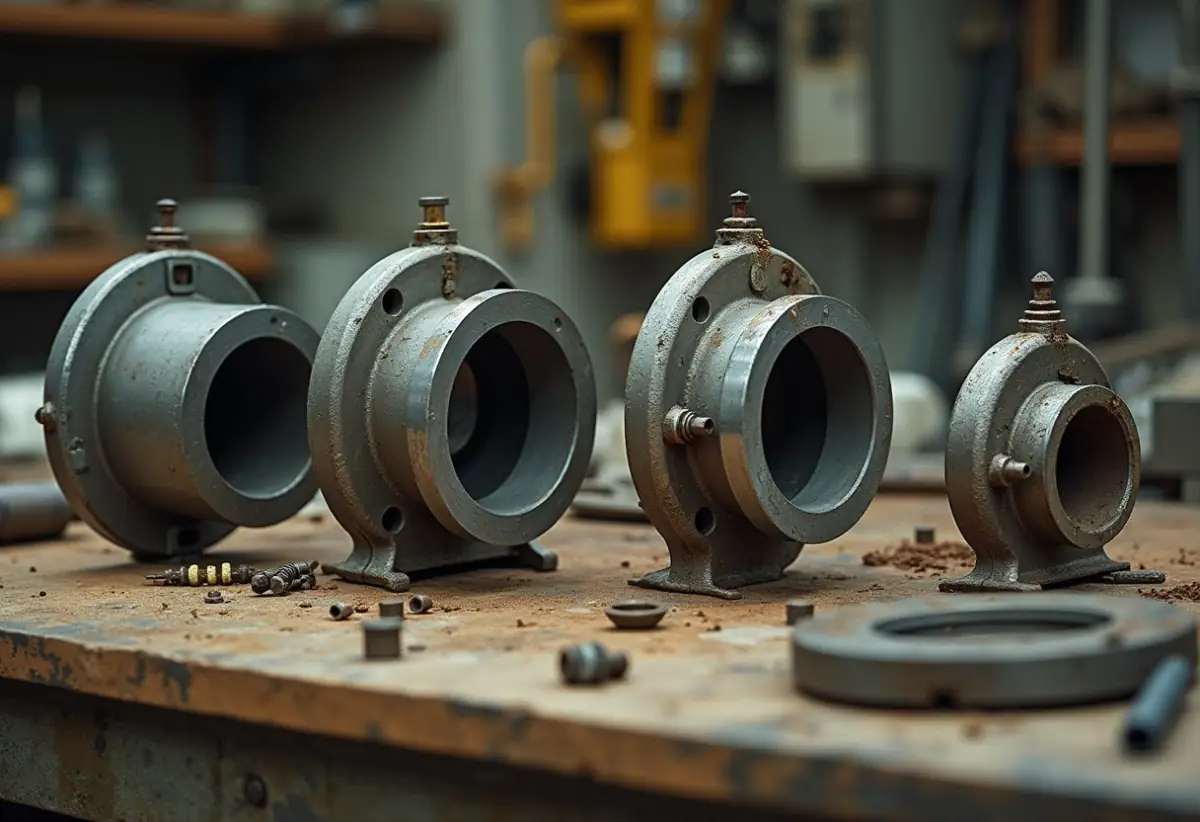
Six designs cover almost every home job: swing, spring (inline poppet), ball, lift (piston), dual check and foot valve. They differ in what closes the valve, how they mount and how they fail. Pick by the fluid (clean water, gritty water or sewage) and by how hard the water column slams when the pump stops.
| Type | What closes it | Where it is used | Orientation | Typical failure sign |
|---|---|---|---|---|
| Swing (flapper) | Gravity and reverse flow swing a hinged disc shut | Sump discharge, low pressure drain-back lines, dirty water | Horizontal, or vertical with flow going up | Loud slam when the pump stops |
| Spring (inline poppet) | A spring pushes the poppet onto the seat before flow reverses | Well drop pipe, booster pumps, quiet sump checks | Most positions; follow the arrow | Chatter or buzz at low flow; leak-back when grit holds the poppet open |
| Ball | A ball rolls or floats back onto a round seat | Sump and sewage ejector discharge | Per the maker; many are vertical-up | Leak-back when debris or wear scars the seat |
| Lift (piston) | A weighted disc or piston drops onto the seat | Clean water and steam lines in globe-style bodies | Usually horizontal only | Sticking open, hum, slow close |
| Dual check (ASSE 1024) | Two independent spring-loaded checks in series | Water service at the meter, low hazard containment | Per the listing | Pressure spikes at the water heater relief valve |
| Foot valve | Spring or flapper check with a strainer on the inlet | Bottom of a jet or shallow well suction line | Vertical, at the bottom of the suction pipe | Pump loses prime overnight |
The spring versus flapper split matters most. Boshart’s guide says the spring in a spring check’s poppet assembly helps close the valve faster, which reduces water hammer. It recommends the flapper type, a disc with a rubber or leather flap hinged at one side, where debris is likely, such as pumping from a pond.
Where does a check valve go on a sump pump?
On a sump pump, the check valve goes on the discharge pipe above the pump, close enough to the pit that only a short column of water falls back when the pump shuts off. Most residential sump discharges run 1-1/2 inch or 2 inch pipe, and the check valve should match the pump’s discharge size, not shrink it.
Three details make or break the install:
- Air relief hole. Pump manuals commonly call for a small hole drilled in the discharge pipe between the pump and the check valve, below the pit cover. Without it, one maker’s manual warns, the pump can air-lock and run without moving any water.
- Service break. Put a union or rubber coupling between the pump and the check so the pump can come out of the pit without cutting pipe. One maker’s manual also says a gate or ball valve should go above the check valve where local, regional or state codes require it.
- Direction. The arrow cast on the body points away from the pump. A backward valve dead-heads the pump.
Orientation advice is not uniform. At least one manufacturer warns against vertical mounting where solids could settle in the valve and keep it from opening at start-up. If you are still choosing the pump, our guide to sump pump types explains which pumps ship with a check valve in the box.
How many check valves does a well pump need?
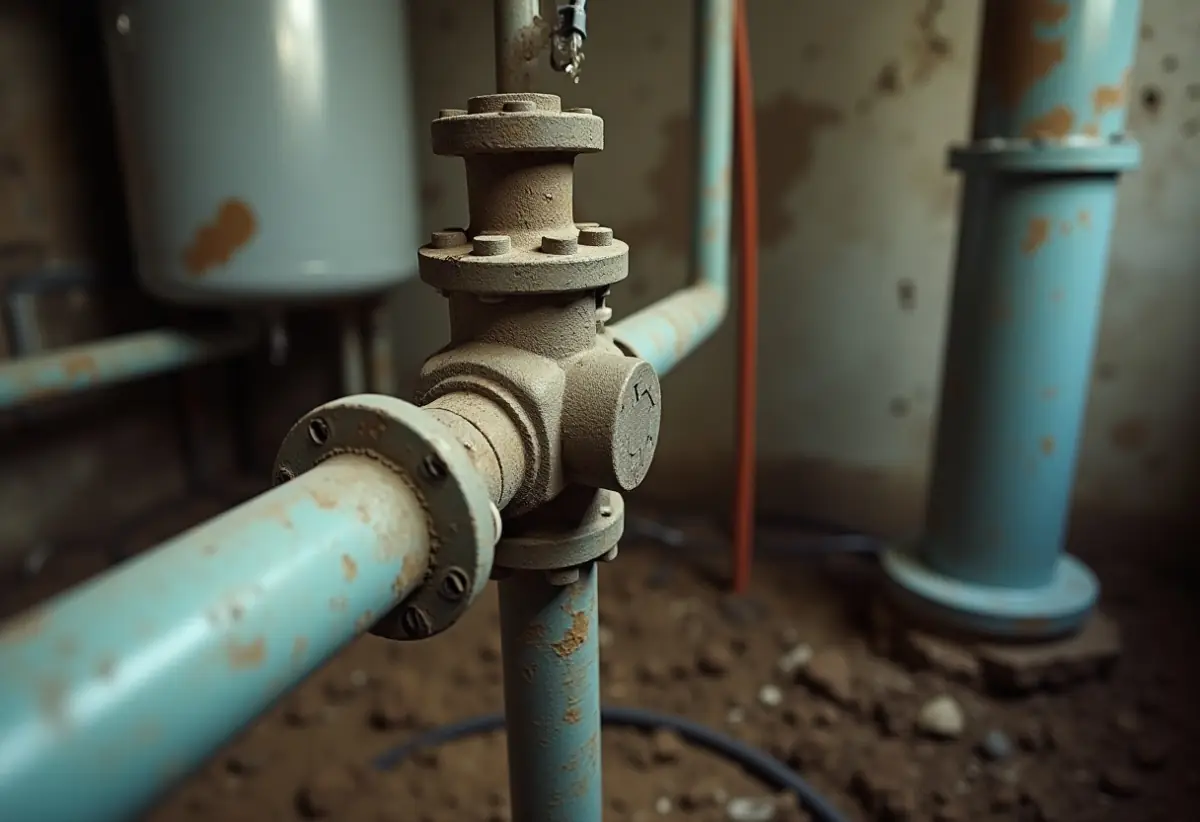
A well pump usually needs one check valve at or near the pump, more on deep settings, and often one near the pressure tank. Franklin Electric says that if the pump has no built-in check, an inline check belongs in the discharge line within 25 feet of the pump and below the drawdown level of the water supply.
Deep well spacing varies by document:
- Franklin Electric’s submersible pump literature says to add check valves at 100 foot intervals on pump settings deeper than 200 feet.
- Franklin’s 6 inch and 8 inch submersible turbine manual recommends a line check valve for every 200 feet of column pipe on a deep setting.
- Boshart’s check and foot valve guide counts four positions: the pump’s built-in check, a second no more than 25 feet above the water pumping level, more at a maximum of every 200 feet of drop pipe, and a final check commonly near the pressure tank.
Boshart says multiple checks break up water hammer. A failed check in the drop pipe shows up as a pressure tank that bleeds down with no tap open, or a pump that restarts with no demand. If that matches what you see, work through our well pump not working checklist before pulling the pump.
Is a sewer check valve the same as a backwater valve?
No. A “sewer check valve” in casual talk usually means a backwater valve, and codes treat that as its own listed product. Building drains need a valve built to a drainage standard, with a seal against sewage backflow and access for cleaning. A water-line swing check stuck in a 4 inch drain does not meet that bar.
IPC Section 715 covers backwater valves. Section 715.1 decides when one is needed, which in general means fixtures set low relative to the public sewer. Section 715.2, as adopted in a Payson, Utah code enforcement handout, requires corrosion resistant bearing parts and compliance with ASME A112.14.1, CSA B181.1 or CSA B181.2. Section 715.3 requires a mechanical seal against backflow, and New York City’s version adds that the flap must hang partly open when no backwater pressure is present.
The governing standard, ASME A112.14.1, is the 2003 edition, reaffirmed in 2022. Our sewer backwater valve guide walks through sizing, cleanouts and cost.
Why does a check valve on the water main need an expansion tank?
A check valve or dual check on the water service stops heated water from pushing back into the city main. That makes the house a closed system: when the water heater warms a full tank, the expanded water has nowhere to go, and pressure climbs until a fixture, the heater or the relief valve gives.
Utilities often install a dual check built to ASSE 1024 at the meter for low hazard containment. Many pressure reducing valves also block reverse flow. Either one creates the closed system, which is why many codes and water heater makers call for a thermal expansion tank once a check, dual check or PRV goes on the main.
A dual check is not field testable like a reduced pressure zone assembly, so it is limited to low hazard uses; see our backflow preventer types compared.
Tameson’s plumbing check valve guide suggests a pressure rating of roughly 2 to 3 times the normal operating pressure, which leaves headroom for the spikes a closed system produces.
Which way does a check valve go, horizontal or vertical?
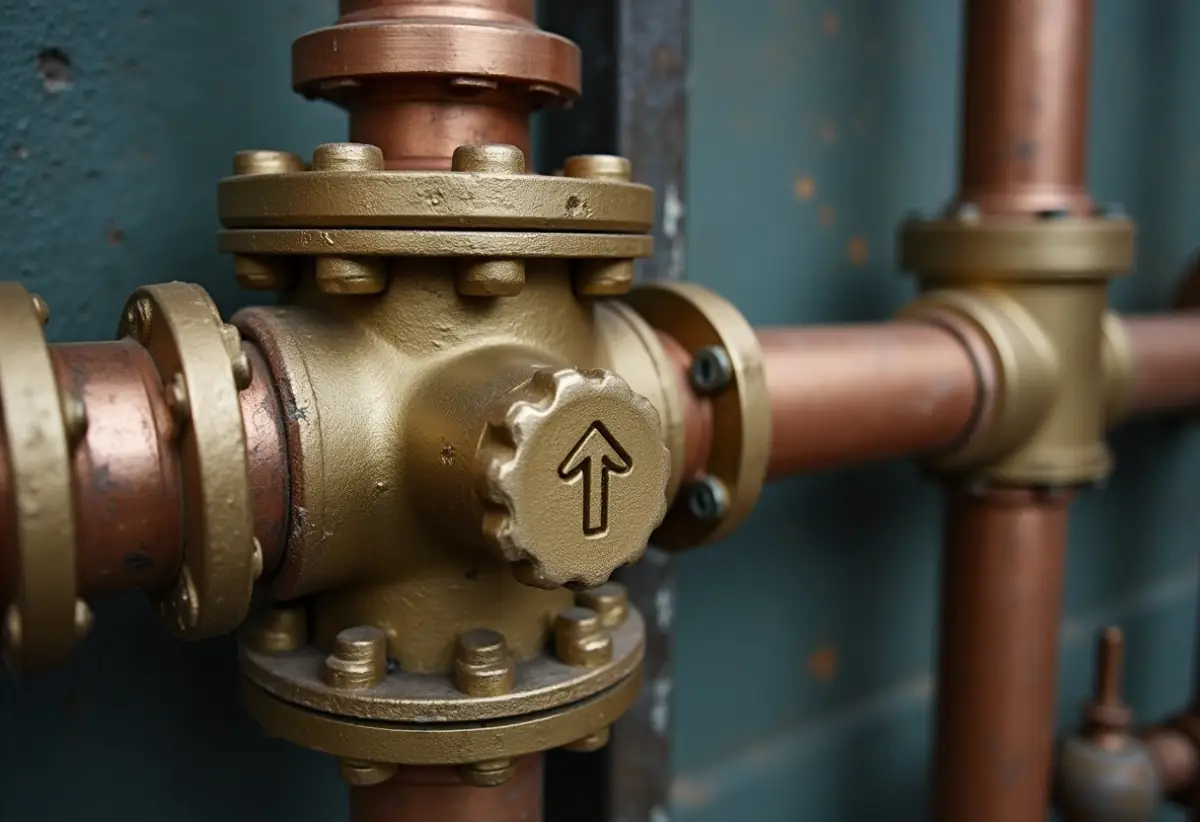
Every check valve has a flow arrow on the body pointing the way water should travel. Whether it can sit horizontal, vertical or at an angle depends on what closes it. Springs work in most positions; anything that relies on gravity has limits.
- Swing checks: horizontal, or vertical with flow going up. Mounted vertical with flow going down, the disc hangs open and the valve never checks.
- Spring checks: the spring closes the poppet in any position on most models. This is why well and booster pump lines use them.
- Foot valves: vertical, submerged at the bottom of the suction pipe, strainer down.
The tradeoff is head loss. A spring check needs a minimum push, called cracking pressure, to open, so it costs more pressure than a free swinging disc. Compare cracking pressure and pressure drop on the spec sheet for your exact model.
What are the signs a check valve is failing, and how do you fix it?
A failing check valve tells on itself in four ways: a bang when the pump stops (water hammer), a rapid chatter, a pump that short cycles with no new demand, and water flowing backward.
| Symptom | Likely cause | Fix |
|---|---|---|
| Bang or thud when the pump shuts off | Swing check closing late on a reversing column | Swap to a spring or quiet check; on deep wells add checks at the spacing above |
| Rapid chatter or buzz while running | Spring check oversized for the flow, poppet hovering | Match valve size to pump flow; check for a partly closed valve downstream |
| Pump restarts with no new water or demand | Check leaking back into the pit or well | Clean the seat or replace the valve |
| Pump runs but moves no water | Air-lock, missing relief hole, or valve installed backward | Drill the relief hole; confirm the arrow points away from the pump |
For a sump check that leaks back, the replacement runs like this:
- Unplug the pump.
- Loosen the hose clamps or union nuts on both sides and lift the valve out.
- Check the flapper or poppet for grit, a torn seal or a broken spring.
- Set the new valve with the arrow pointing away from the pump, snug the clamps, and confirm the relief hole below it is clear.
- Plug the pump in, fill the pit with a hose, and watch two full cycles. The riser should stay full after shutoff and the pump should not restart until water rises again.
Call a well contractor when a drop pipe check fails, since pulling a deep submersible takes a pump hoist. Call a licensed plumber for backwater valves and anything at the meter.
How we sourced this
In October 2026 we reviewed the top search results, then went to primary sources: Franklin Electric submersible pump manuals, Boshart’s check and foot valve dealer guide (March 2025), IPC Section 715 text as adopted in Payson, Utah and New York City, the ASME A112.14.1 listing, and Tameson’s check valve guide. We could not confirm cracking pressure or retail prices on a maker spec sheet in this round, so we left those numbers out rather than guess. Code language varies by edition and local amendment.
Frequently asked questions
Where should a check valve be installed on a sump pump?
Put it on the discharge pipe above the pump, close enough that only a short column of water drains back into the pit when the pump stops. Drill the small air relief hole in the pipe between the pump and the check valve, and add a union or rubber coupling so the pump can be pulled without cutting pipe.
Does a sump pump need a check valve?
Most installers and pump makers want one, because without it every gallon standing in the riser falls back into the pit when the pump shuts off, and the pump restarts sooner. Some local codes do not require it. A check valve is still the cheapest way to cut cycles and protect the pump motor.
What are the signs of a bad check valve?
Listen and watch. A loud bang when the pump stops points to a slow closing flapper. A chattering or buzzing sound points to a spring check that is undersized for the flow. A pump that restarts within a minute or two with no new water coming in usually means the valve is leaking back.
Can a check valve be installed vertically?
Spring loaded inline checks can usually go in any position, as long as the flow arrow points with the flow. A swing check only works vertically when water flows upward, because gravity has to pull the disc shut. At least one sump pump maker warns against vertical installs where solids could settle on the disc.
What is the difference between a check valve and a backwater valve?
A plain check valve is a pressure line part that lets water flow one way. A backwater valve is a sewer part built and listed to a drainage standard such as ASME A112.14.1 or CSA B181, with corrosion resistant bearing parts and a mechanical seal. Codes based on IPC Section 715 call for the listed backwater valve, not a generic check.
How many check valves does a deep well need?
Franklin Electric says to put an inline check valve within 25 feet of the pump if the pump has none built in, and on settings deeper than 200 feet to add check valves every 100 feet. Boshart allows up to 200 feet between valves in the drop pipe and puts a final check near the pressure tank.
Do check valves reduce water pressure?
Yes, a little. Every check valve has to be pushed open, and a spring check takes more push than a free swinging disc, so it costs some pressure and flow. On a short house main the loss is rarely noticeable. On a long sump or well run, compare the head loss figures on the spec sheet before you buy.