Laundry Sink Pump: When You Need One, Sizing and Install
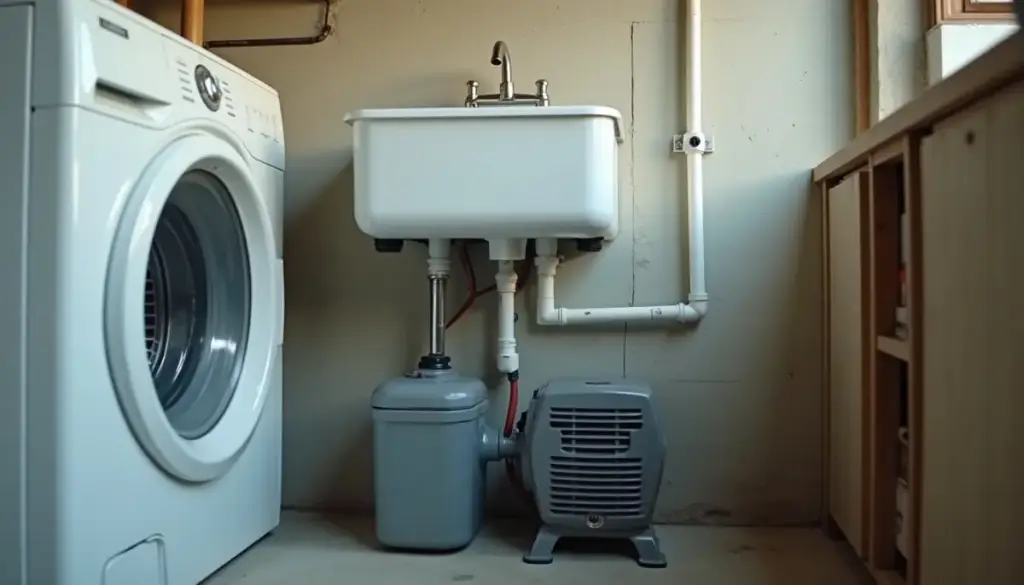
A laundry sink pump is needed when your utility sink or washer drains below the sewer line, and the right one moves more than 17 gpm at your actual lift into a vented, sealed basin.
Key Takeaways
- Whirlpool’s washer install guide requires a drain that carries away at least 17 gpm, so the pump must beat 17 gpm at your total head.
- At 10 feet of head, Zoeller’s 105 moves 34 gpm, Little Giant’s WRS-6 29 gpm and Simer’s 2925B 27 gpm, per maker data.
- Liberty Pumps says never cap the basin vent or use an air admittance valve, and keep at least a 1-1/4 inch unrestricted vent.
- The 2020 Plumbing Code of New York State requires a check valve and full open valve, with a wye on top of the drain at least 10 pipe diameters from a stack base.
- Verified prices for complete systems ran $346.50 to $502.50 in October 2026 (Cooney Brothers, PexUniverse).
When do you need a laundry sink pump?
You need a laundry sink pump when the sink’s drain outlet sits lower than the point where it would join the building drain, so gravity cannot carry the water away. That usually means a basement utility sink or washer with no floor drain and a main line that exits the foundation wall above the slab. Before installing one, check how the trap, vent, and supply lines tie together in utility sink plumbing basics. Once you’ve sorted trap, vent, and supply lines, see what’s involved in portable sink setups for spaces without any plumbing at all.
The 2020 Plumbing Code of New York State, Section 712.1, built on the International Plumbing Code, says fixtures that cannot drain by gravity must discharge into a tightly covered, vented sump that pumps into the gravity drainage system. A laundry tray pump is the fixture-sized version of that sump.
The washer has a ceiling too. Whirlpool’s WTW5700XL dimension guide says to put a standpipe or laundry tub no higher than 96 inches from the bottom of the washer, and that going higher requires a sump pump system. Before buying, measure the vertical distance from the basin floor to the pipe you will tie into, plus the horizontal discharge run.
What types of laundry tray pump systems are there?
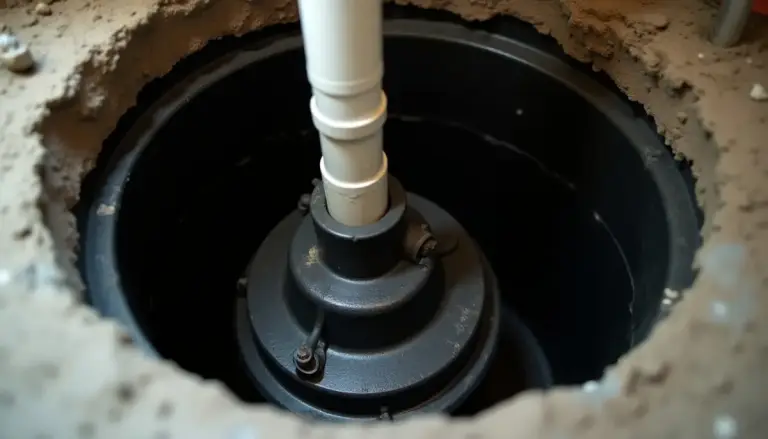
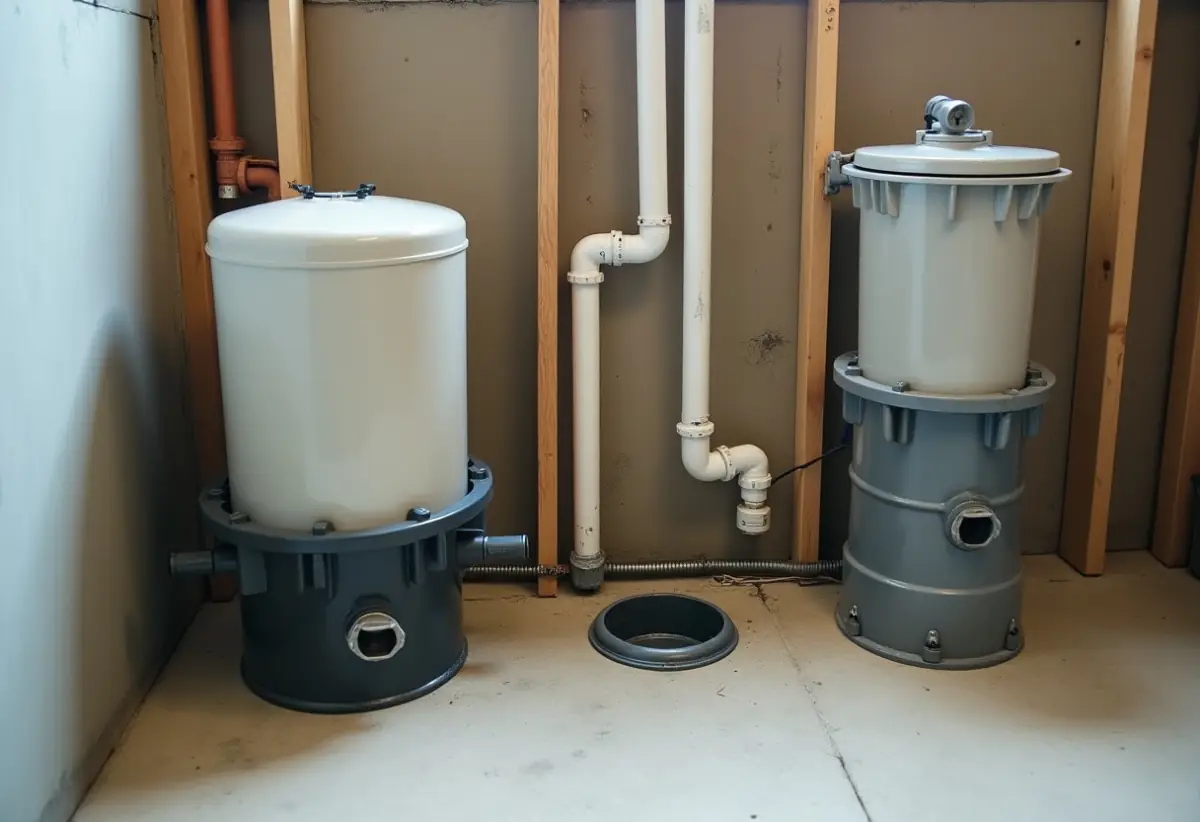
There are three options. An above-floor gray water tank sits under or beside the sink and holds 3.5 to 6 gallons. A below-floor basin is set into the slab. A sewage ejector is the heavier choice when a toilet also drains below the sewer line.
Liberty’s 404 basin holds 4.3 gallons and stands 11-1/8 inches tall. Little Giant’s WRS-6 uses a 5 gallon basin and the WRSC-6 a 3.5 gallon one, and Simer’s 2925B a 6 gallon tank. All are sealed and vented with an internal float or diaphragm switch.
A standard sump pump is the wrong tool, since it is built for clear groundwater in an open pit; our guide to the types of sump pumps covers that job. If a basement toilet is part of the plan, size a sewage ejector pump instead, because the New York code requires pumps that take water closets to pass 2 inch solids.
How do you size a laundry sink pump to a washing machine?
Size the pump to the washer’s drain demand at your real head. Whirlpool says the drain must carry away at least 17 gpm. Find your total head, then read each maker’s curve at that head. If the curve shows less than 17 gpm, the basin fills faster than it empties and water or suds leave through the vent.
Zoeller’s drain pump sheet labels its curve “total dynamic head,” which counts pipe and fitting friction as well as vertical lift. A long run with several elbows eats flow, so leave margin above 17 gpm at your measured lift.
| Model | 5 ft | 10 ft | 15 ft | Clears 17 gpm at 15 ft? |
|---|---|---|---|---|
| Little Giant WRS-9 (509268) | 70 gpm | 65 gpm | 55 gpm | Yes |
| Zoeller 105 (105-0001) | 43 gpm | 34 gpm | 19 gpm | Yes, barely |
| Little Giant WRS-6 (506055) | 46 gpm | 29 gpm | 13 gpm | No |
| Simer 2925B-02 | 38 gpm | 27 gpm | 11 gpm | No |
| Liberty 404 | about 30 gpm | about 23 gpm | about 15 gpm | No |
| Little Giant WRS-5 (505055) | 23 gpm | 20 gpm | 12 gpm | No |
At 10 feet of total head every unit listed beats 17 gpm, the WRS-5 by only 3 gpm. At 15 feet, only the Zoeller 105, Liberty 405 (about 39 gpm on Liberty’s curve) and Little Giant WRS-9 still clear it. When total lift is reached, Liberty’s troubleshooting chart says a second pump station at roughly half the lift may be needed.
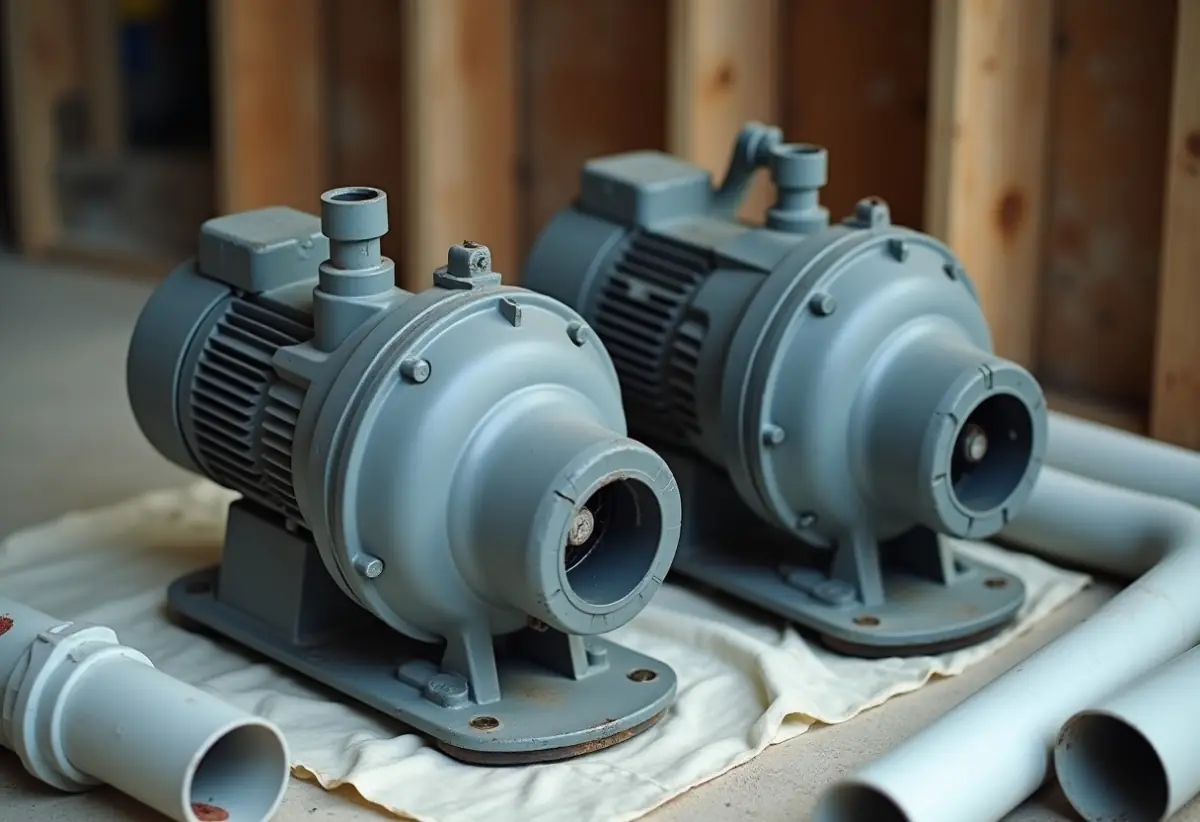
Which laundry sink pump models fit, and what do they cost?
For a typical basement washer and sink, the Zoeller 105, Little Giant WRS-6 and Liberty 404 are the mainstream picks. Verified October 2026 listings ran $346.50 to $502.50 for a complete system, before pipe, fittings and labor. Pick on flow at your head first.
| Model | Flow at 10 ft | Max lift (shut-off) | Basin size | Price seen |
|---|---|---|---|---|
| Zoeller 105 (105-0001), 3/10 hp | 34 gpm | 19.25 ft | 14-1/2 in dia. x 12-1/2 in tall | $346.50 (Cooney Brothers) |
| Liberty 404, 1/3 hp | about 23 gpm | about 20 ft | 4.3 gal | $351.75 (PexUniverse) |
| Little Giant WRS-6 (506055), 1/3 hp | 29 gpm | 18 ft | 5 gal | $439.95 (Global Industrial) |
| Liberty 405, commercial | about 44 gpm | about 34 ft | 5.5 gal (retailer listing) | $502.50 (PexUniverse) |
| Little Giant WRS-9 (509268), 4/10 hp | 65 gpm | 40 ft | 5 gal | Varies by retailer |
| Simer 2925B-02, 1/4 hp | 27 gpm (1,620 GPH) | 18 ft | 6 gal | Varies by retailer |
Ports differ. The Liberty 404 uses 1-1/2 inch inlet, discharge and vent, while the 404L and 405 take 2 inch inlets. Zoeller’s 105 basin has 1-1/2 inch slip inlets on top and side, a 1-1/2 inch NPT discharge and a 2 inch NPT vent.
Temperature ratings run 104°F continuous (140°F intermittent) for the Liberty 404, 125°F for the WRS-6, 130°F for Zoeller and Simer, and 180°F for the Liberty 405. Liberty and Simer each call for a separate 15 amp circuit, and Liberty wants the outlet at least 4 feet above the floor, so budget an electrician if none exists.
Does a basement laundry drain pump need a vent and a check valve?
Yes to both. The basin is a sealed tank, so it needs a true vent to move air as it fills and empties, and a check valve to stop the discharge column from falling back after each cycle. The New York code adds a full open valve.
Liberty’s 404/405 manual says do not cap the vent, do not use one way quick vents or air admittance valves, and connect the vent directly to a building or house vent. Simer says to tie its vent into the sewer vent system without letting the pipe extend into the basin. New York code Section 918.8 bars air admittance valves on sumps or tanks unless an engineer designed the vent system.
Vent size depends on pump flow and developed length. Under New York code Table 906.5.1, a 1-1/4 inch vent has no length limit at 10 gpm and a 270 foot limit at 20 gpm. At 40 gpm the limits drop to 72 feet for 1-1/4 inch and 160 feet for 1-1/2 inch, while 2 inch has no limit.
Section 712.2 requires a check valve and a full open valve on its discharge side, both accessible above the sump cover. Liberty puts a union just above the pump and the check valve just above the union. Zoeller ships the 105 with a PVC full flow check valve and slip union, and Liberty’s 404CV models include one.
Where can a laundry tray pump discharge?
Into the sanitary drainage system only. New York code Section 712.3.5 says pumps connect to a building sewer, building drain, soil stack, waste stack or horizontal branch drain. A tie-in to horizontal pipe goes through a wye into the top of the pipe, at least 10 pipe diameters from the base of any stack or fixture drain.
A sump pit is not on that list. Under Chapter 11 of the same code, a subsoil sump needs neither a gastight cover nor a vent, while a sanitary sump under Section 712.3.2 must have both. Sump pits usually discharge to the yard or a storm line, and Section 1104.2 bars even floor drains from connecting to a storm drain.
A pump can also discharge into an existing washing machine drain standpipe, which the New York code requires to stand 18 to 42 inches above its trap weir. Watch the volume: a 34 gpm pump dumping into a standpipe that also takes a washer invites a washing machine drain backing up. Where the discharge passes through unheated space, Simer says exposed sections must drain back by gravity so trapped water cannot freeze.
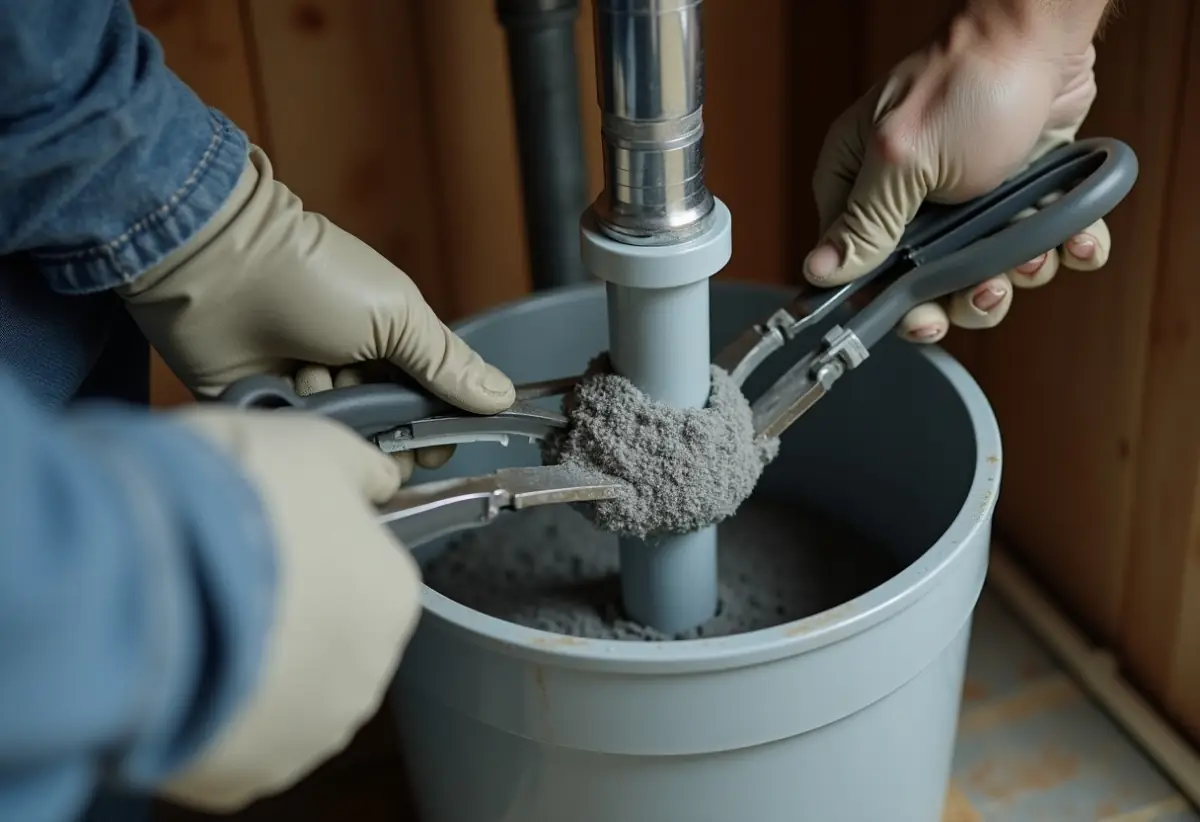
How do you keep lint out of a laundry sink pump?
Put a trap between the sink and the pump, choose a pump rated to pass lint, and clean the trap on a schedule. Liberty’s manual names lint as the debris to clear from the trap periodically, along with checking the check valve.
- Liberty 404 and 405: pass lint up to 3/8 inch. Liberty requires a trap between fixture and pump and recommends a flange type.
- Zoeller 105: 1/2 inch solids, a vortex impeller and no inlet filter or screen to clean. The trap can sit inside the basin.
- Little Giant WRS-6: a removable filter in the cover, with 0.13 inch solids handling at the pump.
- Simer 2925B: 1/8 inch maximum solids, and Simer says to keep the inlet screen clear.
New York code Section 712.4.2 requires sewage pumps that do not take toilets to pass 1/2 inch solids, and inspectors differ on whether a laundry tray pump counts as one. Of these models, only Zoeller publishes a 1/2 inch rating; Liberty’s 404CV and Zoeller’s basins list ASME A112.3.4/CSA B45.9 certification.
How do you install a laundry sink pump step by step?
A tank system install takes ten steps, and the vent and discharge runs are the real work. Dry fit everything, let solvent welds cure, and test one full cycle with water before the washer drains into it. Call a licensed plumber if the vent or wye tie-in requires cutting into a stack.
- Ask your building department whether new drain and vent piping needs a permit; in many areas it does.
- Set the basin as low as possible. Simer says the inlet must sit lower than the water being pumped.
- Install a trap between the sink and the basin inlet, and hand-tighten threaded basin connections without cross-threading.
- Thread the discharge pipe into the pump. For Simer, use thread tape and go hand tight plus 1 to 1-1/2 turns.
- Add a union above the pump, the check valve above the union, then a full open valve.
- Run the discharge into a wye on top of the drain, at least 10 pipe diameters from a stack base.
- Run the vent uncapped to the building vent, sized per Table 906.5.1.
- If you mix PVC and copper, Liberty says let PVC joints cure 24 hours and air out the tank before sweating copper nearby.
- On piggyback-switch models (Liberty 404 and 405, Simer 2925B), plug the switch cord into a grounded outlet and the pump into the back of it. Liberty specifies a GFCI receptacle and no extension cord.
- Fill the sink and watch a full cycle. Simer’s switch turns on at 8 inches and off at 3-1/2 inches; the WRS-6 runs on at 7 to 10 inches and off at 1 to 4 inches.
If rigid pipe hums against the joists, Simer suggests a short length of 1-7/8 inch inside diameter rubber hose in the discharge near the pump.
How we sourced this
We consulted 24 sources and cited 14: Liberty Pumps’ Model 404 spec sheet and 404/405 manual, Zoeller’s FM3164 and FM2801 data sheets, Little Giant’s WRS spec sheet and WRS-6 page, Pentair Simer’s 2925B page, manual and data sheet, Whirlpool’s WTW5700XL guide, the 2020 Plumbing Code of New York State on UpCodes, and prices from PexUniverse, Cooney Brothers and Global Industrial checked October 2026. Liberty flows are read from Liberty’s curves; the 2014 manual reads a few gpm higher than the 2017 sheet, and we used the lower figure. We excluded conflicting retail specs, prices we could not load and unverified labor rates.
Frequently asked questions
Can I drain a washing machine into a laundry sink pump?
Yes, if the pump keeps up. Whirlpool says a washer drain must carry away at least 17 gallons per minute, and a laundry tub receiving the hose must hold at least 20 gallons. At 15 feet of head a Zoeller 105 still moves 19 gpm, while a Simer 2925B drops to about 11 gpm.
Can a laundry sink pump drain into a sump pit?
No. A sump pit is a clear water system that usually discharges outdoors or to storm drainage, and the New York State plumbing code lets a subsoil sump skip the gastight cover and vent. Laundry water is sanitary waste, so it belongs in a sealed, vented basin pumping into the building drain or a waste stack.
Does a laundry tray pump need to be vented?
Yes. Liberty says to connect the basin vent directly to a building vent, keep it at least 1-1/4 inch and unrestricted, and never use an air admittance valve. Zoeller basins have a 2 inch NPT vent port, Little Giant covers a 2 inch FNPT vent, and Simer ties its 1-1/2 inch vent into the sewer vent system.
How high can a laundry sink pump lift water?
Shut-off head runs from 18 feet on the Little Giant WRS-6 and Simer 2925B to about 34 feet on the Liberty 405 and 40 feet on the Little Giant WRS-9. Flow stops at shut-off, so size to the flow you need at your lift. Liberty suggests a second pump station at roughly half the lift when one pump cannot reach.
Why does my laundry pump push suds out of the vent?
Liberty lists three causes. The float switch is stuck or failed, the washer pushes water in faster than the pump moves it out, or the vent is too short or narrower than 1-1/4 inch. Clean the float, check the pump curve against your lift, and add a valve on the inlet if inflow still wins.
Do I need a check valve on a laundry sink pump?
Yes. Without one, the water standing in the discharge pipe falls back into the basin each time the pump stops, which causes short cycling. The New York State code requires a check valve plus a full open valve above the basin cover. Zoeller 105 systems and Liberty 404CV models ship with a check valve.