Heat Pump Water Heater Pros and Cons: Is One Worth It?
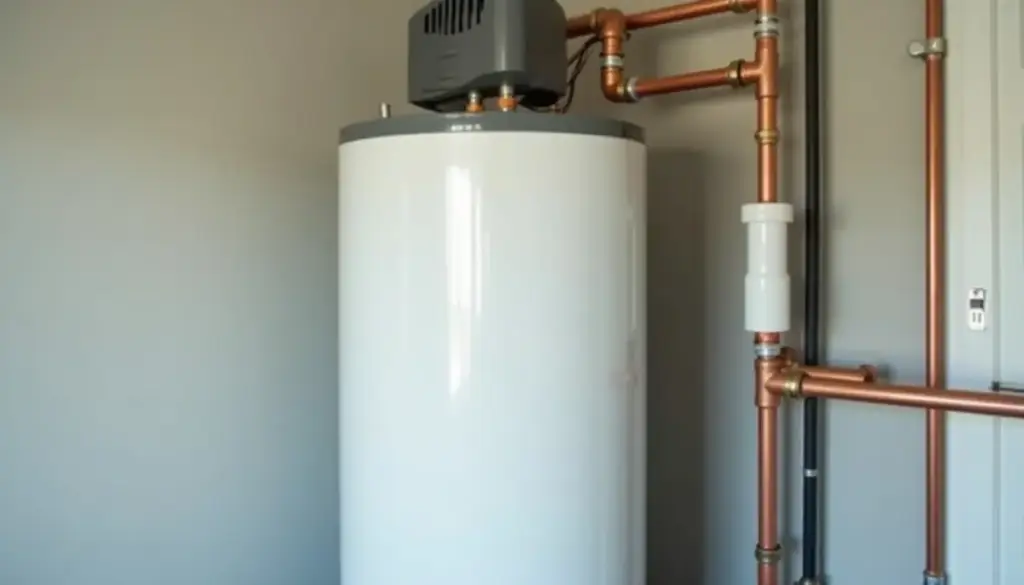
Heat pump water heater pros and cons come down to one trade: a tank rated up to 4 times as efficient as an electric model, in exchange for a higher price, more floor space, and a cooler, louder room.
Key Takeaways
- ENERGY STAR estimates a certified unit saves a family of four about $550 a year at $0.146 per kWh.
- ENERGY STAR requires a Uniform Energy Factor of at least 3.30 for a standard integrated heat pump unit, versus roughly 0.9 for an electric resistance tank.
- Rheem hybrids run best in rooms over 700 cubic feet; ENERGY STAR suggests about 1,000.
- The federal 25C credit ended for installs after December 31, 2025 under Public Law 119-21, per the IRS. Utility rebates, such as Efficiency Maine’s $1,200 instant discount, still exist.
- At the EIA’s July 2026 average residential price of 18.31 cents per kWh, our model puts a heat pump unit about $470 a year cheaper to run than an electric tank.
- Bradford White lists about 55 dBA of operating noise for its AeroTherm line.
How does a heat pump water heater work?
A heat pump water heater moves heat instead of making it. A fan pulls room air across a cold evaporator coil, a compressor concentrates that heat, and a condenser wrapped around the tank passes it into the water. ENERGY STAR describes it as a refrigerator run in reverse, and because moving heat takes far less power than generating it, certified models rate up to 4 times as efficient as a conventional electric tank. That same efficiency math is worth comparing against solar water heating costs and payback before settling on a tank.
The efficiency yardstick is the Uniform Energy Factor (UEF), the federal test rating printed on the yellow EnergyGuide label. A standard electric resistance tank scores close to 0.9. ENERGY STAR’s key product criteria require a UEF of 3.30 or higher for integrated heat pump units and 2.20 or higher for 120 volt, 15 amp models.
Most units are hybrids with 4,500 watt backup elements for heavy demand or cold air. Our guide to the main types of water heaters shows where this design sits next to gas, tankless, and solar options.
What are the heat pump water heater pros and cons at a glance?
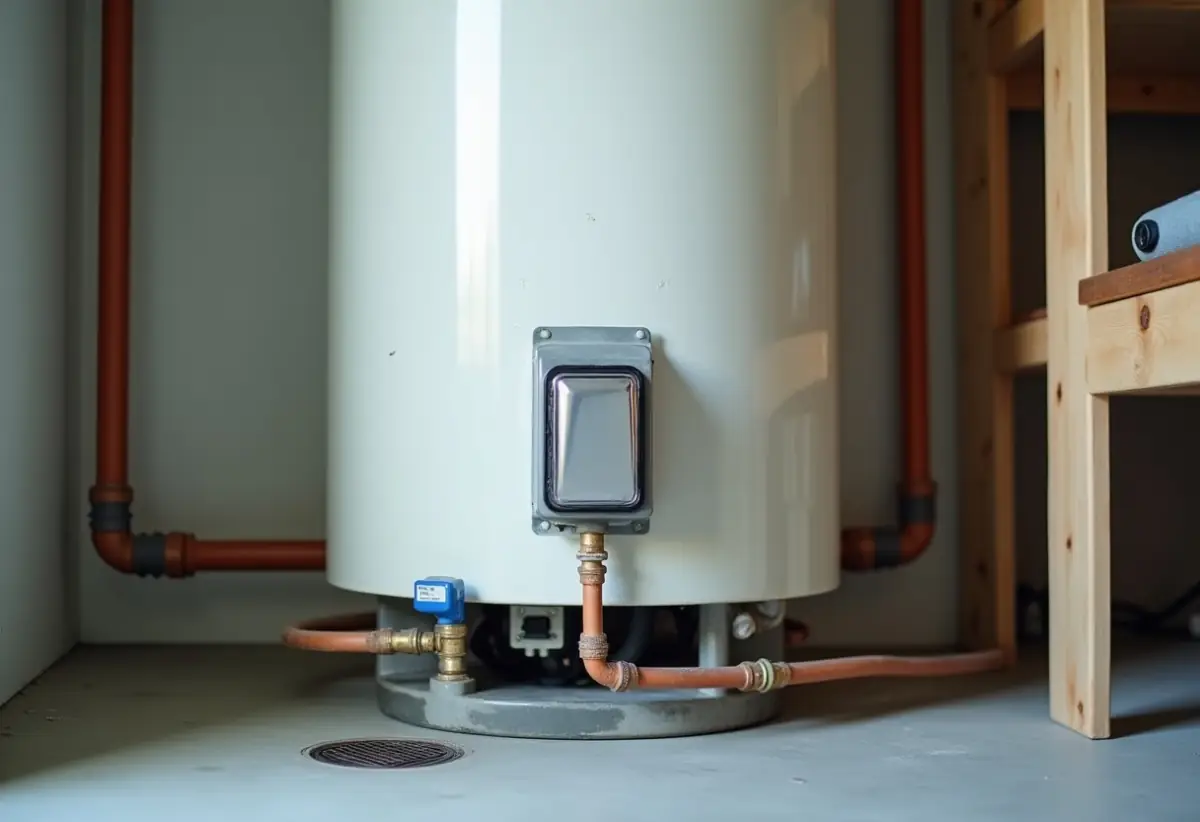
The heat pump water heater pros are lower running cost, dehumidified air, no combustion, and long warranties. The cons are a higher purchase price, space and air volume rules, room cooling, fan noise, slower recovery in pure heat pump mode, and a condensate line. The table below ties each point to a named source so you can check it.
| Pro or con | Detail | Source |
|---|---|---|
| Pro: lower energy bills | About $550 a year saved for a household of four versus a standard electric tank | ENERGY STAR savings table |
| Pro: high efficiency | UEF 3.30 minimum to certify; Rheem ProTerra 80 gallon rated 4.07 UEF | ENERGY STAR criteria; Rheem spec sheet |
| Pro: dehumidifies | Pulls moisture and heat from the room air in hot, humid weather | ENERGY STAR |
| Pro: warranty | At least 6 years on the sealed system to certify; Rheem offers a 10 year limited tank and parts warranty | ENERGY STAR criteria; Rheem |
| Con: higher upfront cost | ENERGY STAR assumes a $1,503 premium over a standard electric tank | ENERGY STAR savings table |
| Con: space and airflow | Best above 700 cubic feet; smaller rooms down to 450 cubic feet need louvers or ducting | Rheem spec sheet |
| Con: cools the room | Fan moves 150 CFM across the coil and exhausts cooler air | Rheem spec sheet |
| Con: noise | Approximately 55 dBA during operation | Bradford White AeroTherm spec sheet |
| Con: slower recovery | 120 volt plug-in model recovers 12 gallons per hour at a 60 degree rise | Rheem plug-in spec sheet |
What are the biggest advantages of a heat pump water heater?
The biggest advantage of a heat pump water heater is the electric bill. ENERGY STAR’s savings table puts annual savings at $270 for a two person home, $410 for three, and $550 for four, compared with a standard electric tank. Those figures assume $0.146 per kWh, so savings grow where power costs more.
The second advantage is free dehumidification. ENERGY STAR notes the unit can cool and dry its space in hot, humid weather.
Third, there is nothing to burn. ENERGY STAR’s 2025 fact sheet notes all electric units need no exhaust venting and put no combustion gases indoors.
What are the main disadvantages of a heat pump water heater?
The main disadvantages of a heat pump water heater are the price premium, the space and air it needs, the cool air and hum it produces, and slower recovery when the compressor works alone. ENERGY STAR assumes a $1,503 incremental cost over a standard electric tank, and that figure does not include extra labor for a condensate line, ducting, or new wiring.
It cools the room
The heat that goes into the water comes out of the room. Rheem’s ProTerra hybrid moves 150 cubic feet of air per minute across its coil. In summer that is a bonus. In a heated basement in January, your furnace replaces some of that heat.
It makes noise
A heat pump water heater has a fan and a compressor, so it hums whenever it runs. Bradford White’s AeroTherm spec sheet lists approximately 55 dBA. Rheem advertises quiet operation without printing a decibel figure, so ask before placing one near a bedroom.
It recovers slowly in heat pump mode
The compressor heats water gently. Rheem’s 120 volt plug-in model, which has no backup elements, lists 12 gallons per hour of recovery at a 60 degree rise. The 240 volt hybrid lists 26 to 27 gallons per hour at a 90 degree rise and keeps 4,500 watt elements for its High Demand and Electric modes. Size up one tank step for back to back showers.
It needs a condensate drain
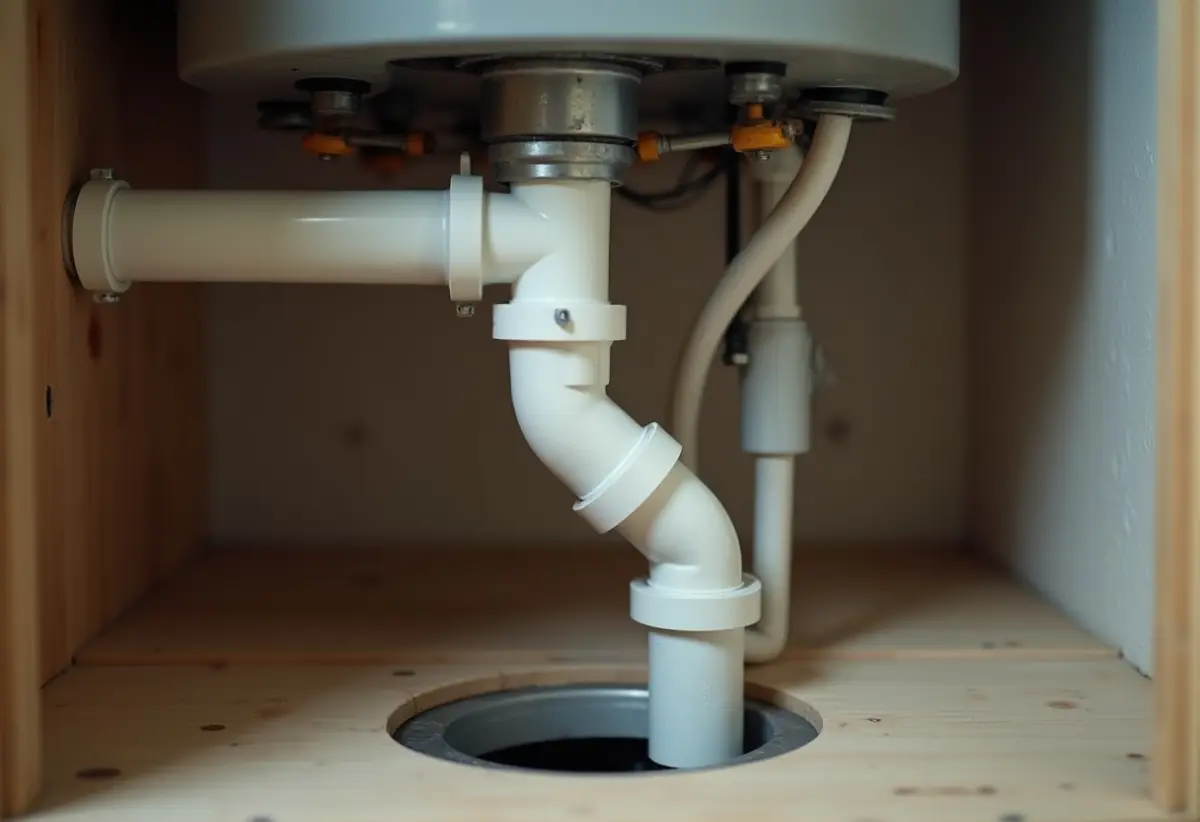
Pulling moisture from the air creates water. Rheem’s units have 3/4 inch condensate drain connections, which must run to a floor drain, standpipe, or condensate pump. No drain means adding a pump.
How much space and air does a heat pump water heater need?
A heat pump water heater needs a large volume of air or a way to bring air in. ENERGY STAR suggests about 1,000 cubic feet of air space kept between 40 and 90 degrees Fahrenheit. Rheem’s ProTerra hybrid spec sheet sets 700 cubic feet as the threshold for full performance and allows rooms down to 450 cubic feet at reduced efficiency.
For a room under 700 cubic feet, Rheem calls for a full louvered door or two louvers, top and bottom, with at least 3.25 square feet of free area for an unducted install. A ducted closet needs 2.9 square feet of louver area. For scale, a 10 by 10 foot room with an 8 foot ceiling is 800 cubic feet.
Height matters too. Rheem’s 80 gallon plug-in stands 75 inches before fan and filter clearance, so measure basement ceilings first.
The 120 volt plug-in models solve a wiring problem. Rheem’s plug-in ProTerra runs on a 15 amp, often shared, circuit, so it can replace a gas tank without a new 240 volt line.
Do heat pump water heaters work in cold climates?
Heat pump water heaters work in cold climates when they sit inside the heated part of the house. What matters is the air around the unit, not the outdoor temperature. ENERGY STAR notes that in colder conditions the unit may switch to its backup electric mode, which raises energy use during those months.
Operating ranges vary by brand. Rheem lists a heat pump ambient range of 37 to 145 degrees Fahrenheit for its ProTerra line and says the hybrid is designed to meet Tier 4 of the Northern Climate Specification (the plug-in targets NEEA Tier 3). Bradford White’s original AeroTherm spec sheet lists 45 to 120 degrees.
In northern states, an unheated garage pushes the unit onto its elements for much of the winter. A basement inside the heated envelope keeps the compressor running, at the cost of some house heat. Rheem’s duct ready models allow ducting as a fix.
What does a heat pump water heater cost to run?
A heat pump water heater costs roughly $150 to $200 a year to run in our model, versus about $650 for a standard electric tank, at the EIA’s July 2026 average residential price of 18.31 cents per kWh. The gap comes straight from UEF: the heat pump buys the same hot water with about a quarter of the electricity.
How we built the chart: the federal UEF test medium draw is 55 gallons a day heated from 58 to 125 degrees, about 3,287 kWh of delivered heat a year. We divided that by each UEF and multiplied by the EIA July 2026 residential average. The 3.0 and 4.07 ratings come from Rheem’s 50 gallon plug-in and 80 gallon hybrid spec sheets; 0.92 is our assumed rating for a new 50 gallon electric tank.
Are heat pump water heaters worth it in 2026?
Heat pump water heaters are worth it for most homes replacing an electric tank, even without a federal tax credit. In our model the unit saves about $470 a year at 18.31 cents per kWh, which pays back ENERGY STAR’s $1,503 price premium in about 3.2 years. A local rebate can shrink that to under a year.
The tax picture changed. The 25C Energy Efficient Home Improvement Credit, which paid 30 percent of the cost up to $2,000, ended for property placed in service after December 31, 2025. The IRS FAQ on Public Law 119-21, the One Big Beautiful Bill Act, confirms the cutoff. Older marketing that mentions the credit is out of date.
Utility and state programs fill some of the gap. Efficiency Maine lists a $1,200 instant discount at participating retailers, and its example drops a $1,550 unit to $350. Programs vary by utility and change often, so check ENERGY STAR’s rebate finder with your ZIP code before you buy.
Payback math, step by step
- Start with the price premium. ENERGY STAR assumes $1,503 over a standard electric tank.
- Subtract any rebate. With a $1,200 Efficiency Maine discount, the premium falls to $303.
- Find annual savings. Our model gives $654 minus $182, or about $472 a year, for a 3.3 UEF unit.
- Divide. $1,503 divided by $472 is about 3.2 years with no rebate; $303 divided by $472 is about 8 months with one.
- Add install extras such as a condensate pump, louvered door, or new circuit.
A standards change also points this way. DOE’s amended rule for residential water heaters, explained in our guide to water heater efficiency standards, is set to push most new electric storage tanks from 35 to 120 gallons toward heat pump technology starting in 2029.
Who should skip it? Homes with only a tight closet, very low hot water users (ENERGY STAR’s two person payback is 5.5 years), and homes on cheap gas. If you are still choosing between technologies, our heat pump vs tankless water heater comparison covers flow rate and footprint, and our roundup of ENERGY STAR water heaters lists certified models by type.
How we sourced this
We consulted 14 sources and cited 10: ENERGY STAR’s heat pump water heater product page, savings table, key product criteria, and 2025 fact sheet; Rheem’s ProTerra hybrid and 120 volt plug-in spec sheets (form dates 07.25); Bradford White’s AeroTherm spec sheet; the EIA Electric Power Monthly table 5.6.A; the IRS FAQ on Public Law 119-21; and Efficiency Maine’s heat pump water heater page. Operating costs are our calculation, not measured bills. Retailer listings and forum posts were excluded. Data checked October 2026.
Frequently asked questions
Are heat pump water heaters worth it?
For most homes with an electric tank, yes. ENERGY STAR estimates a certified heat pump model saves a family of four about $550 a year versus a standard electric tank, paying back its price premium in roughly three years. The case weakens if the only install spot is a small closet, a cold garage, or a home with very low hot water use.
What are the disadvantages of a heat pump water heater?
The main drawbacks are a higher purchase price, the need for roughly 700 to 1,000 cubic feet of air or a louvered door, a fan and compressor hum near 55 dBA on some models, slower recovery in heat pump only mode, a condensate drain line, and cooler air in the room where it sits. Most of these are install planning issues rather than reliability problems.
Do heat pump water heaters work in cold climates?
They work, but efficiency depends on the air around the unit, not the outdoor temperature. ENERGY STAR recommends a space that stays between 40 and 90 degrees Fahrenheit. In an unheated garage that drops below that range, the unit leans on its backup electric elements, so a basement or utility room inside the heated envelope is the better spot in northern states.
Is there a federal tax credit for heat pump water heaters in 2026?
No. The 25C Energy Efficient Home Improvement Credit, which covered 30 percent up to $2,000, ended for property placed in service after December 31, 2025 under Public Law 119-21, according to the IRS. Utility and state programs still offer incentives in many areas, such as the $1,200 instant discount Efficiency Maine lists at participating retailers.
How loud is a heat pump water heater?
Expect a steady fan and compressor hum while it runs. Bradford White lists an operating sound level of approximately 55 dBA for its AeroTherm heat pump models, and Rheem markets its ProTerra line for quiet operation without publishing a decibel figure on its spec sheets. Keep the unit away from bedroom walls and use a closed door if noise matters.
Does a heat pump water heater need a drain?
Yes. The compressor pulls moisture out of the air, and that water has to go somewhere. Rheem ProTerra models have 3/4 inch condensate drain connections, which typically run to a floor drain, laundry standpipe, or a condensate pump. Local plumbing code may dictate where the line can discharge, so confirm the plan before the unit arrives.
What are common heat pump water heater problems?
Most complaints trace back to installation. A clogged air filter cuts efficiency, a blocked condensate line can leak, a cramped closet starves the coil of air, and heavy demand pushes the unit into electric resistance mode. ENERGY STAR notes that annual maintenance, including air filter cleaning, may be required to keep performance up.