Solar Water Heater: Types, Cost and Payback
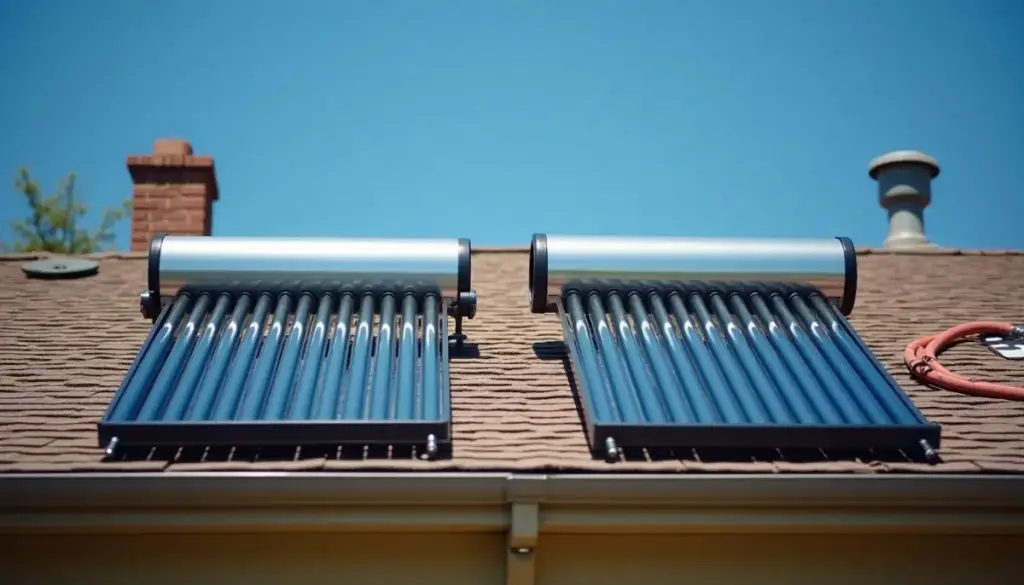
A solar water heater cuts water heating bills 50% to 80%, costs about $3,706 installed on average, and with no federal credit left for 2026 it pays back fastest where electricity is expensive.
Key Takeaways
- The U.S. Department of Energy says a solar water heater should cut water heating bills 50% to 80%.
- HomeAdvisor’s January 2026 average installed price is $3,706 (normal range $1,780 to $5,722).
- Per the IRS, the federal 25D credit ended for expenditures after December 31, 2025 (Public Law 119-21). No federal credit applies to 2026 installs.
- DOE sizing starts at 20 sq ft of collector for each of the first two people and 1.5 gallons of storage per sq ft.
- DOE and ENERGY STAR draw the freeze line at 42 degrees F. Below it, use a glycol closed loop or drainback system.
- At the EIA’s August 2026 average of 18.16 cents per kWh, our model puts an electric tank at $797 a year and a 2.5 SEF solar system at $319.
What is a solar water heater and how does it work?
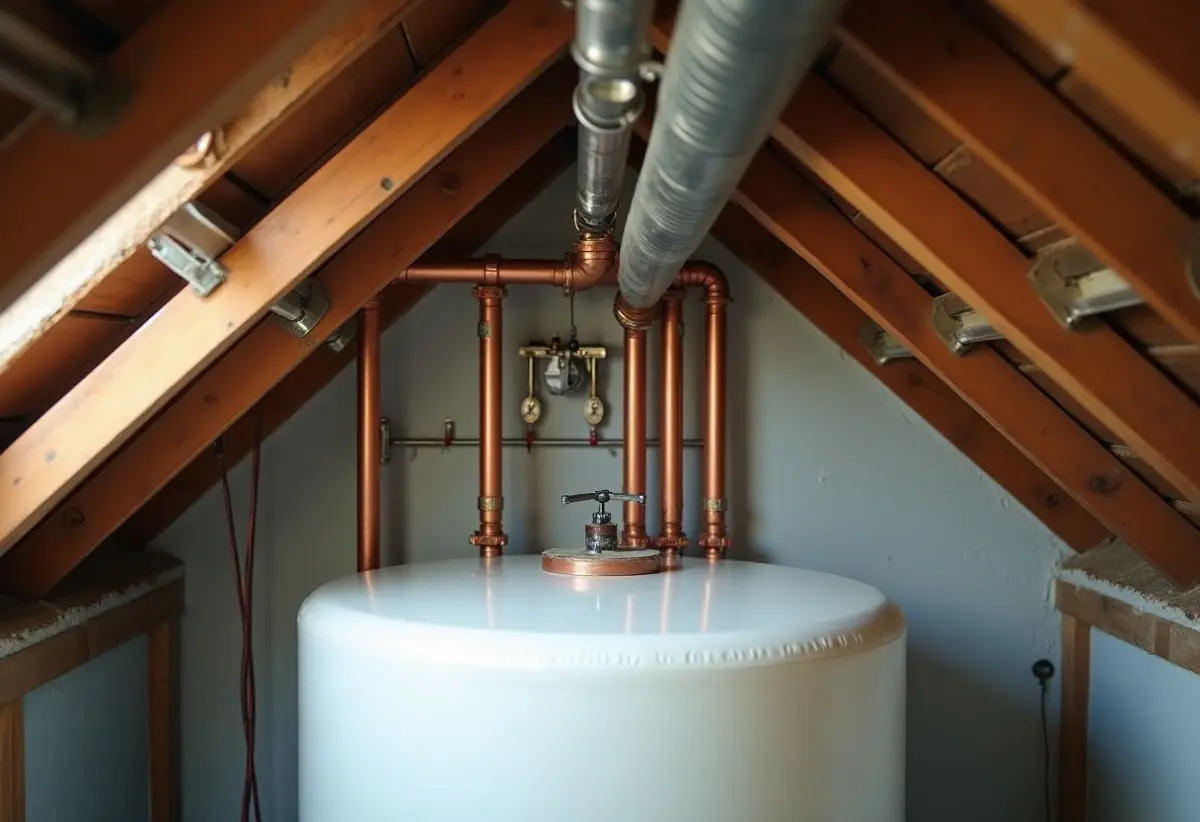
A solar water heater is a roof or ground mounted collector piped to an insulated storage tank. Sunlight heats water or antifreeze in the collector, and a pump (active) or natural circulation (passive) moves that heat to the tank. A conventional heater tops up the temperature on cloudy days and at peak demand.
The DOE Energy Saver guide says these systems work in any climate, though most U.S. homes use them as a preheater. Our overview of the main types of water heaters puts solar next to tank, tankless and heat pump units.
Efficiency is rated by the solar energy factor (SEF), energy delivered divided by gas or electric energy put in. DOE says SEFs run from 1.0 to 11, with 2 or 3 most common. ICC-SRCC publishes certified ratings under its OG-300 program.
What are the types of solar water heaters?
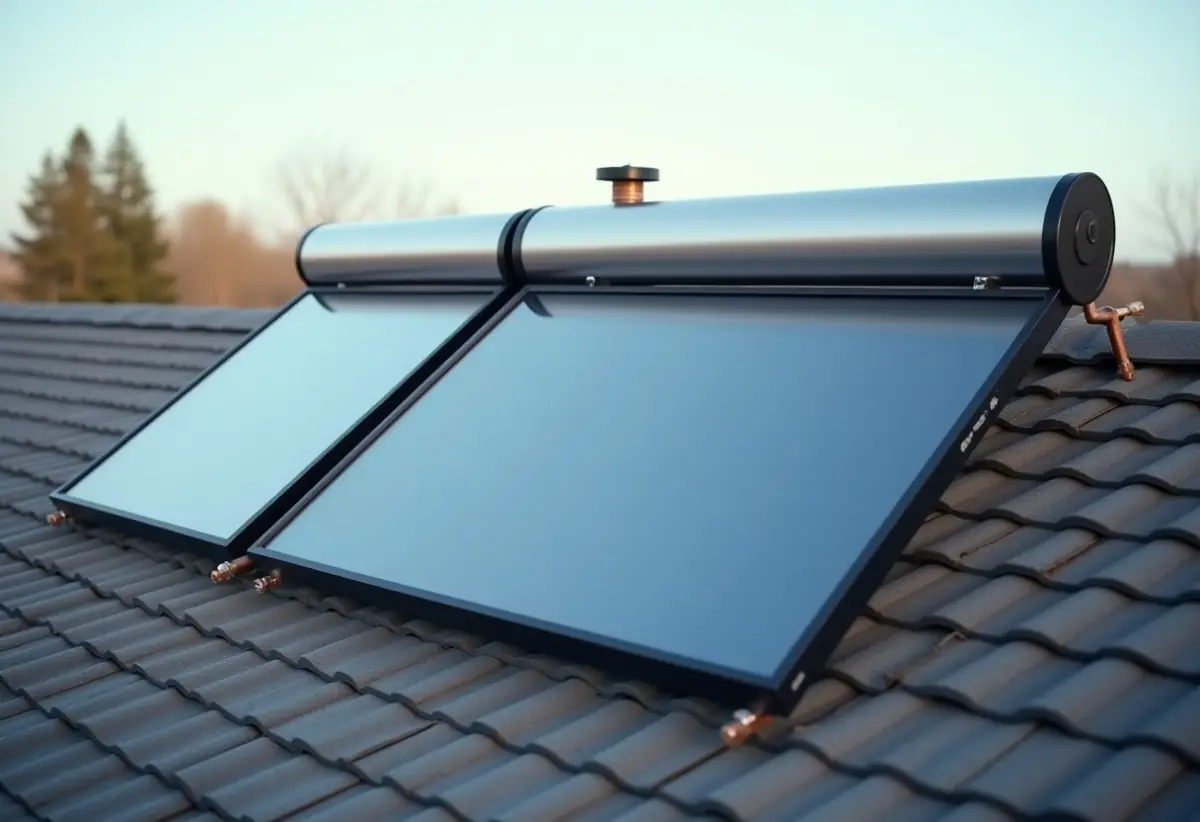
Solar water heaters come in two families. Active systems use pumps and controls, either direct (household water in the collector) or indirect (antifreeze loop plus heat exchanger). Passive systems have no pump and come as integral collector-storage (batch) or thermosiphon units. Climate drives the choice, because only some designs survive a hard freeze.
| Type | Best climate | Pros | Cons | Typical cost |
|---|---|---|---|---|
| Active direct (open loop) | Rarely freezes (DOE) | Simple loop, no heat exchanger loss | Freezes, scales with hard water | $2,000 to $4,000 active system (HomeAdvisor) |
| Active indirect (glycol closed loop) | Freezing winters (DOE) | Glycol protects the collector | Glycol change every 3 to 5 years, pro service | $2,000 to $4,000 active system (HomeAdvisor) |
| Active drainback | Freezing winters | Collector drains when the pump stops | Piping must slope at least 0.25 in per ft (DOE) | Priced within the active range |
| Passive integral collector-storage (batch) | Mild freeze only (DOE) | No pump or controller, low maintenance | Pipes freeze, heavy, loses heat overnight | $3,000 to $4,000 for the unit, materials only (HomeAdvisor) |
| Passive thermosiphon | Moderate to warm | No pump, DOE says most hold about 40 gallons | Roof carries a full tank above the collector | $1,000 to $4,000 passive system (HomeAdvisor) |
Flat-plate vs evacuated-tube collectors
Glazed flat-plate collectors are insulated boxes with a dark absorber plate under glass or polymer, the standard residential choice. Evacuated-tube collectors use rows of glass tubes around a metal absorber fin, and DOE says they show up more in U.S. commercial work. HomeAdvisor lists flat plates at $600 to $1,200 and evacuated tubes at $1,200 to $4,500, materials only.
Do you still need a backup water heater with solar?
Yes. DOE says solar water heating systems almost always need a backup for cloudy days and heavy demand. With a typical solar fraction of 0.5 to 0.75, the sun covers half to three quarters of the yearly load and the backup covers the rest. Your existing electric, gas or tankless heater usually becomes that backup.
- Two-tank system. The solar tank preheats water before it enters your conventional heater.
- One-tank system. The backup element or burner sits inside the solar tank. HomeAdvisor prices an added backup heater, plumbing or controls at $1,000 to $2,500.
- Batch plus tankless. DOE says an ICS collector, which already stores water, may pair with a tankless backup.
The backup still has to meet federal minimums, covered in our explainer on water heater efficiency standards for 2026.

How do solar water heaters handle freezing weather?
DOE says any liquid solar system needs freeze protection where temperatures drop below 42 degrees F, and ENERGY STAR uses the same line. Pipe insulation does not count, since it only cuts heat loss. You either fill the loop with propylene glycol antifreeze or drain the collector and piping, manually or automatically, before the fluid can freeze.
| Your climate | Systems that fit | What to specify |
|---|---|---|
| Never below 42°F (Hawaii, south Florida) | Direct, batch, thermosiphon | Freeze protection optional per DOE threshold |
| Occasional light frost | Batch or thermosiphon with care, drainback | Insulate exposed pipes, drain before a hard freeze |
| Distinct winters | Glycol closed loop or drainback only | ENERGY STAR says steer clear of batch systems here |
DOE specifies propylene glycol, never toxic ethylene glycol, at about 50/50. Drainback loops need collectors and piping sloped at least 0.25 inches per foot (2.1 cm per meter), an insulated air vent at the high point, and a yearly controller check.
Summer overheating is the flip side. DOE says controllers stop the pump when the tank hits a default 180 degrees F, often set lower to prevent scalding, and HomeAdvisor notes mixing valves do the same job. The collector keeps heating, which can vent fluid through the relief valve and age glycol early.
What size solar water heater do you need?
DOE sizes a solar water heater to cover 90% to 100% of summer hot water demand. The rule of thumb is about 20 square feet of collector for each of the first two people, then 8 square feet per extra person in the Sun Belt or 12 to 14 square feet per extra person in the northern U.S. Storage scales at about 1.5 gallons per square foot of collector.
| Household | Collector, Sun Belt | Collector, northern U.S. | Storage at 1.5 gal per sq ft (Sun Belt) |
|---|---|---|---|
| 2 people | 40 sq ft | 40 sq ft | 60 gal |
| 3 people | 48 sq ft | 52 to 54 sq ft | 72 gal |
| 4 people | 56 sq ft | 64 to 68 sq ft | 84 gal |
| 5 people | 64 sq ft | 76 to 82 sq ft | 96 gal |
Figures are our arithmetic from the DOE sizing rule. DOE also lists 50 to 60 gallons for one to two people and 80 gallons for three to four, and its cost example uses two 4 ft by 8 ft collectors (64 sq ft) as a typical home system.
Siting matters as much as size. DOE says face collectors true south (up to 45 degrees east or west costs little), tilt them at your latitude or steeper for winter, and mount only on a roof that will outlast the system’s 25 year life. ENERGY STAR wants direct sun from 10 AM to 4 PM.
How much does a solar water heater cost installed?
A solar water heater costs $3,706 installed on average, with a normal range of $1,780 to $5,722, per HomeAdvisor’s January 2026 update, and high-end systems reach about $12,000. HomeGuide’s 2024 guide reports a $6,000 national average across 38 projects, so quotes of $3,000 to $9,000 are normal.
| Line item | Price range | Source |
|---|---|---|
| Flat-plate collector | $600 to $1,200 (avg $900) | HomeAdvisor, materials only |
| Evacuated-tube collector | $1,200 to $4,500 (avg $2,850) | HomeAdvisor, materials only |
| Solar storage tank, under 80 gal / 80 to 100 gal | $1,400 to $2,800 / $1,700 to $3,800 | HomeAdvisor |
| Pump station (active systems) | $500 to $900 | HomeAdvisor |
| Labor | $70 to $200 per hour | HomeAdvisor |
Roof work drives labor, and DOE says composition shingle roofs are cheaper to mount on than tile or wood shingle. Expect a permit. ICC-SRCC lists the 2024 International Residential Code (Section M2005.1 and Chapter 23) and the 2024 International Plumbing Code (Section 502.1) among the codes that reference its ICC 900/SRCC 300 system standard.
Is solar water heating worth it now that the federal credit is gone?
Solar water heating is worth it mainly where power is expensive, sun is strong and hot water use is high. With the federal credit gone for 2026 installs, payback rests on energy savings and local rebates. Against an electric tank at today’s average price, it lands near 8 to 13 years. Against a heat pump water heater, it never pays back on energy alone.
The IRS FAQ on Public Law 119-21 says the section 25D Residential Clean Energy Credit is not allowed for expenditures made after December 31, 2025, and an expenditure counts as made when installation is completed. A system paid for in 2025 but finished in 2026 does not qualify.
Local money still exists. Hawaii Energy raised its rebates in January 2026 to $2,350 to $2,750 per install, by county and 80 or 120 gallon tank, and Spectrum News reported the program runs through June 30, 2027. Check your state energy office and utility before you sign.
Our payback arithmetic
DOE’s benchmark household of three uses 64.3 gallons of hot water a day, heated from 58 to 135 degrees F, or 4,391 kWh a year. We price it at the EIA’s August 2026 residential average of 18.16 cents per kWh, treat the electric tank as UEF 1.0 as DOE does, and subtract DOE’s O&M allowance of 0.5% of system cost per year.
| Scenario | Annual savings | Simple payback |
|---|---|---|
| SEF 2.5 vs electric tank, $3,706 system | $478 less $19 O&M = $460 | 8.1 years |
| Same, $6,000 system | $478 less $30 = $448 | 13.4 years |
| Hawaii (47.18 cents/kWh), $6,000 less $2,350 rebate | $1,243 less $30 = $1,213 | 3.0 years |
| SEF 2.5 vs heat pump (UEF 3.30) | Solar costs $77 more a year | No energy payback |
| DOE example, $4,000 system vs gas at $1.50/therm | $261 | 15.3 years |
Sales pitches skip the heat pump row. An ENERGY STAR heat pump water heater must reach UEF 3.30, beating a 2.5 SEF solar system on running cost, so read our heat pump water heater pros and cons first. Solar gains ground with ENERGY STAR systems (SUEF of at least 3.00 with electric backup) and in high-price states such as California, at 29.75 cents per kWh in August 2026.
What maintenance does a solar water heater need?
Passive solar water heaters need little upkeep. Active systems need a yearly check and fluid service every few years. DOE says simple systems can go 3 to 5 years between pro visits, and electrical parts usually need replacing once after about 10 years.
- Once a year, check collectors for new shade at mid-morning, noon and mid-afternoon (DOE), plus cracked glazing, loose bolts and worn flashing.
- Lift the pressure relief valve lever to confirm it is not stuck open or closed.
- After mid-morning on a sunny day, listen for the pump. If it is silent, DOE says the culprit is often the starting capacitor. If it runs at night, suspect a shorted collector sensor on the delta-T controller.
- Have a pro test glycol pH and freeze point, replacing it every 3 to 5 years.
- With hard water, circulate vinegar through the collector or hot water loop every 3 to 5 years, and flush the tank.
ENERGY STAR certified solar systems carry warranties of at least 10 years on the collector, 6 on the sealed system and 2 on controls. Our guide to ENERGY STAR water heaters explains how the label works across every fuel type.
How we sourced this
We consulted 18 pages on October 28, 2026, and cited 9 publishers. Types, sizing, freeze rules, maintenance and the payback method come from DOE Energy Saver (live pages blocked our fetches, so we read 2025 archived copies). Tax status comes from the IRS Public Law 119-21 FAQ, prices from EIA Electric Power Monthly Table 5.6.A (August 2026), criteria from ENERGY STAR and ICC-SRCC, costs from HomeAdvisor (January 2026) and HomeGuide (2024), rebates from Hawaii Energy. The chart and payback table are our calculations. We excluded 2026 gas price modeling, brand or model ratings, and code text we could not read directly.
Frequently asked questions
How much does a solar water heater cost?
HomeAdvisor puts the average installed price at $3,706, with most jobs between $1,780 and $5,722 and high-end systems near $12,000 (January 2026 update). HomeGuide reports a $6,000 national average from 38 projects. Flat-plate collectors alone run $600 to $1,200 and evacuated tubes $1,200 to $4,500, materials only.
Is a solar water heater worth it?
It pays best where electricity is expensive and hot water use is high. With DOE’s benchmark household and the EIA August 2026 average of 18.16 cents per kWh, a 2.5 SEF system saves about $478 a year against an electric tank, roughly an 8 to 13 year payback. Against a heat pump water heater it saves nothing.
Is there a federal tax credit for solar water heaters in 2026?
No. The 30 percent section 25D Residential Clean Energy Credit ended for expenditures after December 31, 2025, under Public Law 119-21. The IRS counts the expenditure when installation is completed, so a system paid for in 2025 but finished in 2026 does not qualify. Some state and utility rebates remain.
Do solar water heaters work in winter?
Yes, if the system is built for freezing weather. DOE says liquid systems need freeze protection wherever temperatures fall below 42 degrees F. Glycol closed loops and drainback systems handle hard winters, while batch and direct systems belong in mild climates. Winter output drops, so the backup heater works harder.
How long does a solar water heater last?
DOE plans around a 25 year life for a solar water heating system, which is why it says to mount one only on a new or sound roof. Systems with pumps and controllers usually need a replacement part or two after 10 years, and closed-loop glycol needs changing every 3 to 5 years.
Do you still need a regular water heater with solar?
Almost always. DOE says solar systems almost always need a backup for cloudy days and heavy demand. In a two-tank setup the solar tank preheats water for your existing heater. In a one-tank setup an element or burner sits inside the solar tank. Typical systems cover 50 to 75 percent of the load.
What size solar water heater do I need?
DOE’s rule of thumb is about 20 square feet of collector for each of the first two people, plus 8 square feet per extra person in the Sun Belt or 12 to 14 in the northern U.S. Storage runs about 1.5 gallons per square foot, so a Phoenix family of four needs about 56 square feet and 84 gallons.