Why Are My Pipes Sweating?
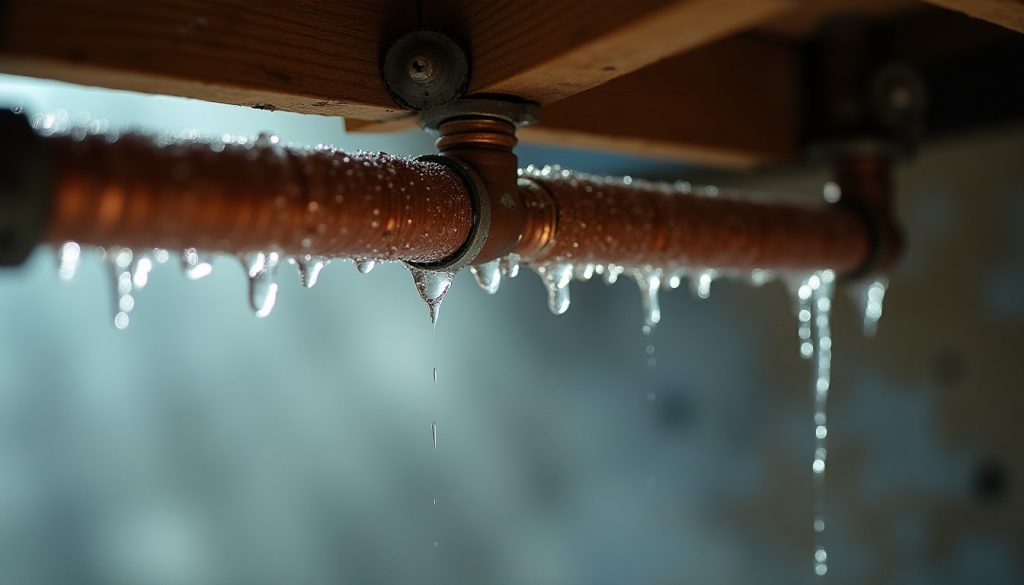
Why are my pipes sweating? The cold water inside has chilled the pipe surface below the dew point of the surrounding air, so moisture condenses on it; insulate the pipe and keep humidity under 60%.
Key Takeaways
- Pipes sweat when their surface is colder than the air’s dew point. At 75 degrees F and 60% relative humidity, the dew point is about 60.2 degrees F (our Magnus formula calculation, checked against a National Weather Service example).
- Supply water can be far colder than that. The City of East Moline, Illinois, reports winter tap water of 34 to 38 degrees F from the Mississippi River.
- EPA says to keep indoor humidity below 60%, ideally 30% to 50%, and to cover cold water pipes with insulation.
- Wet materials dried within 24 to 48 hours usually do not grow mold, per EPA. Sweating pipes rewet the same spot every humid day.
- A cold line that sweats all day with no one using water points to flow somewhere. EPA WaterSense says 9% of homes have leaks wasting 50 gallons or more per day.
Why are my pipes sweating in the first place?
Your pipes are sweating because the pipe surface is colder than the dew point of the air around it. When humid air touches that cold surface, it cools to its dew point and the water vapor turns into liquid droplets. The water comes from the air, not from inside the pipe.
The National Weather Service defines dew point as the temperature air must be cooled to, at constant pressure, to reach 100% relative humidity. Relative humidity alone does not tell you whether a pipe will sweat. Dew point does, because you can compare it directly to the pipe’s surface temperature.
If the pipe surface is below the dew point, it sweats. If it is above, it stays dry. Every fix moves one of those two numbers.
Dew point by air temperature and humidity
Any cold water pipe colder than the number in the cell will collect condensation.
| Air temperature | 40% RH | 50% RH | 60% RH | 70% RH |
|---|---|---|---|---|
| 65 degrees F | 40.1 F | 45.9 F | 50.8 F | 55.0 F |
| 70 degrees F | 44.6 F | 50.5 F | 55.5 F | 59.8 F |
| 75 degrees F | 49.0 F | 55.1 F | 60.2 F | 64.6 F |
| 80 degrees F | 53.5 F | 59.7 F | 64.9 F | 69.3 F |
We calculated every cell with the Magnus formula (coefficients 17.625 and 243.04 degrees C, from Alduchov and Eskridge). As a check, the NWS example pairs 80 degrees F air at 50% relative humidity with a 60 degree F dew point. Our formula gives 59.7 degrees F for the same conditions.
At 80% humidity a pipe must stay above about 68 degrees to stay dry, which almost no cold line does. At 40% it only needs to stay above 49 degrees.
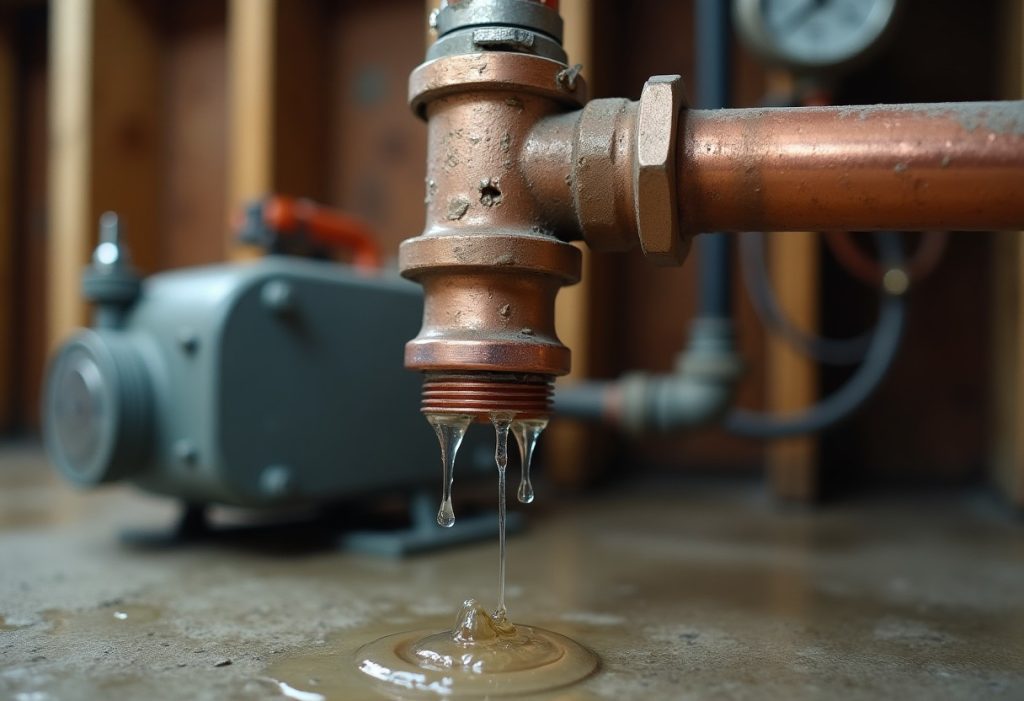
How cold is the water in your pipes by season?
Cold supply water changes temperature with the seasons and with its source, and that sets how far below the dew point your pipes run. River and lake systems swing the most. The City of East Moline, Illinois, which draws from the Mississippi River, reports winter tap water of 34 to 38 degrees F, far below any indoor dew point.
Well and groundwater systems swing less, because water a few dozen feet down tracks the long-run average ground temperature for the region. The EPA shallow groundwater temperature map hosted by the Building America Solution Center shows how much that baseline varies from the northern states to the Gulf Coast.
Summer is often the worst season anyway. Humid summer air pushes the dew point toward the 60s, while winter indoor air is usually too dry to condense on anything but the coldest pipe.
Flow matters too. Still water warms toward room temperature, and every flush or shower pulls fresh cold water through and restarts the sweat.
Sweating pipes vs leak: how do you tell the difference?
Sweat covers the whole cold run with even, fine droplets and shows up on humid days; a leak wets one point, usually a joint, valve, or fitting, and keeps going in any weather. Hot water lines almost never sweat, so water on a hot pipe is a leak. The fastest proof is a dry pipe, a tissue, and the water meter.
| Clue | Sweat or leak? | How to confirm |
|---|---|---|
| Fine droplets evenly along the whole cold water line | Sweat | Wipe it dry. On a humid day, droplets return evenly within minutes. |
| Water only at one fitting, valve, or solder joint | Likely leak | Dry the fitting, wrap it in tissue, and look for one soaked spot. |
| Hot water pipe is wet | Leak | Hot lines sit above the dew point. Trace the water upstream to its source. |
| Dripping stops when the AC runs or a dehumidifier is on | Sweat | Check a hygrometer. Lower humidity should dry the pipe within hours. |
| Meter moves with every fixture off | Leak or running fixture | Run the EPA WaterSense two-hour meter test. |
| Green or white crust, or a fine spray | Leak | Inspect the crusted spot for a pinhole or failed joint. |
| Cold pipe sweats all day while no one uses water | Constant flow somewhere | Do the food coloring test on every toilet tank. |
Use this order to confirm it.
- Dry the pipe. Wipe the whole visible run with a dry towel, including fittings and valves.
- Do the tissue test. Wrap dry tissue or paper towel around the pipe at several points, one of them over a fitting. Check in 15 to 30 minutes. Even dampness everywhere means sweat. One soaked patch means a leak.
- Check the fittings. Run a dry finger under each joint, valve stem, and compression nut. Leaks tend to drip from the low side of a fitting.
- Watch the meter. EPA WaterSense says to read the water meter before and after a two-hour period when no water is used. If the reading changes at all, you probably have a leak.
If the tissue or meter points to a leak, stop chasing humidity and fix a leaking pipe first. Insulating over a leaking joint hides the problem and lets it soak the foam.
Why do sweating pipes matter if it is only condensation?
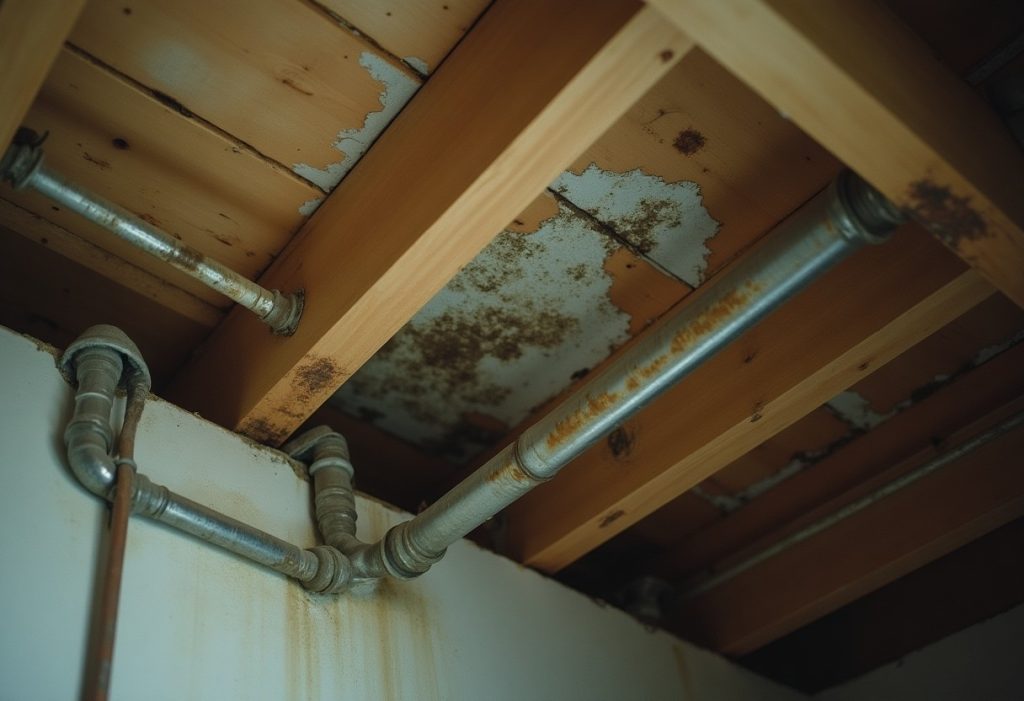
Condensation is clean water, but a sweating pipe drips onto the same spot every humid day, and that steady wetting causes the damage. The drips soak drywall, subfloor, framing, and anything stored below. Over a summer, one cold line can stain ceilings, rot sill plates and joists, rust steel hangers and ductwork, and grow mold on cardboard and paper-faced drywall.
The EPA mold and moisture guide says wet materials dried within 24 to 48 hours usually will not grow mold. A sweating pipe never gives the area that drying window. EPA also notes that rust is a sign condensation is happening and that the pipe should be insulated.
How to stop pipes from sweating?
To stop pipes from sweating, raise the pipe’s surface temperature above the dew point or lower the dew point below the pipe. Closed-cell foam insulation does the first. A dehumidifier does the second. Most damp basements need both, plus a fix for any fixture that keeps cold water flowing all day.
- Stop constant flow. Check every toilet, the water softener, and irrigation lines before buying anything. A cold line that never rests never warms up.
- Measure the air. A basic hygrometer tells you the relative humidity. Plug its reading and the room temperature into the dew point table above.
- Insulate the cold lines. Use closed-cell foam, such as polyethylene or elastomeric rubber tube, sized to the pipe’s outside diameter so it fits snug. Tape or glue every lengthwise seam and every butt joint, and wrap valves and fittings too. Our guide to pipe insulation types and how to install them covers sizing and R-values.
- Dry the air. Set a dehumidifier to 50% and drain it to a floor drain or condensate pump so it runs without emptying. EPA’s ceiling is 60%, and its ideal range is 30% to 50%.
- Move the air. A fan near a sweating run helps surfaces dry faster. Keep basement windows shut on muggy days, when outdoor air often carries a higher dew point.
Closed-cell foam matters because condensation control depends on a vapor-tight surface. Open-cell or fiberglass wrap without a sealed jacket lets humid air soak through to the cold pipe, so water forms inside the insulation where you cannot see it. If the insulation itself drips, look for an open seam or a gap at a fitting.
Does a warmer basement help?
Only partly. Heating the air lowers relative humidity but leaves the dew point unchanged, because the water vapor is still there, so the pipe still sweats while cold water flows. Warmth helps still pipes and wet surfaces dry faster. Pair heat with a dehumidifier, not in place of one.
Why are my pipes sweating nonstop, even at night?
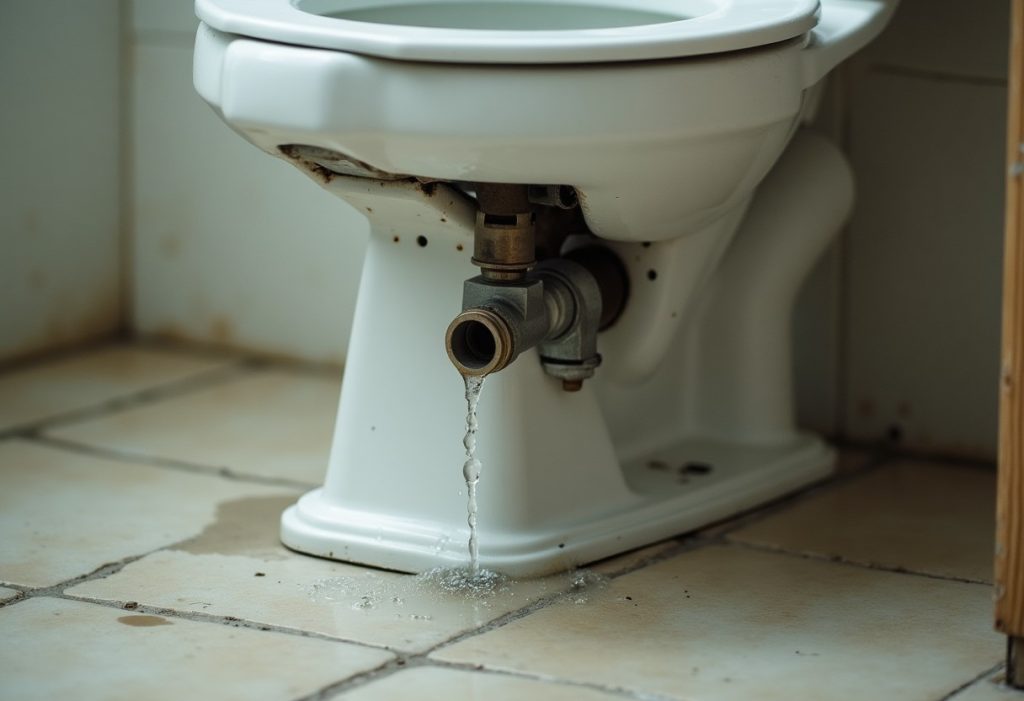
If your pipes are sweating nonstop, even overnight when no one is using water, cold water is probably flowing through them. A running toilet is the usual cause. Its fill valve keeps letting fresh cold water into the tank, so the supply line, and often the tank itself, stays cold and wet around the clock.
EPA WaterSense suggests putting a few drops of food coloring in the toilet tank. If color shows up in the bowl after 10 minutes, the flapper is leaking. WaterSense also reports that 9% of homes have leaks wasting 50 gallons or more per day, and that the average household’s leaks waste more than 9,300 gallons a year.
If the toilet is fine, check the softener, irrigation, and buried service line; the meter test catches all of them. A toilet tank that sweats on its own, with no leak, is the same dew point problem on porcelain, and our guide to toilet tank sweating covers liners and anti-sweat valves.
Which pipes sweat most, and does pipe material matter?
Cold water supply lines sweat most, and bare copper sweats faster than plastic. Copper conducts heat far better than PEX or CPVC, so its outer surface sits almost at the water’s temperature. Plastic walls insulate a little, keeping the outside slightly warmer. In a humid enough room, every cold line condenses regardless of material.
If your home has copper plumbing, expect the bare cold runs in a basement or crawlspace to be the first to bead up each summer.
Well pressure tanks and the cold side of a water softener sweat too. Call a plumber when the tissue or meter test points to a leak, when a hot line is wet, or when you cannot find why a cold line runs constantly.
How we sourced this
We reviewed top-ranking pages for this query in October 2026, then went to primary sources. The dew point definition and check value come from the National Weather Service (La Crosse office). Humidity targets, the 24 to 48 hour mold window, and the advice to insulate cold pipes come from EPA’s mold and moisture guide. Leak statistics and the meter and dye tests come from EPA WaterSense. The winter water temperature comes from a City of East Moline Water Department notice. Every dew point in the tables and chart is our own calculation with the Magnus formula (Alduchov and Eskridge coefficients), rounded to 0.1 degree F and checked against the NWS example. We excluded manufacturer thickness claims and unverified contractor blogs.
Frequently asked questions
Is it normal for cold water pipes to sweat?
Yes, on humid days it is normal physics, not a plumbing defect. Any pipe whose surface sits below the dew point of the surrounding air collects condensation, the same way a glass of ice water does. At 75 degrees F and 60% relative humidity the dew point is about 60 degrees F, so cold lines in a damp summer basement often bead up. Normal does not mean harmless, because the drips still add up.
How do I know if my pipe is leaking or sweating?
Dry the pipe completely, wrap a dry tissue around it, and check back in 15 to 30 minutes. Sweat dampens the tissue evenly along the whole cold run, while a leak soaks one spot, usually at a joint, valve, or fitting. Then turn off every fixture and watch the water meter for two hours. EPA WaterSense says any movement on the meter probably means a leak.
How do I stop my pipes from sweating?
Wrap the cold water lines in closed-cell foam insulation sized to the pipe, then tape every seam and butt joint so humid air cannot reach the metal. Run a dehumidifier to keep the space below 60% relative humidity, the upper limit EPA gives, and ideally between 30% and 50%. Fix any running toilet or other constant flow first, since moving cold water keeps the pipe cold all day.
Can sweating pipes cause mold?
They can. Condensation that drips onto drywall, wood framing, insulation, or stored boxes keeps those materials wet, and EPA guidance says mold usually will not grow if wet materials are dried within 24 to 48 hours. Sweating pipes rewet the same spot every humid day, so that drying window never arrives. Rust on steel parts near the pipe is a sign the condensation has been going on for a while.
Will a dehumidifier stop pipes from sweating?
Often, yes, because it lowers the dew point of the air. At 75 degrees F, dropping relative humidity from 60% to 50% pulls the dew point from about 60 degrees F to about 55 degrees F, by our Magnus formula calculation. Water colder than that will still sweat, so in very cold supply regions a dehumidifier works best paired with pipe insulation.
Why are my pipes sweating when no water is running?
If nobody is using water and the cold line still sweats for hours, water is probably moving somewhere. A pipe full of still water warms toward room temperature and usually stops sweating. A running toilet, a dripping faucet, or a hidden leak keeps fresh cold water flowing through the line. EPA WaterSense suggests a few drops of food coloring in the toilet tank to find a silent toilet leak.
Why do pipes sweat in winter?
Winter supply water is at its coldest, so the pipe surface can drop far below the air’s dew point. The City of East Moline, which draws from the Mississippi River, reports winter water of 34 to 38 degrees F. Indoor air is usually dry in winter, but laundry rooms, bathrooms, and rooms with humidifiers can still hold enough moisture to condense on a pipe that cold.


