Pipe Insulation: Types, R-Value, and How to Install It
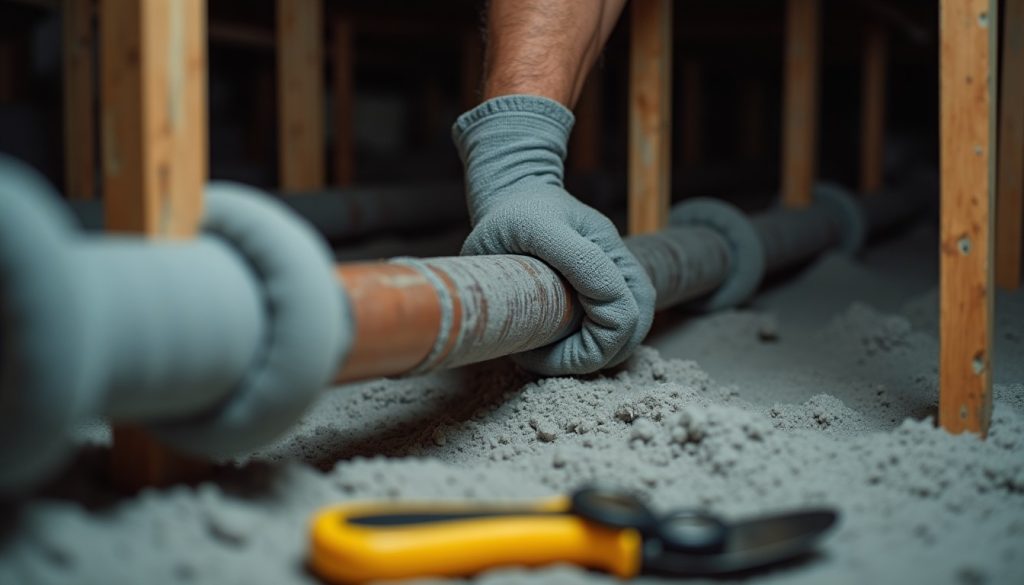
Pipe insulation does two jobs: it protects pipes from freezing below about 20 F, and on hot water lines the U.S. Department of Energy says it raises delivered temperature 2 to 4 F while cutting heat loss.
Key Takeaways
- Insulating hot water pipes reduces heat loss by 25% to 45% and raises delivered water temperature 2 to 4 F, per the U.S. Department of Energy (U.S. Department of Energy).
- DOE estimates pipe insulation on hot lines trims water-heating costs by roughly 3% to 4% a year (U.S. Department of Energy).
- Uninsulated pipes in unconditioned spaces start to freeze around 20 F, per building-science research cited by DOE (DOE Building America Solution Center).
- Elastomeric foam gives about R-7 at a 1-inch wall; fiberglass runs about R-2.9 to R-3.8 per inch (U.S. Department of Energy).
- Standard polyethylene foam sleeves cost roughly $0.10 to $0.30 per foot, making the accessible runs a low-cost project.
- Water heating is about 18% of a typical home’s energy use, so cutting pipe heat loss adds up (U.S. Department of Energy).
Why does pipe insulation matter?
Two reasons: freeze protection and hot-water efficiency. On cold-vulnerable runs, a foam sleeve slows how fast a pipe loses heat to freezing air, buying time before water inside can freeze and burst. On hot water lines, the same jacket keeps heat in the water instead of shedding it into the wall or crawlspace.
The energy payoff is measurable. The U.S. Department of Energy reports that insulating hot water pipes reduces heat loss by 25% to 45% and raises the temperature of water delivered to the tap by 2 to 4 F over an uninsulated pipe. That means you can set your water heater temperature a notch lower and still get comfortable water, and you waste less water waiting for it to warm up. Cutting that wait time also matters on the cold side, where condensation on cold water lines can quietly damage walls and ceilings.
The freeze side is about avoiding a burst pipe. Insulation is a core part of how you prevent frozen pipes, though it slows heat loss rather than adding heat, so it is one layer of protection, not a guarantee in extreme cold.
What are the main types of pipe insulation?
Most home jobs use one of three passive materials plus, for freeze-prone runs, an active electric option. Polyethylene foam sleeves are the common choice for water lines, elastomeric rubber foam wins on tight bends and condensation, fiberglass handles high heat near the water heater, and electric heat cable adds warmth where insulation alone will not hold off a freeze.
| Type | R-value / use | Pros | Best for |
|---|---|---|---|
| Polyethylene foam sleeve | About R-3 to R-4 at common wall thicknesses | Cheap, pre-slit, snaps over pipe, self-seal seam versions | General hot and cold water lines in basements and crawlspaces |
| Elastomeric (rubber) foam | About R-4 to R-7 per inch | Flexible around bends, closed-cell resists moisture and condensation | Cold lines prone to sweating, tight elbows, humid spaces |
| Fiberglass pipe insulation | About R-2.9 to R-3.8 per inch | Non-combustible, handles high pipe temperatures | The first feet of very hot pipe and anything near a flue or vent |
| Electric heat cable (heat tape) | Adds heat; no fixed R-value | Active protection, self-regulating versions adjust to cold | Freeze-prone runs in unheated crawlspaces and exterior walls |
What R-value do you need, and how thick should pipe insulation be?
For typical home water lines, foam rated around R-3 to R-4 is enough. R-value measures resistance to heat flow, and it climbs with wall thickness and with the material. Elastomeric foam gives roughly R-7 at a 1-inch wall, while fiberglass runs about R-2.9 to R-3.8 per inch, per the U.S. Department of Energy. For freeze protection, covering every inch of pipe matters more than chasing a high number.
The chart compares the three passive materials at a 1-inch wall thickness. A longer bar means more resistance to heat loss for the same thickness.
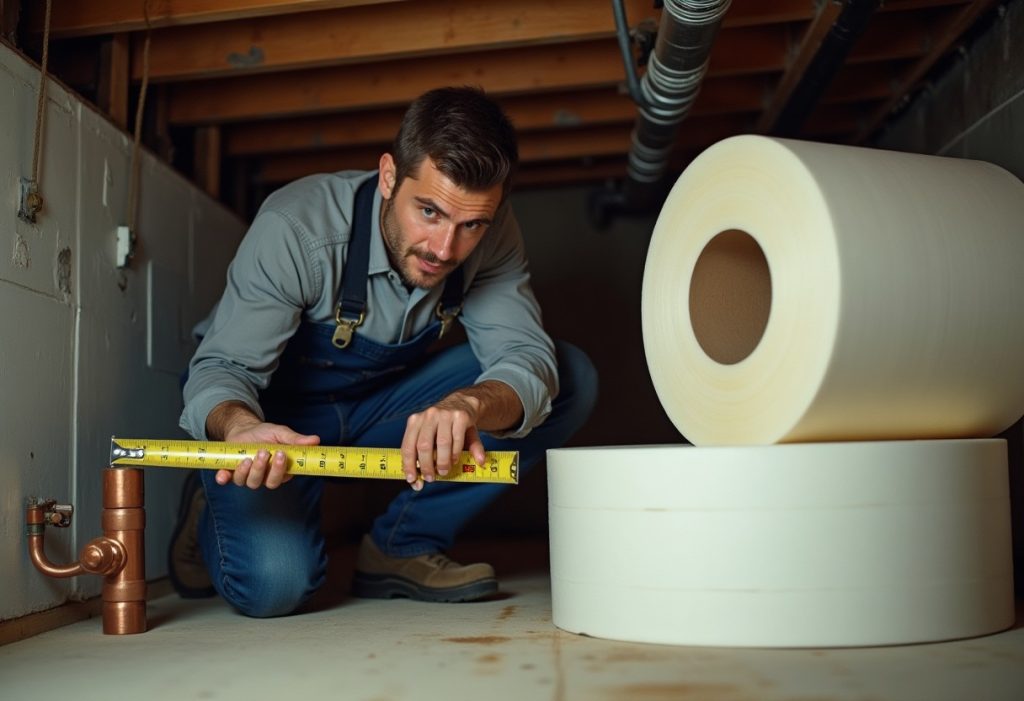
Match the sleeve to the pipe first. Foam sleeves are sold by pipe size (the inside diameter of the sleeve) and by wall thickness. A sleeve that is too loose leaves gaps that leak heat or let cold air reach the pipe, so buy for a snug fit over your actual pipe’s outside diameter.
Where should you insulate pipes in your home?
Insulate pipes that run through unheated or unconditioned space and the hot lines near the water heater. Those are the runs that either freeze or waste the most energy. Interior pipes inside heated walls need far less attention. Prioritize by risk and by payoff.
- Unconditioned spaces: crawlspaces, attics, garages, and unheated basements, where winter air can reach the freeze range.
- Exterior walls: any supply line running through an outside wall, the classic freeze point in a cold snap.
- Hot supply near the heater: the first several feet of hot pipe leaving the water heater, where insulation captures the most energy savings.
- Cold lines that sweat: cold pipes in humid areas, where insulation stops condensation from dripping onto framing and drywall.
Insulating hot and cold lines that run near each other also keeps the cold line from warming the hot one and the other way around. Adding pipe insulation is a natural item on your seasonal plumbing maintenance list before the first hard freeze.
How do you install foam pipe insulation?
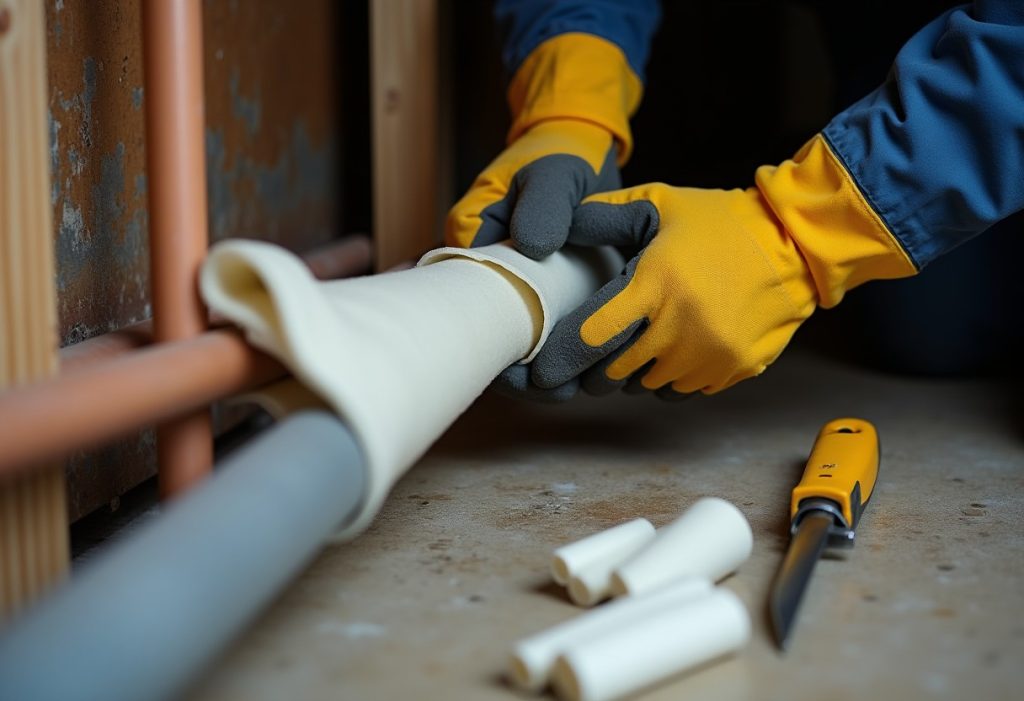
Foam sleeve installation is a basic DIY job: measure, cut to fit, snap the pre-slit sleeve over clean dry pipe, and seal the seams and joints. The goal is full, gap-free coverage, because any bare gap becomes the weak point for heat loss or freezing. Work through the run in order.
- Measure and buy right. Total the exposed pipe length and note the pipe’s outside diameter, then buy sleeves sized to fit snugly with a wall thickness suited to your climate.
- Clean and dry the pipe. Wipe off dust and moisture so self-seal adhesive strips bond and so you are not sealing in condensation.
- Cut sleeves to length. Use a utility knife or scissors to cut each piece, mitering the ends at 45 degrees where two pieces meet at an elbow.
- Snap the sleeve on. Open the pre-cut slit, fit it over the pipe, and press the slit closed. Peel and press the self-seal adhesive strip, or tape the seam if the sleeve lacks one.
- Seal the joints. Butt sections tight and tape every seam, elbow, and tee so there are no exposed gaps of bare pipe.
- Keep foam clear of heat. Stop foam short of flues, gas vents, and the hottest section at the heater, and switch to fiberglass there.
When do you need heat cable instead of insulation?
Use electric heat cable when a pipe runs through a space so cold that insulation alone will not stop a freeze. Insulation slows heat loss but adds no heat, so on the worst runs, an unheated crawlspace pipe, an exterior-wall line, or an exposed line in a cabin, heat cable actively warms the pipe. Self-regulating cable raises output as the temperature drops and shuts off when it warms.
The pattern for a high-risk run is heat cable first, insulation over it. Run the cable along the pipe per the manufacturer’s instructions, then cover both with a foam sleeve so the added heat is held against the pipe. Confirm the cable is rated for pipe freeze protection and, where required, plug it into a GFCI outlet.
Even with cable and insulation, a hard freeze can still catch a pipe, so in a deep cold snap let a distant faucet drip so water keeps moving. If a line does freeze, know how to thaw a frozen pipe safely before it can burst.
How we sourced this
Energy figures come from U.S. Department of Energy Energy Saver guidance: insulating hot water pipes reduces heat loss 25% to 45% and raises delivered water temperature 2 to 4 F, with an estimated 3% to 4% annual water-heating saving, and water heating is about 18% of home energy use. R-value ranges reflect DOE insulation material data and manufacturer specifications; exact values vary by product, wall thickness, and temperature, so we present them as approximate. The 20 F freeze threshold reflects building-science research on uninsulated pipes in unconditioned spaces cited by DOE’s Building America Solution Center. Cost per foot reflects current U.S. retail ranges for polyethylene foam sleeve and will vary by size and region. We consulted DOE and standards sources and excluded vendor performance claims we could not verify.
Frequently asked questions
Does pipe insulation really save energy?
Yes, on hot water lines. The U.S. Department of Energy says insulating hot water pipes reduces heat loss by 25% to 45% and raises the delivered water temperature 2 to 4 F, which lets you set the water heater lower and wait less for hot water. DOE estimates it trims water-heating costs by roughly 3% to 4% a year.
What R-value do I need for pipe insulation?
For most home hot and cold water lines, foam sleeve with an R-3 to R-4 rating is plenty. Elastomeric foam gives about R-7 at a 1-inch wall, fiberglass about R-4 per inch. For freeze protection in unheated spaces, wall thickness and covering every inch matter more than chasing a high R-value.
Do you insulate hot water pipes, cold water pipes, or both?
Insulate both where it helps. Hot lines save energy and deliver hotter water. Cold lines get insulation mainly to prevent freezing in unconditioned spaces and to stop summer condensation that drips and rots framing. In crawlspaces, attics, and exterior walls, wrapping both lines is the safe call.
What temperature do pipes freeze at?
Uninsulated pipes in unconditioned spaces begin to freeze when outdoor air drops to about 20 F, per building-science research cited by the U.S. Department of Energy. Pipes in exterior walls, attics, and crawlspaces are most at risk. Insulation slows heat loss but does not add heat, so extreme or prolonged cold can still freeze an insulated pipe.
How much pipe insulation do I need and what does it cost?
Measure the total length of exposed pipe and the pipe’s outside diameter so you buy sleeves that fit. Standard polyethylene foam sleeves run roughly $0.10 to $0.30 per foot at home centers, so insulating the accessible runs in a basement or crawlspace is usually a low-cost afternoon project.
Can I use foam pipe insulation near a water heater flue?
No. Polyethylene and elastomeric foam are combustible and must stay back from flues, gas vents, and other high-heat surfaces. Use fiberglass pipe insulation, which is non-combustible and rated for high temperatures, on the first few feet of hot pipe leaving the heater and anywhere near a vent.
Is pipe insulation enough to prevent frozen pipes?
Not always. Insulation slows heat loss but adds no heat, so a pipe in a very cold, unheated space can still freeze during a hard or long cold snap. For high-risk runs, pair insulation with electric heat cable rated for pipes, and in a deep freeze let a faucet drip so water keeps moving.
What is the difference between heat tape and pipe insulation?
Pipe insulation is a passive foam or fiberglass jacket that slows heat loss. Heat tape, also called heat cable, is an electric cable that actively warms the pipe. Self-regulating cable raises output as it gets colder and shuts off when warm. In freeze-prone spots, run heat cable along the pipe first, then cover both with insulation.


