Tankless Water Heater Not Working? 9 Causes and Fixes
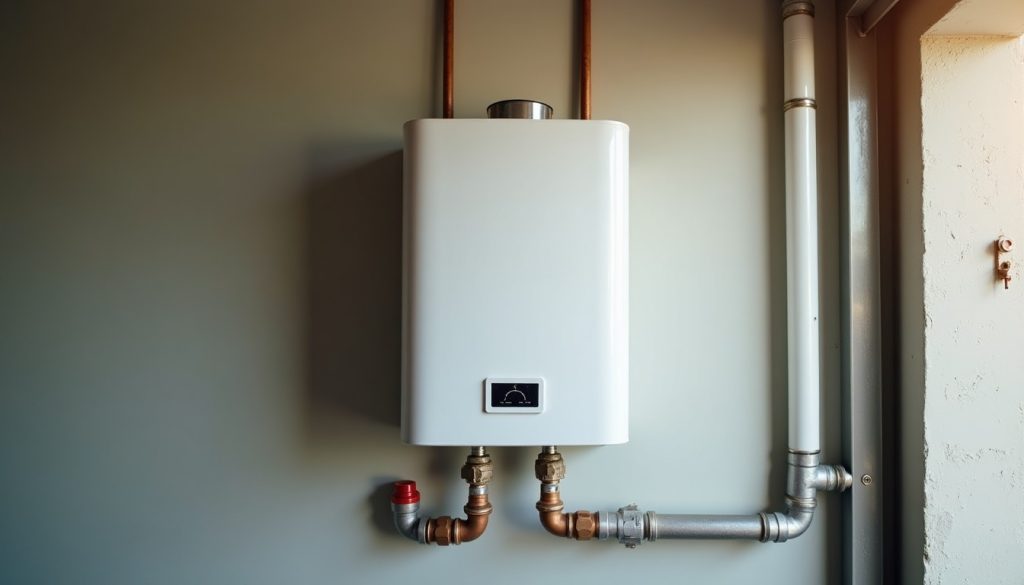
A tankless water heater not working almost always traces to low flow, scale, a clogged inlet filter, short gas supply, blocked venting, lost power, ignition, freezing, or overdemand, and the error code usually tells you which.
Key Takeaways
- Rinnai gas tankless units need 0.4 to 0.6 gallons per minute through the hot side to ignite and 0.26 gpm to keep firing, per Rinnai’s residential FAQ.
- Navien lists a 0.5 gpm minimum flow rate for its NPE-2 condensing models in the NPE-2 Quick Facts sheet.
- A Rinnai RU199 burns up to 199,000 Btu/h, and Rinnai’s sizing table caps a 1/2 inch natural gas line feeding it at 50 feet.
- Rinnai’s manual maps code 10 to blocked venting or a full condensate trap, 11 to no ignition, and 12 to no flame.
- Freeze protection works down to minus 22°F on indoor Rinnai models only while the unit has 120 volt power, per the Rinnai manual.
- Navien’s NPE-240A2 delivers 11.2 gpm at a 35°F rise but 5.6 gpm at a 67°F rise, per Navien’s spec sheet.
Why is my tankless water heater not working?
A tankless water heater stops making hot water when one of its firing conditions fails. The unit needs enough water flow to trip its flow sensor, a clean heat exchanger, a full gas supply, open venting, 120 volt power, a working igniter and flame rod, and demand that stays inside its capacity. Find which condition broke and the fix is usually short.
Start with the display. A blank screen means power. No code and no response at a tap means flow is too low to fire. A numbered code narrows nine causes to one or two.
| Symptom | Likely cause | Fix | DIY or pro |
|---|---|---|---|
| No hot water at one low-flow faucet, fine at the shower | Flow below the activation rate | Open the tap wider, clean the aerator, lower the set temperature | DIY |
| Hot water fades, flow drops, temperature swings | Scale in the heat exchanger | Descale with vinegar or an approved descaler | DIY with a pump kit, or pro |
| Weak flow at every hot tap, no code | Clogged inlet water filter screen | Close the valves, pull and rinse the filter | DIY |
| Code 11 or 12 on a Rinnai, ignition failure on others | Gas valve closed, empty propane tank, undersized gas line, dirty flame rod | Check valves and tank; have gas pressure and the flame rod tested | Check DIY, repair pro |
| Code 10 on a Rinnai, unit shuts off mid-use | Blocked intake, exhaust, or condensate line | Clear the vent terminal and condensate drain | DIY for visible debris, pro for vent work |
| Blank display, no response | Tripped breaker, unplugged cord, failed GFCI | Reset the breaker or outlet | DIY; pro if it trips again |
| Burst of hot, then cold, then hot | Cold water sandwich | Recirculation or a small buffer tank | Pro install |
| Lukewarm when two showers and the washer run | Demand above capacity | Stagger use or upsize | Habit change or pro |
| Warm water from the cold side, odd temperatures | Crossed lines or a failed mixing valve cartridge | Run a crossover test, replace the cartridge | DIY test, pro repair |
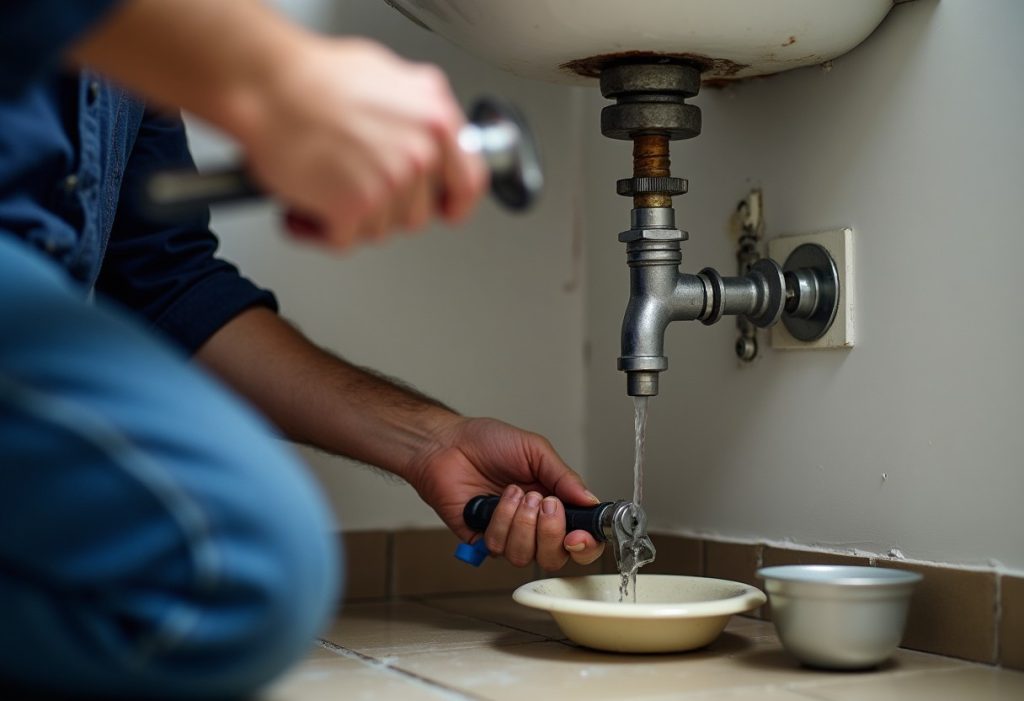
Is the water flow too low to fire a tankless water heater?
Yes, low flow is the most common reason a tankless water heater stays cold at one fixture. The burner only lights once the flow sensor reads a set minimum. Rinnai’s FAQ puts that at 0.4 to 0.6 gpm to ignite and 0.26 gpm to stay lit, and Navien lists 0.5 gpm for its NPE-2 line. Below that, the unit reads no demand and stays cold.
A faucet cracked open a quarter turn, a clogged aerator, or a debris-filled low-flow showerhead can sit right on that line. Rinnai’s own fixes for minimum flow problems are to lower the temperature setting, clean the inlet filter, clean or remove fixture aerators, and replace restrictive low-flow fixtures.
Could scale or a clogged inlet filter stop the hot water?
Yes. Scale coats the inside of the heat exchanger, chokes flow, and makes the unit overheat or swing in temperature, while a clogged inlet filter starves the whole house of hot water flow. Both are maintenance items. Rinnai’s guidelines allow total hardness up to 200 mg/L, and water harder than that scales a heat exchanger faster.
Scale shows up gradually: slower hot water, shrinking flow, and eventually a code. On Rinnai RU models, code 14 (heat exchanger overheat) points to scale hot spots, and SS is a timed reminder that a flush is due.
Navien recommends descaling at least once a year, more often with hard water, high set temperatures, or heavy use. It takes a submersible pump, two hoses, a bucket, and vinegar or an approved descaler. Our step-by-step guide to flushing a tankless water heater covers the valve sequence and circulation times.
The inlet filter is the quick check: a mesh screen at the cold inlet that catches sediment. Close both isolation valves, relieve pressure, unscrew it, and rinse it. Rinnai’s flush bulletin TB-188 also says to clean the filter right after every flush, because loosened scale lands there.
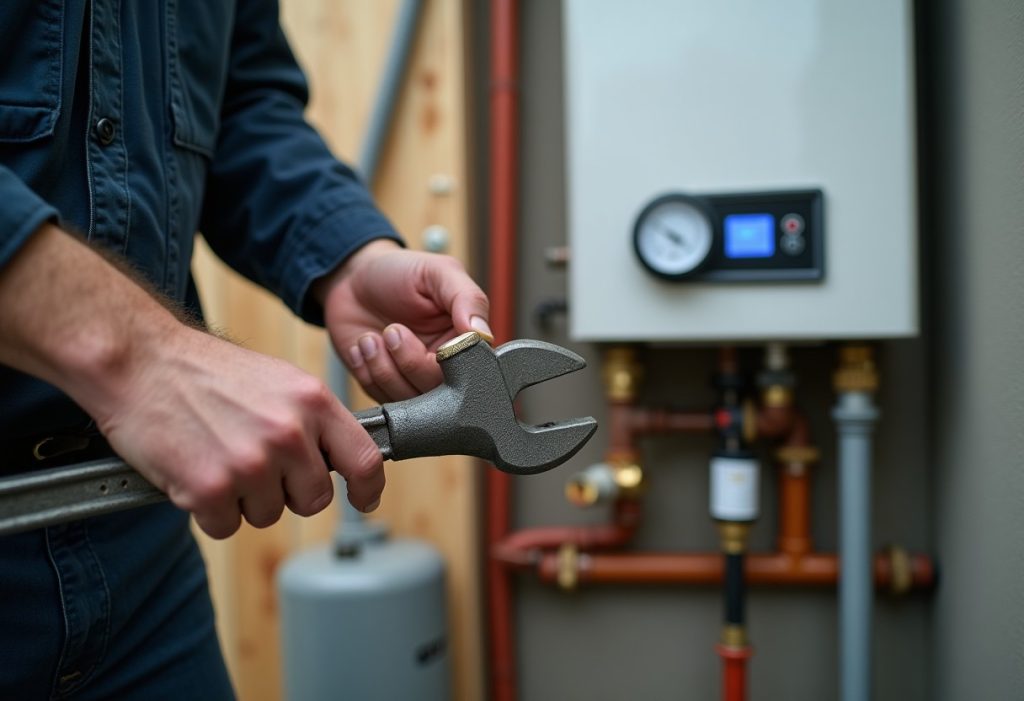
Is the gas supply too small for a tankless water heater?
Often, yes, especially after a tank-to-tankless swap. A whole-house gas tankless unit can burn close to 200,000 Btu/h at full fire, and the gas line, meter, and regulator that fed an old tank may not deliver that much. When gas falls short, the unit fails to light, drops its flame under load, or shuts down on purpose.
Rinnai rates the RU199 at 15,000 to 199,000 Btu/h, and Navien rates the NPE-240A2 at 13,300 to 199,900 Btu/h. Both list a natural gas supply pressure window of 3.5 to 10.5 inches of water column. Rinnai’s FAQ states that its units safely stop running if they detect inadequate gas flow, which looks like the heater quitting mid-shower.
Pipe length matters too. The Rinnai gas sizing table, based on the National Fuel Gas Code (NFPA 54), shows how fast a 1/2 inch line runs out of room as input climbs.
Source: Rinnai residential FAQ, Table 1 (natural gas, Schedule 40 metallic pipe). The same table allows 175 to 350 feet with 3/4 inch pipe for these models.
Ignition failures share this branch. Rinnai’s manual gives code 11 (no ignition) and code 12 (no flame) the same first checks: gas on at heater and meter, propane in the tank, correct inlet pressure, air bled from new lines, and a connected flame rod wire. Code 72 points at the flame rod itself. Checking valves is homeowner work; testing gas pressure or servicing a flame rod is not.
What do tankless water heater error codes mean?
Tankless water heater error codes are a short diagnosis, but each brand numbers them differently, so the same digits mean different faults on a Rinnai, Navien, Rheem, or Noritz. Rinnai’s FAQ says error codes vary by product. Read the code, find your model number on the rating plate, and match it to that model’s manual before you touch anything.
Codes fall into the same families on most brands: ignition and flame, gas, venting, overheat and scale, sensors, fans, and maintenance reminders. Here is how the Rinnai RU-series manual maps them.
| Rinnai RU code | Meaning in the manual | First checks |
|---|---|---|
| 10 | Air supply or exhaust blockage, or condensate trap full | Condensate line clear, air filter clean, vents unobstructed, vent length within limits |
| 11 | No ignition | Gas on at heater and meter, propane in tank, inlet pressure, air bled from lines |
| 12 | No flame | Gas supply, flame rod wire, gas type and pressure |
| 14 | Heat exchanger overheat | Scale hot spots, flush the heat exchanger, treat hard water |
| SS | Service soon (flush heat exchanger) | Flush, then reset per the manual |
| No code | Nothing happens when water flows | Minimum flow, inlet filter, hot and cold lines reversed on new installs |
On a new install, Rinnai’s manual says to confirm the hot and cold lines were not reversed.
Code 10 matters most on condensing units, which drain acidic condensate through a trap. A kinked hose, a frozen line, or a full condensate pump shuts the burner down. A white plume at the vent in cold weather is normal; Rinnai’s FAQ calls it water vapor.
Power is the simplest family. A gas unit needs 120 volt power for its controls, fan, and electronic ignition, so a blank display means a tripped breaker, a tripped GFCI, or an unplugged cord. Reset it once; if it trips again, call a pro.
Why does a tankless water heater go cold in the middle of a shower?
Three things cause cold water mid-shower on a tankless water heater: the cold water sandwich, demand above the unit’s capacity, and a crossover from a failed mixing valve. The sandwich is a brief cold slug after a short pause. Overdemand shows up when several fixtures run together. A crossover makes temperatures drift no matter what else is running.
The cold water sandwich. Shut the shower off and turn it back on a minute later. Hot water left in the pipe comes out first, then a slug of cold that passed through the heater while the burner relit, then hot again. A recirculation system or a small buffer tank after the heater fixes it.
Too many fixtures at once. Capacity falls hard in winter because the unit must lift colder groundwater further. Navien’s spec sheet shows the gap on a single model.
Source: Navien NPE-2 Quick Facts, NPE-240A2 column. A 67°F rise means heating 53°F groundwater to 120°F. At that rise, two showers plus a washer can pass the unit’s limit, and every fixture goes lukewarm together.
Stagger big draws or size up. Noritz suggests a gas tankless unit in roughly the 7.5 to 10 gpm range to replace a 50 gallon tank in a home with several fixtures running at once. If you are still weighing the switch, our tankless vs tank water heater comparison lays out where each one wins.
Crossed plumbing or a failed mixing valve. A worn single-handle cartridge or failed thermostatic mixing valve can push cold water into the hot side, so the heater sees less flow. To test, close the cold inlet valve at the heater and open a hot tap. Steady flow after the pressure bleeds off means a crossover, usually at one bad cartridge.
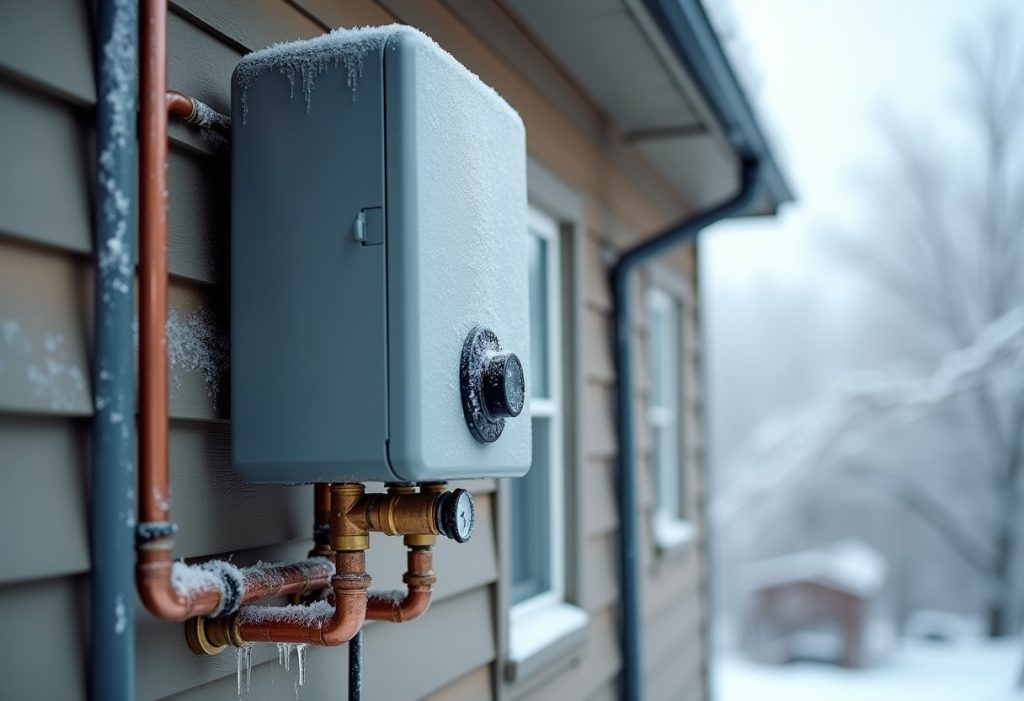
Can a tankless water heater freeze?
Yes. A tankless water heater has built-in freeze protection, but it only works while the unit has electrical power, and it does not protect the pipes and valves outside the cabinet. Rinnai’s RU manual rates indoor models to minus 22°F and outdoor models to minus 4°F with power on and out of direct wind. Lose power in a freeze and the heat exchanger can burst.
Noritz says the same thing in its freeze protection FAQ: if power is lost, the built-in protection will not operate. Rinnai’s manual tells owners to drain the unit manually during a power or gas outage below freezing, along with the condensate trap, drain line, and relief valve. Freeze damage is not covered by Rinnai’s warranty.
After a cold snap, a unit with no flow may have ice in exposed piping. Let it thaw, check for leaks, then restart. Heat tape and insulation prevent a repeat.
When should you call a pro for a tankless water heater not working?
Call a pro when the fix involves gas, combustion, venting, or internal parts, or when a code returns after the basic checks. Homeowners can safely clean the inlet filter, reset a breaker, clear an aerator, check gas valves and the propane gauge, clear snow from a vent terminal, and descale with a pump kit. Rinnai’s FAQ says installation should go to a licensed contractor.
- Record the code and the model number.
- Confirm power, gas valves, and propane level.
- Open a hot tap fully.
- Clean the inlet filter and aerators.
- Check the vent terminal and condensate drain.
- Reset once. If the code returns, call a technician.
If your unit is past its warranty and the repair list keeps growing, compare the bill against what a new tankless water heater costs to install. If the outage hits a tank heater elsewhere in the house, our guide to no hot water covers both types.
How we sourced this
We reviewed top-ranking troubleshooting pages and People Also Ask questions in October 2026 for coverage, then took every figure from manufacturer documents: the Rinnai RU-series Installation and Operation Manual (specs, diagnostic codes, freeze protection, water quality), the Rinnai residential FAQ (flow thresholds, gas sizing table), Rinnai bulletin TB-188, Rinnai spec sheets from 2014 to 2016, the Navien NPE-2 Quick Facts sheet and descaling guidance, and the Noritz FAQ. We excluded forum and third-party code lists and did not reproduce codes from manuals we did not read. Specs vary by model and year.
Frequently asked questions
Why is my tankless water heater not producing hot water?
The usual causes are flow below the activation rate, a closed gas valve or empty propane tank, a clogged inlet filter, scale in the heat exchanger, blocked venting, or lost power. Check the display first, since most gas units show a numbered code. Rinnai units need 0.4 to 0.6 gpm to ignite, so open the hot tap fully before assuming a failed part.
How do I reset my tankless water heater?
Turn the unit off with the power button on the controller, or switch off its breaker, wait briefly, and turn it back on. Rinnai’s manual clears some codes, such as 15 and 54, by resetting the main power. Reset only once. If the same code returns, the fault is still there and repeated resets can hide a gas or venting problem.
Why does my tankless water heater go cold after a few minutes?
Running water goes cold mid-use when demand passes the unit’s capacity, when scale makes it overheat and cycle, or when the gas line cannot keep up at full fire. Capacity drops in winter. Navien’s NPE-240A2 delivers 11.2 gpm at a 35 degree rise but 5.6 gpm at a 67 degree rise, so the same fixtures can outrun it in January.
What is the cold water sandwich effect?
It is a short burst of cold water between two slugs of hot. After a brief pause, the pipe still holds hot water, then cold water that passed through the heater while the burner relit arrives, then hot again. It is normal tankless behavior, not a defect. A recirculation system or a small buffer tank after the heater removes it.
Can low water pressure affect a tankless water heater?
Yes. Low pressure lowers flow, and a tankless unit will not fire below its minimum flow rate. Navien lists a working water pressure range of 15 to 150 psi for its NPE-2 models. A clogged inlet filter, partly closed isolation valve, or scaled heat exchanger can also cut flow even when the house pressure is fine.
Why does my tankless water heater keep turning on and off?
Cycling usually means flow is hovering near the minimum, so the burner lights and drops out. Low-flow fixtures, clogged aerators, and high temperature settings all cause it. Noritz also lists gas supply, venting, and overheating as causes of repeated shutdowns. If opening the tap wider and cleaning the inlet filter do not stop it, have a technician check gas pressure.
Do tankless water heaters work during a power outage?
Gas tankless units do not, because their controls, fan, and electronic ignition need 120 volt power. Freeze protection also stops without power, which matters in winter. Rinnai’s manual says to drain the unit manually if power or gas is lost below freezing. Noritz gives the same warning, since its freeze protection needs power too.
What is the most common issue with tankless water heaters?
Low flow is the most common issue. The burner only lights once the flow sensor reads a set minimum, and Rinnai needs 0.4 to 0.6 gpm to ignite while Navien lists 0.5 gpm for its NPE-2 line. A faucet cracked open slightly, a clogged aerator, or a debris-filled low-flow showerhead often sits right on that line, leaving the unit reading no demand and staying cold.


