How to Fix a Wobbly Toilet: Find the Cause, Then Fix It in Order
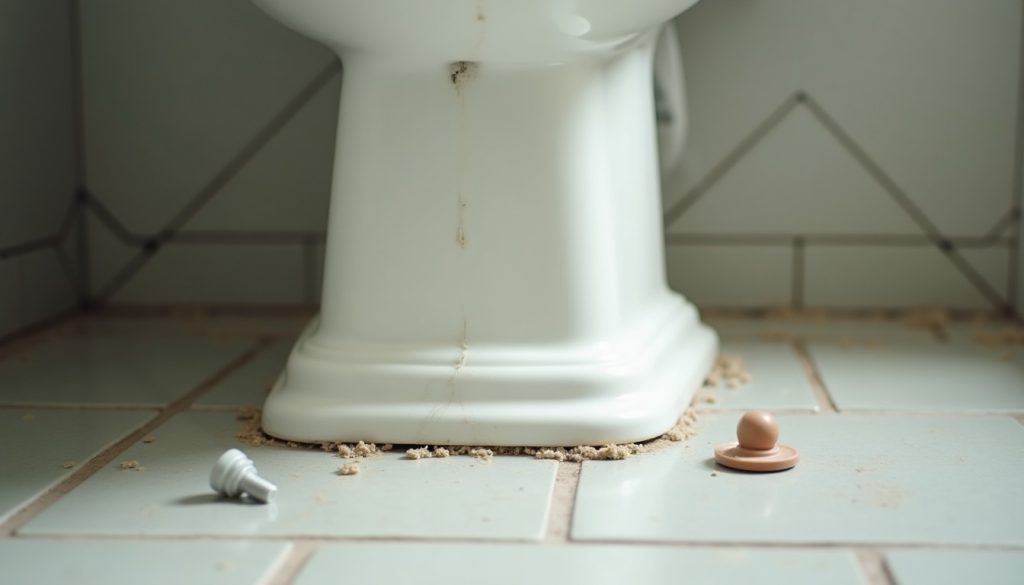
How to fix a wobbly toilet: snug the closet bolts with small alternating turns, shim any gap, and pull the toilet to replace the wax ring or repair the flange if it still rocks.
Key Takeaways
- A rocking toilet crushes its wax seal a little more every time someone sits down, and Kohler’s own installation guide warns that moving a set toilet “may” break the watertight seal.
- Loose closet bolt nuts are the fastest fix, but Kohler’s instructions repeat “Do not overtighten!” because vitreous china cracks before it bends.
- Plastic shims cost a few dollars, versus HomeAdvisor’s $50 to $200 for a pro loose toilet repair.
- The International Plumbing Code (Section 405.4.2) requires floor outlet fixtures to be secured with corrosion-resistant screws or bolts, and Section 405.5 says fixture to floor joints “shall be sealed.”
- A flange that sits too low after new tile can be raised with Oatey’s Set-Rite extension kit, which the maker rates for 1/4 in to 1-5/8 in of correction.
- A soft floor at the base means rot. Bob Vila puts subfloor replacement around a toilet at $173 to $300.
Is a wobbly toilet dangerous, or just annoying?
A wobbly toilet is mostly a slow leak waiting to happen. The bowl seals to the drain with a wax ring that is squeezed once, at installation, and never springs back. Every rock opens a small gap in that seal, so waste water and sewer gas can escape under the toilet where you cannot see it. Left alone for months, that leak can rot the subfloor.
Kohler’s installation guide for its two-piece toilets puts the point plainly. After you lower the bowl onto the ring, the instruction is “Do not move after placement! Watertight seal may be broken!” A toilet that rocks is moving after placement every single day.
The damage runs in a loop: the rocking deforms the wax ring, water seeps out on each flush, the plywood around the flange softens, and the bolts lose their grip in that soft wood. Once the floor is soft, the wobble feeds itself.
A shifting bowl is also a fall risk for anyone who leans on it to stand up.
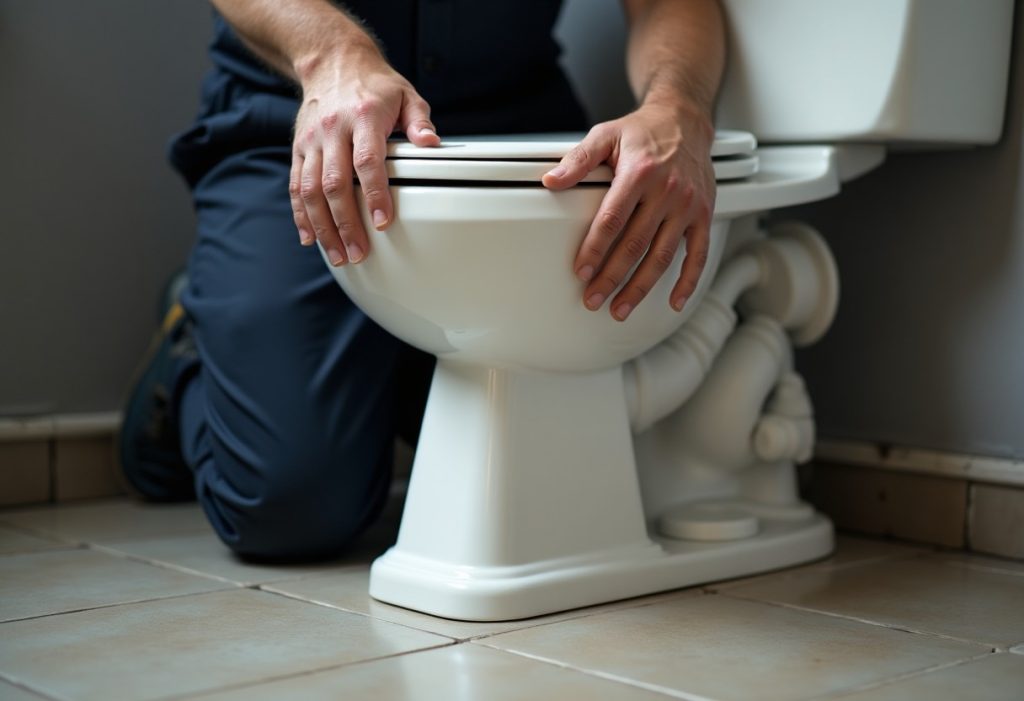
What makes a toilet rock in the first place?
Toilets rock for five reasons: loose closet bolt nuts, an uneven floor under the base, a flange set too high or too low, a broken flange that will not hold the bolts, or a rotted subfloor. You can usually tell which one in five minutes by checking the bolt caps, rocking the bowl in each direction, and pressing on the floor around the base with your hand or heel.
Run this check first:
- Pop off the bolt caps. If the nuts turn by hand, they are loose.
- Rock the bowl both ways. A single lifting corner points to an uneven floor.
- If the toilet seesaws around its center, it may be balancing on a high flange.
- Press the floor around the base with your heel. Any give or dark stained grout means water reached the subfloor.
- Water at the base after flushing, or a sewer smell, means the wax seal has failed.
Match what you see to the cause below. Work from the top down, since the cheap fixes come first.
| What you see | Likely cause | Fix | Difficulty |
|---|---|---|---|
| Bolt nuts turn by hand, toilet lifts evenly | Loose closet bolt nuts | Snug the nuts with small alternating turns | Easy, 5 minutes |
| One corner lifts, visible gap under the base, bolts tight | Uneven tile or floor | Plastic toilet shims, trim, then caulk | Easy, 20 minutes |
| Wobble keeps returning, water or sewer smell at base | Crushed or broken wax ring | Pull toilet, new wax ring or waxless seal | Moderate, 1 to 2 hours |
| Toilet seesaws around its center | Flange too high above finished floor | Pull toilet, lower or replace flange | Moderate to pro |
| Flange sits below new tile, bowl will not seal | Flange too low | Flange spacer or extension kit | Moderate, 1 to 2 hours |
| Bolts spin and never draw the bowl down | Broken flange slot or ring | Flange repair ring or repair plate | Moderate |
| Floor soft or spongy, stained grout, musty odor | Rotted subfloor | Cut out rot, new subfloor, new flange | Pro, often a full day |
How do you fix a wobbly toilet by tightening the bolts?
Tighten the closet bolt nuts by hand until they touch the washers, then add small turns with a wrench, alternating left and right, and stop the moment the toilet stops moving. Do not crank them down. Kohler’s installation guide repeats “Do not overtighten!” because vitreous china cracks before it gives any warning, and a cracked bowl turns a free fix into a new toilet.
- Pry off the bolt caps with a flat screwdriver.
- Turn each nut clockwise by hand until it stops.
- Use a small wrench to add a fraction of a turn on the left nut, then the same on the right.
- Sit and shift your weight. If it still moves, repeat.
- Stop if the nut keeps turning without drawing the bowl down. The flange slot is broken or the floor is soft.
The International Plumbing Code says floor outlet fixtures “shall be secured to the floor or floor flanges by screws or bolts of corrosion-resistant material” (Section 405.4.2, as adopted in the 2024 Maryland plumbing code on UpCodes). Replace rusted or bent bolts with brass or stainless ones.
If the toilet rocked for months first, tightening can stop the movement while leaving a deformed wax ring underneath. Watch the base for a week. If water shows up, read our guide to a toilet leaking at the base before you caulk over the evidence.
How do you shim a toilet that rocks on an uneven floor?
To shim a toilet, find the low side by rocking it, slide a plastic toilet shim into the gap until the bowl sits solid, snug the bolts again, then trim the shim flush and caulk the base. Use plastic shims with ridges, not wood. Wood compresses and swells with moisture, so a wood shim that works today can let the toilet rock again in a few months.
- Loosen the bolt nuts a half turn so the toilet can settle.
- Rock the bowl and watch for the corner or edge that lifts.
- Push a shim, thin end first, into the gap under that edge.
- If it still moves, add a shim on the opposite side.
- Re-snug the bolt nuts with small alternating turns.
- Score each shim with a utility knife along the edge of the base and snap off the excess.
- Run a bead of caulk around the base to hide the shims and lock them in place.
Shims fix floor problems, not flange problems. If the bowl pivots around its center instead of tipping at one corner, the flange height is likely off, and stacking shims only hides it.
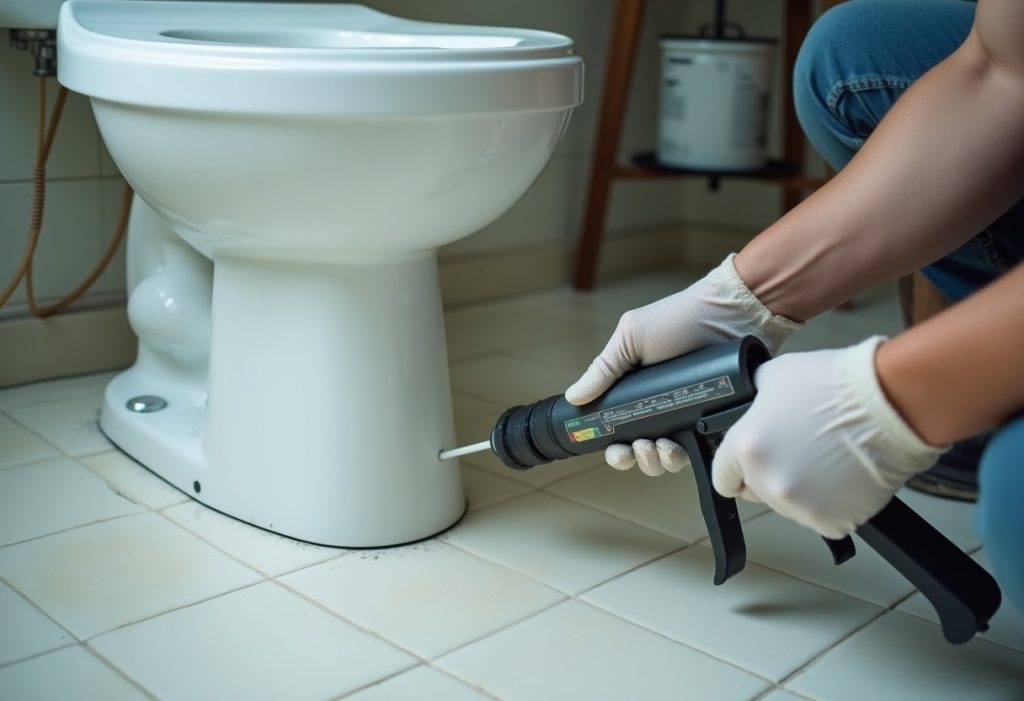
Should you caulk around the base after fixing a wobbly toilet?
Yes, in most cases. The International Plumbing Code says “Joints formed where fixtures come in contact with walls or floors shall be sealed” (Section 405.5), and many manufacturers list silicone sealant in their install parts. Caulk keeps mop water and urine out from under the bowl, holds shims in place, and adds a little lateral grip once it cures.
That wording comes from Section 405.5 in a state adoption of the IPC shown on UpCodes. Some areas use the Uniform Plumbing Code instead, so check local rules if the work will be inspected.
Many plumbers caulk the front and sides but leave a short gap at the back, so a future seal failure shows on the floor instead of pooling under the base. Ask your inspector whether that is acceptable where you live.
Caulk is a finish, not a fix. Caulking over a fresh leak traps water against the subfloor, so fix the wobble, confirm the base stays dry, then caulk.
When does fixing a wobbly toilet mean replacing the wax ring?
Replace the wax ring whenever you lift the toilet off the flange, and any time the toilet rocked long enough to leave water, stains, or a sewer smell at the base. Wax does not rebound after it is compressed. Once a ring has been squashed out of shape by weeks of rocking, re-tightening the bolts will not restore the seal, so the only reliable fix is a new ring.
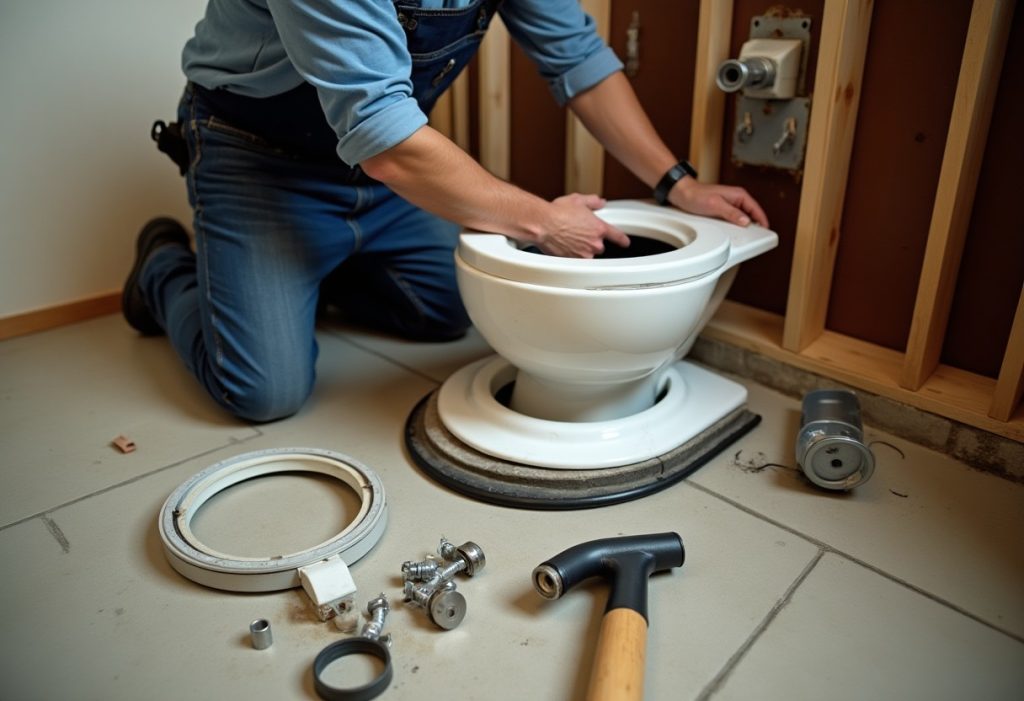
Shut off the water, flush and sponge the toilet dry, disconnect the supply, remove the nuts, lift the toilet straight up, and scrape off the old wax. Then replace the wax ring with a new standard, extra-thick, or waxless seal, set the bowl straight down, and bolt it with the same alternating turns.
With the toilet off, check whether the flange is cracked, too high, or too low, and whether the wood around it is soft. For tool lists, follow our full toilet installation sequence, which uses the same steps.
Lower the bowl straight down and press with your body weight rather than rocking it into place. Kohler’s guide says to “Apply weight evenly.”
How do you fix a wobbly toilet when the flange is too high, too low, or broken?
A flange too low gets a spacer or extension kit, a flange too high gets cut down or replaced, and a broken flange gets a repair ring or stainless repair plate screwed over or beside the old one. All three require pulling the toilet. The goal is a solid, level flange sitting on or just above the finished floor, so the toilet rests on its base and not on the flange rim.
Flange too low
This usually follows new tile laid without raising the flange, so the wax never fully compresses. Oatey’s Set-Rite flange extension kit (model 43400) is sold to correct flange elevations from 1/4 in to 1-5/8 in, with up to 2-1/4 in using extra spacers.
Flange too high
A flange that stands proud of the floor makes the toilet seesaw, and shims cannot fix that. A plumber may cut down a PVC or ABS flange or replace a cast iron one. For the correct height and the difference between repair and replacement, see our guide to the toilet flange.
Broken flange
Snapped bolt slots are common because they carry all the bolt force. A repair ring or half-moon plate screws to the subfloor and gives the bolts a new anchor without cutting the drain pipe. The IPC sets minimum flange thickness at 0.25 in for plastic and 0.125 in for copper alloy (Section 405.4.1), which is one reason thin, cheap rings crack.
How much does it cost to fix a wobbly toilet?
Fixing a wobbly toilet costs nothing if the bolts are loose and a few dollars for shims. HomeAdvisor’s June 2026 guide puts a pro loose toilet repair at $50 to $200, a wax ring replacement at $50 to $200, and flange work at $145 to $350. Subfloor rot adds the most, with Bob Vila putting the subfloor around a toilet at $173 to $300.
Labor drives the bill. HomeAdvisor’s toilet repair cost guide says labor makes up 60% to 75% of a toilet repair bill. This Old House puts the average professional flange replacement at $145 to $165, with labor at $45 to $150.
Rot is the expensive branch. Bob Vila’s subfloor cost guide puts broader subfloor replacement at $428 to $2,978, and neither figure includes new tile.
When should you call a plumber for a wobbly toilet?
Call a plumber when the floor around the toilet feels soft, when the flange is cracked or cast iron, when the bolts will not tighten, or when you see water or smell sewer gas at the base. Those signs mean the fix involves the drain connection or the floor structure.
- Soft or sagging floor. Rotted plywood must be cut back to solid wood, and a joist may need sistering.
- Cast iron flange. Cracking an old cast iron closet bend turns a short call into a pipe repair.
- Second floor bathroom. A failed seal upstairs becomes a ceiling stain downstairs.
- Repeat wobble. Something underneath is still moving.
For a loose bolt or one uneven corner, most homeowners can fix a wobbly toilet in under half an hour with a wrench, shims, and caulk.
How we sourced this
We reviewed the top-ranking guides for “how to fix a wobbly toilet” and related questions in October 2026 (including This Old House, Angi, and HomeServe) and checked each claim against primary or named sources. Installation guidance comes from Kohler’s printed installation guide 1145310-2. Code language comes from IPC Sections 405.4.1, 405.4.2, and 405.5 as shown in state adoptions on UpCodes. Costs come from HomeAdvisor (updated June 19, 2026), This Old House (updated May 26, 2026), and Bob Vila (updated November 2022). Oatey kit specs come from Oatey product listings. We excluded unbranded cost pages and anything we could not trace to a named publisher.
Frequently asked questions
Is a wobbly toilet dangerous?
It is rarely dangerous on day one, but it gets worse with every use. Each rock squeezes and reshapes the wax ring, and once that seal opens, waste water and sewer gas can escape under the toilet. Over months the leak can rot the subfloor, loosen tile, and in bad cases let the floor sag. Fix it within a week or two, not a year.
Can I just tighten the bolts on a wobbly toilet?
Yes, if the nuts are simply loose. Snug each nut by hand, then give it small turns with a wrench, alternating sides, and stop as soon as the toilet stops moving. Kohler warns in its installation guide not to overtighten because the china can crack. If the bolts spin or will not draw the toilet down, the flange is the problem.
How do you shim a toilet?
Rock the toilet to find the low corner, then push a plastic toilet shim into the gap until the bowl sits solid. Use two shims at opposite sides if it still moves. Snug the bolts again, score the shims flush with a utility knife, snap off the excess, and caulk the base so the shims do not show. Skip wood shims because they soak up water.
Should you caulk around a toilet?
In most US jurisdictions the plumbing code says joints where fixtures meet floors shall be sealed, and many manufacturers list silicone sealant for the base. Caulk also hides shims and keeps mop water out from under the bowl. Many plumbers leave a small gap at the back so a future leak shows up on the floor instead of rotting the subfloor unseen.
Does a wobbly toilet mean the wax ring is broken?
Not always, but treat a long-running wobble as a damaged seal. Wax does not spring back, so every rock leaves a gap. Kohler tells installers not to move the toilet after setting it because the watertight seal may break. If you see water at the base, smell sewer gas, or the floor feels soft, pull the toilet and fit a new ring.
How much does it cost to fix a wobbly toilet?
HomeAdvisor puts a loose toilet repair at $50 to $200 and a wax ring replacement at $50 to $200 in its June 2026 cost guide. A flange repair runs $145 to $350 by the same source. If the subfloor has rotted, Bob Vila puts replacing the subfloor around a toilet at $173 to $300 before new flooring. Shims alone cost a few dollars.
Can a toilet flange be too high?
Yes. A flange that sits well above the finished floor lets the toilet balance on the flange rim instead of resting on its base, so it rocks no matter how hard you tighten the bolts. Many plumbers set the flange flush with or slightly above the finished floor. A flange that stands too proud usually has to be cut down or replaced.
How do I stop my toilet from wobbling?
Pop off the bolt caps and tighten the closet bolt nuts by hand, then add small alternating wrench turns until the rocking stops, without overtightening. If one corner lifts on an uneven floor, push a plastic shim into the gap, re-snug the bolts, trim the shim flush, and caulk the base. If wobbling returns, pull the toilet and replace the wax ring or fix the flange.
Why does the toilet move when I sit on it?
A toilet rocks for five reasons, loose closet bolt nuts, an uneven floor under the base, a flange set too high or too low, a broken flange that will not hold the bolts, or a rotted subfloor. Checking bolt caps, rocking the bowl in each direction, and pressing the floor around the base shows which cause applies.
How much to fix a rocking toilet?
Fixing a wobbly toilet costs nothing if the bolts are simply loose, and only a few dollars for shims. HomeAdvisor puts a pro loose toilet repair at $50 to $200, wax ring replacement at $50 to $200, and flange repair or replacement at $145 to $350. Subfloor rot adds the most, with Bob Vila pricing subfloor replacement around a toilet at $173 to $300.
How to make a toilet more sturdy?
Snug the closet bolt nuts with small alternating turns, using corrosion-resistant bolts as the plumbing code requires. Shim any gap under a low corner with plastic shims, then caulk the base, since code says fixture to floor joints shall be sealed. Correct a flange that sits too high or too low, replace a crushed wax ring, and repair rotted subfloor so the bowl rests solidly.


