Point of Use Water Heater: Types, Sizing, Electrical Needs, and Cost
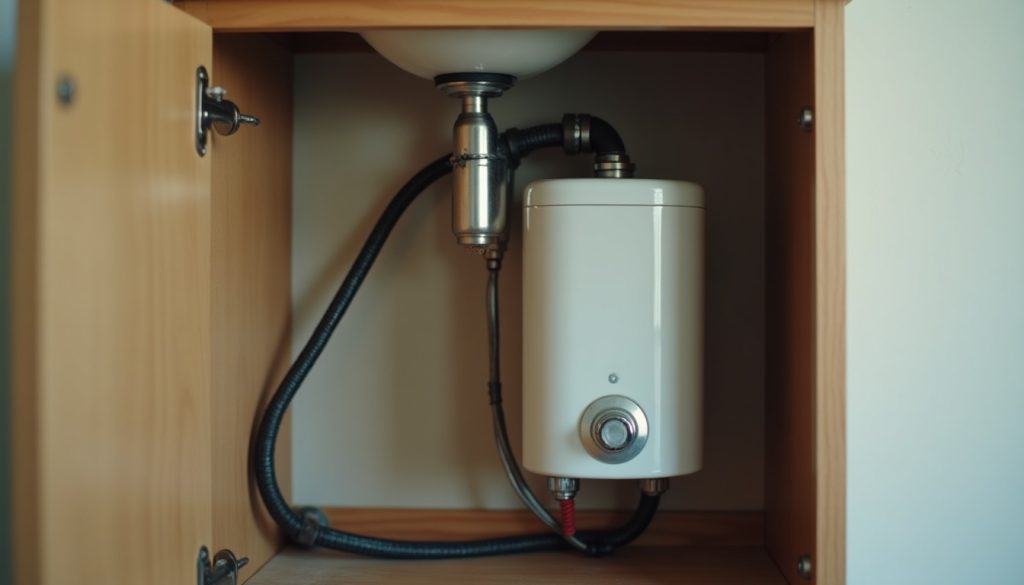
A point of use water heater is a small electric heater (a 2.5 to 7 gallon mini-tank or a compact tankless unit) mounted at one sink so hot water arrives in seconds instead of after a long wait.
Key Takeaways
- Mini-tanks hold roughly 2.5 to 7 gallons; Bosch’s Tronic 3000 T line spans 2.7, 4, and 7 gallon models, all at 1,440 watts.
- Plug-in is possible only for small mini-tanks: Bosch rates its ES2.5 and ES4 at 120 volts and 12 amps with a cord connection.
- A “120-volt” tankless unit is not a plug-in appliance: the EcoSmart POU 3.5 calls for a 30 amp breaker and 10 AWG wire and tops out at 0.5 gpm.
- Flow and temperature rise set the size: Stiebel Eltron’s DHC-E 8/10 gives a 66 degree rise at 1.0 gpm at 9.6 kW, but only 44 degrees at 1.5 gpm.
- The U.S. Department of Energy says demand heaters installed at each hot water outlet can save 27% to 50% versus a conventional storage tank.
- HomeServe puts a typical point-of-use install at $400 to $800, tank or tankless, before any new electrical circuit.
What is a point of use water heater?
A point of use water heater is a compact electric unit installed at or near a single fixture, usually under a sink, that heats water right where you use it. It comes in two forms: a mini-tank that stores 2.5 to 7 gallons of hot water, and a tankless flow-through unit that heats water only while the tap runs. Either one cuts out the long pipe run from a central heater.
A central heater pushes hot water through 30 to 80 feet of pipe that has gone cold since the last draw; a point-of-use unit skips that run. Among the types of water heaters, it is a spot fix, not a main heater.
Mini-tank or tankless: which point of use water heater type fits?
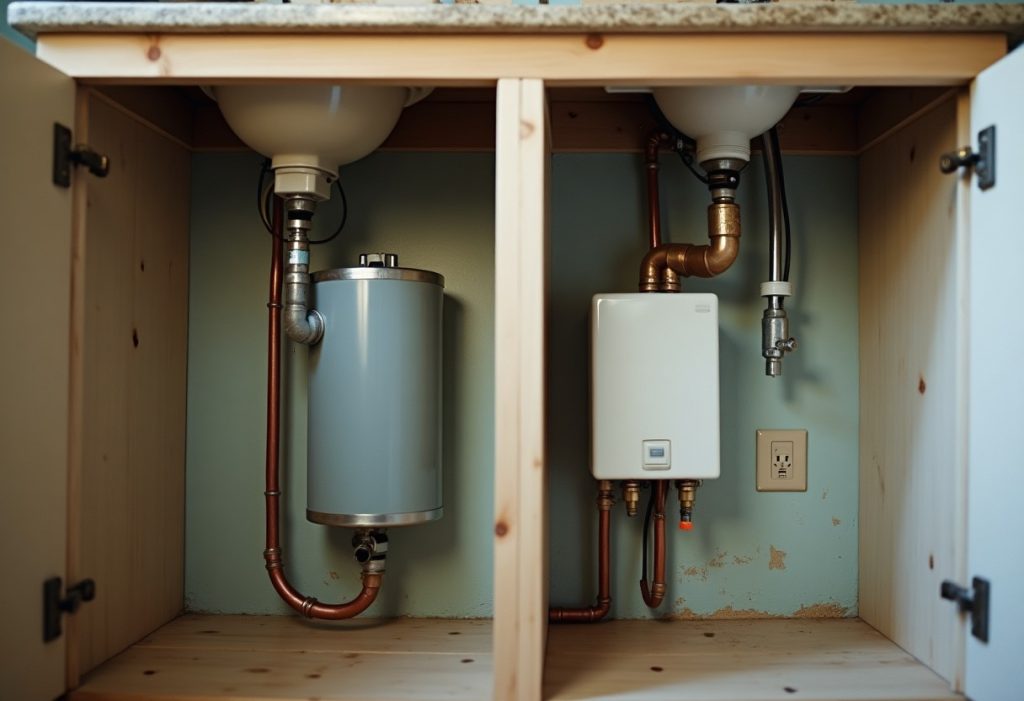
Pick a mini-tank if you want a cheap install on a standard 120-volt outlet and the fixture sees short draws like hand washing. Pick an electric tankless point-of-use unit if you want hot water that never runs out at a low flow and you can supply a 30 to 40 amp circuit. The mini-tank stores heat; the tankless unit needs serious amperage to make heat on the fly.
Mini-tanks are shrunken standard tanks. Bosch rates the Tronic 3000 T’s 1,440 watt element at 6.8 gallons per hour of recovery at a 90 degree rise, so once the stored water is gone, the refill is slow.
Tankless point-of-use units never run dry, but wattage caps their output. The EcoSmart POU 3.5 manages about a 48 degree rise at 0.5 gpm and only about 24 degrees at 1.0 gpm, lukewarm on cold incoming water. The same trade-off drives the bigger tankless vs tank water heater decision, just at a smaller scale.
| Type (example model) | Capacity or output | Electrical | Best fit |
|---|---|---|---|
| Mini-tank, plug-in (Bosch Tronic 3000 T ES2.5 / ES4) | 2.7 or 4 gal stored; 6.8 gph recovery at 90 degree rise | 120 V, 1,440 W, 12 A, cord and plug | Bathroom or bar sink, short hand-washing draws |
| Mini-tank, hard-wired (Bosch Tronic 3000 T ES8) | 7 gal stored; same 1,440 W element | 120 V, hard-wired | Kitchenette or utility sink filling a basin |
| Tankless, 120 V (EcoSmart POU 3.5) | 0.5 gpm max at about 48 degree rise | 120 V, 3.5 kW, 30 A breaker, 10 AWG | Low-flow lavatory faucet, booster duty |
| Tankless, 240 V (Stiebel Eltron DHC-E 8/10) | 66 degree rise at 1.0 gpm (9.6 kW); 44 degree rise at 1.5 gpm | 240 V, 7.2 or 9.6 kW, 30 or 40 A | Kitchen or bath sink with steady demand |
Where does a point of use water heater make sense?
A point of use water heater makes the most sense at a fixture that is far from the main heater, at a new fixture with no hot line, or in a small space with only sinks. Common jobs include a remote primary bath, a basement or garage addition, a wet bar, a detached office or workshop, and commercial hand sinks. It is a fix for one location, not for the whole house.
- Remote sinks. A bathroom at the far end of a long ranch house or a second-floor sink above a basement heater.
- Additions and outbuildings. Running a new hot line through finished walls or across a yard often costs more than a heater at the sink.
- Booster duty. Fed from the main hot line, a unit lifts lukewarm water to full temperature; Stiebel Eltron allows DHC-E inlet water up to 131 degrees.
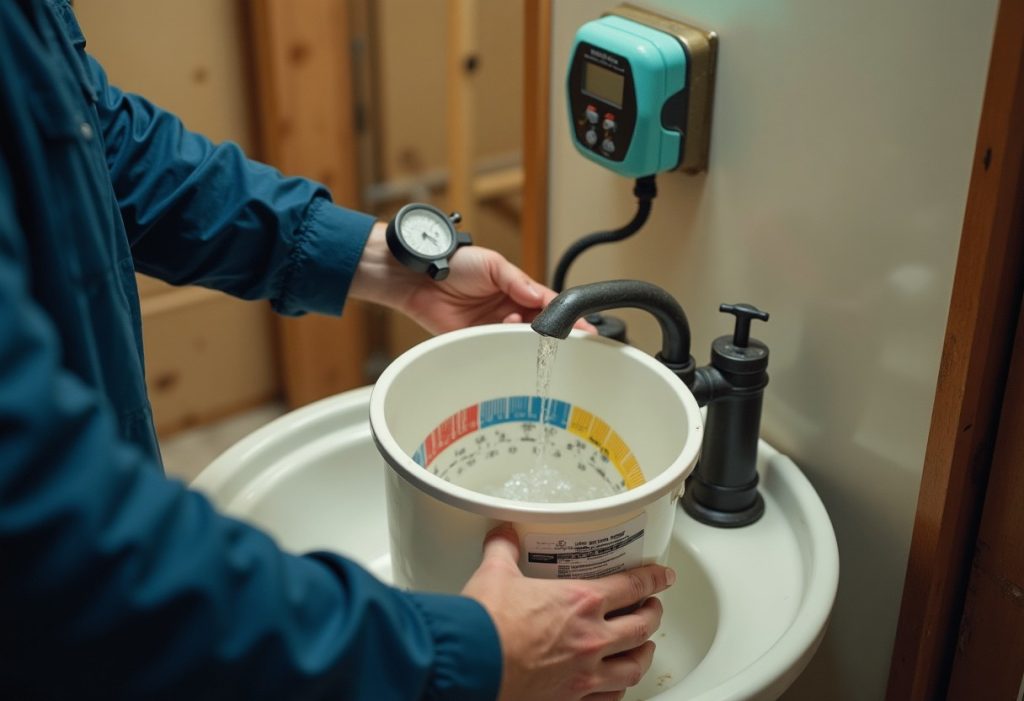
The wait-time payoff is easy to calculate. Half-inch Type L copper holds about 0.012 gallons per foot, and three-quarter-inch holds about 0.025 gallons per foot, based on the tube’s inside diameter. A 50-foot run of 3/4-inch pipe holds about 1.25 gallons, so a 1.5 gpm faucet runs for roughly 50 seconds before hot water shows up, and that water goes down the drain. A heater under the sink cuts that to a few seconds.
How do you size a point of use water heater?
Size a point of use water heater by two numbers: the fixture’s flow rate in gallons per minute and the temperature rise you need, which is your target temperature minus the incoming water temperature. Electric tankless units need about 1 kW for every 6.8 gpm-degrees of rise. Mini-tanks are sized by gallons stored versus how long a typical draw lasts.
For tankless units, kilowatts needed equals flow (gpm) times temperature rise (degrees F) divided by 6.83, derived from 8.33 pounds per gallon and 3,412 BTU per kWh. Check: 0.5 gpm times 47.8 degrees divided by 6.83 gives 3.5 kW, the EcoSmart POU 3.5 rating.
- Find the fixture flow rate. Read it off the faucet aerator or the product listing. EPA WaterSense bathroom faucets flow at 1.5 gpm or less.
- Find the incoming water temperature. Groundwater in northern states can run in the 40s in winter, while southern supply runs much warmer. Use your coldest month.
- Set the target. Around 105 to 110 degrees is comfortable for hand washing; 120 degrees is a common tank setpoint.
- Do the math. Multiply flow by rise, divide by 6.83, and pick a unit at or above that kW rating.
- For mini-tanks, compare gallons to the draw. A 2.7 gallon tank at a 1.5 gpm draw empties of stored hot water in under two minutes on paper, though mixing with cold at the tap stretches usable time.
| Flow rate | Typical fixture | kW for 40 degree rise | kW for 70 degree rise | Amps at 240 V (70 degree rise) |
|---|---|---|---|---|
| 0.5 gpm | Low-flow public lavatory faucet | 2.9 kW | 5.1 kW | About 21 A |
| 1.0 gpm | Throttled bathroom faucet | 5.9 kW | 10.2 kW | About 43 A |
| 1.5 gpm | WaterSense bathroom faucet | 8.8 kW | 15.4 kW | About 64 A |
| 2.0 gpm | WaterSense showerhead | 11.7 kW | 20.5 kW | About 85 A |
The table explains why point-of-use units stay at sinks. A 2.0 gpm shower with a 70 degree rise needs about 20 kW and 85 amps, which is whole-house tankless territory. For the full-home picture, including first-hour ratings for tanks, see our guide on what size water heater you need.
What electrical service does a point of use water heater need?
It ranges from a standard 120-volt outlet to a dedicated 240-volt circuit of 40 amps or more. Small plug-in mini-tanks such as the Bosch ES2.5 draw 12 amps at 120 volts. Electric tankless point-of-use units draw far more: the 120-volt EcoSmart POU 3.5 calls for a 30 amp breaker, and the 240-volt Stiebel Eltron DHC-E 8/10 draws 30 or 40 amps. Always size wiring from the spec sheet.
The trap here is the word “120V” on a tankless box. Homeowners read it as plug-and-play, but a 3.5 kW unit pulls about 29 amps, more than a standard 15 or 20 amp kitchen or bath circuit can carry. The EcoSmart POU 3.5 listing specifies a 30 amp breaker and 10 AWG wire, which in most homes means a new home run from the panel.
Mini-tanks are the easy case. The Bosch Tronic 3000 T spec sheet lists the ES2.5 and ES4 as 120-volt plug-in units at 12 amps, while the 7-gallon ES8 is hard-wired. A 12 amp load can still trip a shared circuit, so many electricians give it its own. Check your local electrical code and panel capacity before buying a 240-volt model like the Stiebel Eltron DHC-E.
How much does a point of use water heater cost?
Expect roughly $400 to $800 for a point of use water heater installed, tank or tankless, according to HomeServe’s cost guide. The unit itself runs about $180 to $350 for a 2.5 to 4 gallon mini-tank, with supply lines, fittings, and electrical connections on top. A new dedicated circuit for a tankless model adds an electrician’s bill that varies by panel location and local rates.
Electrical work moves the price most: a plug-in mini-tank beside an existing outlet is the cheapest job, a new 240-volt, 40 amp circuit the priciest. Mini-tanks also need a code-compliant relief valve discharge, and many jurisdictions require permits for heaters and new circuits.
Operating cost tracks how much hot water you use, not the unit type. The U.S. Department of Energy’s Energy Saver guidance says demand heaters can be 24% to 34% more efficient than storage tanks in homes using 41 gallons or less a day, and 27% to 50% more efficient when installed at each outlet. Most homes add one point-of-use unit rather than one at every outlet, so savings land well below that ceiling.
How does point-of-use compare with a whole-house heater or a recirculation pump?
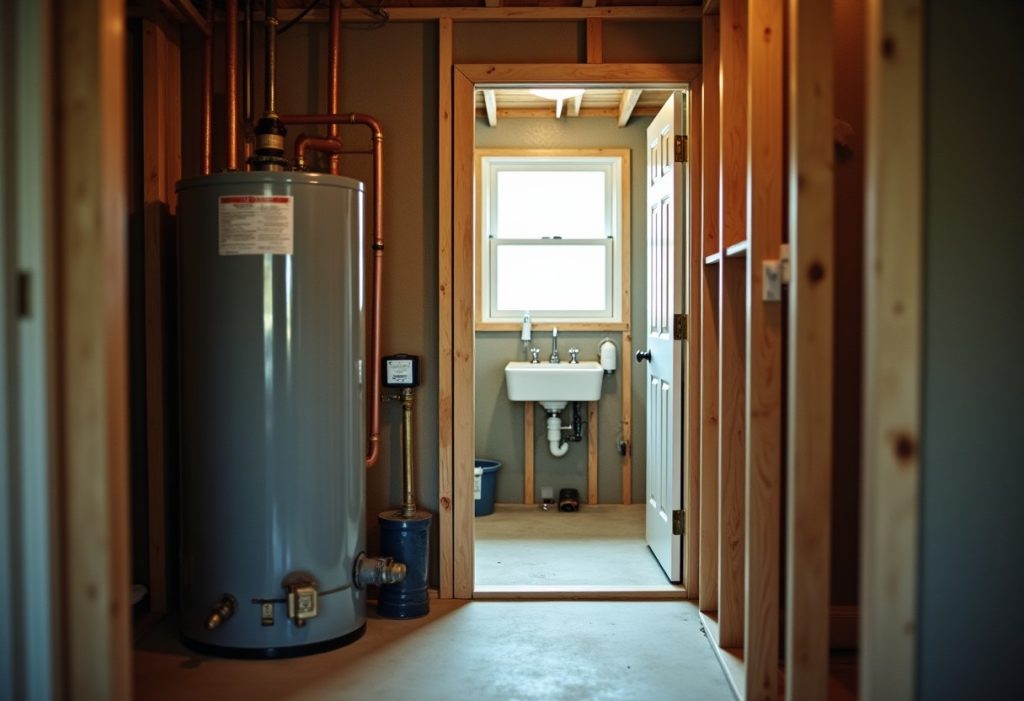
A point of use water heater fixes one fixture, a whole-house heater serves everything, and a recirculation pump speeds hot water to many fixtures using the heater you already own. Choose point-of-use when one remote sink is the problem or no hot line exists. Choose recirculation when several fixtures wait. Choose a central heater upgrade when the problem is running out of hot water, not waiting for it.
| Option | Solves | Typical electrical need | Main limitation |
|---|---|---|---|
| Point-of-use mini-tank | Wait at one sink | 120 V, about 12 A (Bosch ES2.5) | 2.7 to 7 gal stored, slow recovery |
| Point-of-use tankless | Wait at one sink, unlimited low flow | 30 to 40 A circuit (EcoSmart, Stiebel Eltron specs) | Rise drops fast as flow climbs |
| Recirculation pump | Wait at many fixtures | Small pump on a standard outlet | Heat loss from the loop unless timed or on-demand |
| Whole-house tank or tankless | Supply for the whole home | Gas or large electric service | Long pipe runs still mean a wait |
If three bathrooms all wait, a hot water recirculation pump usually beats three under-sink heaters. If only the far bath waits, the point-of-use unit wins: no return line, no change to the main heater.
What are the downsides of a point of use water heater?
The main downsides are limited capacity, heavy electrical demand for tankless models, and another appliance to maintain. Mini-tanks run out in a few minutes of steady flow and recover slowly. Tankless units lose temperature fast as flow rises. Neither can run a shower in a typical setup, and each one takes cabinet space and a relief valve or circuit.
- Pros: hot water in seconds, less water wasted while waiting, no new hot line, and DOE-documented efficiency gains for demand units.
- Cons: small capacity, 30 to 40 amp circuits for tankless models, and a lower rise in winter when inlet water is coldest.
- Quirks: mini-tanks collect sediment in hard water; tankless units need a minimum flow (0.264 gpm on the DHC-E) to switch on.
How we sourced this
We reviewed the current top-ranking pages for “point of use water heater” and related questions, then went to primary sources: U.S. Department of Energy Energy Saver guidance on demand water heaters, manufacturer specification sheets for the Bosch Tronic 3000 T (ES2.5, ES4, ES8), EcoSmart POU 3.5, and Stiebel Eltron DHC-E 8/10, EPA WaterSense faucet criteria, and HomeServe’s installed-cost guide. Sizing figures (kW and amps by flow and rise) and pipe-volume wait times are our calculations from standard water properties and Type L copper inside diameters, checked against the spec sheets. Models are examples, not endorsements; unsourced lifespan claims were excluded. Checked October 2026.
Frequently asked questions
Are point of use water heaters worth it?
They are worth it when one fixture sits far from the main heater and you wait a long time for hot water, or when an addition, wet bar, or workshop has no hot line at all. A mini-tank or small tankless unit costs roughly $400 to $800 installed per HomeServe, far less than rerunning pipe. They are a poor buy as the only heater for a whole house.
How much does it cost to install a point of use water heater?
HomeServe puts a point of use water heater at about $400 to $800 installed, tank or tankless, with the unit itself around $180 to $350 for a 2.5 to 4 gallon mini-tank. The number climbs if an electrician must add a new circuit, which is common for tankless models that draw 30 amps or more. Plug-in mini-tanks on an existing outlet land at the low end.
Can I plug a point of use water heater into a regular outlet?
Some mini-tanks, yes. Bosch rates its Tronic 3000 T ES2.5 and ES4 at 120 volts, 1,440 watts, and 12 amps with a plug-in cord, so they run on a standard receptacle, ideally on a circuit with little else on it. Most electric tankless point-of-use units cannot. Even 120-volt tankless models like the EcoSmart POU 3.5 call for a 30 amp breaker and 10 AWG wire.
Can a point of use water heater supply a shower?
Usually not. A 2.0 gpm showerhead with a 70 degree temperature rise needs about 20 kW, which works out to roughly 85 amps at 240 volts. Small point-of-use units top out far below that; the Stiebel Eltron DHC-E 8/10 delivers a 66 degree rise at only 1.0 gpm at its 9.6 kW setting. Showers need a whole-house tankless unit, a full tank, or a dedicated large electric unit.
What size breaker does a point of use water heater need?
It depends on the type and wattage, so follow the spec sheet. A 1,440 watt 120-volt mini-tank such as the Bosch ES2.5 draws 12 amps. The 120-volt EcoSmart POU 3.5 tankless calls for a 30 amp breaker. The 240-volt Stiebel Eltron DHC-E 8/10 draws 30 or 40 amps depending on its 7.2 or 9.6 kW setting. Local electrical code may require a dedicated circuit.
Where do you install a point of use water heater?
Most go in the cabinet directly under the sink they serve, plumbed into the cold supply and feeding the hot side of the faucet. Some mount on a wall or shelf nearby. Keep the unit as close to the tap as possible, within reach of a suitable electrical circuit, and accessible for service. Mini-tanks carry a temperature and pressure relief valve that needs a safe discharge path under most plumbing codes.
Can a point of use water heater replace a whole-house water heater?
Not in a typical home. A point of use water heater serves one sink or a pair of nearby fixtures, with mini-tanks holding about 2.5 to 7 gallons and small tankless units capped near 0.5 to 1.5 gpm. A whole house with showers, a dishwasher, and laundry needs a central heater. The exception is a tiny space, such as a cabin or office, with only sinks.